


Likes
Comments
Share


@King_Green21
Follow
Everything looking good this week happy with the vegetative stage with the th Seeds original Bubblegum. Says they are an ibl strain so the genetics should be stable, which is less chance of 10 different phenos ( update me If I’m wrong here, still learning )
Day 54 - today I did the last defoliation and lst 2 days before swith to 12/12. Middle growth was insane so spread them out abit by screwing small screws in to the pot and using the as a tie down
Day 55 - all plants seemed to have bounced back the day after and look exactly how I planned so far so good
Day 56 - final day of vegetative growth all seems good, all females showing white hairs , have raised the lights and turned Intake to full to maintain humidity levels and switched lights to 12 / 12.

Likes
5
Share


@AustinRon
Follow
TH 1Q2025 - Week 2 - Seedling
(ON Haze X Original Haze) X Northern Lights #2
“Todd’s Haze”
Objective
- 8 Female Plants, Topped ONCE @ Flip, 12” when topped
- Modified Sea of Green
Seeds Wet: 1139PM, 28.2.2025
Germinated: 2.3.2025
Flip: 21.3.2025
Harvest: 77 Days, DATE: 6.6.2025
_________________________________________
__
Fri Mar 14, 2025
TH 1Q25 15:V:2:1
__
Sat Mar 15, 2025
TH 1Q25 16:V:2:2
- Moderate Fertigation, Root Biased, Reducing Container Moisture Levels
-
LightIntensity: [ 414, µMol/m2/s]
SIDE NOTE: We’re Still 14% Moisture Content on Orange Gasm #1
AM
Watering with PCAL1660, Kelpak, CalMag Fuel, Lush Green
- Starting with 1L PCAL1660 (@ 1g/gal)
- Add 1 ml Kelpak/L
- Cal Mag Fuel: 3.4 ml/L
- Lush Green: 1.7 ml/L
- EC: 0.9 (Delivered)
Sex Tests Returned, Selected 8 for grow, w/ Priority to
- Sex
- Root Development
- Seedling Size
Final Selection: 3,4,7,6,8,9,11,12


__
Sun Mar 16, 2025
TH 1Q25 17:V:2:3
Pots Hefty - #4 looking, meh. (Reduce Light from 75 - 67%)
Disassembled airpots for culled plants.
Notes:
- Overall - HIGHER Moisture than ideal - I’ll say it’s evidenced by sparse root development (Roots White, Top to Bottom - Roots throughout, but SPARSE
- Action: Need to keep OVERALL moisture content at a lower level - Perhaps aided by REDUCED PEAT PARTICLES in coco
- Fine Peat leads to Coco clumping. When it Clumps, it’s time to be washed,.
Mix 1 Liter
PCAL1660: [ 0.35, g]
CalMag Fuel: [ 4, ml]
Lush Green: [ 1, ml]

__
Mon Mar 17, 2025
TH 1Q25 18:V:2:4


Girls are displaying the funk of SMALL container = BUT - We just need some air . . .
Evening
Foliar, 1 Pt
- [x] Solar Rain: [ 2.5, ml]
- [x] Silica Skin: [ 2.5, ml]
Drowned Rats


__
Tue Mar 18, 2025
TH 1Q25 19:V:2:5
With Grow room doors closed last night, we hit max Temp and lost ability to hold RH, Resulting in VPD: 0.96 - 1.27. Opened doors ~0900, reduced max to 82, humidity back up, VPD back down.
We’re at the “I NEED NEW SHOES” stage -
SOP - Prep 1L Propagation Cells
- Assemble PCells
- Load with FRESHLY PREPARED Coco (Fresh, Unused) [NO FINE PEAT]
- Assure Sides are Taughtly packed, not Tightly packed
Evening:
- Fertigate Balance of EC: 1.0 PCAL, KelPak, Cal Mag Fuel, Lush Green, PSP, Quillaja 60 Powder
Fertigation Periphery, 1 pt
PCAL 1660: [ 0.25, g]
KelPak: [ 1, ml]
CalMag Fuel: [ 3.4, ml]
Lush Green: [ 1.7, ml]
__
Wed Mar 19, 2025
TH 1Q25 20:V:2:6

Girls need to look happy, even colored, lifted leaves, BEFORE Transplant and Flip.
Starting Standard Feed Regime at EC: 1.0 mS/cm
__
Thu Mar 20, 2025
TH 1Q25 21:V:2:7
We’ll water to runoff this morning - 8:6:4:5:4
Bumping CaMg, Bumping N
Watered entire Liter over 8 Plants, ~ 125 ml/plant
With LOWER Light, Girls are MUCH HAPPIER.
ALL PCells display ROOT MATS at bottom of airpot. We need to BALANCE THE GREEN across the plants, before Transplant.
A day or two, or three of a more relaxed environment should better prepare us for transplant.

We’re gonna need more water than we’ve harvested.
- [x] 8 Gallons of Distilled Water
For Transplant
Consider P/K ≥ 2.5 (Root BIAS)

Likes
6
Share

@Chubbs
Follow
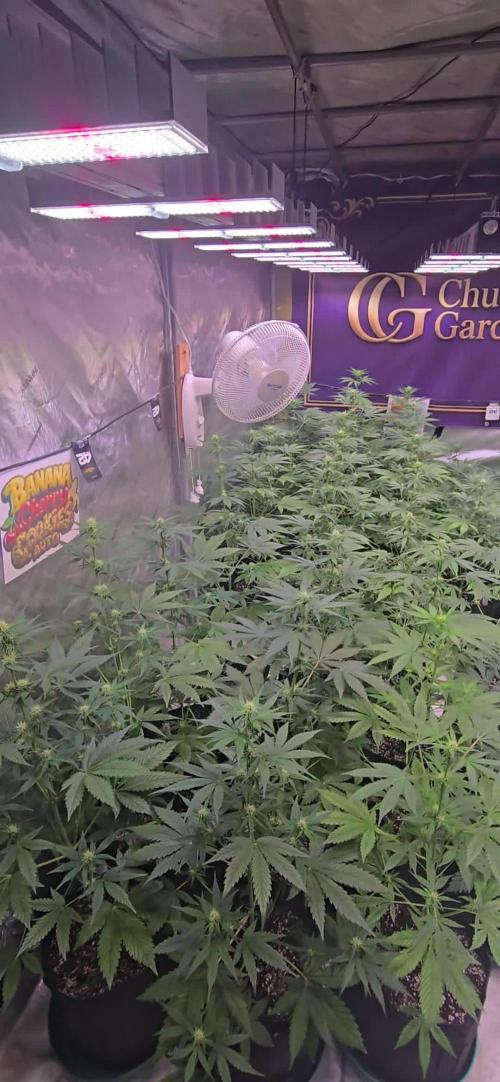
What up Fam, I apologize for the late update. Been away for 2 weeks from the ladies and my son who was watching them did amazing, as I came back to an absolute forest. The plants almost tipped in size which is crazy the growth they had while I was gone. I started adding bloom nutes and did a defoliation and lollipop this week. I'd normally start my training around week 3 but over all they're happy and healthy as can be. Let's Go Happy Growing.

Likes
20
Share


@Basementganja
Follow
Plucked a few leaves that were looking at me funny ;) Not much to do!
Smells of sweet berries, after a fresh rainfall.. Smells amazing!
Watered with 2.5 gallons of the above listed nutrients, every 5-6 days. (when the soil becomes 95% dry)
10% of the solution watered runs out the bottom of the pot, and is removed with a wet-vacuum.

Processing
Likes
6
Share


@Growers4life
Follow
So we had a long hard battle with spidermites over the last few posts and im under the impression they are gone and i won the war with them as of recently tried a bunch of things commercial organic nothing worked so i made a concotion of tea tree and Eucalyptus essential oild and a small amount of soap and that seems to have worked . They are showing small buds. They have been through a tough two weeks thats why i havent posted. As of today they are recovering greatly and should be back to full health in a week or so then they can focus solely on budding. Ive also tooken quite a few clones and topped them as im going to be attempting a sea of green next and will be starting a grow cycle for those.
Likes
12
Share


@cookingwithninja
Follow
day 49 just pure water phed down.
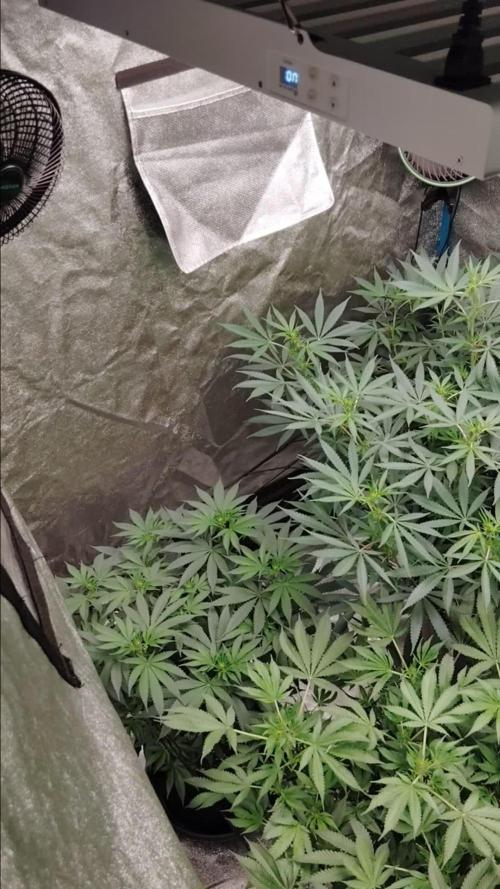
it is day 51, morning before lights on, I might chop today. I use a zero water filter pitcher got off walmart. My humidifier is only a sonic wave. If you use regular tap water it will get gunky in a sonic humidifier. If you have a heat humidifier that boils the water the mist should be clean. These are the 2 types of water humidifiers. Researching best water filters this "zero water" also comes with a free ppm meter! yay! Other water pitcher brands; the water still has ppm. So water misted will still have ppm contamination. You can easily used distilled water only, and reverse osmosis. I just fill a 4gal office water jug with the pitcher and fill my humidifier when needed. I do not use a humidifier in my entire grow up to this point when I chop, I need the perfect rh or this whole effort can fail. growing up to this point only requires 20% effort, chopping now for the 2 weeks dry is this 80% of crucial determination, succeed. A lot of tasks are required today for a clean chop. I feel confident, observed my cross seeds with pink paradise and one with a slightly open caylex looks dark enough for successful germination. I figured 8-16 seeds may be created, 3-4 buds were potentially pollinated. Many growers don't understand when creating genetics with female/female there is a slight chance of herm. You lose 50% of your genetic function. Just water last 2 days, no humic no folvic, 1st time entire grow ha!
There is a lot of cleaning to do, remove the trees, clean the entire tent and environment with bleach water, hacksaw.
I am very proud of my grow. I have sampled 3 of the strains, dr. thunder legit made my lips numb but it could have just been the terps removing my skin cells from the sticky filter, no lie. This is my best grow to date. I did this for you, and to document hype or not under the best conditions I could give my plants, full max potential, although I wish I had more lights, I am not looking for industrial lol, this is how I grow. Learn a lot on youtube and podcasts there is many good content and I may dab into it. You can have a room full of growers and you have 1 seed in your hand, they will all tell you that their way is correct ;) and the best way. Oreo is stinky AF, Bridal is just amazing glad its massive, just not into sativa but the test seemed slight sativa with majority indica, pink untested, dr, thunder just a lip numming plant aha, its very nice, all 4 amazing appeal like advertised, and excited for next run. Either crosses from this or other copycat genetics.
I will give you beautiful glamout shots today, the sizes of the plants, My guesstimate bridal 1lb, thunder 1lb, pink, 0.4lb, bridal 0.5, I am ambitious off 640w lm301h, and 4x 20w blurples daisy chained.
day 51 4 chopped see you in a few weeks :D


Likes
98
Share


@SlowpokeFuegobud
Follow
Welcome to the spectacular world of the Fastbuds photoperiodics!! 😎 They're like us!
🌱 🌱
Preflowering on day 35!! 🌺 Switch 12/12 was on day 25..
Week 3 you can see what happens when I don't adjust my pH.. 😇 From now on RO Conditioner and also pH minus! 💧
I popped the two remaining seeds, after I effed up one in the last grow. 😅
@Fast_Buds here we goooooo!! 😘 🚀
_______________________________________________________________________________________________________________
Setup:
140x70x200 cm Spiderfarmer tent
2x Monkey 16W fans (not oscillating)
1x Secret Jardin 30W
1x box fan 50W oscillating (on lowest level)
LED
Full Spectrum 320W AGLEX AGL-320W-MA
5,6 kg
foldable, dimmable
864 pieces Samsung LH301H
864umol/s
2,7umol/J
full spectrum white + RED 660nm + IR 740nm
wavelength range 380-780nm
covering 3x4ft
Green Buzz Nutrients https://greenbuzzliquids.com/
❗ Use code GD42025 for generous 25% discount (for orders of minimum 75€)
Biobizz Lightmix
Carbon Active Granulate Filter 125/360 cm³/h
PrimaKlima exhaust EC 125-400/240 cm³/h
Likes
52
Share

@Hempface86
Follow
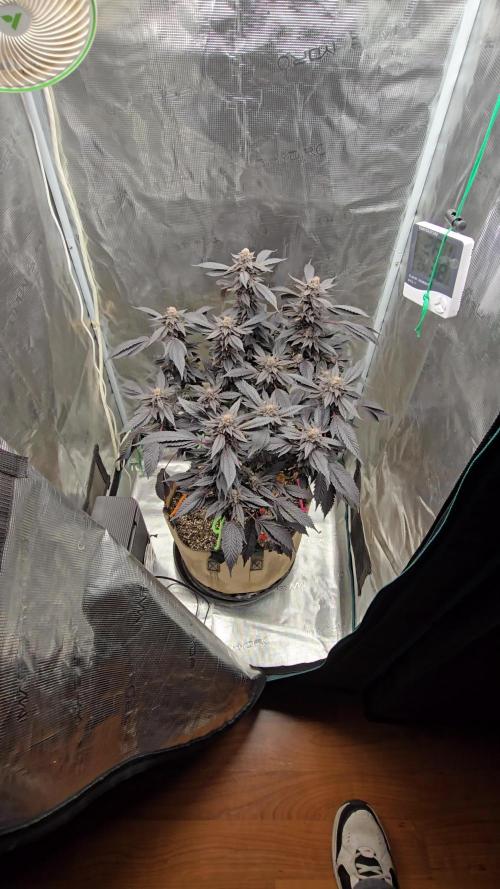
This girl is nearing the end... Very happy the buds are the hardest.I have ever felt.. looking forward to this one.Hope everyone is doing well, happy growing ✌️

Likes
18
Share


@Chronicbastard
Follow
I have been really Busey with work so I missed last week.not really much to say though. There wasn't much stretch with these girls and only one is growing normal.the genetics are all over the place.i have been growing in pretty optimal conditions beside have 40 percent humidy through out my house.they all do look pretty nice though. I can probably squeeze 5 zips out of 4 of them.

Likes
15
Share


@IsseyBukkake
Follow
Week 2 has gone just as well as I'd like it too!
I had an accident during the week where I had dropped a sticky bug trap on one of my girls, this led to me accidentally ripping off a fan leaf and a half, but she seems to have come out of it just fine! (Thankfully).
I have been feeding 1/3 strength nutes the past few feeds, stepping it up from 1/4.
I will be watering until I see runoff from now on to prevent nutrients from building up in the coco.
Update(day 15, 4/12/20)
Today I purchased a new oscillating fan, co2 bags and a new hygrometer that hooks up to my phone and shows me stats.
The girls have been putting in a lot of work over the past 24 hours.
I also had a Purple Punch photo seed sprout today which I may be turning into a mother plant. I will be starting a diary for this girl too.
Update (Day 16 5/12/20)
Second purple punch photo popped today, going to keep 1 inside and give the other to my mom to take care of.
The girls got their first 1/4 dose of calmag today fed at 6ph due to all the nutrients settling there.( I do have ph +/- but I'm going to try run this whole grow at 5.8-6.2.
Update (Day 17 6/12/20)
Plants seem happy today.
Fan leaves producing a the pre-existing nodes are starting to shoot out quite rapidly.
Unfortunately, my streets power went out today for ~90 minutes, I opened the tent, windows and doors to get any light in I could, thankfully the power came back on shortly after.
I fed the girls today with very little run-off(I'm trying to perfect the amount of water they need).
Update (Day 18 7/12/20)
The girls have jumped up over night!
I wont be feeding today as I'd like the coco to dry out quite a bit more.
Update (Day 19 8/12/20
Gave the girls a small feed today with very little run-off
Everything seems to be going well so far, I'm very thankful!
Update (day 20 9/12/20)
Everything is going pretty well today.
I will not be feeding as the increased humidity has kept the coco more moist than usual.
Will be feeding full strength nutes tomorrow!
Thanks for stopping by, HMU with any questions or tips you have.

Likes
7
Share

@sunshinegroww
Follow
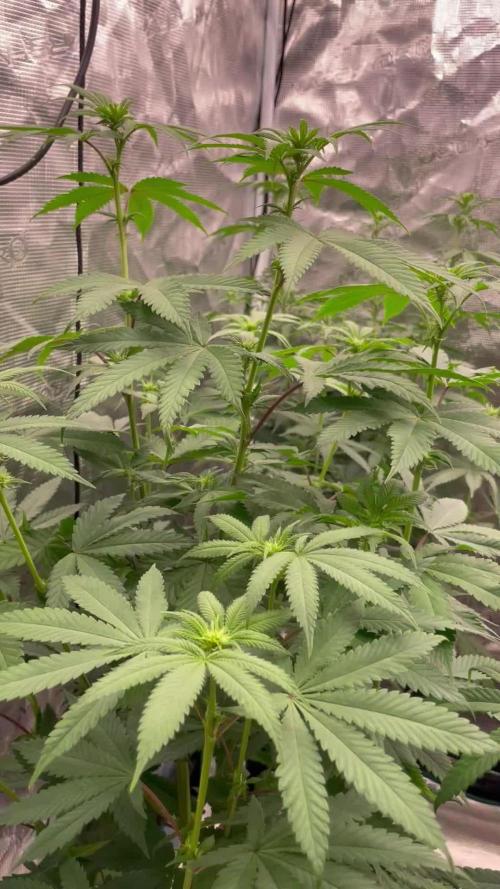
She is beautiful so far so good just want feed and thirsty in few day will clear ber bush

Likes
52
Share


@DogDoctorOfficial
Follow
Let's realign our cosmic compass and embark on a harvest report for our magnificent Cosmos F1, a pure CBD strain that has taken us on an extraordinary journey. Brace yourself for cosmic revelations and interstellar delights!
After an impressive 11 weeks from seed and 7 weeks of flowering, the time has come to witness the cosmic culmination of our efforts. I carefully hung the entire Cosmos F1 plant to dry, allowing the cosmic energy to infuse every inch of this botanical marvel. It's a sight to behold, with majestic branches reaching for the cosmos, reminiscent of a cosmic dancer frozen in time.
As our cosmic queen gracefully dries, her vibrant hues continue to amaze. The shades of green, intertwined with delicate hints of purple and gold, are a testament to her genetic splendor. It's as if she has absorbed the cosmic essence of the universe, transforming it into a visually stunning spectacle.
Now, let's talk about the cosmic power of CBD. Our pure CBD strain holds the key to a transformative experience. With minimal psychoactive effects, this cosmic treasure offers a realm of therapeutic benefits. It's like a cosmic massage for the mind and body, soothing and relaxing, allowing us to explore the depths of cosmic tranquility.
The decision to hang the entire plant for drying is a testament to our dedication to preserving the cosmic integrity of our harvest. By allowing the branches to hang freely, we encourage a slow and controlled drying process, ensuring that the cosmic essence remains intact. It's a ritual that honors the plant's journey, preserving its cosmic magic for us to enjoy.
As we eagerly await the cosmic transformation, let us express our gratitude to the celestial forces that have guided us on this cosmic odyssey. The cosmos has aligned to bring us the extraordinary Cosmos F1, a gift from the cosmic garden gods themselves. We extend our heartfelt appreciation to the cosmic harmony orchestrated by @James and Royal Queen Seeds.
In the coming days, our dried cosmic buds will be ready for the next stage of our journey. From cosmic concoctions to cosmic culinary delights, the possibilities are infinite. Imagine infusing the cosmic power of CBD into soothing teas, cosmic creams, or cosmic confections. The universe is our canvas, and with our cosmic harvest, we can create cosmic masterpieces.
As we bid farewell to our Cosmos F1, let us cherish the cosmic memories we've shared. The vibrant colors, the pure CBD power, and the cosmic connection we've established with the universe. May our future endeavors be as cosmic and awe-inspiring as this one.
Until we meet again, my cosmic friends, lets keep exploring the cosmic wonders, nurturing our cosmic gardens, and let the cosmic energy guide our cosmic creations. May our harvest be abundant, our cosmic experiences be enlightening, and our cosmic journey be filled with celestial blessings.
As always thank you all for stopping by and for supporting me on this journey, i am super passion about growing and fell blessed to have you all with me on

Likes
5
Share


@Momgrowsthechronic
Follow
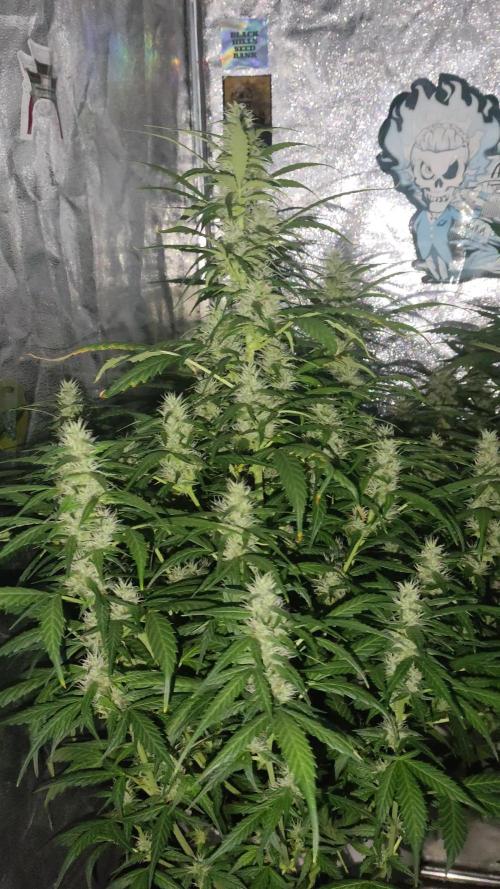
Welcome to the end of Week 7, Day 49 of the Fast Buds replenishment grow. The Lemon Pie Auto strain is turning out to be a beauty as usual with the Fast Buds genetics. The tallest two plants have topped out at 28 inches or 71 cm tall. I believe this strain grows anywhere from 70-120 cms tall so I am on the low end of what these plants can do. But the bud sites are decent and the buds themselves are putting on steady weight weekly. I have increased the fertilizer again in Week 7 to five (5) mls per gallon and they are tolerating it incredibly well. I rarely use this much fertilizer when growing autoflowers but Fast Buds strains are notoriously greedy and I love it! I can smell the plants starting to ripen and I can’t wait for this harvest- almost there…until next time. 🔜
Likes
Comments
Share


Likes
19
Share


@Wenz004
Follow
EC schrittweise auf 1.3 - 1.4
Die ersten 4 Tage im Video kaum Wachstum (war unterwegs)...Blumat war verstopft...Blätter sind unheimlich dünn geworden und die untersten großen verwelkt...ab Mitte der Woche 4 konnte ich eingreifen...danach bissl manuell LST (mit der Hand gebogen) betrieben und entlaubt...bissl später scrog Netz spannen und Pflanze schön in die Breite ziehen. Im Großen und Ganzen hat sich die Pflanze wieder schnell erholt und gedeiht weiter.
Heute auf 12h umgestellt (bin schon ganz aufgeregt...SF1000 raus und SF2000 rein(füllt die gesamte Breite des Zeltes aus😬)...zunächst ca. 45 cm Abstand und 80% trotzdem Photonen schon ca. 40% mehr...in paar Tagen gehe ich auf 100%...habe auch Seitenlampen (Niello T8) bereits installiert aber noch nicht eingeschaltet...evtl. wird das zuviel aber ich experimentiere halt gern...3 Optionen...die Pflanze geht dann richtig ab...Sie geht ein...oder es beeinflusst nichts ausser Stromrechnung.
Likes
144
Share


@roro_204
Follow
For about a week now the nights have gone 12/12
I put them at 1000w in the beginning but they became too hot as they grew taller and started burning the tops of my plants.
I switched the lights to 750w until i finish setting up the inline fans bringing in the natural cool air from outside.
im hoping that way the lights wont burn my babies.
With some help I did some light, minor "lollipopping" and defoliation on all plants.
I want to see how the plants react then next week I may continue.
So far the plants are enjoying their new feeds.
Likes
147
Share


@MrJones
Follow
MrJones Black Berry OG
🔹🔹🔹🔹🔹🔹GOALS🔹🔹🔹🔹🔹🔹
🌞Flowering Environment - 75/80℉ and 50% Humidity
💧 Feeding - Advanced Nutrients Bloom Regiment - Great APP!
🍃Training / Added the second trellis last week, it is doing a great job with support, SCROG process makes it hard to defoliate the plants.
🕷️ IPM - Will be using Green Cleaner" 1 OZ per Gallon, and CannControl from Mammoth alternating between product each month for Integrated Pest Management.
💡Mars Hydro LED / Veg TS-1000 / Flower 480W FC 4800, this light is just performing very well!
🔹🔹🔹🔹🔹🔹🔹🔹🔹🔹🔹🔹🔹🔹🔹🔹🔹🔹
📝 Rambling - With week 14 here, will be the last week of nutrients and will be starting with PH H20, the buds continue to get fat!
🔹🔹🔹🔹🔹🔹🔹🔹🔹🔹🔹🔹🔹🔹🔹🔹🔹🔹
▶️ Friday - 04.09.21 / Feeding 40 OZ of Advanced Nutrients
▶️ Saturday - 04.10.21/ Feeding 40 OZ of Advanced Nutrients
▶️ Sunday - 04.11.21/ Feeding 40 OZ of Advanced Nutrients
▶️ Monday - 04.12.21/ Feeding 40 OZ of Advanced Nutrients - Thrdr girls are getting PHAT! I was a bit concerned a few weeks ago but now I am just as happy as can be!
▶️ Tuesday - 04.13.21/ Feeding 40 OZ of Advanced Nutrients
▶️ Wednesday - 04.14.21/ Feeding 40 OZ of Advanced Nutrients
▶️ Thursday - 04.15.21/ Feeding 40 OZ of Advanced Nutrients
🔹🔹🔹🔹🔹🔹🔹🔹🔹🔹🔹🔹🔹🔹🔹🔹🔹🔹
📜 Cultivar Information - We have created this strain by crossing the best Black Domina available with Very Berry and our own Lost Coast OG Kush, this plant produces large colas with a super intense sweet berry flavor with a sweet-smelling aroma that varies from fruit and berries to sweet candy. This lady offers tight internal stacking giving a perfect structure for those super heavy colas, which is perfect for growth both indoors and out, if grown outside she is fairly resistant to mold and powdery mildew which is a real bonus with such large colas.
🔹🔹🔹🔹🔹🔹🔹🔹🔹🔹🔹🔹🔹🔹🔹🔹🔹🔹

Likes
10
Share


@EVERYTHINGFRIEDISGOOD
Follow
Day22 both early flowering with healthy with big eater (1000ml per day) . accident broke big branch on strain#2 . Now I push nutrients to 600ppm on same nutrient ratio

Likes
4
Share

@IndigoMist8
Follow
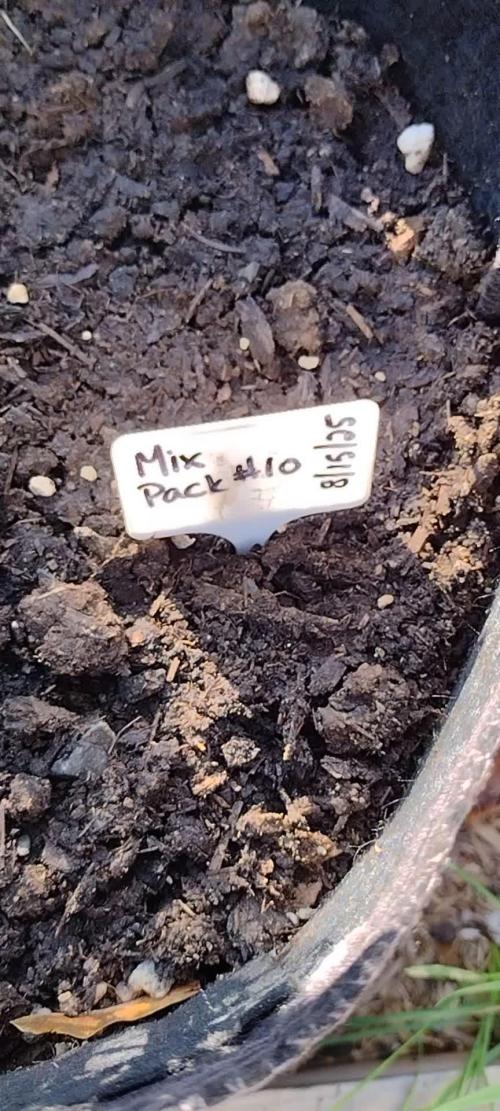
Still hanging on, from neglect mentioned in other diary. Temps are dropping fast and she will be harvested soon.
Likes
Comments
Share


@ScouseCityLX
Follow
Week 1, first time using the custom made DWC bucket, should get slightly longer between bucket changes now.
