
Likes
99
Share
@BudXs
Follow
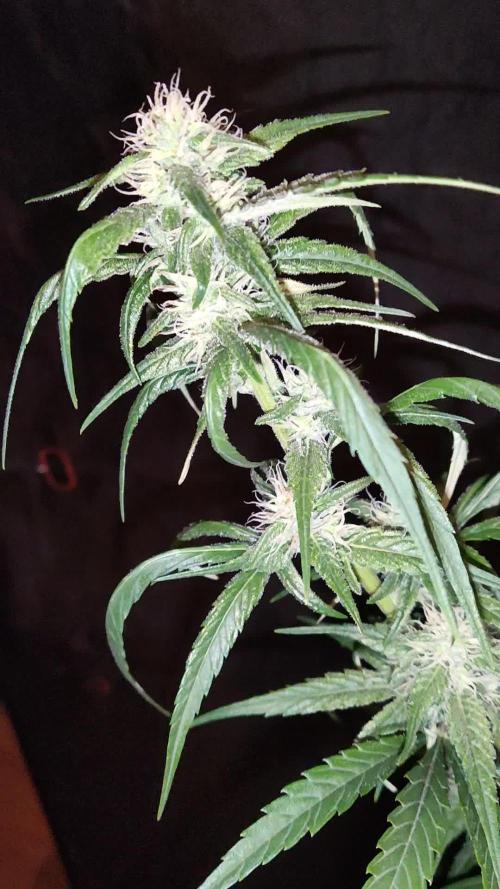
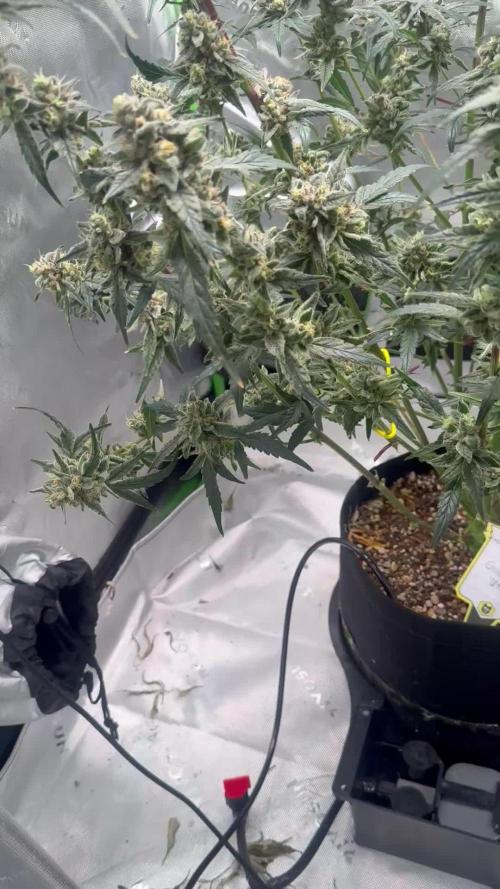
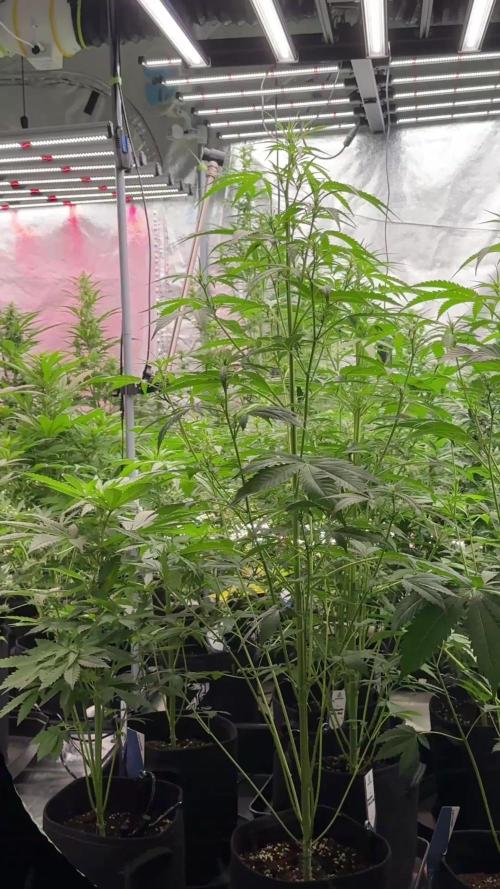
Coming down to the last few weeks to final harvests. Bruce banner and slurricane mothers remain as do 2 x slurry daughters, 4 x bb daughters, and 2 x FFT testers. The season has been good to me, the Scroggernaut has been good to me. Once these buds are in jars, the room will be cleaned, and I will break for the winter. Improvements next year: mini split AC new strains under belly lighting
Likes
43
Share
~ GG4 SHERBET FAST FLOWER by FastBuds ~ Well fam, here we go again with another epic strain from FastBuds Fast Flowering stable. After having such tremendous success growing their Gorilla Cookies Fast Flower outdoors last year, I've decided to run another of their fast flowering strains outdoors this year... GG4 Sherbet Fast Flower! The best description of this awesome cultivar comes directly from my friends at FastBuds which is as follows: "Bred from extremely potent and flavorful Gorilla Glue and Orange Sherbet genetics, GG4 Sherbet FF (Fast-Flowering) takes all the best traits to the next level, offering a high-yielding strain that can produce up to 600 g/m2 in a 7-week flowering time. This super resilient Indica-leaning hybrid thrives indoors and outdoors, and in all types of climates while producing mouth-watering sweet, fruity, spicy and earthy terps that translate into a delicious sugary hazelnut aroma. Expect an extremely relaxing and overall happy effect that’ll leave you with a huge smile from ear to ear. It’s the perfect strain for growers of all levels of experience seeking low-maintenance yet highly productive photoperiod varieties that deliver quality and quantity without extra effort. GG4 Sherbet FF grows chunky buds with long dark orange hairs and spade-shaped calyxes that get encrusted with trichomes by harvest time, giving them a gorgeous silvery-white appearance. This medium-sized photoperiod can reach up to 200 cm in height and yields up to 650 g/m2 while developing that typical hybrid structure. GG4 Sherbet FF grows with a stocky, bushy appearance, developing one sturdy main cola and fat side branches that support huge yields without much effort. This super-fast variety produces distinctive light-green buds with a high bud-to-leaf ratio, making your trimming sessions a breeze. It’s a top-notch resin producer that doesn’t need much maintenance and will thrive in almost every climate, rewarding growers of all levels with extremely flavorful resin that makes for outstanding hash end extracts." ________________________________________________________________________________________________________________________________________________________________________________________________________________________________________________________________________________________________________________________ The Setup: This is going to be an outdoor grow, but I have started the GG4 Sherbet Fast Flower indoors as our weather is still too cold to put her outside (nighttime temp's dipping regularly into the 30's℉). The plan is simple... let her grow inside under a 19/5 light schedule until the nighttime temperatures stay above the mid 40's℉, at which point she'll be moved outside and transplanted into the soil which I have already setup and inoculated with beneficial microbes, and then let the fun begin!🤪💚 ________________________________________________________________________________________________________________________________________________________________________________________________________________________________________________________________________________________________________________________ Weekly Updates: 7/25- Well folks... Here we go into the first full week of flower for the FastBuds GG4 Sherbet Fast Flower and this lady is not holding back! The weather continues to be hot and dry, with only an occasional passing rain shower maybe once a week, and as a result the daily watering continues after sunset. 7/27- The GG4 Sherbet FF is pretty much on autopilot now. All I'm doing is regularly watering her and checking daily throughout her foliage for yellow or dead shade leaves that I remove. 7/29- Passing showers all day yesterday took care of my watering duties, which resumed today with 5g of well water from the garden hose after the sun went down. 7/31- With thirteen days in flower behind her, the GG4 Sherbet FF is only going to get more impressive as the weeks go by now and I can't wait!🤩 Thank you for checking out my diary, your positive comments and support make it all worthwhile! 💚Growers Love!💚😎🙏
Processing
Likes
11
Share
Day 57. Nutes increased for more growth hopefully. Day 58 notice alot what looks like thc from leaves and hairs. Day 59 to 63 see more orange hairs and trychomes. See videos Average 200ml water everyday.
Likes
44
Share
@I_and_I
Follow
Found two females, plant I topped before holiday going well, mate currently looking after them, sending updates to me on holidays, all going very well, mate is bossing it looking after them
Likes
7
Share
Likes
12
Share
@Bassmop
Follow
Topping bei der Runtz ist gut gelaufen und alle Mädels zeigten ihre Pistolen. 😊 Pro Pflanze gab es 1,5l Wasser. Licht wurde auf 50% erhöht.
Likes
5
Share
Deutsch: 🌿 Grow Diary – Blüte Tag 28 🌿 Heute genau ein Monat seit dem Umstellen auf 12/12 – wir sind offiziell am Ende von Woche 4 angekommen. Diese Woche haben wir ein leichtes Lollipopping gemacht ✂️ Alles im unteren Bereich, was kaum Licht abbekommt, wurde entfernt, damit die Pflanzen ihre Energie gezielt in die oberen Buds stecken können. Die Struktur ist jetzt deutlich cleaner und luftiger, was für bessere Lichtverteilung und Luftzirkulation sorgt. Die Buds entwickeln sich jetzt immer deutlicher und starten langsam in die richtige Massephase 🔥 Die Pflanzen wirken stabil, gesund und reagieren bisher genau so, wie man es sich wünscht. Ab jetzt wird’s spannend – die nächsten Wochen entscheiden über Ertrag und Qualität. 📅 Status: Blüte Tag 28 English: 🌿 Grow Diary – Flower Day 28 🌿 Exactly one month since switching to 12/12 – we’ve officially reached the end of week 4. This week we did some light lollipopping ✂️ Everything in the lower area that wasn’t getting much light was removed, so the plants can focus their energy on the top buds. The structure is now much cleaner and more open, improving both light penetration and airflow. The buds are developing more and more and are just starting to enter the real bulking phase 🔥 So far, the plants look stable, healthy, and are responding exactly how you’d want them to. Now it gets interesting – the next few weeks will define yield and quality. 📅 Status: Flower Day 28
Likes
18
Share
@Sti_Cazz
Follow
Another week of Veg gone and trying to understand feeding.... My last grow (the one on the balcony) i overwatered at the start so I made sure this time I would not make the same mistake. I dgave a bit more root booster and found some organic Molasses that i added to the 1st feeding. I know its now considered 'food' but more as an activator of microbes in the earth but I'm sure it can't hurt right? Quite some growth this week, so tried to LST it down a bit... Buuuuut I'm not happy with it, I can forsee spacing problems (should have maybe planted the seeds off-set to one side of the pot to get a better growth going....I'll probably undo the tie-down and just let it grow.
Likes
2
Share
Remember that, however you are played, or by whom, your soul is in your keeping alone. Even though those who presume to play you be kings or men of power, when you stand before God, you cannot say, 'But I was told by others to do thus,' or that virtue was not convenient at the time. This will not suffice. Remember that. Day:18 84°F and 65% RH (VPD) for the vegetative stage. Approximately 1.15kPa(assuming leaf temperature is about 2°F cooler than the air), which falls right into the ideal vegetative sweet spot (0.8kPa to 1.2kPa). At 1.15kPa, plants can draw water and nutrients efficiently without risking stress or wilting. It keeps the leaf pores (stomata) open, allowing for ideal carbon dioxide intake and maximizing vegetative growth. VPD is determined by the leaf's temperature, not just the ambient air. Because leaves usually run 1° to 3°F cooler than room air under bright grow lights, my actual VPD will be slightly lower, closer to the 1.0kPa mark. As she transitions from vegetative growth to flowering, one can gradually lower the humidity (to around 45–60%) and drop temperatures slightly to prevent disease from settling inside dense buds when they appear. Night:6 At 70°F and 60% relative humidity, Vapor Pressure Deficit (VPD) is 0.86 kPa. This is right on the cusp of whats optimal for the vegetative stage. During the nighttime, plants generally close their stomata and undergo cellular respiration rather than photosynthesis. Transpiration slows to a near stop, making VPD less critical at night than during the day. However, maintaining a nighttime VPD between 0.8 and 1.0 kPa is highly beneficial in that it ensures the air is dry enough to prevent powdery mildew or bud rot, but moist enough to keep the plant from undergoing unnecessary stress. This range keeps the environment comfortable for cellular processes and prevents large atmospheric swings. Keeping it all flowing. (Not pushing them yet, these are photoperiods) The optimal soil (root zone) temperature for cellular root respiration and nutrient uptake in cannabis is between 68F & 72F This narrow range balances biological energy production (cellular respiration) with the dissolved oxygen levels in the soil, maximizing plant growth and health. Warmer soils hold significantly less dissolved oxygen. When soil temperature exceeds 74F oxygen depletion occurs, inhibiting cellular respiration almost entirely, At 68-72F root cells generate optimal adenosine triphosphate (ATP) via respiration to power root-tip elongation and the active transport of water and nutrients. Too Hot (Above 78F) Root respiration increases, demanding more oxygen, while the water's oxygen-carrying capacity drops. This creates a prime environment for anaerobic pathogens and Pythium (root rot). Too Cold (Below 60F) Root metabolism and cellular respiration slow to a crawl. This severely impairs nutrient and water absorption, leading to yellowing, wilting, and phosphorus deficiencies. A lot depends on whether it's automatic or photoperiod; with photoperiod, there is not as much of a need to push "hard" as the real countdown only begins once the flower is initiated. Automatics, on the other hand, the chronological "clock" begins ticking the moment the seed germinates. It is of critical importance that the seedling growth gets off to the races, understanding that early growth is like compound interest, which will pay off come harvest. This reality is why getting autoflowers "off to the races" early on yields such exponential benefits. The "compound interest" is directly related to the surface area of the leaves. Larger, faster-growing seedlings process more light and build bigger root networks early on, which translates into an explosion of vertical and lateral growth during their short vegetative window. The margins for error are so thin with autoflowers; this early-stage momentum depends on several critical practices. Seedlings exposed to increased atmospheric CO2 levels early in life will develop at an increased rate. To effectively "extend" or optimize the capacity of Photosystem II (PSII) for increased photosynthetic efficiency. In standard oxygenic photosynthesis, Photosystem II (PSII) is naturally limited to the red-light spectrum, peaking at 680nm. Extending its light-harvesting capacity past 700nm into the far-red region requires bypassing the natural limits of standard chlorophyll a. Adding 730 nm (far-red) LEDs alongside standard red/blue lights has been shown to increase canopy photosynthesis by 20–30% in several crops by acting synergistically with shorter wavelengths. However, the limitation is that excessive, pure IR/Far-red light (without accompanying red light) can trigger the "shade avoidance response," causing plants to grow tall, weak, and spindly rather than robust. Utilizing infrared light (specifically the 700-750 nm far-red range) is a viable method to boost photosynthetic efficiency. It acts as a bridge to allow PSII to utilize a broader spectrum of light, breaking the traditional 700 nm barrier. UVR8-mediated signaling (often in conjunction with CRY proteins) triggers protective mechanisms that maintain the stability of the photosynthetic apparatus (including LHCII and reaction center proteins), thus ensuring that the efficiency of Photosystem II remains higher in UV-B-exposed plants compared to plants lacking this receptor. ΦPSII indictates the rate of electron transfer from water to plastoquinone, which drives the production of ATP and NADPH. There is a close link between ΦPSII and the true rate of CO2 fixation (Φ*co2). ETR stands for Electron Transport Rate. It measures the speed at which electrons are moved through the thylakoid membranes in a plant's chloroplasts during the light-dependent reactions of photosynthesis. Infrared light (particularly Near-Infrared or NIR) improves cellular energy by interacting directly with the electron transport chain (ETC) in mitochondria. This process boosts adenosine triphosphate production, which acts as a metabolic coefficient multiplier by accelerating enzyme activity dramatically. Extend then multiply. Far-Red photons interact with plant photoreceptors to accelerate the plant’s biological "clock" or trigger a shade-avoidance response. Autoflowers don't use the plant's biological clock, although the IR will initiate a shade avoidance and make them stretchy. You can just add equal measures of 660nm-680nm to negate the shade avoidance effect. Replacing nights' "darkness" with a combination of IR+ and 660nm. Because autoflowers don't require a dark period to flower, many growers just blast them with light. 18/6 24/0. However, this ignores the plant's metabolic rhythms, where daytime photosynthesis (light reactions) must be perfectly balanced with nighttime carbon fixation and assimilation (Calvin cycle) to avoid bottlenecking plant development. Cellular respiration is a 24/7 process, but it can only function while the plant has the free oxidative capacity to do so. A 100% photosynthetically active leaf cannot perform cellular respiration. The viral trend of defoliation of every leaf that isn't "getting enough light" is of great detriment overall, putting 100% of the cellular respiratory "workload" and responsibility on the 0/4/6 hours of darkness in sub-optimal conditions for enzymatic activity. Photosynthesis captures nearly 100% of the initial energy as carbon, while cellular respiration is the process that unlocks 90% of that captured energy into usable ATP so the plant can use it. Respiration is considered only roughly 30% to 40% efficient. It captures enough of the potential energy in glucose to synthesize around 30 to 38 ATP molecules per glucose molecule. The remaining 60% to 70% of the energy in the sugar is not captured in ATP; instead, it naturally escapes into the environment as heat, which helps regulate plant temperature. In plants, the primary enzymes of the Electron Transport Chain (ETC) and the ATP synthase complexes are typically adapted to function optimally in warmer temperatures (roughly 77°F to 95°F, depending on the specific plant strain). As temperatures rise within this physiological range, molecular collisions increase, speeding up respiration and ATP production. The cannabis plant has a branched respiratory pathway. During heat or cold stress, plants activate Alternative Oxidase (AOX). AOX burns sugars to dissipate energy as heat rather than coupling it to ATP production. This pathway actually functions optimally at elevated temperatures to help protect the cell from the damaging build-up of Reactive Oxygen Species (ROS) during heat stress. Enzyme activity generally scales with heat; there is a strict biological limit. If canopy temperatures in a grow room exceed 104°F, the enzymes and their supporting lipid membranes lose stability. Not saying you need to go crazy, just optimize nights the same as we optimize days. Phosphorus is the driving force behind early seedling development. It acts as the "energy hub" of the plant, directly driving cell division, robust root growth, and the creation of DNA. Without an adequate, easily accessible supply early on, the plant's overall growth potential and final yield can suffer permanently.
Likes
13
Share
Some of you may have wondered: Why do I use CO2 at average 950 ppfd μmol/m2/s (moral flow)? The answer is quite simple. Because of lack of space in some regions of my cultivation area, I simply cannot keep the ideal distance to my Sanlight high-performance lamp, due to some height growth of various strains. And so some of the main colas have ppfd values of 1250 μmol/m2/s and even more... So this is how I manage to achieve and compensate for such high radiation levels even with a CO 2 balance. And I have to say, my strategy to avoid various light stress symptoms works just fabulously. In combination with CO 2 implementation, my babies are simply unbeatably insensitive to light. Thats it! Beginning of 3rd week flowering: Again feeding my babies by 36 hours fermented potions of Bio Tabs Kompost Tea PK-Booster (15 g pro Liter) and added: 5ml Orgatrex/Liter 1 Spoon of Bactrex 1 Spoon of Mycotrex 1 Spoon of Mycco-Vital 1 Spoon of Dynomyco A little tip for those who are interested in small modifications that have a big difference or influence - on the result - effect - beauty - health - taste! Before adding microorganisms or beneficial bacteria or Mycorrizae and Trichodermas, please use oxygen-saturated water. On the one hand, unwanted chlorine gases evaporate and the small world of the microbiome becomes even faster and more rewarding in compost tea to sprout. Last but not least for this week, I would like to introduce my reasons, why I prefer growing biologically and sustainably. First of all, it’s something which suits very well in these times/days we are living now. Sustainability is a big need and task for our planet. 🌎 Nature means life. Our home, the air we breathe and everything that surrounds us. Not just today. Hopefully tomorrow as well. Maybe I'm starting to protect our environment on a small scale, but maybe I can also make a big difference at all. If you change the way you look at things, the things you look at change... I thought about what’s the difference, between Mineral Feeding and Super Soil Feeding. It’s very easy. Biologically Growing is a similar process than the natural soil activities out there in the lap of nature’s. So plants has to work and interact with the microorganisms and microbiomic communities in the soil. So the plants will never get lazy like the lazy ones of mineral feeding growers. If you grow biologically, you will feed the soil first and the microorganisms will support every parameter next to your plant conditions. And that will generate an unbelievable spectrum of Terpenes and Trichomes you will never forget. It’s the same comparison, when you daily visit McDonalds and you eat only fast food. How does your body and mind react on this shit for money?!?! May I invite you to think about it… See you next week dear Growmies! Have a nice Weekend and take care… Peace out! Addendum for Day 53: At the moment we unfortunately have another winter onset here in Germany. This means that I am forced to take additional heating measures due to structural facts in order to be able to keep the temperatures constant. After all, just tonight the thermometer climbs again to -1 degree Celsius. In addition, my exhaust air system runs out of my bedroom terrace and I therefore grow winter and summer with the patio door open. Well, sometimes I experience real weather-related challenges. But all in all, no problem... "Where there's a will, there's a way." Addendum to pouring out the fermented PK tea: I always administer half a liter of lukewarm aerated water with 3.5 ml of cannazyme per liter to each plant. This means that the "root machine" is not supplied with supplies unprepared and the nutrient solution can thus also be better distributed in the soil. Since I also work with cloth shoes, I spray them evenly moistened everywhere with water that is also warm before pouring them out from the outside. This has the advantage that the moisture stays where it should: in the pot! ... I did the math today ;-) We are still in week 7 until this Friday. And week 8 starts on Friday! OMG... still so much time yeahh! Today my Fast Buds Sour Jealousy and Sweet Seeds Big Devil and Dark Devil Automatics arrived. I'm looking forward to it. This time Fast Buds next Time Sweet Seeds. Love them too. Very beautiful genetics. Today a review video of the beginning of week 3. At the time of the pictures, I had minor signs of nitrogen excess. (Light peaks first at the crown of the roof and then slightly continuing to the middle section.) I then painstakingly racked my brains as to why this could be. I found that very slight dry spots had formed and therefore the root found small accumulations of nitrogen that caused its problems. But then, when I carefully homogeneously checked the moisture content in the substrate, the problem evaporated again. However, they had not shown any loss of growth rate during this time. Nevertheless, they developed as expected. They Strawnanas had no problem with that. In the end, I always have a hard time killing them. But I guess that's the way things go. We live and die. We come and go. But it's not there yet. ;-) Tomorrow is day 56. Tomorrow’s updating day! Can't wait to see their progress. Have a good time and see you tomorrow… 🏽🕊️ 🏽 ☮️🕊️
Likes
19
Share
@MrWolfe
Follow
Got them all stripped down and moved the lights closer. Not going to top them next time, they respond so much more to supercropping. Let me know what you think, if you could take a second to go follow on IG I'll be posting more and more there as I get some stuff to teach people.
Processing
Likes
4
Share
@xavwav
Follow
pistols are beginning to turn amber. thrichome development increases each day. buds are starting to get bulky.
Likes
5
Share
Likes
26
Share
Bonjour à tous les padawans et maîtres jedis Jour 31 arrosage avec 2 litres d'eau ph6.3 à laquelle j'ajoute 4ml de rootboster cellmax, 3ml de cellmax bio organic bloom et 3ml de cellmax bio 8-2-2 par litre d'eau Jour 33 pratique de la technique du topping (voir video) je précise que si cette pratique simple combiné au pinçage d'apex (voir semaine précédente) est faite au bon moment peux offrir un très gros rendement même si le rendement n'est pas mon but principal ma curiosité me pousse à essayer ces deux techniques combinées. TOPPING (ÉTÊTAGE) Les plants de cannabis poussent verticalement. En le faisant, les feuilles nourricières et branches se mettent à pousser horizontalement ou en diagonale à partir de la tige principale. Le topping ou l’étêtage implique de couper la tige principale de la branche verticale entre les nœuds. Essayez de le faire avec des ciseaux ou une lame de rasoir stériles. En coupant la tige principale, deux branches secondaires vont se développer en devenant des tiges principales. Elles pousseront à la diagonale au lieu de pousser vers le haut, ce qui rend le plant plus court et plus facile à gérer. L’étêtage évitera au plant d’avoir une croissance ressemblant à un arbre de Noël. Cela aidera à donner au plant de cannabis une forme plus adaptée aux environnements de culture en intérieur. Vous pouvez continuer de le faire au fur et à mesure de la croissance des branches. Vous pouvez tailler la partie supérieure de chaque branche et faire pousser un plant bonzaï dément. Assurez-vous simplement de ne pas aller trop loin et de ne pas vous retrouver avec quelque chose d’incontrôlable. Certains cultivateurs recommandent d’attendre environ 30 jours dans la vie du plant avant de procéder à l’étêtage. Il fait subir beaucoup de stress et un jeune plant pourrait ne pas pouvoir le gérer. Nous vous recommandons aussi d’attendre une ou deux semaines après votre première session d’étêtage avant d’en commencer une autre. Jour35 arrosage avec 2 litres d'eau ph6.3 à laquelle j'ajoute 4ml de rootboster cellmax et 3ml de cellmax bio 8-2-2 par litre d'eau La plante récupère très vite de son topping
Likes
18
Share
@rockbo47
Follow
SUMMARY: Still continuing with early bloom nutes this week. I ran out of rainwater this week for a few days and had to make a batch with tap water. Had some issues with humidity and temps now that the RH has naturally increased due to the size and bushiness of the plants and so I have had to turn the dehumdifier on however this raises the temps and so its about finding a good balance. I did a heavy defoliation on day 44 stripping almost all fan leaves and any lower small shoots which wont ever get enough light. I also raised the light again so that it is 16" above the canopy of my tallest plant which is a few inches taller than the NL. To mitigate this I raised the NL up by a couple inches or so. DAY 44 -------- Sunday 14th February 11:45 I made 10L of early bloom nutes with dechlorinated tap water (no rain water left), 5L at a pH of 5.7 and 5L at a pH of 5.6. Sunday 14th February 18:00 I did a heavy defoliation on the NL stripping almost all fan leaves and any lower small shoots which wont ever get enough light. I also raised the light again so that it is 16" above the canopy of my tallest plant which is a few inches taller than the NL. To mitigate this I raised the NL up by a couple inches or so. I fed the NL 2L of early bloom nutes which produced 550ml runoff (28%). [24°C/46%] DAY 45 -------- Monday 15th February 18:30 I fed the NL 2L of early bloom nutes which produced roughly 800ml runoff (40%) I THINK, as I spilt a bit in the tent. DAY 46 -------- Tuesday 16th February 11:30 I made 10L of early bloom nutes with rainwater, 5L at a pH of 5.8 and 5L at a pH of 5.9. I forgot to turn the heat down over night and the humidity is at 56% currently. [22°C/56%] Tuesday 16th February 18:30 I fed the NL 2L of early bloom nutes which produced roughly 1L runoff (50%). Shes still not back to her normal intake before the defoliation which was only 2 days ago. I turned the dehumidifier on and set it to 45% as the RH had climbed to 62%. [22°C/62%] DAY 47 -------- Wednesday 17th February 12:00 I made 10L of early bloom nutes with dechlorinated tap water, 5L at a pH of 5.7 and 5L at a pH of 5.6. Wednesday 17th February 18:30 I fed the NL 1.7L of early bloom nutes which produced roughly 820ml runoff (48%). DAY 48 -------- Thursday 18th February 18:30 I fed the NL 1.2L of early bloom nutes which produced roughly 670ml runoff (56%). Shes still hardly drinking much so I will dial this down to 1L tomorrow. I adjusted a couple of ties to expose more bud sites. I had to move the light up again by 2 inches to accommodate for growth as it was sitting at 14" above the canopy. [24°C/52%] DAY 49 -------- Friday 19th February 18:30 I found the tent at 28% RH. No idea how that's occurred but I did notice it was hotter then usual this morning. I turned the dehumidifier of for a couple of hours and it jumped back up to 61% and so I will just set it to 55% RH. I fed the NL 1.5L of early bloom nutes which produced roughly 500ml runoff (33%) so it's looks like she may finally be bouncing back after the defol last sunday. [24°C/52%] DAY 50 ------ Saturday 20th February 11:30 The tent temp has been sat at around 23°C overnight somehow. The dehumidifier keeping the humidity around 45-50% seems to also keep the temps between 23-27°C. Saturday 20th February 18:30 I fed the NL 1.5L of early bloom nutes which produced roughly 600ml runoff (40%). Looks like i have a humidity problem and so ive reluctantly removed some more leaves from Jesus as she is bushy again after a week or perhaps I didnt defol enough. If I have the dehumidifier off the humidity is in the low 60s but if I lower it to like 45-50% then the temps stays too high between 24°C-33°C. [22°C/64%]
Likes
38
Share
So my struggles are finally paying off my girls went into flower!!! Northern lights- did some low stress training to bring main cola down away from light. Added some vinegar in bowls and shot glasses to grow tent to control these flying knats(which bite). Pineapple auto- she's in flower I'm just concerned with all the lower leaf issue's that it's going to affect buds. I've over watered this plant which started the leaf issue's at like 3 weeks. At week 4 I trimmed all the fan leaves off which put it in stress almost haulting all growth for a week. Oh and the knats! I will never use walmart soil again for my grows or house plants. The neem oil has really knocked alot of them out. So the leaf burn and star leaves began at week 5 and it was the only feeding i gave my plants with cal mag and within 2 days the throwing star leaves and burning began.. not sure if it was the cal mag or the knats being so bad at that time. But thru all of it this plant has been a fighter!! You can see in pics the new growth and bud sights are healthy so I hope she fights all the way to the end! I would like to thank Growdiaires and it's community for the opportunity to help and share with others. I appreciate all help, views, likes, comments and support. We all share a common interest and knowledge is power! Thanks again till next week.