


Likes
Comments
Share


@BelgianBudtender
Follow
Yo what's up growmies.
smooth sailing, no more leaks have sprung, the buckets have been recirculating nicely, it seems as if my mad idea to turn my DWC into an undercurrent RDWC mid flower wasn't so mad after all!
the plant bucket is as good as off limits now, its a whole lot of noodle, the roots in it have swallowed my InkBird Probe, which has been kept at a cool 19 degrees steadily. I'm happy i have an easy access bucket now, though, i noticed that if i do not aerate the reservoir, black smuts starts collecting on the bottom, so I put in some better air stones and we are good now.
As for the plant; after starting green sensation these things have become incredibly sticky and smelly, I still cannot place the smell! i like it a lot once i'm acclimated to it, but when first opening the tent it attacks your sniffer quite violently, this is not a stealthy strain, she is resinous and loud.
I think I am happy with my training and how she turned out with a few exceptions, next time, I'm growing following a guide, like Nebula Haze, whilst taking clones.
I know this is week 6 of flower, but honestly its more like week 3 or 4 of actual flower, hence why i waited so long to add PK to the mix, this girl took a while to hit puberty and start flower production after flipping to 12-12, Im not sure if its the strain, a fuck up on my part, or just nature being nature, she did seem to stretch after flipping and before starting flowers, so I'm going to guess it's one of those Sativa quirks where it all just seems to take...a.....little.......longer.
which is I will also set up a veg tent, sick of waiting for flowers! gotta keep that perpetual grow going, you know how it be.
Stay safe and keep growing

Likes
Comments
Share

@GasGrassOrAss
Follow
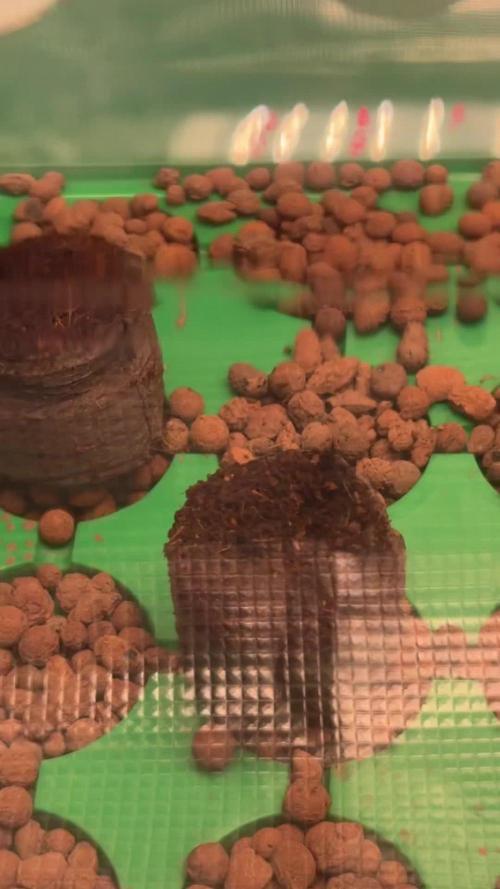
All 4 seeds popped, 2 were wicked, but straightened out within the first week. Had them in coco pucks and a dome, with saturated concrete perlite


Likes
24
Share

@BLAZED
Follow
Average conditions 12 days dry period:
Temps: 20.2 to 22.4 degrees
Humidity: 57.4% to 61.7%
Results:
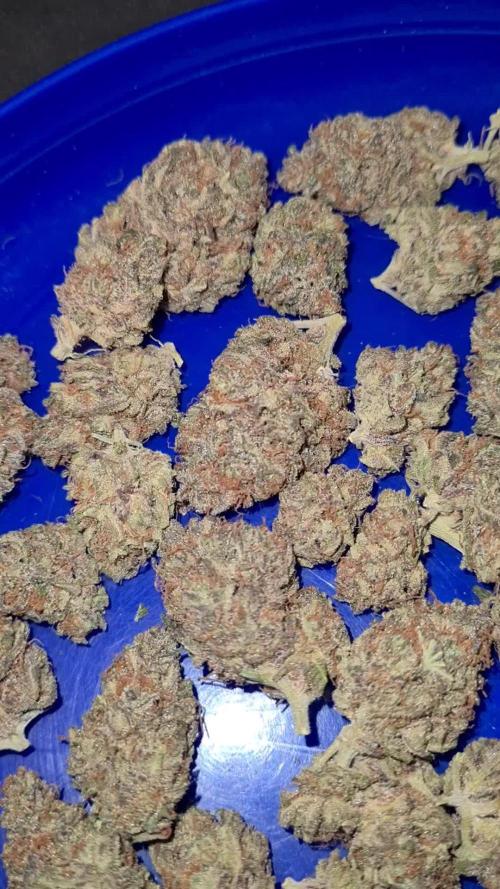
White Widow #1: Buds: 82 grams. Trim: 36.04 grams.
White Widow #2: Buds: 87 grams. Trim: 34.54 grams.
Total gram per watt: 2.22
Thanks for following this journey! See you in the next one!
(Will add smoke report soon)

Likes
51
Share

@Ganjin
Follow
☀️ // Day 14 🍁
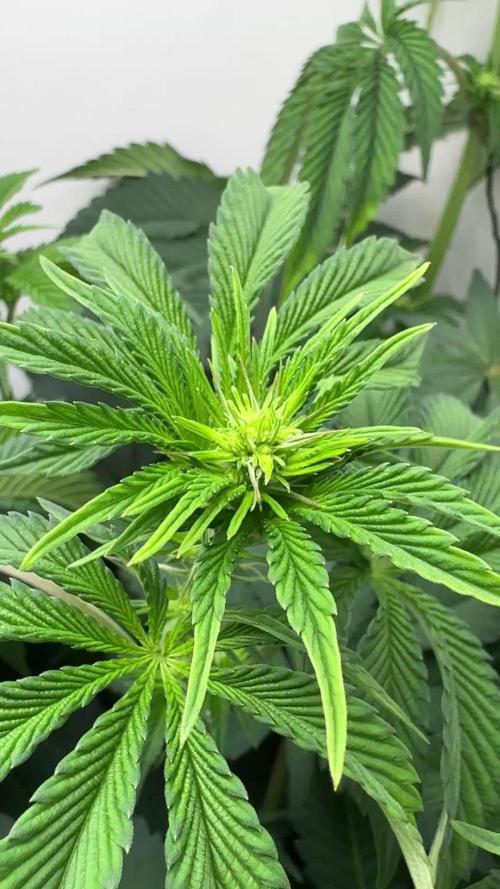
Yeah, about that stretch.. she is also a lenghty plant. She stretched from 30 cm (bend down!) to 70+ cm straight up. With means she more than doubled her size in every way possible. Which became a problem as you can see. Some leafs have very minor light burns and because of that, I needed to reduce the intensity from 100 % to 85 %. I maybe need to decrease it even further if she doesn't stop with it. My hopes are that with the lower intensity, she continues with her amazing journey. It's odd tho, that I have two plants after another in the VGrow that are just incredible stretchers. I just hope I reacted instantly enough but unfortunetely, I can't supervise her in the next 4 days because I am on a travel. She will explode in bud sites till then, I am sure.
She got 5 L water today, with 1 g of Bactrex and 20 ml of Orgatrex. This is the beginning of her 3rd week of flower and she hasn't got any Microorganism since the beginning of flower. This will give the soil a boost for the upcoming weeks!
💦 Watering: 5 L with pH = 6.4
💊 Fertilizer: Bactrex, Orgatrex, Epsom Salt
💡 Light: 850 PPFD at 85%

Likes
27
Share


@phobic94
Follow
De plantjes staan nu al een paar dagen in bloei. Ik heb ze paar dagen alleen maar water gegeven omdat ze wat donker van kleur waren nu geef ik weer voeding. Heb net mijn netje geplaatst en binnen paar dagen schakel ik over naar bloeivoeding.

Likes
28
Share


@m0use
Follow
This gul is getting Phat, ran into some NANNERS, got a few on the plant, picked em all off. Will harvest a week early probably. Excited to see if it makes any viable seeds if it pollinated at all, don't know if they would be sterile or how that works, as it was already pollinated by a female plant to be feminized in the first place. I do think I caused the nanners in this plant from giving it to much LST late into flower trying to dense up the buds.
the Humboldt Seeds webpage said its about a 9 week grow or 60-65 days till maturity at 30-60g/plant. So I am pushing it a bit already, I like the 13 week timeline just as a number, however I think it will be best to chop at 10 or 11 for this one. Will know if I don't post next Saturday as I will be waiting for the dry and yields.

Likes
8
Share


@Kawannabic
Follow
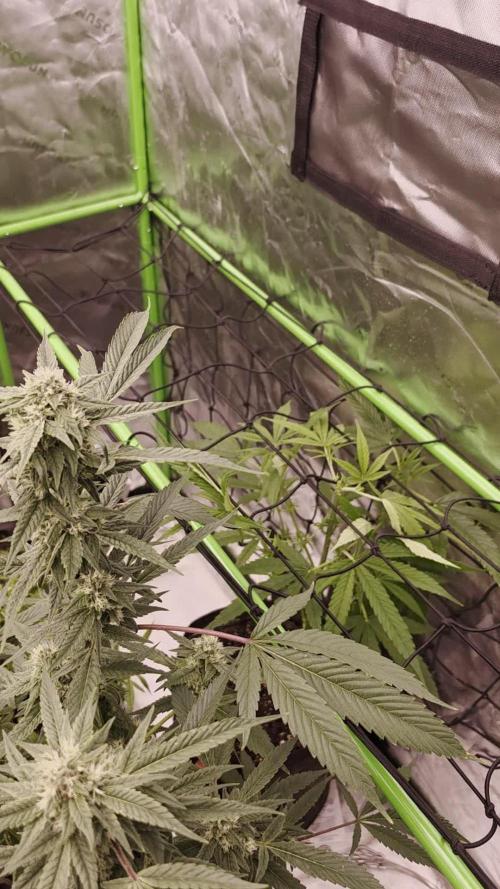
Los cogollos engordan a buen ritmo, la producción de resina también es buena. La planta más productiva está amarilleando en algunas hojas de la parte superior, podría ser un poco de estres lumínico, pero aumento ligeramente el fertilizante para sus riegos.


Likes
5
Share


@Deltatigrou0169
Follow
Bonsoir à tous
Je suis trop content de mes fifilles elles poussent vraiment bien elles grandissent tout les jours, je les mesure tout les 2 où 3 jours.
Elles grandissent de 2cm environ par jour je les trouve magnifique mes fifilles. J'ai deux de mes mutantes qui me font quatre branches principales( on n'y voit sur les photos) je suis refait 😊😊😊 je pense qu'elles vont bien donner.
Je vous dit bonne soirée à tous les amis 👍👍👍

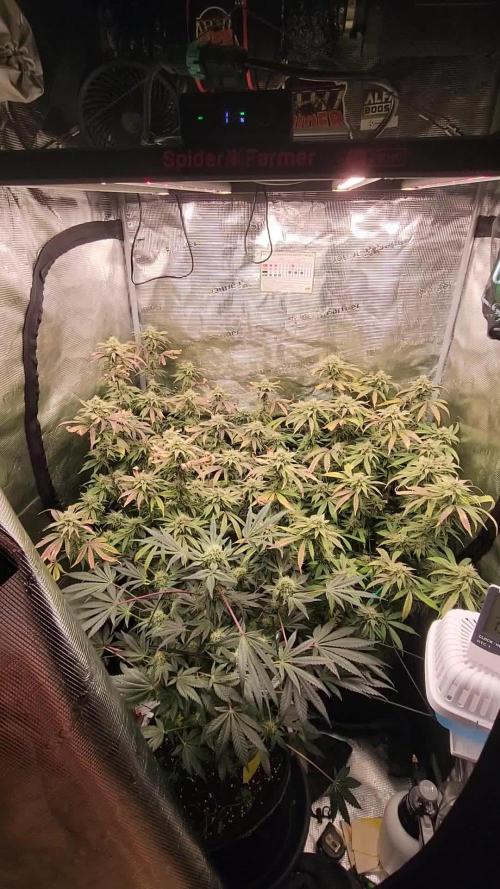


Likes
6
Share


@BlaKX
Follow
Leider mittlerweile gezwungen je nach Tages Temperatur zwischen 80-60% Leistung vom LED Licht. Um unter 30C° Grad zu bleiben Tagsüber. Ansonsten calmag problemle habe jetzt BioBizz durch Canna Calmag Agent ersetzt. Ansonsten bin ich zufrieden. Vermute das mein PH wert etwas zu niedrig ist aber 2 Wochen vor Ende/ernte mach ich mich nicht verrückt sie gehen auf ihr Ende zu trotzdem will man das die Damen immer Kern gesund aussehen;)
Habe Ende der 6 Woche Mars Hydro Adlite 660nm Deep Red installiert

Likes
13
Share


@leapingsoil
Follow
Hello hello!
Cream cookies is getting her final flush today!
Lets see how she develops this final week. I will let her medium dry, then harvest. The buds are getting deep colors, are nice and big but could be a bit more dense.
I am eager to smoke her. Very inviting pungent cookie dough smell from her is filling the tent.
For her flush: 3ml L Flashclean until 20% runoff then 20L icewater and pot full of ice cubes.

Likes
1
Share


@JoExotic
Follow
Week 4 - just started adding grow big from fox farm hopefully they respond well I will update again next week I’ve never smelled anything like this so can’t wait to see the flavor behind these good luck everyone !
Likes
6
Share

@DogDoctorOfficial
Follow
🥒 Project Blue Tent – Week 6
Pickle Lemon Haze F1 – Pheno A (Folder 14A)
Hello everyone, and welcome back to another chapter of Project Blue Tent! 💙🌱
If this is your first time joining the adventure, welcome!
Project Blue Tent follows four individual plants, each documented in its own dedicated diary from seed to harvest. Every plant shares the exact same environment, lighting, irrigation schedule, nutrition and care. By keeping every environmental variable as consistent as possible, we can truly appreciate how each phenotype expresses its own unique personality while also showcasing the remarkable stability of modern F1 genetics.
Today we're checking in with Pickle Lemon Haze F1 – Plant A.
────────────────────────
🌱 Week Six – A Canopy Coming Together
This week has been all about refinement.
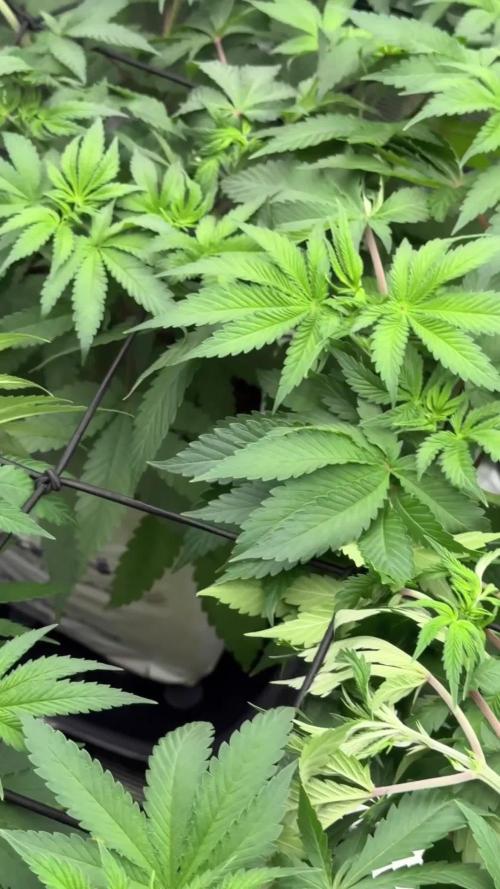
Rather than chasing vertical growth, the focus has shifted entirely toward building the widest and most even canopy possible. Every day brings a little more progress as branches continue filling the SCROG net, gradually transforming four individual plants into one uniform sea of green.
One small change compared to last week's report is the official canopy height.
Although Plant A measured around 66 cm previously, I lowered and tightened the SCROG net across the entire tent. As a result, all four plants are now sitting at approximately 60 cm, with every centimetre of new growth being directed horizontally through the screen instead of upwards.
That's exactly the objective at this stage.
We're no longer trying to grow taller plants.
We're growing a larger canopy.
Every branch guided sideways today will become another well-positioned flowering site tomorrow.
────────────────────────
🌿 Pickle Lemon Haze F1 – Plant A
Plant A continues to impress me every single day.
She remains the most vigorous plant inside the Blue Tent, responding to every bit of training with explosive new growth.
Even after being topped and now spending her days tucked beneath the SCROG net, she simply refuses to slow down. Every branch seems eager to reach for the next opening, making the daily training routine both enjoyable and incredibly rewarding.
The internodal spacing remains nice and tight, the stems continue thickening, and her foliage has developed a rich, healthy green colour that tells me she's enjoying everything the environment is providing.
One thing I particularly appreciate is how well she's balancing strength with flexibility.
The branches are becoming sturdy enough to support future flowers while remaining pliable enough to guide gently beneath the screen without complaint.
She's proving herself to be an absolute pleasure to train.
────────────────────────
🕸️ Working with the SCROG
As the canopy develops, the SCROG net is becoming more than just a training tool.
It's now helping shape the entire structure of the grow.
Every day I spend a few minutes gently guiding branches into empty spaces, allowing the plant to expand naturally instead of allowing individual tops to dominate the canopy.
It's a surprisingly relaxing process.
No aggressive bending.
No rushing.
Just small adjustments made consistently over time.
Watching those empty squares slowly disappear is one of my favourite parts of vegetative growth, and this week the Blue Tent has really started looking like one unified canopy instead of four separate plants.
────────────────────────
🌡️ Blue Tent Environment
Consistency continues to be one of the biggest advantages inside the Blue Tent.
Average conditions throughout the week remained:
• 🌡️ Day Temperature: 30°C
• 🌙 Night Temperature: 25°C
• 💧 Relative Humidity: 58%
• 🥥 Root Zone Temperature: 24°C
• 💦 Nutrient Solution Temperature: 18°C
• ⚗️ pH: 5.8
• ⚡ EC: 1.92 mS/cm
• 💨 CO₂: Approximately 450 ppm
• 💡 Light Schedule: 18/6
• 💧 Irrigation: 1.2 litres per plant per day
These stable conditions continue allowing the plants to focus entirely on vigorous vegetative growth while recovering effortlessly from training.
────────────────────────
🥥 Feeding & Irrigation
The feeding schedule remains unchanged this week.
Sometimes, when everything is working exactly as planned, the best decision is simply to stay consistent.
Each plant continues receiving approximately 1.2 litres of nutrient solution every day through the Mars Hydro automatic drip irrigation system.
The slow and consistent delivery keeps the coco evenly moist while ensuring the roots always have access to fresh nutrients.
Once the solution passes through the substrate, the automatic drainage system removes the runoff beneath the grow bags, preventing old nutrient solution from accumulating around the root zone and helping maintain a clean, stable growing environment.
Current feeding schedule:
• Plagron Hydro A — 1.9 ml/L
• Plagron Hydro B — 1.9 ml/L
• Plagron Hydro Roots — 1 ml/L
The rich green colour across the canopy tells me the plants are extremely happy with this feeding regime, and for now I see no reason to make any adjustments.
────────────────────────
🌿 Pickle Lemon Haze F1 – Plant A
Every week this phenotype reinforces the same first impression she gave me shortly after germination.
She's energetic.
Confident.
And incredibly responsive.
She doesn't simply recover from training.
She seems to thrive because of it.
The combination of vigorous branching, compact internodal spacing and healthy foliage is creating exactly the kind of plant I hoped for when starting this project.
It's becoming easier every week to imagine how productive she'll be once flowering begins.
────────────────────────
👀 Looking Ahead
The objective for next week remains beautifully simple.
Continue filling the SCROG.
Maintain the stable environment.
Keep guiding each branch into its own space.
Patience is the key at this stage.
Every small adjustment made now will help create a flatter canopy, better light distribution and, hopefully, an even more productive flowering cycle in the weeks ahead.
The Blue Tent continues moving exactly in the direction I was hoping for, and I can't wait to watch these ladies take the next step together.
────────────────────────
💙 Thank You
A huge thank you to Zamnesia for making Project Blue Tent possible, from these incredible Pickle Lemon Haze F1 genetics to the complete ecosystem surrounding this grow.
A heartfelt thank you to Plagron for providing the Premium Growbags together with the Hydro nutrient line that continues delivering healthy, vigorous growth week after week.
A special thank you to Phytonaut for the outstanding LED lighting, producing compact growth, beautiful structure and an incredibly even canopy throughout the Blue Tent.
A sincere thank you to Mars Hydro for the automatic drip irrigation and drainage system that has brought consistency, cleanliness and peace of mind to this entire project.
Thank you to GrowDiaries for providing growers around the world with a place to document their journeys, exchange knowledge and inspire one another every single day.
And finally...
Thank you to every one of you following Project Blue Tent.
Whether you've been here since the first seed cracked, recently joined the adventure, leave comments every week or quietly follow along in the background, your support genuinely means more than you know.
The canopy is getting fuller, the plants are thriving, and the adventure is only becoming more exciting.
Until next week...
Growers Love, happy growing, and I'll see you all soon. 🌱💙
Likes
54
Share


@ASCBOOGS
Follow
Day 51 12/12 buds are swelling slowly but surely could have slowed down due to ph fluctuations as my ph pen is not functioning properly so had no other option but to go back to advanced ph perfect nutes for timr being until my new ph pen arrives but will start flush sometime next week

Likes
27
Share


@Herbinski
Follow
It's day 11 since they sprouted and I must say I love what they are showing,😍
Since a few days it is clear to see the differences between the two pheno's.
Pheno 1 is looking good, the first leaves had 5 blades instead of the normal 3 and is creating a beautifully Indica shaped plant💪
Pheno 2 has a little mutation on the fist leaves where she produces only two blades and they are partially grown together, but she has a nice development.
I have no Idea at this stage which of the two I will leave for flowering.
I have only watered them once since the beginning, with 1litr of water each and a bit of root stimulator, the BAC Lava Soil keeps moisture very well and that allows me to water less frequently.
As you can see the vertical development of the plants is not rapid, but as I said before, this is strain that has a prolonged vegetation time so I would say it is going good.
Fingers crossed it all goes well. 😎
Likes
12
Share

@Caertner
Follow
Etwas biegen und runterbinden...
Und ab ins Blütezelt!
Aber irgendwie entwickelt sich der Monat zum Triebknick Monat.
Topping war nicht so geplant... ist beim Umkisten einfach an der Querstrebe hängengeblieben.
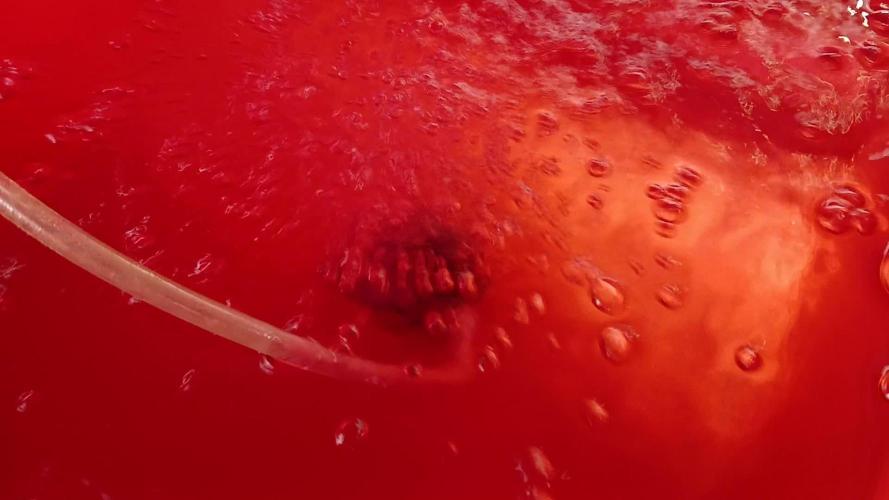
Dafür kann ich mal die Stecklingsfähigkeiten weiter prüfen. Der erste hat nach 10 Tagen das Wasser erreicht... einfach mit Klonkragen in den Topf klemmen, der Sprudelstein macht den Rest.
Likes
56
Share


@Ledbelieve
Follow
So we are at about day 70 of flower 🌺. Still not ready for 3 of these ladies😤. Took down the back right plant last night she was ripe and ready. Hung her up after a lite trim, and she will dry in my jimmy rigged drying tub for about 10 days will weigh her then

Likes
8
Share


@AutoCrazy
Follow
This plant is really starting to pack on bud size now. Pistils are still nice and white so she has a long ways to go yet.
Dinafem never ceases to amaze.
😎🍿🍻🌱

Likes
11
Share


@40Plug
Follow
Wow. Look at these beauties! Really nice buds. Nice grading from green to purple. Smell is insane.