




Likes
151
Share


@BioBuds
Follow
Well, what we feared, became a reality, one of the regular XTrakush plants is a male. This is why I planted two and I'm happy it seems to be only the one. But with the canopy going nice and full it hurt to get it out. Of course, I hoped to have two females but nature went its course. Considered leaving it in, to pollinate the others, or keeping it somewhere, but I do not have the space or light for it.
Thus with pain in my gut, I went about getting her out. I notice a nice developed root system, very healthy, which was very hard to get loose. After shaking the soil off I have a rootball the same size as after my whole grow last time. I could lift the whole 57 ltr bag by lifting the plant. Sturdy stem, thick solid branches. This is what I was aiming for and it works. The soil again is proving itself to be a winner.
The light this low gives some higher temps as expected, but manageable within ranges. The SP-3000 is performing really well and I cant wait to see the bud development coming weeks. I'm sure it will deliver a great amount of bigger buds looking at all the flower sites and the thick branches that support them.
Remember to check in on www.mars-hydro.com, they have awesome deals now for Black Friday!
I'm giving more water now, once in two days instead of three. They seem to need it with the higher temps. The plants seem to take the light well on only 45 cm.
I've started adding the BAC Organic Bloom Nutrition. It is designed to work with the microorganisms I added with the micro life. With this I do a little bit of Calmag, but not so much, since I don't see any evidence of shortages, again proving my soil is dialed in for growing under LED perfectly.
All in all, even with a minor setback, all is ready to pull in a mega harvest.
Thanks for checking in again!! Hug Bud & Sunshine.
Likes
4
Share



Likes
11
Share


@Homegrown93
Follow
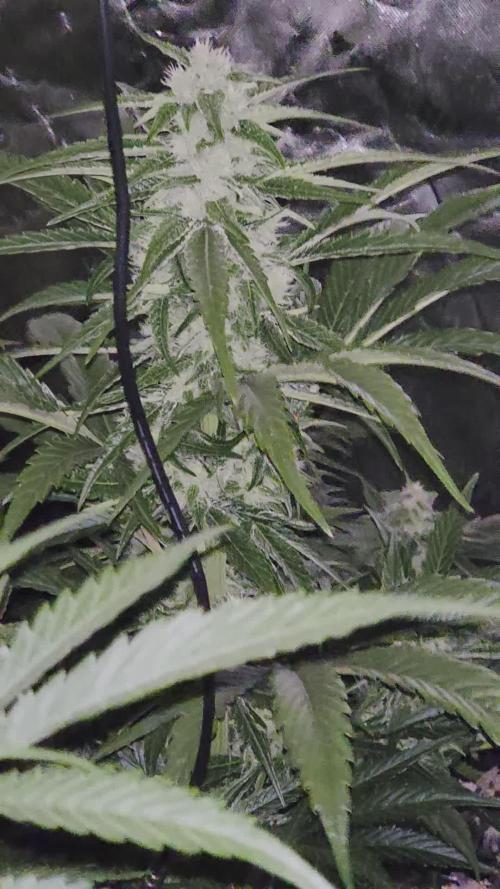
Both were fed on day 43 3.5 liters of full strength nutes. Both ladies are growing nicely, every time I open the tent I’m blessed with that fruity dank smell. Their flowers are bulking up little by little and both are throwing out trichomes in there main colas. Can’t wait for harvest!!!
Day 47- both are looking good, maybe a little heavy on the nitrogen so I’m going to dial back a bit on the nutes. Forum stomper is really taking her time, I hope she fills out!

Likes
29
Share


@BioGrowKing
Follow
Meine Woche war sehr gut, ich habe um getopft nun ist sie nicht mehr in den Becher und hat ein bisschen mehr Platz um sich auszubreiten.
Ich habe heute wieder enhancer benutzt auch hier habe ich wieder von den 1 g die vorgegeben sind ein wenig auf die Oberfläche gestreut und nach gegossen.
Wenn Sie die gewisse Größe erreicht hat werde ich auch diese toppen und so weiter machen
Ich denke sie sieht ziemlich gesund aus in den nächsten zwei Wochen bekommt sie noch mal eine Düngung ab der siebten Woche mache ich das wenn die Wachstumsphase mehr wie acht Wochen beträgt
Auch diese wird von der neuen Lampe die ich als Unterstützung die sie auch bei meinen anderen Grow Report sehen können bestrahlt ich probier das einfach mal aus.
Lg


Likes
3
Share

@IlseImWeedland
Follow
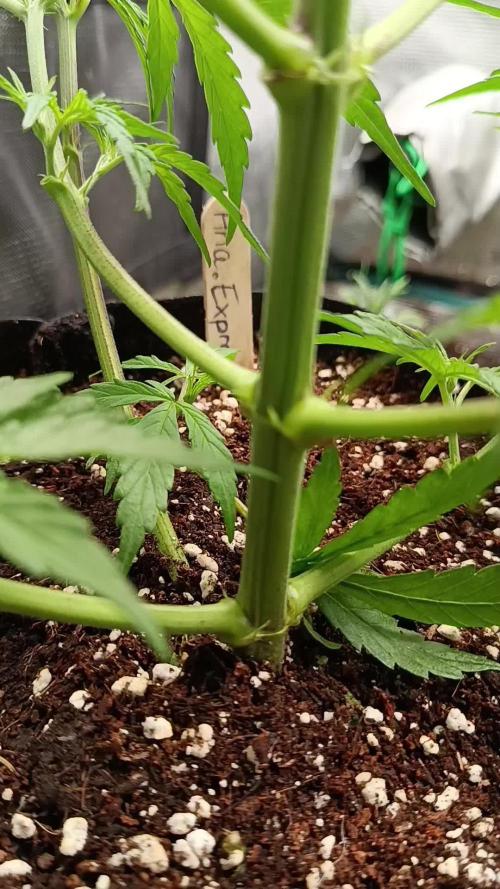
Die Wurzel hat Platz bekommen & die Pflanze ist gewachsen. Große Blätter weiterhin. Bisher ein Blüte Ansatz sichtbar. Weiterhin alle 2 - 3 mal innerhalb von 7 Tagen gedüngt mit BioBizz Grow. Milliliter angepasst. Compression Sprayer wird benutzt für klares Wasser.
Likes
43
Share


@Regenwurm
Follow
Diese erste Woche ist für mich nicht zufrieden stellend. Farbe aller Ladies zu hell, Wachstum in meinen Augen gehemmt da für 7 Tage zu klein. Problem ist noch nicht erkannt, da ich zum ersten mal Advanced Nutrients und das erste mal Autoflowering Seeds nutze. Die Energiesparlampe die ich schon seit Jahren verwende (bei kleinen Töpfen 1 l) war jetzt nicht gut da die Seeds direkt in die großen Töpfe gesetzt wurden und somit der Abstand und Ausleuchtung schlecht waren. Das war bei photoperiodischen Pflanzen kein Problem da immer 2 mal umtopfen. Daher heute der Umstieg auf eine Metal Halogen Lampe 250 Watt. Mal sehen was die nächste Woche bringt. Da ich nur mit Regenwasser gieße habe ich zu dem Advanced Nutrients Sortiment heute noch cal mag gekauft, da auch dies ein Thema sein könnte. Gestartet bin ich mit dem Dünger an Tag 5 mit der hälfte des Düngeplans… ist das so okay?
Temperatur und Luftfeuchtigkeit kann ich als Problem ausschließen da die Werte gut waren

Likes
19
Share


@DogDoctorOfficial
Follow
so i was going for some leaves but end up striping the girls good .... i guess i enthusiasm myself easely lol but they seem to enjoy. normaly i dont do this at this fase, but they needed space and air circulation.
all i grow is medecin for myself, so its ok i gess !!!
hope you guys are enjoying, please let me know your opinion, tips and all are welcome and apreciated .
Peace and stay safe
D


Likes
15
Share


@DailyhighclubNLyara
Follow
Okay so the result of my LST surprised me like a lot. The plant looks great under the light, it’s still my second grow so I hope to learn a lot about the beautiful plants and how they respond. I want to experience everything to learn from them and know how to respond.
I think this week went good but the dry wet cyclus is something I really needed to learn this week. I first tried watering every day but i noticed that the soil wasn’t dry at all, so I thought no that’s maybe just the soil. *Ive learned this cycle in the next week* spoiler alert: it wasn’t
I still give around 1 tbsp of the molasses because the plant is really responding good to it.
The small plant is also looking healthy so perfect, just keep giving her love.
I did a big oops:
So, the plant grew bigger and bigger and faster then I could keep up. So I decided to lst some more, Olga went perfect and I build a lot of confidence from that. So... busy with the other “big” plant and I started doing the head top, but the band was just to tight, but I noticed that to late *SNAP*. Did I just snapped the biggest branch of the middle plant? Yes, I hated myself for 4 days until I thought: there are no mistakes, just happy..... (fill in with your brainpower) well see what happens


Likes
9
Share

@Mrs_Larimar
Follow
2025-09-26
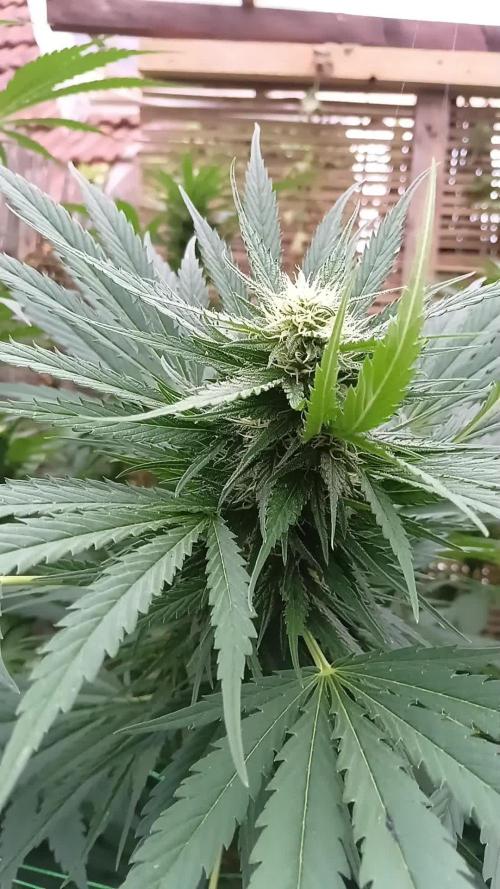
Daylight is now under 12Hours, and iam expecting them to finish soon-
iam hoping for warmer and dryer weather.
we had 6 days of continous, heavy Rain and wind.
For now all Plants are safe, because they are secured by 2 SCROG- nets, and a wonderful Roof.
we will see
Strain Information: Black Russian Early Version
enetics & Background
Black Russian Early Version results from crossing two legendary indicas with potent medicinal effects: White Russian and a splendid Black Domina mother. This is a selection of the famous "domina" phenotype - a real jewel well-known among Spain's best growers.
Growing Characteristics
Cultivation: Very easy to grow
Growth pattern: Moderate stretch during early flowering phase
Structure: Compact yet well-branched - one of the great indica yielders
Flower production: Large amounts of very dense buds
Unique trait: Very few leaves grow between buds
Aroma & Flavor Profile
Resin: Abundant, fruity-smelling with citrusy and earthy notes (likely from Afghan ancestry)
Taste: Denser than the aroma, very sweet and citrusy
Description: Like a fruit salad with lemon juice
Effects & Medical Properties
Type: Markedly indica effects
Duration: Long-lasting and relaxing
Onset: Very rapid - immediately noticeable when inhaled (smoked or vaporized)
Medical use: Highly recommended for medicinal usage
Tolerance: Low tolerance development - remains potent even with extended exclusive use
Why This Strain?
Perfect for outdoor competition due to its early finishing time, robust genetics, and reliable performance. The combination of ease of cultivation and exceptional medicinal properties makes this an ideal candidate for a successful outdoor grow.
Genotype 20% Sativa - 80% Indica
THC 24%
Maturation(Interior) EARLY VERSION - 45 days
Maturation(Exterior) early september
Flavor Sweet fruit
Production 500 g/m2 Indoor | +900 g/pl Outdoor
Odor High
Effect Narcotic
Sex Feminized
Lineage Black Russian x Ruderalis
Cups
3º premio extracción BHO THC Valencia
1º indoor Cannarias Cannabis cup 2012 Copa Asociaciones
2º Categoria Professionale - Secret Cup - Napoli 2018
4º Categoria Exterior- Copa Cata @cogollosdeloeste - Argentina 2022 (@jhonny.jamrock)
2º Premio Categoria Exterior- Copa Cata Cultivadores Primavera - Argentina 2022 (@jhonny.jamrock

Likes
14
Share


@ApothecAries
Follow
November 6th day 63 is the day to harvest. May change but i am checking trichomes daily. Few clear trichs left and most are cloudy. Planning on flushing this weekend for a week.
We are at day 56 flowering and most trichomes are cloudy. preparing to start Flawless Finish flush and let the girls ripen. Ill give an update half way through the next week. Thanks for checking in.
Likes
20
Share


@GR0WER
Follow
New week starts!
🌞21.11.2022 light smelling started. I kame home today to smell thin delicious aroma my babies producing. It's good and bad in a same time! I gave them their first real dose of ph6.05 GHE nutrients in a proportions so called: 'First true leaves' and sprayed them with 'GHE SeaWeed' solution.
(Nutrients input was ph6, drainage - ph6.5)
🌞22.11.2022
New photos downloaded.
I sprayed my Bananas with 'GHE Sea weed' once more and moist the upper layer of a substrate with it.
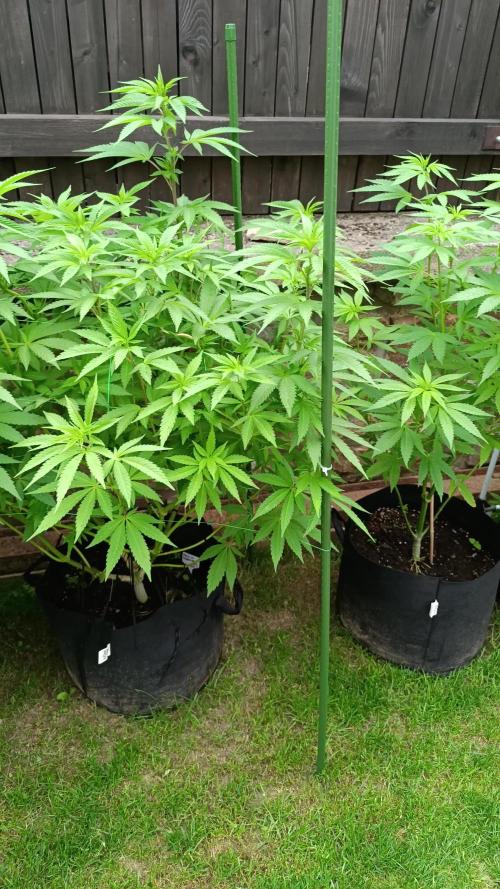
My BPPa#1 is slightly smaller then her sister. She have thinner leaves and lower length. But she producing her brunches faster then BPPa#2. Second plant is thicker and higher and her new side brunches are smaller. Now I wonder who'll be larger in the end of this run.
🌞23.11.2022
No watering, only spraying with 'GHE SeaWeed' solution and moisture the upper substrate layer. My moist sensor for soil showing the beginning of a green sector. So watering will be tomorrow.
🌞24.11.2022
I watered my plants by ph5.9 full pack of fertilisers GHE (amount in a table). Luckily, soil ph starts to fall and today it's somewhere near ph6.8 mark.
My babies are slowing down in the main stem growth, I think it's all because there are a lot of side brunches rising up. When they'll form it well and their leaves will became darker - I'll change nutrients proportions to so called 'Vegitation' and add 'GHE Diamond nectar' + 'GHE Silicate'. Also, tomorrow I'll spray them with 'GHE Protect' solution instead of 'Sea Weed' because they're still on the early stage of veg.
🌞25.11.2022
Today is 'dry' day.
I sprayed my flowers with 'GHE Protect' solution. Nothing new, only one thing: they are awesooooome!
Tomorrow there will be 'SeaWeed' spraying, watering will go on sunday.
UPD: Asked the advice thru the 'Grow questions' option and started LST already - as a result. Today I can't bend them more, because I watered them yesterday - their trunks are full of juices and I'm afraid they'll crack in a half. Tomorrow I will bend them a little more, and the next day after, I hope, they will be lying on their backs like a puppies.
Thank You for Your help, grow mates!💪💪💪
🌞26.11.2022
I sprayed my beautiful girls with 'GHE SeaWeed' solution and moisture the upper layer of substrate with it.
Also, I made LST a little more. Substrate ph still near ph7, but they looks healthy and strong. So I'll go with ph6 solution tomorrow and wait them to produce more roots to regulate their environment.
🌞27.11.2022
Some more LST today and 'Sea Weed' spraying. Girl #2 is lying on it's back already, but BPPa #2 is smaller and her stem is shorter. I can't bend it down till she'll grow a bit more. Now waiting for one more floor to grow.
Week ends.
* Ph in a table is soil ph





Likes
6
Share


@Staffedition
Follow
Привет друзья.
Наше знакомства продолжается с новым сортом автоцветущих растений от Smail_Seeds сорт TROPICANNA POISONZKITTLEZ XL AUTO F1 reg.
Сегодня растению 73 дня.
Растение очень хорошо развилось, ни каких сбоев в генетике не наблюдалось за весь цикл.
Шишки наливаются очень хорошо😀
Так же стрессую, что бы получить пыльцу.
Скоро будут феминизированные растения.
Сорт выводим сами.
Смотри мой профиль, у нас всегда есть что то интересное.
Не забудь поставить лайк❤️, если понравилась как прошла неделя
И читайте наш TELEGRAM: https://t.me/smail_seeds
#Smail_Seeds 😀
Likes
4
Share


@GothBotanical
Follow
Week 7 was all about letting her shine on her own. On Day 43, I gave her a full-strength compost tea after a solid dryback to recharge the soil. The next day, I released all of the LST ties completely — she held her shape beautifully, so I went ahead and cleaned up the lower fluff with a light lollipopping to boost airflow. I also spotted some gnats, so I laid down a solid layer of DE across the topsoil. On Day 44, I refilled her auto-watering base and tucked a few fan leaves to keep light reaching the inner sites. The following morning (Day 46), I gave her a Big Bud feed at 2.5 ml per gallon and refilled the base again. I also started using a pH kit to bring my feed water into the 6.2–6.5 range, which I’ll be doing consistently now. Trichomes are building up across the sugar leaves, pistils are still mostly white, and her structure is solid without needing any ties. By the end of the week, I noticed a few small splash marks from previous feeds and a couple tiny speckles on a top leaf — likely early light stress, so I’m keeping an eye on it. Overall she’s deep in mid-flower and stacking up beautifully. Week 8 should be a frosty one.

Likes
7
Share


@Stickygreens420
Follow
11/7/2022: decided to lower my scrog net 2 inches. Was probably a little late, so I had to do some super cropping to get the plants under the net. A little concerned since they are autos, but the plants are all still very healthy, so hopefully thete won't be any issues. Watered with the coconut powder and added some BuildASoil BuildABloom for the first time today. Also dropped the humidity down to 55% now that flowers are starting to develop. Puts my VPD at about 1.45.
11/9/2022: watered about 1.3 liters each, with Fish Shit, Bio-Phos, ThermX 70, and coconut powder. The snapped branch and supper cropping seem to be doing well. Looks like all three plants are near the end of stretch. The Strawberry Gushers continues to stack, and a few hairs are starting to brown. The tricomes are starting to develop as well. She smells funky. Almost sweet and sour. Something really unique. Excited for it to continue to develop. The Newberry and Orange Bubblegum aren't smelling as much yet, but they are a week or two behind. The Newberry has a bit more of a musky smell, but pretty faint still.
11/12/2022: fed all three a compost tea yesterday and they loved it . Been praying all day. The Strawberry Gushers has a minor purple stem, so I thought the tea might help. This may just also be the genetics, since this strain tend to turn purple in late flower. Figured the tea couldn't hurt and the girls are all reacting positively. Otherwise, thay all remain healthy.
11/13/2022: made a sprouted seed tea today using corn and watered about 1.3 liters to each plant.
Avg. VPD:1.45
PPFD: 700
DLI: 45
