The Grow Awards 2026 🏆 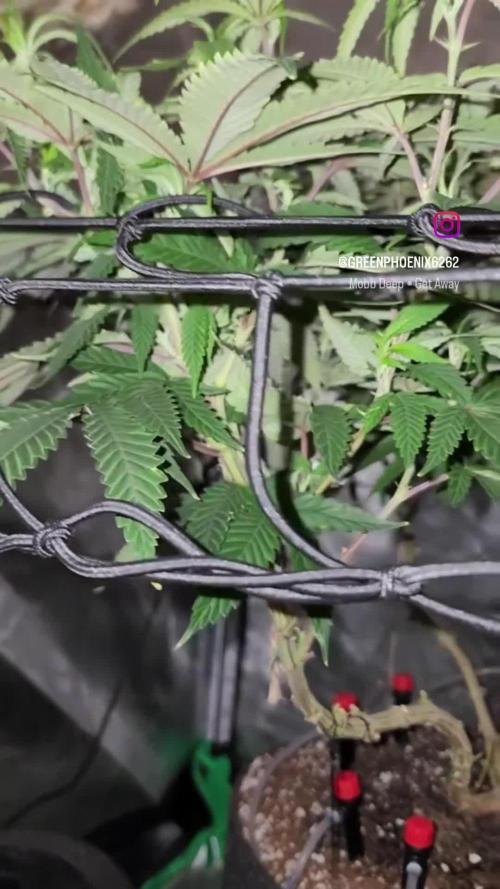





Likes
8
Share
@GREENPHOENIX6262
Follow
02/15 (M) - Prepping her to flip into flower within the next week or two - Weaved her under net for better light coverage - Running 8 drip emitters with a 5 gallon res - 45 sec feed every 8hrs.
02/15 (C) - Thus far all 15 are still kicking but they did take a hit - starter roots for all 15 have begun - I will update with pics within the next 2 weeks - Running high temps and high humidity during lights on.
02/18 (M) - Mom is doing great - No deficiencies - Flipped her into flower today - running 8 line feed with 5 gallon res - clean water feeds for the first 2 weeks.
02/18 (C) - The babies to a bit of a hit they are looking a bit funky but they are rooting - some of the clones are growing their own babies - I will let them rock as to seeing they are rooting and showing new growth.
02/19 (C) - 4 out of the 15 have developed very strong roots - the rest have smaller roots coming in - will continue to run high humidity and monitor accordingly.

Processing
Likes
32
Share
@Vega0284
Follow
Hey Guys!
Super excited this week! I've really been wanting to try growing outdoors, so I built a cheap hoop house! Got most of this stuff for the frame from Lowes under 300$. All the soil products I got from GrowGreenMI. Some really cool people out there.
One thing I'm super worried about is drainage. Right now those holes are about 4 feet deep and they've got about 4 inches of water in them already. What's been cautioned is that, eventually, about 2 months in these plants roots will grow and reach the bottom and cause root rot to form. One of the biggest things I was trying to be wary of was causing root rot. This was also the biggest precautionary measure I took when mixing the soil. Adding the extra perlite, coco, and clay pebbles. Best advice right now is to build the soil up on the holes another 16 to 18 inches and possible stick a PVC pipe down to the lowest drainage point of the hole to allow some of that natural occurring water to evaporate.
Any advice anyone has on it is welcomed!
Making a compost tea for the soil outdoors, will probably put 2 cups in each RDWC bucket as well and let that do it's magic for a day or so before nutrient change. Raised the bed about 14 inches as well!
All the seeds sank! Off to a good start! Lol


Likes
5
Share
@DarkRaven420
Follow
They both had a three day germination period. This is the first time I’ve ordered seeds online. I was so impressed with the service that I received. The seeds germinated in a plastic container with paper towels in it, three days later I have seedlings. The Northern Lights are not as big as the Cookies at this stage but it still looks pretty good; I’m going to keep an eye on it since it’s still in the fragile stage of development.

Likes
20
Share
@Djeregueijhoson
Follow
Semana bem fria, temperaturas a noite chegaram a 7 graus, e ainda tive um inicio de mofo em um dos top buds, foi vacilo meu, acabei dobrando ele demais e tirei ele da circulação de ar. Retirei esse bud e fiz uma vistoria bem feita nos outros, não encontrei nada… semana que vem eu colho e já sei que preciso de mais um ventilador hehe


Likes
23
Share
@ChachoGreenCrown
Follow
Buenas a todos compañeros cultivetas! Seguimos trabajando las Critical Purple de GeaSeeds y decir que llevan un ritmo brutal ! Aquí en la tercera semana de la etapa de flora... las he guiando un poquito con la malla y la verdad pinta fantastico. Soportan el peso de la rama muy bien.
Seguimos abonando con línea orgánica grotek y bueno los resultados pintan bien
En cuanto a la iluminación.. estamos con un Lec 315W solux selecta a pena potencia de w jejeje. He instalado unas trampas para insectos por si algún polizonte le da por aparecer. De momento todo limpio
Destacar que las temperaturas vuelven a bajar.. han rondado entre 17 y 19°C en apagado y unos 22°C en encendido. Hemos conseguido vencer las temperaturas del exterior , aún así les falta un pelin de calor Jajaja
HE COLGADO UN VIDEO DONDE APARECEN RECIEN ENCECIDO EL ARMARIO Y BUENO AHI SE VE QUE LA TEMPERATURA ES BASTANTE BAJA. Aún así la raíz se mantiene calentita y la canopia no peligra.
la humedad relativa en torno al 65% osea que genial. En breves volvemos con más contenido. Un saludo a todos compañeros

Likes
8
Share
@SoakingThePot
Follow
Fastbuds Banana purple punch and Gorilla Cookies are looking great in early veg. Started a second seed of the strawberry banana and she finally popped up so now it’s just a week behind the others,but looking good hopefully will see some real growth in the next week!

Processing
Likes
6
Share
@NastyNug
Follow
End of Week 5. Either over watered or not enough CalMag in Week 4. Lower leaves yellowed and looks like growth stunt in 4. Increased CM, looks like coming back.
Processing
Likes
2
Share
@Patillac31
Follow
•Morning of day 19, ¾ through week 3.
Did a light defol on both ladies. I gotta say I'm a big fan of Big Bud by Seedstockers! This girl is going to be exactly what her name is. I know its early with roughly 40 days to go, but I will for sure be growing this girl again. Any suggestions drop me a line. Happy gardening and stay safe Gromies! 🔥🌱🙏🖖✌️😷
•Morning of day 15, start of week 3.
°Big bud is 32" in diameter after more LST. And 37"tall (soil to top). Less stretching and more compacting of nodes. Very pleased! She's feeding at full strength and looking like she might want more. Very vigorous growth.
°Agent Orange. 30" in diameter after LST. plant did NOT respond well to LST. AND IS 36½" tall (soil to top). Also showed signs of nutrient burn. Will only feed half strength every 3rd watering.
Any suggestions drop me a line! Happy Gardening!


Likes
13
Share
@ArtisticGrown
Follow
This week has been great.I'm glad that I was able to pull the plant when I needed to. The weather out here isn't always the best coming towards the end of October. How ever i handle it the best we can. What ive learned to do is wet trim before hang dry. Heres some phots of these glossing nugs. Iknkw ill lose a bitin water weight but im happy none the less. Fire 🔥
This has been a great grow, I learned a lot from Growing out here in new mexico. It was amazing to be able to train these plants 4 into one using training techniques. LST, HST, Defolation & topping all play a roll. It is fun to learn and sharpen my skills.
I hope everyone enjoys my diary.
Thank you so much Divine seeds. I appreciate the free seeds and the friendly community competition 👌
There's a lot of good growers outthere and I wanna learn from all. Much love ❤️ I'll be back with a smoke review soon

Likes
5
Share
@LeedsCityFarmz
Follow
Plants Flipped to flower on a 12/12 light schedule. EC dropped slightly to try and reduce any major stretch. These plants should have been lollipoped last week before putting them into a scrog but unfortunately I was unable to, so I have to remove the Scrog to make it easy to lollipop and then place them back into a Scrog once lollipoped. When the Scrog was placed back on it was more for support as I'd already built the structure of the plant the prior weeks. Although a few lanky branches did get bended back over. Another Scrog layer will probably added later in flower for further support when buds start forming.
Processing
Likes
16
Share
@Gelato93weed
Follow
Terra : fatta in casa : sabbia di quarzite , torba di felci amazzonice , cocco , e tericcio vergine professionale universale concimato .
Vasi standard 11 l fino ad arrivare a 30 l
Piqnte e varieta ;
10 moby dick 5 crystal m 5 amnesia xxl 2 mimosa evo 3 glockis 2 avgani #1 3 blu gelato 41 1 gelato auto
20 ore di luce 2 lampade da 600 w 20 h 4 h buio . 50 cm la distanza perche scalda 300 C °
1,5l di aqua ogni giorno con arancio e limone per i parasiti poi azoto liquido 0.1 x 100 1 l N
Fosforo 0.5 x 100 1l P
Potassio 1 x 100 1l k
Fioritura
Va tutto bene non ho molto da dire e tutto nuovo anche per me sto imparando i prossimi diari saranno migliori

Likes
3
Share
@Dunk_Junk
Follow
Day 63 - Flowers just starting. They're looking nice. Through the week I've chopped quite a few leaves off her to allow light penetration.


Likes
2
Share
@Saintvicious
Follow
Going strong. Biggest seed in pack and she's showing. Bout to be Lst time.
Likes
7
Share
@LittleBigTrees
Follow
Potted then up to 4ltr pots ready for flowering ✌️ switched to 12/12 on day 35

Likes
13
Share
@cookingwithninja
Follow
Week 9 day 1 video pheno.
Gonna chop this week
Week 9 day 7 well chop this weekend so on week 10 Day 1-2. Just waiting on a light to reveg one.
Everything is magic
Likes
145
Share
@Salokin
Follow
Hello Growmies,
The final chapter of this incredible journey has unfolded, and it's time to share the bountiful harvest and reflections on the entire cultivation process. Trimming the plant was a joy, and with gentle fingers, I removed all the large fan leaves. The precision in this process revealed the true beauty of the buds, setting the stage for a smooth harvest. With care and gratitude, the plant was chopped, and the buds were hung to dry. The anticipation for what lies ahead only adds to the sense of accomplishment. The wet weight, excluding fan leaves, stands at an impressive 782 grams. The buds are massive, a testament to the efficacy of the nutrients used, particularly the Power Buds. The name seems apt, as the result is a collection of sticky, dense buds with subtle lemon notes and sweet pungent undertones. In the final moments, the plant unveiled some delightful purple hues. While I wish I could have allowed them to intensify further, it's a reminder that each grow is a learning experience. In hindsight, a slightly longer fading period would have accentuated those beautiful colors. We live and learn, and that's the essence of this journey.
A heartfelt thank you to Plagron and Zamnesia for hosting this amazing contest. The quality of the products and the support throughout the journey have been invaluable.
As this chapter concludes, I'm left with a sense of fulfillment and gratitude for the collective experience we've shared. The plant's growth, from seed to harvest, has been a testament to the art and science of cultivation.
Feel free to check out my other adventures in my bigger environments, until then...happy growing!
Stay Lifted
Salokin

Likes
154
Share
@Tropicannibis_Todd
Follow
Well growmies ive been looking forward to the FastBud Tester 2311 , the more she went into flower the more the frost would build up , and that's when the terps came out 👉 Sweet , fruity 👈 Buds are tight and full of frost 👈 Couldn't of asked for better Genetics 😉
The smell coming from this girl during the entire grow was just dreamy 👈. Of course I have no clue to what she is but I like it......
Amazing Job FASTBUDS 👏 I would definitely recommend once they release this one 👍
👉 Big thanks to all my Growmies out there in GD land 👈 Much appreciated 🙏
Thanks To MarsHydro for the TS1000
👉I used NutriNPK for nutrients for my grows and welcome anyone to give them a try .👈
👉 www.nutrinpk.com 👈
NutriNPK Cal MAG 14-0-14👉 All Weeks
NutriNPK Grow 28-14-14👉 Weeks 2 & 3
NutriNPK Bloom 8-20-30👉 Weeks 4 to 8
NutriNPK Bloom Booster 0-52-34👉 Weeks 4 & 9 👌👌