


Likes
Comments
Share


@CanadianFillmore
Follow
Welcome to week 4 of flower for the outdoors grow. Green Crack and LSD are continuing to pack on buds, the plants are still hungry and I've stepped up the total amount of feed I'm giving them, #gaiagreen power bloom.
Thanks for stopping by growfessors 👽🌳💚

Likes
16
Share


@DonKrika
Follow
Last week of flower, I flushed during the last 4 days, I didn't do big flushes I simply water the plants with plain water, last 3 days of complete darkness.
I think that next time I will complete the flush and then give 3 days of complete darkness, the fact that the plant is not receiving light makes flushing harder because the plant drinks less water.
During the last 3 days, the humidity was always greater than 50% but the plants didn't seem affected.
Before I started the flush the pant was only receiving 8h of light.
I'm currently drying the plants, the temperature fluctuates between 17 and 19 degrees, I start with 65% humidity and I reduce 1% of humidity every day. I Do a 14 day dry
DAY 134
PH - 6.02
Solution Temp - 16.9
PPM-1955
Watering Volume per plant - 4L
DAY 136 - Molasses
PH - 5.92
Solution Temp - 15.2
PPM-300
Watering Volume per plant - 4L

Likes
3
Share


@NYGROW
Follow
First early week of flower!! So far so good this is my first grow and I have big hopes for it


Likes
223
Share


@HazeyBobby
Follow
It has been a great week of growth and no further accidental toppings - first pistils beginning to show at the end of the week. Tops are looking good, forming shape across the net. Stretched branches are being tucked under one square across every 3-4 days. The net is filling up nicely, with some limited pruning below the canopy of both leaves and growth stems. I'm trying to avoid any defoliation on this grow.
Fertigating with an inflow EC of >1.4 seems to be moving the run-off EC higher - will maintain higher inflow EC until run-off is within acceptable range. Run-off EC Should be within 300 Points of Inflow EC.
Run-off EC still remains below target although now increasing to where it should be. Tracking run-off volume/EC/pH at every fertigation event as I manage the feed EC to monitor what the plant is doing/feeding. Fertigation is maintained now to once a day (at lights on) to maintain the target EC. Light period is during the night time to better maintain heat/humidity conditions during light off period (which happens during daytime).
-----------------------------------------------------------------------------------------------------------------------------------------------------------------------------------------------------------------------
The grow setup includes ;
- Secret Jardin DS120W tent (120cm x 60cm x 180cm) placed inside the bedroom
- Mars Hydro SP250 LED light
- extraction fan - AC Infinity Cloudline T6 (gives me great control over the environment)
- ventilation fans
- aquarium heater for nutrients solution (for winter use only)
- small oil heater (for winter use only)
- small dehumidifier
- 20L Airpots (as final pots) and 3.5L general plastic pots (for seedling stage)
- Canna Coco substrate mixed with 40% perlite
- GHE Flora Trio as base nutrients and various additives
- pH and EC/TDS meters
- 2x Govee Thermo/Hygro meters (one at canopy, the other at the roots level - these allow for external monitoring and recording)
-----------------------------------------------------------------------------------------------------------------------------------------------------------------------------------------------------------------------
Some strain info from Royal Queen Seeds ;
An amazing mix of genetics background - Its true genetics are unknown. Some say OG Kush is a mix of ChemDawg with a Lemon Thai and Pakistani Kush. Others say that it’s just a special cutting of ChemDawg from the early 90s. The most obvious trait of OG Kush is its strong, unique, very dank, slightly citrus aroma, almost like fuel or strong detergent. The flavour of OG Kush is equally as strong and dank, with a long-lasting aftertaste.
Strong mental and physical high - OG Kush is an extremely strong cannabis strain, with most experienced smokers listing it as one of their favourites. The effect is as strong physically as it is mentally. Though its effect is like an Sativa, the strain's genetics are mostly Indica. The effect is as strong and complex as the flavour. OG Kush takes around 8 weeks to flower and on average the yield is 500 grams per plant.


Likes
24
Share


@DevokeOG
Follow
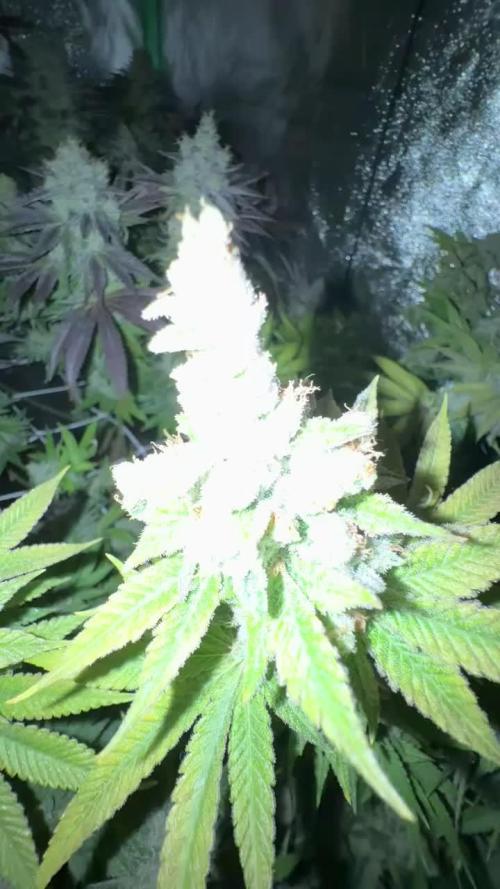
First grow, if you have any advice or feedback to give me go ahead :). All conditions of the plant will be what the plant is currently at in week 3. I tried to keep it as organic as possible and only cut one of the lower leafs to try to get a clone going.
Likes
4
Share


@ZinosBest
Follow
- COMING SOOOOOOOOOOOOOOOOOON -
Bro... I want something write here, just give me some time, sure?
You can trust me, it will be worth it.
So could you do me a favor?
Check back a bit later, homie...
Likes
11
Share


@Organic473
Follow
By the looks of her on week 9 I can say I Am impressed...she was fed some black strap molasses which I Know she loves...I expect some more heavy rains from tomorrow as the tropical storm passes through let’s see how she holds up after…airflow on this mountain 150M above sea level is really good so she dry out in no time….fingers crossed!

Likes
10
Share


@Martymar021208
Follow
This grow will be a very humbling experience being this is my first full grow from seedling to harvest and figured I would bring others along for this journey with me, hopefully some of you viewers may even have insight to any future problems I should have or run into. I appreciate your support and well wishes 🙏. Good luck to you and your grows. Can't wait for the first topping and to start L.S.T.

Likes
11
Share


@SonomaSungrown
Follow
Booming and blooming.
One pheno is about 25" tall, and the other is over 3' tall.
Not a ton of odor yet, but I continue to be very impressed by the growth rate of these Pride of the Lion genetics.
Sprayed CannControl on Wednesday as a preventive measure.
Aphids are strong in the brussels sprouts right now.


Likes
8
Share


@HAPPY91
Follow
Week 15 9/5/2023-9/11/2023:
Day 99 9/5:
Each drank about 32 ounces of plain filtered water. 68.9 F-84.7 F 31%-65%
Day 100 9/6:
Nothing today. 68.9 F-86.2 F 23%-65%
Day 101 9/7:
Pennywise drank 32 ounces, Gorilla Glue and Laughing Buddha drank 16 ounces of plain filtered water. 68.9 F-86.2 F 23%-65%
Day 102 9/8:
Nothing today. We had a huge storm hit and lost power most of the day.
Day 103 9/10:
Nothing today. 67.8 F-84.9 F 40%-91%
Day 104 9/11:
Each drank plain filtered water until runoff.
Light is at 100%


Likes
49
Share


@masterofsmeagol
Follow
6/1 I'm anxious to get my plants in their final homes. Another 90 degree day today and then it will be cooling off with some showers. I plan to take advantage and utilize that to make the transition. I have some small burns on a couple plants bit considering the weather we've had its nothing. Temperature swings 50 degrees. I hope these girls do OK outside. I was tired and stoned last night and I accidently topped a plant I had already FIMed. Oh well. Transplants soon. Supports screwed in after the heat. Plants have been handling this weather like a champ. Big thick healthy stalks.
UPDATE PUT THE PLANTS IN AROUND 730. Cutting down on light hours I'm poverty close to where we are. It was 95 today. Plants have suprisingly little burning. My fan was taken so they go without that tonight too. In the next few days it's going to cool down and that's when I'll transplant. Only thing left before transplant is sanitizing trellis and supports. Easy peezy. Especially if it's supposed to be in the 50s. And people dent climate change lol. I'm hoping that all this adversity makes my flower a higher quality. I'm glad to have the quantity to pick the best phenos for the BIG POTS. Im trying to stay excited but it's just so dumb hot. Oh well. If the plants can do it so can I. I'm planning to give them some kelp me kelp you next watering and may start some light organic nutes.
6/2 Phone doesn't like uploading my videos. Broke record high temp yesterday 95 and tomorrow we will break the record low 50. Plants withstood the heat well and are doing great. Transplant soon. They were a little light but I held off on the water. Plan on it tomorrow. May transplant tomorrow. I have several videos that haven't uploaded. I thought they did but I was wrong. Oh well.
UPDATE: Forgot to water. Some were light and others could've held off. Did the half a powerade bottle ahain. A litt ke less on the heavier ones. However I'm looking to transplant into final homes tonight and into this weekend. I sanitized a fifty and a forty so my bags and two pots are sanitized. Cage is sanitized and ready and pallets are sanktized and in place. The 40 and 60 fit PERFECT in the small space left from the pallets. Plus the plants always lean the opposite direction so things should go smooth. Only thingvleft is sanitizing stakes, bamboo, plastic garden stakes and all the other plastic training stuff. I'll just soak it while I transplant. Gotta mix the soil first too though.
UPDATE. Heat went higher than expected and hit 90. I figured I'd go back around three and screw in suppirt stakes and begin getting everything ready for transplant (i.e. supports, mix soil, sanitize trellis) before I transplanted tomorrow MORNING was what I had planned. Unfortunately we got a huge thunderstorm with a shot ton of rain and it's gonna continue throughout the night. I think this is God's way of telling me to take a break. I can get up early and get those support stakes screwed in. Then when I get back from the wife's doctor's I can do the transplants. I'm trying to break the labor up into manageable chunks. Looking at my other diaries I can see that my plantscare fine in their three gallon homes. It'd a little disheartening seeing such big clones that I started so much earlier on the other diaries. However I always was fighting SOMETHING (usually more than one thing) and last year was a shit show. At least this year I stay away from anyone else's cannabis any clones and I'm extremely cautious. I've seen my cousin out perform me multiple times with healthy plants like this I'm excited to see how it goes. I really needed the break anyway but tomorrow morning the stakes will be in. Hopefully they'll be outside.
6/3 Broke the record for low days after breaking record for highs. I saw it 94 yesterday and the day before. On the way to my grow at 6am it was 44 degrees and it's not warming up much. Fifties at best. Rainy. I left the door closed. The big door on the otherside got opened as the other end of the garage neededcto he used. If the rain let's up I'm going to set up the grade stakes so I can transplant in the morning and throughout the day. I think I'm going to light dep a couple of them and leave them in the 3's. We'll see.
UPDATE: At 12:30 the temp today was 44. Yesterday it was 94. I can't believe this. Plants are doing great though and are in the garage under lights for the day. The BIG door was open part of the day. Didn't take any pictures (or even enter the grow area) as I sanitized the last 40 gallon pot and a bunch of grade stakes. I drilled the grade stakes to the pallets in the front. The first row is done. Just need to sanitize the plastic trellis itself and finish attaching the other grade stakes. I don't need the fill trellis up by transplant. I just need the bags to not knock over and have SOME support. I'll be back over there either to tonight to put more supports in or tomorrow when I actually plan to start transplanting. I'm getting excited. After dealing witb the stiff that I sanitized I didn't dare go fuck with my plants so I looked through the window. I'll finish sanitizing the net tomorrow. These plants look great. I'm wondering if doing the two diagonal I poles with zipties actually works. It would save me some kone for sure. I'll definitely update in the morning.
6/4 It's warmed up to a balmy 44 degrees. My plantsxare in the garage still. Weather sucks this whole week but after this heavy rain it should be perfect weather to transplant these girls. A little to chilly but it will warm up and I need to get this shit done. I'm trying to do to much at once. I need to just out dirt in bags and get them outside. I'm glad I waited until after this craziness. Breaking temp records for high one day then breaking it for low the next can't be good for the plants. I'll update what gets done today. I may mix soil or I might wait until tomorrow. It will let up some then. Plants still look fabulous 👌
6/5 50 degrees still raining like hell. Rain until Friday. Plants are inside under the onecworking light. Lots of indirect light through the massive windows though. I'm planning on mixing soil today and tomorrow and getting bags and pots half filled. Just trying to break the labor up into manageable pieces. It's probably a good thing I didn't put them in their huge containers before all this rain.
UPDATE: MIXED SOIL 1/3 of each (FOX FARM OCEAN FOREST, HAPPY FROG, AND ROOTS ORGANIC 707). I prepared I believe 11 containers for transplant. I need to sanitize two more containers and I'm good. I got a lot done. Might go back over. Set up extra cams too. I'm excited. Talked to my commercial buddy amd he motivated me. No reason my plants can't handle this shit. I've just had massive personal shit going on. Friday is the next GOOD day but these girls might go out earlier. I'm checking the forecast. I'll sanitize the other containers in the morning and fill them.
6/5 Today is usually my watering day but shit still seems heavy so I'm going to hold off. Despite that i need to transplant. I think they're wet enough. I could do it today. Plants are looking good and weather takes a better turn Friday. It's not raining hard though. It's just sprinkle right now. I may transplant some today depending on how things go. I'll keep the diary updated.
UPDATE: I went back over with the intent to just mix soil and let it acclimate. I decided to try to transplant one. I grabbed a 10th planet and started to go. I had done a bunch of manual labor already so i wasn't thinking. Of course the fucker was dry and didn't wanna come out ofcthe pot and the root ball pretty much decintigrated in my hand so I'm not sure how that will go. Tried again with the Blueberry Cheese Cake. I thought the roots just might not have been rootbound abdcthat could've been the case. After having another rough transplant I recognized I was tired, all the hard stuff is done and it's gonna keep raining until Friday. I wanted to transplant three and put them outside but with the wind and rain and the difficult transplant I let them sit under the light in the garage in indirect light. I had the doors open for a while. Should be open now but i don't want to have to go back over and shut it. Plus I'm not to keen on getting water on my light. Let's hope for a better day tomorrow. This was the only thing I had going good. Phrple punches are still behind. I've decided I'm oing to light dep ttwo of the plants in the 3 gallon pots. The two shittiest or smallest plants (probably purple punch will be light deped.
WENT BACK OVER AT FIVE AND IT APPEARS EVERYTHING IS ALRIGHT. WILL HAVE CHECK IN MORNING. Vid won't upload. Tried multiple times. I'll try again tomm.
6/6 Waiting for a doctor's appointment when I should be transplanting buy whatever. Everything is looking really good. Despite me disint9grating the rootball in my hands the two transplants look great! When I get back I'm planning to get some more work done. It's still lightly raining off and on but the door is up. I'm lettingvthe soil mix acclimate a little bit too. Hard labor is mostly done. Now the intricate part. Wish me luck. Not sure if it will be today bit I'm hoping.
WENT BACK OVER CAUSE IT WASNT RAINING BUT AS SOON AS I WAS CLOSE IT STARTED POURING SO THE PLANTS ARE UNDER THE ONE WORKING 150HPS AND THE AMBIENT LIGHTING FROM THE WINDOWS. TOMORROW IS TRANSPLANT DAY. I WONT HAVE A VEHICKE SO IT WILL BE TRICKY BUT IM GONNA MAKE IT HAPPEN. Opened doors at 530. Video still didn't upload
6/7 Still raining. It's off and on and a nice rain though. It's 53 degrees at noon. I transplanted two 10th planet's into 20 gallon pots. I transplanted these two a little differently. I put the bags in there final spot I side my cage andctransplanted in the misting rain. The first one came out and seemed to be heavier on the bottom and broke off. I tend to "throw" them in the hole before they collapse. With my anxiety I suck at transplanting. Plus these plants haven't filled the 3 gallon pots with roots yet but i want hem in their final homes and its time to go outside. I transplanted the other two plants indoors and let them have days in the garage with the door open and the light on then protection from the elements at night. I've been doing this for awhile. They would all be outside if the weather wasn't so shitty. This rain is supposed to stop. I'm curious as to what will be the fate of the two plantsci transplanted and left outside. I'm praying and hoping for the best. I also put my back tarp up so I have a wind break between rhe buildings. I stopped working because I didn't want to fuck anything up. Anxiety disorders suck. TOOK A BUNCH OF VIDS BUT THEY WONT UPLOAD. GOES FROM 9% TO 65% BUT ALWA7S TURNS RED "FILE FAILED TO LOAD". I'LL KEEP THE DIARY UPDATED. ESPECIALLY IF I GO BACK OVER. WAS ABLE TO LOAD A COUPLE VIDEOS. I GUESS ITS NOT AS BAD AS I THOUGHT. AT LEAST I HOPE. WENT BACK OVER AT 3 AND CHECKED THINGS OUT. THE TWO REXENT TRANSPLANTS I LEFT OUTSIDE SEEMED TO BE IMPROVING. DESPITE THE FACT I DUMPED A SHIT TON OF SOIL ALL OVER ONE OF THEM. IT SNAPPED A LITTLE BRANCH CLOSEST TO THE SURFACE. ITS STUFF I'LL REMOVE ANYWAY BUT STILL. IM REALLY CROSSING MY FINGWRS AND PRAYING THESE GIROS WILL MAKE IT. With everything i have going on tjis is my respite.IM GOING TO TRY TO SEE WHAT I CAN ACCOmplish TOMORROW. SOME OF THE PURPLE PUNCHES ARENT READY FOR TRANSPLANTING THOUGH. I ALSO ADDED TEO TARPS TO THE CAGECTO COVER THE WIND TOWER BETWEEN THE TWO BUILDINGS. THIS IS GOING TO BE A GOOD YEAR! Shut the door at seven. For some reason the two 10th planet's I transplanted (that fell all over the plant and I thought mightve broke it) look awesome lol. Despite the ridiculous pouring rain. It's going to let up soon and we are do fir some good weather. I'm trying to get everything (that isn't getting light depoed) into the cage. Four transplanted. Ten (I mean 8 more) to go.


Likes
2
Share

@Pot_Portraits
Follow
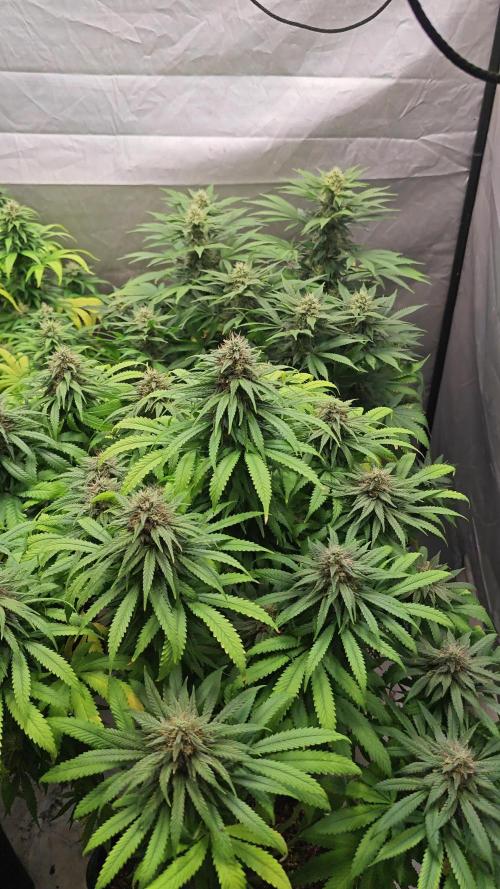
Video update, they made it through the toughest early summer, so now it's about letting them finish, and give them a haircut for the pictures 🎉
Likes
24
Share


@Finniegrow
Follow
Vegetation: To keep temperature and moisture on optimal levels at around 23°C / 65% I'm using two mechanical timers.
- 24/7 on: Fans and water pumps (+Ventilation after 3.11.)
- Timer 1: Lights and Humidifier
18h on / 6h off
- Timer 2 (BROKEN 3.11.): Ventilation
18h (15min on / 15min off) / 6h off
NOTES:
Everything looks good and the roots have appeared from almost every (11/13) rock-wool cube.
From now on I'll mostly water the plants from bottom by adding the wanted amount of nutrient solution on a plate, and then placing the plant on top of for ~15seconds
This week I'm also starting to prepare the hydroponic systems (2x NFT-GT90, and 1x EBB-flow I think) and stronger nutrient solution since my plants are becoming ready to be transferred. Spreader-mat is the base of my plants when I have transferred them in to the hydroponic systems. DO NOT place more than one layer of the spreader-mat as it is not meant to be used like that! As you're cutting the mat for NFT's, be aware to have some extra for your peace to reach nutrient solution below the tray. That way you won't get noise from water dropping when systems are turned on.
Day 15 (1.11.)
Day 16 (2.11.)
First watering with a bit stronger nutrient-solution (~ EC 0,6 / pH 5,9) than before, starting with 50ml/plant and watering once from above. Slowly increasing EC to 0,8.
I cleaned and assembled 2 out of 3 hydroponic-systems which I'm going to use. I'll do the same also to the last system, but it currently has my plants on top of it so I'm going to do it later.
I want to make sure that my plants have built healthy and big enough root system before transplanting to hydroponics. I'm waiting for the rock-wool cubes to be bursting of roots so they won't drown on their first day in hydro. Also, as the plants are bigger before the transplant, I'm able to fill my nutrient-solution tanks full with correct strength nutrient-solution for Mid-Vegetation from the start, therefore no need for that much adjusting later on.
Day 17 (3.11.)
I noticed my other timer which controls the lights had stopped working... The lights were on when they shouldn't have been, I noticed it an hour after they were supposed to turn off. I think I caught up to it early, but it may have been on for maximum of 2 days straight. No worries there since on vegetation-phase the plants don't necessarily need any sleep (Even though you should avoid quick changes like that!).
Roots have appeared from the bottom of every cube and plants are looking pretty healthy. I think they are almost ready for hydroponics.
Day 18 (4.11.)
Few plants are showing symptoms of nutrient deficiences or some sort of sickness, not certain what exactly. I'll be keeping an eye on it. I'll be transferring in to hydroponic systems in maybe a week, so I don't want to stress my plants more than what's necessary.
Increased my solution strength to 0,9 EC with a bit more Cal-Mag than before, and watered the plants for 50-150ml each plant depending on weight and size. I'll be slowly increasing the strength by around 50% during upcoming week. Thanks for tips!
Day 19 (5.11.)
Day 20 (6.11.)
Plants are recovering well from deficiences and I just transferred all of them to hydroponics. I don't have the water pumps on for 24/7 just yet, at this point I water them a couple times a day by keeping the pumps on for somewhere around 15min at a time. Lights are now set to 60% and I also added a tower fan to circulate the air and shake the plants.
Day 21 (7.11.)
Lights are now set to 70% since the Led's and plants are spreaded wider in the tent than before. Distance to plants stays the same at 75cm.
Likes
10
Share


@MooseMan420
Follow
The video is actually from 4 days after I planted my germinated seed. Found the vid after I already posted Week 1! With the seed being an autoflower I was worried it looked a little small at first, but I was wrong...

Processing
Likes
11
Share


@kcartel
Follow
I did not expect such a strong aroma, the plant smells very strong! This week I had a small pruning of the lower leaves, now the main green mass remained at the top, began to grow in volume. Cones began to gain weight, it is already noticeable how the branches became heavy and weighty, fertilizers added 2 times a week in microdoses, the passport indicated that with a stable coverage of 20-4 will grow faster, but I still decided that the whole stage from beginning to end I will spend on 16-8, since I myself assume that this is the most comfortable hours, next week I believe will be the final flowering stage, near Xia Harvest, at the moment all trichomes are transparent and white mustache, my camera unfortunately does not allow for high quality pictures and I can not memorializing it in the photo, in general, I am guided by its past cycle, and I feel that everything will be fine.
Processing
Likes
43
Share


@GrowerGaz
Follow
Day 39
Plants are still looking hungry with the exception of the Moonwalker Kush , I fed them mid week with canna Flores Organic which didn't seem to improve anything, so today I gave them some Iguana Juice (OIM) and Bac OrganicPK booster , so I hope they look a bit brighter this week and get enought for the bud swell in the next week or so.
Strange Fruit
She stinks of 90's bubblegum after the leaf rub smelling more kushy, also the best resin producer
Northern lights
Smells amazing super sweet with some floral aroma, the buds are swelling nice and should be an acceptable yield.
Powerlights
Smell is a bit meeeah on this one has a slight with of rotten exotic fruit and rubber. Strange terp I have not experienced before , has some nice big crystals.
Moonwalker Kush
This is the one plant that has a nice green glow since, this plant was hand feed as I only have four autopots. Smells nice mad kushy as you would expect from a Skywalker cross, with some berry fruit in the background.
I may or may not give them one more feed in five days , will see how things are progressing.
Jack's Toe Jam
I harvested it this week and the smell is amazing , smells like an Amsterdam coffeeshop from 1998. Strange blend of citrus from JH and sweetness of cheese.


Likes
Comments
Share

@SolitudeCorners
Follow
📓 Cultivation Diary: The 12/12 Flip & Transition Week
1 for rosin 1 for flower
📅 June 5, 2026 (Veg Day 17)
Irrigation/Reservoir: Prepared a full 100L reservoir refresh.
Nutrients: Kept the feeding aggressive with a double dose of vegetative nutrition (x2 Nutrient formula) to ensure the root zones and plant tissues are fully stocked with elements before the transition.
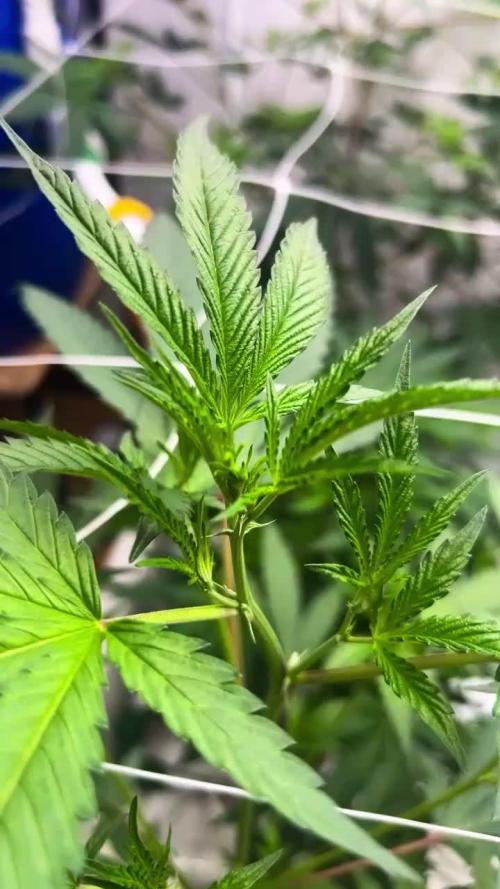
Canopy Observation:the canopy is thick, uniform, and fully occupying the table space. The trellis net is officially filled out, and the lower branches are strong and rigid.
📅 June 6, 2026 (Day 1 of Flower / Bloom Week 1)
The Flip: Officially switched the timers to a 12/12 photoperiod (Lights ON at 6:00 PM / Lights OFF at 6:00 AM).
Schedule: First irrigation shot triggers exactly 1 hour after lights on (7:00 PM), followed by a shot every 1.5 hours.
Volume: Configured the drip stakes to run for 1 minute per shot, delivering 5 shots total per day. This provides roughly 450ml per plant per day, creating excellent target dry-backs overnight to force vigorous root searching.
📅 June 11, 2026 (Day 6 of Flower / Bloom Week 1)
Irrigation/Reservoir: Bumped reservoir capacity up to 110–120L to keep up with increased transpiration as the plants begin their post-flip stretch.
Nutrient Recipe (TargetingpH 6.0 EC 2.5
Water: 110–120L
Athena Cleanse: 120ml
Silica: 220ml (Essential for stem strength during the stretch)
CalMag: 10ml
Athena Bloom: 600ml (Adjusting base to target 1.2–1.3 EC from Bloom component)
Athena Core: 400ml
Irrigation Adjustments: Increased the shot duration slightly to 1 minute and 15 seconds to match the accelerating growth pace.
The early flowering stretch has officially begun. The tops are noticeably pushing past the trellis net layers, and the node spacing remains tight and stacked. Leaf color is an excellent dark green with healthy, bright yellow-green shoots driving upward at the growth tips. No signs of stress or stalling from the schedule shift.