


Likes
Comments
Share


@Homegrown93
Follow
Pink kush has been flowering the quickest, she’s growing well and her new leaves don’t show any sign on the claw so good thing I backed off of that two weeks ago. Her preflowers are turning purple and sometimes it almost looks as if she’s bleeding pink blood. I’m giving her big bud already as she started flowering a solid week before the others. Only giving a little lst and defoliation lately.
Canna cheese just keeps stretching, I can’t complain because I let her go. I just hope she won’t overgrow her space. She has a nice thick stem and drinks plenty. Only a little lst and defoliation lately.
Alien berries so far is the smallest of the bunch, although she’s the slowest to flower, I gave her one more dose of grow nutes before committing to bloom nutes for her. She keeps stretching and gets awfully bushy. Some light Defoliation and little lst.
Strawberry Skywalker has a nice fat stem for its size, she’s short but wide and is throwing out some insane preflowers. She gets very bushy so I defoliate and lst her.
In the next few feeds I’ll add big bud to the rest of them.


Likes
22
Share


@ButtLover
Follow
As you can see in the pictures the girls have stretched quite a bit more and are starting to produce nice buds. I think the stretch should begin to slow down soon considering they're entering the third week tomorrow. That delicious sweet earlier flowering smell is getting a little stronger. Mmm! Nom nom!
It is proving difficult to squeeze them both into a single picture in the room I photograph them in. I may have to start only photographing them separately next week 😅 We will see how it goes! I hope to acquire some photography florescent lights and a seamless background for future grows. Or, make a DIY background. This would allow me to take pictures elsewhere in the house where backgrounds and lighting aren't great.
There was a little heat stress visible on some of the upper leaves but nothing major. I slept in yesterday morning and the lights were a little lower than they should have been. It did make the pictures a little less attractive, unfortunately. Hopefully I won't be feeling so lazy next week.
Hope you all enjoyed this week! 🤗 Don't forget to like!

Likes
2
Share

@obeee
Follow
1. Strain-by-Strain Overview
Permanent Marker (The Titan): Experiencing a massive explosion in flower mass this week. The tightly stacked nodes analyzed in previous weeks have officially fused into towering, ultra-dense colas. The calyxes are swelling heavily, confirming its status as the primary yield driver of this run.
Strawberry Banana (The Resin Queen): An absolute frost machine right now. While the bud structure remains lighter and more aerated as expected by its genetics, the trichome coverage is outstanding. The density of resin glands per millimeter is staggering, making it an incredible gourmet profile.
Super Boof (The Terpene Champion): Developing an incredibly sweet, loud, and mouth-watering aroma. The flower structure is rock-solid and highly resinous, perfectly balancing heavy production with elite olfactory qualities.
2. Environment, Inputs & Strategy Adjustment
Nutrition Ramp-Up: Stepped up the organic input regimen this week. All tailored KNF (Korean Natural Farming) inputs have been increased to 4 ml per Litre to support this critical cell-expansion and ripening phase.
Liquid Bio-Availability: Maintained the immediate "Mix & Go" liquid delivery protocol to feed the living soil directly without stalling the Lacto Bacillus (LAB) or risking calcium precipitation from the WCA. The plants are converting these pre-digested complex sugars and minerals into pure bud density instantly.
Snaescence & Rinsing: Natural fading is progressing beautifully on the lower fan leaves. The progressive nitrogen depletion is allowing the plants to naturally flush their tissues, ensuring maximum terpene purity and zero harshness on the final smoke. I also increased the dosage to 4ml/L for all my KNF nutriment


Likes
31
Share


@Mr_ZAF_Budz
Follow
Hello Canna Fam😎
So it’s been 14 weeks and I finished drying and weighing my harvest. Not too bad for some and terrible for some others. Nevertheless the following dry weights are as follows…
Gorilla Cookies: 76g of bud and 18g of popcorn buds
Girls Scout Cookies: 55g and 22g
LSD-25:
Six Shooter: 21g and 36g
A quick update on the late blooming Gorilla Glue, she is stacking up nicely with another week to go before the chop. The smell is just great and she is finally starting to get sticky sticky.
I hope you all enjoy the diary entry and and please give a like if you do. Happy growing ✌️🏼
Likes
29
Share


@MadeInGermany
Follow
Info:
Unfortunately, I had to find out that my account is used for fake pages in social media.
I am only active here on growdiaries.
I am not on facebook instagram twitter etc All accounts except this one are fake.
Flowering day 29
since time change
to 12/12 h.
Hey guys :-)
Once again a nice week has passed in which the lady has developed super :-).
The buds start to grow and are now getting more pk.
This week it was poured 3 times with 1.2 l each (nutrients see table above).
Fresh osmosis water was filled in canisters for the next 2 weeks.
Everything was cleaned and the plant was checked for health :-).
I wish you a lot of fun with the update and stay healthy 👍
You can buy this Nutrients at :
https://greenbuzzliquids.com/en/shop/
With the discount code: Made_in_Germany you get a discount of 15% on all products from an order value of 100 euros.
You can buy this Strain at :
https://www.amsterdamgenetics.com/product/kosher-tangie-kush/
Type:
Kosher Tangie Kush
☝️🏼
Genetics:
Kosher Kush
X
Tangie
👍
Vega lamp:
2 x Todogrow Led
Quantum Board 100 W
💡
Bloom Lamp :
2 x Todogrow Led
Cxb 3590 COB 3500 K 205W
💡💡☝️🏼
Soil :
Canna Coco Professional +
Nutrients :
Green Buzz Liquids :
Organic Grow Liquid
Organic Bloom Liquid
Organic more PK
More Roots
Fast Buds
Humic Acid Plus
Growzyme Big Fruits
Clean Fruits
Cal / Mag
Organic Ph - Pulver
☝️🏼🌱
Water: Osmosis water mixed with normal water (24 hours stale that the chlorine evaporates) to 0.2 EC. Add Cal / Mag to 0.4 Ec Ph with Organic Ph - to 5.8

Likes
Comments
Share


@BruWeed
Follow
Se encuentra perfecta. Los cocos cada vez estas con mas tricomas. Algunas chalas tienen color violeta. Su olor es fuerte y se siente dulce. Yo creo que en un mes ya estaria, voy a dejarla 3 semanas mas con fertilizantes y despues empiezo con el lavado de raíz.
Es una planta muy linda, todo es perfecto y sin dudas volvere a cultivarla.

Likes
4
Share

@Guerrilla_grower777
Follow
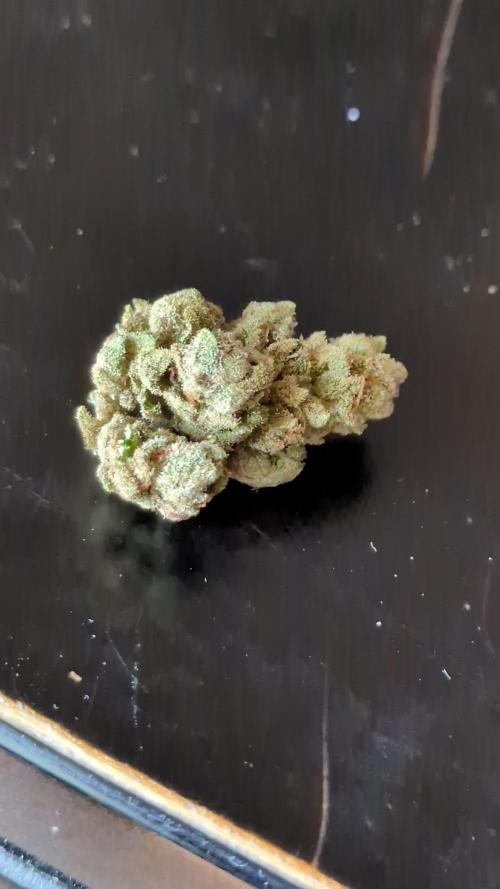
Best autoflower ever,you might not like the flavour because everyone has his own preferences but nothing beats this one in terms of potency

Processing
Likes
12
Share


@Adam420
Follow
Still doing her thing.
Fighting caterpillars
New growth everywhere and is shooting towards 5ft.(60inches)
Very bushy and gets stronger from winds lately.
Bent top stem to do low stress training
Likes
31
Share


@Joni2017
Follow
the last week before harvesting 😬😁 when trying to move the plants the branches were split due to the weight of the flowers 😱😆😋👏🏻 solved with bamboo sticks and insulating tape💪😋 irrigation with water alone until harvest💦💦💦 temperature 24 C ☀️ humidity 45% 💧 binaural sounds 🎼😎
Likes
20
Share


@Green_Dream
Follow
So I was thinking that growth is quite slow in the last two weeks. Then I discovered that the roots were looking weird, and noticed fungus growing on them. So I took the roots out and you can see the problem yourself in the pictures. I removed the bottom part of the roots and I added new coco in the pots, then I placed the girls back. It's been one week now and I can see new roots coming out at the bottom of the pots.
The strange thing is that the 2 plants that were healthy(completely white roots) are also having the smallest buds 😒
Btw, I also flushed them with FloraKleen and H2O2(10%, 2ml/l). Then started feeding again, but with reduced nutrients - 630ppm
I also elevated the pots, so they don't touch the trays anymore and started using the dehumidifier(50% humidity). I also bought a RO system and started using RO water instead of rainwater.
Damn, I hope the harvest will look decent!


Likes
14
Share


@Terpyboyz
Follow
So this grow came to a finshed but I had a. Few issues that’s held me up from finishing up the diary, but in due time I will reupload it all in order soon. But over all I will also update with a final weigh in of each strain produced so stay tuned 🤙🏻🔥


Likes
7
Share


@Aleks555
Follow
We are entering the third week of growth for our FBA 2503 strain from 42Fast Buds, and everything is progressing beautifully. We've recently transplanted the plant into a 10-liter pot, giving it more room to thrive. Even though it's an autoflowering strain, we've decided to experiment with a 12/12 light cycle—12 hours of light during the day and 12 hours at night—to see how it responds.
The daytime temperature peaks at 30°C, with an average range between 27°C and 28°C, while humidity is consistently maintained at 60% to 65%. The plant has reached a height of 14-20 cm and is already showing three sets of leaves. We're preparing to start low-stress training (LST) to help guide its growth.
In addition, we've begun feeding our beauty with nutrients from Xpert Nutrients, and we’re really pleased with the results so far. The plant looks strong and vibrant, and we're excited to see how it develops over the coming weeks!
Processing
Likes
17
Share


@Majormolasses
Follow
This week I started to realize how much water these lady’s exactly started drinking they are getting so thirsty all the time I’m like non stop giving them water it feels like. They are getting super big Arnie the gal one with two tops is at 17” and helga the shorty with the booty jk. Is 10” but was topped on week 8 I believe so she’s trying to catch up and has been they both where popped from seedling at the same time but are totally different should be the same strain but have different characters about ones smell for sure I love smelling them. 👃

Likes
9
Share

@Billzbudz
Follow
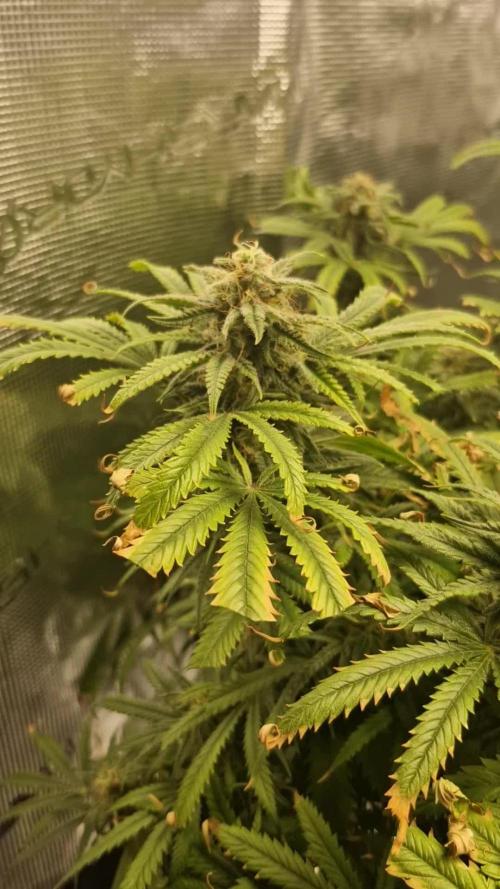
Week 15 off flower the budz are starting to bud..Over fed the ladies to much try to fatten up the budz..my mistake..they will fatten up when they are ready..no point forcing the process..lesson learned...nurti burn or nuti lock out ether way gave them a flush off h2o...and trim an burnt leafs...also raised the light just incase off light burn...Having trouble with humidity up around 60%..I have dehumidifier in the with a carbon fan also a clip fan still at 60 % All vents are open aswell..Tonight i will leave a corner of the tent door open to see if that help drop the humidity..

Likes
39
Share


@Hazecat_420
Follow
Se ven tantos brotes que está todo hermoso y lleno de colores. Vamos de maravilla. Seguimos con este proceso terminando ya su 4ta semana de floración
Likes
Comments
Share

@Anon73
Follow
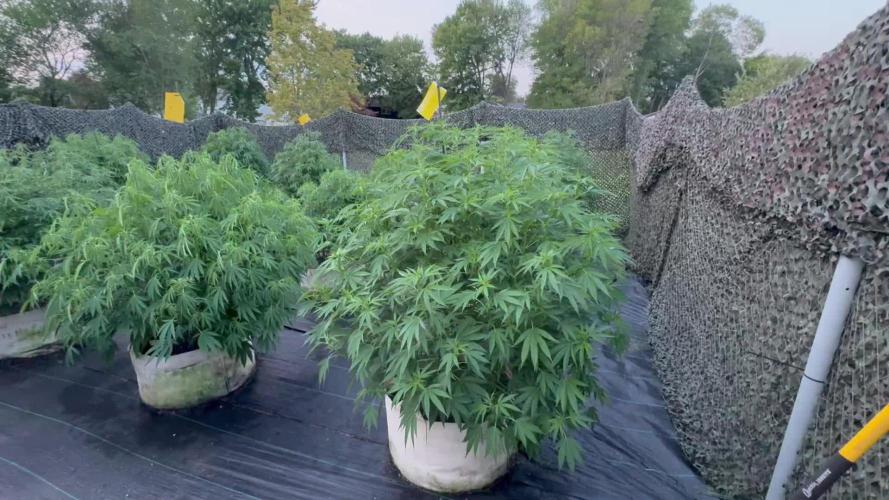
Excellent growth still.
No bugs, no mildew.
Found a few snails and one grasshopper.
The grasshopper would not touch the plant.
It was staying on the support pole.
Flowering has made itself known.

Likes
19
Share


@Skinnytalls420
Follow
Day 51-31/01/22 looking really well first signs of crystals and brown hairs coming through!!!! Day 54-03/02/22 some of them look like they gonna be ready soon!!!! Day 56-05/02/22 we end this week with a watering I’ve woke up this morning and from the pics u can probably tell they need water!!!!
Likes
27
Share


@CannbellFarms
Follow
I’m overjoyed with the phenos this strain is producing, strong vibrant purples with some serious flavour profiles!
Scent Profiles we have:
Candy Lemon Sherbet 🍬🍋
Sweet & Piney Diesel 🍭🌲⛽️
Sweet & Tangy Tropical Punch 🏝️🥊
Alongside this, these beauties are the frostiest and the most insanely dense koala looking nugs I’ve ever produced!
Likes
141
Share


@1Right_Angle
Follow
Aug 29th
- entering week 4 of Flower for CloudWalker and rOOF95
- PurpsBerry enters week 9 of Flower. Looking at her today,!if this monsoon does not happen
-Purps fed and she looks amazing. Possible flush next week. Samples to be taken this week for microscope assessment
Sept 4th
- last day of week 4 for rOOF95 and CloudWalker
- PurpsBerry gets inspected today, could be close to Harvest for her


Likes
7
Share


@Staffedition
Follow
Привет друзья.
Наше знакомство продолжается с новым фотоцветущим растением от Smail_Seeds сорт ORIGINAL CHEMZKITTLEZ F1 reg.
Сегодня растению 99 дней.
Шишки наливаются уже тяжелей и тяжелей стоять малышки)
Перевёл на 12/12 1.10.2023
Растение очень хорошо развивается, ни каких сбоев в генетике не наблюдается😀
Сорт выводим сами.
Смотри мой профиль, у нас всегда есть что то интересное.
Не забудь поставить лайк❤️, если понравилась как прошла неделя
И читайте наш TELEGRAM: https://t.me/smail_seeds
#Smail_Seeds 😀