


Likes
Comments
Share


@JUNGLE_B4RNS
Follow
Hello fellow grower
Week 4 development under the Mars Hydro FC6500. The growth rate is spectacular, all the plants are showing some Nitrogen deficiencies. The roots have totally filled up the 1.8l pots. This is impressive.
_________________________________________________
Barney’s genetics under the perfect type of light is marvelous. Hopefully all their strains are extremely resilient and will forgive wrong moves to recover quickly.
_________________________________________________
Cellmax BIO RootBooster have blasted the roots development, and filled up the pots in less than 2 weeks.
_________________________________________________
18/09
Water + BIO RootBooster 4ml/1l + AllZymes 1ml/1l
pH 6.5

Likes
18
Share


@Earthsower
Follow
She is in the last stage of the vegetation and she looks good the meristem is thick and the auxiliary shoots have begun to form it’s canopy. N13 kush has many five fingered leaves and she now stands at 36cm


Likes
143
Share


@SwissKush
Follow
Day 71 - Ripening Day 5
a. she drinks 4L a day, slowing down from the 5L a day
b. the buds are still growing every day is noticeable
c. the pistils on the flowers are nearly all orange and brown, there are no new white pistils growing, but still few white pistils remain
d. trichomes are very milky white, still some clears and no amber I can see on the actual buds, few ambers on random leafs
e. this will probably be the last week of growth, and there will be a short florakleen flush as ppms never went above 1000ppm on this grow.
Day 72 - Ripening Day 6
a. consuming 4L a day of nutrient solution
b. her flowers are still growing! The resin is so much on the leaves and buds
c. the remaining white pistils are maturing... trichomes are very milky.
Day 73 - Ripening Day 7
a. buds are still growing, every day is noticeable growth, she drinks 3.5-5L a day
b. pistils are all turning, very few white pistils left
Day 74 - Ripening Day 8
a. the flowers are smelling very strong, pine, blueberry and diesel fuel
b. she is wrapping up nicely
Day 75 - Ripening Day 9
a. performed defoliation, removed 50+ large fan leafs, there is resin all over the stems, will use for ice hash
b. the buds are still growing, the smell becomes too strong for the carbon filter overnight
Day 76 - Ripening Day 10
a. adding only Spring water to the DWC right now, keeping ppms below 800, preparing for the flush
b. buds are becoming very frosty
c. the fan leafs have started to fade nicely
d. I am seeing the first glimpses of amber trichomes, mostly milky white throughout
e. all pistils have turned red and orange
Day 77 - Ripening Day 11
a. the trichomes are mostly milky white with a few ambers showing here and there
b. added 5L of spring water to help the flush
c. will change to FloraKleen tomorrow, and harvest in a day or two.
d. constantly removing faded fan leafs, they are becoming easier to snap off the stem, the plant is entering the harvest window.


Likes
15
Share


@Roope
Follow
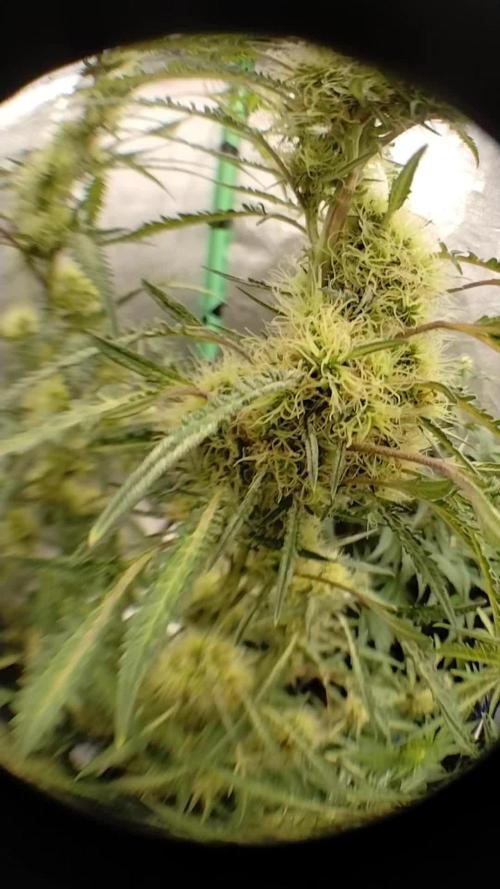
Ewerything works and im so bananas right now and broud of those ladys that comment will be,
Start u'r own project and dont race becouse somebody may have 20+year of more info and they get moster no epic size planta but thats the goal be like pro at this lifetime.
Aint do any modification only extra bag of co2 and wery mild start nutriments so stay in tune!




Likes
3
Share

@momothehobo
Follow
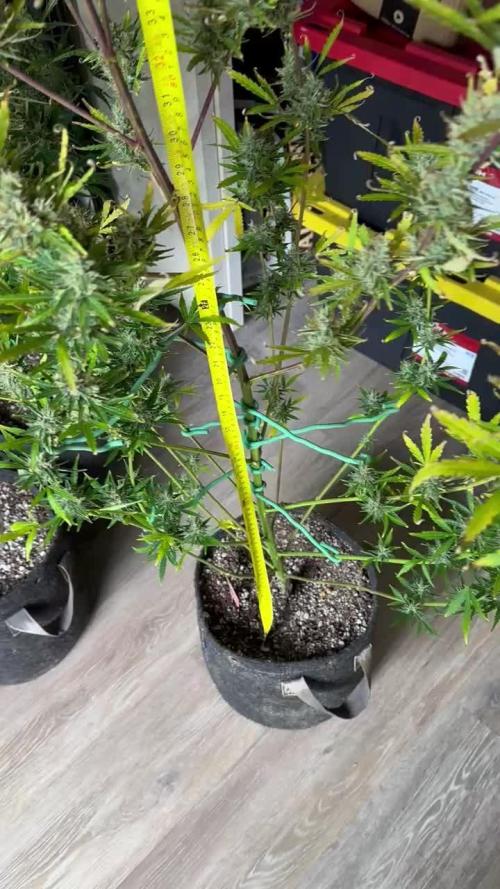
They got the chop this week; they turned out to be the tallest I've grown in a while! I didn't weigh out the bags in the fridge but I'd have to say there's at least 2 zones in each bag, so I can't complain about yield 🤘 The terps are sweet, skunky, and a smooth citrus, though I'm not sure what they'll be like after the ~30 day cure... I'm hoping it gets sweeter 🤞 - Thank You for checking out my diary!
Processing
Likes
12
Share


@2Stones1Bird
Follow
Checkout my Instagram @smallbudz to see the Small budget grow setup for indoor use, low watt, low heat, low noise, step by step.
08/11/2019 - Showing early flower development?
09/11/2019 - Gave her 0.500 ml plain water PH 6.5, she's starting to need more water and also due to 30c temps. She's also showing light green around the leafs maybe slight magnesium deficiency.
10/11/2019 - Yellow leafs showing up really fast so I 'flushed' the medium with 1l of 6.4 PH plain water, watered until some run off start to showing, change the watering plan again, now I only water when the pot feels light and dry at the bottom.
13/11/2019 - Pot was really light and dry at the bottom so I gave her 1.5l of water with 0,75ml of Grow, 1,5ml of Bloom and 0.75ml of Max BioBizz PH 6.5 until some runoff started to appear I think was too much again : also added a work-supplement led strip light.
14/11/2019 - Leaves looking pale raise the light to 45cm instead of the recommended by manufacture 25-40cm.
Likes
17
Share


@Elpicor
Follow
D28
All plants are showing pre-flowers, now the TS 1000 and FC3000 are pumping together at 45% dimmer and it will go up to 50% in a week, this morning before the lights went on I sprayed the fish mix on the leaves, now I understand why they advise to use it outdoors,,, I must say, however, sprayed on the leaves it has an explosive growth effect, this will be the only time I will spray them, during the week I will gradually switch to bio grow and bio bloom
D30
Lamp doesn't swiched off last night because network outage, fu...ing wifi timer, they will got 48 hous of light, plus extractor broken... damn, I replaced the 10 cm fault with a 12.5 cm, perhaps it was also time, the network problem was solved by provider and plants rested for 6 hours tonight, however today they are not bad, I hope they have not triggered some strange anomalies that will develop in the future
D32
Fan leafs defoliation covering new buds
D34
Strawberry pie will continue its journey on the balcony the plants in the growbox are straching and I would like to give them a comfortable space to grow, administered 0.5ml bio bloom for all except strawberry pie because it is late
Likes
11
Share


@Dreadnug
Follow
Growing fast - have the start of 16 cola locations and starting to work some of them back towards the middle of the plant. Lots of training - noticing that the ground cover is a bit too aggressive and getting in the way of light distribution so having to trim that back quite a bit. Also its making it hard for the training ties to stay in the ground.
Weekly nutes continue with same mix above.

Processing
Likes
6
Share


@Smokwiri
Follow
Well, I've been comparing this with similar strains, untill now, i think she sugar kush is less profitable when using LST, but it works good, and the plant is nice and low
Likes
2
Share


@Gardens_of_Of
Follow
She completed the first week of flowering happily and she keeps stretching. Trailers net added to level the canopies.

Likes
8
Share

@Northfork
Follow
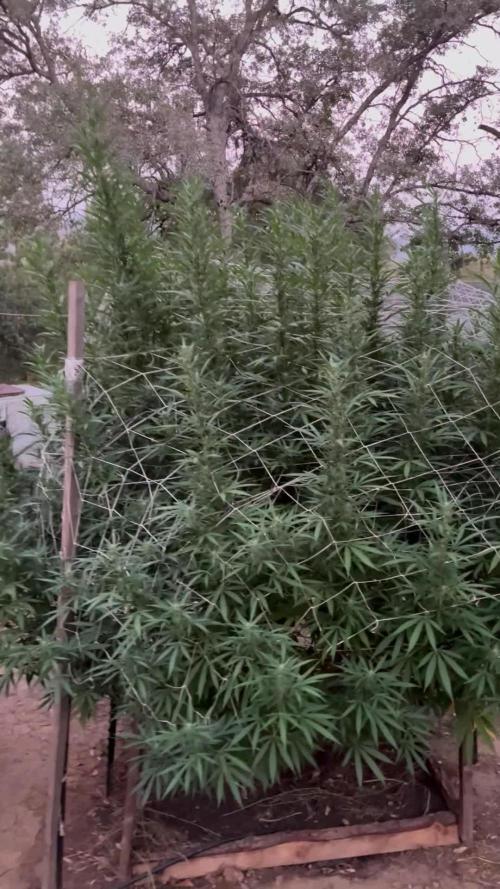
8-25-25
Apple fritter has stopped stretching and started stacking really good super Frosty sticky apple fritter buds everywhere plant is going to start getting heavy soon.
Likes
56
Share


@Ultraviolet
Follow
What's in the soil? What's not in the soil would be an easier question to answer. 16-18 DLI @ the minute. +++ as she grows.
Probably not recommended, but to get to where it needs to be, I need to start now.
Vegetative @1400ppm 0.8–1.2 kPa 80–86°F (26.7–30°C) 65–75%, LST Day 10, Fim'd Day 11
CEC (Cation Exchange Capacity):
This is a measure of a soil's ability to hold and exchange positively charged nutrients, like calcium, magnesium, and potassium. Soils with high CEC (more clay and organic matter) have more negative charges that attract and hold these essential nutrients, preventing them from leaching away.
Biochar is highly efficient at increasing cation exchange capacity (CEC) compared to many other amendments. Biochar's high CEC potential stems from its negatively charged functional groups, and studies show it can increase CEC by over 90%. Amendments like compost also increase CEC but are often more prone to rapid biodegradation, which can make biochar's effect more long-lasting. biochar acts as a long-lasting Cation Exchange Capacity (CEC) enhancer because its porous, carbon-rich structure provides sites for nutrients to bind to, effectively improving nutrient retention in soil without relying on the short-term benefits of fresh organic matter like compost or manure. Biochar's stability means these benefits last much longer than those from traditional organic amendments, making it a sustainable way to improve soil fertility, water retention, and structure over time. Needs to be charged first, similar to Coco, or it will immobilize cations, but at a much higher ratio.
a high cation exchange capacity (CEC) results in a high buffer protection, meaning the soil can better resist changes in pH and nutrient availability. This is because a high CEC soil has more negatively charged sites to hold onto essential positively charged nutrients, like calcium and magnesium, and to buffer against acid ions, such as hydrogen.
EC (Electrical Conductivity):
This measures the amount of soluble salts in the soil. High EC levels indicate a high concentration of dissolved salts and can be a sign of potential salinity issues that can harm plants.
The stored cations associated with a medium's cation exchange capacity (CEC) do not directly contribute to a real-time electrical conductivity (EC) reading. A real-time EC measurement reflects only the concentration of free, dissolved salt ions in the water solution within the medium.
98% of a plants nutrients comes directly from the water solution.
2% come directly from soil particles.
CEC is a mediums storage capacity for cations. These stored cations do not contribute to a mediums EC directly.
Electrical Conductivity (EC) does not measure salt ions adsorbed (stored) onto a Cation Exchange Capacity (CEC) site, as EC measures the conductivity of ions in solution within a soil or water sample, not those held on soil particles.
A medium releases stored cations to water by ion exchange, where a new, more desirable ion from the water solution temporarily displaces the stored cation from the medium's surface, a process also seen in plants absorbing nutrients via mass flow. For example, in water softeners, sodium ions are released from resin beads to bond with the medium's surface, displacing calcium and magnesium ions which then enter the water. This same principle applies when plants take up nutrients from the soil solution: the cations are released from the soil particles into the water in response to a concentration equilibrium, and then moved to the root surface via mass flow.
An example of ion exchange within the context of Cation Exchange Capacity (CEC) is a soil particle with a negative charge attracting and holding positively charged nutrient ions, like potassium (K+) or calcium (Ca2+), and then exchanging them for other positive ions present in the soil solution. For instance, a negatively charged clay particle in soil can hold a K+ ion and later release it to a plant's roots when a different cation, such as calcium (Ca2+), is abundant and replaces the potassium. This process of holding and swapping positively charged ions is fundamental to soil fertility, as it provides plants with essential nutrients.
Negative charges on soil particles: Soil particles, particularly clay and organic matter, have negatively charged surfaces due to their chemical structure.
Attraction of cations: These negative charges attract and hold positively charged ions, or cations, such as:
Potassium (K+)
Calcium (Ca2+)
Magnesium (Mg2+)
Sodium (Na+)
Ammonium (NH4+)
Plant roots excrete hydrogen ions (H+) through the action of proton pumps embedded in the root cell membranes, which use ATP (energy) to actively transport H+ ions from inside the root cell into the surrounding soil. This process lowers the pH of the soil, which helps to make certain mineral nutrients, such as iron, more available for uptake by the plant.
Mechanism of H+ Excretion
Proton Pumps: Root cells contain specialized proteins called proton pumps (H+-ATPases) in their cell membranes.
Active Transport: These proton pumps use energy from ATP to actively move H+ ions from the cytoplasm of the root cell into the soil, against their concentration gradient.
Role in pH Regulation: This active excretion of H+ is a major way plants regulate their internal cytoplasmic pH.
Nutrient Availability: The resulting decrease in soil pH makes certain essential mineral nutrients, like iron, more soluble and available for the root cells to absorb.
Ion Exchange: The H+ ions also displace positively charged mineral cations from the soil particles, making them available for uptake.
Iron Uptake: In response to iron deficiency stress, plants enhance H+ excretion and reductant release to lower the pH and convert Fe3+ to the more available form Fe2+. The altered pH can influence the activity and composition of beneficial microbes in the soil. The H+ gradient created by the proton pumps can also be used for other vital cell functions, such as ATP synthesis and the transport of other solutes. The hydrogen ions (H+) excreted during photosynthesis come from the splitting of water molecules. This splitting, called photolysis, occurs in Photosystem II to replace the electrons used in the light-dependent reactions. The released hydrogen ions are then pumped into the thylakoid lumen, creating a proton gradient that drives ATP synthesis.
Plants release hydrogen ions (H+) from their roots into the soil, a process that occurs in conjunction with nutrient uptake and photosynthesis. These H+ ions compete with mineral cations for the negatively charged sites on soil particles, a phenomenon known as cation exchange. By displacing beneficial mineral cations, the excreted H+ ions make these nutrients available for the plant to absorb, which can also lower the soil pH and indirectly affect its Cation Exchange Capacity (CEC) by altering the pool of exchangeable cations in the soil solution.
Plants use proton (H+) exudation, driven by the H+-ATPase enzyme, to release H+ ions into the soil, creating a more acidic rhizosphere, which enhances nutrient availability and influences nutrient cycling processes. This acidification mobilizes insoluble nutrients like iron (Fe) by breaking them down, while also facilitating the activity of beneficial microbes involved in the nutrient cycle. Therefore, H+ exudation is a critical plant strategy for nutrient acquisition and management, allowing plants to improve their access to essential elements from the soil.
A lack of water splitting during photosynthesis can affect iron uptake because the resulting energy imbalance disrupts the plant's ability to produce ATP and NADPH, which are crucial for overall photosynthetic energy conversion and can trigger a deficiency in iron homeostasis pathways. While photosynthesis uses hydrogen ions produced from water splitting for the Calvin cycle, not to create a hydrogen gas deficiency, the overall process is sensitive to nutrient availability, and iron is essential for chloroplast function.
In photosynthesis, water is split to provide electrons to replace those lost in Photosystem II, which is triggered by light absorption. These electrons then travel along a transport chain to generate ATP (energy currency) and NADPH (reducing power). Carbon Fixation: The generated ATP and NADPH are then used to convert carbon dioxide into carbohydrates in the Calvin cycle. Impaired water splitting (via water in or out) breaks the chain reaction of photosynthesis. This leads to an imbalance in ATP and NADPH levels, which disrupts the Calvin cycle and overall energy production in the plant. Plants require a sufficient supply of essential mineral elements like iron for photosynthesis. Iron is vital for chlorophyll formation and plays a crucial role in electron transport within the chloroplasts. The complex relationship between nutrient status and photosynthesis is evident when iron deficiency can be reverted by depleting other micronutrients like manganese. This highlights how nutrient homeostasis influences photosynthetic function. A lack of adequate energy and reducing power from photosynthesis, which is directly linked to water splitting, can trigger complex adaptive responses in the plant's iron uptake and distribution systems.
Plants possess receptors called transceptors that can directly detect specific nutrient concentrations in the soil or within the plant's tissues. These receptors trigger signaling pathways, sometimes involving calcium influx or changes in protein complex activity, that then influence nutrient uptake by the roots. Plants use this information to make long-term adjustments, such as Increasing root biomass to explore more soil for nutrients. Modifying metabolic pathways to make better use of available resources. Adjusting the rate of nutrient transport into the roots. That's why I keep a high EC. Abundance resonates Abundance.
Likes
19
Share


@Ezzjaybruh
Follow
GNOSTIC SEEDS
BISHOP, MOSAIC, LOGOS
Flipping within week. I’m over over sharing in updates, love to talk garden if anyone’s curious. Hit me up on comments or dm
Likes
7
Share


@WolverineGreens
Follow
The stretch looks to be comin to an end. In the process of doin my last defol.
Temps are staying in the zone at the moment. I think I'm in for a Shit show but fingers crossed. Maybe they will come fix the a.c. early or somethin...lol


Likes
3
Share


@Whosaysgirlscantgrow
Follow
Last week or so on this one. She’s got one last feed and then we will be heading to flush in the next 3 or 4 days. Aiming for the chop in 7 days ish. She smells like a sweet shop, starting to change to purple in places! I can’t wait!
Still using Monkey Nutes

Likes
29
Share


@GrownwithLED
Follow
In week 7 the 12 plants have filled out the space inside the HOMEBOX grow-tent very nicely and therefore its time to switch to flowering. I change the timer, which I put infront of the supply of my SANlight EVO4-120 LEDs, to 12/12 hours of light/darkness. This will induce the flowering of my babies and they can start to develop buds. The BIO NOVA nutrients work very well, which can be seen in the nice healthy green color of the plants. I follow the SOIL-CULTIVATION chart from the BIO NOVA website, but use only half the recommended dose, because my tap-water already has a very high EC-value of 0,8 when it comes out of the faucet. Since I have used REGULAR seeds for THE PURPS from BC-BUD-DEPOT, I have to check for males on a regular basis. Two plants show clear male pollen-sacks already now (see above in video) and have to be culled right away. I cut the plants off at the main stem right above the soil and take away the plants and throw them into the trash right away. This way I make sure NO pollen can mature inside the male pollen-sacks and be released later and inseminate my babies on accident. In the places of the male PURPS plants, I put a MAC and KK-plant into the AUTOPOT-system, so all 12 placed are filled again. Now its time to wait until the first flowers start to appear. 👍😎


