


Likes
Comments
Share


@myrceneCB1
Follow
WEEK 10 - 25/9/2021 - 1/10/2021
30/9/2021 - No major issues these past week. Plant 1,2 and 3 responding really well to scrogging. The original purpose of the net was to support the buds actually. But since the net is in place, I thought it would make more sense to use the opportunity to bring the 3 plants to the same level as plant 4. Despite that, plant 4 still has trouble catching up and plant 1-3 just stretched like crazy.
Plant 1-3 have started flowering and stretching. Not plant 4 though. No signs of stigmas yet. Weird genetics. Been having issues since germination.
Major defoliation done for all plants. Sucker branches removed and LST readjusted.
Complete res change done. 30 gallons of water mixed with the following:
Liquid Silicon - 1ml/gal - 30ml
Cal-Mag - 2.5ml/gal - 75ml
Micro - 3.5ml/gal - 105ml
Gro - 2.5ml/gal - 75ml
Bloom - 3.5ml/gal - 105ml
Hydroguard - 2ml/gal - 60ml
pH - 6.12
EC - 1.21 mS/cm
T - 24.5

Likes
8
Share


@Hiroots420
Follow
27/04/2021 (Day 42)
Todo viene muy bien, las plantas están comiendo con muchas ganas y consumen unos 15L de solución diario.
La preflora está comenzando!
Ya se puede observar como van estirando y mostrando bastantes pelos!
Los Citizen x 8 están trabajando a un 80% rondado los 500W.
28/04/2021 (Day 43)
Se realizo un nuevo cambio de solución, las plantas ya están tirando pelos y los leds están al 80%, se observo un gran crecimiento radicular y las paredes del tallo son increíblemente gruesas y duras.
03/05/2021 (Day 48)
Las plantas vienen con un crecimiento optimo pero la flora se está tardando demasiado en hacerse presente, se estima que es debido al estrés que tuvo en semana 3 de vege produjo un retraso de algunos días.
Esta semana se incorpora Safe Roots al sistema con la finalidad de que deje la solución lo mas limpia posible.
También se realizaron bastantes defoliaciones ya que no existía penetracion de luz teniendo en cuenta el tamaño que están ocupando (85% del espacio de cultivo a 30/35 cm de altura)

Likes
3
Share

@trelopoulos
Follow
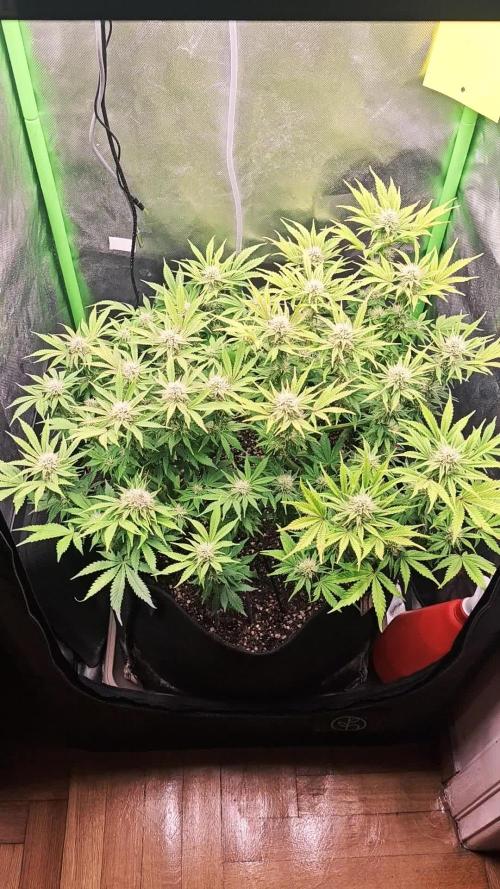
Ladys got stunned.. because of high potassium that locked calsium.. at least it wasn't at veg.. they dont handle well potassium silica.. Did one clean water watering and hope for the best.. still looking promising.

Likes
20
Share

@Chubbs
Follow
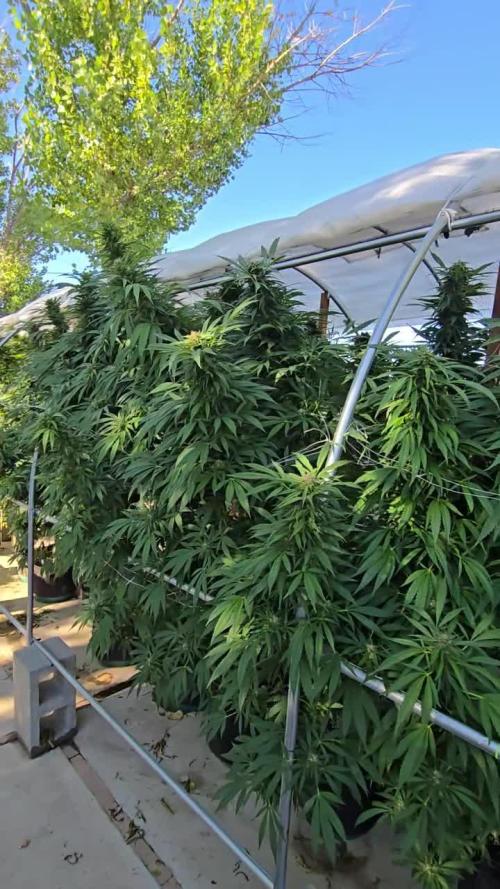
What up fam. Weekly update on these girls. During thus past week I found some dreadful catapillers in some of my flowers. It's never something you want to find but it's definitely part of the challenge growing outdoors. I started to harvest some for some fresh frozen so once I get them all done in the next couple weeks I'll know what my total is going to be. All in all Happy Growing.
Likes
39
Share

@GreenHobbit
Follow
Woche 13 | Tag 85–91
Der letzte Tanz vor der Axt ?🌲
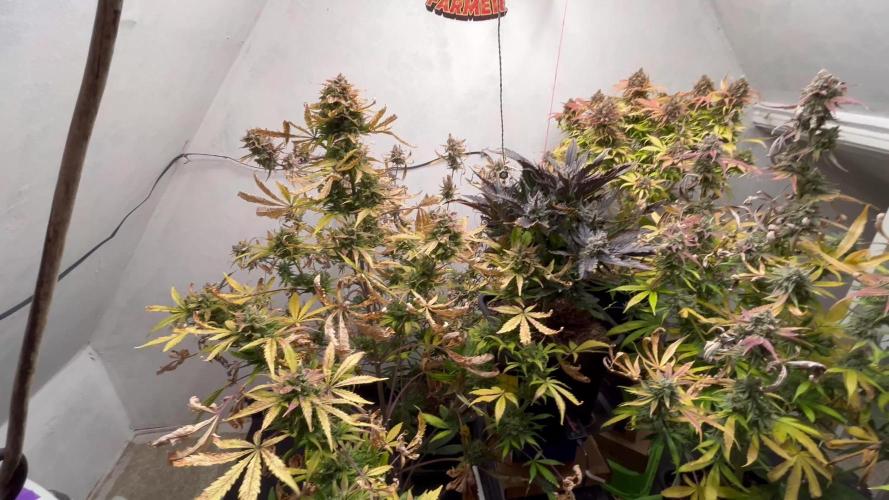
Woche 13 markierte den endgültigen Endspurt für die fünf Autos. Nach über drei Monaten unter den LEDs ist das Ziel nun zum Greifen nah. Die Pflanzen zeigen alle klassischen Zeichen der Endreife: kräftiger Fade, herbstliche Farben, knochentrockene Fächerblätter und eine Harzproduktion, die selbst nach 20 Jahren Growerfahrung noch ein breites Grinsen ins Gesicht zaubert.
Die Purple Punch entwickelt sich weiterhin zum heimlichen Star des Runs. Was auf Fotos oft unscheinbar wirkt, entpuppt sich beim genaueren Hinsehen als massiver Bud-Busch mit erstaunlicher Dichte. Die dunklen Farben, die fast schwarzen Blätter und die dicken, steinharten Blüten machen sie zu einem absoluten Hingucker.
Auch die GMO hat in den letzten Tagen nochmal ordentlich zugelegt. Die Buds sind komplett überzogen mit Harz und die Trichome zeigen inzwischen deutlich mehr Reife als noch vor wenigen Tagen. Die Wirkung dürfte genau in die Richtung gehen, die ich mir für diesen Run vorgestellt habe.
Die Blueberry hat überraschend stark aufgeholt und befindet sich mittlerweile ebenfalls voll im Erntefenster. Ihre Blüten sind komplett bereift und zeigen inzwischen erste Bernsteinfärbungen.
Hyperion präsentiert sich weiterhin als wahre Frostmaschine. Die Blüten sehen aus, als wären sie mit Puderzucker überzogen worden. Während die Trichome noch etwas jünger wirken als bei Purple Punch und GMO, befindet sie sich inzwischen ebenfalls in der maximalen Potenzphase.
Die Runtz liefert zum Abschluss noch einmal ein wahres Farbfeuerwerk. Gelb, Orange, Rot, Grün und Lila treffen auf unglaublich frostige Blüten und machen sie zu einer der schönsten Pflanzen des gesamten Runs.
In dieser Woche wurden erneut zahlreiche Makroaufnahmen gemacht, um die Trichomentwicklung zu verfolgen. Während vor wenigen Tagen noch einzelne klare Köpfe zu finden waren, dominieren mittlerweile milchige Trichome. Erste Amberköpfe tauchen nun auf allen Pflanzen auf und bestätigen, dass sich das Erntefenster endgültig geöffnet hat.
Die Bewässerung wurde stark reduziert. Die Pflanzen zehren inzwischen vollständig von ihren Reserven und zeigen einen spektakulären Fade. Genau so möchte man einen Run kurz vor dem Ziel sehen.
Nach 91 Tagen steht nun die letzte Entscheidung an: Noch wenige Tage Geduld für die gewünschte Menge Amber oder die Axt schwingen. Das Ziel dieses Runs war von Anfang an eine schwere, körperbetonte Wirkung mit maximaler Reife – und genau darauf steuern die Pflanzen aktuell zu.
Die nächste Aktualisierung wird höchstwahrscheinlich bereits der Erntebericht sein.


Likes
1
Share


@Luke_Lee
Follow
—————————————————————
WEEK 1 / DAY 01-07
Mars Hydro FC-E3000
Floragard Professional GrowMix
11L Plant bag made of fleece
Light: 50 cm / 25%-75watt;
Schedule: 24/0;
20° C - 55 RH
150ml water per Plant
PH 6,5-7
0ml BioGrow; 0ml TopMax ; 0ml BioBloom
#1 Blueberry Automatic
#2 Blueberry Automatic
Fan, extractor and pump ON 24/0.
—————————————————————-
These are the two at the top left and right (red brackets)
-24.01.2025
Both seeds have sprouted successfully after 3-4 Days
-26.01.2025
Today is the last day of the first week. The little ones are doing well, the first few “real leaves” have appeared and the vegetation phase can begin.
19.5° C - 78RH
Total Time: 193,39h
Total Energy: 25,04kWh
Likes
2
Share

@LST420
Follow
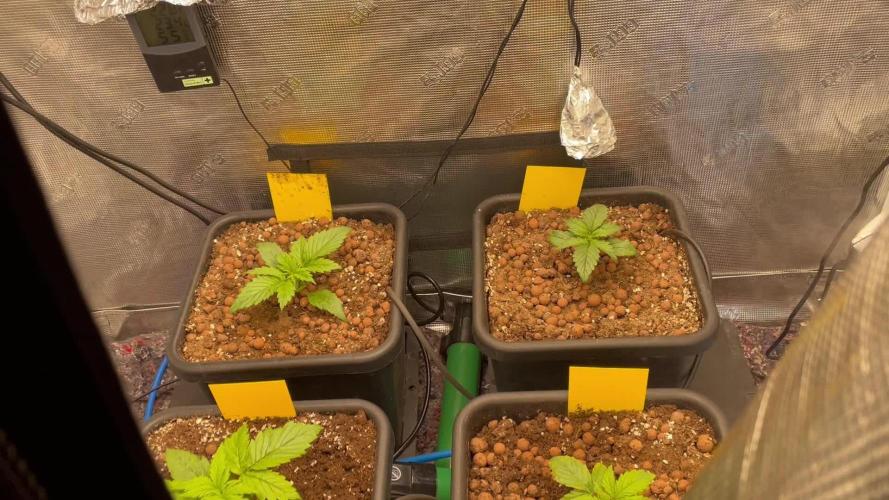
Week 3 I've been feeding the plants some extra CalMag because the Auto Night Queen appears to have a deficiency. And I started with LST.

Likes
19
Share


@adam_pawloski87
Follow
Let’s Go Day 22 from seed for these 5 Ogreberry Autos from @twenty20mendocino and Bruce Banner from @fastbudsgenetics !! Today we turned the Scorpion up to full power and raised it to 38 1/2 inches above pots and getting a reading of 520 - 530 par ! gonna let the babies grow into the light now over the next few weeks till they hit into flower an keep a steady eye on it Incase I got to raise the light higher or lower !! Air temp an humidity has been great , stayin from 70-75 degrees through the day an humidity is staying around 58% ! So far so good Let’s grow lil Babies let’s grow!!! Hope you all enjoy an are ready for another amazing week ! Peace love an positive vibes to all you Growmies out there Cheers 😶🌫️💨💨💨💨💨🤙🏻keep them eyes peeled for next week y’all !! If there’s any questions please ask me ! Thank you all. 💚💯


Likes
30
Share

@Kirsten
Follow
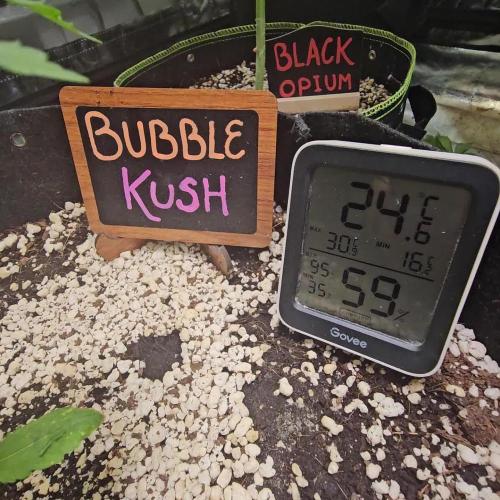
Bubble Kush is beginning to show some good growth this week, so I hope we will get going now.
13.8.25:
I watered with 500mls of dechlorinated water PH'd to 6.6 with;
💜 1ml Trace
💜 1 TSP Biosys
PH: 6.6
PPM: 351
17.8.25:
I watered with 2ltrs of dechlorinated water PH'd to 6.0 with;
💜 2ml Trace
PH: 6.0
PPM: 391
18.8.25:
The plant was FIM'ed today, no watering was necessary.
Thanks for checking in this week and hanging out in the comments 😊💚✌️🍃🙏
Likes
34
Share


@rhodes68
Follow
12/7
Week five and in full flower.
Runoff was way high 1400-1700 ppm this accounts for the tiny white tips on new growth.
Increased amount to 0.5 gal once a day but may have o go back to twice a day.
Still on half/grow half/bloom until the stretch plays out still trying to hit 700ppm of feed without runoff exceeding upper limits so feed alone is running 600ppm to counter the hard water. Once I have a handle on the runoff will up nuets.
After some thought and a bit of reading I decided to do this as a root drench and fertilized flush to remove all salts from the pot.
0.5 gal 5.7PH CT Grow AB / Kangaroots /Fish Sh!t with @50% runoff - 950ppm (unadjusted 750ppm adjusted) in / and 1020ppm out.
See how things look in 24 hours.
12/12 Feed set to 800ppm still half grow half bloom
12/13 Some pics lights on just getting the hang of it
Nuets now just the Coco Tek half grow half bloom 800-ish ppm 15% runoff 2.5 quarts 5.9PH at lights on
Likes
1
Share

@SpliffDoc
Follow
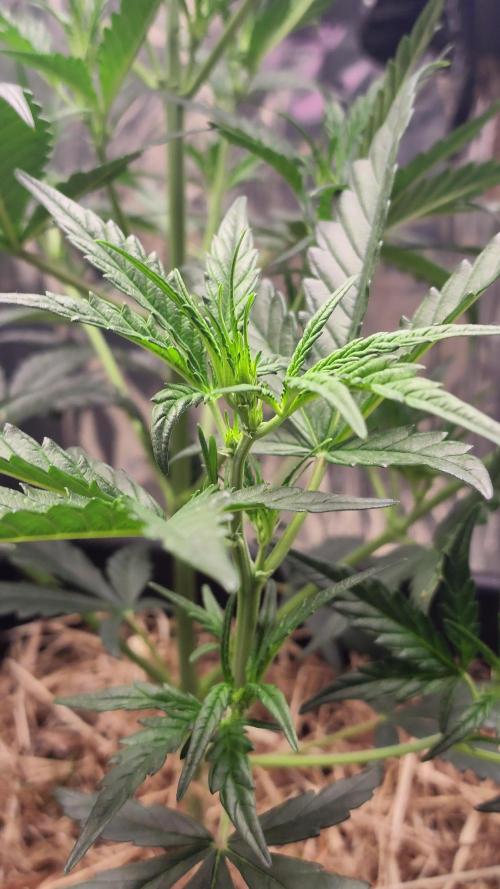
Day 29 - What an absolute beauty she is. No need to defoliate or train this plant she does everything herself, she is growing at an incredible rate. Couldn't be happier with it.
Day 31- received 2-8-10 top dress. She's ready to take on the 🌎 now, can't wait for this one😋
Update Day 33-This beautiful girl is getting big. Love the way shes growing, not one single dot of a problem. Bud sites are forming, soon the buttons will appear. ✌️
Likes
11
Share


@Purrple_Haze
Follow
Bloom Mode On 🌺⚡️
Big shift this week—after 24 weeks of vegging, I’ve officially flipped the light cycle to 11/13 and kicked off flowering! She’s standing strong and ready for the next chapter. You can even catch the tent peeking in the background on the pics.🏕️💡
Why now? In my region, September and October tend to be wet, and I’d rather not risk losing these gorgeous buds to mold. Plus, the high summer sun is peaking, and I want to give her the best light intensity possible for an explosive bloom. ☀️🔥
She’s still running on the same feeding routine as my autoflowers—Effective Microorganisms a few days ago, followed by a dose of BioBizz Grow and Alg·A·Mic to keep her both green and stress-free as she stretches into flower. 💧🌿
To keep her strong and resilient, I’m also spraying silica on the leaves every three days—just a little armor for the battles ahead. 🛡️🌱
Let’s see what she does with all that sunlight and freedom—this Red Hot Cookies is about to turn up the heat! 🍓🌶️🚀

Likes
14
Share


@Cannibalgardens
Follow
Boy this plant has been going a slow and steady race so far I can't wait to see how reacts to bring put into a bigger pot. The growth is a great green colour and she hasn't been lacking anything . Looking forward to next week and seeing how the growth has come along .. cheers and thanks for checking out the grow..
Likes
73
Share


@Roberts
Follow
Cookies and cream auto is growing great. She is bulking and smelling and looking good. Gonna sit back and let her finish under the Medic Grow Mini Sun-2. Thank you Medic Grow, and MSNL Seeds. 🤜🏻🤛🏻🌱
Thank you grow diaries community for the 👇likes👇, follows, comments, and subscriptions on my YouTube channel👇. ❄️🌱🍻
Happy Growing 🌱🌱🌱
https://youtube.com/channel/UCAhN7yRzWLpcaRHhMIQ7X4g

Likes
13
Share

@Stork
Follow
Day 84 Mon
Add Water
PH 5.8
EC 0.7 - 0.6
DLI 12h
PPFD
Water 22c
Day 86 Wed
PH 6.0
EC 0.5
DLI 12h
PPFD
Water 18c
Day 87 Thu
PH 5.9
EC 0.5
DLI 12h
PPFD
Water 21c
Day 87 Thu
Add Water
PH 6.1 - 5.9
EC 0.7 - 0.4
DLI 12h
PPFD
Water 18c
Day 87 Fri
PH 5.9
EC 0.6
DLI 12h
PPFD
Water 18c
Day 88 Sat
Add water
PH 5.9 - 6.0
EC 0.6 - 0.5
DLI 12h
PPFD
Water 18c


Likes
8
Share


@Krissci
Follow
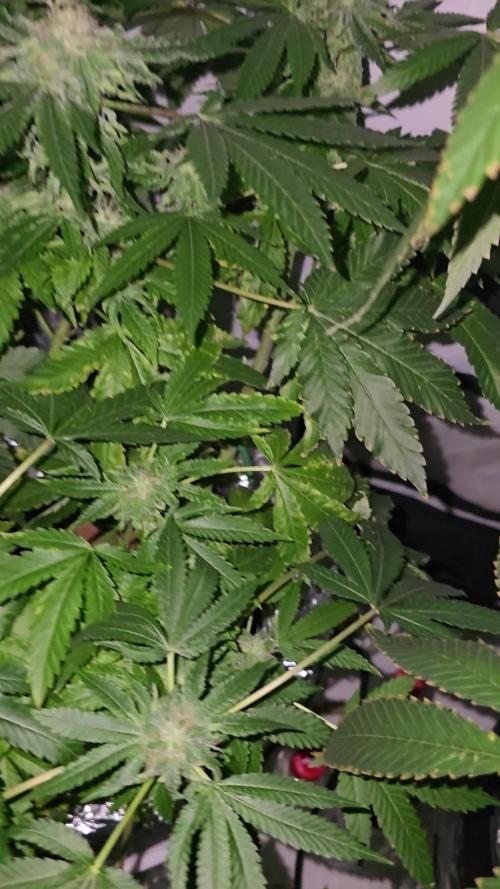
One of the best plants I've grown so far.
Trichomes are crazy
Day 4 - most probably last sugar/pk feed before beginning flushing.
Major defoliation to expose buds


Likes
16
Share


@Naujas
Follow
Week 15 is over :) Everything looks very good, the girl looks really very beautiful, that violet color of the leaves is amazing, the flowers are getting bigger every day :) I also feel its very delicious aroma, to be honest I can't wait to taste it: D but she still has a lot of time left until the harvest, I think about 2 weeks :) good luck to everyone.