


Likes
Comments
Share


@Ferinky
Follow
La cosecha esta muy cerca, estoy revisando los tricomas diariamente.

Likes
35
Share


@Santica_Garden
Follow
As I said, not happy with the Harvest, I have uploaded a video which I explain more. But I will definitely run her again and do a better job when growing and paying more attention 👍🏾


Likes
Comments
Share

@TrunkoKush
Follow
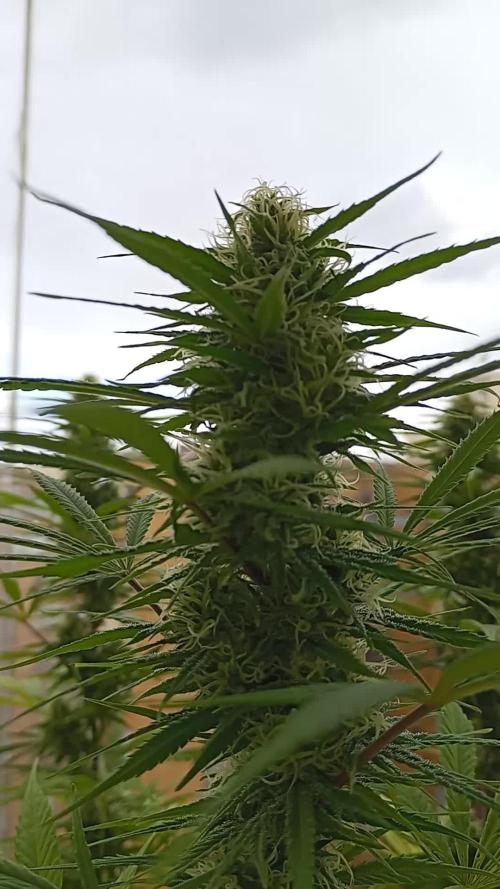
Earthy Wood and Lemons. Purple Trichome Necks. Purple Stems. Senescence. Purpling Leaves

Likes
48
Share


@MG2009
Follow
Still on water only. Captains Cake going to mom and clone tent. Alongside sour dream. For future diary's. Switching to Budswell 0-7-0 for flowering next week.😁

Likes
11
Share

@SundancerS
Follow
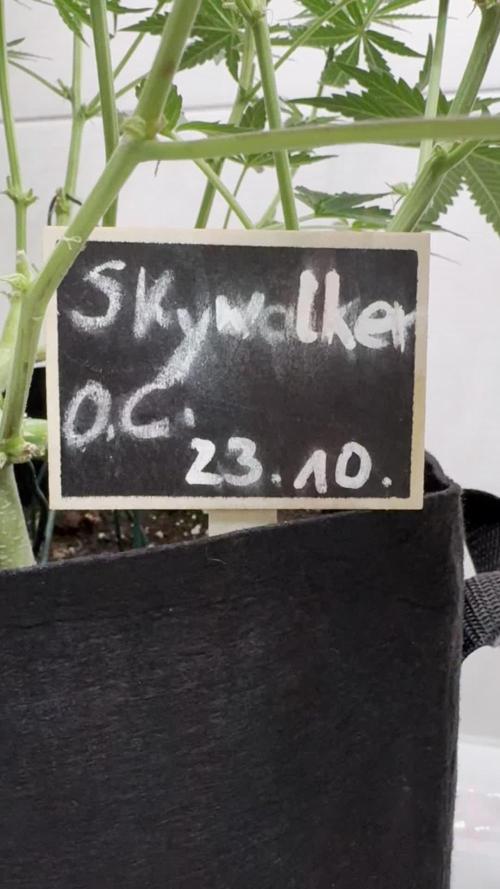
Sky steht jetzt da wie jemand, der gerade einen radikalen Frühjahrsputz hinter sich hat:
weniger Arme, dafür deutlich mehr Ausstrahlung.
Man sieht sofort: Hier mussten Triebe gehen. Viele sogar. Platzmangel, Luftzirkulation, Vernunft, die klassische Grower-Entscheidung zwischen Herz und Schere. Ergebnis: ein deutlich aufgeräumtes Gerüst mit Fokus auf die Top-Triebe, die jetzt alle schön im Licht stehen wie VIPs auf der Gästeliste.
Und die Buds?
Die haben in Woche 4 endgültig beschlossen, keine Theorie mehr zu sein. Die Colas strecken sich nach oben, dicht besetzt mit weißen Stempeln, die mittlerweile nicht mehr „Hallo“ sagen, sondern „Bleib noch ein paar Wochen“. Die Buds sind klar länger geworden, beginnen sich übereinander zu stapeln und wirken jetzt richtig säulenartig. Keine Kugeln mehr, das sind jetzt ernstzunehmende Blütenstände.
Harzproduktion ist sichtbar angezogen: ein feiner, gleichmäßiger Frost legt sich über die Zuckerblätter. Noch kein Zuckerschock, aber eindeutig der Moment, in dem man nach dem Anfassen der Pflanze unauffällig an den Fingern riecht.
Die unteren Bereiche sind deutlich luftiger, man merkt, dass die Energie jetzt konsequent nach oben geht. Genau so, wie man es in Woche 4 sehen will:
weniger Drama unten, mehr Geschäft oben.

Likes
209
Share


@BioBuds
Follow
This week we encountered some problems and we lost a couple of days of growth. It was smooth sailing up to here and maybe a little too smooth. I saw that the buds didn't develop right after the previous post last week. After dropping a question and establishing possible reasons I did some interventions to let the plants recover.
I raised the light which was real close and temps were too high. Next to that I watered with just some normal tapwater as I suspected some too low PH. I started ventilating more to disperse the heat a little.
These actions seemed to have helped as last couple of days I see some real fattening of the buds.
This SP-3000 is real powerful and cant be as close as my previous leds. Again props to Mars Hydro and a big thank you to @MarsHydroLED!!
Let's hope we do the last couple of weeks with less stress for all of us! Sorry for not posting any Sunshine posts, I have a Christmas surprise in store for those enjoying the mixed reality shots.
For those who didn't like it, it will be the last you'll see of her, so she'll say goodbye at the same time!
Thank you for following and all the likes, everybody!
Take care and stay safe!! Hug Bud



Likes
3
Share
@MaxWax
Follow
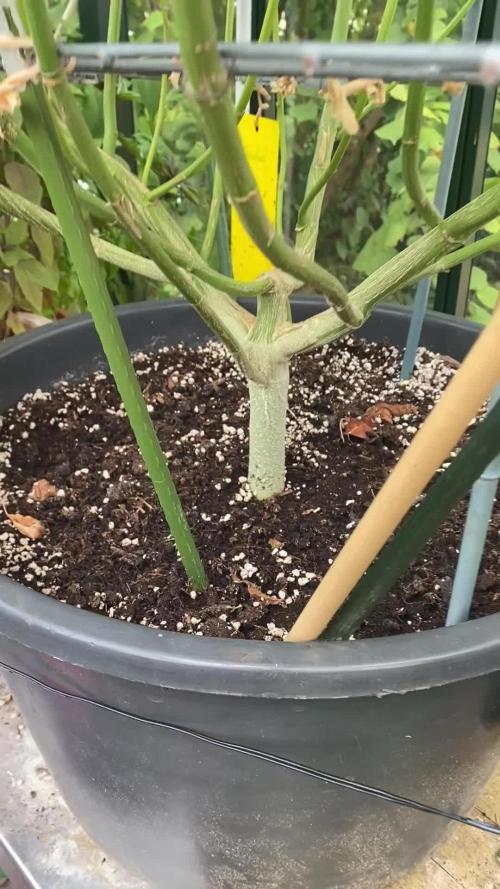
Unfortunately, the plant didn't handle my absence very well. It got way too hot inside the greenhouse, and my neighbor was a bit too generous with the nutrients while not allowing enough runoff (drain). I flushed the plant today—the initial runoff was at a critical 2200 PPM, but I managed to flush it down to a stable 800 PPM. I really hope she recovers quickly now. I have to leave for another two-week work trip this coming Monday, so I'm hoping she bounces back by then so I can leave with peace of mind🙈😀

Likes
24
Share


@Finniegrow
Follow
NOTES:
I've flowered my babies for 42 days at the beginning of this week. Keeping EC at 1,4-1,5 / pH at 6,0-6,2 and nutrients as before. I'm propably starting to flush after this week.
Day92 (16.1.)
Took some pictures/videos for the diary and refilled the tanks with 40l of fresh nutrient solution.
Day93 (17.1.)
Day94 (18.1.)
Day95 (19.1.)
Day96 (20.1.)
Day97 (21.1.)
Day98 (22.1.)

Likes
21
Share

@MG2009
Follow
01/27/2021
Flowering going well
Flowering #2,#3,#6 #6 is a week ahead of#2,#3 will put others in on week 4 for a staggered harvesting
01/30/2022
watered with fungal tea and some aloe mixed in for amino acids and other goodness. Well see how she progresses in 4 days
Also working on some banana peel tea to give a boost of potassium if I do next week it should be available for week 6-7.
Ps.
Fuzzy Mellon (bag seed male)
I will pollinate one lucky branch on #6 as she is my favorite. But number 3(tall and lanky one) will get pollination of one branch as well.
I can't wait to see how they recombine with fuzzy melon smell mixed with burnt rubber and model glue and pine.
#2 no pollination (smaller one) #5 (bonsai) and #8 are males. So 3 female out of 8 seeds. Going to make some feminized seeds next time,so I'll have plenty of female's for a staggard harvest.
Likes
11
Share


@HarezyGreen
Follow
Excited to see seed germ, then they have taken to soil. Its like being a parent all over again I just want them to flourish lol. Need to get my vent sorted and my humidity down gradually but going well. Few issues with a stuck seed shell. Stumpy will and is getting some extra help. DIY C02 is working a treat too 👍👍


Likes
2
Share


Likes
14
Share


@RussianGrower
Follow
Приветствую всех, кто следить за мной. Ваша поддержка очень важна для меня.
На следующий день после того как я обновил прошлую неделю дневника наступило время пересадить растения в более крупное ведро. Я покажу вам как использовать дешовые пивные стаканы для пересадки ваших растений. Вы можете посмотреть это на первом видео.
Когда я пересаживал растения я дополнительно добавил микоризу в большое ведро. Мои АК-47 показывают сативный фенотип, поэтому они были слишком высоки, поэтому я был вынужден поместить стебель растения как можно глубже и заполнить его, чтобы корни начали расти из него позже. Я также срезал первую пару непродуктивных листьев и побегов с них. Если вам интересно следить за приключениями травки в России.

Likes
47
Share


@GanjaReaper
Follow
Day 69:
As you can see, lucky the buds gone bigger but because of these intense feeding to fix the grow, they start to get nutrient burns. So for the new week i might only give water until the end with maybe some Regulator, enzymen, humic-blast...
They also don't drink fast anymore. Another indicator that they having a hard time taking all the nutrients and that they are at their end of their stage.
Some smaller plants, that finished growing and flowering faster, are already done and will get cut down in the comming days.
These plants are some Gorilla's and some are cherry cola's.
As you see, some have been foxtailing because i had to raise the lamps everytime. I personally don't like fox tail buds but i know some people that love them, pure flower to smoke.
I really liked to make those photos in the dark, It shows many flowers and thc.


Likes
12
Share


@Zer0xKira
Follow
Pre flowers started on my soil grow. Just started seeing one or two white hairs on my hydro girl. Starting to clear up that calcium deficiency as well.
Likes
81
Share


@NugLife420
Follow
I was finally able to sex them all. 1 Male/Hermie, and the rest have beautiful white pistles forming. They are starting to go through a stretch now as well. I also ordered some more grow lights 3 Mars Hydo TS1000's. I can't wait for those to arrive.)

Likes
52
Share


@Ultraviolet
Follow
You don't become confident by shouting affirmations in the mirror, but by having a stack of undeniable proof that you are who you say you are, outwork your self-doubt.
Nitrogen fixation is a chemical process by which molecular nitrogen (N2), which has a strong triple covalent bond, is converted into ammonia (NH3) or related nitrogenous compounds, typically in soil or aquatic systems but also in industry. The nitrogen in air is molecular dinitrogen, a relatively nonreactive molecule that is metabolically useless to all but a few microorganisms. Biological nitrogen fixation or diazotrophy is an important microbe-mediated process that converts dinitrogen (N2) gas to ammonia (NH3) using the nitrogenase protein complex (Nif).[2][3]
Nitrogen fixation is essential to life because fixed inorganic nitrogen compounds are required for the biosynthesis of all nitrogen-containing organic compounds, such as amino acids and proteins, nucleoside triphosphates and nucleic acids. As part of the nitrogen cycle, it is essential for agriculture and the manufacture of fertilizer. It is also, indirectly, relevant to the manufacture of all nitrogen chemical compounds, which include some explosives, pharmaceuticals, and dyes.
Nitrogen fixation is carried out naturally in soil by microorganisms termed diazotrophs that include bacteria, such as Azotobacter, and archaea. Some nitrogen-fixing bacteria have symbiotic relationships with plant groups, especially legumes.[4] Looser non-symbiotic relationships between diazotrophs and plants are often referred to as associative, as seen in nitrogen fixation on rice roots. Nitrogen fixation occurs between some termites and fungi.[5] It occurs naturally in the air by means of NOx production by lightning.[6][7]
All biological reactions involving the process of nitrogen fixation are catalyzed by enzymes called nitrogenases.[8] These enzymes contain iron, often with a second metal, usually molybdenum but sometimes vanadium.
Green clover (Fixation)
White clover (Fixation)
Red Clover. (Fixation)
Yellow Clover. (Fixation, deeper roots)
Sweet Thai Basil. (Terpenes)
Italian Basil. (Terpenes)
Chamomile.(Oil production)
Borage.(Pest attraction taste)
Lavender.(Pest attraction smell)
Marigold(Pest attraction visual)
Mycorrhizae are beneficial associations between mycorrhizal fungi and a plant’s root system. Mycorrhizal fungi spores germinate in the soil, creating filaments (hyphae) that penetrate the root cells, thus establishing a symbiotic relationship. This collaboration leads to the development of both intra-radical and extra-radical networks of filaments, enabling efficient exploration of the soil for enhanced access to nutrients and water. Consequently, these vital resources are transferred to the plant, resulting in numerous benefits for crop cultivation.
Various mycorrhizal products are available in diverse formulations (powder, granular, and liquid), concentrations, and qualities. Ongoing advancements in products, technologies, and research are reshaping our understanding of mycorrhizae. Despite these positive developments, certain misconceptions persist. In the following discussion, we aim to clarify the truths and dispel the myths surrounding mycorrhizae products.
MYTH #1
A HIGHER NUMBER OF MYCORRHIZAE SPECIES MEANS BETTER RESULTS.
Contrary to common belief, having a higher number of mycorrhizae species in a product does not translate to better results; in fact, it often yields the opposite outcome. A plant can sustain only one association with a particular mycorrhizal fungi species. Introducing multiple species creates competition among them, which is not advantageous for the plant. The initial colonizer does not ensure the highest success; instead, it gains precedence. It is recommended to select a product with a concentrated presence of a single mycorrhizae species known for its effective performance, rather than opting for a product with multiple species at lower concentrations.
MYTH #2
ECTOMYCORRHIZAE ARE EFFECTIVE FOR CANNABIS PLANTS.
Although ectomycorrhizae can colonize five to ten percent of plant species, cannabis is not among them. Ectomycorrhizae do not penetrate the root cells; instead, they develop around the roots and on the exterior. For cannabis plants, it is essential to seek out endomycorrhizae. Endomycorrhizae are capable of colonizing 70% to 90% of plant species, including cannabis. Unlike ectomycorrhizae, endomycorrhizae penetrate the root cells, forming structures like arbuscules for the exchange of nutrients and water with the plant.
MYTH #3
WHOLE INOCULANT (PROPAGULES) PERFORM BETTER THAN ONLY VIABLE SPORES.
The propagule count specified on most mycorrhizae products indicates the presence of spores (viable and unviable), hyphae, and root fragments. However, it is crucial to note that only viable spores, those with the capacity to germinate, can successfully colonize a plant’s root system. Spores are to mycorrhizal fungi what seeds are to cannabis plants—a fundamental component enabling fungi reproduction. Consequently, even if a mycorrhizal product boasts millions of propagules, its effectiveness hinges on the presence of viable spores. Without viable spores, the product will not contribute to plant development. Therefore, the genuine value of a mycorrhizal inoculant lies in the quantity of viable spores it contains, as only viable spores can efficiently initiate symbiosis.
MYTH #4
ALL METHODS OF APPLICATION YIELD IDENTICAL RESULTS.
To establish the symbiosis, mycorrhizal fungi spores must be close to the plant roots. The optimal recommendation is to directly apply mycorrhizal inoculant to the roots, either in powder, granular or slurry form. This method ensures maximum proximity between the spores and the roots, facilitating a rapid establishment of symbiosis. Particularly with crops like cannabis, which have a short growing cycle, employing this technique is the most effective way to obtain optimal benefits. Alternatively, techniques such as blending the inoculant with the soil are effective, but there may be a delay in the establishment of symbiosis. This is because the roots need to grow and come into contact with the dispersed spores throughout the growing media.
MYTH #5
MYCORRHIZAE CAN ONLY BE GROWN ON LIVING PLANTS.
While the predominant method for commercially producing mycorrhizae involves growing them on the root systems of living plants (in vivo production), it is not the exclusive nor the optimal technique. In fact, this production approach has notable drawbacks that the “root organ culture” method just does not have (in vitro production). In vitro production occurs in meticulously controlled, aseptic laboratory conditions, allowing for the consistent generation of products that are viable, highly concentrated, species-specific, and free from pathogens. Achieving such precision and quality is impossible when relying on the cultivation of mycorrhizal fungi on plants exposed to external conditions.
In conclusion, it is crucial to take all these factors into consideration when choosing the appropriate product for your crop to fully harness the wide array of benefits provided by a high-quality mycorrhizal product.
STRONGER PLANT – Stress resistance.
FASTER GROWTH – Improve plant structure and shorter veg time.
INCREASE YIELD – Overall more biomass.
IMPROVED QUALITY – Increase cannabinoids and terpenes content.

Likes
4
Share


@TS_Greens23
Follow
So ,,I had managed to snap a couple branches early on in this grow of the Orange 🍊 Sherbet,,but I’ve managed to train her back to a respectable canopy and she has started to reveal her bits,!!!! She’s looking kind of skinny and scarce after her defoliation,,but I’m content that she’s going to finish up strong 💪 and produce some nice flowers
Likes
4
Share

@Roberts
Follow
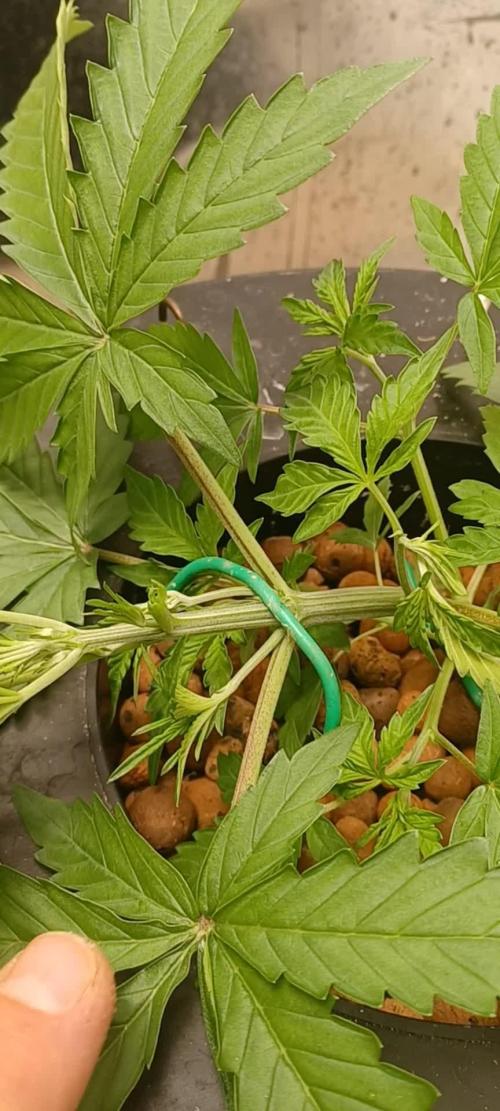
Animal Mintz is growing great. She has made excellent progress. Everything is looking good. She got her first lst today. Thank you Zamnesia seeds, Medic Grow, and Hon&Guan. 🤜🏻🤛🏻🌱🌱🌱
Thank you grow diaries community for the 👇likes👇, follows, comments, and subscriptions on my YouTube channel👇.
❄️🌱🍻 Happy Growing 🌱🌱🌱
https://youtube.com/channel/UCAhN7yRzWLpcaRHhMIQ7X4g.