


Sticky Braccoli Auto - Eternity Cup 2026





Lamp
Mammoth Lightingg
Light
VEG
Nova Sun Series Light Emitting Diodes/950W
Mammoth Lighting
FLO
Nova Sun Series Light Emitting Diodes/950W
Mammoth Lighting





Drip
Auto watering system
Spider Farmer

Coco Coir
Scientetics

Indoor
Room Type
11 liters
Pot Size
Start at Harvest
G
Germination9mo ago
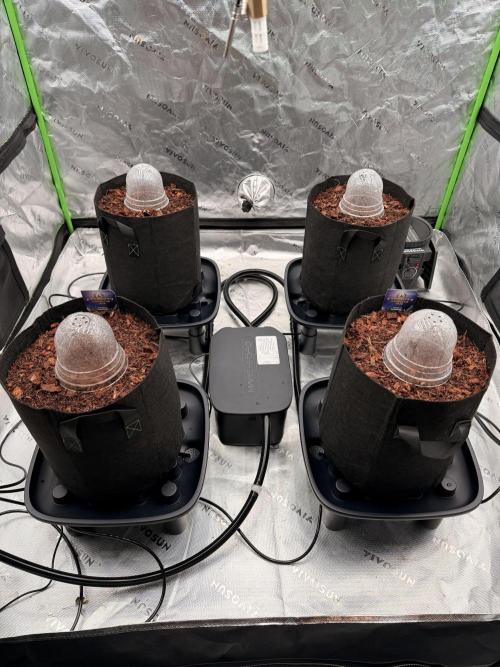
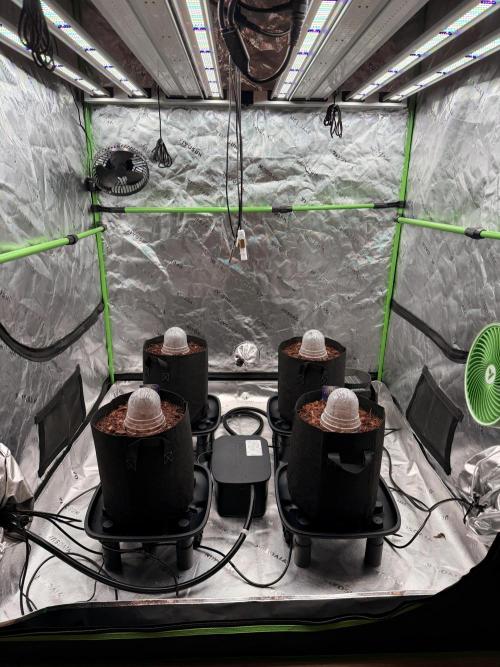
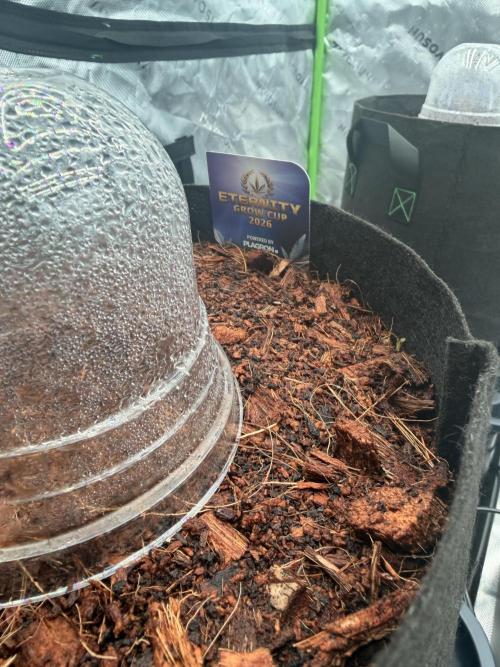

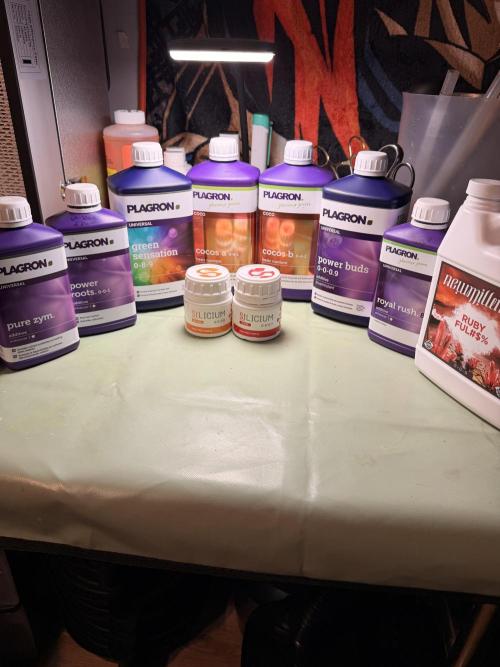
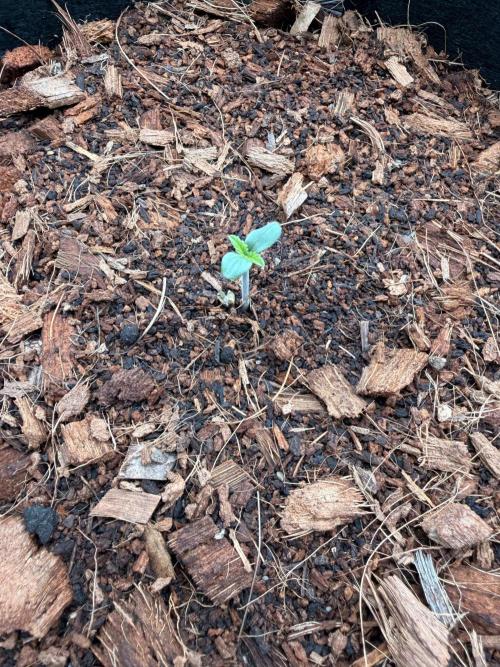
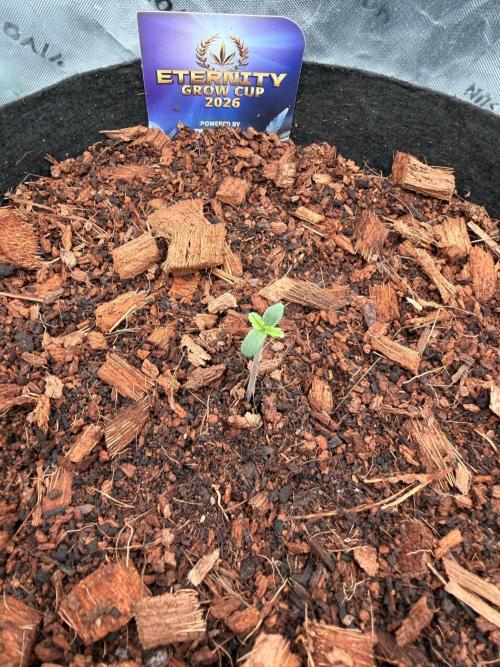
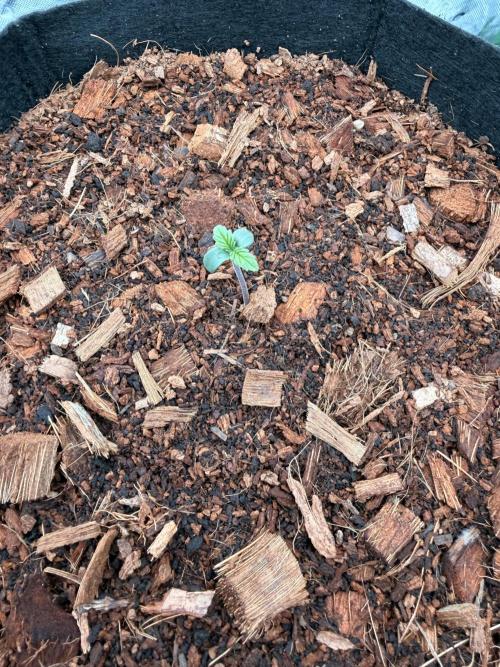
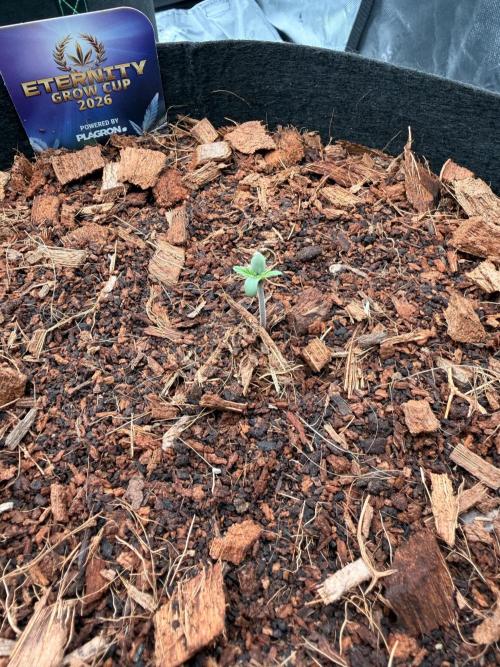
Nutrients 8
Scilicium
0.132 mll

Cocos A
0.528 mll

Cocos B
0.528 mll
Stoney_Stark 🌱 Germination Week Update — Eternity Cup
Event: Eternity Cup
Hosted by: Plagron Nutrients × Zamnesia Seeds
Grower: Stoney Stark / Little Lilly Farms
Strain: Sticky Broccoli Auto
Plants: 4
Tent: 4×4
Pots: 3-gallon fabric
Medium: Plagron Coco
Light: Mammoth Nova Sun Series 950W
Method: Direct sow into coco
⸻
Environment
• Temperature: 77°F
• Humidity: 80% RH
• Light Schedule: 20/4 (adjusted on emergence)
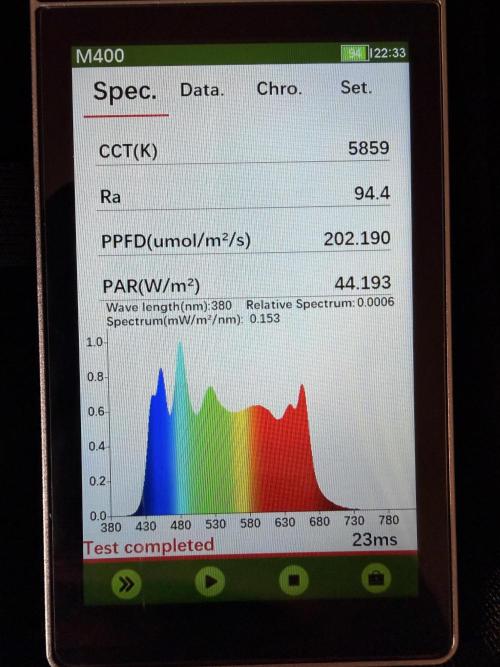
• PPFD:
• Pre-emergence: very low
• Post-emergence: increased to ~150 µmol/m²/s
Warm, humid conditions were maintained to encourage fast, uniform emergence.
⸻
Germination & Emergence
1/15 — Planting Day
Seeds were sown directly into pre-moistened coco. Each pot was primed with ¼ gallon of low-EC nutrient solution to hydrate the medium and establish beneficial biology without stressing seedlings.
1/16 — Moisture Maintenance
• Mixed ½ gallon RO
• Applied 250 ml per plant to lightly moisten the top layer
• pH: 5.8
• PPM: ~90
Additives (per gallon):
• 5 ml Ruby Fulvic
• 5 ml Photo+
This was a very light biological watering focused on chelation, root signaling, and photosynthetic support.
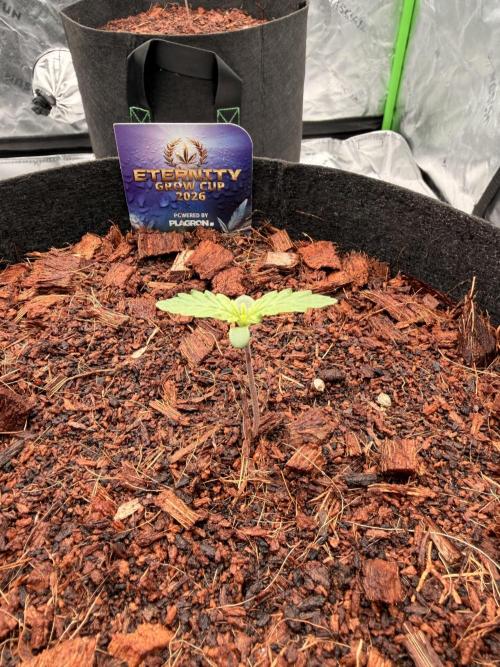
1/19 — Full Emergence
All four Sticky Broccoli Auto plants successfully emerged. Light intensity was increased to ~150 PPFD and the light schedule was set to 20/4.
Each plant received 250 ml of nutrient solution.
• pH: 5.8
• PPM: ~275
Nutrients (per gallon):
• 0.5 ml Silicium
• 2 ml Coco A
• 2 ml Coco B
• 2 ml Power Roots
• 2 ml Pure Zym
• 5 ml Ruby Fulvic
• 1 ml Fish Sh!t
⸻
Nutrient Purpose (Early Stage)
• Silicium: Strengthens cell walls and improves early stress tolerance
• Coco A & B: Provides balanced macro and micronutrients tailored for coco
• Power Roots: Encourages rapid root initiation and lateral root development
• Pure Zym: Enzymes keep the rhizosphere clean and improve nutrient availability
• Ruby Fulvic: Enhances nutrient chelation and uptake at very low EC
• Fish Sh!t: Introduces beneficial microbes for nutrient cycling and root health
⸻
Notes & Outlook
Germination was fast and uniform across all four plants with no signs of stress. The low-EC, biology-focused approach is working as intended, establishing a healthy root zone before pushing nutrition. Plants will remain on gentle feeds while roots expand and seedlings transition into early vegetative growth.
Next focus: steady PPFD increases, daily moisture control, and continued root development.
🤘🏻Week 1 update coming 1/28/2026
10 likes
6 comments
Share
Used method
Directly In Substrate
Germination Method
1
Week 1. Vegetation9mo ago
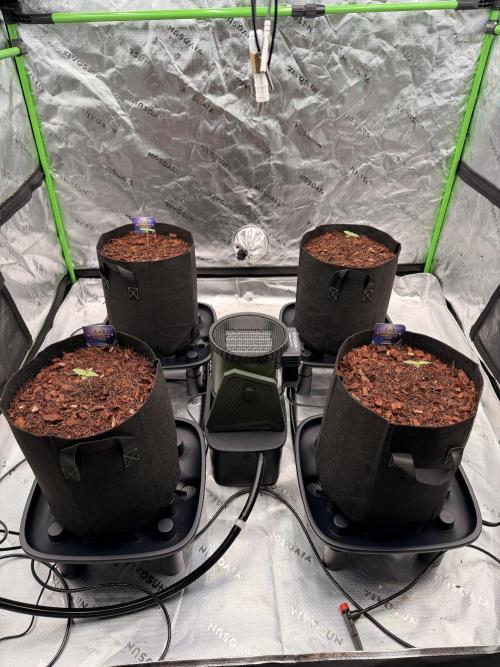
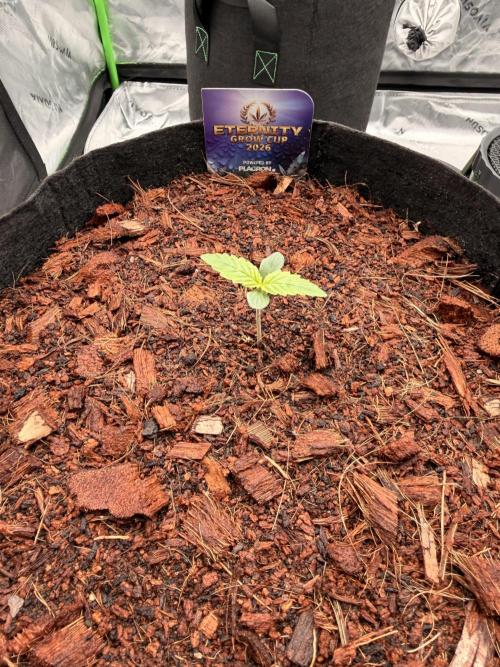
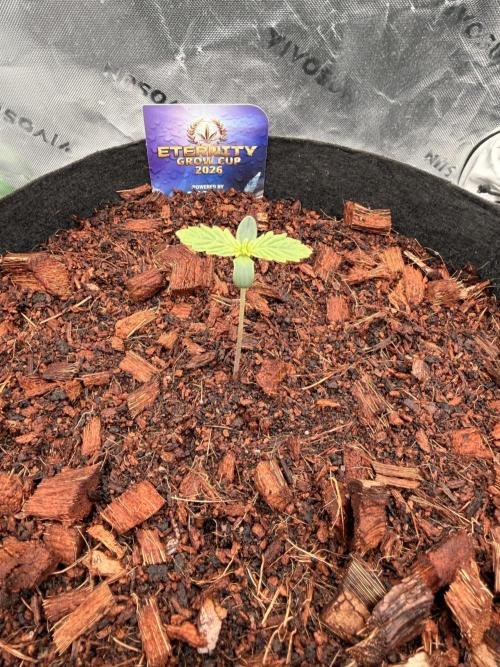
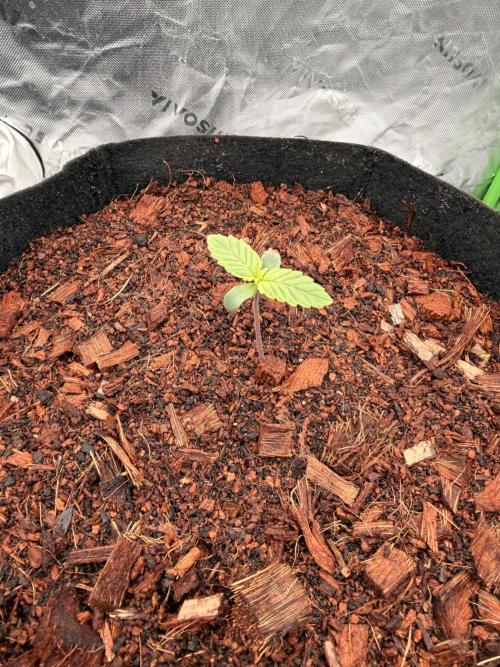
5.08 cm
Height
20 hrs
Light Schedule
27 °C
Day Air Temp
5.8
pH
300 PPM
TDS
70 %
Air Humidity
25 °C
Night Air Temp
11.36 liters
Pot Size
76.2 cm
Lamp Distance
Nutrients 8
Scilicium
0.132 mll
Cocos A
0.528 mll
Cocos B
0.528 mll
Stoney_Stark Eternity Cup — Week 1 Update
Strain: Sticky Broccoli Auto
Grower: Stoney Stark / Little Lilly Farms
Stage: Seedling → Early Veg Transition
Medium: Plagron Coco
Method: Hand-fed / establishing root zone
⸻
Growth Stage Overview
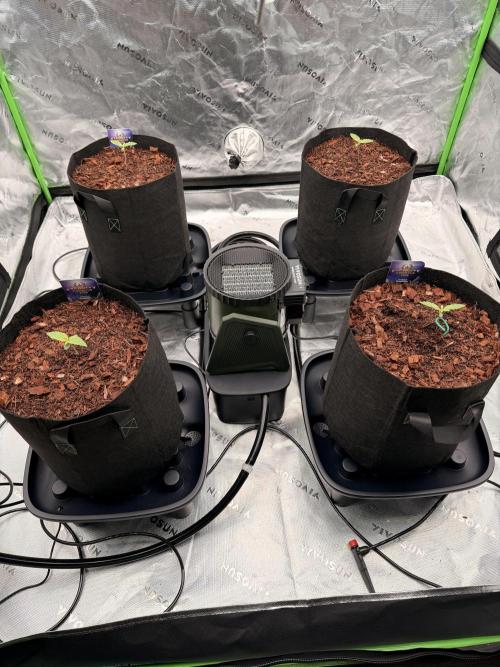
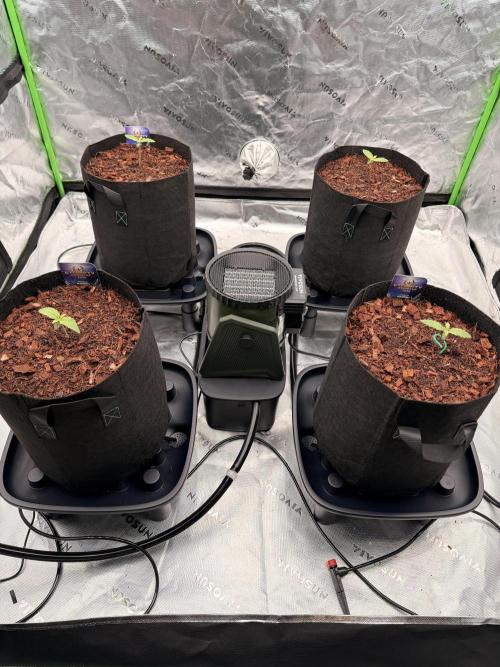
Week 1 focused on gentle root establishment and stress-free early development. All four plants responded well to low EC feeds and consistent moisture. One plant showed early stem weakness but was easily corrected with support and has continued growing normally.
⸻
Environment & Light
• Humidity: Gradually reduced to 68% by 1/25
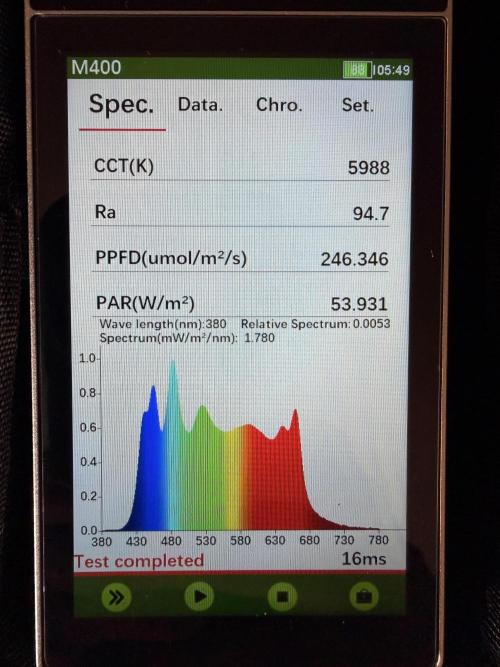
• PPFD Progression:
• Early week: ~235–250 PPFD
• End of week: 300–320 PPFD
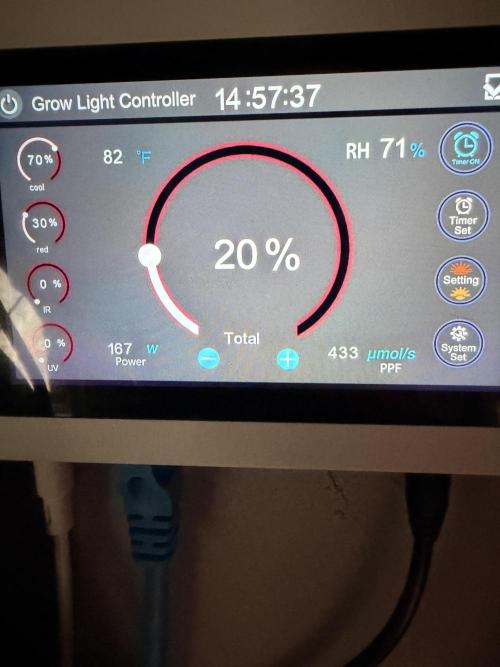
• Spectrum (1/27):
• 65% Cool
• 35% Warm
• 0% IR
• 0% UV
Light intensity and spectrum were adjusted conservatively to encourage root growth without driving excessive transpiration.
⸻
Watering & Nutrient Log
1/21 — Initial Week 1 Feed
• Volume: 500 ml per plant
• PPM: 235
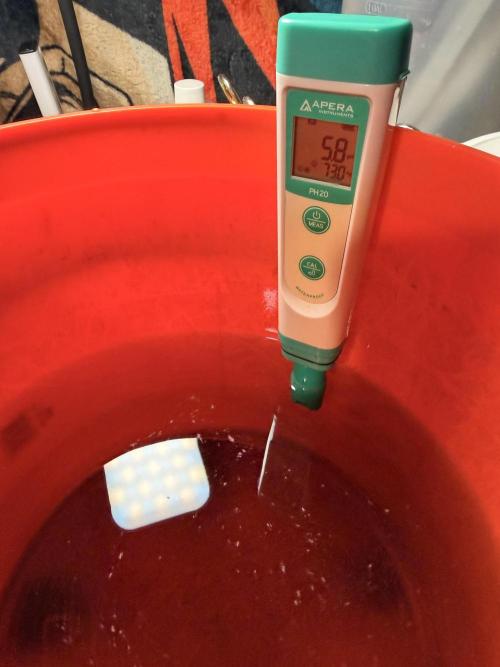
• pH: 5.9
Nutrients (per gallon):
• 0.5 ml Silicium
• 2 ml Cocos A
• 2 ml Cocos B
• 2 ml Power Roots
• 2 ml Pure Zym
• 5 ml Ruby Fulvic
• 1 ml Fish Sh!t
⸻
1/23 — Light Increase
• Adjusted light to ~246 PPFD
• Volume: 500 ml per plant
• PPM: 260
• pH: 5.8
Nutrients (per gallon):
• 0.5 ml Silicium
• 2 ml Cocos A
• 2 ml Cocos B
• 2 ml Power Roots
• 2 ml Pure Zym
• 5 ml Ruby Fulvic
• 1 ml Fish Sh!t
⸻
1/24 — Structural Support & Microbial Boost
• One plant began tipping during watering
• Installed a simple garden-wire loop for support
• Volume: 600 ml per plant
• PPM: 235
• pH: 5.9
Nutrients (per gallon):
• 0.5 ml Silicium
• 2 ml Cocos A
• 2 ml Cocos B
• 2 ml Power Roots
• 2 ml Pure Zym
• 5 ml Ruby Fulvic
• 1 ml Fish Sh!t
• Recharge: ⅛ tsp
⸻
1/25 — Environment Adjustment
• Lowered RH to 68%
• Volume: ¼ gallon per plant
• PPM: 298
• pH: 5.8
Nutrients (per gallon):
• 0.5 ml Silicium
• 2 ml Cocos A
• 2 ml Cocos B
• 2 ml Power Roots
• 2 ml Pure Zym
• 5 ml Ruby Fulvic
• 1 ml Rhyzium
• 1 ml Fish Sh!t
⸻
1/27 — End of Week Push
• Adjusted spectrum and raised PPFD to 300–320
• Volume: ¼ gallon per plant
• PPM: 600
• pH: 5.9
Nutrients (per gallon):
• 0.5 ml Silicium
• 4 ml Cocos A
• 4 ml Cocos B
• 2 ml Power Roots
• 4 ml Pure Zym
• 5 ml Ruby Fulvic
• 2 ml Photo+
• 1 ml Fish Sh!t
⸻
Grow Technique Note — Tall Fabric Pots & Autoflowers
Using taller fabric pots provides several advantages for autoflower cultivars, especially during early root development:
• Improved root depth: Autos tend to send a dominant taproot early; extra vertical space allows uninterrupted downward growth
• Better oxygenation: Taller profiles increase air exchange through the sidewalls, reducing the chance of anaerobic zones
• More efficient nutrient uptake: A deeper root column improves access to moisture and nutrients, especially in coco
• Reduced early stress: Strong early root architecture helps autos handle later increases in PPFD and EC without stalling
• Improved water distribution: Gravity-assisted flow encourages roots to chase moisture downward rather than circling
This setup supports faster early establishment, which is critical for maximizing autoflower yield within a fixed lifecycle.
5 likes
comments
Share
2
Week 2. Vegetation8mo ago
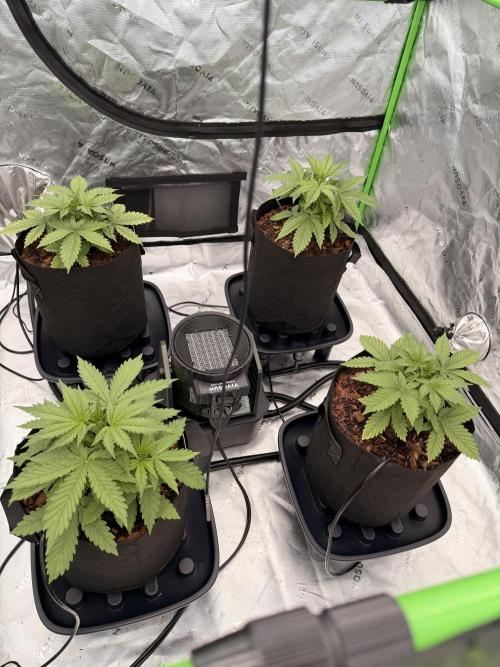
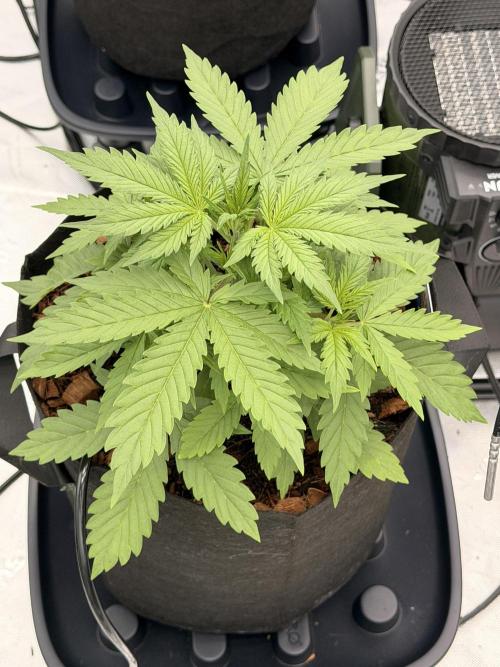
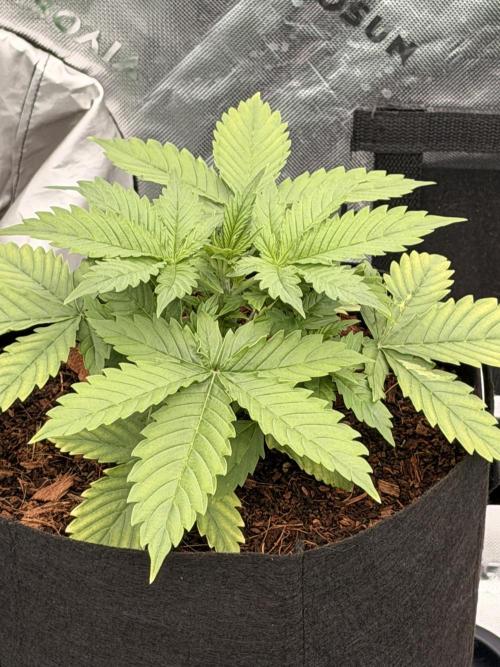
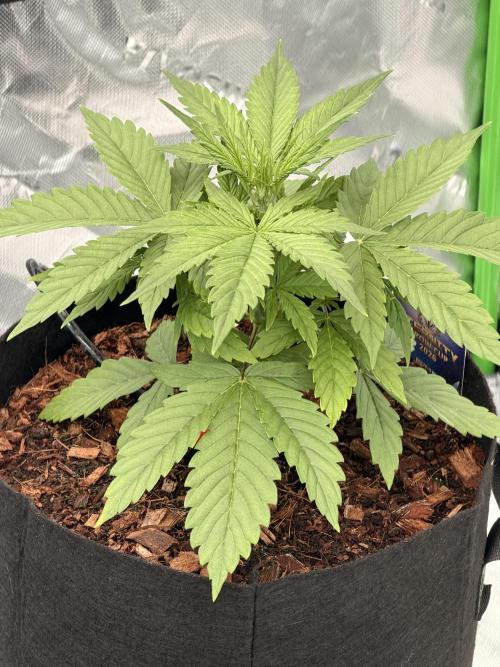
15.24 cm
Height
20 hrs
Light Schedule
26 °C
Day Air Temp
5.8
pH
420 PPM
TDS
70 %
Air Humidity
25 °C
Night Air Temp
11.36 liters
Pot Size
1.32 liters
Watering Volume
76.2 cm
Lamp Distance
Nutrients 9
Scilicium
0.132 mll
Cocos A
1.585 mll
Cocos B
1.057 mll
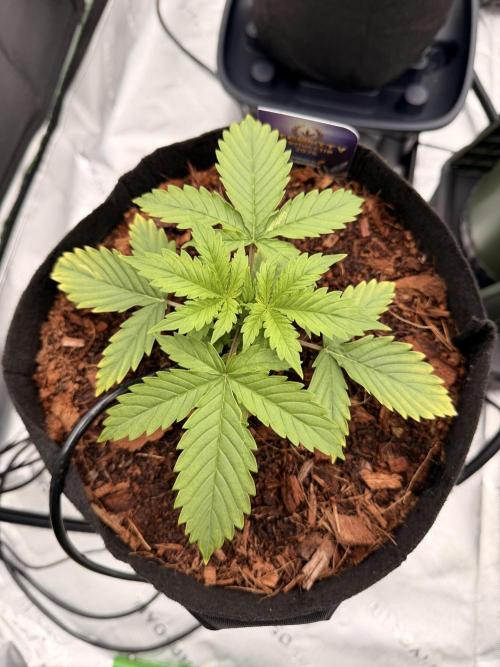
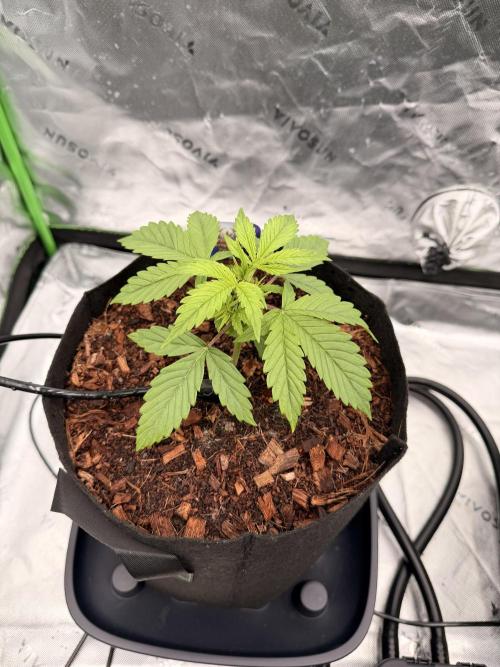
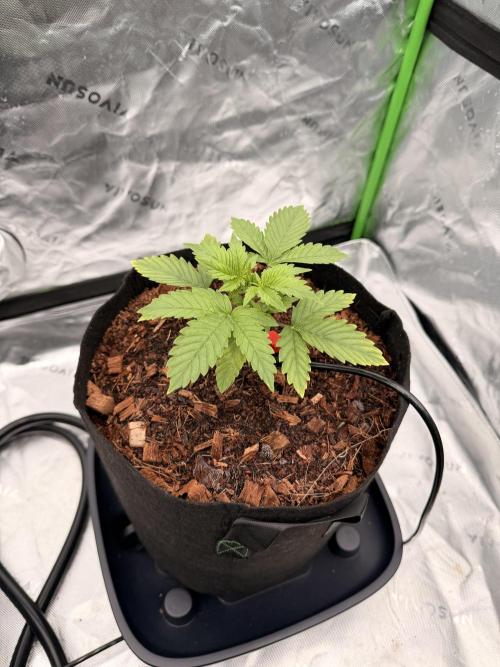
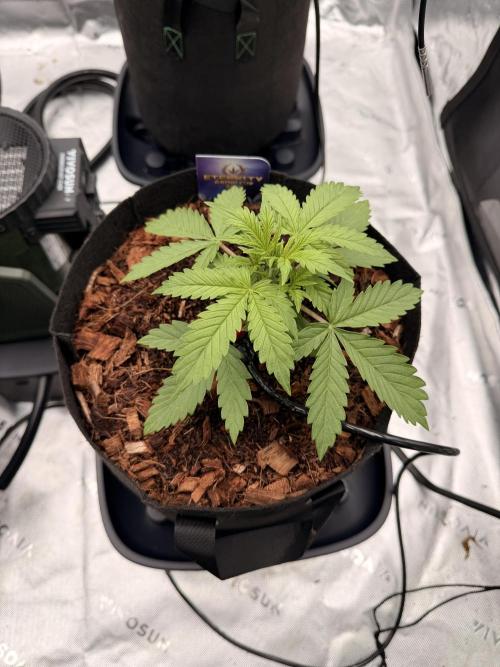
Stoney_Stark Stoney_Stark Week 2 Update — Sticky Broccoli Auto
Grower: Stoney Stark / Little Lilly Farms
Stage: Early Veg (Week 2)
⸻
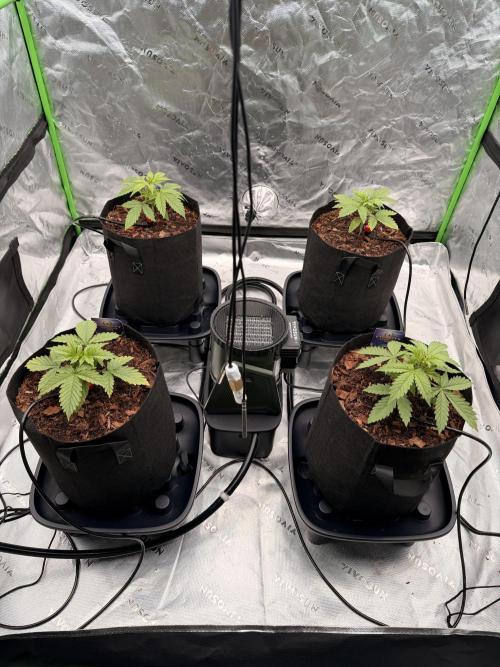
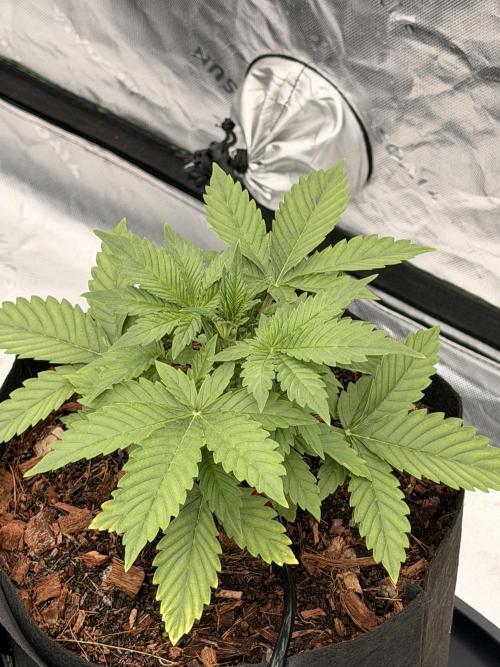
Growth Overview
Plants are establishing well and responding positively to automation. No visible stress from the siphoning incident. What initially appeared to be a nitrogen deficiency was later identified as a magnesium deficiency common in coco systems, with a light green fade also indicating the early onset of nitrogen demand.
⸻
Irrigation & Automation
• Transitioned to auto-irrigation emitters this week
• Distribution appears even across all plants
• Initial siphoning issue identified and corrected by removing pump after feed cycle
• Monitoring pot weight closely to avoid overwatering
⸻
Watering & Feeding Log
1/29 — First Auto-Irrigation Run
• Amount: ~¼ gallon per plant
• PPM: 420
• pH: 5.9
Nutrients (per gallon):
• 0.5 ml Silicium
• 4 ml Cocos A
• 4 ml Cocos B
• 2 ml Power Roots
• 3 ml Pure Zym
• 5 ml Ruby Fulvic
• 2 ml Photo+
• 1 ml Fish Sh!t
Notes: First run with emitters. Feed appeared evenly distributed.
⸻
1/31 — Siphoning Incident
• Issue: 5-gallon bucket siphoned into all 4 plants
• Result: No negative plant response observed
Nutrients (per gallon):
• 0.5 ml Silicium
• 4 ml Cocos A
• 4 ml Cocos B
• 2 ml Power Roots
• 3 ml Pure Zym
• 5 ml Ruby Fulvic
• 2 ml Photo+
• 1 ml Fish Sh!t
⸻
2/1 — Auto-Irrigation Dialed In
• Feed Time: 1 minute
• Runoff: Small amount
• Adjustment: Pump removed immediately after feed to prevent siphoning
Observations:
• Noticed early light green coloration initially interpreted as nitrogen deficiency
• Adjustments made to increase available nitrogen
Nutrients (per gallon):
• 0.5 ml Silicium
• 4 ml Cocos A
• 4 ml Cocos B
• 2 ml Power Roots
• 3 ml Pure Zym
• 5 ml Ruby Fulvic
• 2 ml Photo+
• 1 ml Fish Sh!t
• +2 ml additional Cocos A
• +1 ml Royal Rush
⸻
2/2 — Moisture Hold
• Pots felt heavy
• Decision made to skip watering for 1–2 days to avoid overwatering
⸻
2/3 — Light Auto Feed + Deficiency Diagnosis
• Feed Time: 1 minute
• Pots: Still holding moisture; irrigation paused for the next couple days
Updated Diagnosis:
• What initially appeared to be nitrogen deficiency was confirmed to be magnesium deficiency, common in coco when running low-mineral water
• The light green coloration also indicates the beginning stages of increased nitrogen demand
Correction Plan:
• Adding Scientetics MagCal at 2 ml per gallon starting next feed to supply readily available magnesium and calcium
• Nitrogen levels maintained via Cocos A and Royal Rush without over-increasing EC
Nutrients (per gallon):
• 0.5 ml Silicium
• 6 ml Cocos A
• 6 ml Cocos B
• 3 ml Power Roots
• 4 ml Pure Zym
• 4 ml Photo+
• 2 ml Fish Sh!t
• 1 ml Royal Rush
• (MagCal to be added next feed)
⸻
Issues & Adjustments
• Magnesium deficiency: Identified and corrected with planned MagCal supplementation
• Early nitrogen demand: Being met through controlled increases to Cocos A and Royal Rush
• Overwatering risk: Managed via pot-weight monitoring and irrigation pauses
• Auto-irrigation: Functioning correctly after siphon fix
———
Deficiency Learning Note
This week provided a useful reminder about how nutrient deficiencies present in coco-based systems. What initially appeared to be early nitrogen deficiency was identified as magnesium deficiency, which commonly manifests as a light green fade and interveinal chlorosis on lower leaves. In coco, magnesium can become limiting even when using coco-specific base nutrients, particularly when running low-mineral or RO water.
The light green coloration also coincided with increasing nitrogen demand as the plants transitioned deeper into vegetative growth. Rather than aggressively raising EC, the correction strategy focused on restoring magnesium availability while maintaining balanced nitrogen levels.
⸻
Plan for Week 3
• Introduce Scientetics MagCal at 2 ml/gal
• Allow pots to dry slightly before next irrigation
• Monitor color correction in new growth
• Fine-tune auto-irrigation timing and volume
• Gradually increase feed strength as plants size up
7 likes
1 comment
Share
3
Week 3. Vegetation8mo ago
30.48 cm
Height
20 hrs
Light Schedule
26 °C
Day Air Temp
5.8
pH
1000 PPM
TDS
65 %
Air Humidity
25 °C
Night Air Temp
11.36 liters
Pot Size
0.95 liters
Watering Volume
63.5 cm
Lamp Distance
Nutrients 9
Scilicium
0.132 mll
Cocos A
2.642 mll
Cocos B
2.113 mll
Stoney_Stark Sticky Broccoli Auto — Week 3 Update
Grower: Stoney Stark / Little Lilly Farms
Event: Eternity Cup
Stage: Late Veg (Pre-Flower Transition Approaching)
⸻
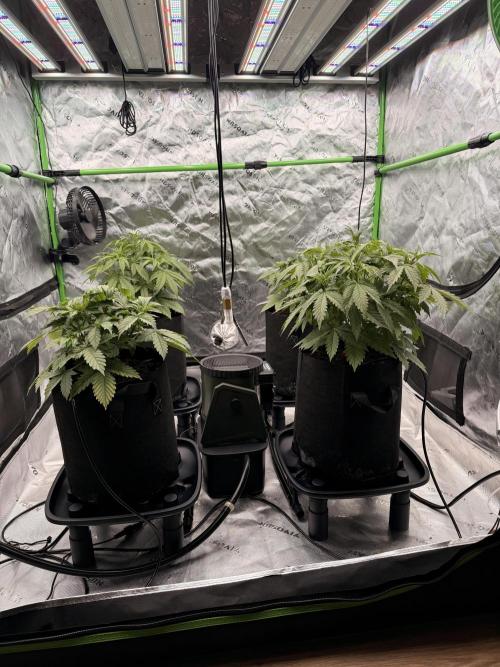
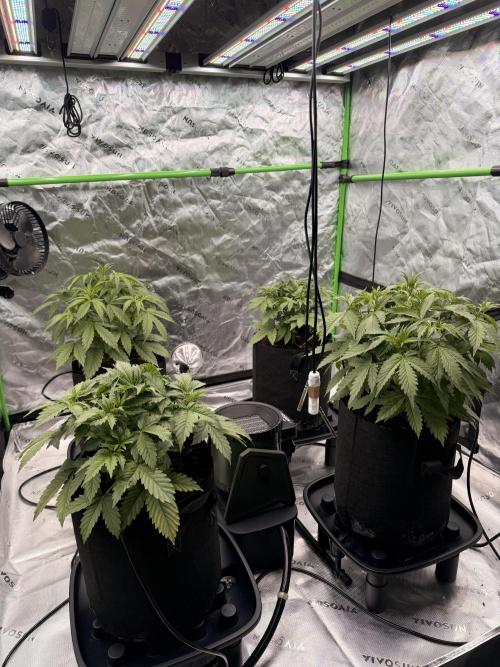
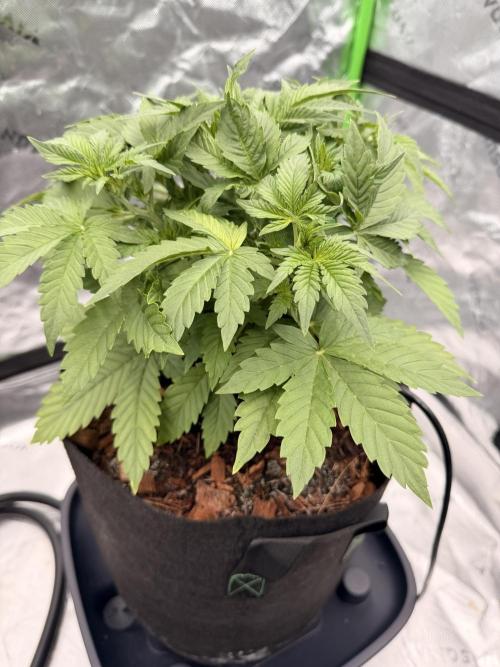
Growth Overview
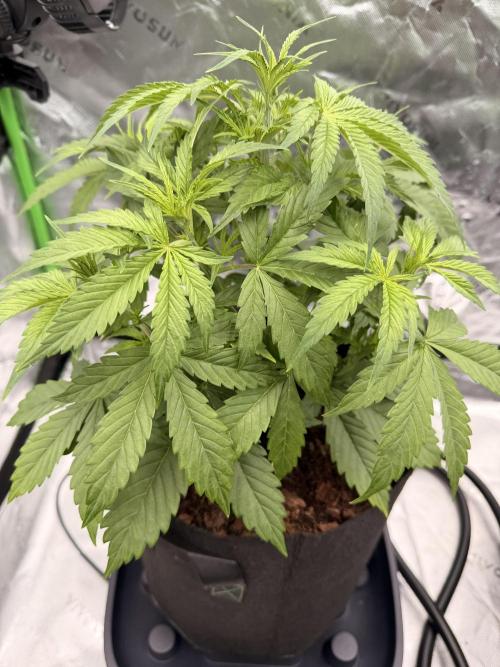
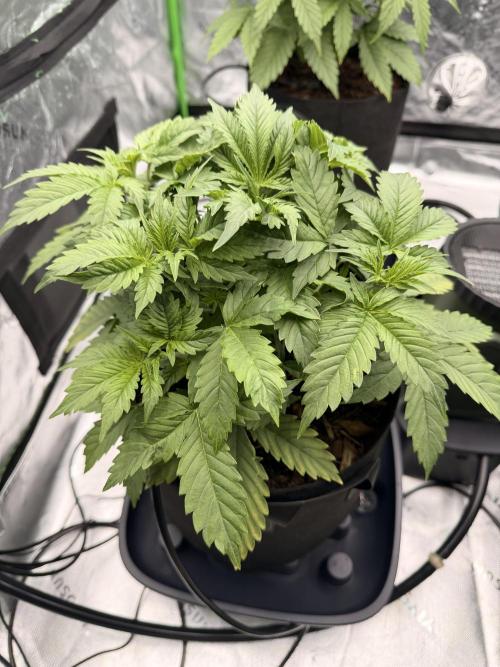
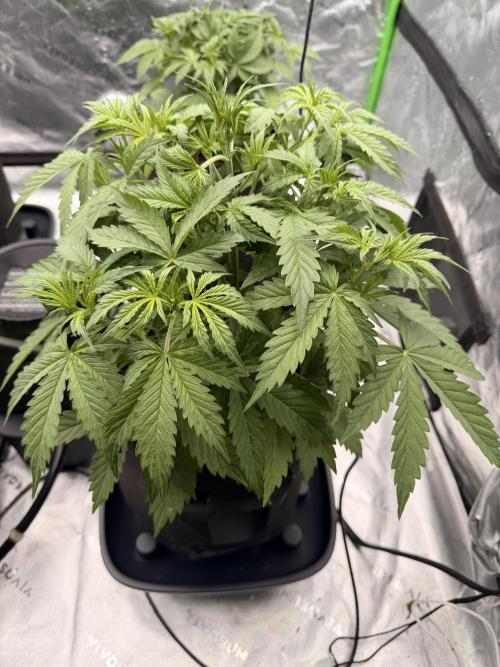
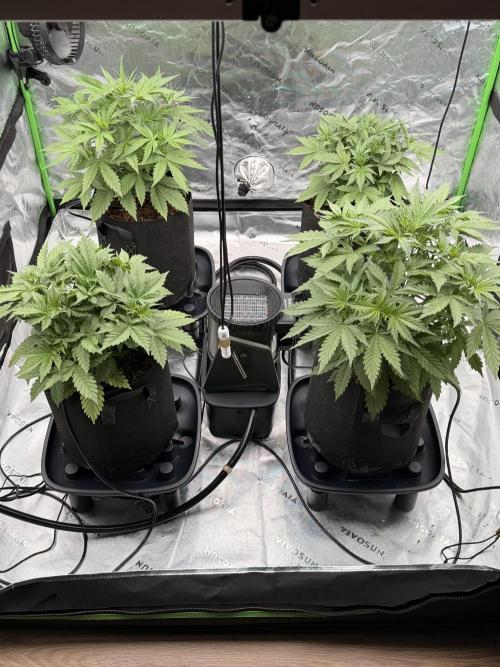
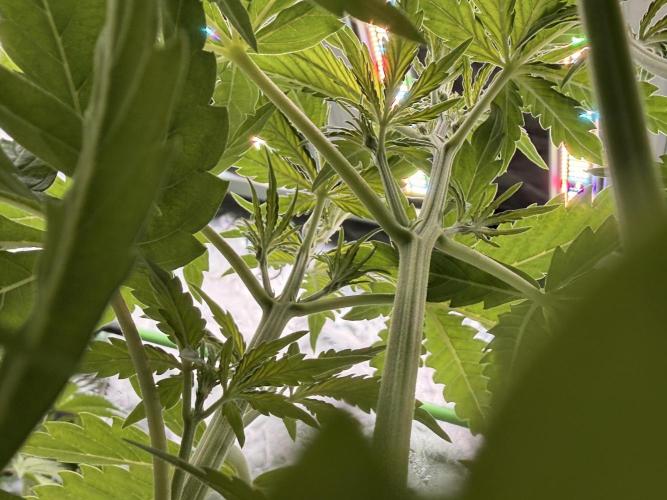
Week 3 showed aggressive vegetative expansion. Plants are stacking nodes quickly with strong lateral branching and tight internodal spacing. No visible pistils yet, but structure suggests pre-flower is approaching soon.
Feeding frequency has increased to near-daily, which aligns with rapid coco dry-back under elevated PPFD and warmer temps. Plants are handling higher EC without tip burn or clawing, indicating strong uptake and healthy root function.
⸻
Light Settings
2/5 — Spectrum Adjustment
• 60% Cool
• 40% Warm
• 0% IR
• 0% UV
• 430 PPFD
This spectrum favors vegetative growth by emphasizing blue light for tighter structure while maintaining enough red for balanced development.
⸻
Environment
2/6
• Temp: 84°F
• RH: 69%
VPD is on the higher transpiration side at that temperature. This explains the heavier feeding demand and strong nutrient pull. Plants are metabolically active and drinking accordingly.
⸻
Watering & Nutrient Log
All nutrient amounts listed per gallon.
⸻
2/6
• 1 gallon mixed
• ¼ gallon per plant via auto system
• 1050 PPM
• 5.8 pH
.5 ml Silicium
2 ml Mag-Cal
10 ml Cocos A
6 ml Cocos B
1 ml Royal Rush
4 ml Pure Zym
4 ml Photo +
2 ml Fish Sh!t
5 ml Ruby Fulvic
Notes: Elevated PPM largely from Scientetics Mag-Cal addition. No signs of toxicity; plants appear to be responding positively.
⸻
2/7
• Light defoliation
• Cleaned lower growth to prevent sprayer interference
• Removed 2 larger fan leaves per plant for penetration
• 5-gallon batch mixed
• Auto system ran 2 minutes
• 5.8 pH
• No runoff
Nutrient mix remained identical.
⸻
2/8
• Auto system ran 3 minutes
• Small runoff achieved
• 1250 PPM
• 5.8 pH
Same nutrient ratios maintained.
Observation: 1250 PPM in week 3 is aggressive for autos, but structure and leaf posture suggest they’re metabolizing efficiently.
⸻
2/10
• Removed 2 large top leaves per plant to open side branching
• 2 gallons mixed
• Auto ran 3 minutes
• ½ gallon per plant
• Small runoff achieved
• 900 PPM
• 5.8 pH
Adjusted mix:
.5 ml Silicium
2 ml Mag-Cal
10 ml Cocos A
6 ml Cocos B
1 ml Royal Rush
4 ml Pure Zym
2 ml Fish Sh!t
5 ml Ruby Fulvic
Photo + removed this feed cycle.
Lowered PPM to 900 — a smart reset to prevent salt stacking while maintaining daily feeding cadence.
⸻
Nutrient Function Breakdown
Silicium
• Strengthens cell walls
• Improves stress tolerance
• Supports upright leaf posture
Mag-Cal
• Provides calcium for cell structure
• Magnesium for chlorophyll production
• Essential under high LED intensity
Cocos A & B
• Primary macro base (NPK + micros)
• Drives vegetative expansion
Royal Rush
• Early metabolic stimulator
• Supports nitrogen utilization
Pure Zym
• Enzyme product
• Breaks down dead root matter
• Prevents medium compaction in coco
Fish Sh!t
• Microbial inoculant
• Enhances nutrient conversion
Ruby Fulvic
• Chelation support
• Improves micronutrient uptake
• Increases efficiency at higher EC
Photo + (earlier feeds)
• Carbohydrate support
• Microbial fuel
• Supplemental metabolic enhancer
⸻
Technical Observations
• Feeding frequency is appropriate for 84°F + 430 PPFD
• Achieving slight runoff on 3-minute cycle is ideal
• Dropping from 1250 to 900 PPM was a strong preventative move
• No pistils yet — expect pre-flower within 5–10 days
At this pace, they are setting up for a strong stretch phase. Structurally, they look primed for a controlled but productive transition into flower.
5 likes
1 comment
Share
4
Week 4. Vegetation8mo ago
60.96 cm
Height
20 hrs
Light Schedule
26 °C
Day Air Temp
5.8
pH
950 PPM
TDS
65 %
Air Humidity
24 °C
Night Air Temp
11.36 liters
Pot Size
1.89 liters
Watering Volume
40.64 cm
Lamp Distance
Nutrients 8
Scilicium
0.132 mll
Cocos A
2.642 mll
Cocos B
2.642 mll
Stoney_Stark Sticky Broccoli Auto — Week 4 Update
Grower: Stoney Stark / Little Lilly Farms
Stage: Early Flower (first few days)
Medium: Coco
Method: auto-irrigation assist
⸻
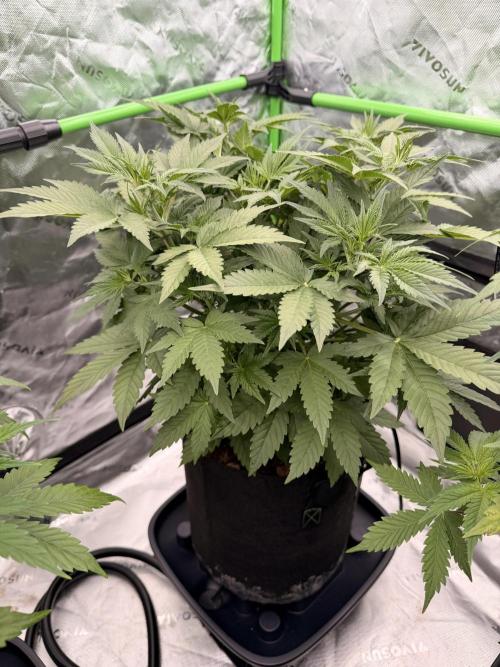
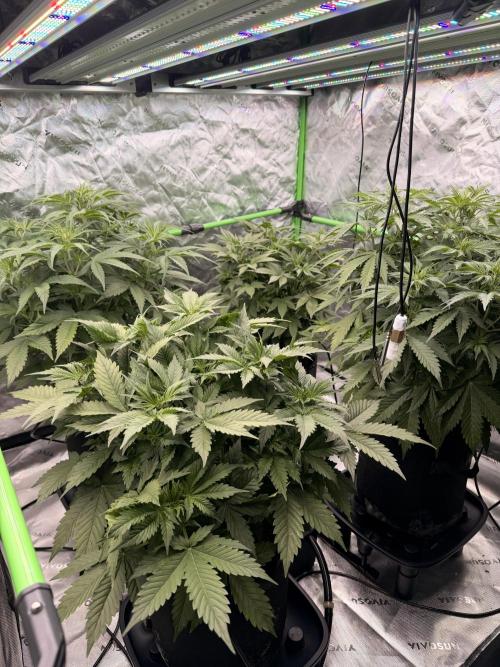
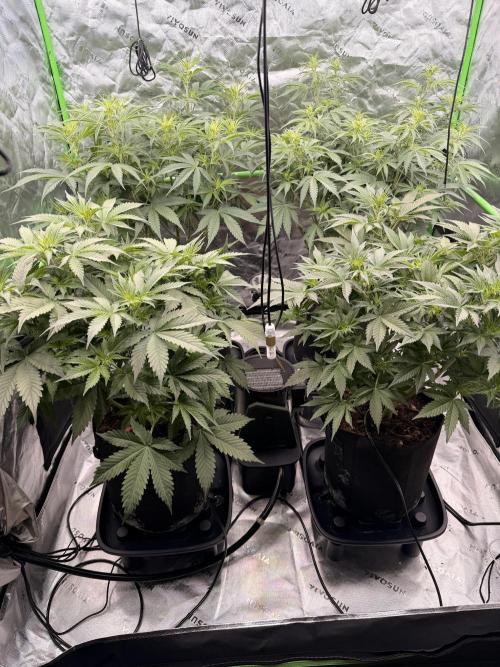
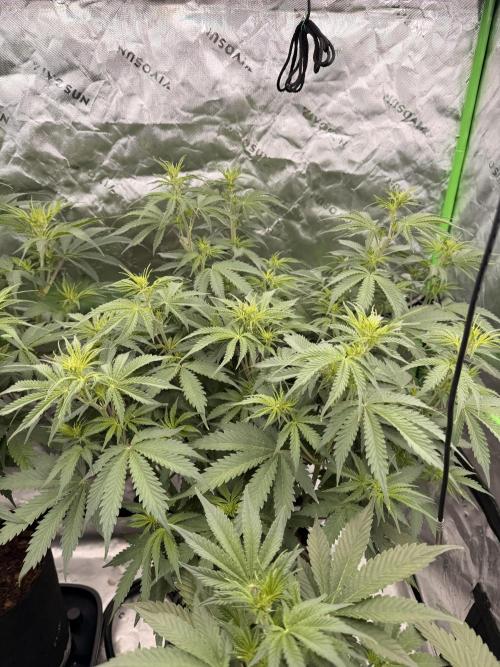
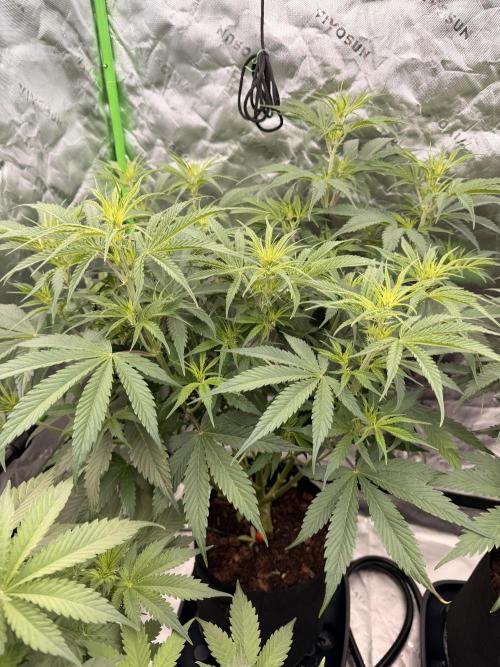
Growth Overview
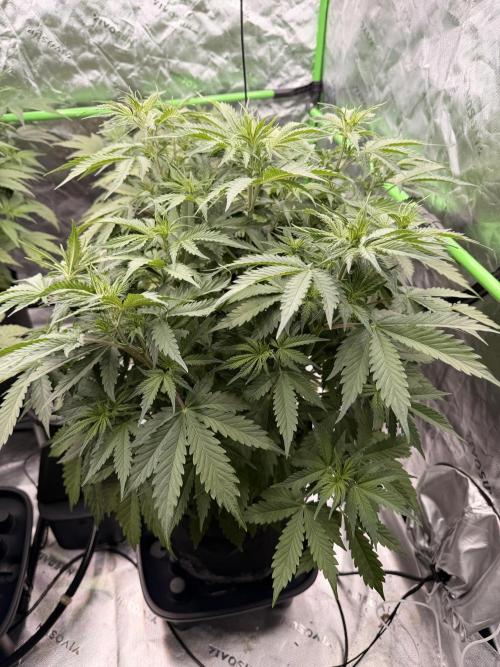
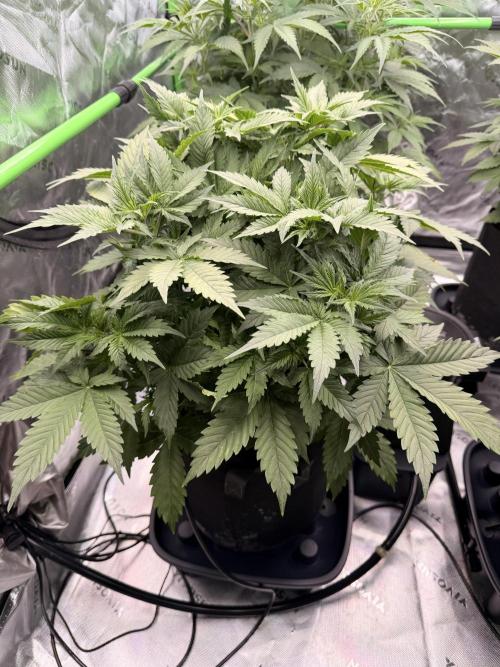
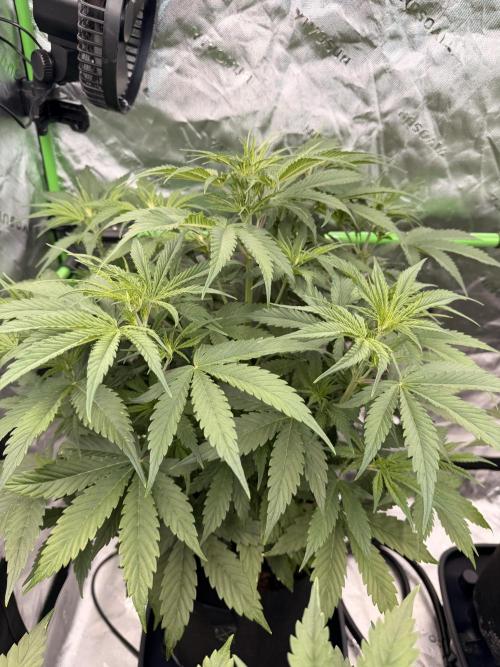
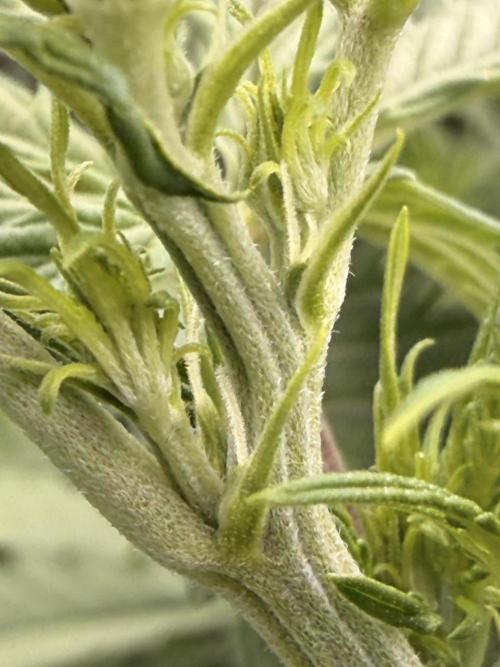
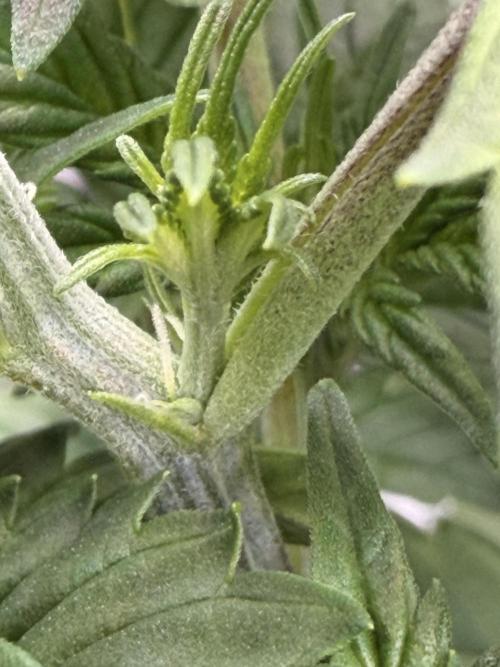
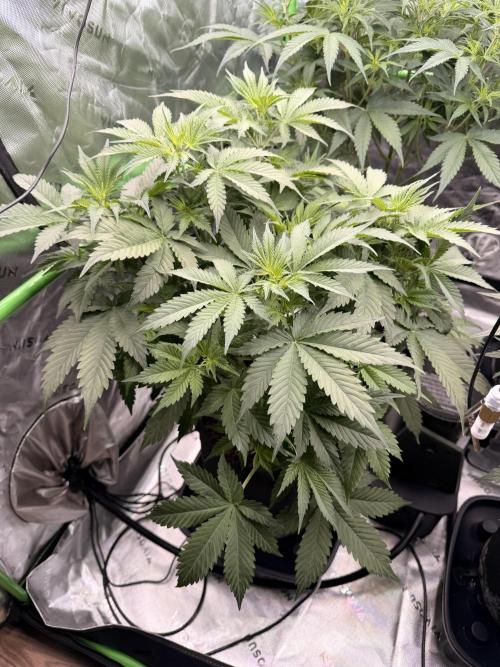
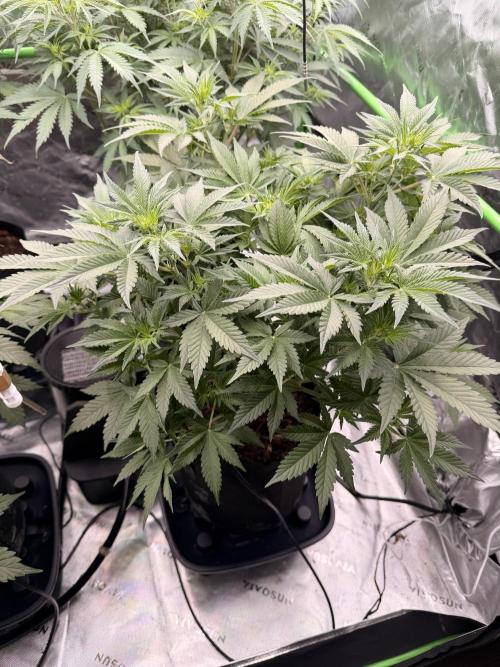
Week 4 marks the transition into flowering for all four Sticky Broccoli autos. Pistils are now visible across the tent, confirming early flower onset. The two smaller plants received a heavier defoliation to remove excess leaf mass and improve airflow and light penetration. Overall structure looks solid, with healthy tops forming and good response to feeding.
⸻
Canopy Management
• Removed a good amount of leaves from the smaller plants
• Goal was to balance transpiration, reduce humidity pockets, and expose bud sites
• No signs of stress post-defoliation
⸻
Light & Spectrum
• Adjusted spectrum to 55% Cool / 45% Warm, then to 50% cool / 50% warm on 2/17
• IR introduced as end-of-day treatment
• Initially 5% IR for last 5 minutes
• Increased to 10% IR for last 5 minutes by 2/14, then 10% IR for 10 mins on 2/17
• Strategy aimed at encouraging stretch control and early flower signaling
⸻
Watering & Nutrient Log
(All nutrient amounts listed per gallon)
2/11
Volume: 1 gallon total (¼ gallon per plant)
Runoff: Small amount on the two smaller plants
PPM: 1100
pH: 5.8
Nutrients:
• 0.5 ml Silicium
• 2 ml Mag-Cal
• 10 ml Cocos A
• 10 ml Cocos B
• 2 ml Royal Rush
• 4 ml Pure Zym
• 5 ml Ruby Fulvic
⸻
2/12
Volume: 2 gallons total (½ gallon per plant)
Goal: Full saturation + reset medium EC/pH
PPM: not recorded
pH: not recorded
Nutrients:
• 0.5 ml Silicium
• 10 ml Cocos A
• 10 ml Cocos B
• 2 ml Royal Rush
• 4 ml Pure Zym
• 5 ml Ruby Fulvic
• ¼ tsp Recharge
⸻
2/13
Volume: 4 gallons
PPM: 1000
pH: 5.9
Nutrients:
• 0.5 ml Silicium
• 10 ml Cocos A
• 10 ml Cocos B
• 2 ml Royal Rush
• 4 ml Pure Zym
• 5 ml Ruby Fulvic
• 2 ml Fish Sh!t
⸻
2/14
IR increased to 10% for final 5 minutes
Previous mix discarded due to microbial activity
Volume: 2.5 gallons
PPM: 875
pH: 5.8
Nutrients:
• 0.5 ml Silicium
• 10 ml Cocos A
• 10 ml Cocos B
• 2 ml Royal Rush
• 4 ml Pure Zym
• 5 ml Ruby Fulvic
• 2 ml Fish Sh!t
⸻
2/15
Volume: 2.5 gallons total
Runoff: 3 of 4 plants
PPM: 880
pH: 5.8
⸻
2/16
Volume: 3.5 gallons
Auto-irrigation run time: 2 minutes
PPM: 975
pH: 5.7
Nutrients:
• 0.5 ml Silicium Bloom
• 10 ml Cocos A
• 10 ml Cocos B
• 2 ml Royal Rush
• 4 ml Pure Zym
• 5 ml Ruby Fulvic
• 2 ml Fish Sh!t
⸻
2/17
Plants looking slightly overwatered
No feeding today
Allowing additional dry-back before next irrigation
⸻
Notes & Observations
• Early flower transition is uniform across all plants
• Medium EC successfully lowered through runoff resets
• Monitoring moisture closely after heavier irrigation cycles
• Expecting increased uptake as flower development accelerates
7 likes
comments
Share
5
Week 5. Flowering8mo ago
76.2 cm
Height
18 hrs
Light Schedule
24 °C
Day Air Temp
5.8
pH
1000 PPM
TDS
60 %
Air Humidity
23 °C
Night Air Temp
11.36 liters
Pot Size
3.79 liters
Watering Volume
40.64 cm
Lamp Distance
Nutrients 8
Scilicium
0.132 mll
Cocos A
2.113 mll
Cocos B
3.17 mll
Stoney_Stark Sticky Broccoli Auto — Week 5 Update
Stage: Early Flower (Week 1)
Grower: Stoney Stark / Little Lilly Farms
⸻
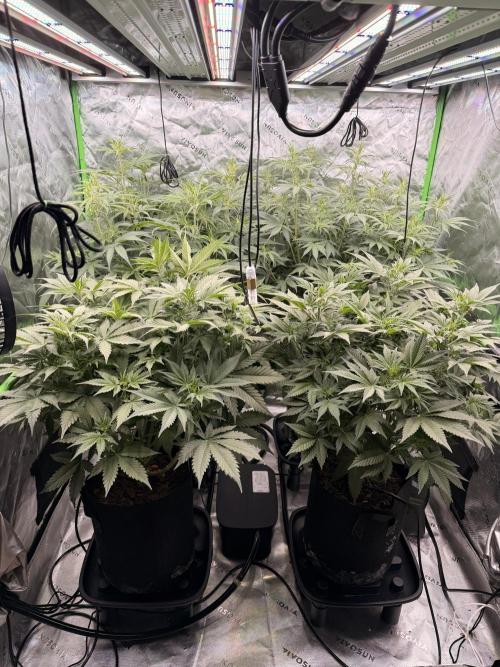
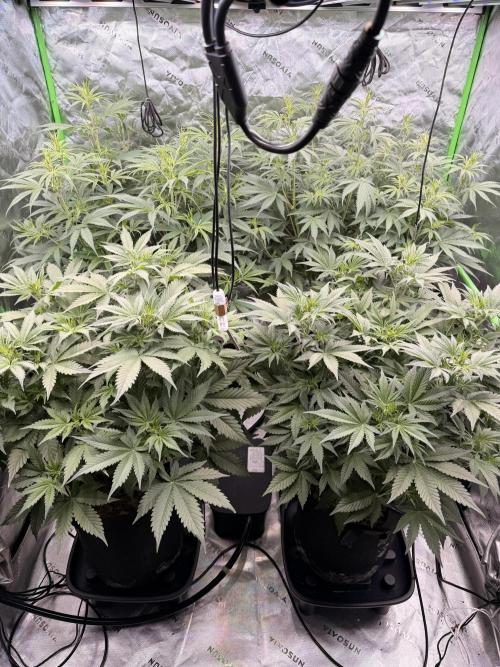
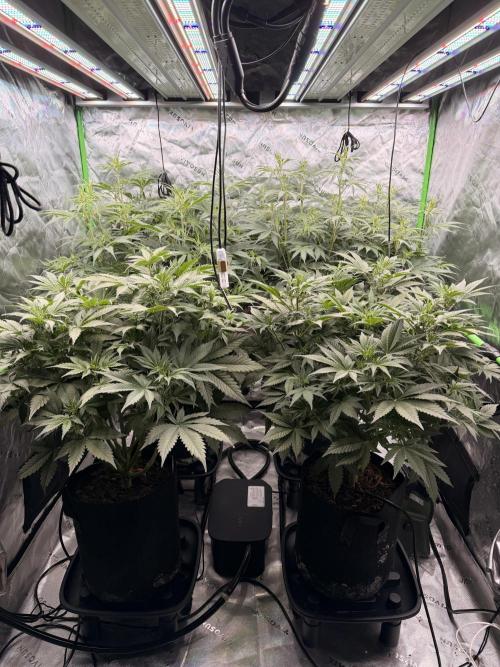
Growth Overview
Week 5 marks the official transition into flower, and all four Sticky Broccoli autos are responding strongly. The two larger plants have entered an aggressive stretch phase, showing more sativa-leaning internodal expansion than expected for an indica-dominant cultivar. The two smaller plants remain shorter and bushier, expressing a more classic indica structure.
Overall vigor is excellent across the tent. Leaf color is vibrant, stems are thickening rapidly, and there are no visible deficiency or toxicity symptoms.
⸻
What’s Happening This Week (Plant Physiology Breakdown)
This week represents the flower initiation + stretch overlap, one of the most metabolically demanding phases of an auto:
1. Rapid Stretch (Hormonal Shift)
• Plants are responding to increased flowering hormones (gibberellins and auxins)
• Internode spacing is increasing rapidly on the larger phenos
• Energy is being redirected toward vertical growth while flower sites are forming
This explains why the two larger plants are stretching “harder” than expected, despite indica genetics.
2. Root Demand & Water Uptake Increase
• Daily feeding to runoff is necessary because:
• Root mass has expanded significantly
• Transpiration rates are high due to stretch
• Coco dries faster under increased metabolic load
The initial underwatering sign on one larger plant (2/18) aligns perfectly with this surge in demand.
3. Nutrient Uptake Shift
• Nitrogen demand is still present (for stretch), but tapering
• Phosphorus and potassium uptake are ramping up
• Enzyme activity and carbohydrate metabolism are increasing rapidly
Your slight drop from ~1100 ppm to ~1000 ppm combined with consistent runoff resets kept the root zone perfectly balanced during this sensitive transition.
4. Post-Defoliation Response
• The 2/20 defoliation and lollipopping improved:
• Light penetration to lower sites
• Airflow through the canopy
• Hormonal focus on top flower sites
The strong recovery seen by 2/21 confirms the plants were ready for it.
⸻
Watering & Feeding Strategy
Medium: Coco
Irrigation: Auto-watering system
Frequency: Near-daily
Runoff Target: 10–30% depending on reset goal
The alternating heavier runoff days (30%) and lighter days (5–15%) is ideal for:
• Preventing salt buildup
• Maintaining stable EC in the root zone
• Supporting rapid stretch without overfeeding
⸻
Nutrient Mix (Per Gallon)
• 0.5 ml Silicium Bloom
• 8 ml Cocos A
• 12 ml Cocos B
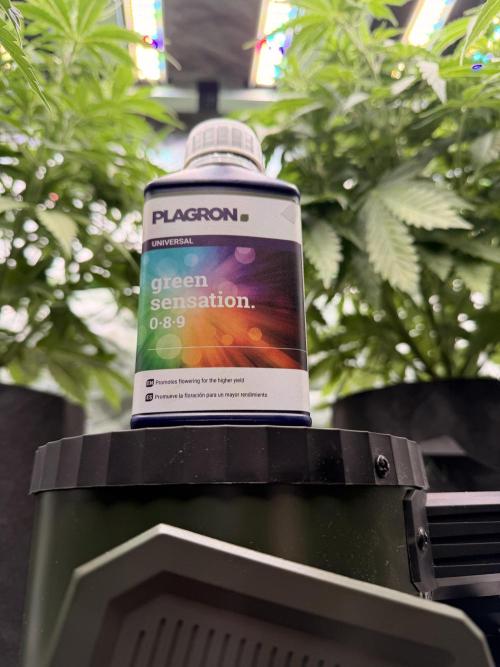
• 1 ml Green Sensation
• 1 ml Power Buds
• 4 ml Pure Zym
• 5 ml Ruby Fulvic
• 6 ml Photosynthesis Plus (added 2/24)
PPM: ~1000
pH: 5.8–5.9
⸻
Plant Status Summary
• Stretch is strong but controlled
• Root zone fully reset and balanced
• No signs of stress post-defoliation
• Flower sites stacking rapidly
• Photosynthesis support added at the perfect time
This week sets the foundation for bud size, structure, and final yield. If stretch continues another 7–10 days, that’s completely normal for autos expressing hybrid vigor.
9 likes
1 comment
Share
6
Week 6. Flowering8mo ago


91.44 cm
Height
18 hrs
Light Schedule
24 °C
Day Air Temp
5.8
pH
1000 PPM
TDS
60 %
Air Humidity
23 °C
Night Air Temp
11.36 liters
Pot Size
3.79 liters
Watering Volume
40.64 cm
Lamp Distance
Nutrients 9
MagCal
0.528 mll
Silicium Bloom
0.132 mll
Cocos A
1.321 mll
Stoney_Stark Sticky Broccoli Auto — Week 6 Update
Grower: Stoney Stark / Little Lilly Farms
Stage: Late Stretch / Early Flower
Medium: Coco
Feeding Method: Heavy daily feeds to runoff
⸻
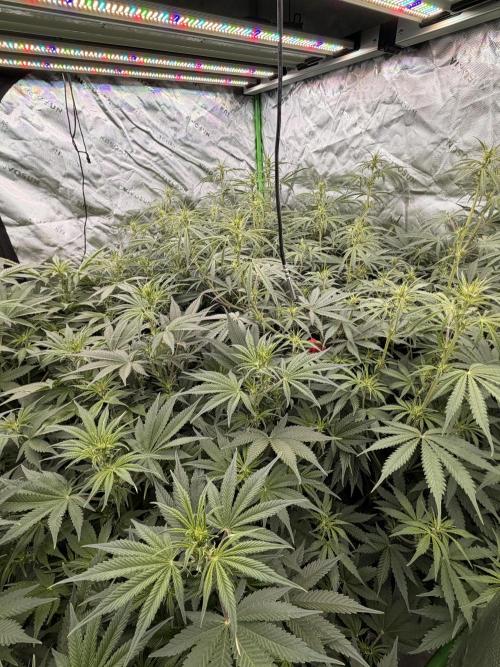
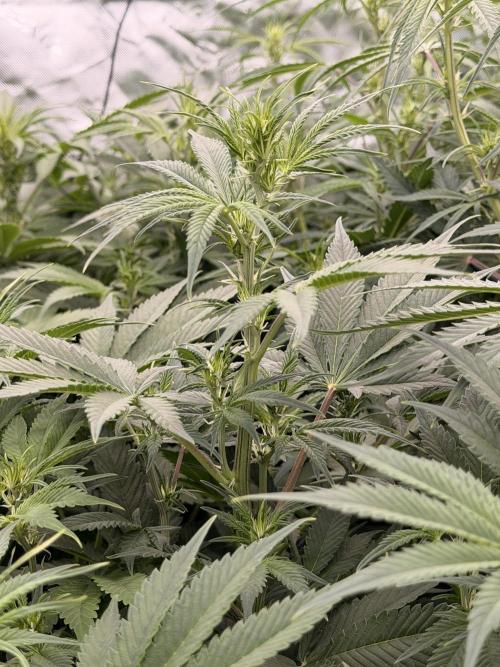
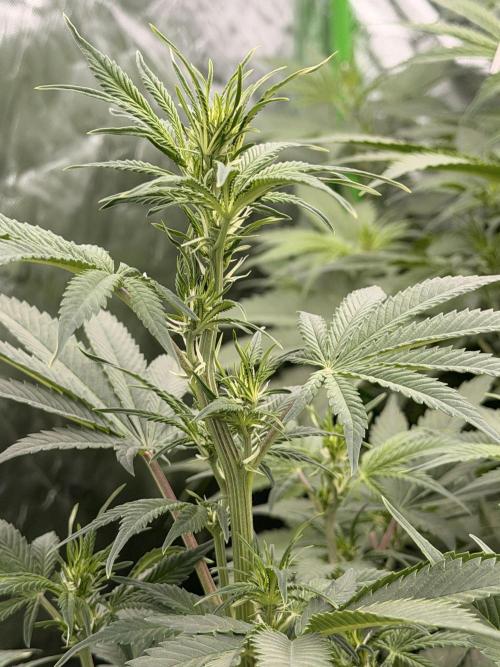
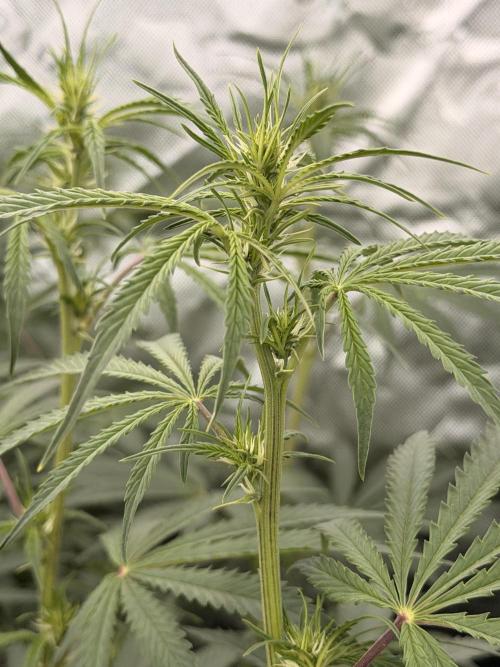
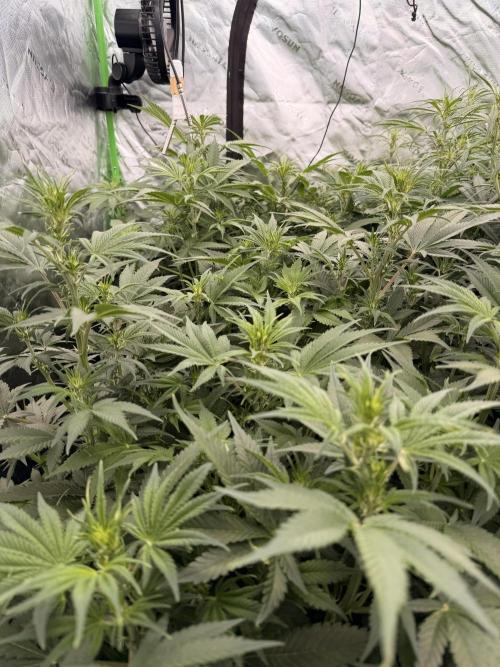
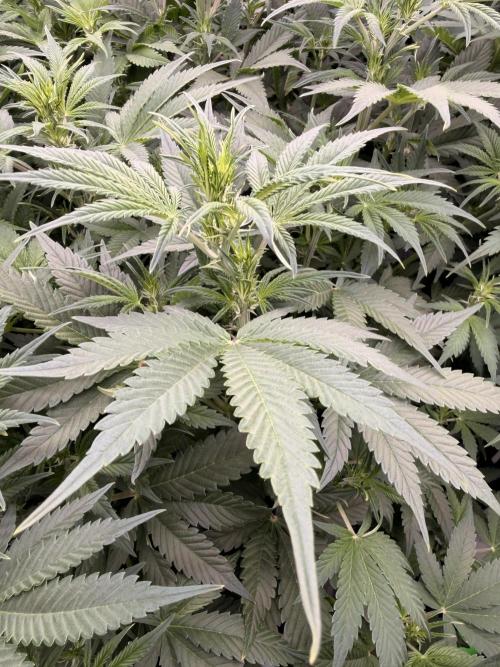
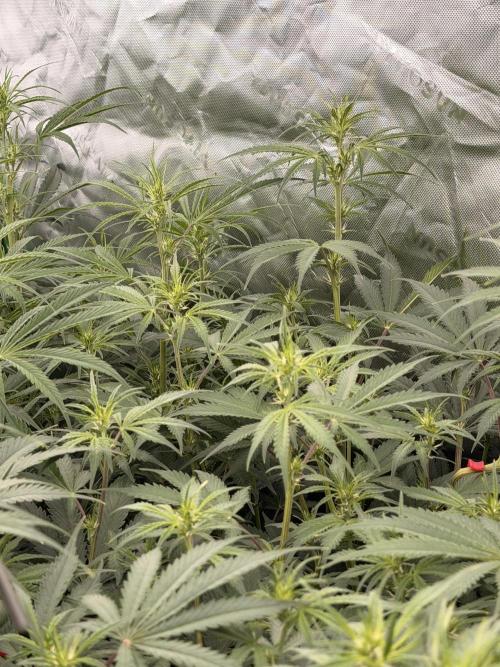
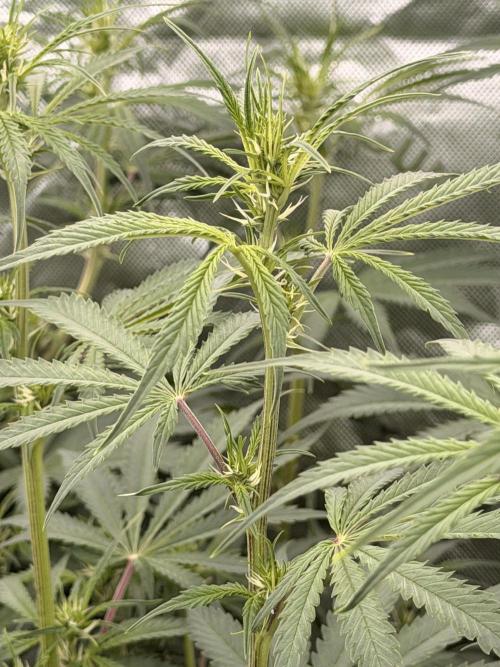
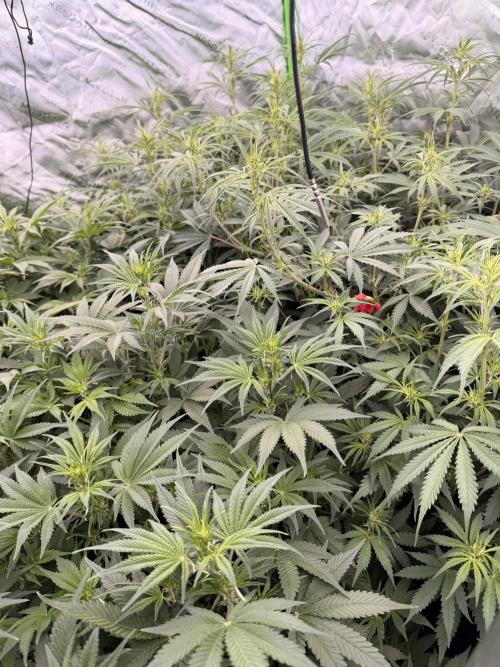
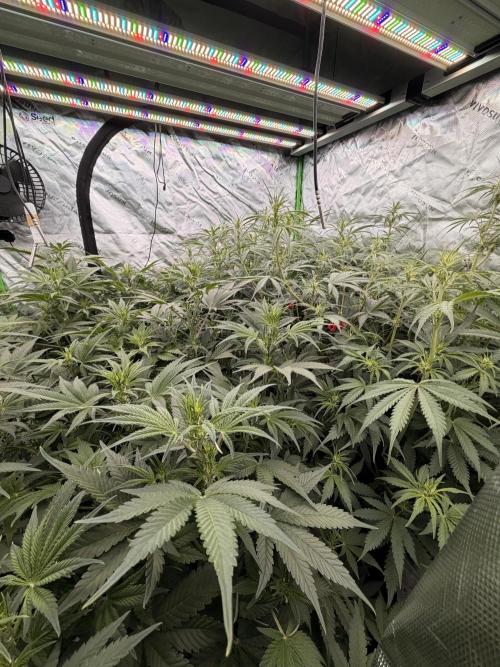
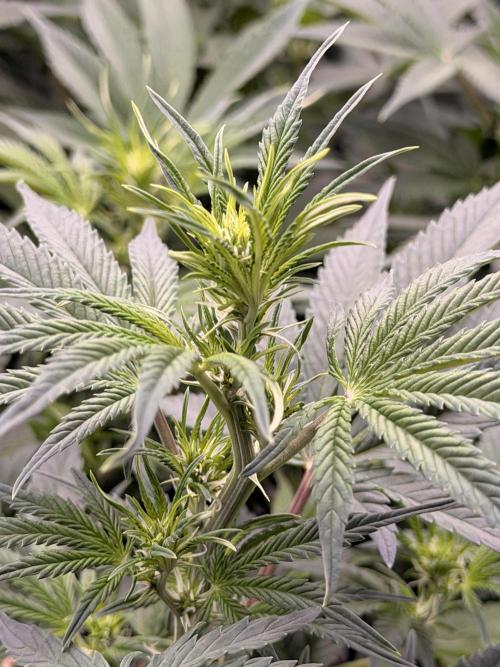
Growth Overview
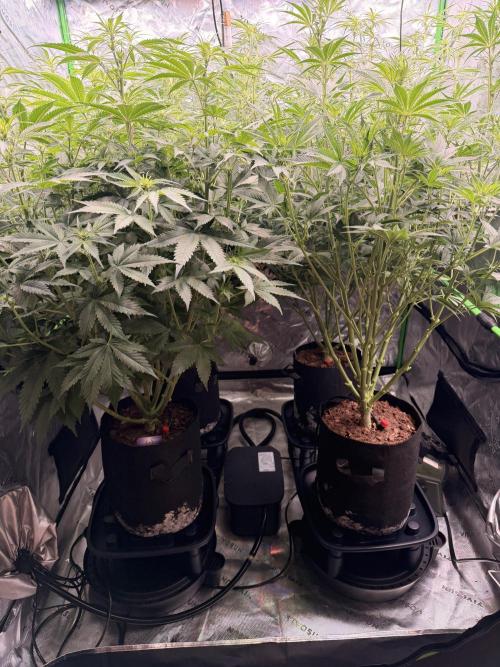
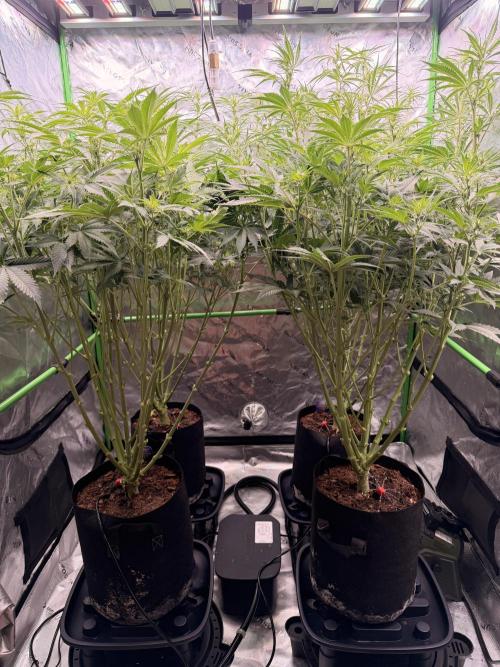
The plants have exploded in growth this week and are still actively stretching. Daily water demand is extremely high, with most days requiring nearly 1 gallon per plant. Despite aggressive feeding and stretch management, the plants are showing zero stress, strong vigor, and excellent leaf color.
Two distinct phenotypic expressions are now clearly visible across the four plants, with differences in stretch rate and structure.
⸻
Canopy & Training
• Plants began stretching close to the light
• Instead of raising the fixture, taller stems were bent and secured with plant clips
• Canopy remains even and light penetration is well controlled
• No signs of light stress or photobleaching
⸻
Watering & Feeding Log
2/24
• Volume: 4 gallons total
• Runoff: ~25% per plant
• EC/PPM: 1100 ppm
• pH: 5.8
Nutrients (per gallon):
• 0.5 ml Silicium Bloom
• 2 ml MagCal
• 5 ml Cocos A
• 13 ml Cocos B
• 4 ml Pure Zym
• 2 ml Green Sensation
• 2 ml Power Buds
• 5 ml Ruby Fulvic
• 6 ml Photosynthesis Plus
⸻
2/25
• Volume: 4 gallons total
• Feed timing:
• ~½ gallon per plant at 3am (no runoff)
• Reservoir feed at 1pm
• ~5% runoff observed by 3pm
• EC/PPM: 1040 ppm
• pH: 5.7
Nutrients (per gallon):
(same as 2/24)
⸻
2/27
• No feed
⸻
2/28
• Volume: 4.5 gallons total
• Runoff: ~15% per plant
• EC/PPM: 1000 ppm
• pH: 5.8
Observations:
• Plants look exceptional
• No stress indicators
• Very aggressive vegetative push
• Clear pheno variation emerging
Nutrients (per gallon):
(same as previous feeds)
⸻
3/1
• EC/PPM: 1000 ppm
• pH: 5.8
Observations:
• Extremely vibrant color
• Stretch still actively continuing
Nutrients (per gallon):
(unchanged)
⸻
3/2
• No feed
⸻
3/3
• EC/PPM: 940 ppm
• pH: 5.8
Nutrients (per gallon):
• 0.5 ml Silicium Bloom
• 2 ml MagCal
• 5 ml Cocos A
• 13 ml Cocos B
• 4 ml Pure Zym
• 2 ml Green Sensation
• 2 ml Power Buds
• 5 ml Ruby Fulvic
• 6 ml Photosynthesis Plus
⸻
Nutrient Strategy Notes
• High B demand (Cocos B) is supporting stretch and early flower development
• Green Sensation + Power Buds driving early generative signaling
• Photosynthesis Plus supporting rapid biomass production
• Pure Zym helping maintain clean root zone under heavy feed frequency
• Slight ppm taper beginning as stretch progresses
⸻
Overall Assessment
This was a textbook Week 6:
• Heavy feeding handled effortlessly
• Stretch is strong but controlled
• Plants are healthy, vigorous, and highly responsive
• Setup is perfectly tuned for the transition into full flower
5 likes
comments
Share
7
Week 7. Flowering7mo ago

91.44 cm
Height
18 hrs
Light Schedule
24 °C
Day Air Temp
5.8
pH
1000 PPM
TDS
60 %
Air Humidity
23 °C
Night Air Temp
11.36 liters
Pot Size
3.79 liters
Watering Volume
30.48 cm
Lamp Distance
Nutrients 10
MagCal
0.528 mll
Silicium Bloom
0.132 mll
Cocos A
1.321 mll
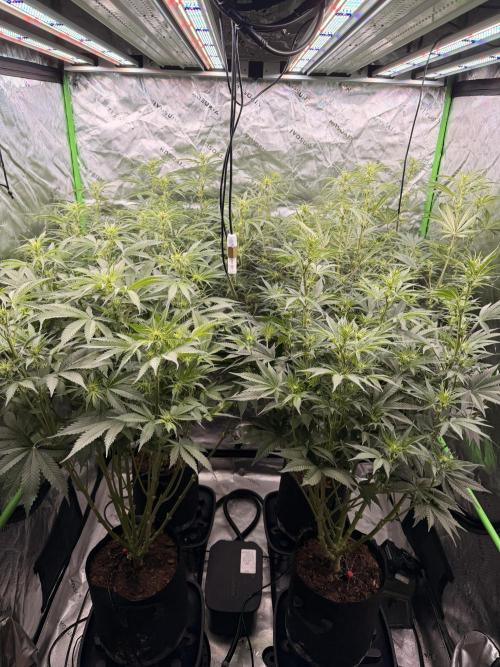
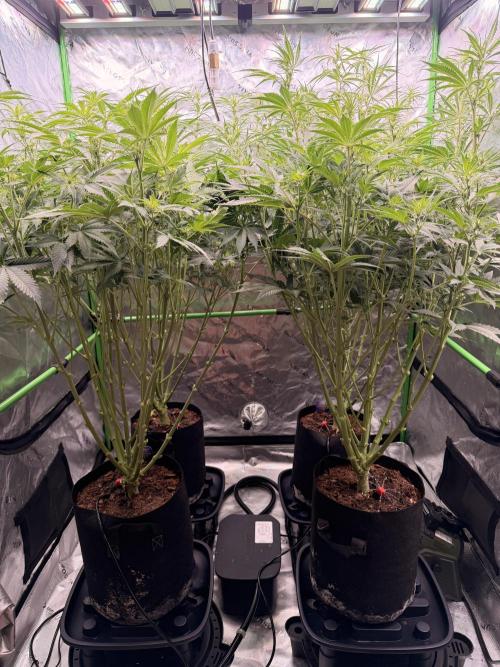
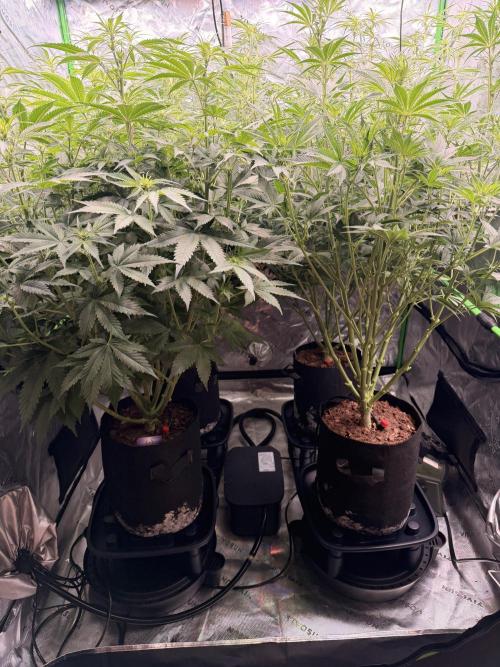
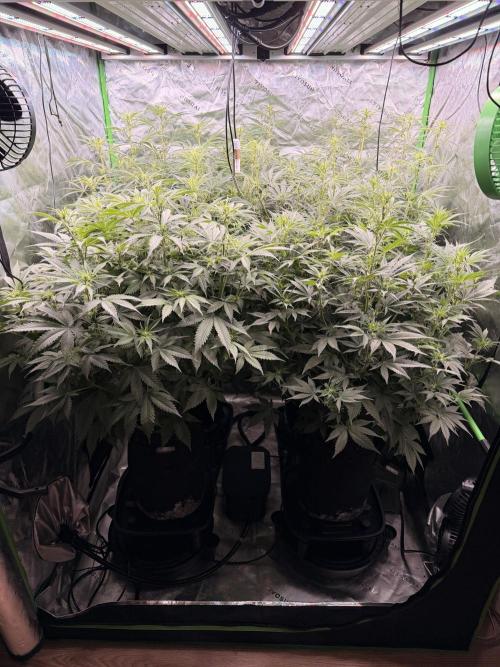
Stoney_Stark Sticky Broccoli Auto – Week 7 Update
Week 3 of Flower
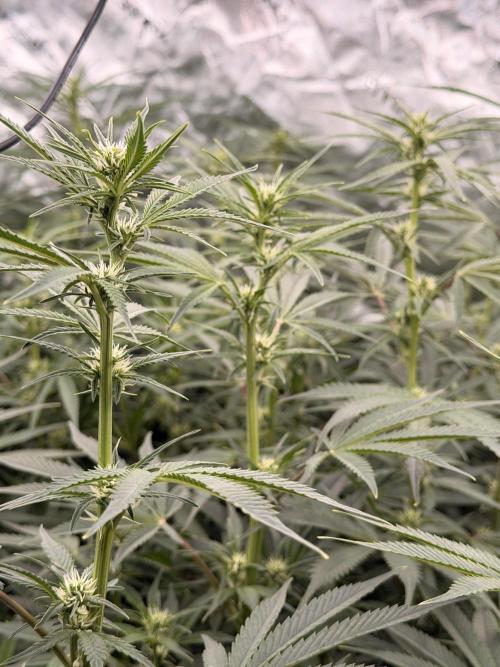
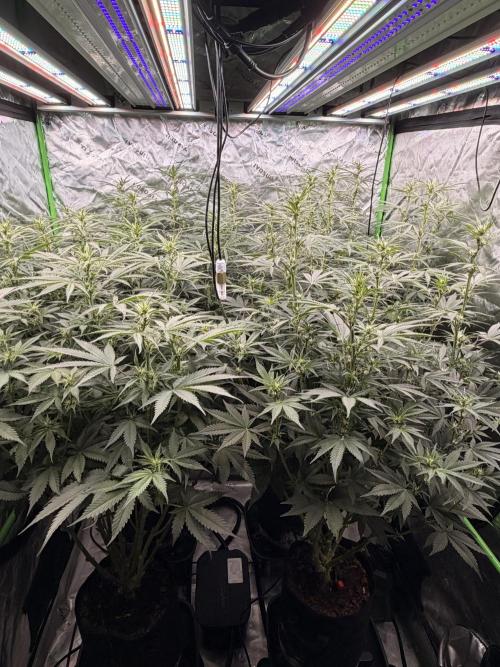
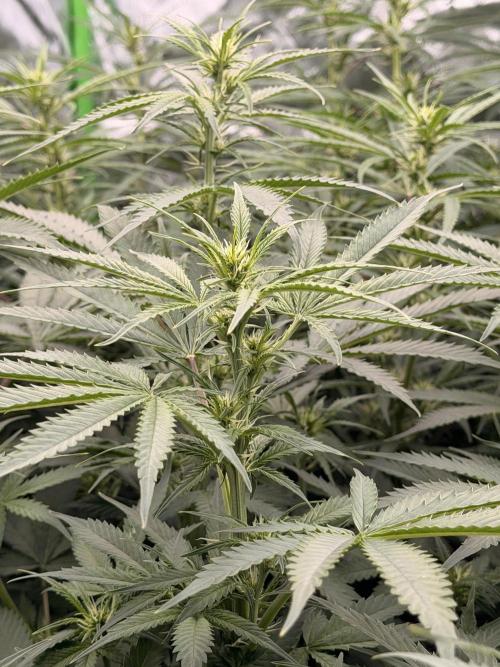
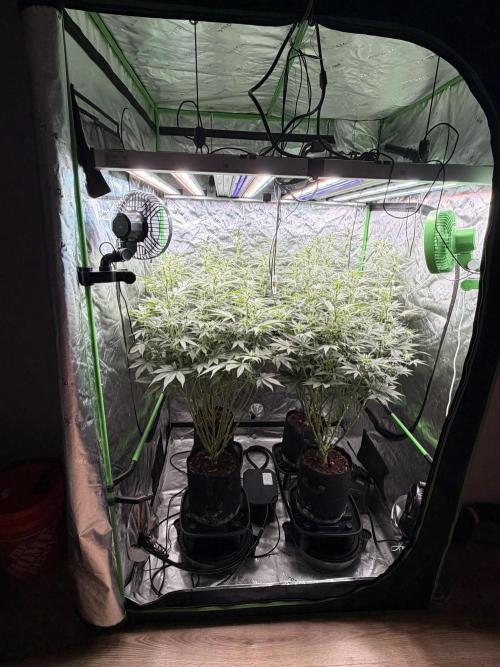
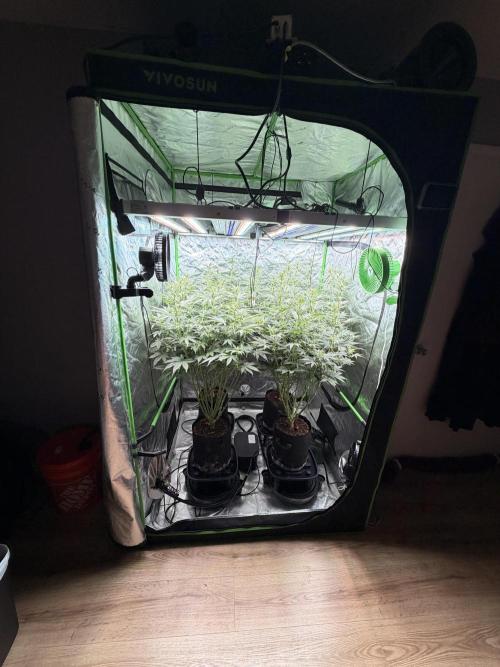
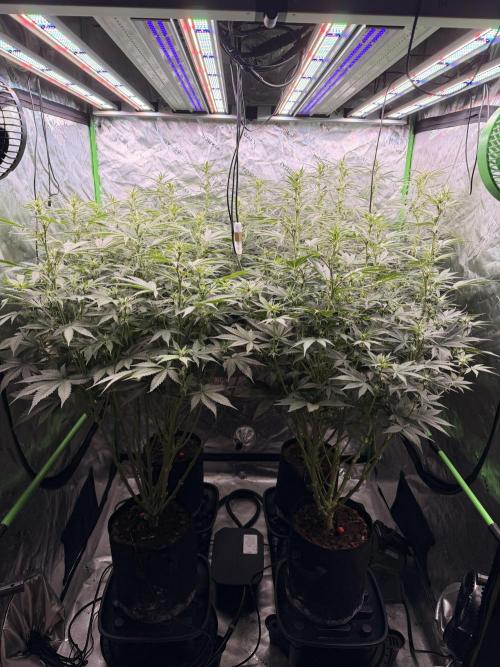
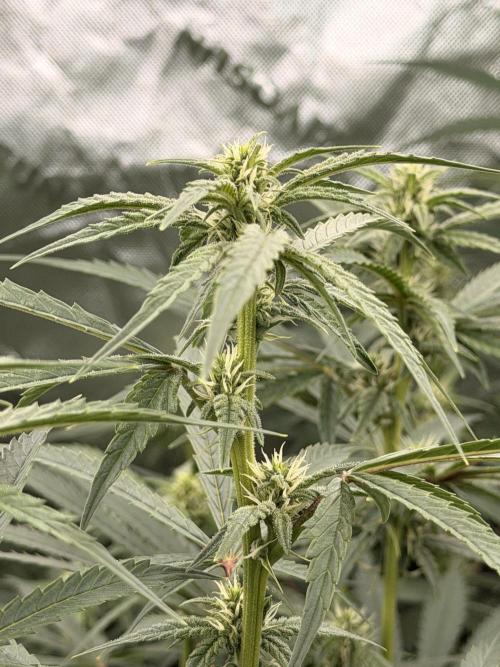
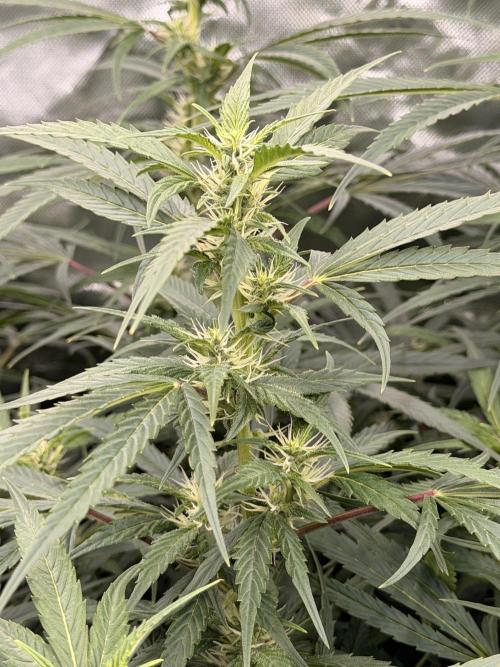
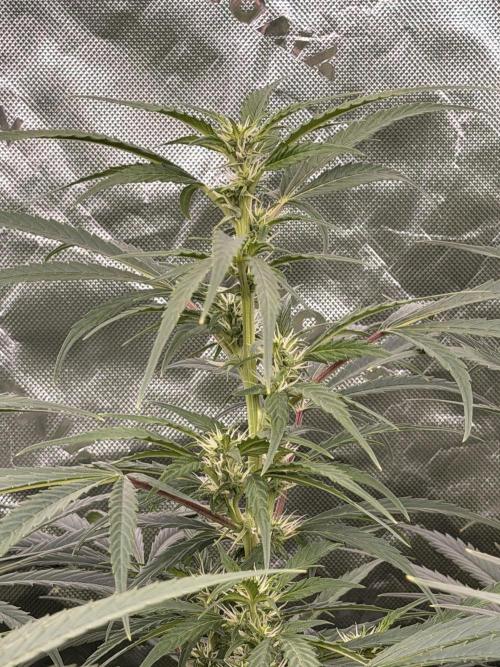
Stretch appears to be finished and the plants have transitioned fully into flower production. Bud sites are forming across the canopy and stacking is beginning nicely. Trichomes are already visible on a couple of the plants, which is a great early indicator of strong resin production.
Aroma is developing into a sweet, skunky, earthy profile. Overall plant health looks excellent with strong color and structure. There is very minor tip burn visible on some leaves, which may be the result of allowing the coco to dry back slightly too much between feedings. Allowing coco to dry too far can concentrate salts in the medium and temporarily increase EC around the root zone.
⸻
Light & Environment
• Plants have finished stretch and are now focusing energy on bud formation.
• UV-A and UV-B supplementation introduced this week at low intensity.
• UV schedule: 30 minutes halfway through the light cycle.
• Final defoliation completed to open the canopy and improve airflow and light penetration.
⸻
Feeding Log
All nutrient measurements are per gallon.
3/3
Started using low intensity UV-A and UV-B for 30 minutes halfway through the light cycle.
Mixed ~4 gallons of feed solution. Each plant received about 15% runoff.
940 ppm
5.7 pH
• .5 ml Silicium Bloom
• 2 ml MagCal
• 5 ml Cocos A
• 13 ml Cocos B
• 4 ml Pure Zym
• 2 ml Green Sensation
• 2 ml Power Buds
• 5 ml Ruby Fulvic
• 6 ml Photosynthesis Plus
⸻
3/4
Added Royal Rush to the schedule at 8 ml per gallon once per week as recommended on the bottle. Interested to see how the 8-0-0 nitrogen boost performs during flowering.
1200 ppm
5.8 pH
• .5 ml Silicium Bloom
• 2 ml MagCal
• 5 ml Cocos A
• 15 ml Cocos B
• 4 ml Pure Zym
• 3 ml Green Sensation
• 2 ml Power Buds
• 5 ml Ruby Fulvic
• 8 ml Royal Rush (weekly)
• 6 ml Photosynthesis Plus
⸻
3/5
Final defoliation completed.
Mixed 4 gallons.
1140 ppm
5.8 pH
• .5 ml Silicium Bloom
• 2 ml MagCal
• 5 ml Cocos A
• 15 ml Cocos B
• 4 ml Pure Zym
• 3 ml Green Sensation
• 2 ml Power Buds
• 5 ml Ruby Fulvic
• 6 ml Photosynthesis Plus
⸻
3/6
Mixed 4 gallons.
Auto-watering system ran until about 10% runoff.
1160 ppm
5.8 pH
• .5 ml Silicium Bloom
• 2 ml MagCal
• 5 ml Cocos A
• 15 ml Cocos B
• 4 ml Pure Zym
• 3 ml Green Sensation
• 2 ml Power Buds
• 5 ml Ruby Fulvic
• 6 ml Photosynthesis Plus
⸻
3/7
Auto-watering system activated until about 1 gallon remained in the reservoir.
Each plant watered to runoff.
1180 ppm
5.8 pH
• .5 ml Silicium Bloom
• 2 ml MagCal
• 5 ml Cocos A
• 15 ml Cocos B
• 4 ml Pure Zym
• 3 ml Green Sensation
• 2 ml Power Buds
• 5 ml Ruby Fulvic
• 6 ml Photosynthesis Plus
⸻
3/8
Mixed 4 gallons. Approximately 2.5 gallons used.
Each plant received a healthy amount of runoff. Plants are looking very healthy and bud sites are stacking nicely.
1100 ppm
5.8 pH
• .5 ml Silicium Bloom
• 2 ml MagCal
• 5 ml Cocos A
• 15 ml Cocos B
• 4 ml Pure Zym
• 3 ml Green Sensation
• 2 ml Power Buds
• 5 ml Ruby Fulvic
⸻
3/9
Mixed 3 gallons. Each plant watered to light runoff. About 1.5 gallons of feed solution remained.
885 ppm
5.8 pH
• .5 ml Silicium Bloom
• 2 ml MagCal
• 5 ml Cocos A
• 15 ml Cocos B
• 4 ml Pure Zym
• 3 ml Green Sensation
• 2 ml Power Buds
• 5 ml Ruby Fulvic
⸻
3/10
Finished the remaining nutrient solution from 3/9.
No runoff.
⸻
Nutrient Function Overview
Silicium Bloom
Provides potassium silicate to strengthen cell walls, improve structural strength, and increase resistance to environmental stress during heavy flower development.
MagCal
Supplies calcium and magnesium which are critical for chlorophyll production, cell structure, and preventing deficiencies common in coco.
Cocos A & B
Primary base nutrient supplying macro and micronutrients needed for flowering growth.
Pure Zym
Enzymes that break down dead root matter and organic debris in the root zone, keeping the rhizosphere clean and improving nutrient uptake.
Green Sensation
Bloom enhancer designed to increase flower density, resin production, and final yield.
Power Buds
Encourages rapid flower initiation and increased bud site formation.
Ruby Fulvic
Fulvic acids improve nutrient chelation and transport, helping plants absorb nutrients more efficiently.
Royal Rush
High nitrogen microbial feed that stimulates beneficial microbes and increases metabolic activity in the root zone.
Photosynthesis Plus
Beneficial bacteria that enhance photosynthesis efficiency and root zone microbial activity.
7 likes
3 comments
Share
8
Week 8. Flowering7mo ago
109.22 cm
Height
18 hrs
Light Schedule
24 °C
Day Air Temp
5.8
pH
1000 PPM
TDS
55 %
Air Humidity
23 °C
Night Air Temp
11.36 liters
Pot Size
3.79 liters
Watering Volume
20.32 cm
Lamp Distance
Nutrients 10
MagCal
0.528 mll
Silicium Bloom
0.132 mll
Cocos A
1.321 mll
Stoney_Stark Sticky Broccoli Auto – Week 8 Update (Week 4 Flower)
Overall Plant Status
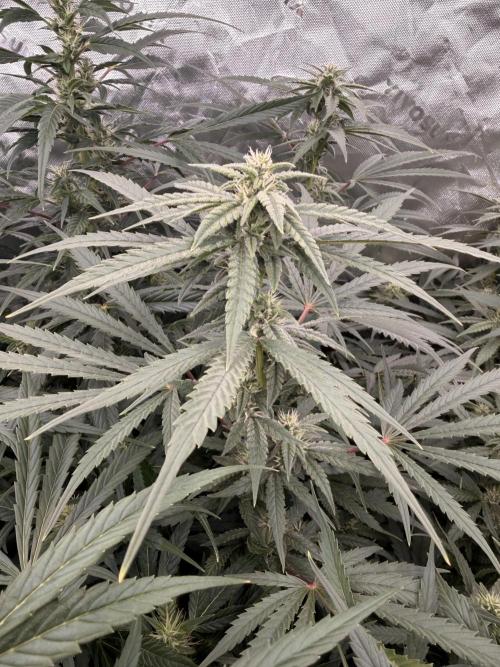
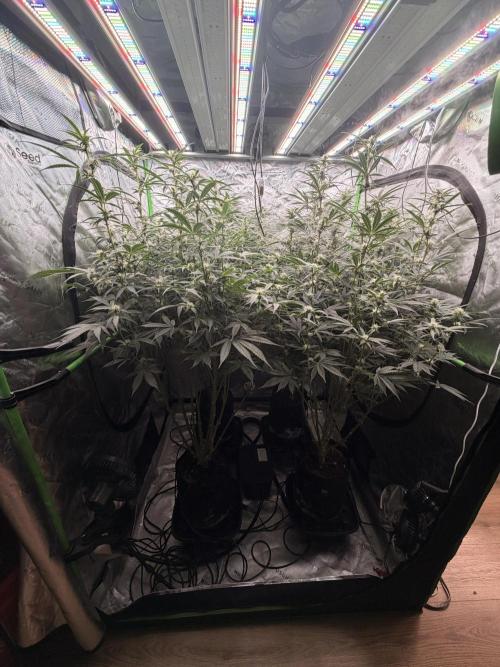
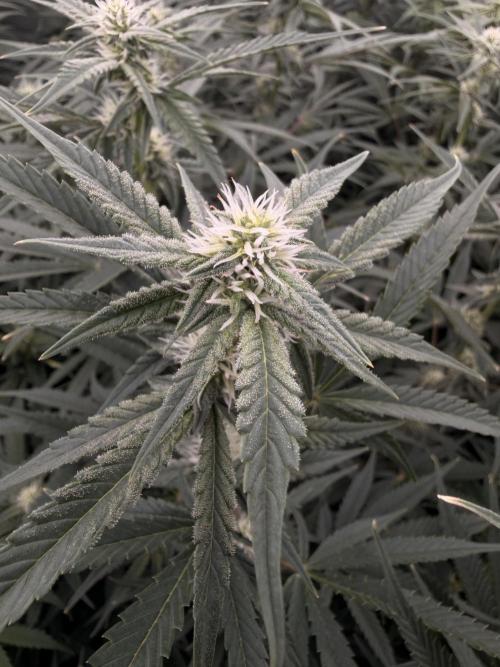
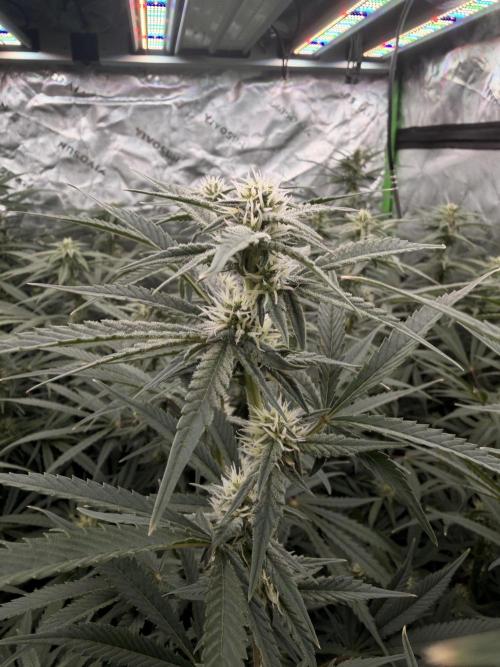
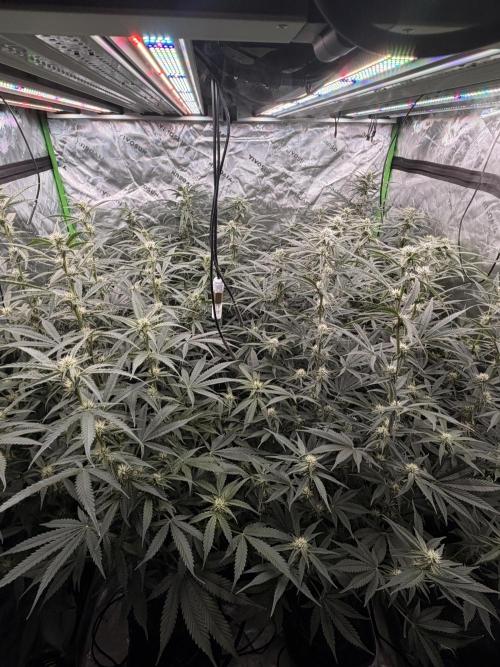
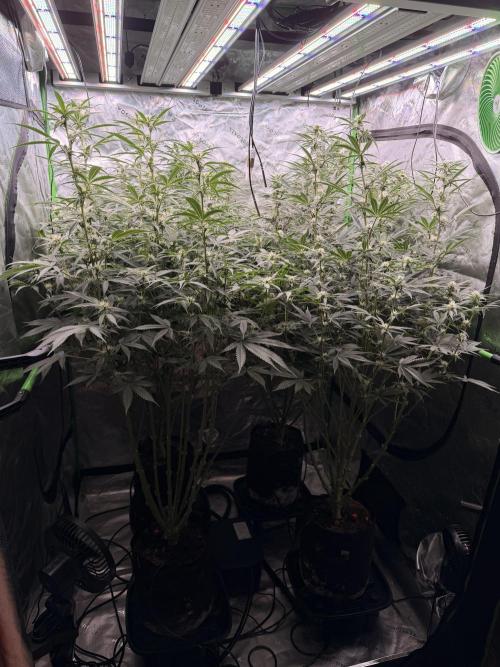
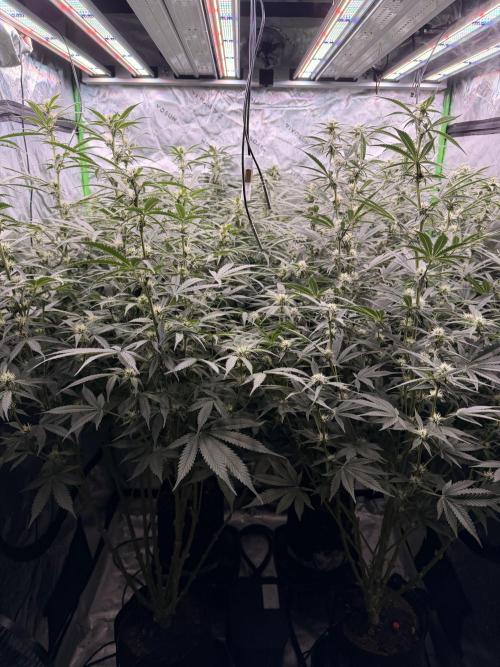
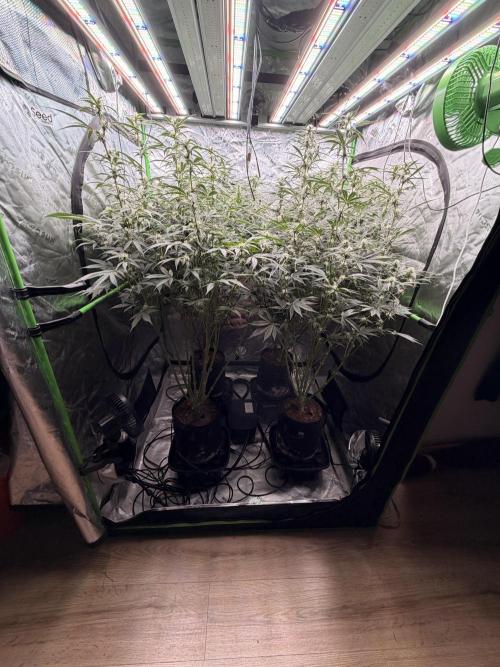
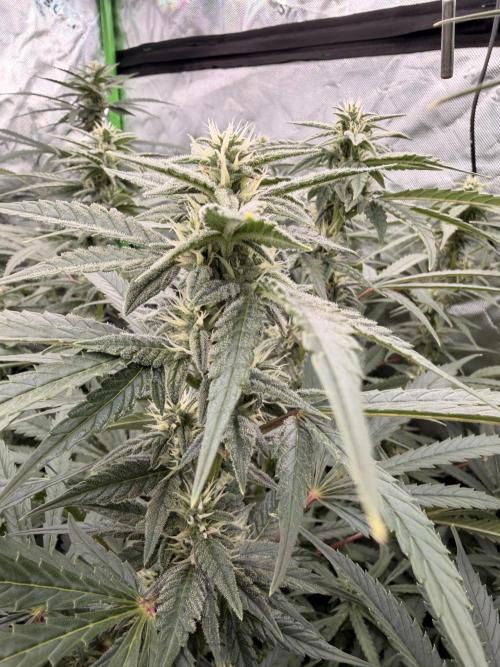
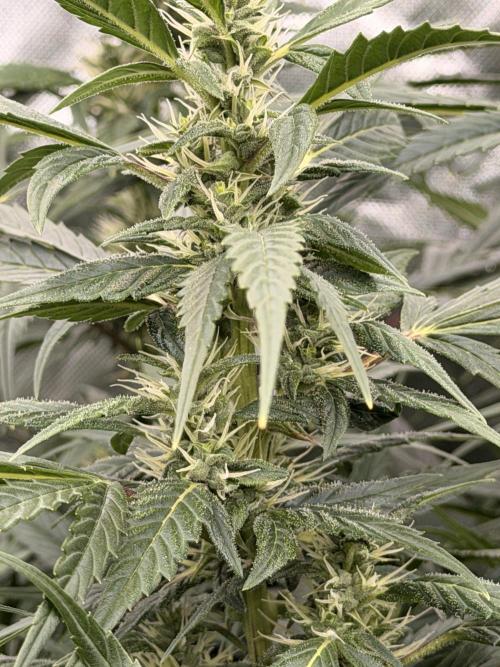
Week 4 of flower and things are… interesting. All 4 plants are showing excellent health overall—no visible deficiencies, strong color, and vigorous growth. However, there are some growth irregularities across the canopy.
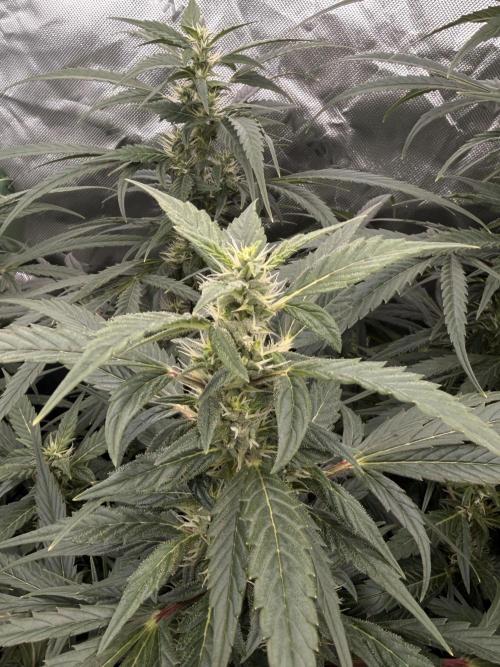
• Bud structure is developing oddly and slower than expected
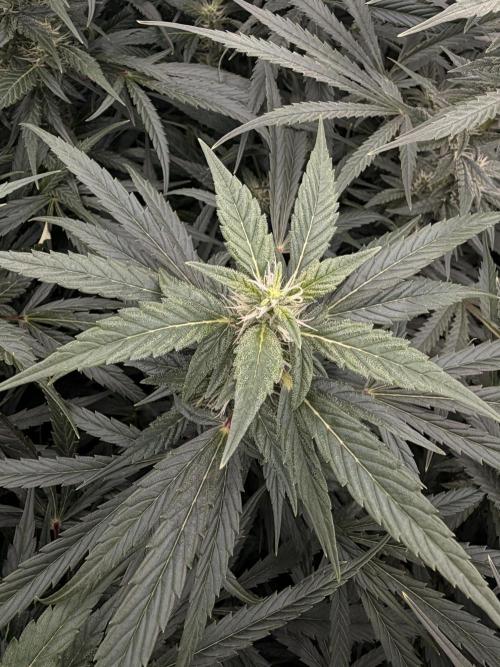
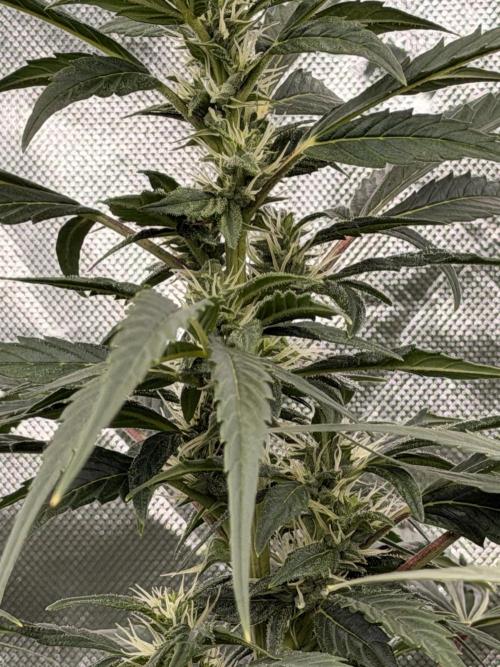
• One plant (back left) is showing re-veg–like traits
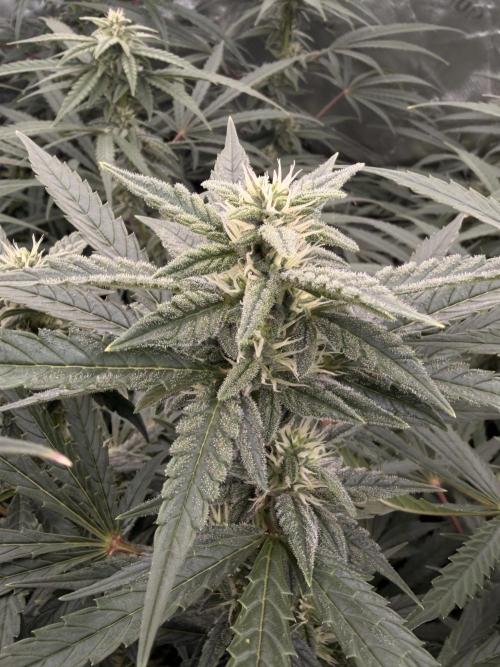
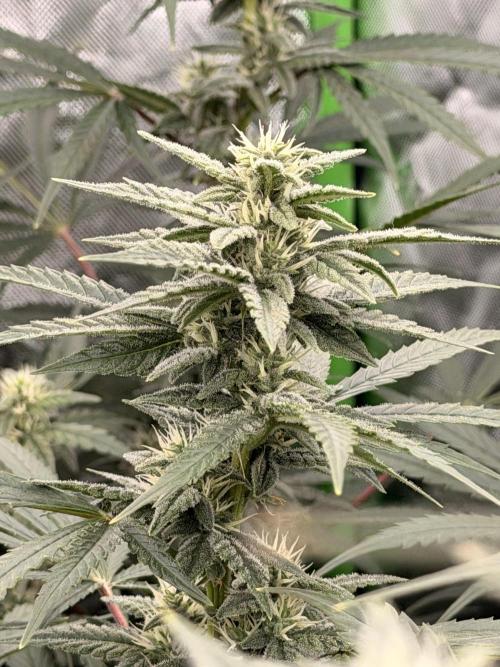
• Another (back right) is absolutely dumping trichomes early
• Front two plants appear the most “normal,” but still not bulking heavily yet
Despite being labeled an 8–9 week auto, this run is clearly trending longer. Estimated finish now looks closer to 11–13 weeks, likely leaning toward the longer end.
⸻
Environment & Light Notes
• UV was being applied but has now been turned OFF (3/15) to rule out stress-related responses
• Light schedule unchanged otherwise
• Feeding timing:
• Auto irrigation ~30 min after lights on (2:30 AM)
• Secondary feed mid-day (~1:30–4 PM)
Observation:
The re-veg–like growth (3-finger leaves, excessive leafy growth) is unusual for autos but can be triggered by:
• Spectrum imbalance (UV/IR stress)
• Genetic instability (more likely with some autos)
• Environmental stress (though unlikely here given overall health)
⸻
Watering & Nutrients
General Range This Week:
• PPM: 860 → 1200
• pH: 5.7 – 5.9
• Runoff: 0% → 20% depending on day
⸻
3/11
• 4 gallons total
• Split feeding (AM + PM)
• Minimal runoff initially, slight runoff later
• 1200 PPM / 5.8 pH
Per gallon:
• .5ml Silicium Bloom
• 2ml MagCal
• 5ml Cocos A
• 15ml Cocos B
• 4ml Pure Zym
• 3ml Green Sensation
• 2ml Power Buds
• 5ml Ruby Fulvic
• 5ml Photosynthesis Plus
⸻
3/12
• 4 gallons total
• ~20% runoff achieved
• Plants evened out in height
• 1000 PPM / 5.8 pH
(Same mix minus Photosynthesis Plus)
⸻
3/13
• Split feeding again (AM + PM)
• ~15% runoff
• 1000 PPM / 5.7 pH
(Photosynthesis Plus reintroduced)
⸻
3/14
• Light defoliation + lower branch cleanup
• ~15% runoff
• 860 PPM / 5.8 pH
⸻
3/15
• No feed
• Observed abnormalities:
• Back left plant showing re-veg–like growth (3-finger leaves, excessive foliage)
• Back right plant heavily coated in trichomes
• Front plants stable but slow to bulk
• Action taken: UV turned OFF to troubleshoot
⸻
3/16
• 4 gallons total
• 10–15% runoff
• 947 PPM / 5.9 pH
Mixing order adjusted:
• Silicium Bloom → MagCal → Green Sensation → Base nutrients → additives
⸻
3/17
• 4 gallons total
• Initial 0.5 gal per plant (low runoff)
• Second feeding planned later
• 940 PPM / 5.9 pH
⸻
Plant-Specific Observations
Back Left Plant (Problem Child)
• Throwing 3-finger leaves
• Excessive leafy growth vs bud formation
• Appears to be in a partial re-veg expression
• Most likely cause: genetics or light spectrum sensitivity (UV suspect)
Back Right Plant
• Frost monster
• Heavy trichome production early
• Slightly behind on bulk but resin production is top tier
Front Two Plants
• Most stable phenotype
• Normal structure
• Slightly slow bulking but otherwise on track
⸻
Next Week Game Plan (Week 5 Flower)
• Monitor re-veg plant for normalization after removing UV
• Maintain:
• 900–1000 PPM
• 5.8–5.9 pH
• Watch for:
• Bud set transition → bulk phase
• Consider:
• Slight increase in PK (Green Sensation / Power Buds) if bulking still lags by end of Week 5
6 likes
comments
Share
9
Week 9. Flowering7mo ago
109.22 cm
Height
18 hrs
Light Schedule
24 °C
Day Air Temp
5.8
pH
840 PPM
TDS
55 %
Air Humidity
23 °C
Night Air Temp
11.36 liters
Pot Size
3.79 liters
Watering Volume
20.32 cm
Lamp Distance
Nutrients 9
MagCal
0.528 mll
Silicium Bloom
0.132 mll
Cocos A
0.793 mll
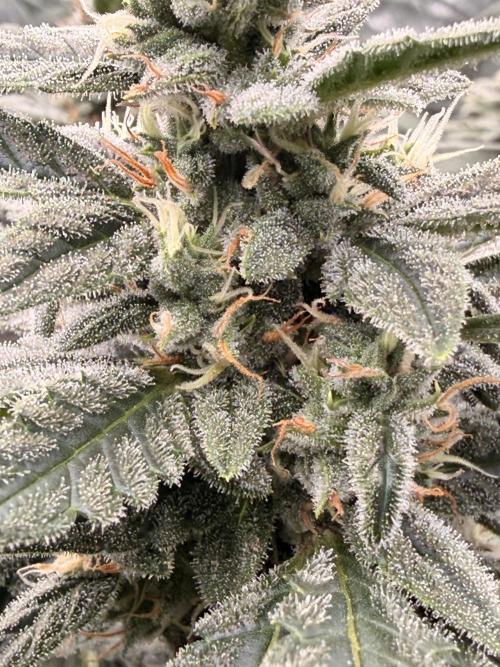
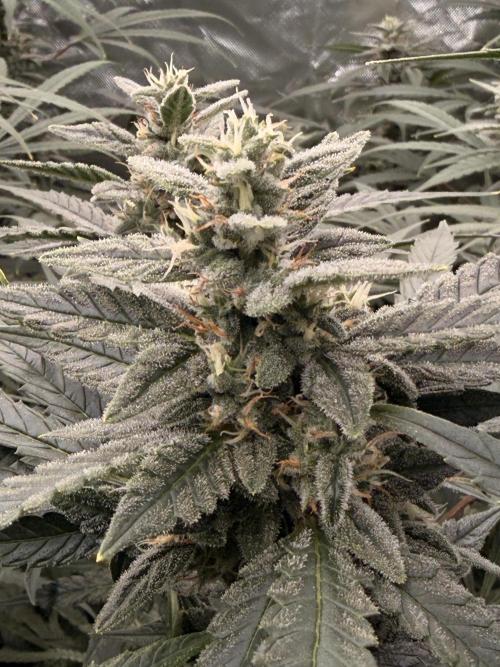
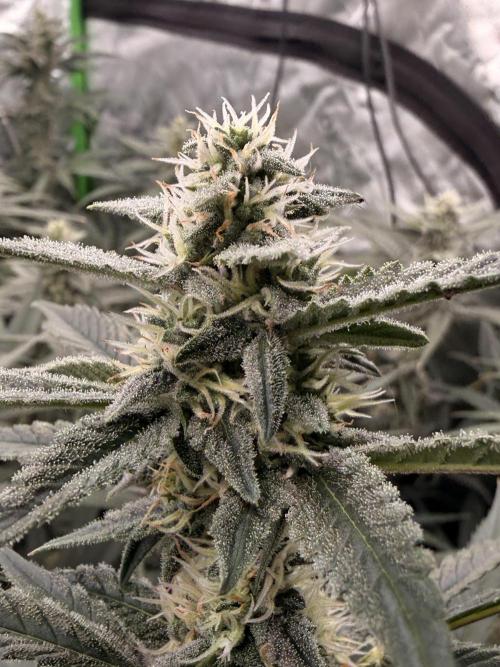
Stoney_Stark Week 9 Update — Sticky Broccoli Auto (Week 5 Flower)
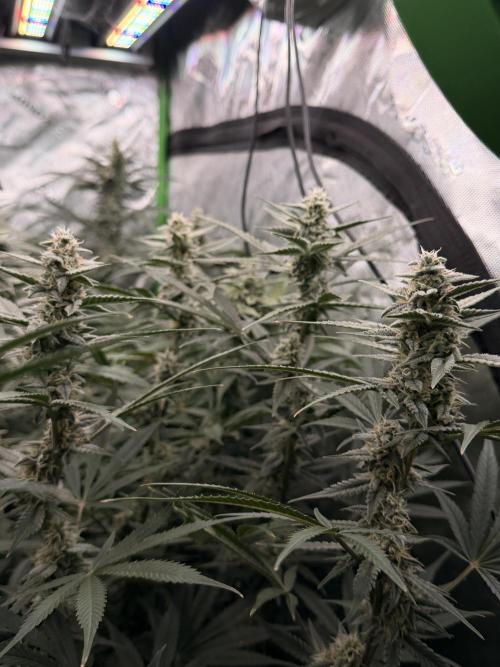
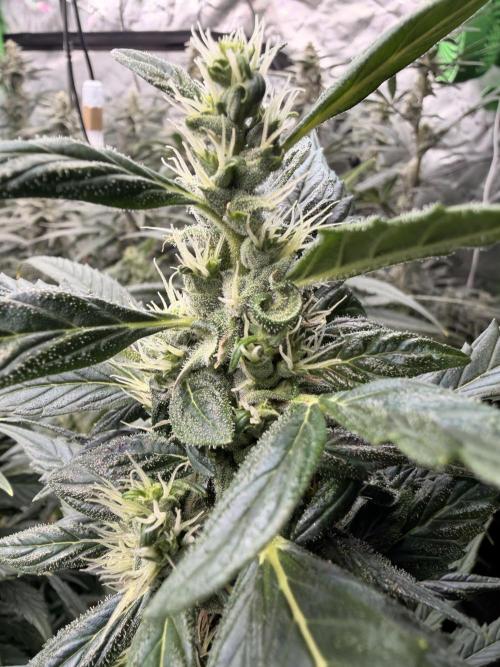
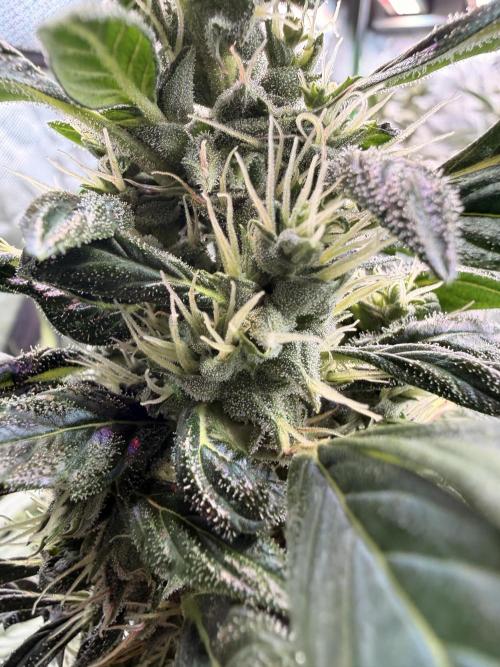
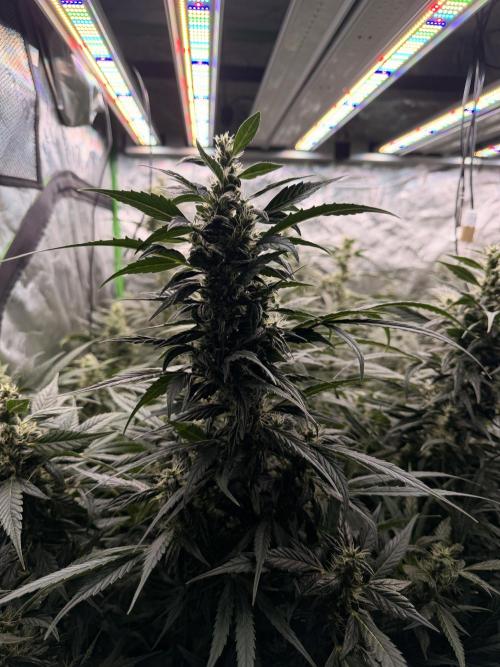
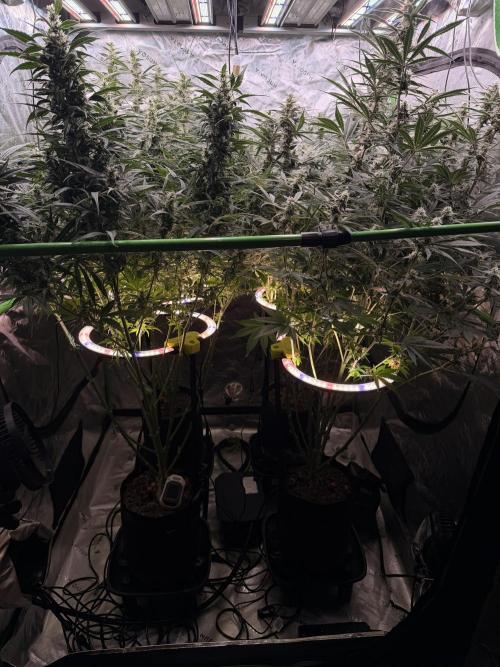
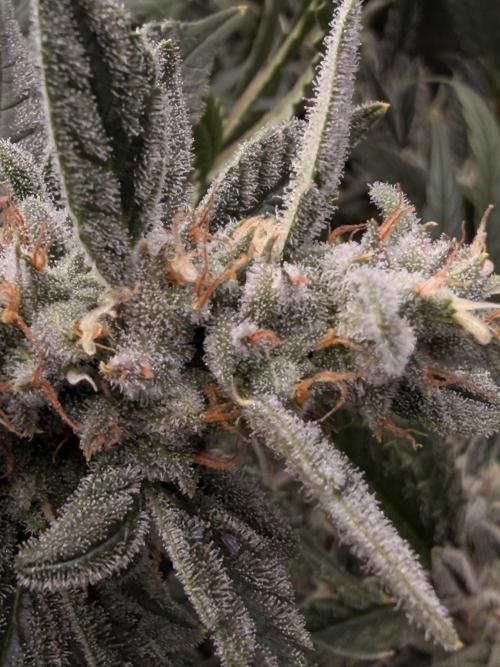
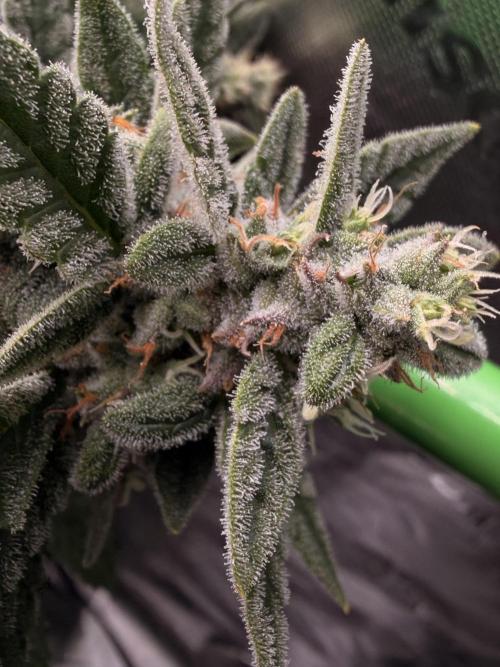
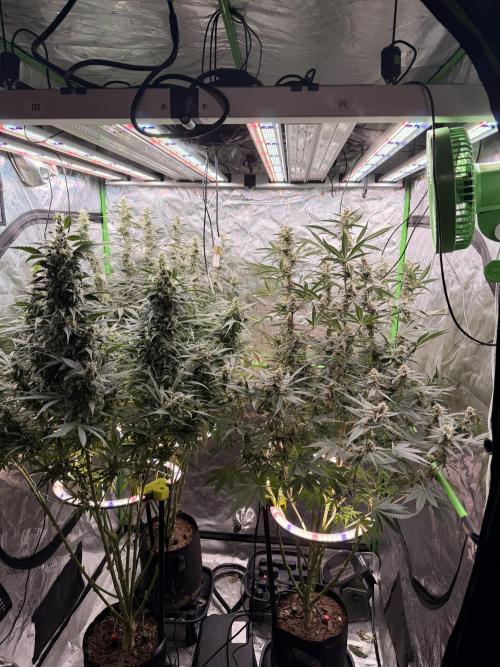
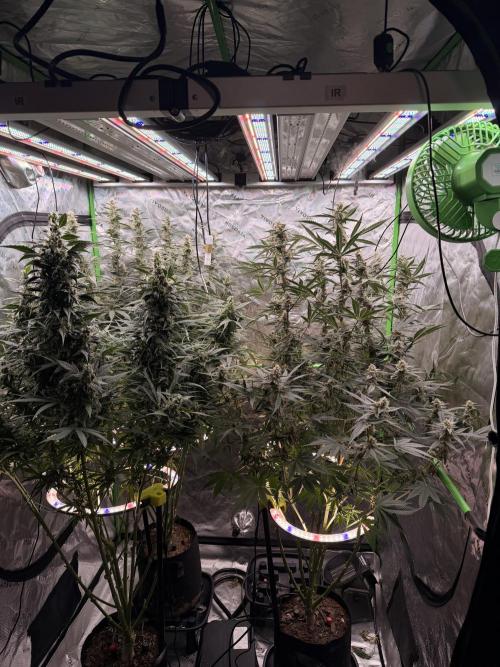
Things are really starting to separate now. Two of the plants are going crazy — heavy trichome production, stacking thick buds, and getting extremely greasy to the touch. The other two are more “normal” phenos but still look very healthy with solid structure and good bud development.
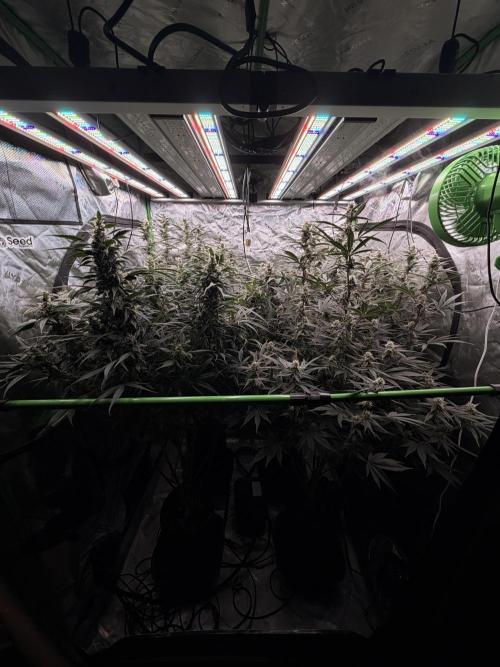
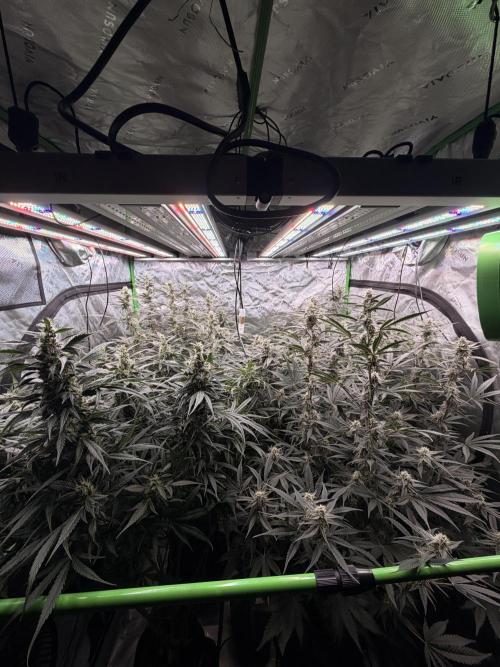
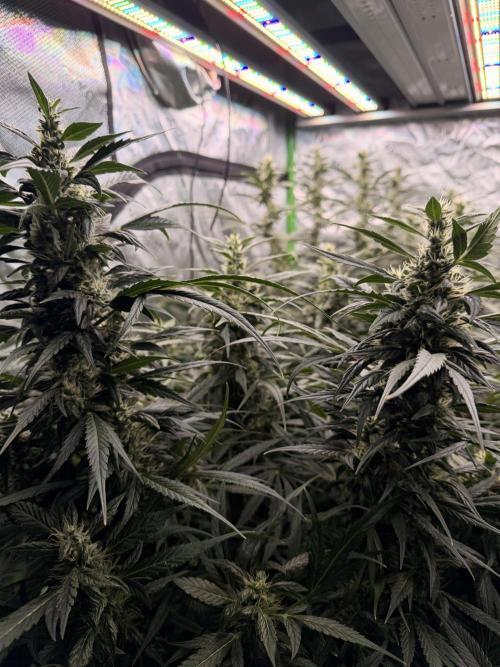
All four plants are tall — pushing close to my height — and filling the tent out completely. Canopy is thick, and bud sites are developing nicely across all plants.
⸻
Light & Environment
• Stage: Mid Flower (Week 5)
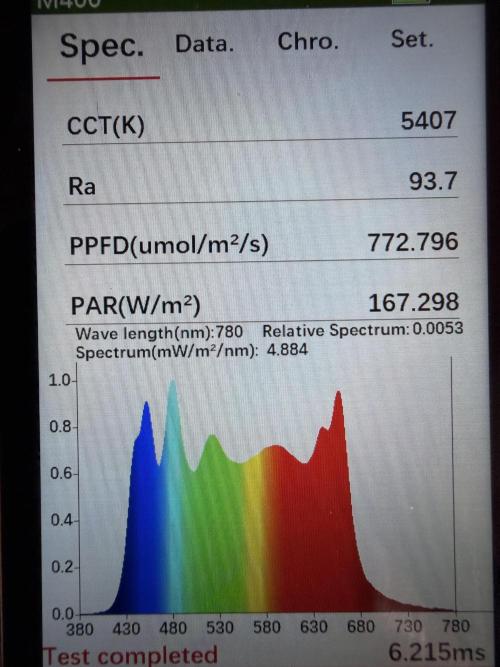
• PPFD: ~650–750 range across canopy
• Light Distance: ~16–18 inches
• Temps: ~75–80°F lights on
• RH: ~60–65%
• VPD: ~1.0–1.2 kPa
Plants are handling intensity well. No major light stress — just strong stacking and resin production.
⸻
Feeding Strategy
Running frequent fertigations with split feeds to maintain consistent moisture and nutrient availability in coco.
3/18
• 4 gallons @ 2:30am → ~15% runoff
• 2 gallons @ 12pm → ~10% runoff
• 775 → 620 ppm | 5.7–5.8 pH
3/19
• ~2.5 gallons total feed
• 840 ppm | 5.8 pH
3/20
• ~2.5 gallons total feed
• ~10% runoff each plant
• 840 ppm | 5.8 pH
3/21
• Split feed (~2.5 gallons + 1.5 gallons later)
• ~10% runoff
• 840 ppm | 5.8 pH
3/22
• Adjusted plant positioning to monitor irregular structure
• Split feed:
• 2 gallons @ 3:30am
• 1 gallon @ 1:45pm
• ~5–10% runoff
• 850 ppm | 5.7 pH
3/23
• Used leftover 1 gallon
• No runoff
3/24
• 2 gallons total (½ gallon per plant)
• No runoff
• 1234 ppm | 5.7 pH
⸻
Nutrient Mix (Per Gallon)
• 0.5 ml Silicium Bloom
• 2 ml MagCal
• 3 ml Cocos A
• 12 ml Cocos B
• 4 ml Green Sensation
• 4 ml Pure Zym
• 5 ml Ruby Fulvic / Photosynthesis Plus (alternating)
• 8 ml Royal Rush (introduced 3/24)
⸻
Nutrient Function Breakdown
Silicium Bloom
• Strengthens cell walls, improves stress resistance, and supports bud weight during mid-late flower.
MagCal
• Keeps calcium and magnesium levels stable in coco, preventing deficiencies under high feeding frequency.
Cocos A & B
• Base nutrients supplying NPK and essential micros — tuned for coco to maintain proper ionic balance.
Green Sensation
• PK booster + metabolic enhancer → drives bud density, resin production, and yield.
Pure Zym
• Breaks down dead root matter → improves nutrient uptake and root zone efficiency.
Ruby Fulvic
• Enhances nutrient transport and chelation → better uptake at higher ppm ranges.
Photosynthesis Plus
• Beneficial bacteria → boosts root health and increases metabolic activity.
Royal Rush (8-0-0)
• Nitrogen supplement → helps maintain green tissue and supports late stretch / bud development without overloading base nutrients.
⸻
Observations
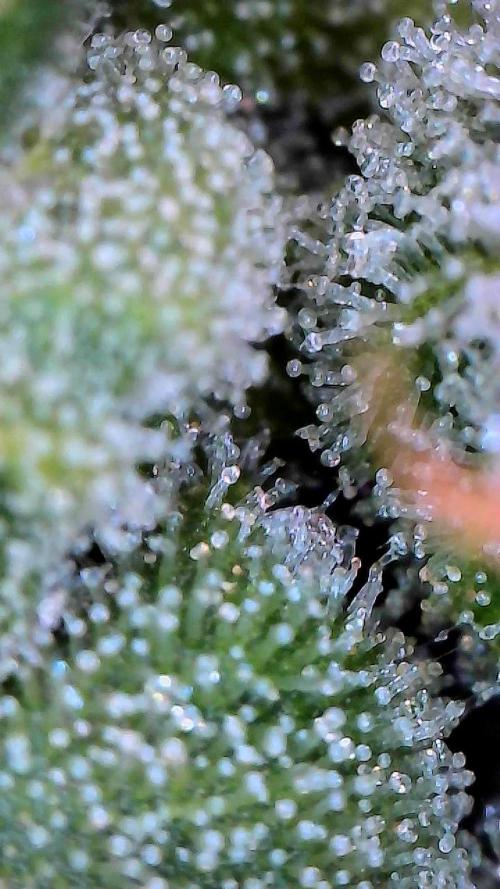
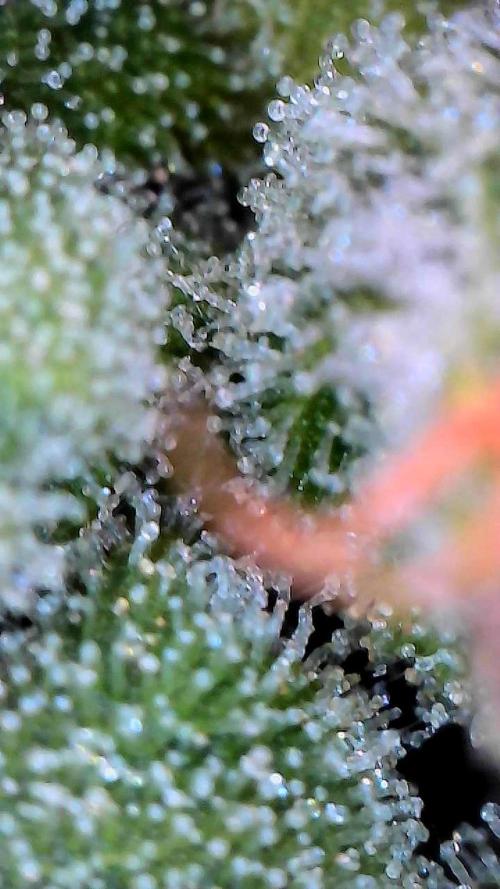
• Two phenos are absolute standouts — extremely frosty and already greasy to the touch
• Other two plants still strong but more standard expression
• Buds are starting to take real shape and stack
• Resin production noticeably increasing day by day
• Irregular plant still developing — monitoring closely after repositioning
• Slight increase in ppm (1234) — watching for tip burn or salt buildup
6 likes
2 comments
Share
10
Week 10. Flowering7mo ago
109.22 cm
Height
18 hrs
Light Schedule
24 °C
Day Air Temp
5.8
pH
840 PPM
TDS
55 %
Air Humidity
23 °C
Night Air Temp
11.36 liters
Pot Size
3.79 liters
Watering Volume
20.32 cm
Lamp Distance
Nutrients 6
MagCal
0.528 mll
Silicium Bloom
0.132 mll
Cocos A
0.528 mll
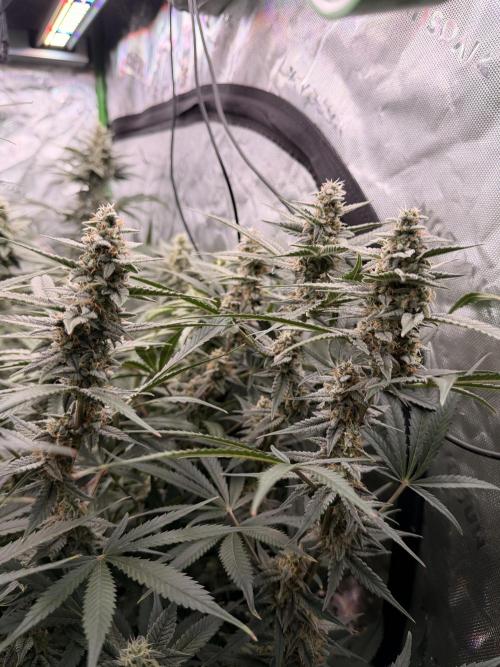
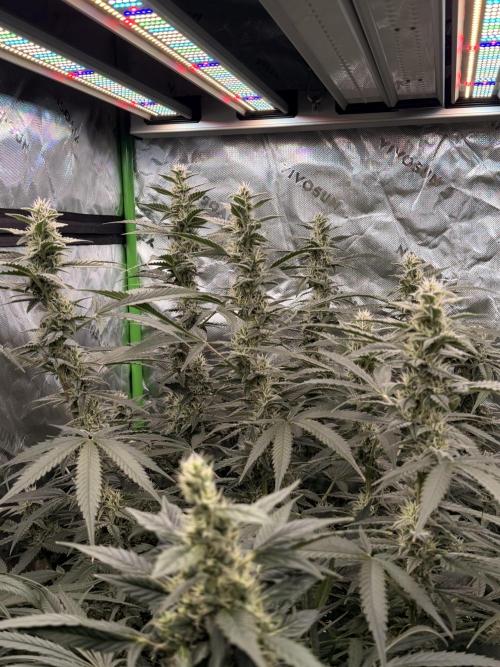
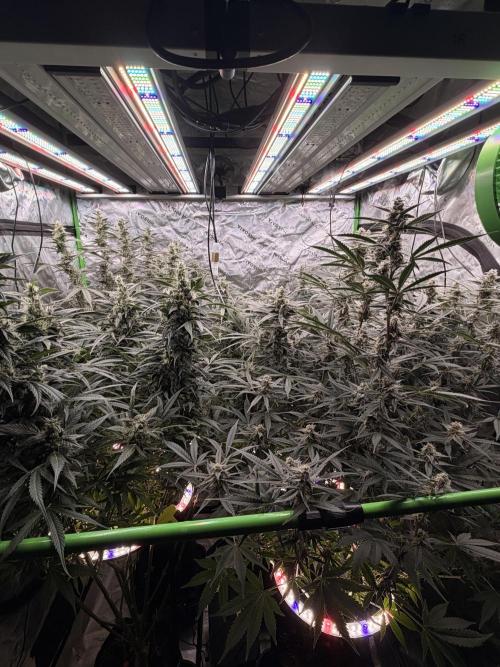
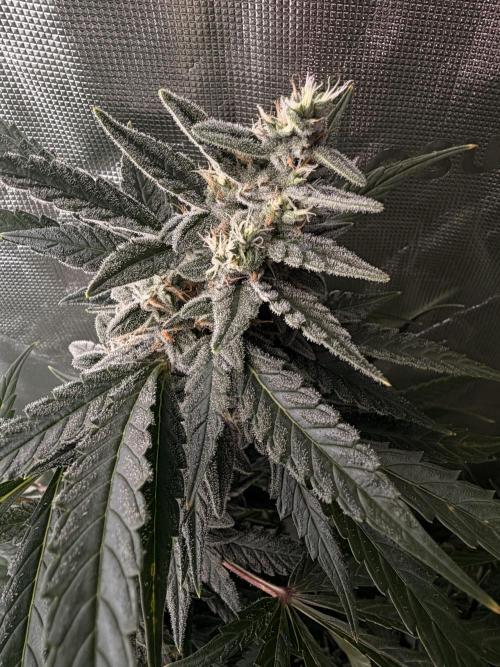
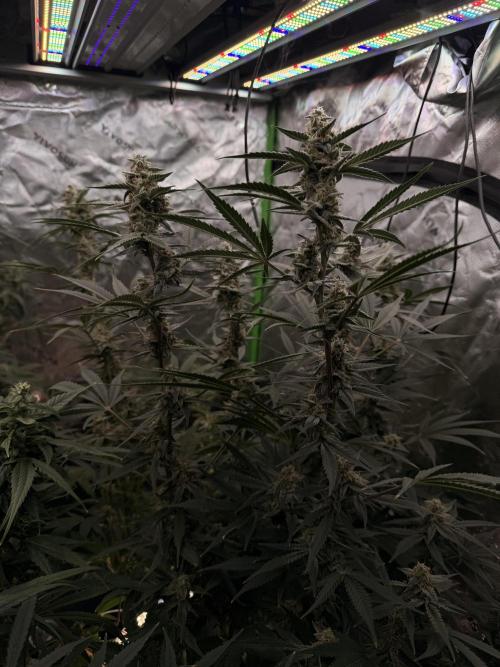
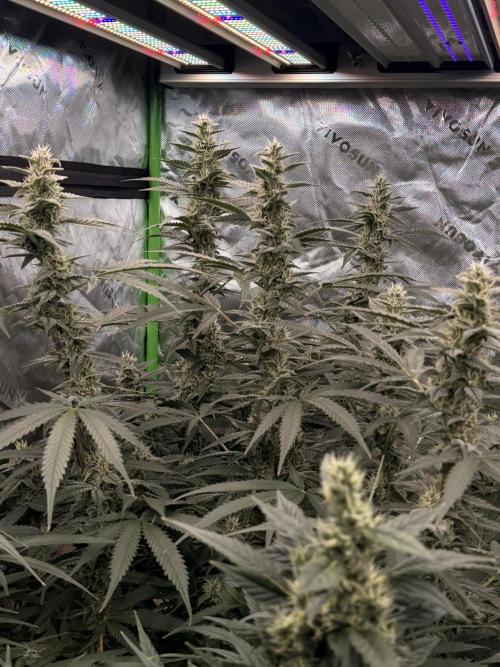
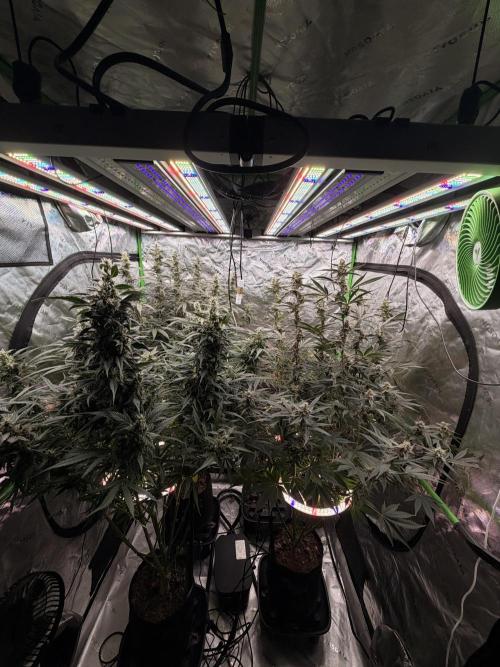
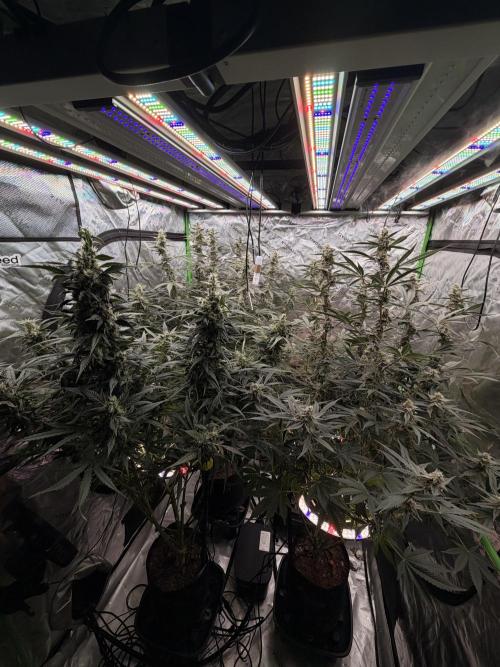
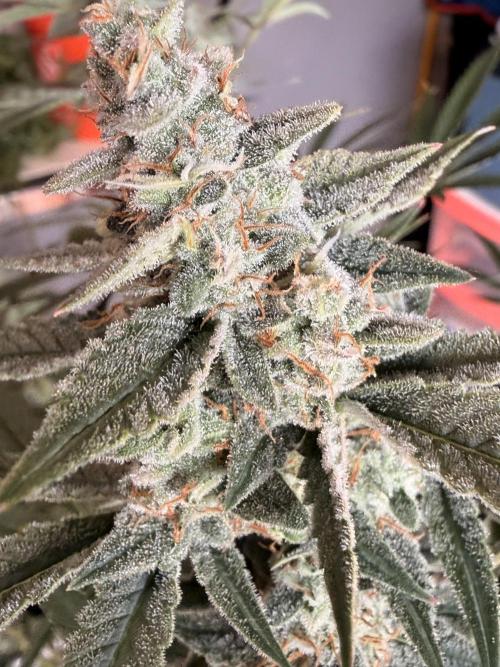
Stoney_Stark Week 10 Update – Sticky Broccoli Auto
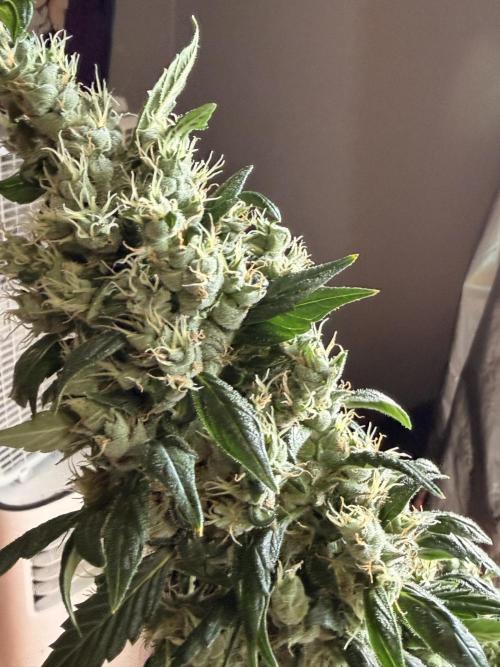
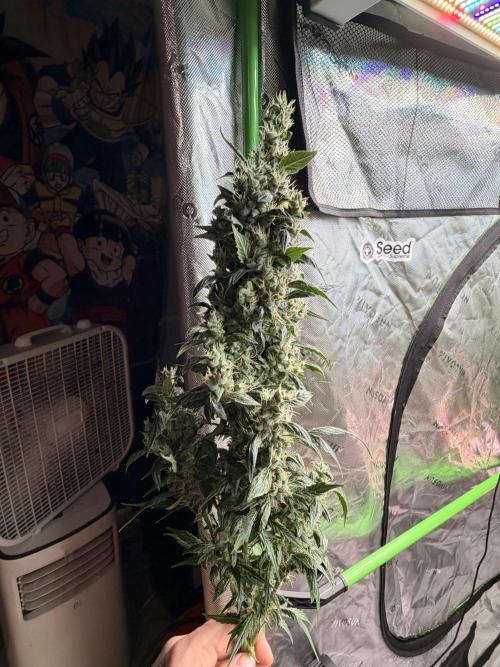
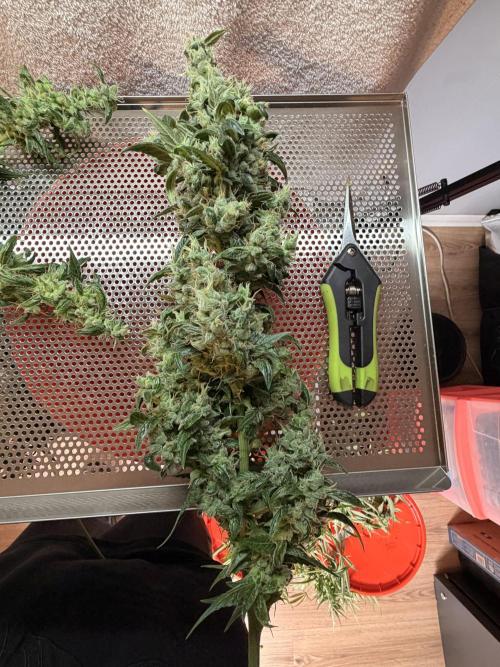
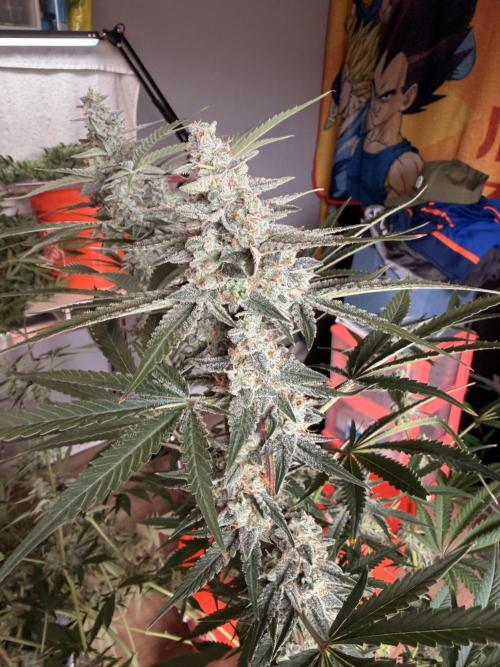
Late Flower / Staggered Harvest Begins
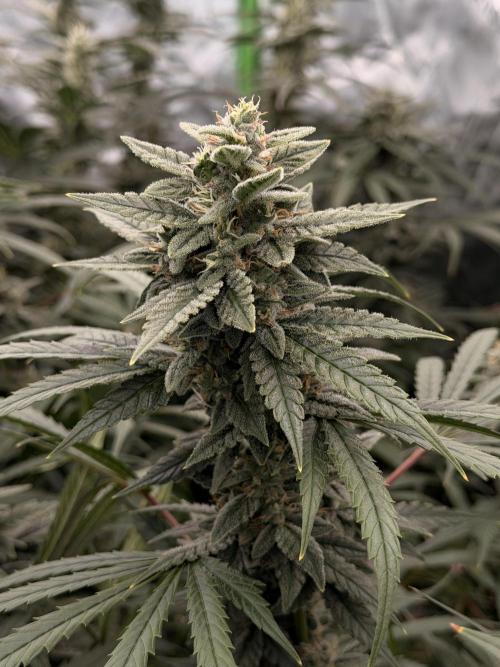
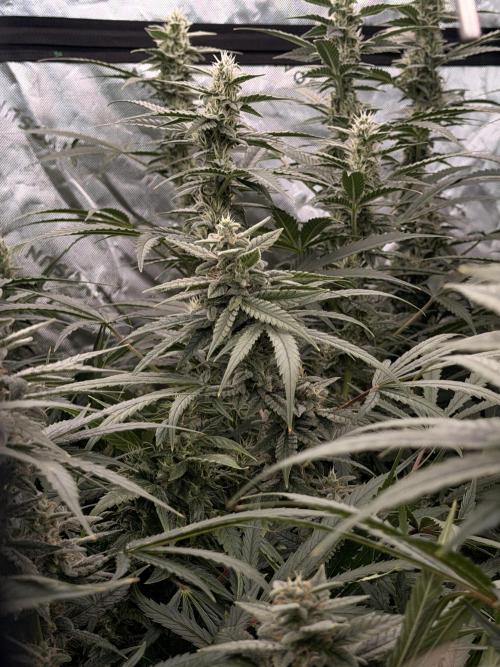
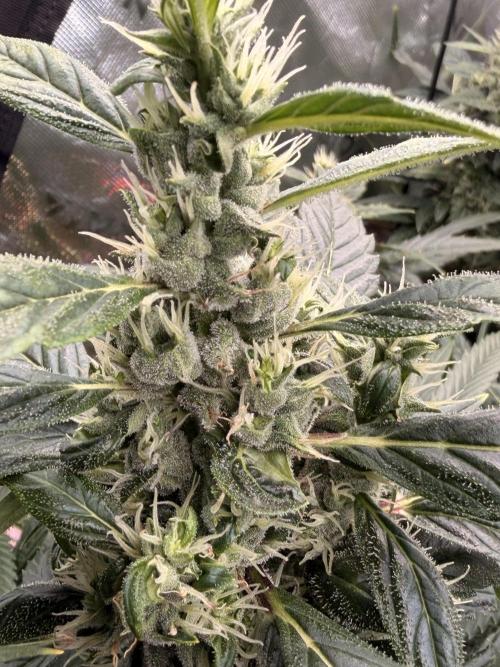
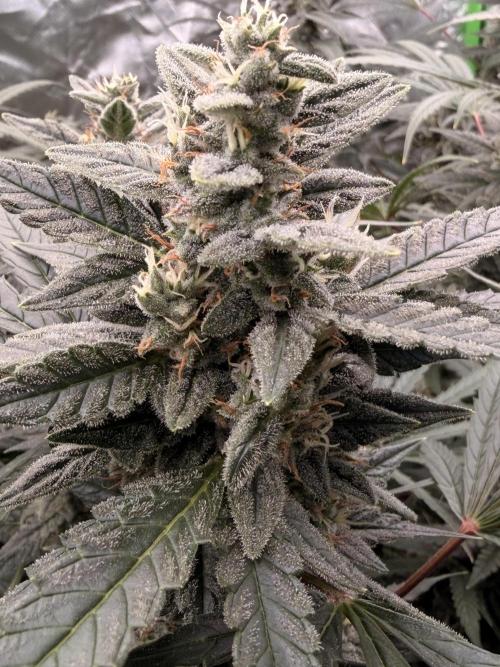
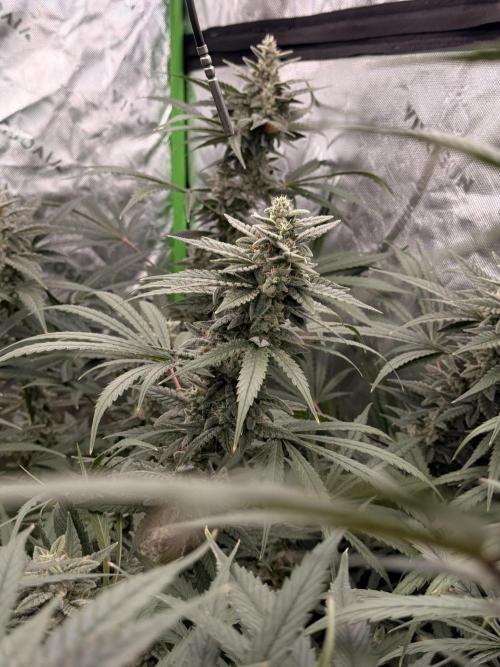
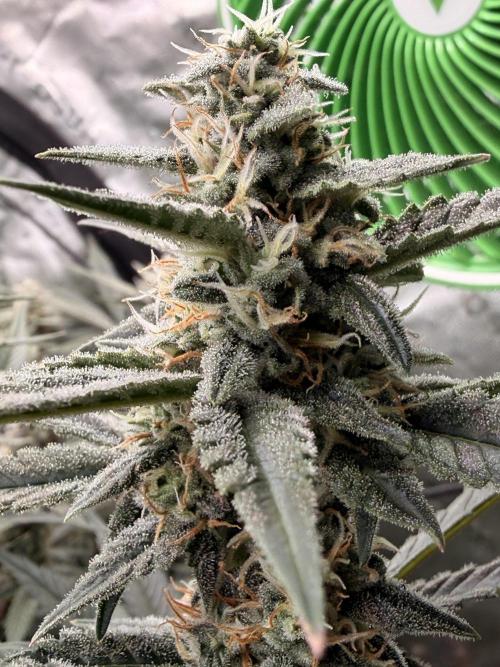
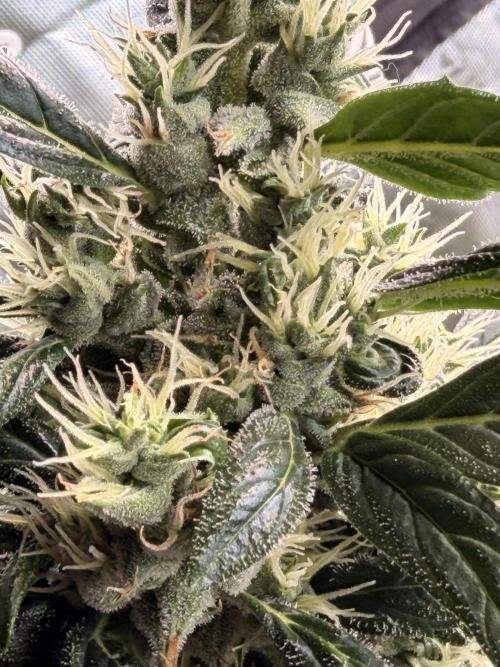
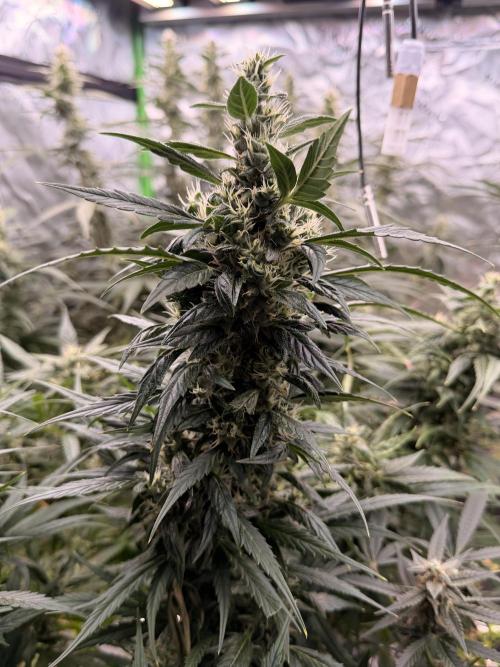
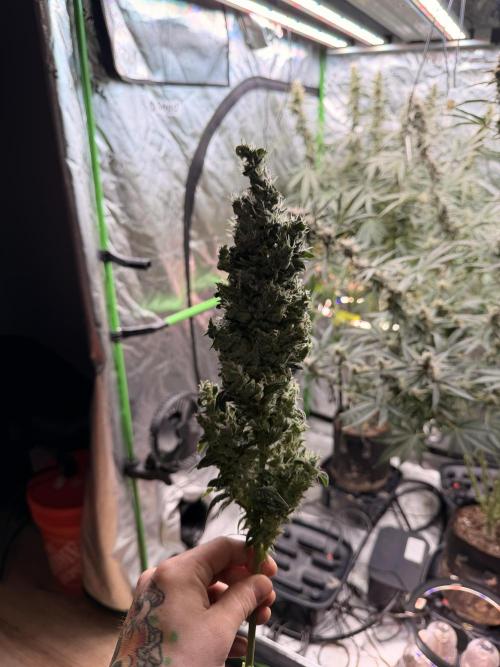
This week marked the start of harvest. One plant had to come down early due to size and structural issues, but overall quality is still looking strong. The remaining plants are being staggered for harvest to dial in peak ripeness.
⸻
Drying / Post-Harvest Note
• One harvested plant nearly filled the Cannatrol Cool Cure C
• Space is now a real concern for the remaining harvest
• May need to stagger loads or get creative with drying strategy
⸻
Lighting & Canopy Management
• Installed under-canopy lighting (3/25)
• ~24W per light
• Producing 200–300 PPFD under canopy
• Helps push lower bud development late into flower
• Likely contributed to improved lower-site density
⸻
Feeding Strategy Shift
• Fully transitioned to hand feeding
• Removed emitters to prevent overwatering and improve control
• Beginning staggered flush approach:
• 2 plants switched to plain RO water
• Final plant continues light feeding before final flush
⸻
Feeding Log
3/26 – Standard Feed
• 4 gallons mixed, ~2.5 gallons used
• ~5% runoff per plant
• 5.8 pH
Per gallon:
• 0.5ml Silicium Bloom
• 2ml MagCal
• 4ml Green Sensation
• 2ml Cocos A
• 8ml Cocos B
• 4ml Pure Zym
⸻
3/27 – Accidental Heavy Feed (Adjusted)
• Mixed wrong schedule, used ~50%
• 900 ppm / 5.8 pH
Per gallon:
• 0.5ml Silicium Bloom
• 2ml MagCal
• 4ml Green Sensation
• 3ml Cocos A
• 12ml Cocos B
• 4ml Pure Zym
⸻
3/28 – No Feed
⸻
3/30 – Light Feed / Transition Phase
• Fed at lights on (~2:30 AM)
• ~5% runoff
• 430 ppm / 6.0 pH
Per gallon:
• 0.5ml Silicium Bloom
• 2ml MagCal
• 4ml Green Sensation
• 2ml Cocos A
• 8ml Cocos B
• 4ml Pure Zym
⸻
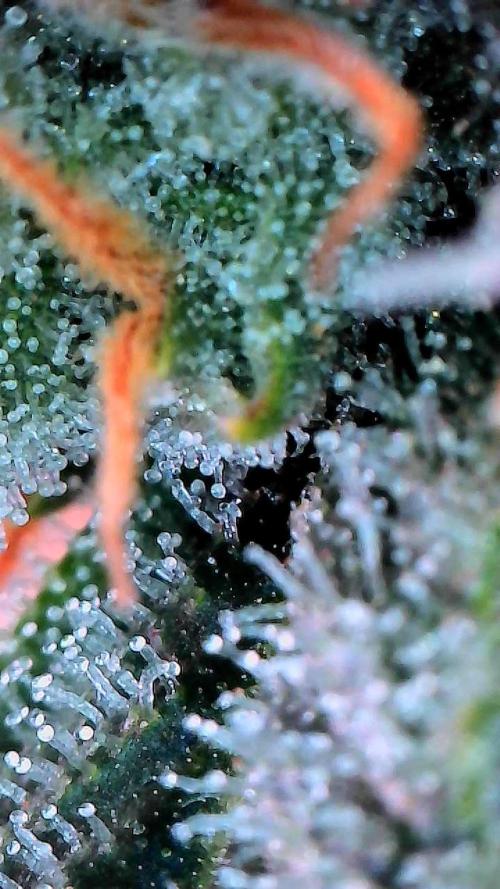
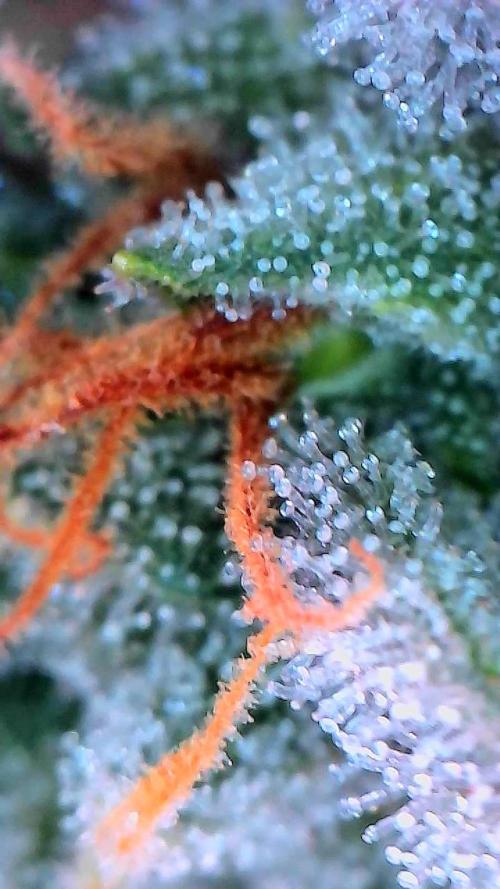
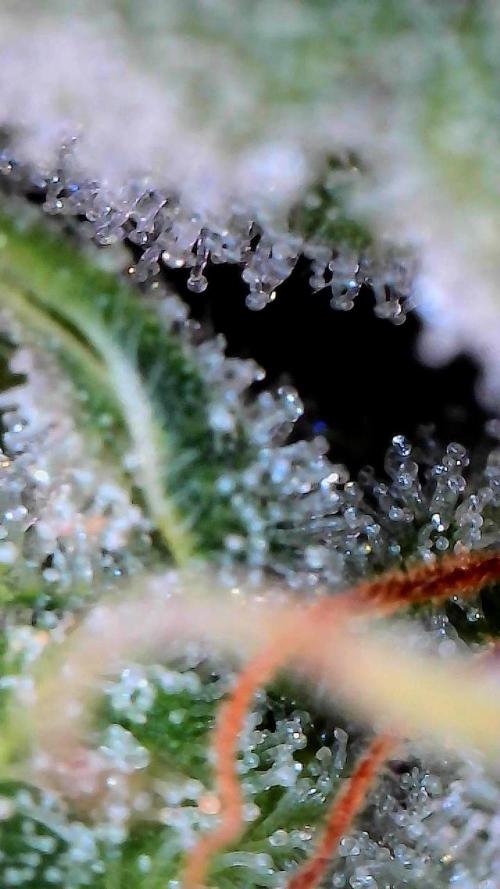
Trichome & Ripeness Check
• Majority: cloudy dominant
• Some amber beginning to show
• Small percentage still clear
• Right in the harvest window depending on desired effect
⸻
Observations
• Bud weight is seriously stacking – causing structural issues
• Under-canopy lighting seems to be helping lower development
• Plants are finishing strong with good resin coverage
• Staggered harvest should help maximize overall quality
⸻
Next Steps
• Chop 2 plants this weekend
• Let final plant push another week for increased amber
• Monitor Cannatrol capacity and drying timing
• Continue RO water on finishing plants
7 likes
comments
Share
11
Week 11. Harvest6mo ago
Happy Harvest Day!


4/10
Rated
Overall fell short of expectations. All 4 plants were widely different, there seemed to be no stability. Wish I would have done the photoperiod version, oh well, there’s always next year. I did enjoy growing them.
Show more
Translate
Spent 72 days
Ger Veg Flo Har
7.09 g
Bud wet weight per plant
7.09 g
Bud dry weight per plant
4
Plants
40.64 m²
Grow Room size
Normal
Difficulty

Sleepy
Positive effects

Insomnia
Medical effects

Diesel, Earthy, Sweet
Taste
Height
Day air temperature
Air humidity
PPM
PH
Light schedule
Night air temperature
Pot size
Lamp distance
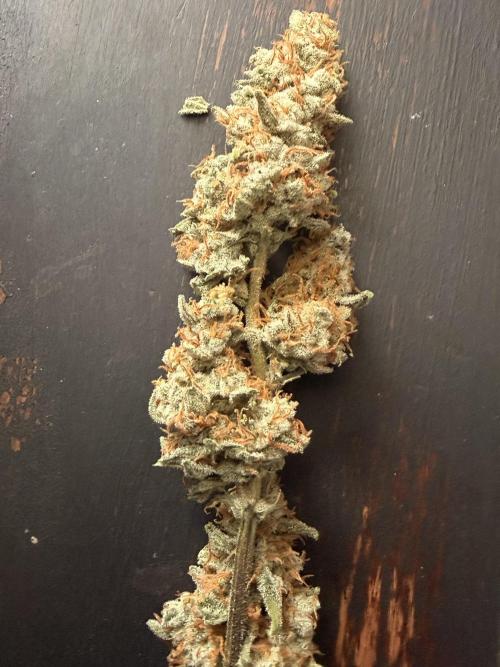
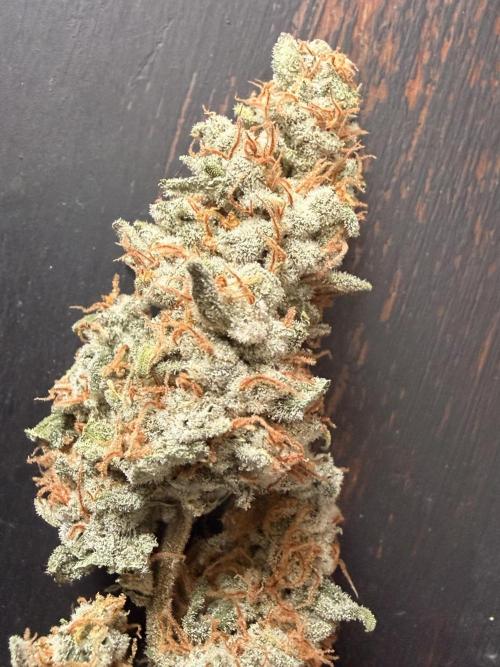
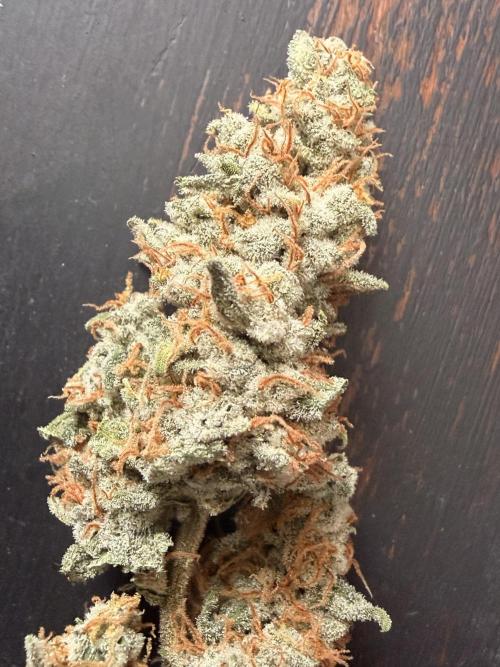
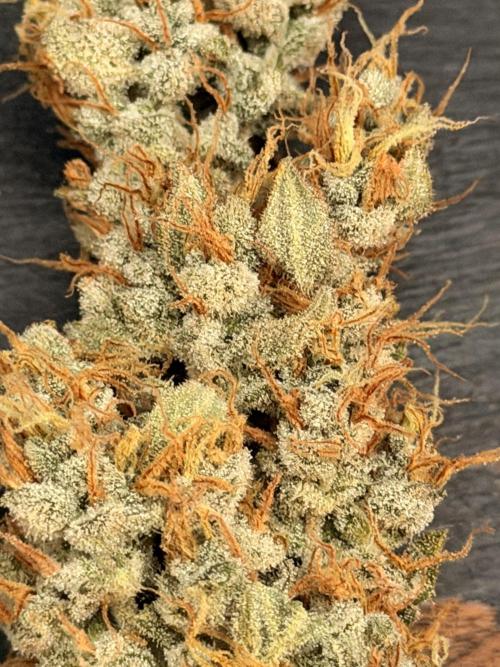
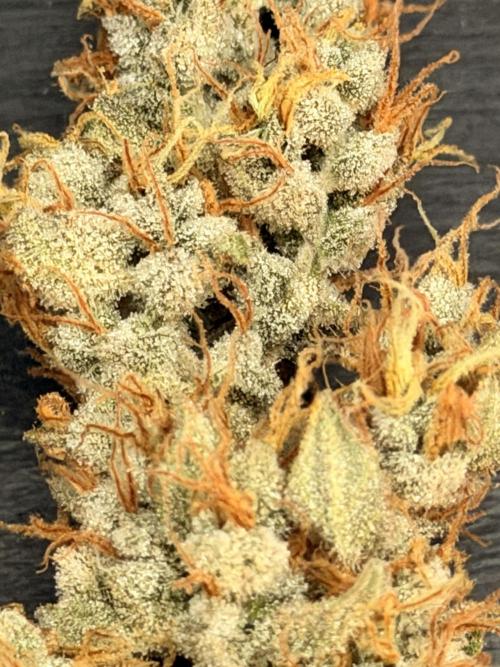
Stoney_Stark Sticky Broccoli Auto – Harvest Update
Strain: Sticky Broccoli Auto
Breeder: Zamnesia Seeds
Grower: Little Lilly Farms
Overall Outcome
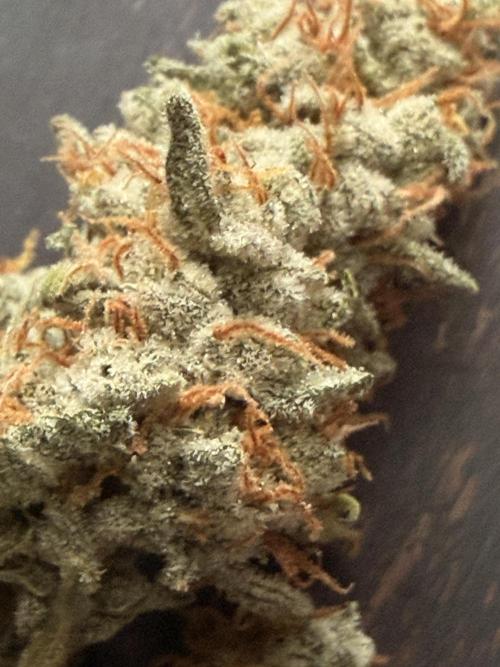
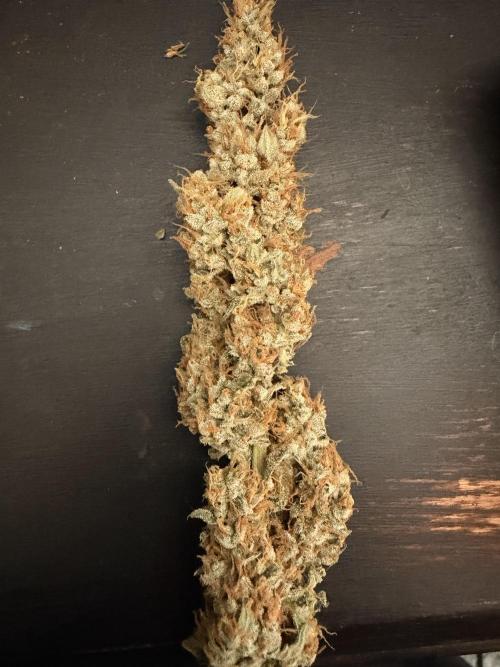
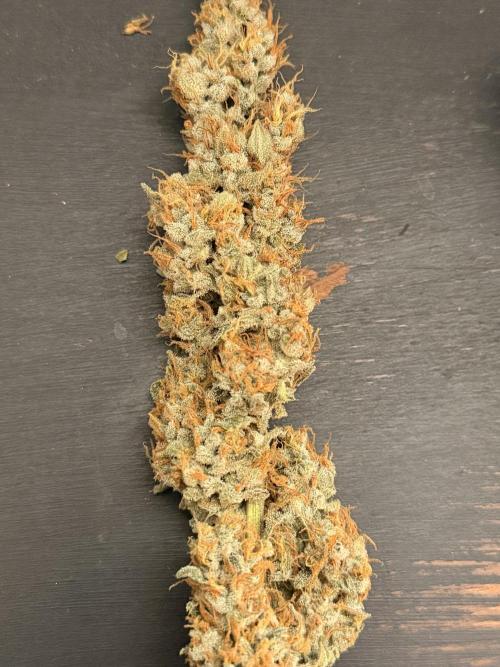
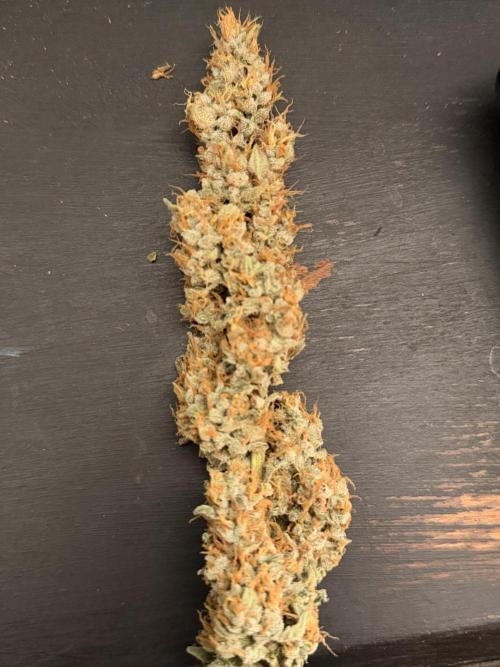
This run didn’t hit the mark. The genetics felt unstable and inconsistent across all four plants—each one expressed very differently in structure, growth, and final bud development.
Bud quality leaned airy and loose, lacking density, but was heavily coated in resin and trichomes. Visually appealing frost, but the overall structure didn’t back it up.
Terpene profile was underwhelming—nothing loud or complex. Mostly a sweet gas aroma, but lacking depth and punch.
⸻
Harvest & Final Week Timeline
4/1
Fed one plant ½ gallon of previous nutrient mix. Very minimal runoff.
4/2
* 1 gallon of premade feed (from 3/31) used
* Small runoff achieved
* Other 2 plants received straight RO water (not pH’d)
* No noticeable change in color or fade on water-only plants
4/3
¼ gallon of premade feed mix applied
4/4 – Harvest Begins
* Cut down 2 plants
* Fit both into the Cannatrol for drying
* Buds extremely resinous and sticky
* Heavy trichome coverage across both plants
* Switched remaining plants to straight RO water moving forward
Final Feed Mix (per gallon):
* 0.5 ml Silicium Bloom
* 2 ml MagCal
* 4 ml Green Sensation
* 2 ml Cocos A
* 8 ml Cocos B
* 4 ml Pure Zym
4/6
* Purple coloration showing on sugar leaf edges
* ¾ gallon RO water (not pH’d)
* ~5% runoff
4/7
* ¾ gallon RO water
* Minimal runoff
4/8
* 1 gallon RO water
* ~15% runoff
4/9
* ¾ gallon RO water
* ~20% runoff
4/10
* 1 gallon RO water
* ~15% runoff
⸻
Drying & Cure
All 4 plants have been harvested, dried, and are currently being trimmed. Final weight will be recorded once trimming is complete.
⸻
Final Thoughts
* Pros:
* Extremely resinous buds
* Heavy trichome production
* Good visual frost
* Cons:
* Airy, low-density buds
* Weak terpene expression
* Highly inconsistent phenotypes across all plants
Overall, this run felt like a genetic gamble that didn’t fully pay off. While the resin production was impressive, the lack of density and terp complexity made this one fall short of expectations.
8 likes
1 comment
Share
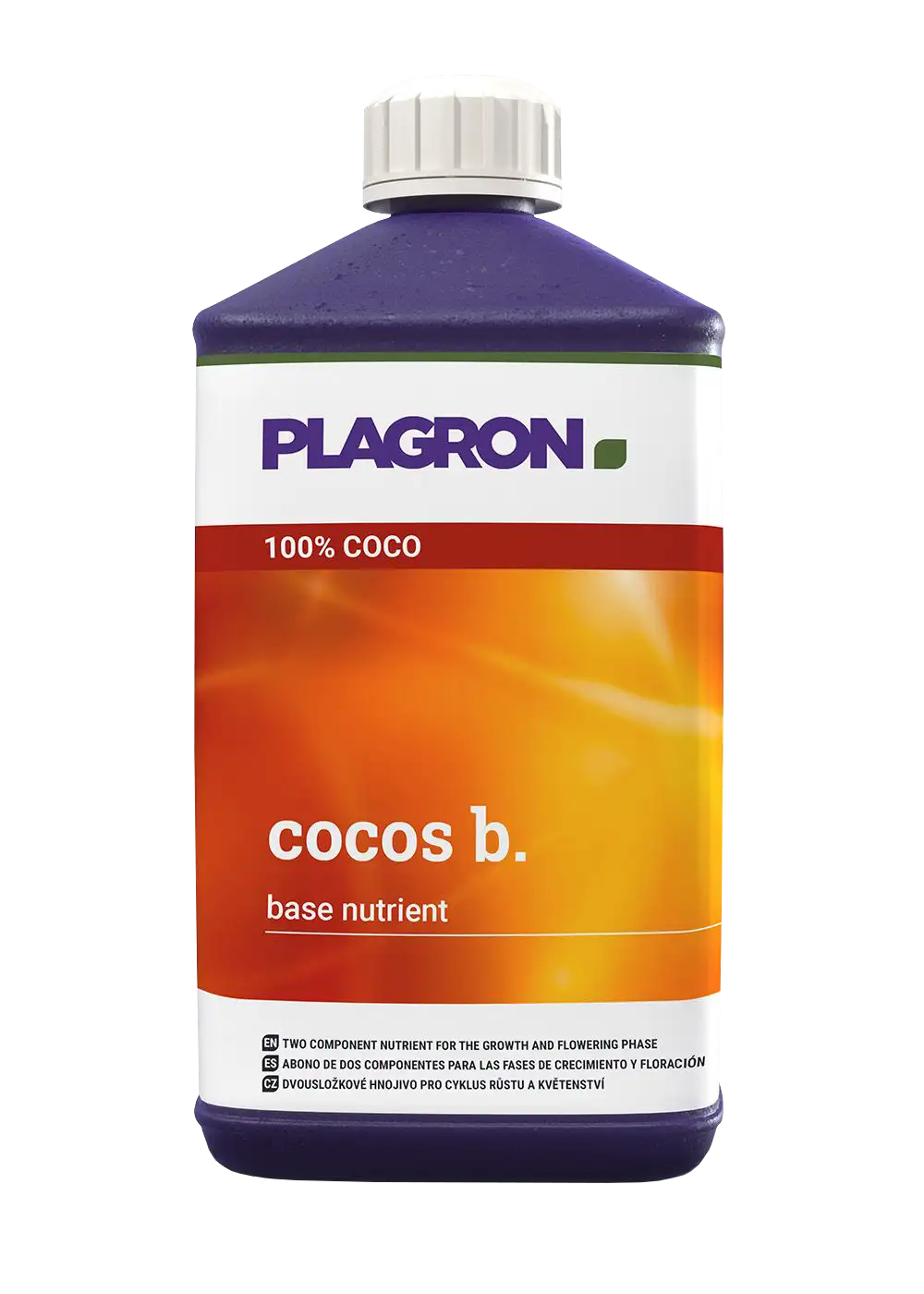
Equipment Reviews






15 comments
Sort by
popularity
popularity
newest
oldest

DrGruen commentedweek 09mo ago
good luck😎
likes 3

Stoney_Stark commented9mo ago
@DrGruen, Thank you🤘
likes 3
Stoney_Stark commented9mo ago
@DrGruen, Thank you🤘
likes 3

wolfvb commentedweek 38mo ago
That pre-flower transition is looking so clean! Love the setup and the way she's growing. Those plants are going to do amazing in the Cup! Excited to see how they progress! 🏆🌱
likes 2

TurtleInWeed commentedweek 28mo ago
Nice beginning, good luck with the run.
likes 2

GERGrowDesigns commentedweek 09mo ago
Good Luck and keep up Growing ⭐
like 1
Stoney_Stark commented9mo ago
@GERGrowDesigns, Thank you🤘
like 1
GERGrowDesigns commented8mo ago
@Stoney_Stark, looking absolut Amazing Growmie 💚
likes
GERGrowDesigns commentedweek 97mo ago
Great and clean work with youre Broccoli so far Growmie 🏆youre Details are amazing ! Good Luck for the next weeks and keep up Growing 🤝💚
like 1
Stoney_Stark commented7mo ago
@GERGrowDesigns, Thank you
likes

GhostTerpZ commentedweek 77mo ago
Looking really good ❗️ ❗️ ❗️
like 1
Stoney_Stark commented7mo ago
@@GhostTerpZ, thank you!!
like 1

Mrs_Larimar commentedweek 77mo ago
They Look beyond Happy 🌱💚
like 1

gr3g4l commentedweek 07mo ago
Wishing you the best of luck with your grow and a big, sweet, sticky harvest.
like 1

cangrowz commentedweek 116mo ago
Happy Growing Growmie🌱?💚
likes

the end.
Enjoying this diary? Follow for more updates!

Prefer the old Diary view?
Go back to the old Diary view