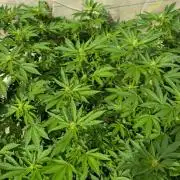
Mexicanasseeds Follow-up: Week 1 of Flowering (Day 7)
Cultivar: Morphological Evaluation of Elite Banana Heir Clones (Feminized) Selection of survivors from antimitotic treatment for chromosomal duplication
Parents: (GSC x OG Kush x Chiquita Banana)
1. Floral Induction and Light Intake (Photoperiod 12/12)
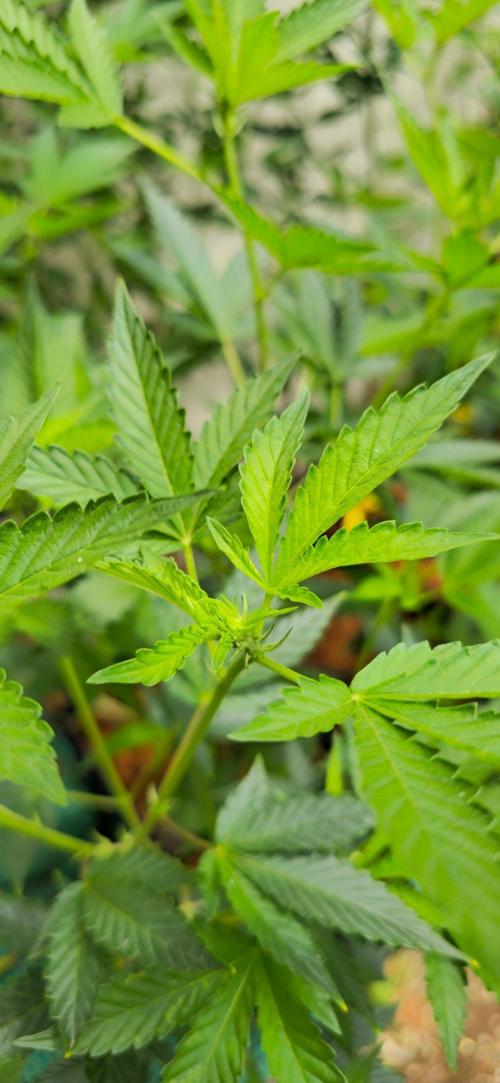
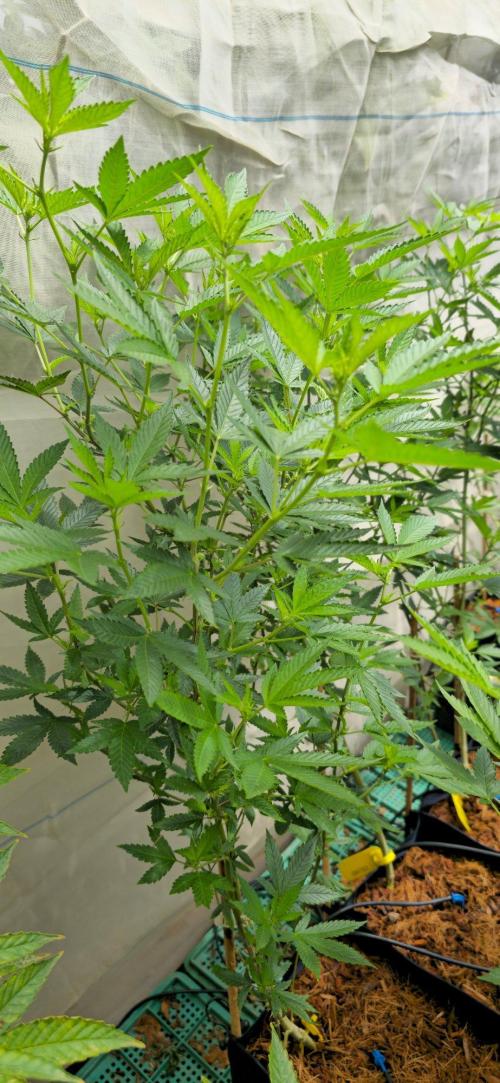
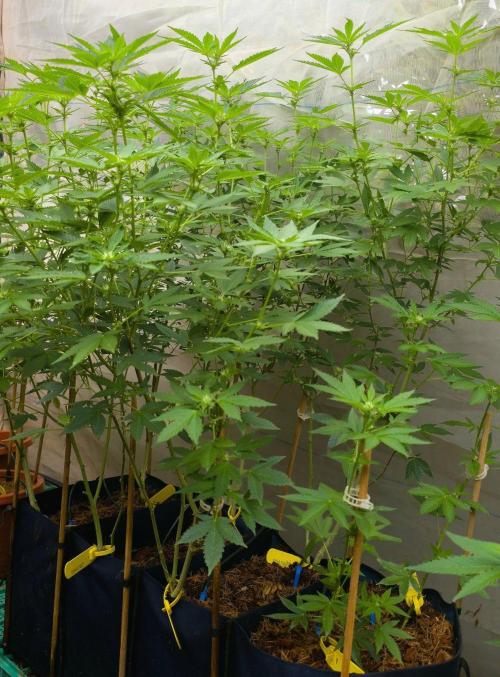
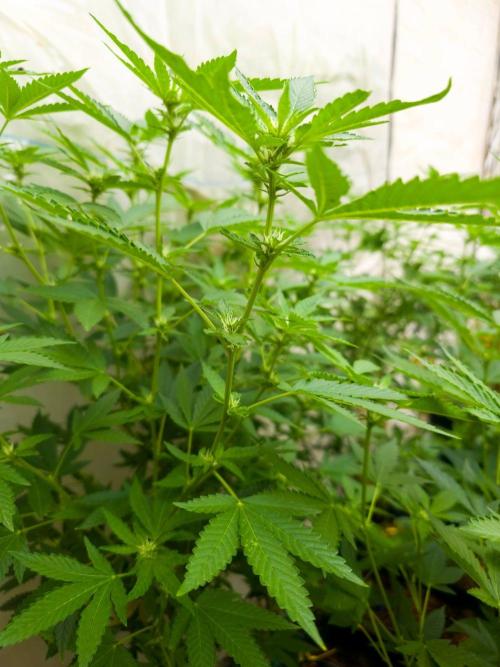
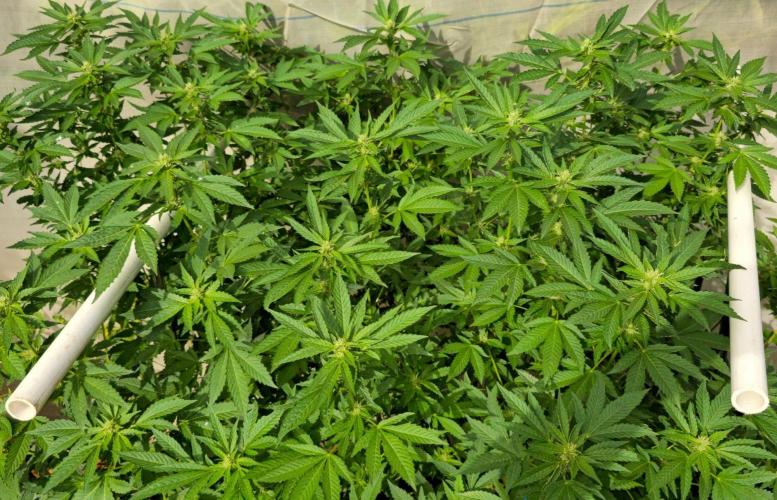
- Physiological Transition: The first week since the switch to flowering photoperiod (12/12) is complete. The plant responds with a vigorous and controlled initial stretch, showcasing the classic structural inheritance of its lineage.
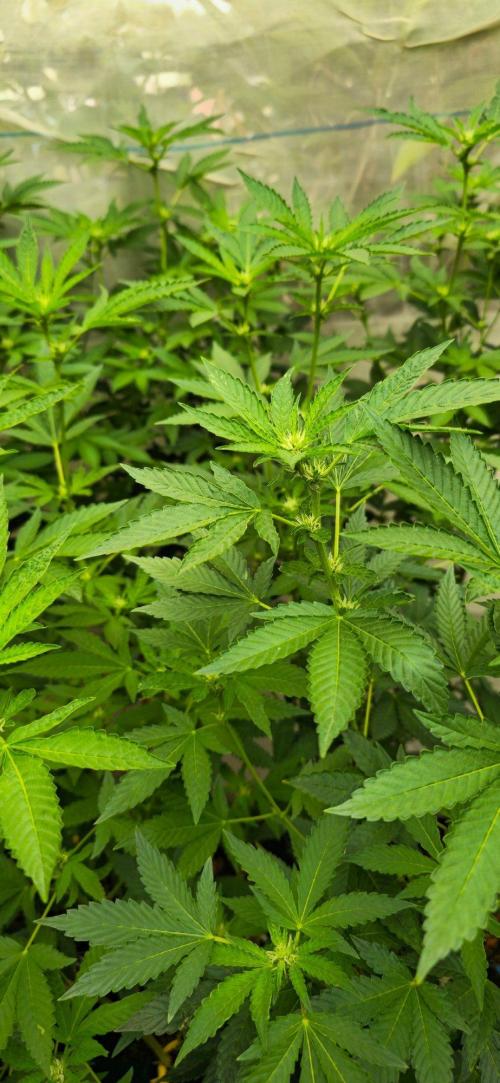
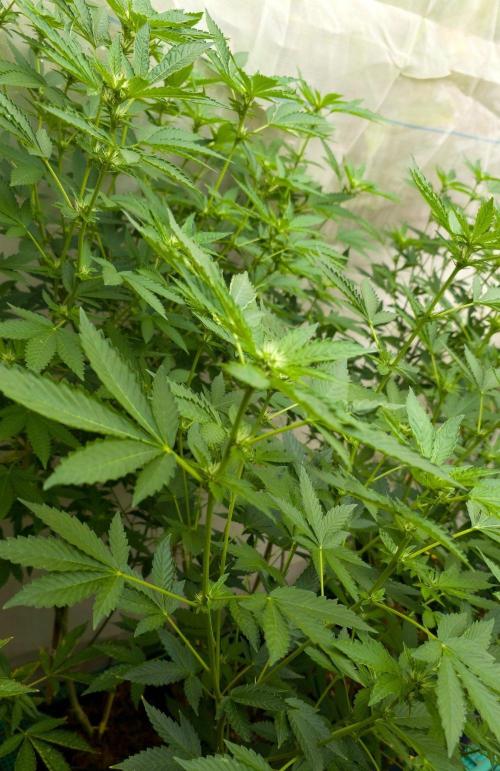
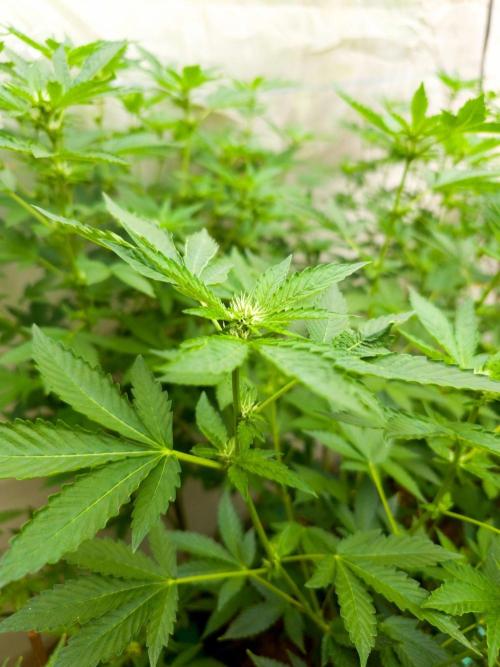
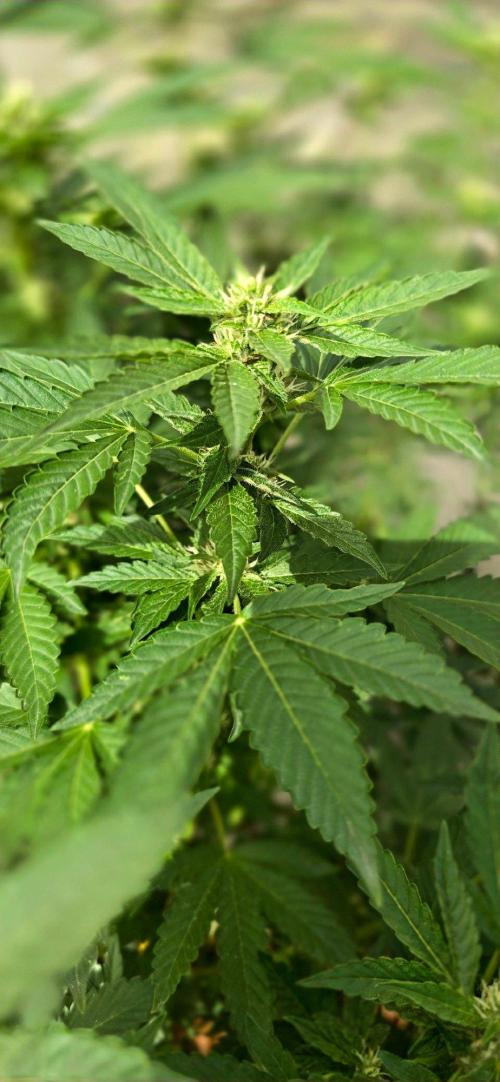
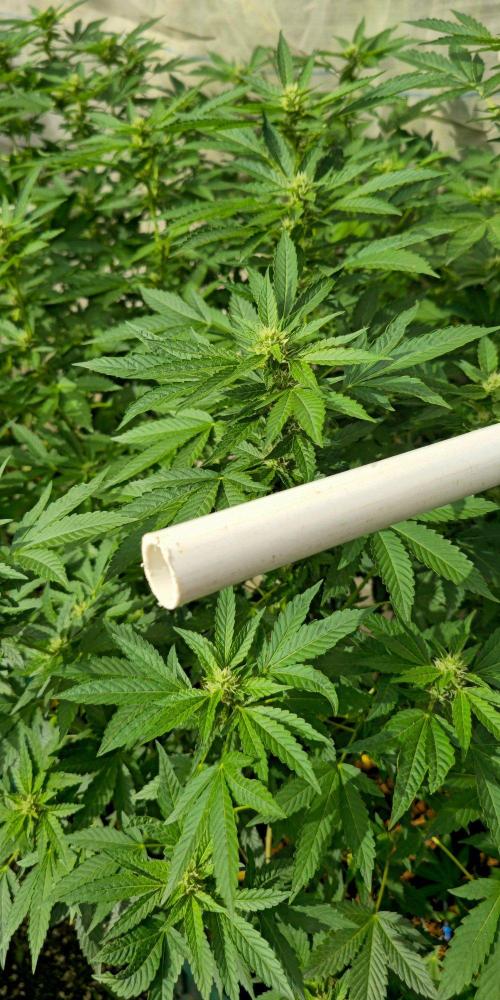
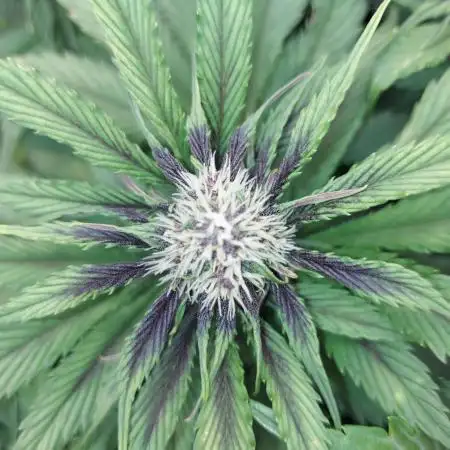
- Primary Pistilogenesis: The formation of the first floral primordia in the apical and axillary meristems is visually confirmed, with clear appearances of turgid white stigmas/pistils.
Pigmentation and Leaf Expression: New tissue in a lime green hue with high photosynthetic activity, indicating rapid mobilization of nitrogen and phosphorus to support cell division during the stretch.
2. Canopy Architecture and Structural Control
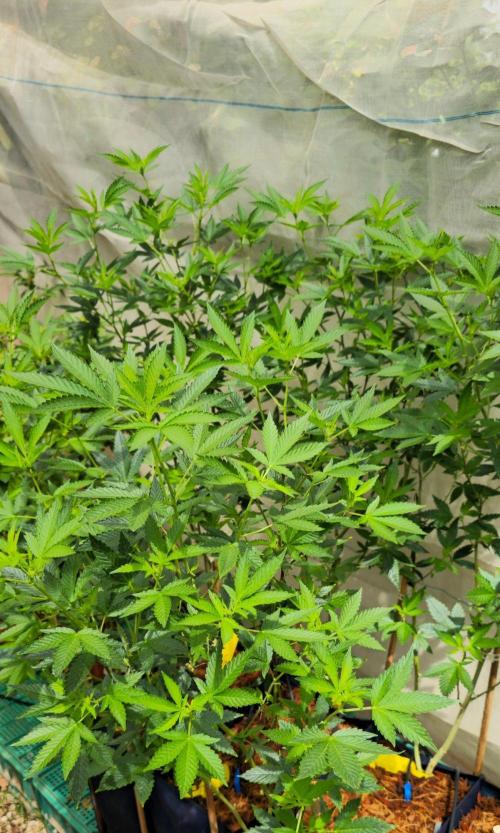
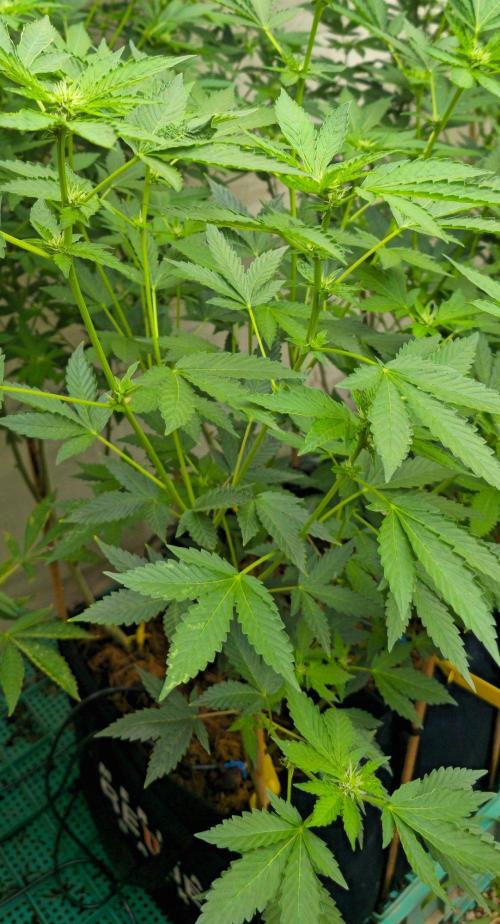
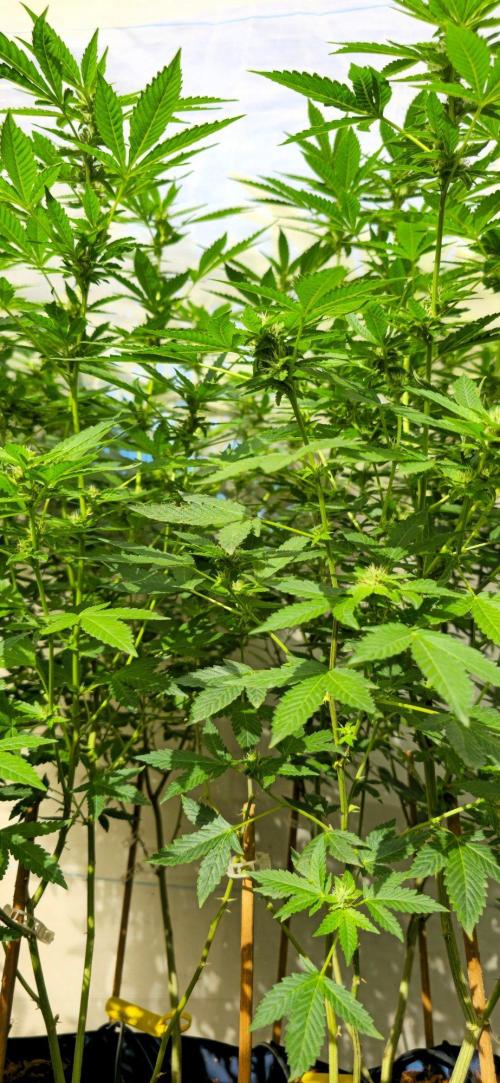
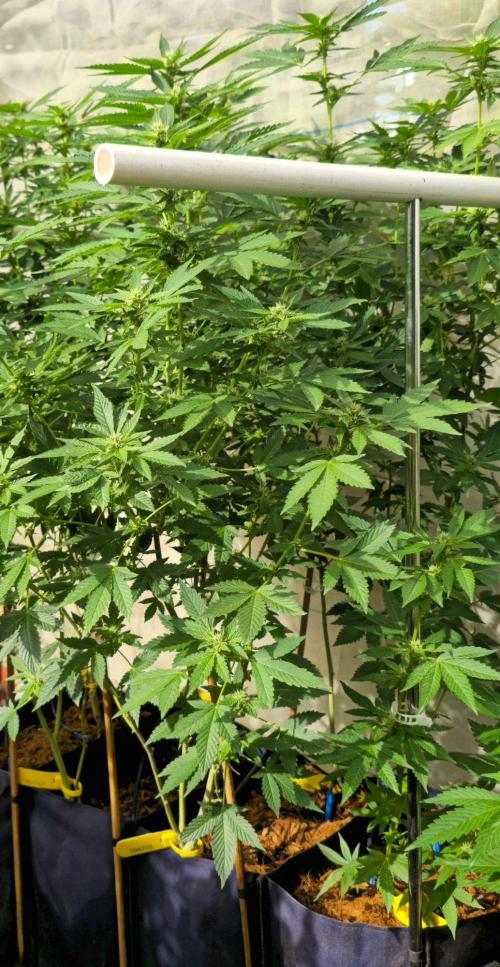
- Internodal Elongation: Accelerated vertical growth characteristic of the cultivar, maintaining a uniform internodal distance that will allow optimal penetration of PAR radiation in the middle and lower parts.
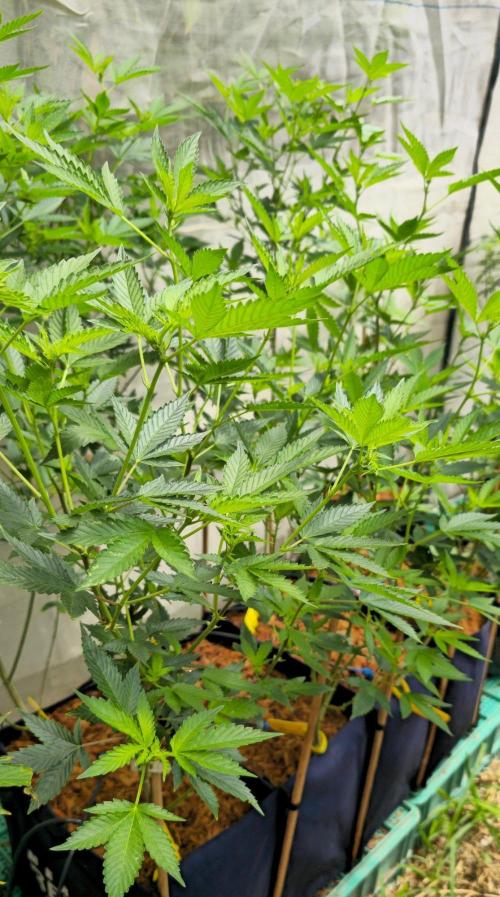
- Structure and Mechanical Support: Individual staking was consolidated with wooden stakes and support rings to guide the verticality of the main branches, preparing the structure for the future biomass overload in the calyxes.
- Basal Sanitation: Adjusted cleaning of lower branches to eliminate inefficient shadow points (energy sinks), channeling photosynthates directly to the dominant tips.
3. Substrate Dynamics and Hydroponic Fertigation
- Growing Medium: Inert mix of 50/50 coco substrate (50% chips for macroporosity / 50% fiber for retention and CEC).
- Irrigation Regimen: Automated drip irrigation by micropulses, distributing the nutrient solution homogeneously in the wet bulb.
- Hydroponic Control:
Drainage pH: Maintained in the sweet range of 5.8 – 6.1 to ensure maximum bioavailability of P, Ca, and Mg during floral differentiation.
- Leachate Fraction: ~20% drainage per irrigation event to prevent salt accumulation (EC) in the root zone.
- Solution Temperature: Controlled at 24 °C to maintain dissolved oxygen saturation (DO) and avoid direct thermal stress on the roots.
4. Phytosanitary Status and Environmental Management
- Biological Protection: Greenhouse protected with high-density anti-thrips mesh and 30% shade Raschel mesh, mitigating peaks of infrared radiation and excessive DPV stress.
- Foliar Health: Zero presence of pests (thrips, mites, or whiteflies) or symptoms of fungal pathogens (powdery mildew/botrytis). Leaves with well-expanded blades and active stomata.
19 likes
3 comments
Share
Used techniques
LST
Technique
12-12
Technique
Defoliation
Technique
Transplantation
Technique
2
Week 2. Flowering
10d ago
1/7
1.1 cm
Height
12 hrs
Light Schedule
29 °C
Day Air Temp
5.8
pH
Normal
Smell
1000 PPM
TDS
55 %
Air Humidity
24 °C
Solution Temp
24 °C
Substrate Temp
24 °C
Night Air Temp
15 liters
Pot Size
3 liters
Watering Volume
Mexicanasseeds MEXICAN SEEDS | FOLLOW-UP: WEEK 2 OF FLOWERING (DAY 14)
Cultivar: Morphological evaluation of elite Banana OG clones (Feminized)
Objective: Evaluation of survivors to antimitotic treatment for chromosomal duplication.
Parents: (OG Kush × Chiquita Banana)
Stage: Early flowering | Photoperiod 12/12
🔬 RESEARCH WITH AVAILABLE RESOURCES
Before the arrival of flow cytometry, plant ploidy research already utilized tools such as morphological observation, microscopy, and direct chromosome counting. These methods were fundamental for studying chromosomal variations in plants during the 1950s, 1960s, and 1970s.
In Mexico, due to restrictions and regulations, access to specialized technologies can represent an economic and technical barrier for independent projects. Therefore, we resort to traditional evaluation methods that allow us to document differences, compare specimens, and select candidates for further studies.
These methods do not replace chromosomal confirmation, but they allow us to build a foundation of observations and guide research with the available resources.
1. FLOWER DEVELOPMENT AND PHYSIOLOGICAL TRANSITION
- Adaptation to the reproductive phase: After completing the second week since the switch to a 12/12 photoperiod, the specimens show a progressive transition towards the reproductive phase, with a favorable morphological response and continuity in the development of apical and axillary shoots.
- Differentiation of floral primordia: An increase in the expression of the first flowering sites is observed, with incipient groupings of floral structures at the nodes and apical meristems. The presence of clearly visible white stigmas highlights the progress of floral differentiation.
- Activity of the meristems: The apices maintain active growth, with the formation of new leaf tissue and the development of initial floral structures. The presence of young shoots with lime green coloration contrasts with the more mature foliage, which retains a uniform green color.
- Continuity of growth: During this stage, significant vegetative activity is still evident, characteristic of the transition to flowering, with elongation of the stems and expansion of young leaves.
2. PLANT ARCHITECTURE AND CANOPY DEVELOPMENT
- Internodal elongation: The specimens maintain evident vertical growth, with the development of new stem segments and a relatively uniform distribution of nodes. The observed architecture reflects a continuous expansion of the branches and greater occupation of aerial space.
- Development of lateral branches: Active growth of secondary branching is observed, presenting new shoots and points of floral development. The overall structure retains an open arrangement in the upper areas, while the lower foliage shows greater density.
- Leaf expansion: The leaves show considerable expansion, with elongated leaflets, well-defined serrated edges, and developed leaf blades. The images show a combination of mature leaves with intense green color and younger tissue of a lighter shade.
- Structural stability: The main stems exhibit continuous vertical development and maintain their structural integrity. The distribution of the branches allows for observation of different growth levels and differentiation of the apical points.
3. FOLIAR DEVELOPMENT AND PHYSIOLOGICAL STATE
- Coloration and uniformity: The foliage predominantly presents green tones, with differences in intensity between mature leaves and newly formed shoots. The foliage maintains a predominantly green color, without widespread chromatic alterations.
- Leaf morphology: A characteristic morphology of the cultivar is observed, with narrow, elongated leaflets and serrated margins. The leaves maintain adequate expansion and a distributed arrangement along the main and secondary stems.
- Growth of new tissue: The apical shoots present young tissue of light green color, visually associated with the formation of new leaves and the continuous development of the meristems.
- Leaf integrity: I do not detect extensive damage from necrosis, generalized deformities, or evident foliar lesions. The foliage retains a generally uniform appearance.
4. SUBSTRATE AND FERTIGATION SYSTEM
- Growing medium: The coconut substrate composed of a 50/50 mix of chips and coconut fiber is maintained as a reference, as described during the first week of follow-up.
- Irrigation system: The crop has an automated drip irrigation system using micropulses, according to the records from the previous week.
- Hydroponic parameters: In the first week, drainage pH values of 5.8–6.1 were documented, an approximate leaching fraction of 20%, and a nutrient solution temperature of 24 °C. No new measurements are available to confirm if these parameters were maintained during the second week.
- Root follow-up: This week's follow-up focused on the development of the aerial part. The condition of the roots, the electrical conductivity of the substrate, and the distribution of moisture require specific measurements for evaluation.
5. PHYTO-SANITARY STATUS AND ENVIRONMENTAL CONDITIONS
- General condition: The specimens present a visually vigorous appearance, with abundant foliage and continuous development of the shoots. No widespread symptoms of deterioration are identified in the visible parts.
- Leaf health: I do not detect extensive damage or foliar symptoms that clearly indicate a phytosanitary issue. However, the absence of evident symptoms does not completely rule out the presence of pests or pathogens.
- Development under cover: The crop is maintained under translucent cover, in a protected environment where specimens with different levels of development coexist.
- Morphological response: Growth continues without evident structural alterations. Leaf expansion and the formation of new growth points are maintained.
6. MORPHOLOGICAL EVALUATION OF THE CLONES
During the second week of flowering, the Banana OG specimens show visible progress in the differentiation of their reproductive structures, accompanied by still considerable vegetative activity.
Variation in the arrangement of branches, distribution of nodes, leaf expansion, and expression of the first floral sites is observed. These characteristics constitute relevant aspects for the comparative record of the clones that survived the antimitotic treatment.
This week's observation allows us to document the continuity of growth and initial morphological changes, although these morphological observations alone do not allow for confirmation of chromosomal modifications or establish genetic differences between the specimens.
CONCLUSION | WEEK 2 (DAY 14)
At the end of the second week of flowering, the evaluated specimens present continuous vegetative development, with elongation of the stems, leaf expansion, and more evident floral differentiation than in the initial record.
The presence of white stigmas and incipient floral groupings confirm the visible progress of the reproductive phase. Likewise, the foliage retains a generally uniform appearance, with no clearly identifiable extensive damage in the images.
This stage constitutes a new reference point for the morphological follow-up of the elite Banana OG clones, allowing us to document their structural and reproductive evolution during the first weeks of flowering.
13 likes
1 comment
Share
Used techniques
Defoliation
Technique
LST
Technique
12-12
Technique
Transplantation
Technique
3
Week 3. Flowering
11h ago
1/6
1.1 cm
Height
12 hrs
Light Schedule
29 °C
Day Air Temp
5.8
pH
Normal
Smell
1000 PPM
TDS
55 %
Air Humidity
24 °C
Solution Temp
24 °C
Substrate Temp
24 °C
Night Air Temp
15 liters
Pot Size
3 liters
Watering Volume
Mexicanasseeds 🌿 MEXICAN SEEDS | FOLLOW-UP: WEEK 3 OF FLOWERING
Cultivar: Banana Heir (feminized)
Evaluation: 8 surviving elite clones from the antimitotic treatment.
Parents: GSC × OG Kush × Chiquita Banana
Stage: Early flowering | Week 3 | Day 22 | Light cycle 12/12
🔬 RESEARCH WITH AVAILABLE RESOURCES
Before the arrival of flow cytometry, plant ploidy research already utilized tools such as morphological observation, microscopy, and direct chromosome counting. These methods were fundamental for studying chromosomal variations in plants during the 1950s, 1960s, and 1970s.
In Mexico, due to restrictions and regulations, access to specialized technologies can represent an economic and technical barrier for independent projects. Therefore, we resort to traditional evaluation methods that allow us to document differences, compare specimens, and select candidates for further studies.
These methods do not replace chromosomal confirmation, but they allow us to build a foundation of observations and guide research with the available resources.
🔬 2. WHICH SPECIMENS STAND OUT?
B.H #68, B.H #62, and B.H #65 present morphological characteristics of interest for continued evaluation.
The goal is to determine whether these differences correspond to natural variation among clones or if they could be related to changes in chromosome number.
It is important to note that the appearance of a plant alone does not confirm chromosomal duplication.
3. THE FOUR STAGES OF EVALUATION
STAGE 1 | Morphological selection
Leaves, leaflets, stomata, and leaf tissue thickness are compared to identify specimens with particular characteristics. These traits allow for the selection of candidates for more detailed evaluation.
STAGE 2 | Floral evaluation
The size and shape of floral structures, trichomes, and the distance between nodes are documented. Comparison with the diploid reference line allows for the identification of differences in development.
STAGE 3 | Progeny analysis
Seeds obtained are compared with those from the diploid line, considering characteristics such as size and weight. This allows for the study of differences among descendant families, although the appearance of the seeds does not confirm their ploidy.
STAGE 4 | Fertility evaluation
The reproductive capacity of the specimens and their offspring is analyzed. Triploid plants often exhibit reduced fertility due to the difficulties their chromosomes encounter during the formation of reproductive cells. However, fertility alone does not confirm that a plant is triploid.
📊 CONCLUSION | GENETIC FOLLOW-UP
The eight clones constitute the reference population for this evaluation, while B.H #68, B.H #62, and B.H #65 are identified as priority candidates due to their morphological characteristics.
Monitoring the crop and comparing specimens will gather evidence to guide the next evaluations.
Morphology allows for the identification of candidates; confirmation of ploidy requires specific tests.
Research, selection, and genetic development.
@squalino, thank you very much for your support, my friend. Week by week we will be sharing its development. If you ever need assistance with any project related to automatic irrigation systems, nutrition, or any specific topic, we are at your service. Thank you very much for supporting us from the beginning of the project!