


Banana Purple Punch Auto RF3

RRuffinstarted grow question 10mo ago
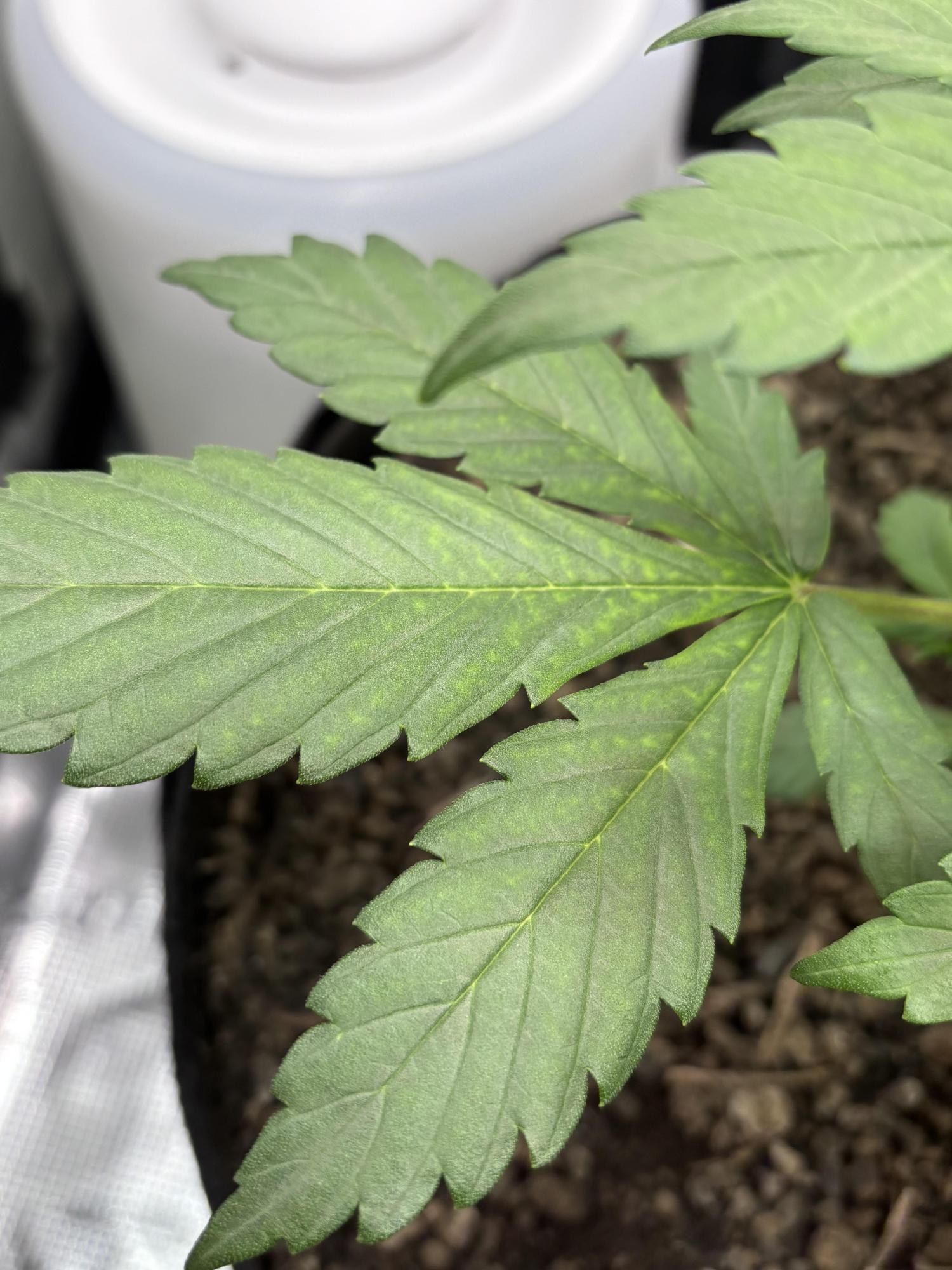
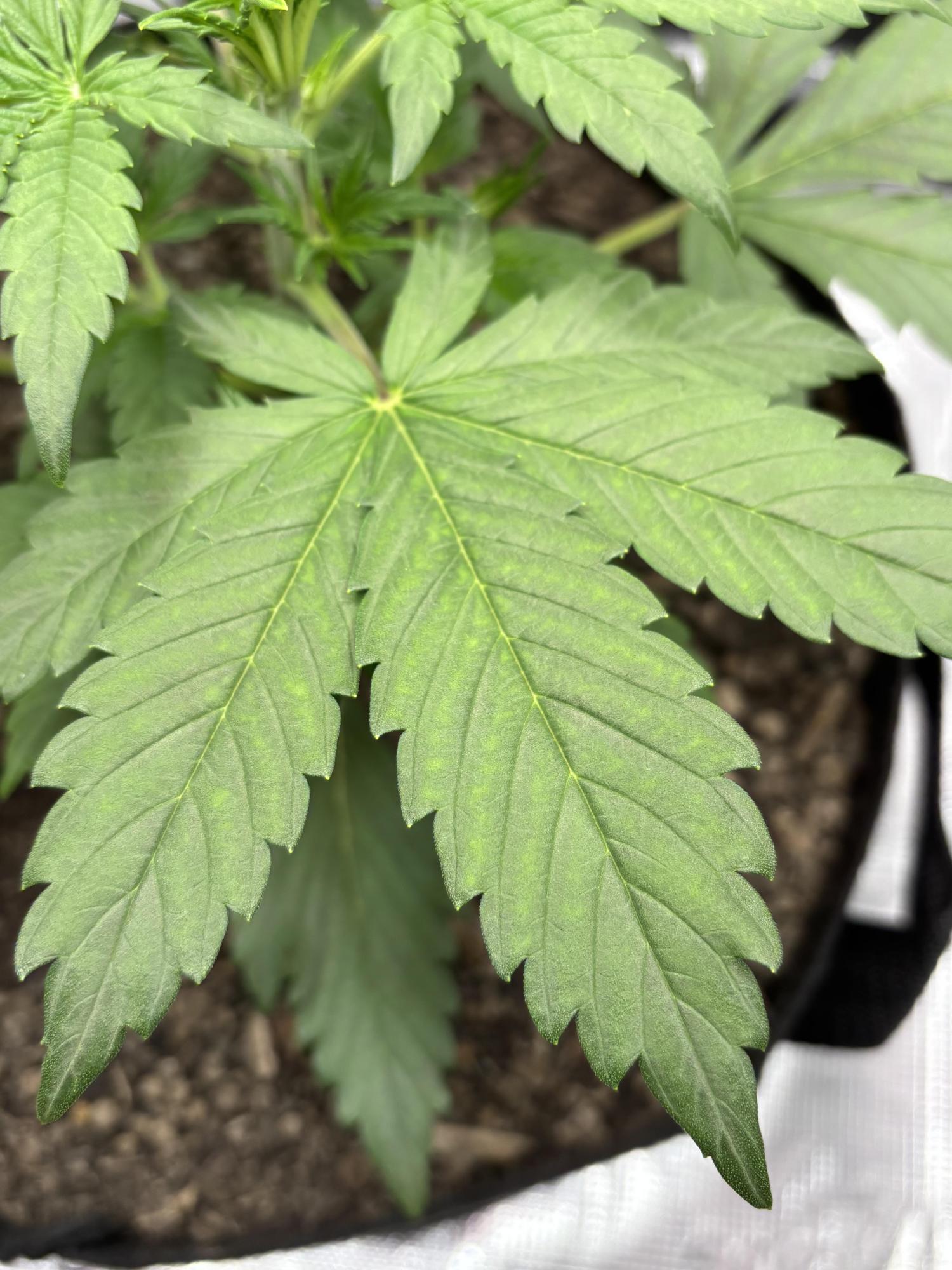
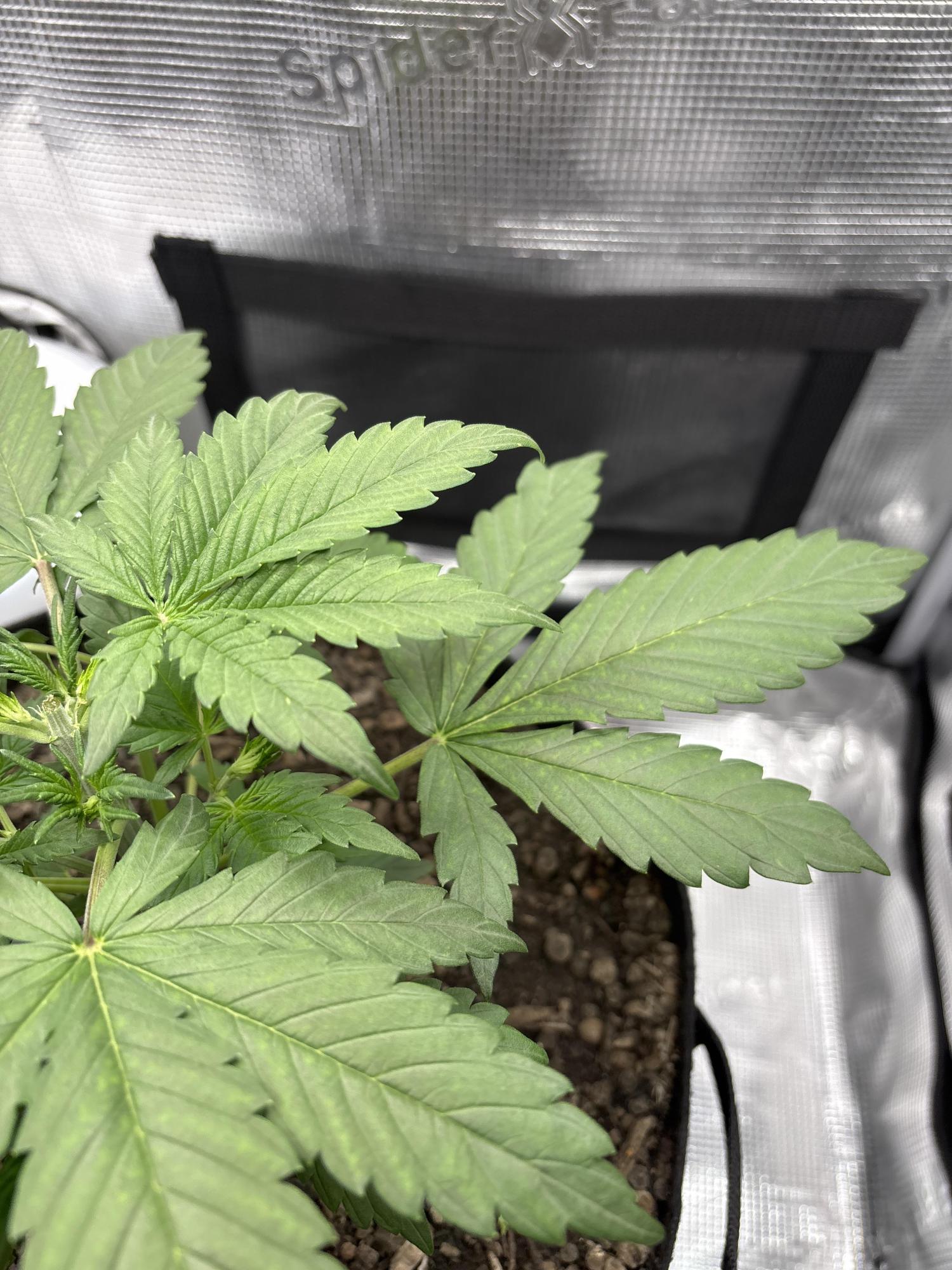
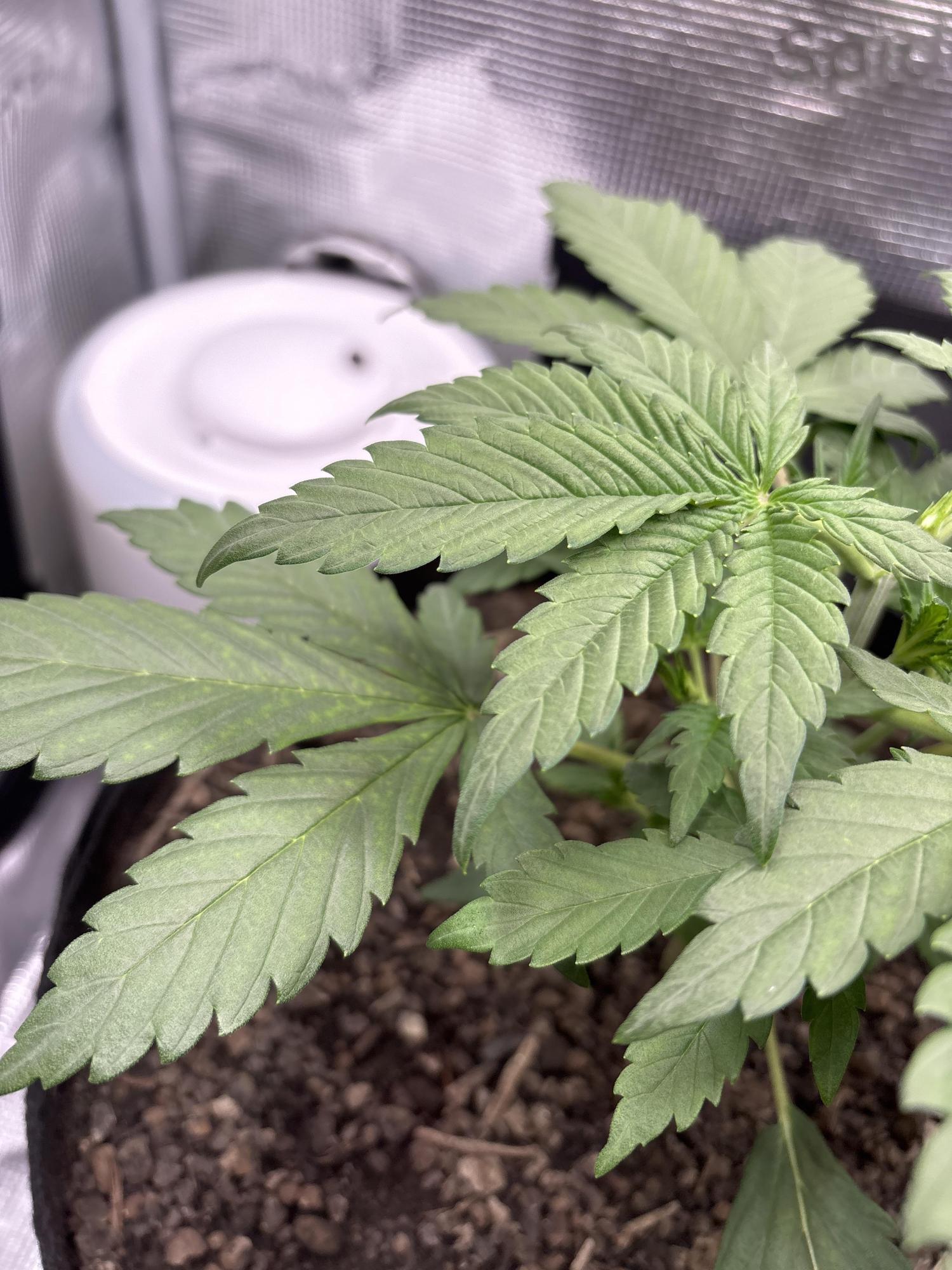
I’ve been growing for a bit but still lack experience. I’m using living soil and was told not to fertilize if the soil is under 10 weeks old. However, my plant shows issues: pale spots on the leaves and drooping tips. I suspect a phosphorus deficiency and overwatering but idk.
1 like

pHilosophy420answered grow question 10mo ago
Your plant isn’t showing phosphorus deficiency. Those pale little spots and the slight droop are almost always early magnesium deficiency + overwatering especially in fabric pots and young living soil.
living soil can still run low on Mg early on and when the pot stays too wet the plant cant pull it in properly.
What to do is to let the pot dry more between waterings (fabric pots dry fast pick it up and wait until it feels light). Don’t add normal nutrients yet just correct the Mg and watering rhythm.
You caught it early and the plant should perk up in a few days 👊👍


Organomananswered grow question 10mo ago
The drooping tips are overall dark green look seems to point to an abundance of nitrogen.
The slight yellowing may indicate the need for extra magnesium, a common issue with indoor grows under LED lights.
I don't see any real issues with a lack of posphorous........or potassium or nitrogen.
6-8 weeks is about the maximum from any soil mix before needing additional feeding.
Start with half strength every 7-10 days when you get to that point.
I am extremely doubtful about any insect or fungal problems.
Organic growing does not magically increase the need for oxygen in the root zone........ I wish people would not post AI answers...........
likes
Complain

Ultravioletanswered grow question 10mo ago
Some nutrients leech with each watering further and further down, potentially out of reach of root zones. Different nutrients have different mobilities in soil, much like mobility in the plants. I don't see enough of a problem to pinpoint other than that chlorophyll seems to be affected across the plant, but very slightly. Organic growing requires much more oxygen in a medium compared to a synthetic medium, microorganisms "scavenge" oxygen too. This is often overlooked, I know from experience also that fabric pots are not even half as "airy" when compared to an airpot, the difference was surprising to me at least. Hypoxia is something that occurs when oxygen runs low in a medium. More often than not, an "oversaturation" of a medium will cause problems as oxygen moves 10,000 times slower in a medium saturated past a point, so even if it's there, its more or less "locked out". A plant grown in a hypoxic medium will generally have diminished chlorophyll content, a condition known as chlorosis, low oxygen concentrations in the root zone inhibit nitrogen, potassium, and magnesium, all of which are vital components of the chlorophyll molecule but it would explain why symptoms always appear attached to the big 3, often worst thing you can do is add more of the big 3 when its not an actual deficiency. While osmosis is the mechanism by which water enters a plant's roots, the process of osmosis itself does not stop in oversaturated soil; the plant's biological capacity to sustain the conditions needed for effective osmosis is compromised by the lack of oxygen itself. Osmosis is necessary to get water into plant roots, which then drives the pressure for bulk flow up the xylem, the majority of calcium and magnesium is taken up by plant roots and transported throughout the plant via bulk flow (mass flow) in the xylem. Make sure RH is not staying above 60 consistently overnight. Gluck, get her juices flowing.
1 like
Complain

HinduGodanswered grow question 10mo ago
I WOULD CHECK UNDER DA LEAVES WITH A MICROSCOPE FOR CRITTERS AND FUNGUS!!! REMEMBER LIVING SOIL NEEDS TO BE MOIST NEVER SATURATED OR DRY BACK COMPLETELY!!! WRONG WATERING PRACTICES CAN AND WILL CAUSE ISSUES!!!
1 like
Complain

Green_Clawsanswered grow question 10mo ago
In living soil you will need to add amendments before the 10 week point. Depending on how the soil was put together and what was added at the start.
likes
Complain
Similar Grow Questions


Solved

Fetanq
Leaves on one side are dying but don't feel crunchy.Due to slight nutrient burn problems I've given this plant less nutrients than usual.
But last week the leaves on one side of the plant were hanging and dying off.
They don'y feel crunchy and don't break off when you touch them. But they're thin.
6y ago
3
3


Solved

SanderanderS
Now what?!
Lately , leaves of a expert Gorrila are looking funny ,curly etc.
I was thinking Oxygen lockout because of the tight rootsystem.?!
The stick I use to check the water in the coco Perlite mix got stuck!
Anybody ! Please?
Leaves. Curl down
Plant. Stem · Red or purple
Roots. Other
5y ago
2
4


Solved

Startergrower10
Leafs downWhy my plants got leafs down now is 6 days i don give the water to them but they still look like this
Leaves. Curl down
4y ago
4
4
Solved

aDriftwoodKing
Need help with drooping seedling plsI suspect this seedling is either overwatered or underwatered, but unsure. Idk how often it was watered, but I have 3 others in same soil/tent doing fine. Soil doesn't look or feel wet, just slightly damp. The leaves have been curled since it sprouted. Its a 5 days old autoflower
Leaves. Curl down
3y ago
3
2
Solved

Ner0z
Stunting and discolourationI want to identify the problem. Plants are 12 days old, stunted with some discolouring on the leaves and some purple stems. Leaves curling down. Medium is promix hp. Ph in 5.9-6.1. Runoff 6.5. 1 light feeding done day 9. Lights 30" 50% pwr. 72-76c 72% RH
6y ago
4
1
Solved

versace_grow
Is this heat light burn? HPS 600w at 20cmIs this light heat burn?? These are all buds at the top of the canopy and they are the ones nearer to the lights. I have 2x600w HPS, one with a cooltube and the other just with the wing. The possibly burnt buds are the ones under the wing (just 20 cm).
Leaves. Edges burnt
Leaves. Tips · Burnt
Leaves. Curl down
6y ago
3


Solved

Scissorhands_Guy
Leaves issues !Could someone tell me why the leaves sag like that ?
Go see my diaries for settings details.
P.S : photo number 2 show leaves of the bottom of the plant, and no problems here. I also watering a little more last days, maybe over-watering issues ?
Leaves. Curl down
5y ago
1
2


Solved

partlychili
Leaves cupping inwards4 weeks old and its been 2 days her leaves are cupping inwards, i started only calmag yesterday @ 1.5ml/L with a pH of 5.9 as I thought that might have been the cause.. but it hasn't perked back up. Do I just wait or might it be something else? Also top leaves praying up, heat?
Leaves. Curl down
6y ago
2
3
Solved

heythere12345
Leaves clawingReasons for the leaves to claw down so bad? ( I think its the heat? )
Ph is balanced
Biobizz light mix soil
Watering every other day with 300ml ( 0.5 ml biogrow, 0.5 bioheaven, 0.5 alg a mig, 0.5 root juice) week 3 day 20 from first leaves.
Leaves. Curl down
4y ago
2
3


Solved

BucketHathead
Did I do the right thing? Pls check my update on this week!Can my Growmies check my update on this week please? Ppm shot up and I noticed nute burn. Weird bc I have only added water since last week. I cleaned the pump, removed air stone and lowered ppm. Definitely seems like too much nutes - hoping they’ll perk up.
4y ago
2
2
Solved

WitekMajestatyczny
Weak and dropping plant and yellow leaves 2 weeks after topping.Hello guys. I am struggling with some problems after I have made a topping on 4th week of vegetation about 2 weeks ago. The plant seems to be a hole time really weak and is dropping, leaves are also really thin and a bit curled.. First 2 photos are made on 17.02 and the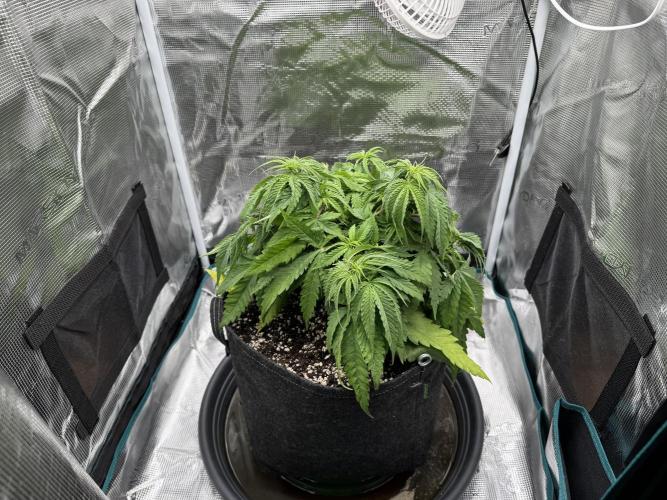
Leaves. Curl down
Leaves. Color · Yellow
Setup. Strains · Photoperiod
8mo ago
9
8
Solved

Reaper
Coco problemThe anubis (picture from day 9) u can see there was a litle calmag issue (brown dots) now, the new growth is a bit CURLY, is this because of the calmag issue? also the cheese is in the same coco/feed and has no issues at all, i use 6-9 formula + 0.5ml calmag/literWeek 2
Leaves. Curl down
7y ago
1
5
Solved

BigD_era420
Flowering nutrientsMy beans enter week 6 of flowering and the leaves turn into this color. What can I do?
Leaves. Curl down
Leaves. Color · Yellow
3y ago
1