


Bei der Pflanze sterben die Blätter

All_our_small_plantsstarted grow question 9mo ago
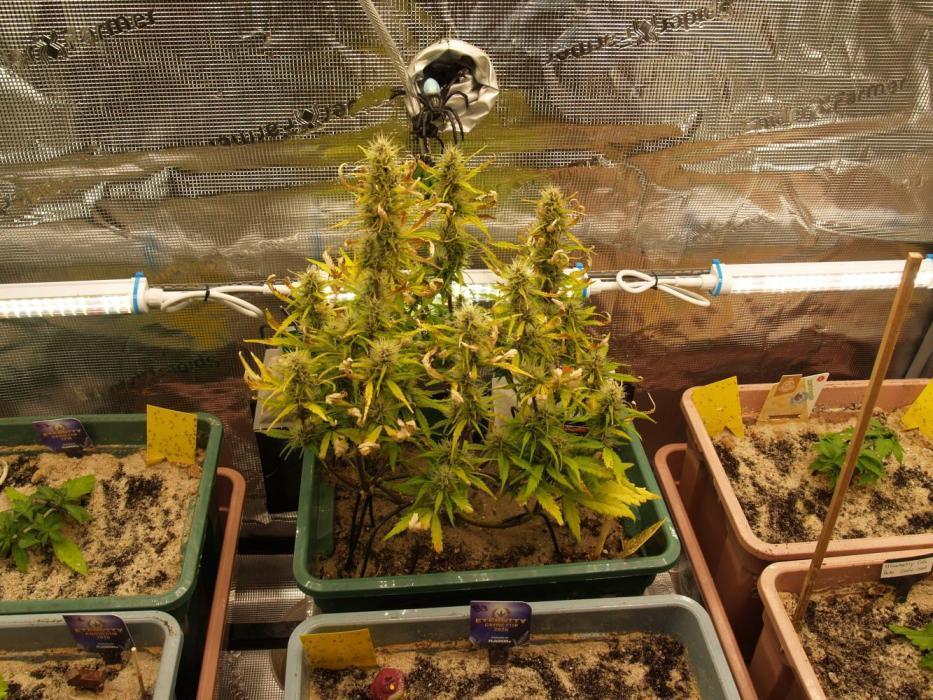
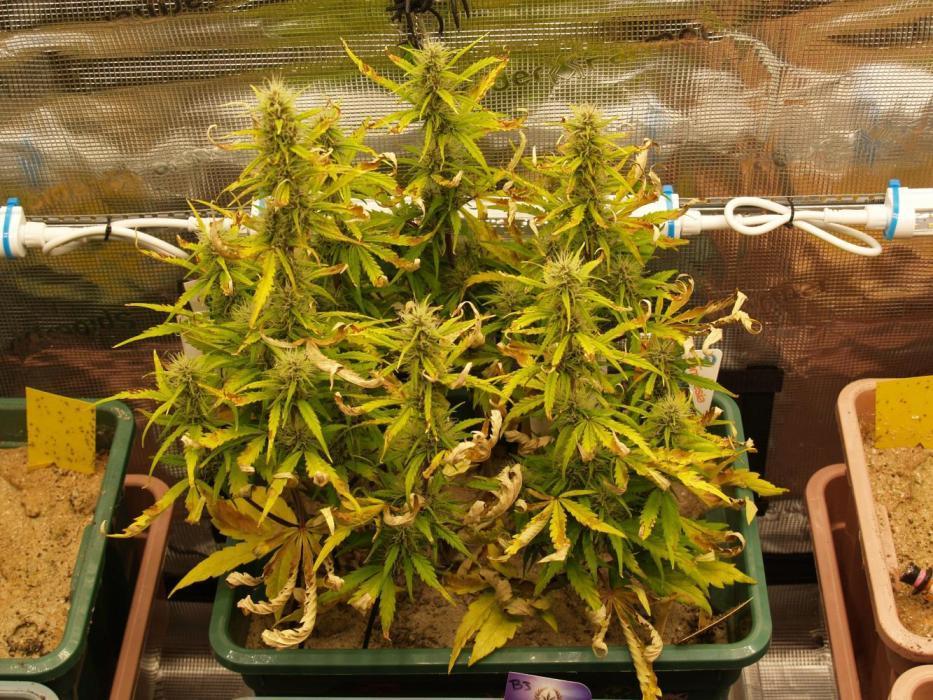
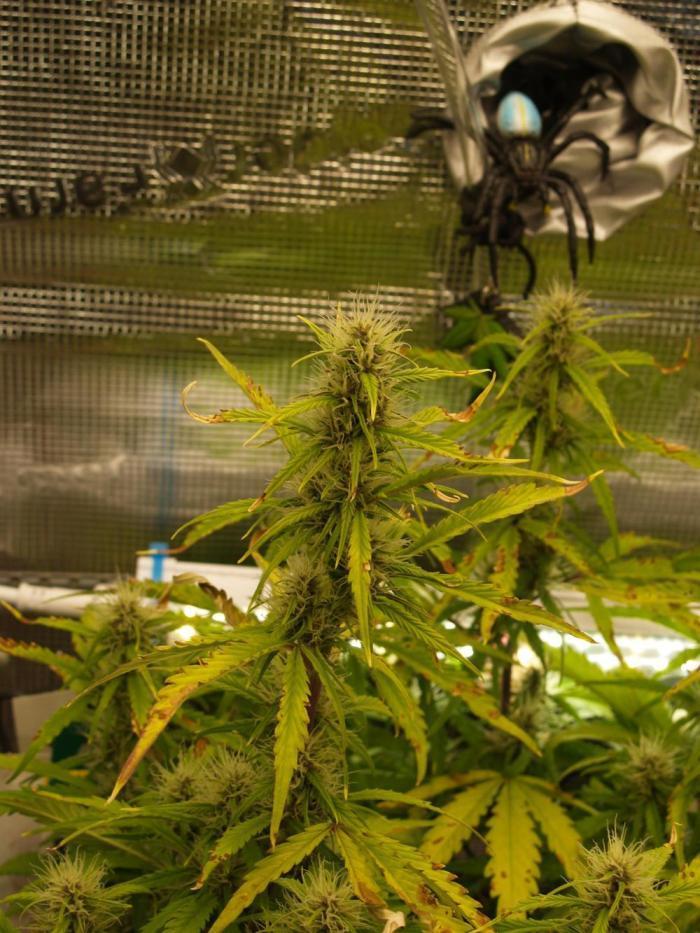
What could be the cause? We checked the EC and pH values and everything is fine. Other than the sand, we haven't done anything differently. Does anyone have an idea? It started around week 6 and is getting worse.
1 like

RasendeRollo92answered grow question 9mo ago
Hi 🙋♂️,
I'm sorry to see that, I had similar issues in my reports, but I had different reasons than what I suspect you have.
With EC & pH values being fine, it probably has to do with some other environmental influence, like too high light intensity... that was the case for me back then, but I don't suspect that for you.
This error pattern also occurs when the roots have a problem, for example caused by waterlogging. I suspect that more for you, as the soil couldn't dry out properly due to the sand.
Another possible factor is the humidity in general, but I don't think that's it.
I hope this helps & I hope she pulls through again!
Good luck moving forward 👊🤞🏽👍
foxbberganswered grow question 8mo ago
pH value: 6.2
EC value: 1.5
Temperature: 20ºC
Humidity: 68%
Pest control: nematodes and predatory mites
PPFD: 490 µmol/m²/s
At these figures (temperature, humidity, light), your plants won't take high EC... have you ever measured what's in the drain?
Could be a lockout - though my initial idea is rather damaged roots due to bugs. Since you already feed mites and nematodes, my first attempt would be to restore the roots/root zone (low EC, mykos, bacteria, kelp).
Do you have any chance to lower the humidity... or at least raise the temperature a little, to avoid upcoming problems (fungal infestation, mildew, bud rot)?
Good luck 🙏
likes
Complain

Organomananswered grow question 9mo ago
Advanced phosphorous deficiency.
"Sand", I presume as a "gnat barrier", is not a contributing factor.
It is not septoria.
It is not "nutrient burning".
It is not calcium related.
It is not "waterlogging".
1 like
Complain

Ultravioletanswered grow question 9mo ago
Sand in a growing medium or soil can contribute to the formation of non-permeable or oxygen-deficient layers, particularly when fine sand particles mix with other materials, become compacted, or trap water. While coarse sand is often used to increase aeration, the wrong type of sand or poor mixing can have the opposite effect. It is not sand itself, but fine sand particles (
1 like
Complain

Momentumanswered grow question 9mo ago
the 2nd week of flowering is interesting, where these brown spots are forming in the second to last picture, which could be septoria, a fungus, that overwintered with you
the little one on the left is already getting it too
1 like
Complain

desade9answered grow question 9mo ago
ph lock out, and the plant is poisoned with fertilizers.
1 like
Complain

AestheticGenetixanswered grow question 9mo ago
It probably started around week 5
Your plants need nitrogen for the stretch. So the first 3 weeks of flower, I still feed my plants grow and bloom formulas and then at week 4 and 5 you have to give your plants calcium and magnesium at this time. Your plants are about to swell and build buds.
Calcium is the plant cell wall building block and if it doesn't have access to this at this time, it will steal it from the leaves.
Both of these things, the nitrogen and the cal mag at these times will help keep the plants happy and healthy from beginning to end of flowering.
You don't want nitrogen deficiency early in flower and you don't want leaf necrosis from cal mag deficiency at the end of flower.
Remember this for next time.
likes
Complain

Lotopharganswered grow question 9mo ago
That looks like nutrient burn to me. Do you have slow-release fertilizer in the soil? Spontaneously, I would say it's nitrogen burn. Of course, it could be something completely different, but I would consider flushing. Maybe someone else has a better idea. Have you measured the drain pH and EC? You could check what comes out/how the buffering capacity of the soil is. I'm definitely keeping my fingers crossed for you.
likes
Complain

Tower84answered grow question 9mo ago
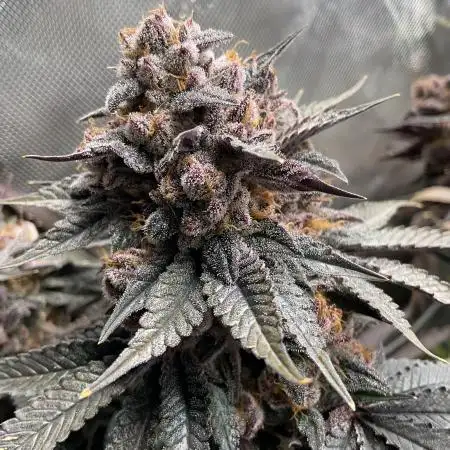
If the pH and EC are fine, then I also suspect root damage. Maybe the roots were already weakened relatively early due to the fungus gnat infestation, leading to an infection of the root tissue. As a result, the nutrients were absorbed poorly. The plant had its problems quite early on. Then you gave it more nutrients, which may have further weakened it due to over-fertilization. So I suspect you won't be able to save much, sorry.
1 like
Complain

Gnrlymsntrp81answered grow question 9mo ago
If you checked your nutes ph and ec are good, could be problem with the roots. Rootrotf f.e.
likes
Complain
00110001001001111Oanswered grow question 9mo ago
looks like advanced N-deficiency.
Looks like a Ca-deficiency started back in week 5.
whether or not it's a physical deficiency or lockout requires more information. They either need more or something is too high and impeding other nutrient molecules (imbalance).
likes
Complain
Ultravioletanswered grow question 9mo ago
Sand in a nutshell. fine sand or deep sand layers—can cause hypoxia or anoxia (no oxygen) in substrates by restricting gas exchange and water flow. While sand is often thought of as airy, in aquatic or heavily saturated environments, its small particle size can compact and seal off lower layers, preventing oxygen from penetrating. Plastic pots, don't help but sand will just destroy oxy.
As microorganisms progress through flower they scavenge more oxygen in competition with the plant. As micros slowly add more and more co2 into medium this slowly increases moisture retention of medium, once moisture in the medium goes above a setpoint, oxygen movement speed swings from 10,000 times slower than air in soil to 320,000 times slower in saturated soil.
Soon as that happens its all lactic acid and 10% of the energetic output, irrespective of any other metric. Everything begins to fail.
1 like
Complain
Similar Grow Questions
Solved

PurpGod
Dying leaves helpLeaves dying Turing yellow and brown
Leaves. Tips · Die
Leaves. Curl up
Leaves. Color · Yellow
5y ago
2
3
Solved

Manijuana
Any ideas on what's causing my baby to yellow at the top? I think too much heat personally as ive been at a temp of 81. Root system is doing great! Any thoughts are welcome!
Leaves. Tips · Die
Leaves. Curl up
Leaves. Color · Yellow
5y ago
3
2
Solved

ykscotttyk25
My plant is sick like never before,should I end her life or wait for a mericalMy plant is sick like never before,should I end her life or wait for a
Leaves. Tips · Die
Leaves. Curl up
Leaves. Color · Yellow
2y ago
4
4

Solved

kansasscott725
Fan leaf deficiencies during flower. To cut or not to cut?Day 85 Update: G13 has a ton of fan leaves turning fast. Pretty sure it's a PH issue. Should I wait until they're dead to trim them off or get rid of every fan leaf that is affected more than 50 percent of the leaf?
6y ago
2
2
Solved

420_Little_Green_Fingerz
Leaf curling cause - Humidity, nutrient or overwateringHey fellow growmies,
Leaves are curling and fading which I have seen in other grows for this strain.
Do you know what might be causing this and how best to remediate?
Humidity has been high recently ie above 60% for large periods
Watering has been consistent
Nutrients reduced … Show more
5y ago
2
2