


Likes
Comments
Share


@WeEdandGrowLover
Follow
Well,all i hve to Say is she Still growing well.😏😊😊
Well but there are some lil brown marks on a few leaves so i must hve overfeed her a bit,i'll do my research.
✌️✌️✌️

Processing
Likes
7
Share


@Kushma666
Follow
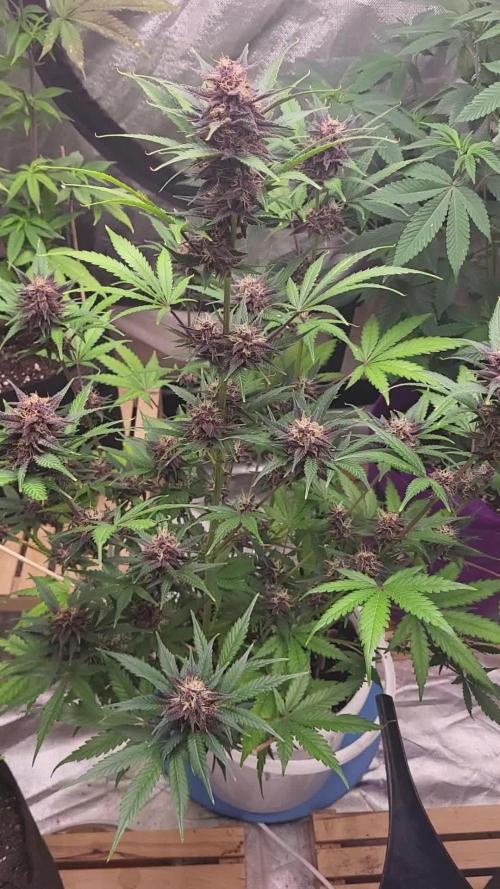
Day 1 beginning of wk 3 flower fed the girls up this morning 4.5 ltr phostrogen to all but bubblegum #1 she gets fed 10ltrs of bud burst they are starting to smell so good 3 strains iv never grown before or even smoked lol exciting stuff 5-6 more weeks to go

Likes
17
Share

@Growmigos
Follow
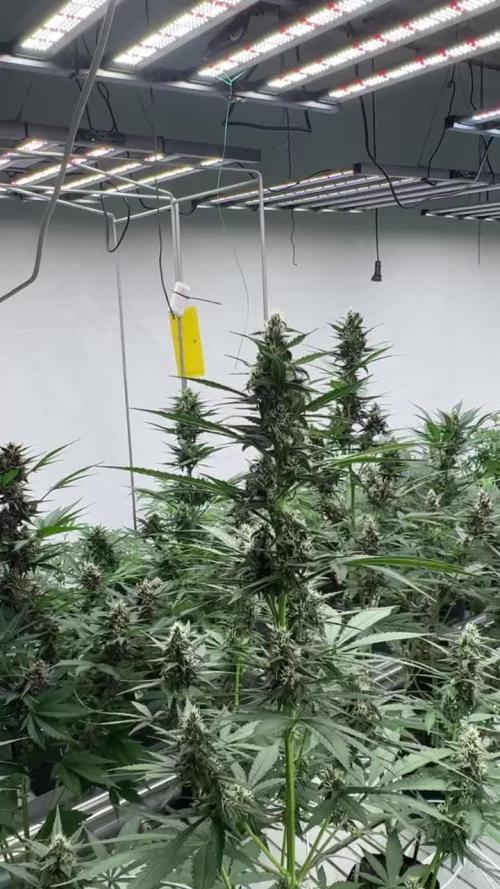
Habe heute dünger abgesetzt ,jetzt bekommt sie die letzte zeit nur noch abgestandenes Leitungswasser...ich habe sie die erste Zeit unter 75 watt und jetzt das letzte Drittel unter 144 watt dazu noch der kleine Topf von 5 Liter macht natürlich kleine buds .Aber sie sieht total schön aus riecht so stark nach 🍋 und Blaubeeren vanille Kaugummi echt stark

Likes
3
Share

@42breeding
Follow
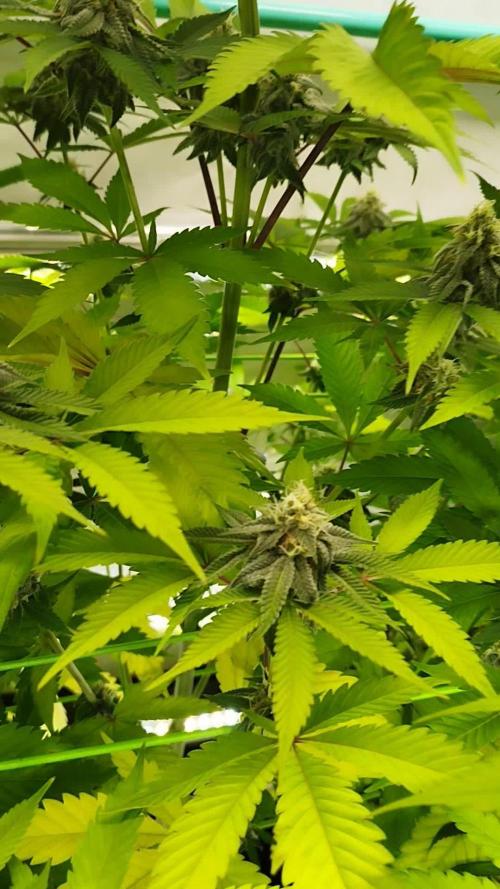
The buds are actively forming, with more pistils developing each day. You can clearly see them swelling day by day. defoliation along with lollipopping was done to remove excess foliage and open up the bud sites for better light penetration.


Likes
10
Share


@WEEDOOR
Follow
Everything goes on properly except for the high temperature and the proximity of the flowers to the lamp. I really hope the flowers will withstand the pressure because I have no way to lower the temperature anymore or keep the lamp away from the flowers.

Likes
16
Share


@Freddd
Follow
First defoliation this week, took off all the lower leaves as they weren't getting much light and there's plenty of green leaves around the buds, looks nice at the base now. I discovered that the ppm runoff was 3500 so I've been pouring the nutrients solution into the top by the litre and letting it drain back to my reservoir, I'm using the flowering res from my other grow, which is 1:2:2 and 1500ppm.
She appeared to be growing really slowly with small buds, but I had a look at a two week old photo and I must have lost track of time, as she had only just begun to flower. Feels more like four weeks! So now I'm wondering what more she can do. Stay tuned this could be exciting. I'm excited anyway. Nothing like what I expected.
Updated some more shots, I only now just realised that I can hold the plant upside down or at any angle under the lights to get the type of bud shots that are normally impossible.
Likes
3
Share


@Blunoser
Follow
Week 5 Flower. This is the start of Week 5 Flower. Grow is cruising along. Adding Epsom salts on the last 2 feeds of the week. Tip burn from using it too often.


Likes
7
Share


@LeakyTitsBukkake
Follow
Use just solids of milk for the best plant, no contest only win.
Made it fresh, can't do no evil.
Plant soil fingers are thick and love milks, Strong plants bones and teeth.
Thank you much champion

Likes
4
Share

@Jabbamo
Follow
_______________________________________________________
Di. 17.3. ( Beginn "Herbsteln" )
- 3,15 Liter pro Pflanze gegossen (ca. 100ml Drain)
1,2 ml / Liter "Calmag"
1,0 ml / Liter "Bio Grow"
3,5 ml / Liter "Bio Bloom"
1,5 ml / Liter "Top Max"
Ph 6,2 / 620 ppm
- Luftentfeuchter auf 40% runter
_______________________________________________________
Sa. 21.3.
- 3,05 Liter pro Pflanze gegossen (ca. 50ml Drain)
1,2 ml / Liter "Calmag"
1,5 ml / Liter "Bio Grow"
4,0 ml / Liter "Bio Bloom"
2,0 ml / Liter "Top Max"
Ph 6,2 / 770 ppm

Likes
16
Share


@MadeInGermany
Follow
Info:
Unfortunately, I had to find out that my account is used for fake pages in social media.
I am only active here on growdiaries.
I am not on facebook instagram twitter etc All accounts except this one are fake.
Have fun with the update.
Hi everyone :-) .
This week she has continued to develop very well.
She reacts very well to the training :-).
It was poured twice with 1.2 liters each this week.
Everything was cleaned and refilled.
Stay healthy 🙏🏻
You can buy this Strain at
https://www.barneysfarm.com/blue-cheese-34
Type:
Blue Cheese
☝️🏼
Genetics:
Blueberry
X
Original Cheese
👍
Vega lamp:
2 x Todogrow Led
Quantum Board 100 W
💡
Bloom Lamp :
2 x Todogrow Led
Cxb 3590 COB 3500 K 205W
💡💡☝️🏼
Soil :
Bio Bizz Coco
☝️🏼
Fertilizer:
Green House Powder Feeding
☝️🏼🌱
Water:
Osmosis water mixed with normal water (24 hours stale that the chlorine evaporates) to 0.2 EC. Add Cal / Mag to 0.4 Ec Ph with Organic Ph - to 5.5 - 5.8
Likes
8
Share


Likes
32
Share


@Arcadium
Follow
Explosive growth this week! Must of doubled in size. Some kind of hungry insects, caterpillars maybe? Minor leaf damage, nothing major. Going to keep up with Neam/Aloe/Kelp spray. No rain in the foreseeable future, 26c every day, early summer for sure.
Doesnt appear to need any extra nutrients, will add some more Gaia Green next week.
I've had Lupins here for the past few years, which are Legumes and have great nitrogen fixing qualities, not to mention this entire patch of land had 20 years of old decaying blackberry bramble which were cleared 3 years ago when we bought the place, and the soil is some of the richest I've ever seen. No shortage of Nitrogen in there.
I'll be honest, this plant is twice the size this time of year then the last 2 years I've been growing outdoors. I'm a little concerned I'll need my ladder come Oct! I did FIM once earlier in the week, will FIM ever 2-3 weeks till July to try and keep the height under control.

Likes
2
Share


@GingerGarageGrow420
Follow
Day: 42 from sprout
Strain: Chill Out OG F4
Medium: Fox Farm Ocean Forest
Light: Vivosun VS2000 switched to 75%
Light Distance: 12 inches
Watering: By hand, ~12 oz daily
Nutrients: pH Perfect Advanced Nutrition Grow, Bloom, Micro 2 ml / L
Likes
51
Share

@German_GrowLab
Follow
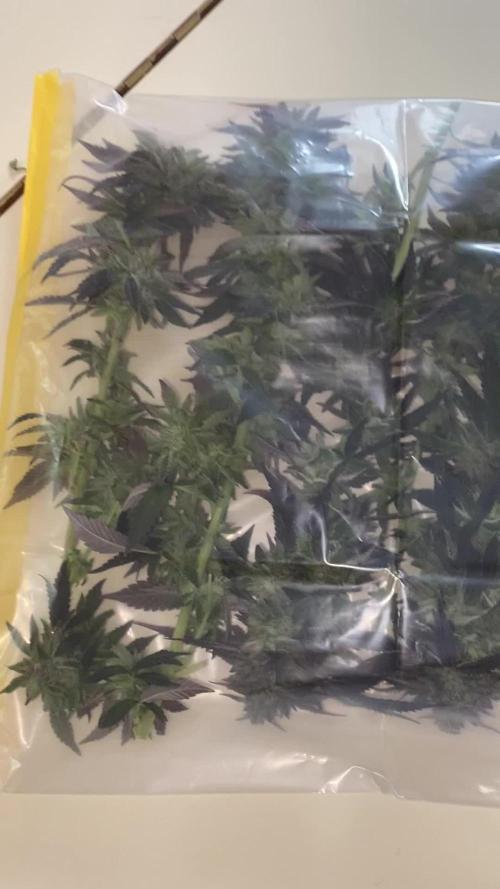
Soooo, nach langem Warten (ich bitte um Entschuldigung, es kam immer irgendwas dazwischen), nun die Ernte! Nachdem ich jetzt alle Sorten verkostet habe, kann ich euch nun mein Fazit präsentieren.
Im Großen und Ganzen bin ich eigentlich ganz zufrieden mit dem Ergebnis, muss aber auch gestehen, dass ich bei der ein oder anderen Strain doch etwas mehr erwartet habe. Bei den nun folgenden Bewertungen möchte ich noch anmerken, dass sich diese rein auf den Outdoor-Anbau der jeweiligen Sorte und nur auf den einen bekannten Phäno beziehen. Man kann grundlegend behaupten, dass sich alle Sorten doch sehr solide geschlagen haben, und das bei diesem … naja, sagen wir mal wechselhaften Sommer. Allerdings merke ich einfach, dass sie lange nicht ihr volles Potenzial ausgeschöpft hatten, was ich immer etwas schade finde. Ich bin trotzdem froh, dieses Projekt durchgezogen zu haben, und gehe mit reichlich neuen Erkenntnissen sowie einem abwechslungsreichen Stash in die besinnliche Zeit.
Was hat mich grundlegend bei den meisten Sorten gestört?
Bei fast allen Sorten, mit Ausnahme der Hella Jelly und der Lemon Tree (wer hätt's gedacht), waren die Terps doch sehr flüchtig. Im Vape kamen sie wirklich gut zur Geltung, wenn man sie allerdings im Joint (pur, versteht sich) geraucht hatte, haben sie oft nach den ersten Zügen an Präsenz verloren, was wirklich schade ist. Dies ist aber wahrscheinlich auf die Anbaubedingungen zurückzuführen und soll den Breedern keinesfalls ihre Qualität absprechen. Wie schon in einem vorigen Kommentar erwähnt, haben sie einfach nicht ihr volles genetisches Potenzial erreichen können.
Ich bin mir des Weiteren auch nicht sicher, ob ich beim nächsten Mal wieder auf die Dryferm-Bags setzen werde. Es war doch ein ziemliches Gefummel, bis man die Blüten ohne Kontakt zueinander in die Beutel verfrachtet hatte. Außerdem hat es meiner Meinung nach die Trocknungszeit eher verkürzt, obwohl ich mich an die Temperatur- und Luftfeuchtigkeitsrange gehalten hatte, was ich auch nicht unbedingt begrüße. Und zu guter Letzt sind sie auch echt nicht billig, wenn man bedenkt, dass ich pro Pflanze teilweise über 4 Beutel benötigt hatte (pro 3 Stk. ca. 25 Euro) und sie laut Hersteller nur dreimal verwendet werden sollten. Das ist doch auf Dauer ein ganz schönes Investment. Aber das sind nur meine 2 Cent zu dem Thema :).
Nach und nach sollten jetzt hier die Erntereports eintrudeln. Ich hoffe, ich schaffe alles heute. Falls nein, seht es mir bitte nach. Falls ihr noch spezifische Fragen zu einer Sorte habt, lasst es mich einfach wissen, dann bekommt ihr noch eine ausführlichere Beschreibung.
PS: Die Filmore-Slim musste ich leider fast komplett entsorgen. Sie hatte die festesten Blüten, die ich je bei einer Outdoorpflanze gesehen habe, was ihr leider zum Verhängnis geworden ist (durchgeschimmelt). Von ihr hatte ich leider keine rauchbaren Blüten. Von der Optik war sie auf jeden Fall ein Champion!
Ich habe von allen Sorten Fresh Frozen in der Gefriertruhe, die ich in der kommenden Zeit wachsen möchte (auch von der Filmore Slim). Also kann ich sie hoffentlich als Konzentrat verkosten.
Das soll es gewesen sein. Ich wünsche euch viel Spaß mit den folgenden Ernteberichten und eine ruhige, besinnliche Weihnachtszeit mit euren Liebsten! Wir hören uns dann hoffentlich im nächsten Jahr wieder, mit vielen neuen spannenden Projekten.




Likes
19
Share


@Iamdisabl3dsgirl
Follow
It has been under 24hrs since I dropped these babies into my hydroponics unit and they have already cracked and taprooted into the plugs, proof of amazing genetics!
Likes
10
Share


@Ieiogrow94
Follow
Eccoci di nuovo qui!!!
Super eccitato per questa nuova collab con Anesia Seeds, team davvero al top, che mi ha dato l’opportunità di testare questa nuova genetica e di condividere i progressi con tutti voi!!!
Come sempre partiamo nei bicchieri per poi travasare.. Questa volta verrà svolto tutto sotto la Lumatek Zeus 465 ProC, mi aspetto molto da questo ciclo!!
Che bellezza finalmente il raccolto ed il test e...
UNA GENETICA SPAZIALE DAL SAPORE UNICO E ODORE TROPICALE INTENSO, un vero piacere per i sensi la seconda miglior genetica del ciclo SUPER CONSIGLIATA A TUTTI..
Grazie a tutti per il supporto ❤️🍀🔥

Likes
10
Share


@Dendegrow
Follow
Blue Sunset Sherbert ❤️ – What a beauty this one turned out to be!
The buds have absolutely exploded in size and density! 💣💜 The terpene profile is something truly special – rich, unique, and completely unforgettable. The plants have taken on stunning dark hues, with anthocyanins beautifully developed, giving them that deep, almost mystical color.
Frosty, dense, and shining like gems – they’re almost ready to meet the scissors ✂️✨ I think by the end of this week it’s time for harvest, and I honestly can’t wait to taste the final result. Stay tuned – this one is a masterpiece in the making!
---
Blue Sunset Sherbert ❤️ – was für eine Schönheit diese Lady geworden ist!
Die Blüten sind regelrecht explodiert! 💣💜 Und das Terpenprofil? Etwas ganz Besonderes – so einzigartig, so intensiv, einfach unvergesslich. Die Pflanzen haben sich wunderschön dunkel verfärbt, das Anthocyan hat sich super gebildet und überzieht alles mit einem frostigen Look.
Hart, dicht und einfach nur beeindruckend – ich denke, Ende der Woche ist Erntezeit ✂️✨ Ich bin unglaublich gespannt, wie sie schmecken wird. Bleibt dran – das hier ist echtes Headstash-Material!
Likes
81
Share


@UnorthadoxDude
Follow
Hey! Welcome to week 8! Karen is mid way through her flowering stretch. Please check back to last week as I update daily so the week is now complete. I count about 20 colas now.
Day 51: Have reconfigured the tent, see video. Karen is now 36cm and still stretching. Karen has more light now. Smell is still there hits you when you open the tent. Fertigated 2l.
Day 52: Height: 39cm. Karen's scent is heavenly. I have reconfigured again and installed some upgrades. Better reflector. Much bigger carbon filter. Increased airflow. Better config. More efficient pot layout. Karen is lovely.
I am grateful to her and for her, so I wrote her a little poem, I hope she liked it.
"Karen! Oh Karen! The phoenix of flowers,
Three lowly weeks she struggled in vain,
Shadowed and starved for five hundred hours,
He slowly wept to witness her pain.
Karen! Oh Karen! I P-H'd your showers,
and in the fourth week you started to gain,
Hallowed and hard you survived as you cowered,
I thought you meek, I was wrong once again.
Karen! Oh Karen! Forgave me my howlers.
She set a pace, a pace she maintained,
Now shes a girl at the peak of her powers,
And so I'm a geek, with buds on the brain."
Day 53: Approx 48h into a simulated dry spell.
Alright I think it is time for Karen to get her first MAJOR defoliation. I will update shortly with photos and info. I will also be doing some gentle LST to separate the colas a bit.
Day 53.5: Defoliation and LST. Finally got chance to photograph that bunda. Enjoy!
Day 53.75: Bit of a fail. Messed up the timer and the lights ended up being off for about 3 or 4 hours. Because I was cooling the room (open window) to keep temperature in the tent down, without any light the temperatures absolutely plummeted as it is sub-zero outside. By the time I realised and turned the lights on, the temp in the main tent had dropped to 14 degrees celsius. Whoops! How is that for mistreating your girl? Defoliated about 80% of her leaves, 4 nodes, significant LST, then stuck her in the cold and dark for 1/6 of a day. Not to mention she is now almost 3 days into a "dry spell". There do not seem to be ill effects, and Karen has already begun to respond to the LST; all the colas that had been changed in angle are now upright again.
The dry spell I keep mentioning, there is a method behind my madness, I have spotted one or two small flies and I think they may be fungus gnats. I am starting to suspect that the 2nd seedling in the Purple OG Punch Auto grow was actually beheaded by fungus gnat larvae. So I am drying out the mediums as much as I dare. I am closely monitoring the plants, so far the only one I have had to break the drought for is Enigma; all the girls in big pots haven't even noticed it's dry yet. How far am I going to push it? Well I will judge it on a plant by plant basis, but quite honestly I am hoping to see physical signs of thirst before I breakdrought. Of all the plants the two I think will respond most strongly to this will be Karen and Bertha, because of where they are. Karen here is actually probably 4 weeks into flowering rather than two, so about now is a good time to give her a little hydration stress. I do not think I will push it past 5 days, as RH is 34%. By now all the plants will be compensating for the lack of moisture and the high temperatures and low humidity. They will be taking more and more moisture out of the coco, and as the coco dries further and further down, those plants that have space will start desperately growing roots to find moisture. Mark my words, 24 hours after I end this drought, every plant in the tent will throw out crazy growth.
Day 54: Ended drought and fertigated 6l, no run off, I will re-fertigate tomorrow. Karen is still stretching her height post LST is now 37cm. The two tallest colas seem to have stopped but the other colas are still stretching.
Day 55: Alright so it has been 5 hours since lights on, and Karen is looking in good shape, all her drooping leaves have perked back up and she has added quite a bit of foliar growth. The colas are all still rising, except perhaps the two tallest. This girl is absolutely loaded with pistils, I'm starting to see trichomes on the sugar leaves, but trich production hasn't started in earnest yet. She has a least 20 colas, and 6 of them are thicker/taller than the primary cola at her tip. Every one of her nodes has reinforced itself with a bulbous growth and these cola branches are swelling rapidly. I am increasingly of the opinion that, all being well, this girl is going to surprise us all with her yield. My first grow, which was just mucking about really, I got 60-70g of the two main plants, and they were just bare sticks with 2 colas. Although her height is less than theirs was, 2/3 of their height was bare stick... whereas every mm of her is befoliaged and living. So in terms of the height of the actual cola I think they were about comparable in usable space on a per cola basis. The main difference being that Karen has 20+ colas whereas they had 2 primary and 2 lower. I know that it is probably unrealistic to expect more than 70g from a single auto grown indoors. Nevertheless my gut tells me this baby could achieve at least 100g, perhaps as much as 150g. The next few weeks will determine that, but given where we were in week 3 I will be grateful for any yield of quality bud. I have dropped the lights down to 18/6 from 'tonight' onwards.
I really have no idea how long we have left for Karen. According the the "brochure" she flowers for 7-8 weeks, with a total crop time of 9 weeks. The problem is I don't know what a total crop time is? Does that mean from seed to finish? If so Karen is clearly not going to be anywhere near that timescale.I am going to go ahead an assume that, for my plant anyway, the first 4 weeks were veg weeks. I think it is fair to count week 5 and 6 as flowering because pistils were popping out very early in week 5 if not before. So that makes this week four of flowering. I am going to assume 8 weeks rather than 7, so I think we have another 4 full weeks give or take a week. On that basis I am expect harvest week to be around week 12 or so. I am not fixed on this though, I am determined not to harvest this girl early.
Day 55: Photos taken 00:00 9/3/23 Strong 24h of veg growth as predicted.
Day 56: Existing leaves continue to swell. Stretch appears to be slowing. I've taken so many media this week that I cannot scroll down far enough to select a recent thumbnail. Probably Karen's biggest week in terms of changes. She is looking like she is going to impress. Height 39cm.
