Likes
46
Share

@valiotoro
Follow
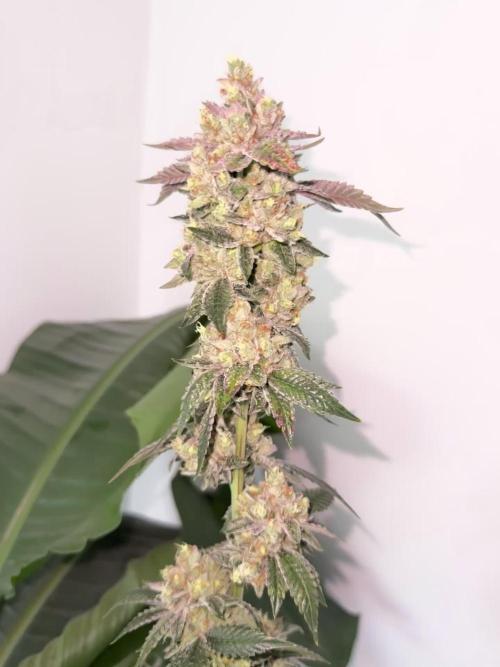
The buds are nice and chunky, absolutely loaded with resin 🔥
Not too leafy either, which makes trimming a breeze just how I like it.😎

Likes
38
Share


@J_diaz420
Follow
Transplantes a macetas finales de 7lts realizados tempranamente para que se acomoden bien para pronto pasar a floración, no más de los 30 días de vegetación 🍀👨🌾🏻

Likes
4
Share

@Naujas
Follow
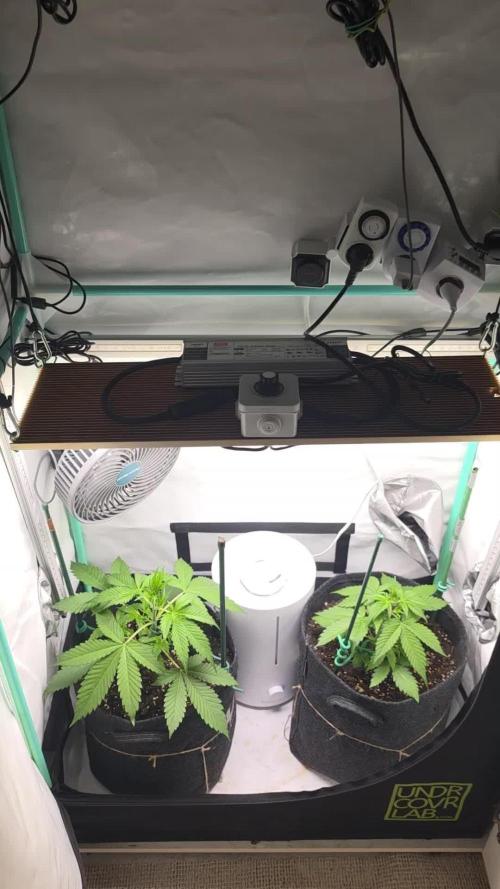
21 diena!!! Mergaitė atrodo kiek maža, bet tuo pačiu ir sveika :) Šią savaitę pradėjau naudoti LST, ir ji taip pat gavo šiek tiek @plagron maistinių medžiagų, kurios jai labai patinka :) Sėkmės visiems :).


Likes
Comments
Share

Likes
1
Share

@c_sevilla_g
Follow
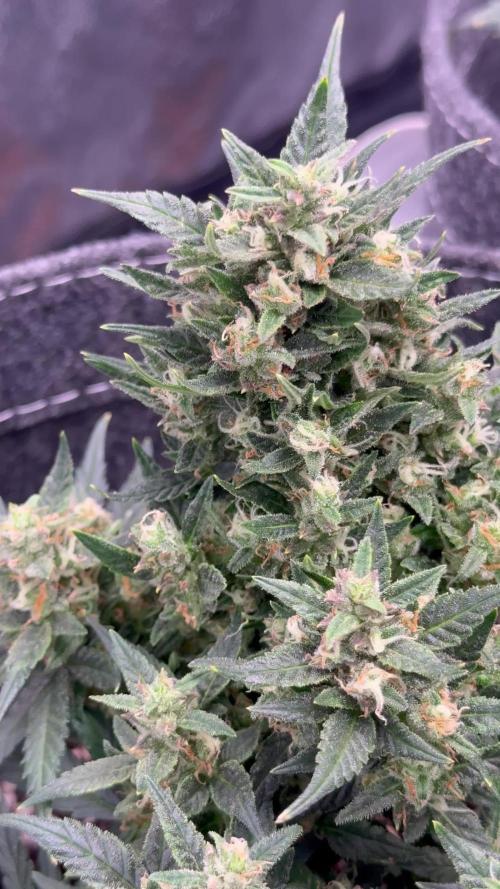
Ya comencé con el flush y Ya tienen un 2-5% de tricomas color ámbar las Pound cake, y la purple lemonade tiene aproximadamente 10% color ámbar (las colas más altas, los bajos tienen menos). Nose en cuanto tiempo más cortar para que estén en un 20-25%
Likes
28
Share


@HydroHerb420
Follow
They’ve been over fed and underfed but they look and smell good. Buds are quite small but are rock hard, even the lower ones. Just running loads of rainwater through them to finish them off, has a ph of 5.8 and doesn’t even register on the ec stick so it’s perfect for flushing in hydro. Merry Christmas 💚💚

Likes
52
Share


@SlowpokeFuegobud
Follow
🍮 🤤 ❤️ 🍮 🤤 ❤️ 🍮 🤤 ❤️ 🍮 🤤 ❤️ 🍮 🤤 ❤️
DAY 58
Watered with molasses and Enzym+ 💧 As always 2L.
DAY 61
Watered with molasses 💧
🌱 🙏 Grower love!!!
_________________________________________________________________________
https://hypnoseeds.com/product/cream-brulee-auto/
Cream Brulee Auto
Description
We love our Cream Brulee and wanted to create an even more special variety so everyone could harvest it faster. Introducing Cream Brulee Auto! After a meticulous process of crossing our exemplary variety with our autoflowering genetics of the highest quality; it is ready to shine and captivate all grow spaces. Equally to lovely feminized Indica-leaning sister, Cream Brulee Auto will take over your heart. You’ll want to keep it in constant rotation. In just about 8 weeks it goes from being a seed to a bountiful harvest of sweet and creamy cannabis from the irresistible dessert we know and love.
Appearance and Grow Tips
While Cream Brulee Auto has the same quality and potency as its feminized cannabis predecessor, what stands out is its speed to finish and enormous dense colas. These magical cannabis seeds take around 8 weeks from seed to harvest and can produce up to 500 grams (per plant) of pure happiness. Indica lovers won’t be able to look away, their growth speed will put anyone in a trance!
Make sure to provide this variety with at least 18 hours of light throughout the entire grow and decent pot size, around 3 gallons minimum, so it can grow to its full potential. Due to its ultra-fast autoflowering genetics, we recommend planting the previously germinated seed directly into the final pot to avoid stressing or damaging the roots. LST is always a good idea to increase performance and control any height problems you want to avoid.
Administer nutrients at 1⁄4 of the recommended dose and then gradually increased as the plant grows and reacts. With optimal conditions and treatment, this strain will bless you with beautiful buds of up to 19% THC.
Flavor and aroma
Thanks to its special lineage, Cream Brulee Auto is absolutely packed with the same delicious flavors and aromas. Its autoflowering magic makes it even easier and quicker to grab your delicious dessert cannabis buds. Notes of cream, caramel, together with vanilla, buttered nuts, and coffee will leave stunned even the most experimental cannabis connoisseur.
Effects
After the first delicious puff, you will be in a dream state, deeply relaxed and pleasantly euphoric. Its calming effect makes it better to consume it at night to help you sleep. Similarly, during the day if you are looking for a half-conscious state Cream Brulee Auto will keep you upbeat and happy.
😍
________________________________________________________________________________
SETUP:
° Mars Hydro TS1000 Version 2022
https://www.mars-hydro.com/all-products/ts-1000-led-grow-light
Thanks @coco!! ❤️
° Zelsius 60x60 cm (2x2ft)
° 2x 5W Fans
° PrimaKlima EC 125 400/240cm³/h exhaust fan & Carbon Active Granulate 240cm³/h
° Biobizz Grow + Bloom
° tap water EC 0,26uS upgraded to EC 0,5 with PlantMagic MagneCal - pH 8, nutrient solution downgraded to pH 6,5 with Advanced Hydroponics Minus Bloom
° BioEnhancer every 2 weeks instead of feeding
° from week 4 in the same container Aptus Enzym+ once a week
° Organic tomato soil + perlite
🍮


Likes
2
Share

@lipiedealer
Follow
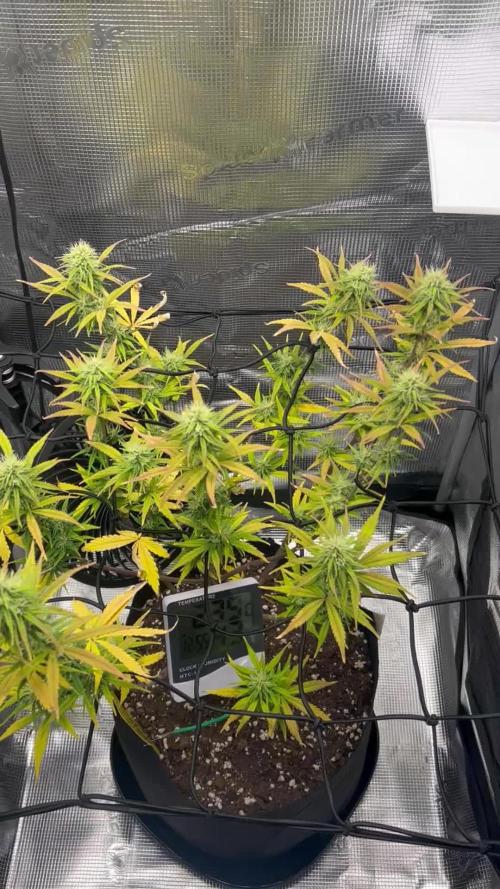
Its day 61 currently, i’ve given her the last feed and will start the flush now, even though she’s discarded most of her leaves already and is using up the remaining nutrients in the remaining leaves on her own.
Most of the pisitls have started turning orangey-brown so harvest is right around the corner, and i dont have a loupe for looking at trichomes but i’ll be taking macro pictures using my phone’s camera and will harvest as soon as i start seeing a few turning amber. There isn’t enough detail in the pics to know if the trichomes are transparent or milky, but its easier to see the amber ones, so thats how i’ll proceed.
This week’s song is Killing Me Softly by The Fugees, hope yall had a great week.


Likes
Comments
Share

@GoodTimesOrganics
Follow
Hi liebe Community and Welcome back! 💚
Jetzt kommen wir allmählich Richtung finaler Blütewoche.
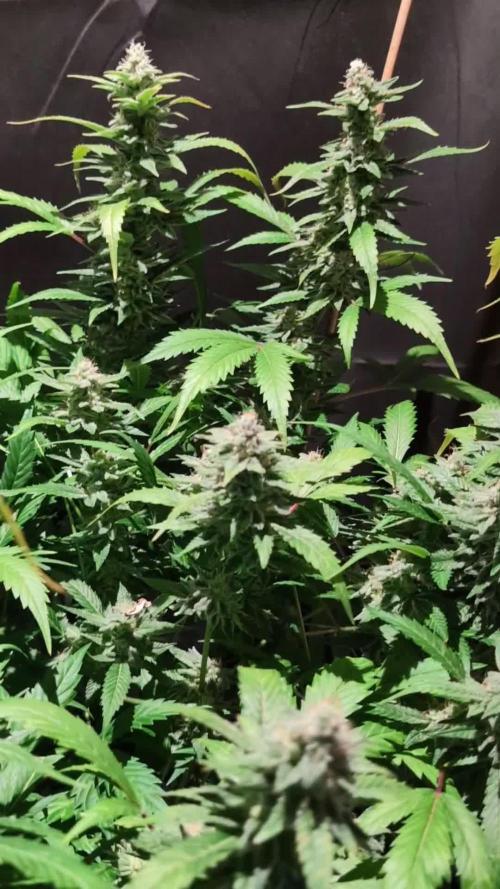
Es lässt sich beobachten, dass die Blütenbildung im mittleren Bereich der Colas stark ausgebreitet hat und die Pflanze Richtung Spitze eher etwas dünner wird.
Sie bildet die Blüten sehr vielseitig aus, von dünner kompakt bis hin zur breiten dichteren stellen.
Bei diesem Genotypen, ist das Wuchsverhalten doch eher Sativa lastig.
Ihr Geruch wirkt jedoch inzwischen immer intensiver in Richtung Grapefruit (GMO). Wie beschrieben kommt dieses Aroma stark aus dem GMO Phenoltypen.
Die Wachstumsbedingungen im Growzelt sind aktuell wieder super!
———————
🌞 Temp: 22°C
🌚 Temp: 20 °C
💨 RH: 53%
VPD: 0,91 kPa
😎PPFD: 830 mqm
———————
Stay Tuned! 💚
Processing
Likes
120
Share


@CBD_Sweden
Follow
Hi all the happy people here in GrowDiaries.
This is my second cultivation ever and it will be fun to try a bigger space than my closet grows
First, I'm just going to say I'm done with the construction of my new growroom.
I put some pictures on the construction here in week one.
The room is 2.14 meters by 1.7 meters and has a ceiling height of 2 meters.
It provides a floor area of 3.6 square meters.
I use a 54 Watt Lightwawe T5 for germination and 2 Pcs 400 Watt HPS lamps.
I have a channel fan that replaces the room air about 40 times an hour to get a comfortable theme in the room, the air enters a fresh air intake from the outside.
The air is purified through a carbon filter to then leave the room to the rest of the basement.
Then I use that heat to heat the rest of the basement.
I will use 8 pcs 15 liter Autopots to grow with and a 100 liter water tank that supplies the pots of water and nutrition.
I will grow completely organically in soil and will watercure my buds to get the best possible medicine for me.
But there are no cultivation rooms to be displayed here, so I continue with what is most important.
Today I have put my seeds in my moisture dome and hope the seeds have germinated within a few days.
I am very excited to see how the new growroom will work and how this CBD Fast Eddy plant from Royal queen seeds will turn out.
CBD Fast Eddy Automatic is combining Cheese x Juanita la Lagrimosa x Ruderalis, Fast Eddy is a rapid growing, flavourful, and CBD-rich auto strain that goes from seed to harvest in 8-9 weeks, produce generous yields, and induce a clear, mellow, and most importantly, functional high.
THC: 9%
CBD: High
Yield Indoor : 400 - 450 gr/m2
Yield Outdoor: 80 - 130 gr/plant
Height Indoor: 60 - 100 cm
Height Outdoor: 80 - 120 cm
Flowering: 6 - 7 weeks
Harvest month: 8-9 weeks after sprouting
Genetic Background: Cheese x Juanita la Lagrimosa x Ruderalis
Type: Sa 50% In 40% Ru 10%
Effect: Clear, Painrelief
Climate: Mild
..............................................................................................................................................................................................................................................................................................................................................
Update 2017-08-15. Both seeds have germinated and planted in small pots inside the humidity dome.
I'm so glad it worked so well and now it's just hoping they'll start growing and become 2 big healthy girls :)
...............................................................................................................................................................................................................................................................................................................................................
Update 2017-08-16. I have mixed my own soil today. Its 40% sieved peat harrow H2-H4 0-30 mm, 45% sieved peat harrow H4-H6 0-30 mm. 5% sand and 10% of compost soil. And i use 15% of perlite and mix it all together.
...............................................................................................................................................................................................................................................................................................................................................
Update 2017-08-20. These girls are much slower to germinate and to start growing than the other 6 girls I started at the same time.
One of the germinated seeds split in half, so I had to take a new seed and germinate it. It took 2 days.
It was just a smal taproots after germination with this strain as opposed to my Fastbuds cbd.
But I hope everything goes well from now and that they live up to their name, Fast Eddy.
................................................................................................................................................................................................................................................................................................................................................
Update 2017-08-21. New pics.
................................................................................................................................................................................................................................................................................................................................................
2017-08-22. Nr1 dident make it and died. Started germinate a new seed to get another Nr1.
..............................................................................................................................................................................................................................................................................................
2017-08-27. Nr 1 is in a small pot in humidity dome and i hope shes going to break the surface soon. Nr 2 is slow but doing fine.
---------------------------------------------------------------------------------------------------------------------------------------------------------------------------------------
2017-08-28. Nr2 is transplanted in 15 liter autopot.
---------------------------------------------------------------------------------------------------------------------------------------------------------------------
2017-08-29. New movie of the girls Nr2. Its no water for 3 days now so the roots develop more and match the plant above the soil. The temp controlled fan is awesome, its easy to set what temp you like to have in the room. Right now its 28 celcius. And humidity is 56%.
-----------------------------------------------------------------------------------------------------------------------------------------------------------------------------------------------
2017-08-29.
Hello to you who read my diary, I just want to say that I am pleased that you have chosen to check in with me and in my diary.
I just want to say that I do this for myself and for a steady flow of my medicine.
Everything you read and see in my diary is 100% honest and I will never distort or beautify anything here.
I document my crops so that I can learn from my mistakes and also to look back at those different crops.
I try to update with pictures every day and with text if something special has happened in the garden.
This is my strainhunt for the best medicine and the beginning of my journey with cannabis and the cultivation of it.
-----------------------------------------------------------------------------------------------------------------------------------------------------------------------
2017-08-30. Cleaned the room this morning, just vacuuming and cleaning with chlorine solution. Im testing the fan to control temp and humidity, it works great.
Added a movie. Everything is looking great right now.
------------------------------------------------------------------------------------------------------------------------------------------------------------------------
2017-08-31. 3 New pics.
------------------------------------------------------------------------------------------------------------------------
2017-09-01. New pics and a video of the grow room from today.
----------------------------------------------------------------------------------------------------------------------
2017-09-04. Week 2 starts now, new pics.
--------------------------------------------------------------------------
2017-09-05. KL 08.00. Cleaned the room this morning, just vacuuming and cleaning with chlorine solution.
KL 12.00. The girl got 2 liters of water with nutes in it, added a video.
-------------------------------------------------------------------------------------
2017-09-06. KL 08.00. The girls woke up after their beauty sleep, the leaves are always a bit down after 6 h of darkness, but they will stretch now when the HPS lamp starts.
Everything looks good and I keep trying to tuck the leaves so they get the maximum amount of light where needed. Added pics and video.
--------------------------------------------------------------------------------------------------------------------------------------------------------------------------------------------
2017-09-07. Day 17 from sprouting. I have never tested PH in my grows, when growing organic in soil iv learned that it adapt PH by it self. But im curious by nature so i had to test.
Kl 10.00 Tested PH in the soil, it was 6.9 and tested my tap water and it was 6.8. Added video of the girl.
Kl 22.30. New pics.
-----------------------------------------------------------------------------------------------------------
2017-09-08 KL 08.00. Good morning, added new video.
2017-09-08. Kl 23.50. Gave every girl 3 liters of water and nutes, added new video.
-----------------------------------------------------------------------------------------
2017-09-09. Kl 21.00. Defoliated a lot and added pics.
------------------------------------------------------------------------------------
2017-09-10. Kl 08.00. Last day of week 2. New video.
2017-09-10. Kl 23.00. 3 new videos.
--------------------------------------------------------------------------------------------------


Likes
20
Share


@PureMedicin
Follow
Popped 20 seeds and all seemed to be fine. I encountered a problem with one of the pink kush seeds. It seems to be sprouting with a very small root and it released itself from its seed shell in the paper towel. It died
I have tasted all the strains except the G 13 Haze. So i hope to get 1 or 2 good plants. Especially from the Pink kush and orange sherbert.
10x Pink Kush, 5x Orange Sherbert, 2x Cookies Kush, 2x G13 Haze and 1x Utopia Haze. Growing in biobizz Coco mix. Using a soil nutrient for the first week or two
Likes
31
Share


@MisterSix
Follow
Stretch is end in this week and bud start forming, it's begin to gave nice trichomes production.
i have add Snowstorm to the feed and it work effectively on pushing those trichomes and also some rhino to enhance the stem that fall over last week it's amazing silica.
can't wait to see the end result and i'm happy right now
Likes
3
Share


@Earthsower
Follow
She has suffered with light stress from the week pria to this which caused deficiency. I repotted her after keeping her in natural sunlight for most of the week and will continue to keep her there until she recovers. I have not fed her a two weeks and will continue the draught until the pot almost completely drys!

Likes
17
Share


@Mroizo
Follow
Start of week 5.
It looks good to me, healthy but I thought it would stretch a little more.
At the beginning of this adventure I had problems with fungus gnats, which I thought had already been resolved but it isn't, there aren't many of them and they aren't harming the plant, at least for now.
Likes
6
Share


@HUMO_Cultiva
Follow
Day 39 from seed!! I’m exited to watch the explosive grow of this genetics soon i will be take some clones or each pheno to take the best and put in the next batch!!! Stay tuned

Likes
6
Share

@J4kpvp
Follow
Hello:)
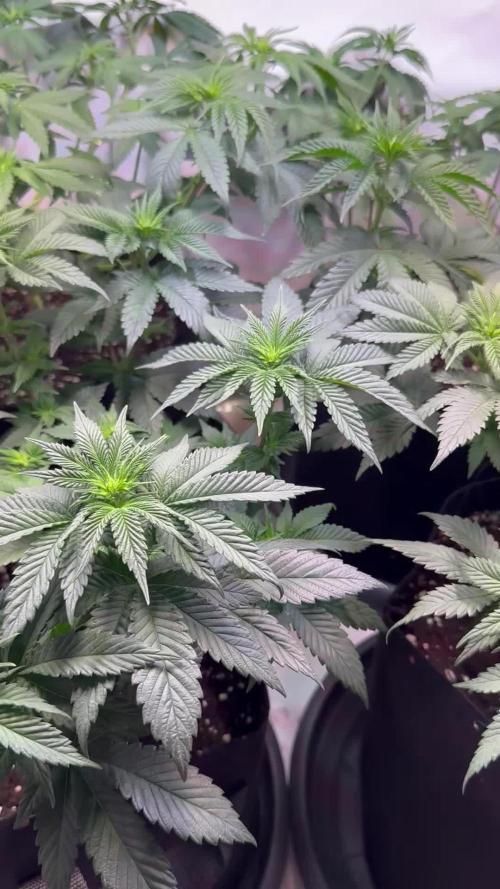
really nice first week of flowering:) they show me some signs of overfertilization, so I don‘t add anything at the moment, even though I should add some bactrex and orgatrex now:)
Did some more LST and defoliated them quite a bit. This time I try to go a lot more aggressiv concerning defoliation:). I managed to get the four plants fairly even in height, next week I‘ll install the net and let them grow in peace after that:)
All looking very promising so far