


Likes
Comments
Share


Likes
34
Share


@iLoveGoodWeed
Follow
Seed one receive finalpart at the end of week and will continue till end of next week and then flush time.
Seed two buds getting bigger but it's not yet ready for final part.

Likes
14
Share

@all_about_420
Follow
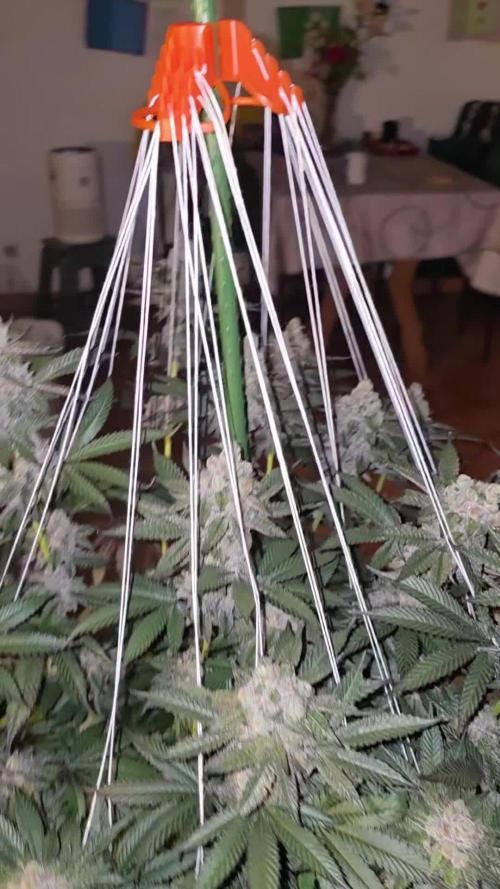
Der Tag der Ernte ist offiziell gekommen, und die Blue Lobster von Cipher Genetics präsentiert sich zum krönenden Abschluss in ihrer absoluten Pracht. Die harzdurchtränkten, kompakten Blütencluster verabschieden sich mit einem atemberaubenden Farbspiel aus tiefen Blautönen und dunklem Violett, das unter der dichten, weißen Kristallschicht regelrecht leuchtet.
Neben der optischen Dominanz ist es vor allem das Terpenprofil, das den Raum komplett einnimmt: Beim finalen Schnitt verströmt die Pflanze den weltbekannten, unverwechselbaren Blue-Lobster-Geruch. Ein intensiv süßes, fast schon künstliches Blaubeeraroma vermischt sich hier perfekt mit einer schweren, gasartigen Diesel-Note. Durch die Genetik der Kreuzung schlägt zudem die Blueberry-Banana-Linie voll durch, was dem Ganzen eine cremige, reife Bananennote und einen dezenten Unterton von spritziger Traube verleiht. Diese extrem klebrige und geruchsintensive Kombination macht sofort klar, warum diese Genetik einen solchen Hype genießt. Die Struktur ist steinhart, die Qualität makellos – ein absolut erfolgreicher Cut, der nun perfekt vorbereitet in die Trocknung geht.

Likes
47
Share


@Ultraviolet
Follow
What's in the soil? What's not in the soil would be an easier question to answer. 16-18 DLI @ the minute. +++ as she grows.
Probably not recommended, but to get to where it needs to be, I need to start now.
Vegetative @1400ppm 0.8–1.2 kPa 80–86°F (26.7–30°C) 65–75%, LST Day 10, Fim'd Day 11
CEC (Cation Exchange Capacity):
This is a measure of a soil's ability to hold and exchange positively charged nutrients, like calcium, magnesium, and potassium. Soils with high CEC (more clay and organic matter) have more negative charges that attract and hold these essential nutrients, preventing them from leaching away.
Biochar is highly efficient at increasing cation exchange capacity (CEC) compared to many other amendments. Biochar's high CEC potential stems from its negatively charged functional groups, and studies show it can increase CEC by over 90%. Amendments like compost also increase CEC but are often more prone to rapid biodegradation, which can make biochar's effect more long-lasting. biochar acts as a long-lasting Cation Exchange Capacity (CEC) enhancer because its porous, carbon-rich structure provides sites for nutrients to bind to, effectively improving nutrient retention in soil without relying on the short-term benefits of fresh organic matter like compost or manure. Biochar's stability means these benefits last much longer than those from traditional organic amendments, making it a sustainable way to improve soil fertility, water retention, and structure over time. Needs to be charged first, similar to Coco, or it will immobilize cations, but at a much higher ratio.
a high cation exchange capacity (CEC) results in a high buffer protection, meaning the soil can better resist changes in pH and nutrient availability. This is because a high CEC soil has more negatively charged sites to hold onto essential positively charged nutrients, like calcium and magnesium, and to buffer against acid ions, such as hydrogen.
EC (Electrical Conductivity):
This measures the amount of soluble salts in the soil. High EC levels indicate a high concentration of dissolved salts and can be a sign of potential salinity issues that can harm plants.
The stored cations associated with a medium's cation exchange capacity (CEC) do not directly contribute to a real-time electrical conductivity (EC) reading. A real-time EC measurement reflects only the concentration of free, dissolved salt ions in the water solution within the medium.
98% of a plants nutrients comes directly from the water solution.
2% come directly from soil particles.
CEC is a mediums storage capacity for cations. These stored cations do not contribute to a mediums EC directly.
Electrical Conductivity (EC) does not measure salt ions adsorbed (stored) onto a Cation Exchange Capacity (CEC) site, as EC measures the conductivity of ions in solution within a soil or water sample, not those held on soil particles.
A medium releases stored cations to water by ion exchange, where a new, more desirable ion from the water solution temporarily displaces the stored cation from the medium's surface, a process also seen in plants absorbing nutrients via mass flow. For example, in water softeners, sodium ions are released from resin beads to bond with the medium's surface, displacing calcium and magnesium ions which then enter the water. This same principle applies when plants take up nutrients from the soil solution: the cations are released from the soil particles into the water in response to a concentration equilibrium, and then moved to the root surface via mass flow.
An example of ion exchange within the context of Cation Exchange Capacity (CEC) is a soil particle with a negative charge attracting and holding positively charged nutrient ions, like potassium (K+) or calcium (Ca2+), and then exchanging them for other positive ions present in the soil solution. For instance, a negatively charged clay particle in soil can hold a K+ ion and later release it to a plant's roots when a different cation, such as calcium (Ca2+), is abundant and replaces the potassium. This process of holding and swapping positively charged ions is fundamental to soil fertility, as it provides plants with essential nutrients.
Negative charges on soil particles: Soil particles, particularly clay and organic matter, have negatively charged surfaces due to their chemical structure.
Attraction of cations: These negative charges attract and hold positively charged ions, or cations, such as:
Potassium (K+)
Calcium (Ca2+)
Magnesium (Mg2+)
Sodium (Na+)
Ammonium (NH4+)
Plant roots excrete hydrogen ions (H+) through the action of proton pumps embedded in the root cell membranes, which use ATP (energy) to actively transport H+ ions from inside the root cell into the surrounding soil. This process lowers the pH of the soil, which helps to make certain mineral nutrients, such as iron, more available for uptake by the plant.
Mechanism of H+ Excretion
Proton Pumps: Root cells contain specialized proteins called proton pumps (H+-ATPases) in their cell membranes.
Active Transport: These proton pumps use energy from ATP to actively move H+ ions from the cytoplasm of the root cell into the soil, against their concentration gradient.
Role in pH Regulation: This active excretion of H+ is a major way plants regulate their internal cytoplasmic pH.
Nutrient Availability: The resulting decrease in soil pH makes certain essential mineral nutrients, like iron, more soluble and available for the root cells to absorb.
Ion Exchange: The H+ ions also displace positively charged mineral cations from the soil particles, making them available for uptake.
Iron Uptake: In response to iron deficiency stress, plants enhance H+ excretion and reductant release to lower the pH and convert Fe3+ to the more available form Fe2+. The altered pH can influence the activity and composition of beneficial microbes in the soil. The H+ gradient created by the proton pumps can also be used for other vital cell functions, such as ATP synthesis and the transport of other solutes. The hydrogen ions (H+) excreted during photosynthesis come from the splitting of water molecules. This splitting, called photolysis, occurs in Photosystem II to replace the electrons used in the light-dependent reactions. The released hydrogen ions are then pumped into the thylakoid lumen, creating a proton gradient that drives ATP synthesis.
Plants release hydrogen ions (H+) from their roots into the soil, a process that occurs in conjunction with nutrient uptake and photosynthesis. These H+ ions compete with mineral cations for the negatively charged sites on soil particles, a phenomenon known as cation exchange. By displacing beneficial mineral cations, the excreted H+ ions make these nutrients available for the plant to absorb, which can also lower the soil pH and indirectly affect its Cation Exchange Capacity (CEC) by altering the pool of exchangeable cations in the soil solution.
Plants use proton (H+) exudation, driven by the H+-ATPase enzyme, to release H+ ions into the soil, creating a more acidic rhizosphere, which enhances nutrient availability and influences nutrient cycling processes. This acidification mobilizes insoluble nutrients like iron (Fe) by breaking them down, while also facilitating the activity of beneficial microbes involved in the nutrient cycle. Therefore, H+ exudation is a critical plant strategy for nutrient acquisition and management, allowing plants to improve their access to essential elements from the soil.
A lack of water splitting during photosynthesis can affect iron uptake because the resulting energy imbalance disrupts the plant's ability to produce ATP and NADPH, which are crucial for overall photosynthetic energy conversion and can trigger a deficiency in iron homeostasis pathways. While photosynthesis uses hydrogen ions produced from water splitting for the Calvin cycle, not to create a hydrogen gas deficiency, the overall process is sensitive to nutrient availability, and iron is essential for chloroplast function.
In photosynthesis, water is split to provide electrons to replace those lost in Photosystem II, which is triggered by light absorption. These electrons then travel along a transport chain to generate ATP (energy currency) and NADPH (reducing power). Carbon Fixation: The generated ATP and NADPH are then used to convert carbon dioxide into carbohydrates in the Calvin cycle. Impaired water splitting (via water in or out) breaks the chain reaction of photosynthesis. This leads to an imbalance in ATP and NADPH levels, which disrupts the Calvin cycle and overall energy production in the plant. Plants require a sufficient supply of essential mineral elements like iron for photosynthesis. Iron is vital for chlorophyll formation and plays a crucial role in electron transport within the chloroplasts. The complex relationship between nutrient status and photosynthesis is evident when iron deficiency can be reverted by depleting other micronutrients like manganese. This highlights how nutrient homeostasis influences photosynthetic function. A lack of adequate energy and reducing power from photosynthesis, which is directly linked to water splitting, can trigger complex adaptive responses in the plant's iron uptake and distribution systems.
Plants possess receptors called transceptors that can directly detect specific nutrient concentrations in the soil or within the plant's tissues. These receptors trigger signaling pathways, sometimes involving calcium influx or changes in protein complex activity, that then influence nutrient uptake by the roots. Plants use this information to make long-term adjustments, such as Increasing root biomass to explore more soil for nutrients. Modifying metabolic pathways to make better use of available resources. Adjusting the rate of nutrient transport into the roots. That's why I keep a high EC. Abundance resonates Abundance.
Likes
168
Share


@Still_Smoq
Follow
📆 Week 12, 22-28 July 2024
22-28 July - Observed and let the plant grow.
📑 Pablo continues to swell in bud growth. Trichome and resins continue to develop. She still has a few more weeks to go with no signs of slowing down yet.
🍶 24, 28 July nutrient solution changed
🍽️ 24, 28 July feeding schedule updated
💧 Using reverse osmosis water with EC/TDS at 0
🐉 Nutrient Solution EC 2.4 at 75 degree F
🔆 Light power at 80%, DLI 40 canopy coverage at 12hrs
😤 Using PYPABL, Air Pump, 400GPH
That is it for this week. Thanks for the look, read and stopping by.

Likes
3
Share

@420DeepGrow
Follow
📆 Semana 4
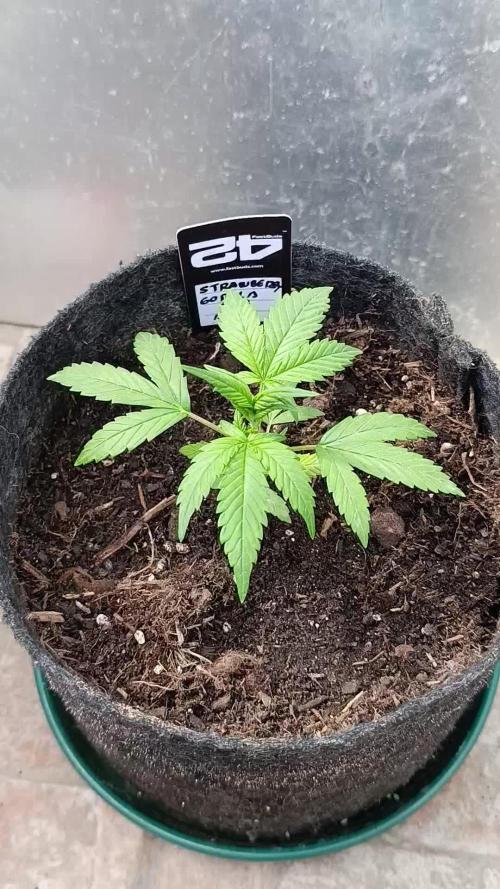
Continúa el tiempo inestable, con alternancia de nubes y claros, lo que mantiene un crecimiento controlado pero cada vez más sólido. Aun así, la planta responde con buen vigor cuando aparecen ventanas de sol, mostrando más actividad y desarrollo en los brotes.
Se aprecia mayor grosor de tallo y estructura más firme, señal de adaptación progresiva al entorno. El sistema radicular acompaña, permitiendo aumentar la nutrición sin generar estrés.
Se sube la EC para cubrir la mayor demanda, manteniendo siempre riegos medidos y buen equilibrio en el sustrato para evitar excesos en condiciones de alta humedad.
⚡ EC: 0.9
💧 pH: 6.2–6.4
🌡️ Agua: 18–20°C
🌫️ Humedad: 60–80%
☀️ Luz: variable, con intervalos de sol más aprovechables
🌡️ Temp ambiente: 17–24°C
🔥 Nota: Ajustar la nutrición cuando la planta lo pide, incluso en clima irregular, marca la diferencia en la evolución.
Seguimos creciendo fuerte 💪!
Likes
22
Share


@Brotanical
Follow
🌿 Update Woche 5: Die Sativa-Diva im Haus! 👑
Willkommen in der neuen Woche! Wir zählen heute Tag 1 der Woche 5 seit der Umstellung auf 12/12 (effektiv befinden wir uns also in der 4. Blütewoche) 💨.
Pheno-Watch: Eine Critical Runtz die aus der Reihe tanzt!
Obwohl alle Damen die gleiche Genetik von Sensi Seeds haben, zeigt die zweite Pflanze von links ein völlig anderes Gesicht. Während der Rest der Gang schön kompakt und „Indica-like“ bleibt, haben wir hier einen echten Sativa-Phänotyp am Start! 🚀
Was mir auffällt:
• Stretch-Alarm: Die Lady hat deutlich längere Internodien und will hoch hinaus. Sie ignoriert das SCROG-Netz fast schon provokant! 😂
• Blatt-Check: Die Finger sind viel schmaler und filigraner als bei ihren Schwestern. Echtes Sativa-Feeling! 🍃
• Diva-Vibes: Sie ist definitiv die Zickigste im Bunde. Gleiches Licht, gleicher Dünger – aber sie meckert schneller. Sativa-lastige Phenos sind eben oft ein bisschen feinfühliger, was den EC-Wert angeht. 💅✨
🛠️ Canopy Management & Feeding
Um das Blütendach eben zu halten, bin ich fleißig am machen 😄. Ich muss die Sativa-Braut immer wieder sanft unters Netz weben, damit sie den anderen nicht die Show (und das Licht) stiehlt. ✋🕸️
Beim Dünger fahre ich jetzt zweigleisig: Die kompakten Damen vertragen alles super, aber für unsere „Diva“ fahre ich die Dosis wohl einen Tick runter. Man muss sie einfach individuell behandeln! 💧
Parameter:
• 💡 Licht: beide LEDs laufen auf 75% ca 640mol
• 🌡️ Temp: 24-25°C
• 💧 RLF: 50-55%
Ich bin extrem gespannt, wie sich die Buds der Sativa-Lastigen im Vergleich zu den „Golfbällen“ der anderen entwickeln. Es bleibt ein Abenteuer! 🕵️♂️🔥

Likes
2
Share


@OS_Farmz
Follow
Well, that seems to the last vegetation week fot this beauties. Now the got quite huge and the genetic diffirence between two strains can be seen. Today will switch the lights to 12/12 and let's go;)


Likes
8
Share


@Kayotic
Follow
* Smells very strong now, hint of grape and intense gas scent
* Buds are starting to fatten up
* Watering twice a day
* Supposed to be over 100 degrees today and tomorrow

Likes
44
Share


@SooSan
Follow
12/12 + 28 jours
Mon 1er Schwazzing !!!
Photos et vidéos avant et après la defoliation
1️⃣
🏠 90x60x90
☀️ FC-E 4800 => puissance a 70%
🍁
1x Black Bomb / Philosopher Seed
2x Amnesia Lemon / PEV Seeds
1x Blueberry / PEV Seeds
1x Blueberry / 00 Seeds
1x Wappa / Paradise Seed
1x Dark Phoenix / Green House Seed
1x Quick Sherbet / Exotic Seeds
1x Mango Cream / Exotic Seeds
1x Banana Frosting / Sensi Seed
1x Hindu Kush / Sensi Seed
4x Fast Mix / Sweet Seed
📎 https://growdiaries.com/diaries/122084-grow-journal-by-soosan
📎https://growdiaries.com/diaries/124052-grow-journal-by-soosan
2️⃣
🏠 30x60x50
☀️TS1000 => puissance a 80%
🍁 4x Quick Sherbet - Exotic Seed
📎 https://growdiaries.com/diaries/122080-grow-journal-by-soosan
Sponsorisé par Mars Hydro


Likes
14
Share


@LokalGrenz
Follow
Had some humidity issues been watering with spring water until I get something to filter the tap water
Jan.8th amnesia haze 1 got bit taller so I did some more LST

Likes
15
Share


@NokEternal
Follow
Entering the 9th week things are going Splendidly, I had to adjust the lights up a bit as NLA#1, Suffered a little bit of what looks to be Light Burn, Other than that, The Girls are filling out nicely, and the aroma is kicking in good. I also decided too go ahead and start using Fox Farm Bembe, which to my understanding is a Molasses backed with Microbes for the Root Zone, That and I've Heard it's a natural sweetener as well. Thanks everyone thus far for the views and likes, One Love...

Likes
85
Share


@Teamdirtbag2
Follow
She is growing good. Defoleated A lot. She is starting to get frosty. No burn upped the newts to 680 ppm.
Hung the second light. So things should get interesting.

Likes
34
Share


@PapaNugs
Follow
This was a week. The drama at the beginning was one of the fans falling down onto my gorilla cookies. It snapped a branch off really bad but the girl hung onto it by threads. I duct taped her up and somehow took. 😎😢
I defoliated and did a little lst on a couple of the girls. Nothing major. Also increased the light to 80% now. I think I'll stay there until late flower when I switch to 12/12.
I also added blocks to a couple of the girls to make the canopy level. That put the light at 15" as recommended by Medic Grow.
Purple Lemonade is slowly making a comeback. I will say, even though the buds are small and the plant has struggled, the smell is already there. Which excites me. The lemonade smell is definitely there.
Dimmed to 80%
Here are the lights details:
Medic Grow Mini Sun-2 150W LED
Model: MN150-022
Spectrum mode: V1
Efficacy: 2.8 umol/J
Thanks for stopping by!
You can find the light on Grow Diaries:
https://growdiaries.com/grow-lights/medic-grow/mini-sun-2-150-watts
You can find the light on Medic Grow's website:
https://medicgrow.com/
Likes
26
Share


@Bread_n_Buds
Follow
It was a wonderful journey, I really had the honor of doing this girl many times, this time even close to the Monster Zkittlez with which they generated the Runtz who was also in the grow. Super modern family situation, I wanted to try to figure out which one I liked best, and I still haven't been able to. at least I'm still tasting Runtz's first flowers and it's heavenly but the freshly picked Gelato and the upcoming Zkittlez are scary just to see them. Super resin, it really looks fake, I also have some macro photos that will make you cry. The resin is everywhere the trichomes are even in the largest leaves the scent is of the garden of eden. wow. Show. Really nice. It was freshly cleaned I want to try to do the resin the first time and then I have freshly cleaned and hung the whole girl upside down under the crop data next week when I clean and can give the detail. Gorgeous. Before being collected, she did two music therapy days, one of which in the dark with frequencies for plants and together we listened:
1 - Paolo Conte - "Gelato" al Limon
2 - Raekwon - Ice Cream to stay on the "Geato" theme and then all the M83 discography to be collected with the very famous Outro of Interstellar really seems to pass to a better life listening to that stuff. Top of the top

Likes
31
Share

@Growbody
Follow
Hallo und Herzlich willkommen zu meinem neuen Grow mit der Forbidden Runtz double XL Automatic von Grower's Choice. Diese schreiben: "Eine Kreuzung zwischen „Forbidden Fruit“ und „Runtz“. Eine Sorte von Growerschoice mit sehr hohem Terpengehalt. Die Aromen waren das Wichtigste bei der Auswahl und Kreuzung dieser Genetik". Sehr süss und fruchtig soll sie sein, ganz genau mein Fall.
Die URL findet ihr hier:
https://www.growerschoice.nl/de/feminisierte-selbstbluhende-hanfsamen/forbidden-runtz-xl-auto.html#additional
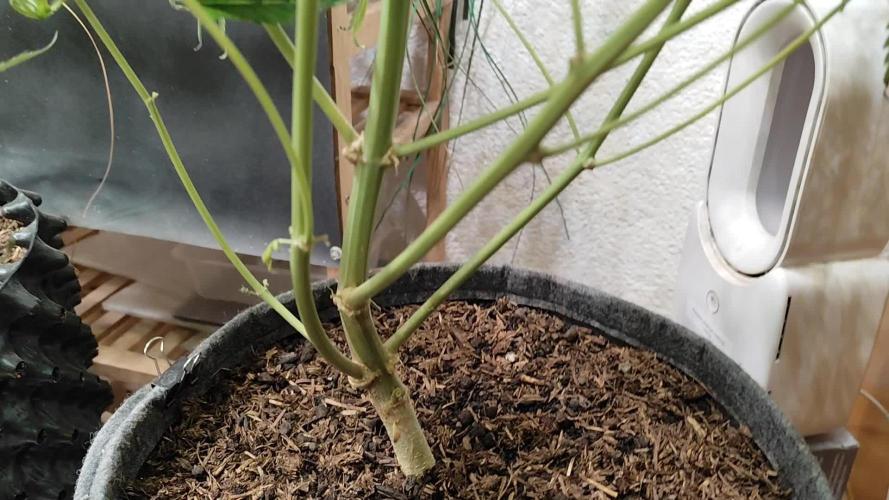
Tag 64: 1,0 Liter Wasser. Die Spitzen der Forbidden Runtz double XL Automatic von Grower's Choice sind voller Blüten.
Tag 66: 1,25 Liter Wasser. Ein neuer Mitbewohner ist eingezogen.
Tag 68: 1,0 Liter Wasser. Gegen die Thripse waren die Florfliegenlarven nicht so effektiv, deshalb gibt's jetzt noch Raubmilben.
Tag 70: 1,0 Liter Wasser.
Schön, dass du dir den Grow angesehen hast. Bleib neugierig und hab ein schönes Pfingstfest 👋😎

Likes
44
Share


@Chedderbob112
Follow
Waiting on a full plant hang dry so will wait at least two weeks maybe three hope ma vegging station holds up n can dae tge damage the now as av said guys this is definitely not the perfect set up am not on good terms with land lord so basically squatting here lol and growing and a got caught with one in this house the land lord doesn’t even know lol 😂


Likes
4
Share

@eldruida_lamota
Follow
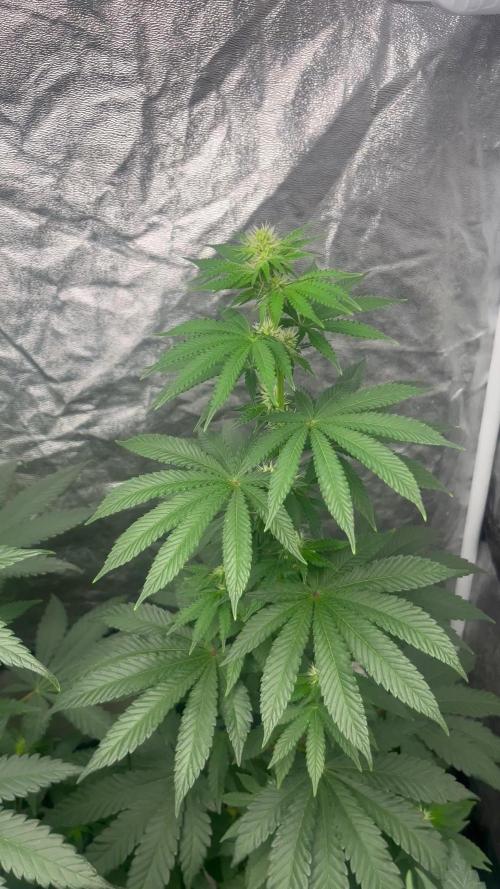
Que pasa familia, vamos con la tercera semana de floración de estas F.U.H. feminizadas de Seedstockers.
Vamos al lío, las plantas se trasplantaron a macetas de 7 litros.
El ph se controla en 6.5, la temperatura la tenemos entre 24/21 grados y la humedad ronda el 50%.
El ciclo de crecimiento puse 12h de luz, el foco está al 70% de potencia.
Me gustaría estar más encima este cultivo pero la salud me está impidiendo un poco estar 100% con el proyecto.
- os dejo por aquí un CÓDIGO: Eldruida
Descuento para la tienda de MARS HYDRO.
https://www.mars-hydro.com
Hasta aquí todo, Buenos humos 💨💨💨

Likes
3
Share


@Tashtegoo
Follow
9.7.
Smell changed from a mix of orange and maracuja to a whole multi vitamin juice kind of flavor over night.
Under the loupe I can spot the odd amberish trichome, maybe by mishandling , but most are milky or clear, still producing more fresh ones.
12.7.
A bunch of trichomes developing an amber hue.
Also the leaves are turning yellow now.
Harvest Window is open now, wanna see some more amber, but not too much. Mainly hoping for thicker buds.

