


Likes
Comments
Share


@deFharo
Follow
Bienvenidos cultivadores de marihuana clandestinos y también a los que tienen la fortuna de no serlo!🖐️👨🌾
Bien, bien, esta cepa va muy bien, siete semanas de vida y uno desde el paso a floración, buen consumo de agua y compactación, gran fortaleza en tallo y ramas, todas las cepas sativas que cultivo esta temporada me parecen que crecen lento, pero queda mucho por delante.🤸♂️🕺
Para combatir el gran aumento de la humedad relativa y la aparición de hongos, en el periodo de oscuridad estoy reuniendo los once cultivos actuales en una habitación con un des-humificador, manteniendo una humedad relativa durante ese periodo, alrededor del 55-60%. Mañana voy a hacer una aplicación foliar con azufre soluble para las plantas jóvenes, y para otras dos que tengo comenzando la floración voy a aplicar cola de caballo foliar, para prevenir oídio con ambos productos.
También, esta semana de días muy nublados, mantengo todas las plantas con 12h de luz interior, si vuelven días soleados, volveré a sacar mis plantas un par de horas a tomar, la gratuita e inimitable luz de sol.
• DATOS:
👨⚖️🤷♀️ Cultivo clandestino de marihuana en el norte de España
🌼 Maceta air-pot de 6l.
🌍 Sustrato personalizado con minerales y etc... ver la composición en la cuarta semana de este diario.
💡 Luces ViparSpectra P1000 al 60% de potencia a una distancia media de 15cm.
🌞💡 Horario mixto: 10h en interior y 10h en exterior.
🏠 Carpa de cultivo compartida con otras 4 plantas sativa: 60x60x140cm.
🥗 Nutrición soluble 3M, hecha en casa con Materia orgánica, Minerales y Microbiología.
=========================
• CON TU PERMISO, ME REBELO... 💃👨🌾
En el jardín mojado por la lluvia
Sin Gurú, sin Método, sin Maestro
Solo tú y yo, la naturaleza y el espíritu santo
Sin Gurú, sin Método, sin Maestro
Séptima semana desde que comencé la nueva temporada de cultivos, después de un breve descanso, una semana donde me cuestiono, una vez más, el sentido de estos diarios semanales en GD...
Después de más de dos años publicando mis cultivos orgánicos, aprendiendo, compartiendo, incansable, conocimiento, fórmulas y técnicas, escribiendo desde la emoción y la euforia del eterno aprendiz, sin apología, intentando al tiempo, amenizar con mis anti héroes y memes, perdedores que han tenido la oportunidad de expresarse con libertad, tal vez, porque yo soy uno de ellos, o todos! 👨🚀... todo bien! ha sido divertido y me ha permitido estructurar mejor mi experiencia... pero estoy cansado!!
La deriva que observo en GD no me gusta, el esfuerzo gozado antes, se ha convertido poco a poco, para mi, en vano y fútil, yo he buscado el conocimiento y compartirlo... ¿Hay alguien ahí?, he mantenido la independencia frente la industria del fertilizante soluble, orgánico o de síntesis química, y sus tablas predeterminadas de nutrición, me he resistido a algunos patrocinios... porque, algunos, piden más de lo que dan!😯 y ahora me encuentro como Simón en el desierto, pero, aun así, prefiero mantener mis diarios de cultivo limpios y libres de polvo y paja... ser o tener!!
Hay una tendencia, o mejor, carrera por los "me gusta", en la que yo también he participado, que mayormente está relacionado con los patrocinios, y también con aquellos, que a falta de otras cosas, quieren ganarse el cielo en GD... ¿Cuántos gurús habrá el mes que viene?... y el próximo? Habitualmente, recibo "me gusta" de desconocidos, a viejos comentarios de aquí y de allá, también mensajes amables en mis diarios de cultivo, pero serializados la mayoría, obviando cualquier contexto... todos a la espera de reciprocidad, y así me he comportado hasta ahora con este asunto, pero observo que esto lleva a una pérdida de autenticidad y hasta una perversión del sistema, porque creo que el interés ya no pasa por los diarios de cultivo. Yo por mi parte, no voy a devolver ningún "me gusta" descontextualizado o sistematizado, sea en mis diarios o fuera de ellos, agradezco y animo la comunicación entre cultivadores, y yo estoy siempre abierto, con entusiasmo, a compartir mi experiencia con quien lo desee.
En cuanto a mis diarios de cultivo, voy a ser mas críptico, a ver si consigo rescatar algo de tiempo y energía para hacer otras cosas y acabar los diarios de cultivo en curso.
Esto es todo por hoy...
SALUD CULTIVADORES!! 🖐️👨🌾🌞
================================= 🙄☮️👇🙏👌🤛👍👉👉👉❤️💜❤️👈👈👈🤜👌🙏👇☮️🤩🖐️🏻 =================================

Likes
19
Share


@proud_to_grow_loud
Follow
I'm finally ending this strain and for a minute I had posted the last 2 weeks as a different name... I'm an idiot. From now on, its all going to be different strains so I won't need to keep too much track on what I'm growing. I have several plants right now and will be doing more videos on my youtube channel. PROUD_TO_GROW_LOUD Bros pro grow show. YouTube and Instagram have way more than here. Check it out!


Likes
14
Share


@Dieselnutz
Follow
Day 74 of flower, all the colas are beginning to topple over due to how dense n chunky they are.the sample nug takin at 9 weeks was excellent super gassy skunky LOUD! Pretty sure im gonna take them within the next few days.
Likes
43
Share


@SleepyWillow
Follow
Looks really good pushing her to the max. Still a few white hairs! Probably the end of this week I'll chop her.
7/18 put her in the closet all night for her dark cycle.
7/19 I cut her down this morning in her dark period. Hung her in my dark closet.
7/23 she is still no where near dry. This will be my slowest dry yet! Trimmed half of her up today. She smells incredible!! So sticky!! I'll take her weight when she is ready for jars.

Likes
12
Share


@CanadianFillmore
Follow
Week 8 begins for LSD and Green Crack. These ladies are getting close to the end, there was a lot of yellowing leaves on each plant, so they were removed. Not much else to say.
Thanks for stopping by growfessors 👽🌳💚

Likes
12
Share


@Bleko
Follow
She seems to be a little finicky to low humidity and seems to be a nute whore. Her clone I took 3 or so weeks ago was exibiting same characteristics as this one with low humidity. In living soil but also use Fish Shit and HPK. She'll take as much as I want to give here while the others in the tent want me to back off a bit except Pink Kush she's a nute whore too. Overall happy with her, understandable for a "boutique" strain. Also decided to double down on lighting, running 2 250 true watt quantum boards in my 2x4. Currently turned up on both to 75%. Plan on cranking to full 500w last few weeks.

Likes
8
Share


@Elguacho420
Follow
Buenas a tod@s... Bueno otra semanita más para las niñas... Las dark devil... De momento va todo bien, todo en orden, las eh pasado a la maceta de 7 lt para q ya estén ahí, un buen sustrato y un poquitito de nutrientes para las raíces... A esta altura no podemos hacer mas q darles cariño y dedicación... De momento esto, luego más y mejor, a seguir trabajando duro... 💪🏻💪🏻 Buenos humos para tod@s... 😎⚕️💪🏻💪🏻
🇦🇷🤝🏻🇪🇦

Likes
14
Share


@JamieKnolliver
Follow
Endlich bereit für Blüte, stelle das Licht auf 12/12 Zyklus und lasse die Lampe nun mit voller Stärke auf 500watt laufen.
Habe einen Mangel festgestellt, der wahrscheinlich auf das fehlen von CalMag zurück zuführen ist.
Außerdem ist es Zeit die Pflanze großzügig zu entlauben.
Processing
Likes
28
Share


@Bud_E_grows
Follow
Slowly starting out, dialed in temp and humidity. Was jumping from 68-82 degrees Fahrenheit
And humidity from 38%-52%
Only watering with cal mag and occasional misting.


Likes
67
Share


@GanjaReaper
Follow
Welcome back everyone,
As you can see are almost all seedlings growing. Some where still in the soil.
Might happend when giving water(seedlings can turn or get deeper), checked it out and they are alive and well.
All pictures are from day 4.
The humidifier had been added, so I had to adjust the room.
I spotted a corner of the room that gets dryer faster. I adjust the fan for now and see what happens.
Corners are always hard to get perfect. Sometimes the light, air, watering doesn't come there properly.
Seedlings don't need much nutrients, neighter do autoflowers. with normal soil I would recommend to only give water for 1-2 weeks, since it holds nutrients in it as well.
But since I'm using Cocos for this grow, I might have to add some basic nutrients in the upcomming week.
For this week I gave/give only water turns and Startbooster/rhyzotonic turns.
Update day 5:
- Lowerd the lights to avoid stretching, they are now at 75cm distance from lamp to pots.
I want them at 40-50 cm, but I don't want to rush it.
- Added another layer of cocos to avoid the soil from drying up therefore the roots from dying.
This will happen because of lowering the lamps down, the soil will get exposed more to heat.
As you can see, the humidifier is doing his thing haha. Pictures and videos where taken without the lights + fans on.
because of that, it will look like this. Still fun thought.
Arround 7 seeds didn't reach the surface yet, lets hope they make there way up soon.
Enjoy!
Likes
4
Share


@aliengrowETK
Follow
Poderia ter saído melhor mais foi muito boa a experiência !! Valeu✌️🏼👽600

Likes
37
Share


@Master_weeda
Follow
Jour70 arrosage avec 2 litres d'eau ph6. 3
Jour72 arrosage avec 2 litres d'eau ph6.3
Jour75 arrosage avec 1 litre d'eau ph6.3

Processing
Likes
1
Share


@regionallystoned420
Follow
Week 5 purple showing , 2 slight differences in the structures on each plant . Had both these phenotypes before
Likes
153
Share


@DogDoctorOfficial
Follow
So i both some Autopots and decided to give them a try with autoflowers, this will be my second time ever growing autos and i decided to go with 4 different ones from 4 different seed banks.
For now i have 3 seeds that pop out and one that didn't so i pop another from the same and again, have a third one as we speak popping , lets hope this time she does other way that seedbank becomes a no go for me.
For food i will be giving them Aptus Holland with for me is the my recipe for a way easier grow knowing i dont have to worry on that department . I will be explaining me feedings and how i do them as i post and evolve along time 💚🙏 so lets have some fun and try out this Auto everything world lol
Thank you all for reading and checking out my diaries, im humbled by it all, much love to you all 💚💚💚🙏🙏🙏💚💚💚🙏
Thank you APTUSHOLLAND for having faith in my love for growing , lets make magic together 🙏🙏🙏
Genetics - - Zamnezia Seeds
https://www.zamnesia.com/
- - Advanced seeds https://advancedseeds.com/web/
- ?- buddah Seeds
- - Fast Buds
https://2fast4buds.com/
Grow tent - 4x4
Ligth - LUMATEK ZEUS 465 COMPACT PRO
Food - HAPTUS HOLLAND
Filter - vanguard hydroponics Falcon Filters
Extraction - vanguard hydroponics 560 m3h
control - Trolmaster
All i grow is medicine for myself, for me and for my best friend with is me 😆 nothing to sell, so don’t even ask 😅💚💚💚
All info and full product details can be find in can find @
https://aptus-holland.com/
https://autopot.co.uk/
https://lumatek-lighting.com/
#aptus #aptusplantteck #aptusgang #aptusfamily #aptustrueplantscience #inbalancewithnature #trueplantscience #growerslove
With true love comes happiness 💚🙏 Always believe in your self and always do things expecting nothing and with an open heart , be a giver and the universe will give back to you in ways you could not even imagine so 💚💚💚
More info and updates @
https://growdiaries.com/grower/dogdoctor
https://instagram.com/dogdoctorofficial
https://youtube.com/channel/UCR7ta4DKLFMg2xxTMr2cpIg
💚💚💚Growers love to you all 💚💚💚


Likes
49
Share


@masterofsmeagol
Follow
8/1 Took another video but didn't upload either videos when I was in town. I'll have to upload later. I have a lot going on and I need to consult my diary more often. The Temps dramatically changed. I watered yesterday just a few that were light but then it poured all night. This morning things looked SUBSTANTIALLY better. I think as long as I can get some sunlight the next few days things will be alright. That streak of weather in the 100s really did a number on me and my plants. Everytime I go they seem to be looking better so I hope that they bounce back and I don't lose anything after all this work. Plants seem "strong" though. They appear very healthy. This just seems like a mistake I made that was substantially worsened by severe thunder storms we weren't supposed to get. If they don't come back before rain I may move the plants that haven't recovered yet inside the barn for the night. It really depends. I want them to dry out. I'm thinking of going and putting a fan in the cage on the smart pots. I just need to keep an eye on them.
UPDATE: I was worriedly watching my plants from the cams and got a message from my father saying my plants were "REALLY DROOPY." I got there and noticed they were WAY worse then earlier and it was sunny and 70's. I got my dude on the phone and sent him several pictures. Luckily I had a second opinion also from my father. A 3cu ft bag of 707 is 22 gallons. These pots were light like that. They just have a seven foot plant in them lol. I'm so happy. I was planning on bringing them Inside tonight in case of ANY rain, luckily I was able to ascertain THE REAL problem, consult my diary and askother growers. Things are looking good. I'm so happy I'm not overwatered.
8/2 Thank the Lord! And my father for his constant vigilance and my commercial buddy for always being there for me. I went over this morning and everything is back up. Plants definitely got stressed though. I think I was OVER and UNDER watering during those days where it was 100 degrees. It'd 68 today. I say this because as soon as I watered the plants they started picking right back up. Luckily I had a dry bag of 707 to pick up and compare with my 20 gallon grow bags and had my father check the weight as well. He's a forester and told me the weight was about tge same. I gave the big blue cheese in the back closer to 2 gallons until I saw some water coming out the bottom. The reason I think I may have overwatered is that the water evaporated as i had watered during the day or at night but not the 10% that they needed. I didn't QUITEgive them all their 10% last time more like I split the difference and did a gallon amd half. Some did get two though. I noticed some light yellowing going up one of the plants that I've watered the most. These plants are transitioning fast to flower. I think I've got the watering schedule down better and that's "don't water them on a schedule". I'll have to individually take note of the plants. Also on that plant and a few others I see minor nute deficiencies so as soon as I can feed I'm going too. I'm going to show my buddy all my info and ask his advice before i take the next step though. I can't believe they made it through this. Talk about anxiety. Wow.
UPDATE: Talked to my commercial buddy. He advised to pick off any of the dead leaves, (which I mostly already have there weren't many) and to wait until next water to feed. He broke it all down in a way i could understand. Then he broke the feeding down further for me so I now know where to start. He did say he thinks my only problem this year will be, "finding a place to store it" lol. I thought he was joking but he went out back and brought out five gallon buckets with screw top lids lol. This back and forth dialogue (with a professional) is seriously lowering my anxiety and giving me confidence that im doing the right thing. Hes never led my wrong and hes always been there. So has my dad. He said to take the old man out for coffee because he saved my ass! I opted for the bottle of whiskey instead. I'll be checking them later. I'm waiting to feed until next watering and I'm waiting to apply BT. I don't want to do anything to a plant that has been that stressed. I'm giving them a few days to chill. Then the twenties will get a quart of grow big, big bloom and calmag and I'll convert that measure to the same amount for the 30's, and 50's. I'm not sure EXACTLY how big that tote is but I think it's closet to 30 than to 40. So I've got a solid plan for the week. I think what I'll be looking to do next is get my supports up. The wind has been crazy but these plants (even when stressed) seemed super strong! Still no fungal stuff knock on wood.
UPDATE: Had to take the car to the mechanic and snag my wheeler to make it home. I sefoliated quite a few bog yellow fan leaves and some smaller leaves down low. Plants went through some stress thats for sure. I HAD to leave my phone with the wife as she had a telehealth appointment so I couldn't take pictures. I wish I could've because things are looking great. I can't wait until things dry out a bit and I can feed! I'm STILL in awe of how my plants look RIGHT NOW and how the looked yesterday. Another buddy said If I didn't see it (and I didnt know you) I wouldn't have believed it was even the same garden! I'll check AGAIN later if my car is ready. I'm anxious to feed and get my supports up. Plants are STRONG though.
8/3 Plants looked great this morning. I did notice what looked like nute deficiencies on the plants I've watered most. After speaking with a few local growers I decided to water. I watered everything a gallon. The containers got more. The 10 got less. Then i mixed up a feeding solution of 1 tsp grow big 2 big bloom and .5 calmag and fed the 20s approx 1.5 pints. A little less for the 10 and a little more for the bigger pots. I'm going to go back over and if I see no negative effects from earlier I'll use the rest of the solution. I'm hoping this was the right decision. It hasn't been enough time but the bags were light. Not SUPER light but last time I waited it didn't work out well for me. Two local growers have told me theyve been watering daily and they have plants in raised beds and right in the ground. I want my watering to be in the morning anyway. Hopefully this works out. I'll update.
UPDATE: Went back over and everything was standing up nice. They loved that water and the small dose of nures hasn't burned them so ill be able to use more next time. I used a Gatorade bottle thats 1.25 pints amd went from there. A total of two gallons was used on the garden. Things look amazing. Things are changing on the daily. I'm losing some leaves now. Well they aren't dropping off but I'm plucking them before they yet that far. I need to water in larger volumes I think. Plants are drying out too quick. Others are saying they are watering much more often as well. It really hasn't been raining and these plants are huge. I have lush green leaves but this transition and the added watering I think has leeched a lot of the nutrients from the soil. Since I have the fox farm that's what I'll be using. I still have a couple leaves that are destroyed by a fourkined plant bug. It's very identifiable so theres another I need to find. Also seeing chunks missing from leaves. I need to up my ipm game. I don't want to do more than one thing at a time though so I know what happened if anything goes wrong. Since i did the nutes today the spraying of BT or captain Jack's I'd going to have to wait. Despite losing these old fan leaves my plants are dense. Defoliating really helped with airflow. I also noticed some chlorosis on a few leaves. That's why I'm going to start doing the 10% minimum. I'm waiting until they are real dry then I'll give everyone (but big blue) their 10%. I got run off from big blue just from like a gallon amd a half today. I hope my 2 minute video uploaded. It says it dis but u bet it didn't. I'm trying again and I'm at 12%. Let's see if my patience lasts. Looks like it doesn't want to upload
8/4 Thunderstorms and heavy rain all night. It's supposed to rain steadily all day. Plants werent drooped or blown around looking or anything after this storm and I only have minimal supports up. I defoliated anything that needed it. Just a few yellow leaves on the bottom interior. More like nitrogen deficiency. I am watering to frequently though. Im noticing some chlorosis (minor) on old far leaves. Could just be that the soil is getting depleted but "if the brown surrounds your plant is drowned" and I noticed a few leaves like that. Just a couple bit i know what to look for. I hate to say it but i think ive almost got things dialed in for this grow. I will need to put up further supports. These are some STRONG plants. I shook them all off today. The seemed to love the nutes. Plants looked way better this morning than I was expecting. I need to up my watering volume to 10% everytime. I DID fine more pillar damage when defoliating and a four lined plant bug mark on the purple punch in the ten.
8/5 It's not raining right now but it Rained all day and night. Plants really seemed to likecthise nutes. I'll up it to a quart next feed. I defoliated what needed it. Found my FIRST totally yellow leaf of the season. Big old interior leaf i must've missed earlier. Smell has greatly increased. Seeing that these plants seem to have no ill effect from all this water I feel more confident about my ability to fully water them their 10%. Especially since they are massive plants. I have one daln near 8ft and it's damn near as wide. Real good airflow. I think this is gonna be my year. I certainly hope so. I need to get rid of that fourlined plant big but more importantly I need to deal with pillars proactively so next nice night I'm going to treat with bt. Super proud of myself so far.
8/6 Didn't rain much yesterday. In fact I stepped out my door and the sun was fully visible and bright while rain poured down around me. It wad a cool experience but the plants dodnt get much for water. I checked the weight this morning (heavy) and shook off the plants and did my normal morning inspection. I news to remove a pallet so I have more room. Plants are really trying to flower. Next week I'm gonna yet them with a stronger dose of nutes. Last year this was about the time I lost my crop. Knock on wood but this is the healthiest crop I've ever had. I MAY apply BT tonight. Haven't decided yet. I'll keep the diary updated.
UPDATE: Went over to check the plants that were WET and HEAVY this MORNING because of the windstorm. If dried the bags out completely. Everything but the 10 was drooping right over like before. Good thing I've got some pretty good intuition. I took two videos. I gave everything their 10% 2 gallons each and for each container plant. Plants were back up by the time I was done adding supports.
8/7 Sunny this morning. Plants looked good. Had to defoliate some dead leaves. I can't believe those grow bags dried out so fast yesterday! Its just the wind was so strong! Plants were right sideways! They got some syrong roots thats for sure. One of them (my canary) seemed light this morning! But we are getting an inch and a half of rain starting tonight into tomorrow so im not watering ANYTHING. I'm not sure what I'm going to do IF anything. I added to my supports. I COULD put EVERYTHING in the barn where we put heavy equipment. I'll probably at least bring a couple inside in case something horrible happens. Things arecreally doing good. Flowering up nice. Found a cicada on one yesterday. First time I've ever seen one. I'll update with what I decide to do.
UPDATE. My canary seems a little light and is losing lots more leaves im not sure if it's because of the transition to flower but I assume that has something to do with it. Plants still have MORE than enough leaves. Found a couple pillars and killed them. Took a video. I have one blueberry cheese that I hope doesn't have a fungal infection as it's losing more leaves. But it takes more water and is greener and fuller up top. I think I'm just worried because of last year. I've done what I can gor the storm so let's see what happens if I NOTICE it get too bad I can bring some indoors.

Likes
8
Share

@CheeRz
Follow
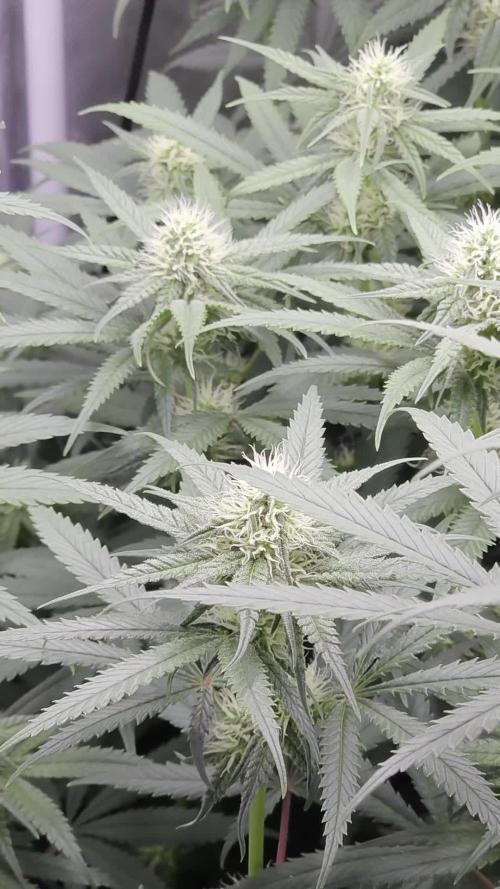
FLOWER WEEK 5: Big Bang | Divine Seeds 💥
🌱 FLOWERING PROGRESS
The Big Bang is hitting her absolute prime mid-bloom phase this week! 💥 The flower production has taken over completely, and the colas are swelling at a notable rate. The canopy is holding its uniform structure above the Scrog line, and the stacking is looking tight and intense. 📈
Trichome development has accelerated massively over the past few days, coating the main bud clusters and surrounding sugar leaves in a frosty layer of resin. The pistils are incredibly dense and long, forming thick, hairy white crowns on every single top. Overall plant vitality is outstanding as she continues to channel all her internal resources into maximizing bud volume and flower density. 🕸️✨
💧 NUTRIENT FEEDING & WATERING
I’ve dialed up the organic nutrition line to match her peak-flowering hunger, pushing the main sugars, bio-stimulators, and energy enzymes to maximum levels. ⚡
Current Feeding Schedule (per Liter):
Bio-Bloom: 3.0 ml/l
Bio-Heaven: 4.0 ml/l
Acti-Vera: 4.0 ml/l
Bio-Grow: 1.0 ml/l
Top-Max: 1.0 ml/l
Calmag: 1.0 ml/l
Parameters:
pH: 6.5
Relative Humidity (RH): 59.0% 💧
Temperature: 30.0 °C 🌡️
VPD: ~1.73 kPa
CO2: 675 ppm 💨
💭 GROWER'S NOTE
👀 Status Report: Things are heating up in the tent! With temperatures hitting 30°C and a matching 59% RH, the VPD has pushed up to around 1.73 kPa. This high-performance climate means the Big Bang is transpiring at full speed. By upgrading the diet to 3 ml/l Bio-Bloom and boosting both Bio-Heaven and Acti-Vera to 4 ml/l, I'm giving her the massive energy reserves she needs to process nutrients at this high transpiration rate. Luckily, this solid Divine Seeds phenotype handles the summer-like conditions like an absolute tank. The buds are noticeably packing on frost and thickness daily. Keeping the airflow high and pushing hard through peak bloom! 🚀🌱✨

Likes
11
Share


@TintoBrass
Follow
Hello guys, we are in week 5 and I decided to change the base fertilizers, because in the country where I am now, as it turned out, the quality of ADVANCED NUTRIENTS is poor,
Now my babies will eat
СANNA coco
on the 28th day I made a flash (I washed the plants well) and in a day I gave them the first watering with CANNA))
In appearance, the plant has become much larger and looks healthy, so the baby on the 30th day began to show stigmas
Looking forward to BLOOM 😈
Likes
12
Share


@Bread_n_Buds
Follow
And it starts like this. an official collaboration starts with the friends of Zamnesia, from today I will only grow, grow and flower Zamnesia Seeds plants and I really like it.
We are close to a flowering in the extreme heat and therefore we opted to start with 4 very fast F1s, they are not joking guys when they tell you that they are made to be more resistant, stable and fast they are not telling you something false. The girls are super fast, even those from other brands tried in the past are excellent and a sliver and this one from Zamnesia have all it takes to be the best autoflowering on the market.
The Runtz F1 was born at the speed of light, 17 hours in water, 24 on land and we were already born, both of us.
Oh yes, a lot of research is being done on autoflowering plants, you have all noticed monstrous improvements compared to Low Rider and subsequent derivatives.
Whoever works best wins and from what I have been able to see so far Zamnesia is working very well. I know, there is a group of sceptics, friends I'm here on purpose, give me a couple of months and we'll see.
Zamnesia is the best online shop in the situation, you can find everything from seeds, to mushroom kits, through vaporizers and a thousand other things https://www.zamnesia.io
Runtz F1 seeds specifically
https://www.zamnesia.com/10662-zamnesia-seeds-runtz-f1-automatic.html
Site Description
ZAMNESIA - RUNTZ F1 HYBRID AUTOMATIC: UNIFORMITY, RELIABILITY, AND GREAT FLAVOURS!
What can we say about Runtz that hasn't already been said? Well, trust us when we say you've never seen it quite like this before! From the team at Zamnesia comes Runtz F1 Automatic. Now, this isn't some Formula One car-related special edition, no. This strain takes everything you know and love about the original Runtz and offers a reliable and uniform growing experience that will impress everyone.
GROWING RUNTZ F1 HYBRID AUTOMATIC
Runtz F1 Hybrid Automatic is the lovechild of Gelato and Zkittlez; the result is a strain that's extremely vigorous and fast to flower (taking just 10 weeks from germination to harvest). While autoflowers generally make for a no-hassle growing option, F1 hybrid seeds take this ethos one step further. Runtz F1 Automatic showcases great uniformity, meaning all plants will have a remarkably similar appearance and output. These plants are also highly resistant to pests and disease, so if it's your first foray into the world of cannabis cultivation, you're in the right hands with Runtz F1 Automatic.
Reaching heights of 55–75cm, Runtz F1 Automatic can slot into the pokiest of grow spaces, both indoors and outdoors. But this small stature is not to the detriment of production. Once ready, growers will be treated to a return of around 500g/m² indoors and 100–150g/plant outdoors.
AROMAS, FLAVORS, AND EFFECTS OF RUNTZ F1 HYBRID AUTOMATIC
Another perk of F1 hybrid genetics is that these plants are teaming with terpenes and cannabinoids, making for a pungent and potent experience you're unlikely to see with other strains. When it comes to delivering massive flavors, Runtz F1 Hybrid Automatic certainly doesn't phone it in. Upon taking that first toke, users open themselves up to bold notes of creamy vanilla mixed with candied citrus fruit. The result is mouth-watering. With 25% THC to its name, Runtz F1 Automatic offers an uplifting, euphoric, and creative high that will suit all kinds of scenarios, whether social or solo.
Likes
43
Share


@TheCannaProphet
Follow
~ GG4 SHERBET FAST FLOWER by FastBuds ~
Well fam, here we go again with another epic strain from FastBuds Fast Flowering stable. After having such tremendous success growing their Gorilla Cookies Fast Flower outdoors last year, I've decided to run another of their fast flowering strains outdoors this year... GG4 Sherbet Fast Flower!
The best description of this awesome cultivar comes directly from my friends at FastBuds which is as follows:
"Bred from extremely potent and flavorful Gorilla Glue and Orange Sherbet genetics, GG4 Sherbet FF (Fast-Flowering) takes all the best traits to the next level, offering a high-yielding strain that can produce up to 600 g/m2 in a 7-week flowering time. This super resilient Indica-leaning hybrid thrives indoors and outdoors, and in all types of climates while producing mouth-watering sweet, fruity, spicy and earthy terps that translate into a delicious sugary hazelnut aroma. Expect an extremely relaxing and overall happy effect that’ll leave you with a huge smile from ear to ear. It’s the perfect strain for growers of all levels of experience seeking low-maintenance yet highly productive photoperiod varieties that deliver quality and quantity without extra effort.
GG4 Sherbet FF grows chunky buds with long dark orange hairs and spade-shaped calyxes that get encrusted with trichomes by harvest time, giving them a gorgeous silvery-white appearance. This medium-sized photoperiod can reach up to 200 cm in height and yields up to 650 g/m2 while developing that typical hybrid structure. GG4 Sherbet FF grows with a stocky, bushy appearance, developing one sturdy main cola and fat side branches that support huge yields without much effort. This super-fast variety produces distinctive light-green buds with a high bud-to-leaf ratio, making your trimming sessions a breeze. It’s a top-notch resin producer that doesn’t need much maintenance and will thrive in almost every climate, rewarding growers of all levels with extremely flavorful resin that makes for outstanding hash end extracts."
________________________________________________________________________________________________________________________________________________________________________________________________________________________________________________________________________________________________________________________
The Setup:
This is going to be an outdoor grow, but I have started the GG4 Sherbet Fast Flower indoors as our weather is still too cold to put her outside (nighttime temp's dipping regularly into the 30's℉).
The plan is simple... let her grow inside under a 19/5 light schedule until the nighttime temperatures stay above the mid 40's℉, at which point she'll be moved outside and transplanted into the soil which I have already setup and inoculated with beneficial microbes, and then let the fun begin!🤪💚
________________________________________________________________________________________________________________________________________________________________________________________________________________________________________________________________________________________________________________________
Weekly Updates:
5/16- The FastBuds GG4 Sherbet Fast Flower is going into Week Seven from seed now and is looking so much better with our weather steadily improving!
I started brewing a batch of Compost Tea today which should be ready in 24-36 hours, after which I'll give the GG4 Sherbet FF a treat!
5/18- Yesterday, I gave the GG4 Sherbet a healthy drink of the freshly brewed Compost Tea which will benefit the microbes in her soil greatly!
My Compost Tea recipe is as follows: In a doubled up mesh bag I put in 2 cups of wiggle worm castings, 1 cup of Alfalfa Meal, 1/2 cup of Dr. Earth 4-4-4 dry amendment w/beneficial mycorrhizae, 1 tbsp. Stash Blend, 1 tbsp. Plantonics Amino Bliss. Then in a 5g bucket filled with 68-74℉ non-chlorinated well water (which I do not adjust ph on, if it's good enough for me to drink... it's good enough for my plants) I add 4 tbsp. of unsulfured black strap molasses and 4 tbsp. of liquid Kelp Extract. I then aerate the water via a pump and large round air stone and hang the mesh bag so that it stays suspended above the bottom of the bucket and so the air bubbles can surround it. I then cover the bucket and leave it alone for 24-36 hrs after which there should be a generous layer of foam in the bucket which indicates that your tea is ready to serve!
5/20- I'm almost certain that slugs are the culprits of all of the leaf chewing that has occurred on the GG4 Sherbet FF. I only wish I had figured it out sooner but, on the bright side, this is a photoperiod and she has plenty of time to recover so she'll be just fine. Yesterday, once I figured out that I was facing a slug attack, I immediately deployed my favorite defense against slugs and other little soft bodied buggers and their larvae... Diatomaceous Earth. This stuff is death to fungus gnat larvae, along with other pest larvae and will ruin a slugs day quickly! If you look at diatomaceous earth under magnification, it resembles shards of glass and acts as the same on the soft bodies of pests either repelling, or killing them!
5/22- Our weather has dried out and warmed up so I'm watering daily with well water straight from the garden hose.
With seven weeks of growth now for the GG4 Sherbet Fast Flower, she just keeps looking better by the day and in a month you won't recognize her!
Thank you for checking out my diary, your positive comments and support make it all worthwhile! 💚Growers Love!💚😎🙏
Likes
7
Share


@HIAZ_urbanbudfarmer
Follow
Busy week getting the new setup going. All the girls are doing great
