Likes
Comments
Share
@Drtomb
Follow
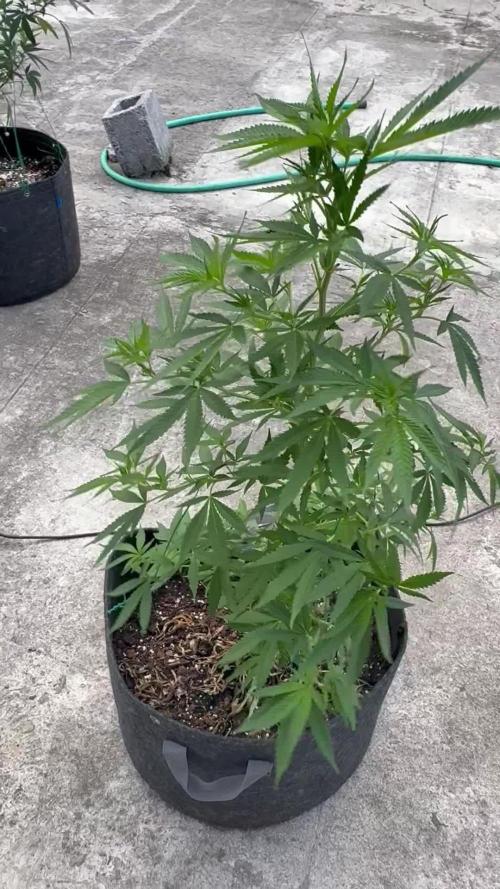
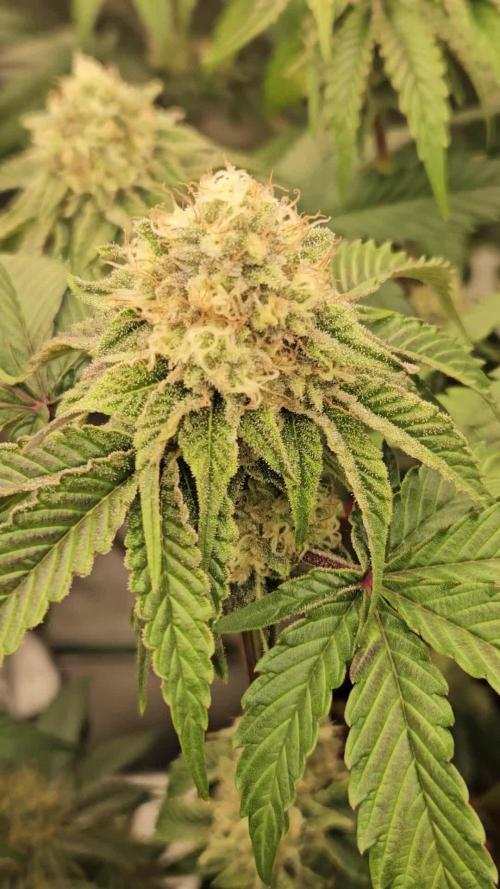
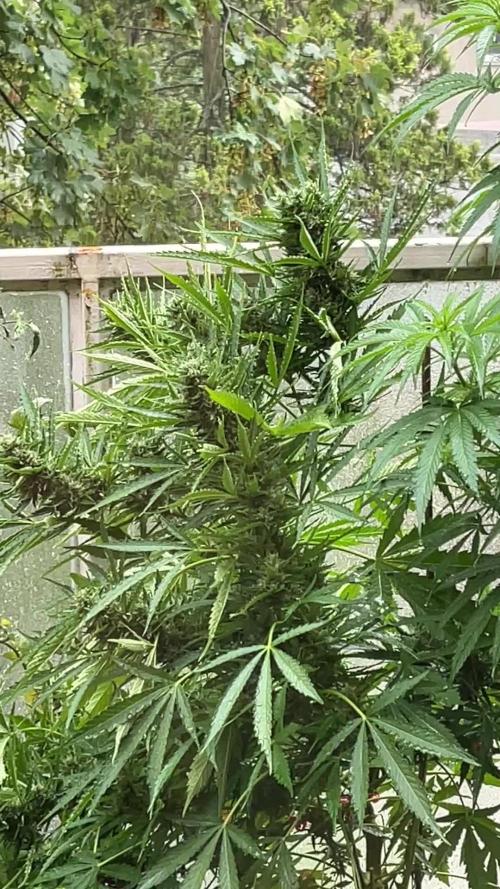
Well. I started a 3 week flush yesterday. Ill be changing the water weekly. Ive always been a 2 week kind of flusher. But after i tried a 3 week on suggestion from another grower... I won't be going back now. Which means we have 20 days left of growth and purification.
Likes
90
Share
Fucking chem og how resilient is she, for sure, she's a fighter, came back as determined as ever to pack it in some more, she didnt mind the dark, was a bit scared about the mold, so far no signs of it so let's all make a prayer for chem og, hope the taste is what i enjoy kinda fun flying blind ... but even a blind person would notice what an indica this is 😅 last week of smart proteins no nutrients added yet, just plain water and one point four bricks of shitting in my pants what a shake down my leg ! I'm smoking Dr. Grinspoon rn, and i've listened all i can to cypress hill's dr. green thumb and they say "I never grow at my home" but what they dont say is all about the rest of it lol abricots? peaches ? 🚀 dropped her down to 10/14 so she's got plenty of time for resin production now she's a stinker smells like citrus and indica, or more like indica citrus, does that make sense ? 👊
Likes
9
Share
Close up of pistil hairs And only 2 plants for space and what not Check out YouTube video SuperSmoker for more!
Likes
4
Share
More defoliation later this week, will update photos :) ... bud sites just barely starting to form, I absolutely love this strain, it's not like other Cali Kush I've tried, it hits like an indica, so much so, we use is as a night time herb
Likes
Comments
Share
Likes
170
Share
Bonjour à tous les padawans et les maîtres jedis Jour42 ma plante entre bien en floraison je pratique sur elle une defolliation pour permettre aux têtes de prendre la lumière La floraison des plantes de cannabis La plante de cannabis passe par différentes étapes de vie avant de parvenir à la récolte. Ces étapes sont : la germination, la pré-croissance, la croissance et la floraison. Pour les autofloraisons il n'est pas nécessaire d'avoir de changer le cycle de lumière elle entre en floraison automatiquement voilà d'où elle tient son nom "d'autofloraison" L'origine de l'auto-floraison vient de la sous-espèce "cannabis sativa ruderalis" , qui à l'origine produit de très faibles niveaux de THC. C'est en croisant cette variété de marijuana avec d'autres qui produisent des niveaux de THC plus élevés qu'à vu le jour ce magnifique compromis que sont les variétés auto-fleurissantes avec des taux de THC très satisfaisants. En parallèle, cela a permis d'améliorer la production de ces variétés, qui initialement étaient exceptionnellement basse. Pour des résultats optimaux, en culture Outdoor (extérieur), je recommande que la germination des graines de marijuanaAuto-flo se fasse entre avril et août. En culture Indoor(intérieur), la photopériode idéale que ce soit pour la croissance comme pour la floraison est de 20h de lumière. N'oubliez pas que ces graines ne sont pas tributaires de la photopériode pour passer en floraison. Il est préférable d'utiliser des pots d'une capacité de 10 à 20L dès le début, étant donné que leur cycle de vie est réduit, les auto-flo n'ent pas besoin de plus de volume pour se développer. Vu sa petite taille (et la discrétion) elle fait l'objet d'un bon choix pour la culture de cannabis sur balcons. La première variété de Lowryder auto-floraison a été créé à partir de cannabis indica sativa croisé avec des génétiques de cannabis sativa rudelaris par la banque de graines de marijuana "The Joint Doctor". Puis vinrent la White Dwarf de "Buddha Seeds", la Roadrunnerde "Dinafem", l' Auto Stoned d' "Autofem", la Speed Devil de "Sweet Seeds" , la Maxi Gom de "Grassomatic", la Flash, la Gnomo de Kannabiaet bien d'autres. Jour42 defolliation (video) Avant toute chose n'oublions pas de bien désinfecter ses outils et bien ce laver les mains. Quesque la defolliation ? LES CULTIVATEURS AMATEURS, PRENEZ GARDE, MAIS NE PRENEZ PAS PEUR La défoliation consiste à retirer les feuilles des plants de cannabis en intérieur afin d'accroître le rendementfinal. Le cultivateur amateur doit faire preuve de vigilance lorsqu'il commence à appliquer cette technique de taille. Malgré le débat sans fin entre ceux qui prônent cette technique et ceux qui la dénigre, il n'y aucune raison pour qu'un amateur ne s'y essaie pas afin de voir si ça lui convient ou non. COMMENT DÉFOLIER Que vous tailliez les feuilles ou les branches des plants de cannabis, il vaut mieux utiliser un sécateur stérile qui est confortable en main. Arracher des feuilles à la main manque de finesse et engendre souvent par accident, l'arrachement des couches d'une tige en plus de la feuille. L'objectif principal de la défoliation est de permettre une meilleure pénétration de la lumière et de promouvoir la production de plus grosses têtes. Les feuilles éventails qui font de l'ombre doivent être retirées. Tailler la tige principale et/ou les pousses secondaires n'est pas de la défoliation. La règle d'or lorsque vous donnez à vos plantes un rafraîchissement est de commencer avec les feuilles nourricières les plus grandes et les plus larges, en taillant du bas vers le haut. Il est important de retirer les feuilles stratégiquement et non pas au hasard. Pensez également qu'il vous faut limiter votre rafraîchissement à approximativement 10 à 20 % des feuilles totales de votre pied. Il est très facile de s'emporter durant la taille et de se retrouver avec des plantes chauves. Un excès de taille de feuilles empêchera la photosynthèse et paralysera vos plants. QUAND FAUT-IL DÉFOLIER Il est assez rare d'appliquer la défoliation comme seule technique pour obtenir un fort rendement. La taille des feuilles est généralement associée à d'autres méthodes de tailles et de palissage pour un meilleur rendement telles que le topping ou étêtage, le FIMming, le LST, le manifolding, le supercropping et le ScrOG. Les cultivateurs utilisant la méthode ScrOG auront besoin de retirer toutes les croissances inférieures ainsi que les feuilles et les tiges se trouvant sous le filet. Les plants de cannabis peuvent être défoliés dès lors qu'ils sont passés de la phase de plantule vers la phase de croissance végétative. Cependant, il est recommandé aux cultivateurs amateurs de laisser aux plantes 1 à 2 semaines de croissance végétative avant de s'attaquer à la défoliation de celles-ci. De plus, certaines variétés sont plus sensibles à la taille que d'autres et de ce fait, seront plus stressées par la taille des feuilles. Surveillez minutieusement le comportement de vos plants après la taille. Une période de convalescence de minimum 3 à 7 jours avant de recommencer la défoliation est fortement recommandée pour éviter trop de stress aux plants. Les cultivateurs peuvent également défolier pendant la phase de floraison, ce qui permettra à l'énergie de la plante d'être concentrée vers la production de têtes tout en limitant l'ombre et l'excès d'humidité. Néanmoins, il est important de ne pas défolier trop tard sous peine de simplement blesser ses plants inutilement. LES AVANTAGES DE LA DÉFOLIATION Évidemment, l'avantage numéro un de la défoliation, c'est l'augmentation du potentiel de rendement de cette technique de taille pour tous types de cannabis allant de la photopériode aux variétés autofloraison. Ce n'est pas un secret que les fleurs qui reçoivent plus de lumières deviennent plus grandes et larges que celles dissimulées dans l'ombre des feuilles. De plus, retirer les feuilles intérieures des plants touffus aide à prévenir toutes menaces de moisissure. Les plants très feuillus avec un feuillage intérieur dense produiront une quantité importante de têtes pop-corn. Dans le pire des cas, les branches de têtes et les têtes qui sont denses succomberont au pourrissement. Si vous observez des gouttes d'eau se former sur la surface des feuilles, il est grand temps de penser à faire de la défoliation. Libérer la zone inférieure et médiane des feuilles est un excellent moyen d'améliorer la circulation de l'air. LES DÉSAVANTAGES DE LA DÉFOLIATION Les plants de cannabis en intérieur bénéficient de la défoliation pour deux raisons. La première est parce qu'ils reçoivent la lumière d'une source stationnaire au-dessus d'eux, et la deuxième est parce que les conditions environnementales sont contrôlées par le cultivateur et non Mère Nature. Les plants d'extérieurs eux, n'y gagnent pas beaucoup, car les cas échéants se vérifient pour eux. Le soleil traverse le ciel, illuminant sur sa route, différentes portions de la plante de son lever à son coucher. Les cultivateurs en extérieur n'ont pas besoin de manipuler les plantes afin qu'elles se développent en adoptant une structure plate puisque le soleil est infiniment plus puissant que n'importe quelle lampe de culture et qui plus est, il est toujours en mouvement. Tailler les feuilles des plants extérieurs les rend également plus vulnérables aux conditions humides et brise leurs barrières naturelles contres les nuisibles. De nombreux cultivateurs d'intérieur peuvent, et malheureusement, c'est souvent le cas, réduire le rendement final à cause d'une défoliation faite au mauvais moment et/ou excessive. Tailler les plantules n'est pas conseillé et engendre souvent des plants nains. Scalper les plants matures est encore pire, et au lieu d'obtenir de longues branches de têtes, vous obtiendrez probablement encore moins de fleurs. De même, tailler des plants malades ou en mauvaise santé à n'importe quelle période de la croissance risque de paralyser la croissance plutôt que d'encourager la formation de fleurs denses. Jour44 Arrosage une fois sur 2 topmax de biobizz Jour46 arrosage avec de l'eau ph6.3 à laquelle j'ajoute 0.8g par litre d'eau de feeding enhancer greenhouse. Jour47 léger arrosage. Jour48 léger arrosage
Likes
Comments
Share
🌱 Godfather OG (Zamnesia) | Pheno B | Week 4 Nine Fingers of Perfection If her sister impressed me this week, Pheno B absolutely stole the spotlight. This is exactly why I love documenting each phenotype individually. Two plants, grown from the same pack of seeds, living in the same room, drinking the same nutrients, receiving the same light and environmental conditions… yet expressing themselves in completely different ways. And this lady decided to make an entrance. The first thing that catches my eye isn’t her height or even her branching… It’s those magnificent nine-finger fan leaves. Large, perfectly formed, beautifully symmetrical, and reaching toward the light like solar panels engineered by nature itself. Every time I walk into the room, I find myself stopping for a second just to admire them. Sometimes the simplest details become the most beautiful part of the journey. ⸻ 🌿 Plant Development Week four has been all about momentum. The root system is clearly well established now, allowing the plant to shift its energy into vigorous vegetative growth. Every branch is becoming thicker, every internode stronger, and the overall structure feels incredibly balanced. Compared to last week, she’s noticeably fuller while still maintaining excellent spacing between growth sites. The canopy is beginning to spread naturally, making future training easier with every passing day. One characteristic that really stands out is her calmness. She simply looks comfortable. No unnecessary stretching. No signs of stress. No complaints. Just healthy, steady growth. ⸻ 🌿 Those Incredible Nine-Finger Leaves I have to dedicate a section to these because… honestly… they deserve it. Those enormous nine-finger fan leaves are simply gorgeous. Wide blades. Perfect symmetry. Strong petioles. Beautiful texture. Deep, healthy green colour. Each leaf is functioning like a giant solar panel, collecting every possible photon from the Future of Grow LEDs and converting it into energy for explosive growth. They’re not just beautiful to look at—they’re a fantastic indication that the plant is photosynthesizing efficiently and building the energy reserves she’ll need once flowering really begins. Sometimes growers become obsessed with removing leaves too early. Personally, I look at leaves like these and think… “Why would I remove one of the plant’s biggest energy factories?” For now, they’re staying exactly where nature intended. ⸻ 🌱 Low Stress Training & Leaf Tucking Training continues to remain gentle and patient. Instead of heavy manipulation, I’m allowing the plant to dictate the pace while simply guiding branches into better positions using Low Stress Training. Large fan leaves are carefully tucked whenever necessary, exposing developing shoots underneath without sacrificing photosynthetic capacity. It’s amazing how quickly the lower branches respond once they receive just a little more light. Each adjustment is small, but together they slowly create a flatter, more productive canopy that should pay dividends later in flower. Sometimes less really is more. ⸻ 💧 Feeding Program The feeding schedule remains exactly where the plant wants it. Current solution: • Terra Grow — 1.8 ml/L • Power Roots — 1 ml/L • Pure Zym — 1 ml/L • Sugar Royal — 1 ml/L Adjusted to: * pH 6.1 * EC 1.35 mS/cm The plant continues responding beautifully, with healthy new growth appearing daily and no indication that any adjustments are needed. When the leaves tell you they’re happy, the smartest decision is often to simply keep doing what you’re doing. ⸻ 🌡️ Environmental Conditions The room continues running remarkably well considering the outside temperatures. Current environment: • Day temperature: 33°C • Night temperature: 25°C • Relative humidity: 63% • CO₂: 639 ppm • Solution temperature: 26°C • Root zone temperature: 21°C Although daytime temperatures remain relatively high, stable irrigation, consistent humidity, healthy root development and continuous airflow are allowing the entire room to thrive. It’s another reminder that plants respond to the complete environment, not just a single number on a thermometer. ⸻ 🔭 Looking Forward Over the coming week I’ll continue opening the canopy through gentle leaf tucking while allowing those side branches to establish themselves before the flowering stretch begins. If she continues growing with this kind of balance and vigour, I expect a beautifully structured plant with excellent light penetration and multiple strong flowering sites. And if those nine-finger leaves are any indication… She’s only just getting started. ⸻ 🚀 The 12/12 From Seed Adventure Every week this experiment becomes more interesting. Growing directly under a 12/12 light schedule from seed removes many of the variables associated with long vegetative periods and allows each genotype to reveal its natural behaviour much earlier. Some plants stretch. Some remain compact. Some develop incredible branching. And then you find a phenotype like this one that immediately captures your attention with extraordinary foliage. That’s exactly why I wanted to document every phenotype separately. No two plants tell the same story, even when every variable around them remains identical. For me, that’s where the real magic of growing begins. ⸻ 🙏 Thank You As always, a heartfelt thank you to everyone following this adventure. Whether you’ve been here since the very beginning, discovered the diary recently, leave encouraging comments, ask questions, share advice, or simply enjoy watching these plants evolve each week… thank you. Every visit, every conversation, and every bit of support helps make this project even more rewarding. I’d also like to thank the GrowDiaries community and platform for giving growers from around the world a place to document, learn, and inspire one another. Special thanks to the amazing companies helping bring this project to life: 🌱 Zamnesia — for providing the outstanding Godfather OG genetics. 💜 Plagron — for the reliable nutrition that keeps these plants thriving from week to week. 💡 Future of Grow — for delivering the powerful lighting that fuels every stage of development. And finally… Thank you for joining me on this 8×8 journey. Every phenotype teaches us something new, and sharing those lessons with this community is one of the most rewarding parts of the entire experience. Until next week’s update… Growers Love and keep growing, keep learning, and never stop appreciating the little details—sometimes they have nine perfect fingers. 🌿💚
Likes
3
Share
Sie macht sich weiterhin gut und hat ordentlich Durst, ca.10l alle 2 Tage. Leider habe ich an manchen Trieben Zwitter Zeichen in Form von einzelnen Bananen entdeckt und mit einer Pinzette entfernt. Irgendwas gefällt der Dame nicht, hatte noch nie Zwitter Probleme 🤔
Likes
95
Share
@Canna96
Follow
This week went very well, the Cream Mandarine Auto doubled in size from 12" to 24" which is exactly what I was hoping for. I think I have about one week left of vertical growth, then I will be transitioning her to flower nutrients. All the training and toppings are done, so just minor defoliation from here on out. Very excited to see what this Cream Mandarine Auto from Sweet Seeds can produce. Thanks for stopping by, have a great weekend, and Blaze On!
Likes
7
Share
It's been a couple weeks.I'm going to update the appropriate week account
Likes
5
Share
Engorde weenooo engoorde real jajajajaja Bueno, pues buenas noticias dado que la población tan bestia de araña roja ha descendido a minimos! Por lo general ni veo ya, pero se que aún queda alguna, por ello, les meteré una limpieza mas con aceite de neem y jabón potásico, pero una sola mas, quizá esta noche o ya mañana. A partir de esta aplicación ya se acabo el uso de estos productos, y el siguiente lavado foliar que le haré será un té de canela, haré un concentrado hirviendo agua y con canela en polvo, filtrándolo para wue no quede residuo. Esto lo haré con intenciones antifungicas y de controlar un poco mas la humedad para mantener los bichos controlados. PD: de verdad! Estoy encantado con esta variedad. La compré en la web de Alchimia y en su sección de comentarios la peña hablaba mal de esta variedad, en concreto de esta, la selección de Grower Choice, y ya os digo que estoy esperando terminar el cultivo para irme para allá a esos comentarios y poner el link de este cultivo porque para mi, está siendo de verdad de las plantas mas bonitas, resistentes, olor, estructura, recuperación, toodo, para mi esta está sin duda en mi top 3!!
Likes
9
Share
Growth slowed a little due to lights off temps dropping during the snow we had early December. Not worried about it. For the love of ganja
Likes
8
Share
@Zucca
Follow
Everything is proceeding good. Due to plants hight and colas weight, I had to use some poles to sustain the heaviest branches. Pistils are becoming to turn reddish, sugar leaves are more and more covered of transparant trichomes and fan leaves are becoming yellow and falling. Buds are increasing in size and even in the lowest branches there're some of them despite are quite small comparing to the ones on the top.
Likes
15
Share
Week 15 in 2 days(Day 41 today Saturday June 18, 2022 @11pm) Running a high ppm for entire grow so last 2 -3 week dropping to zero(0) ppm to drain plant real good
Likes
285
Share
👉Alrighty Then👈 ( 👉Bonus Video Showcases Everything I Have Going on in TropiCannibis HQ 👈) So we are at DAY 54 of Flowering with the Sugar Larry 👈 And she's doing fantastic 👍 😀 decided to showcase pheno #2 , definitely has different traits then #1 very interesting 😀 thoe both are killing it 👈 So just waiting on alittle more amber to show before we do the chop 👌 👉I had to Top her during the middle of 4th week 👍 Happy Growing 👉Soil Provided by ProMix.ca 👉Nutrients Provided by Agrogardens 👉Lighting Provided by MarsHydro.ca Thanks my friends for the great support over the years 🙏 Happy Growing
Likes
4
Share
Que pasa familia, vamos con la octava semana de floración de estas Tropicana poison F1 de Sweetseeds. Vamos al lío , las 3 plantas seleccionadas fueron trasplantadas a su maceta definitiva, ya superaron el shock por el trasplante, estas semanas las paremos todas a floración. El ph se controla en 6.2 , la temperatura la tenemos entre 20/22 grados y la humedad ronda el 50%. El ciclo de floración 12h de luz, el foco está al 100% de potencia. Las jodidas estiraron demasiado, veremos como acaban, no me gustan tan altas. Las flores están cogiendo un olor bastante curioso, el tono morado rojizo llama la atención y la tricomada que llevan también alucinas. Hasta aquí todo, Buenos humos 💨💨💨
Likes
2
Share
@KEVS_BEST
Follow
Woche 4 - Weiteres Wachstum und kräftigere Blätter In der vierten Woche setzte sich das beeindruckende Wachstum der Pflanzen fort. Die Nährstoffe blieben dieselben wie in der Vorwoche, mit der Zugabe von 30 ml Canna Terra pro 10 Liter Wasser. Das Licht wurde schrittweise weiter erhöht, bis es die maximale Leistung für die Vegetationsphase erreichte, mit einem PPFD-Wert von knapp 500. Die Pflanzen wuchsen immer kräftiger und gesünder, und die Blätter waren mittlerweile größer als meine Hände – und ich habe wirklich große Hände! 😄 Die Luftfeuchtigkeit und Temperatur blieben konstant und bewegten sich weiterhin im optimalen Bereich wie in der Vorwoche. Die Pflanzen zeigten eine merkbare Veränderung in ihrer Farbe: Sie wurden deutlich dunkler grün, ein Zeichen für eine optimale Versorgung mit Nährstoffen und ein gesundes Wachstum. Insgesamt war dies eine sehr erfolgreiche und erfreuliche Woche im Grow, mit weiterhin sichtbaren Fortschritten. ENGLISH Week 4 - Further Growth and Stronger Leaves In the fourth week, the plants’ impressive growth continued. The nutrients remained the same as the previous week, with 30 ml of Canna Terra added per 10 liters of water. The light was gradually increased until it reached the maximum intensity for the vegetative phase, with a PPFD value of around 500. The plants grew even stronger and healthier, and their leaves were now larger than my hands – and I have really big hands! 😄 Humidity and temperature remained stable, staying within the same optimal range as the previous week. The plants also showed a noticeable change in color, becoming significantly darker green, indicating an optimal nutrient supply and healthy development. Overall, it was a highly successful and satisfying week, with clear progress visible. Woche 4 - Weiteres Wachstum und kräftigere Blätter In der vierten Woche setzte sich das beeindruckende Wachstum der Pflanzen fort. Die Nährstoffe blieben dieselben wie in der Vorwoche, mit der Zugabe von 30 ml Canna Terra pro 10 Liter Wasser. Das Licht wurde schrittweise weiter erhöht, bis es die maximale Leistung für die Vegetationsphase erreichte, mit einem PPFD-Wert von knapp 500. Die Pflanzen wuchsen immer kräftiger und gesünder, und die Blätter waren mittlerweile größer als meine Hände – und ich habe wirklich große Hände! 😄 Die Luftfeuchtigkeit und Temperatur blieben konstant und bewegten sich weiterhin im optimalen Bereich wie in der Vorwoche. Die Pflanzen zeigten eine merkbare Veränderung in ihrer Farbe: Sie wurden deutlich dunkler grün, ein Zeichen für eine optimale Versorgung mit Nährstoffen und ein gesundes Wachstum. Insgesamt war dies eine sehr erfolgreiche und erfreuliche Woche im Grow, mit weiterhin sichtbaren Fortschritten. ENGLISH Week 4 - Further Growth and Stronger Leaves In the fourth week, the plants’ impressive growth continued. The nutrients remained the same as the previous week, with 30 ml of Canna Terra added per 10 liters of water. The light was gradually increased until it reached the maximum intensity for the vegetative phase, with a PPFD value of around 500. The plants grew even stronger and healthier, and their leaves were now larger than my hands – and I have really big hands! 😄 Humidity and temperature remained stable, staying within the same optimal range as the previous week. The plants also showed a noticeable change in color, becoming significantly darker green, indicating an optimal nutrient supply and healthy development. Overall, it was a highly successful and satisfying week, with clear progress visible.