


Likes
Comments
Share


@Cheeba_Inu
Follow
December 23, day 9. Growing coming along decently, despite the early transpiration issue and large pot size. Clear bag and humidifier have been working well, as the ambient humidity of around 35 percent is not pleasant for younger plants. Coco is never my favorite for seedlings, but I expect things to take off soon!
December 26, day 12, I reduced how much the plant is covered, while still maintaining humidity. I am experimenting with JR Peterson dry nutrients, specifically their 1 part "tap" formula to see if it holds ph better in for Toronto tap water. I am feeding .4 ec of dry Cal mag and .4 ec of the base nutrients for a total of 1 ec, and I will see how the malasana cookies responds!
December 28, Day 14, malasana cookies is responding just fine to the change in nutrients. I am applying 2x daily foliar at .8ec Cal-mag. Its difficult to maintain consistent high plant humidity with such low ambient RH, so this can hopefully help with cal-mag. Cal-mag can be particularly difficult to move up the xylem during transpiration under these conditions. While the plant looks a bit yellow in the photos the leaves are a decently healthy green in realty.

Likes
20
Share

@Hempcules
Follow
WEEK 14
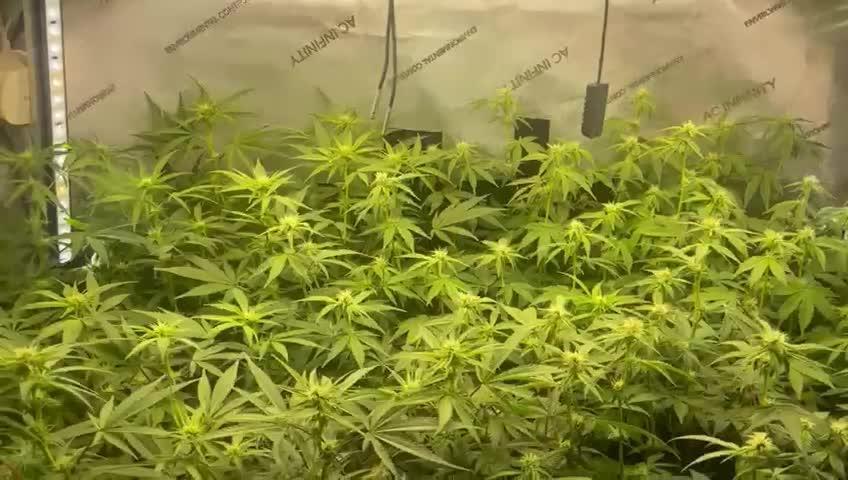
I’m thrilled. The plants are developing beautifully. They’ve gained a good bit in height again, but the canopy has become exceptionally even and bushy. Thanks to the long training, many strong shoots have grown, and both plants have a massive stem and impressive root system.
They’re slowly beginning to give off a light scent as well. A very sweet cannabis aroma is already noticeable. I believe this will become one of their key characteristics in the future.
Due to their height, I had to remove my internal dehumidifier and now use it as an intake dehumidifier. That way, I’m also able to further reduce the humidity in my grow space.
I only fertilized once this week because I repotted the plants into fresh Allmix a few weeks ago, so the soil is still very rich in nutrients. The leaves have a healthy color and the plants are generally in great condition.
Next week, I’ll raise the VPD and begin fertilizing twice a week. Other than that, I’ll leave the plants to continue growing undisturbed and hope all my shoots soon develop fully into blossoms.
Likes
30
Share


@Lukush
Follow
Hey growmies its flower time Finnaly
Frosted guava looking really good , happy and really enjoying her life cycle.
This week it's time to start giving her some good nutrition for the flower cycle.
Bud candy : 6 ml
Tarantula : 6 ml
Bud ignitor: 6 ml
Voodoo juice: 6ml
Giving them for the first 2 week of flower!
Hope you all enjoy mi diarie and if you do hit that like button or leave a comment below thanks very much for the support 😃Check out the new Video in the diarie 😃😀😃😄

Likes
3
Share


Likes
28
Share


@GanjaGecko
Follow
In der Woche hat es wieder scheiße geregnet. Ich musste zwar nur einmal gießen, allerdings mussten nach der Woche ⅓ vom Mainbud und zwei Teile der sidebuds weg, weil sich dort schimmel bemerkbar gemacht hat. Kann man sicht viel machen wenn die Ladys der Witterung komplett ausgesetzt sind.
Ich hatte die Woche nur einmal gegossen. Zusätze waren 1g/L BioEnhancer von GreenHouseFeeding, 1ml/L PowerBuds, 0.3ml/L GreenSensation von Plagron und 0.8ml/L BioBloom von BioBizz. Das ganze auf einen ph-Wert von 6.8 gebracht. Jede Lady bekam unterschiedlich viel. Je nach Gewicht des jeweiligen Topfes.
Ich hoffe das sich das Wetter langsam an den Sommer anpasst und die restliche Zeit ohne schimmel verläuft und mit mehr Sonne als Regen🍀💚

Likes
3
Share

@HuntersQualities
Follow
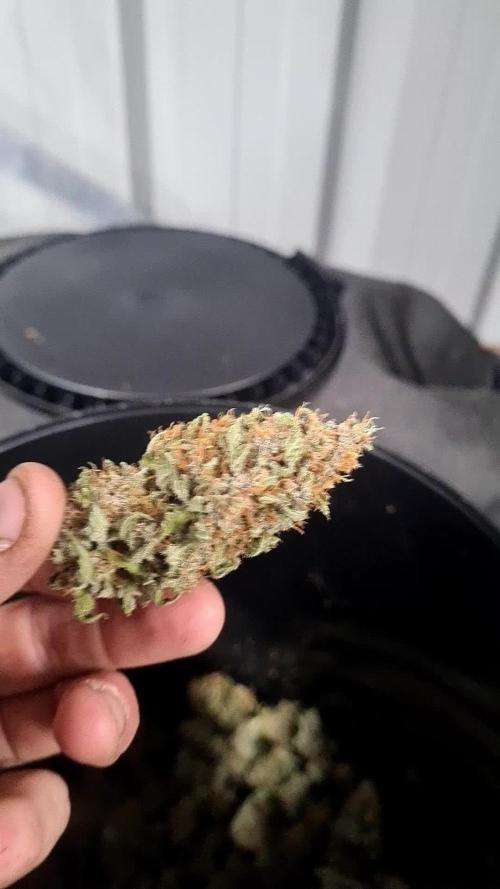
very easy going grow! absolutely loved the Banana purple punch! really stood to its game. got a nice total in the end, with a very tasty smoke!
Likes
2
Share


@HomegrownGenetics
Follow
Great start to week two of flower! Started with my weekly water change (every Monday) and some maintenance on the plants. I did a larger defoliated and lollipopping to just about everything under the SCROG net, hoping to maximize yield. Room conditions are awesome, about 80 degrees with ~60% humidity, real happy with VPD. With these ideal conditions, I've been pushing nutrient levels pretty high with an EC of ~3.2 - 3.3. Also got about 7 inches of growth in plants, still have this whole week to stretch.
Likes
30
Share


@BudXs
Follow
We shall see. So far, both plants are similar in stature. Obviously larger fan leaves on the one that wasnt plucked, but a tonne of growback at day F5 on the defoliated one. Non defoliated one seems to have some thicker stems. The final weights will tell all


Likes
4
Share

@DogDoctorOfficial
Follow
🥒 Project Blue Tent – Week 8
Pickle Lemon Haze F1 – Pheno B (Folder 14B)
Hello everyone, and welcome back to another chapter of Project Blue Tent! 💙🌱
If you're discovering this diary for the first time, welcome aboard!
Project Blue Tent follows four individual plants from seed all the way through harvest, with each phenotype receiving her own dedicated diary.
All four sisters share the same tent, lighting, irrigation, nutrition, environmental conditions and overall training strategy.
The idea is simple:
Keep the variables as consistent as possible and let the genetics tell the story.
And this week...
The story is getting very interesting.
Because all four girls have entered flowering with absolutely no intention of slowing down.
Today we're giving the spotlight to Pickle Lemon Haze F1 – Plant B.
And once again...
She's shining. 💙🌱
────────────────────────
🌸 Week Eight – Flower Has Arrived
The Blue Tent has officially entered the next chapter.
After seven full weeks of vegetation, we're now running 12/12, and the response from the plants has been immediate.
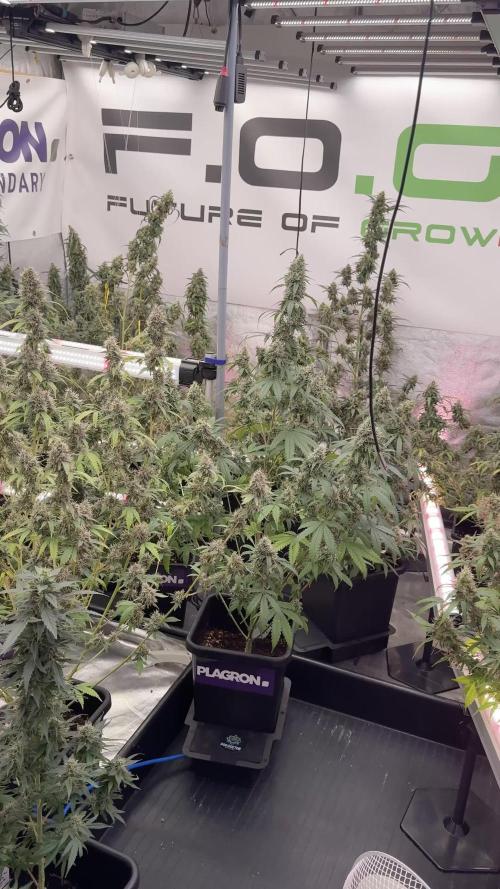
Plant B is now sitting around 81 cm, compared with approximately 60 cm when we finished the vegetative phase.
That's a serious amount of growth in a very short period.
And what's particularly impressive is that the plants aren't simply stretching upward.
They're developing everywhere.
The branches are extending.
New growth is appearing rapidly.
Flowering sites are becoming more obvious every day.
And the first real signs of bud development are now beautifully visible throughout Plant B's structure.
This is the point where all those weeks of preparation start becoming meaningful.
The SCROG gave us the structure.
The defoliation opened the canopy.
The training created the framework.
And now...
Flowering is filling that framework.
────────────────────────
🌿 Pickle Lemon Haze F1 – Plant B
Plant B continues to be one of those girls that makes me stop and look twice.
Her foliage is lush, vibrant and beautifully green, and the overall health of the plant is exactly where I want it to be.
The developing flowers are progressing quickly, with fresh pistils and new growth appearing throughout the canopy.
And despite the speed at which she's developing, she's still maintaining a remarkably even structure.
That's something I really appreciate about this phenotype.
She has always been a cooperative plant.
She responds well to training.
She builds strong lateral growth.
And even now, with flowering underway and the stretch accelerating, she's still giving us a canopy that is relatively easy to manage.
At least...
As easy as four extremely vigorous plants can be. 😂
────────────────────────
💥 Super Cropping – Keeping the Canopy Under Control
The biggest challenge right now isn't getting these girls to grow.
They've already made that part very clear.
The challenge is managing how quickly they're growing.
We're continuing to use super cropping on selected branches as another tool for managing the most vigorous vertical growth.
The idea is to reduce the dominance of certain shoots, redistribute growth and encourage stronger branching points as the plants continue developing.
And these girls are making me work for it.
I'll carefully work a branch down...
Come back later...
And somehow it's already standing back up again.
😂🌱
They're determined.
But that's actually what makes this stage so interesting.
We're not trying to stop their natural growth.
We're trying to work with it.
The canopy is already very even, and we're simply making small interventions where necessary to keep the most aggressive growth from getting too far ahead.
Whether we'll successfully keep everybody compact throughout the stretch?
Well...
Let's see.
They certainly haven't read that part of the plan.
────────────────────────
🌸 Bud Formation – Things Are Moving Quickly
One of the most exciting changes this week is the speed of flower development.
We're only at the beginning of flowering, yet Plant B is already showing beautiful formation throughout the canopy.
The sites we've spent weeks creating and positioning are now beginning to transform.
Pistils are appearing.
Clusters are becoming more defined.
And every day there's another little sign that tells me:
We're properly in flower now.
This is one of those moments where you can finally see the purpose behind all the earlier work.
The individual branches aren't just branches anymore.
They're becoming future flowers.
And Plant B has plenty of them.
────────────────────────
🌱 Seven Weeks of Vegetation – Was It Too Much?
Looking at Plant B now, I'm still wondering whether I gave these girls too much vegetative time.
Seven weeks of vegetation is considerably longer than I normally run.
Usually, I'd flip earlier.
But the extra time gave us something valuable:
A very established canopy.
Strong branches.
A developed root system.
And a structure capable of supporting a lot of flowering growth.
The downside is becoming very obvious now.
These plants have an incredible amount of momentum.
They grew from roughly 60 cm to around 81 cm incredibly quickly, and they're still moving.
So there is definitely a little bit of:
"What have I created?" 😂
happening in the grow room right now.
But worrying about it isn't going to make the plants grow slower.
We've prepared them.
We've trained them.
We've opened the canopy.
We're managing the stretch.
Now we watch.
And we see where these girls want to take us.
────────────────────────
💡 Strong Light From the Beginning
The transition into flowering also means we're starting with approximately 800 PPFD across the canopy.
I want these girls to have strong light available from the beginning of flower rather than slowly creeping toward higher intensity.
They're already extremely vigorous, so the idea is to give them the photons they need while closely observing how the canopy responds.
The challenge is balancing that strong light with the environmental conditions and the very significant stretch we're already seeing.
I'm particularly interested in seeing whether the combination of strong light and continued canopy management can help keep the plants from becoming excessively elongated.
Because if there's one thing Plant B has demonstrated this week...
It's that she has absolutely no shortage of energy.
────────────────────────
🌡️ Blue Tent Environment
The room continues to run with remarkably consistent conditions across all four sisters.
This week's recorded averages were:
• 🌡️ Day Temperature: 27°C
• 🌙 Night Temperature: 27°C
• 💧 Relative Humidity: 67%
• 🥥 Substrate Temperature: 24°C
• 💦 Nutrient Solution: 19.1°C
• ⚗️ pH: 5.81
• ⚡ EC: 2.09 mS/cm
• 💨 CO₂: approximately 666 ppm
• 💡 Light Schedule: 12/12
• 💧 Irrigation: approximately 1.4 L/plant/24h
• ? Pot Size: 8 L
• 📏 Plant Height: approximately 81 cm
One thing that continues to stand out is the relatively small difference between day and night temperatures.
We're sitting around 27°C for both.
That can contribute to continued stretching, and considering how quickly these girls are already growing, it's something I'm keeping firmly in mind.
But for now, Plant B is responding beautifully.
Healthy foliage.
Strong development.
Rapid flower formation.
And no obvious signs that she's unhappy with her environment.
────────────────────────
🥥 Feeding – Supporting the Transition
The flowering nutrition is now established.
Current feeding:
• Plagron Hydro A — 2 ml/L
• Plagron Hydro B — 2 ml/L
• Plagron Hydro Roots — 1 ml/L
• Plagron Power Buds — 1 ml/L
• pH Plus — 0.03 ml/L
• pH Min — 0.03 ml/L
Current EC:
2.09 mS/cm
pH:
5.81
The plants are consuming aggressively and developing extremely quickly, so the nutritional strategy is now supporting that transition without making unnecessary changes simply for the sake of changing something.
Plant B's colour is exactly what I want to see.
That beautiful, lush green foliage is telling me that she's handling the current program very well.
And when I look at the flowering sites developing throughout the canopy...
I'm certainly not seeing a plant asking me to interfere.
So for now:
We stay consistent.
Observe.
Measure.
Adjust only when necessary.
────────────────────────
💧 The Drip & Drainage System – One Continuous Loop
The automatic irrigation and drainage setup has become one of my favourite parts of this project.
Plant B is now receiving approximately 1.4 litres of nutrient solution every 24 hours through the drip irrigation system.
The process is beautifully simple.
The drippers deliver the nutrient solution directly to the coco.
The solution passes through the substrate and feeds the root zone.
The resulting runoff drains into the collection trays underneath the grow bags.
From there, the drainage pipe carries the water toward the pump.
The pump removes the collected runoff and returns it toward the reservoir, creating a recirculating irrigation and drainage loop.
Water goes in.
The plants use what they need.
Runoff is collected.
The pump moves it away.
And the system continues its cycle.
It's a remarkably elegant setup when everything is working properly.
And right now...
It is working wonderfully.
The plants are growing rapidly, their water demand is increasing, and the system is keeping irrigation consistent without requiring me to manually water four increasingly thirsty plants every day.
That consistency is especially valuable in a project where we're deliberately trying to keep the four sisters under comparable conditions.
It's another variable we can keep controlled while we watch the genetics express themselves.
────────────────────────
🕸️ Managing the Canopy During the Stretch
The SCROG has already done its main job.
Now we're using the structure we've created to manage flowering growth.
The canopy remains impressively even.
There are no huge dominant towers completely taking over the room.
Instead, the flowering sites are distributed across the surface we've spent weeks building.
But the stretch is happening quickly.
So we're continuing to watch the taller shoots and selectively using training and super cropping where necessary.
This isn't about constantly manipulating the plant.
It's about making small corrections before a branch becomes a major problem.
A little intervention now can be much easier than trying to fix an overly dominant branch later.
And Plant B has responded very well so far.
She's stretching...
But she's stretching into a structure.
That's exactly what I wanted.
────────────────────────
🌿 Plant B's Personality Is Still There
This is one of my favourite things about Project Blue Tent.
From above, the four sisters can look almost identical.
Same tent.
Same lights.
Same irrigation.
Same nutrients.
Same environment.
And yet...
Spend enough time with them and their personalities start becoming obvious.
Plant B remains one of the more naturally cooperative phenotypes.
She's vigorous, but her structure remains usable.
She's growing rapidly, but the canopy hasn't become chaotic.
She's producing flowering sites quickly, while maintaining that beautiful green foliage we've been watching since vegetation.
And now she's showing another characteristic:
She doesn't seem particularly interested in slowing down.
😂🌱
Which, honestly, is a pretty good problem to have.
────────────────────────
🌸 From Canopy to Flowers
There is something incredibly satisfying about looking at Plant B now and remembering what she looked like only a few weeks ago.
Back then, we were talking about:
Topping.
SCROG.
Empty squares.
Branch positioning.
Defoliation.
Canopy management.
Now we're talking about:
Flowering sites.
Pistils.
Stretch.
Bud formation.
And eventually...
Bulk.
That's the transition we've been working toward.
The plant has moved from building the machine to using the machine.
The canopy is the foundation.
Now the flowers get to take over the story.
────────────────────────
👀 Looking Ahead
The next couple of weeks should be fascinating.
All four sisters are moving incredibly quickly, and Plant B is right there with them.
We'll continue managing the canopy as needed.
We'll keep an eye on the stretch.
Super cropping will remain one of the tools available when individual branches get too ambitious.
The irrigation system will continue providing its consistent cycle.
The flowering nutrition will continue supporting development.
And the environmental conditions will remain under close observation.
Most importantly...
We don't need to panic about the speed.
Yes, they're growing fast.
Yes, I may have kept them in vegetation longer than usual.
Yes, the warm nights aren't exactly helping us keep the stretch compact.
But the plants are healthy.
The canopy is remarkably even.
The flowers are forming beautifully.
And Plant B is looking absolutely fantastic.
So...
Let's see where this goes.
🌸💙
────────────────────────
💙 Thank You
A huge thank you to Zamnesia for making Project Blue Tent possible and for giving us the opportunity to explore these Pickle Lemon Haze F1 genetics phenotype by phenotype.
A heartfelt thank you to Plagron for the Premium Growbags and Hydro nutrient line supporting these girls throughout their journey and now through the beginning of flowering.
A special thank you to Zamnesia for the Phytonaut LED lighting helping us create such a strong, even canopy and now providing the intensity we're using during the transition into flower.
And a massive thank you to Mars Hydro for the automatic drip irrigation and drainage system.
Watching the drippers, coco, runoff collection, drainage lines, pump and reservoir work together has been incredibly satisfying.
The system has become an important part of keeping the entire room consistent.
Thank you as well to GrowDiaries for providing a place where growers from around the world can document their journeys, exchange experiences and learn together.
And finally...
Thank you to everyone following Project Blue Tent. 💙
Plant B has officially entered flowering.
She's stretching.
She's building flowers.
She's producing lush, beautiful growth.
And she's making it very clear that seven weeks of vegetation gave her plenty of momentum.
😂🌱
For now, the canopy remains beautifully even.
The flowers are developing quickly.
The super cropping is helping us manage the most ambitious branches.
The irrigation system is doing its job.
The nutrition is supporting the transition.
And Plant B...
Well...
She's simply shining.
Four sisters.
One environment.
One experiment.
And four plants that somehow manage to make every week more interesting.
Let's see what the next chapter brings.
Until next week...
Growers Love, happy growing, and take care everyone! 🌱💙
Likes
Comments
Share

@MrHazeAmaze
Follow
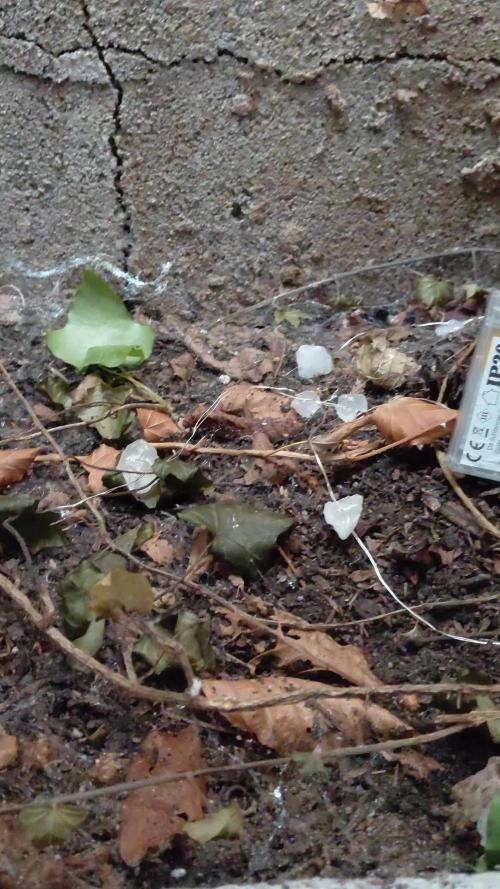
I raised her in a skull, but most of her life was spent in neglect. I left her outside in burning heat, then in sudden cold, dragged her indoors, then abandoned her again. She suffered thirst, darkness, and the bite of spidermites that stripped her leaves — though strangely, they spared the flowers, as if something in her bloom commanded a grim respect.
When her time came, I did not cut her. Growing is usually a preparation for harvest — you nurture only to take, always before death arrives on its own. I chose the opposite. I carried her down into the cellar for her final weeks, set her skull in the stone-lit dark, and simply let her decline. There she stood, a crown of fading flowers above hollow bone, turning slowly from bloom to ruin.
I left her to wither not by accident, but as proof. To show that a grow without harvest becomes its own message: that life, denied the cut, meets death as it is, unshaped, unclaimed. And in that cellar, in her vessel of bone, she embodied what I wanted to see — beauty not ended by hand, but surrendered to shadow.
Likes
2
Share


@fabialien
Follow
Semana 7 de vida, seguimiento de lunes a lunes.
Lunes 19 agosto 2024, evidencia de una semana transcurrida, en la cual proporcionamos terpinator a todas, purpinator solamente a Purple cherry de Positronics, a las otras 6 alimentamos con Armor Si.
Próximo riego será de Bases PH perfecto de Advance Nutrients a todas.


Likes
150
Share


@FrenchxFarmer63
Follow
Cette semaine à était très riche en engrais naturelle et en eau !!!!
*Fumier de vache pour les différents apport qu'ajoute cet engrais au fil du temps ,
*Marc de café ,
*Purin d'ortie ,
*Peau de banane
*Cendre de bois
Arrosage tous les jours en petites quantités pour aider à assimiler tous les apports donné
Et voilà que c'est demoiselle ont pris un coup de speed pour la poussée , obligé de continuer le palissage encore à ce stade... Ça grandit , ça grandit !!
Nous sommes fin Juillet , je suis dans l'attente que les jours réduisent pour le passage en floraison naturel grasse à la nuit...
Je ne sais pas si je dois procéder à une grosse défoliation pour les feuilles du dessous sur le principe d'un "Lollipopping" , qu'en dites vous ??
Des avis ?
Des questions ?
Des choses à dire ?
C'est toujours intéressant de discuter sur les différents mode de culture !!

Likes
6
Share


@TyRun
Follow
Placing a dehumidifier or humidifier in the grow box turned out to be ineffective when both devices have their own automated settings. For instance, a humidifier set to 55% humidity works within a ±5% range, meaning it waits until the humidity drops below 50% to turn on and runs until it hits 60%. Since its sensor refreshes every 30 seconds, it might show 54% one moment and jump to 61% the next—not exactly stable at 55%. The dehumidifier behaves similarly.
To achieve more consistent results, it’s better to rely on a hygrometer inside the grow box and use “dumb” devices that simply turn on when powered. Connecting these devices to smart outlets provides more precise control.
For manual control, I maintained around 55% humidity by turning the humidifier and exhaust fan on and off via phone. Most moisture and aroma are released during the first three days, then taper off. The common rule of “when thin branches snap, it’s dry” led me to overdry my buds. A more reliable method is to monitor the hygrometer. When humidity stabilizes after the initial rise, wait one more day and then jar the buds.
Rehydrating Overdried Buds:
Overdried buds can be revived with a small piece of mandarin (or orange) peel, about 2.5x2.5 cm. Thoroughly wash the peel (even sanitize it if needed), cut a square, and place it on top of the buds in the jar. In my experience, this brought the humidity from 46% to 62% within 4 hours. Afterward, burp the jars for 15 minutes and monitor the hygrometer. If the humidity drops below 55%, return the peel for a few more hours. Once stable at 60-62%, remove the peel and continue curing, burping the jars twice daily for 15 minutes.
As for humidity packs like Integra Boost or Boveda, I used them because I had some lying around. These packs are designed for 12 grams of product, so they don’t make a big difference in larger jars. If you burp jars daily and gently rotate the buds, they’re not really necessary.
Trimming and Results:
After 7 days of drying, I decided to trim dry this time. It turned out to be somewhat more convenient—everything gets covered in resin anyway, but the remaining leaves easily fall off, speeding up the process. I went for a tight trim, removing as much as possible. During the process, I felt disappointed seeing how little remained on the branches. The buds turned out airy and small, and I started cursing American genetics halfway through the trim.
However, when it came to weighing, the results were surprisingly decent.
Considering the buds' poor appearance, they’re not going to impress anyone visually, so it might have been easier to shred everything and use it for extraction. I don’t have extraction equipment, so I’ll make cannabutter from the trim, and the buds can rest in jars for now.
Takeaways:
Use a proper hygrometer for humidity control, not built-in sensors on humidifiers or dehumidifiers.
Overdried buds can be easily rehydrated with citrus peel.
Daily burping and rotation are sufficient for curing without humidity packs.
Dry trimming can be faster and more convenient but may highlight issues with bud density.
Despite underwhelming appearance, high resin content makes the strain great for extraction.

Likes
3
Share

@MandaleApical
Follow
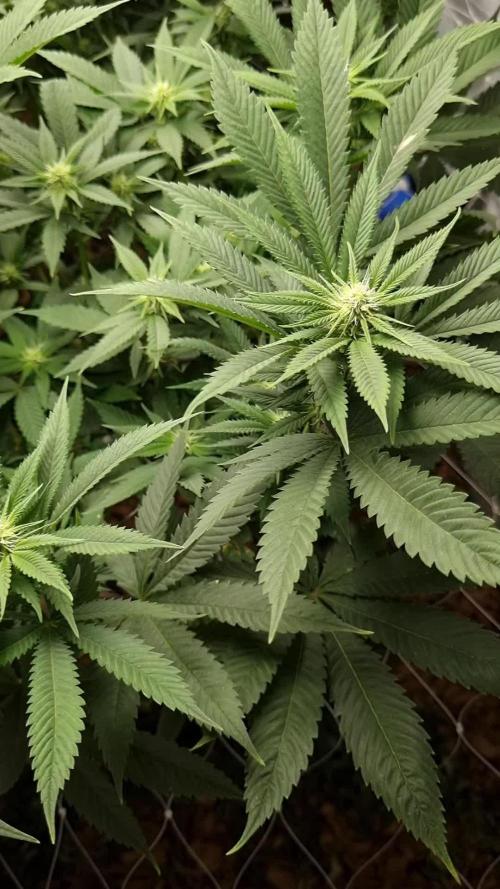
Bueno me tomé mi tiempo para subir esto van dos semanas de flora las plantas se pueden observar estiraron bastante. Bueno solo queda esperar. Hice una pequeña exfoliación esta semana para darle entrada a la luz en la primer semana de flora regué con bioinsumos de @cogolit busquenlos. La segunda con agua.
La próxima semana nos vamos a la expo cannabis y vamos a adquirir nuevas variedades de este banco y vamos a adquirir Barney fans también. Vamos a ir por variedades frutales y vamos a ir por variedades de pastel y crema.

Likes
8
Share


@Silverback_Guerilla
Follow
5/6 - 5/13
Not much stretch, thankfully...just packing on the pistils.
👉 Check out these new XS1000 lights on Amazon: https://amzn.to/3ttb2j9
👉 Get 10% OFF using this coupon code: lt10gdvip
I ended up taking these back outdoors to finish for a week or two..but then brought them back indoors into my closet for their last week.
They produced about 180g of dried bud that I pressed for the rosin. Not the strongest or best tasting strain to smoke, but it made some good goo for dabs.
Likes
12
Share


@CANNASIM
Follow
Hello, long time, no grow. I’m trilled to start on a new grow project, i’m away from growing a long time, but my love for ot was always present, i miss it a lot so i have got a few strains from Fastbuds to test and come back with a minimal setup.
I have got the Fastberry, Bluedream, and the 1:20 cbd, they have sent in the Banana Purple punch
Ok, so what is a minimal setup? For this grow i have choose to grow in my balcony, it is fairly big and i gave good sunlight, we are in summer now, so temps are high, swinging a lot. It is raining often as well so I did not need to water much.
For the nutrients i will go organic i think, in my substrate i have about 30% warm castings, so i’m good for till mid grow length +-, i might add a bit of nutrients in 30 days mark.
The objective of this experiment is to use as little as possible, 360 degrees.
For the germination process i have used a mixed process method, that i have learned from Fastbuds and i have loved it, 24h in a glass of filtered water, paper towel for about 24h -48h and then the Floraflex gremination pellets, i have tested on the jiffy and worked fine as well. Cool about this method, if you are more on the anxious side or like to control more the process this is the way, you can follow the hole process and see the development in parts. I will add images later on, for this breakdown.
Well that is it, lets hope for a cool, safe journey for this girls.
Likes
10
Share


@TrimQueen
Follow
This week I have moved out from my last apartment and have moved into a new one. Now she has had more space to develop. She is showing her first pistilos but the smell still under control. Here is winter and too windy, so the smell prob is not a big prob. I'm Intending to let her bloom for at least 2 months / or 2 months and half more. Feed her with 4-14-8 organic yesterday. Shes responding good about it.


Likes
13
Share


