


Likes
Comments
Share


@Green_Tool
Follow
Se realiza trasplante a macetas definitivas de 10 Litros Geotextiles, se aplica super soil con 3 productos orgánicos de la marca Yeskaya nacional (chile) mezclando un total de 90 Litros, se riega con 200 ml por planta con Great White y Orca.
Se realiza Riego Foliar con Knactive producto antiestrés nacional (chile).
Todo con PH 6.0
yeskaya.cl
www.instagram.com/knactive_cl


Processing
Likes
15
Share


@Sup3rNov4
Follow
Day 2. All the girls are coming along nicely one has a little heat damage to the main cola so redirected the airflow. almost all fan leaves are naturally falling off
Cool little slide show of there life cycle. https://lightmv.com/v/mqatait] Link to Slide Show
Day 4. So so so close to harvest I tried to check the trichomes but the scope got covered in THC 😂 and the iPhone 12 Camera sucks so can't get a picture of them


Likes
35
Share


@Cannabeast40
Follow
Welcome back to my summer grow🙂
Everything is still in need for more, more light - more nutes - more airflow and last but not least, more ir/uv 😎
Also gaining weight so that’s also great 😊
Hope to see you again next week 😎
-------------------------------------------------------------------------------------------------------
SpectrumX LED🔥 @medicgrow
880 Watt⚡️
2x UV/IR LED panels 💥
2.7 μmol/J🔥
Full Spectrum V1,F1,VS,FS🌈
Display with PPFD & Live spectrum
Light measurement: Apogee MQ-610 & Apogee DLI-600.
Fertiliser:
Organics Nutrients
https://www.organicsnutrients.com/en/
Green Buzz Nutrients
Discount Code: GD42025
Grants 25% with a minimum Order value at 75 Euro.
https://greenbuzzliquids.com/en/shop/

Likes
12
Share


@rickhaZe
Follow
Dia 32: agregamos mas sustrato a cada planta y realizamos poda de hojas bajas y nudos mas desfavorable
Dia 35: agregamos la primera dosis de blossom blaster pro.
6 ml en 6 litro de agua, aplicamos 500ml a cada planta.
Dia 37: aplicamos 500ml de agua por planta.
Dia 38: sesión de fotos a todos los ejemplares de este cultivo y rotación de las plantas dentro de la carpa, todos los dias hago estos movimientos para que todas capten la misma luminosidad y el sustrato se seque mas parejo.
Dia 39: aplicaremos monster bloom en el cultivo, la solución será de 1.8g (ya que es en polvo) en 6 litros de agua

Likes
11
Share


@musashi_miyamoto
Follow
she needs some nutrients desperately. needs a good watering too, but she's still coming along well i think.
adding more compost because i dont want to overcorrect the deficiency.
definitely have to clear the ground around her, but the mint around it shades the soil around the base so im leaving those.
7/24 - gave her a good watering and some bio bloom just to get some guaranteed essentials. the veggies around it are definitely hogging the nutrients but whatever, it be like that. upper leaves are kind of folded upwards, i imagine because of the heat (it was like this before giving any nutrients). gave her a neem oil mist bath to get rid of all the pests that are adding to the problem.

Likes
3
Share


@ThitPinGyi94
Follow
I experienced a 7.7 magnitude earthquake, and both electricity and internet were cut off, so my posts are delayed. We are still continuing with humanitarian relief efforts, and I am helping myself. Casualties and building damage have occurred in almost the entire city. With much sadness, I present the photos of this week


Likes
8
Share

@PapaTerps
Follow
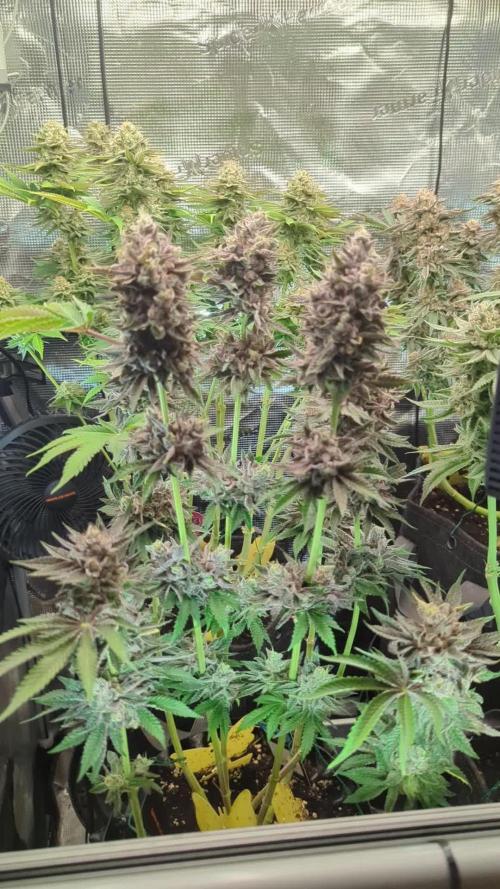
Monaco - Nine Weeks Harvest
Day 108
🚿 Watered her every second day with 2L of RO tap water, with defined nutrients, mixed individually in order and then pH'd to 6.3. From this week, I will gradually start to reduce her nutrients levels until she is receiving just plain water - she will be flushed for at least ten days before harvest.
✂️ I removed a couple of sugar leaves from around the flower at the top canopy to improve light penetration to help her mature 💪🏻
🌸 Shes into week 8 of bloom and she is just focusing on maturing her flower, which means it's time to prepare her for harvest.🍂 On inspection, her pistils have mostly turned amber with white pistils appearing from newer growth and her trichomes are all milky clear. Her cone shaped cola have taken on autumnal colours, with deep purples and blues popping from under the shimmer of the dense trichome coverage. Her aroma is also very present, with strong fruity and gas notes with undertones of spices!
The goals for these final few days is to get her flushed and remove all unnecessary foliage as well as regular inspecting her for maturity levels, but also molds and pests. All good so far 🙏🏻

Likes
19
Share


@Ieiogrow94
Follow
È stato un piacere coltivare questa genetica fantastica peccato per aver perso strain 2 causa ermafroditismo!!
Molto profumata e resinosa asciutta 12g ma in un vaso da 6,5l penso sia un ottimo risultato anche perchè i fiori sono compatti!!
Grazie @Barneys per la collaborazione e grazie a tutti voi per il supporto!
Ne vedremo delle belle!!
❤️🔥🌲

Likes
18
Share


@rhodes68
Follow
Adjusted the nuet list to reflect reality at this point dont see need for anything else.
8/31 Still building and looking well so will keep doing what we are, just keep her happy for a few more weeks ;)
9/1 Still not feeding till tomorrow thinking last use of Recharge and Bio-Bloom
9/4 Day 61 Looks good this morning pics later
9/7 Re-adding Big Bloom (Fox Farms) to nuet mix, plants seem to be missing it and I agree. Once a week at 3 tps/gal
Likes
6
Share

@Wenz004
Follow
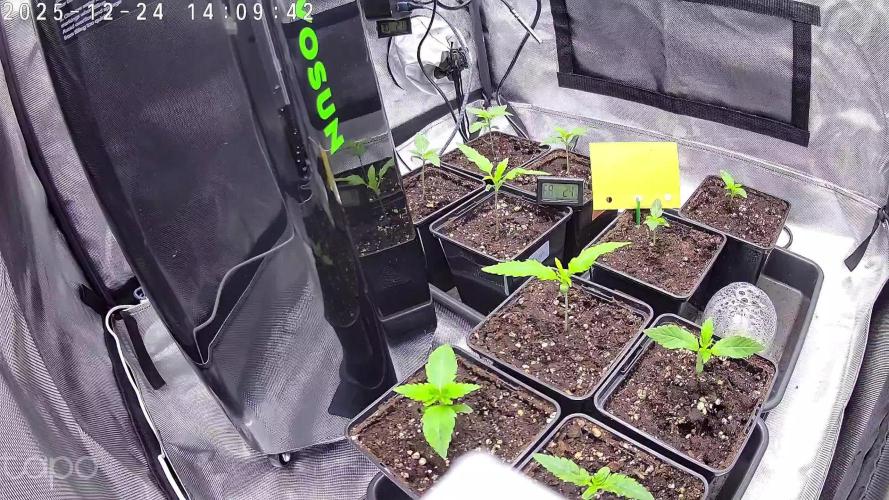
Keimung und Sämlingsphase Tag 1-9
Mal was neues probieren - Samen aus der teilweise deutlich alten Sammlung verbrauchen und so die Mõglichkeit haben mehr Varianten und Geschmäcker auf einmal probieren zu können.
2 x Special queen - promo rest - andere bisher schiefgelaufen
1 x biscotti - promo
2 x tropicana cookies - war mal großzügige Entschädigung
2 x Euphoria - bestellt als Daysmoke - wollte sowas schon immer 😁☝️
1x mexican rush - mal bestellt 1 Stück um Warenkorb auf bestimmten Wert zu bringen😁 - die wird bei dem mix Probleme machen - da Sativa lastig
2 x gg4 gorilla glue - promo
Alle extrem schnell gekeimt nach gerade mal 1.5 Tagen, euphoria sogar noch deutlich schneller 1 x gg4 und einmal SQ erst nach 2.5 Tagen.
Plan - wollte alles unberührt wachsen lassen später in 120 x 120 (keinerlei lst oder hst) mit einer kurzen Vegi - rechne ich ab Tag 10 nach Keimungs -und Sämlingsphase.
KI hat mir von diesem Plan abgeraten - oder wenigstens mexican rush und special queen zu toppen - mal sehen😁


Likes
5
Share


@Saihtan
Follow
Purple haze auto begin flowering a week later after the group went to 12/12. She just started drinking a half gallon a day. She has also stretched above the rest of the plants!

Likes
121
Share


@NuggetPawn
Follow
Left and right have both been topped for the second time on D31.
Increased the EC and the plants seem to be growing very well!
Have started to train the plant in the middle out, the other two I am not going to train until D33.

Likes
64
Share


@MadeInGermany
Follow
Hey everyone 🤗.
This week you've put a lot of energy into growing your buds.
You look very beautiful :-)
Next week I'll add some Pk 13/14.
I wish you lots of fun with the update, stay healthy and let it grow 😎
You can buy this Strain at :
https://www.barneysfarm.com
Strain :
Blue gelato 41 clone from mother (Barney's Farm)
☝️
Genetics:
Blueberry x Thin Mint Girl Scout Cookies x Sunset Sherbert
👍
Vega lamp:
2 x
Todogrow LED HLG Quantum Board 100 W ( 200 W )
💡
Flower lamp:
2x Todogrow LED CXB3590 205 W = ( 410 W )
💡 ☝️
Soil : Canna Terra Professional +
☝️
Fertilizer:
Canna Terra Vega , Canna Terra Flores , Rizotonic, Cannazym, CANNA Boost, Pk 13/14, Canna Cal / Mag, Canna Ph - Grow, Canna Ph-Bloom
☝️🌱
Water:
Osmosis water mixed with normal water (24 hours stale that the chlorine evaporates) to 0.2 EG. Add Cal / Mag to 0.4 Ec Ph with Ph - to 6.0 - 6.3
💦 💧
Likes
Comments
Share


@Steviegrows
Follow
Planted germinated seed on 6/6. The girl on the right came out first, followed by middle, then left by mid-week. By end of week, each stood about 3". Sporadic light watering throughout the week with a dropper at the base of the sprout, spritzed the soil surface and inside of humidity domes which were placed over pots periodically. Only the two 150w COBs are switched on, the 100w QB is off to protect the babies.


Likes
3
Share


@TrimQueen
Follow
It’s day 30. One month old since her first sun light exposition. It’s been an amazing journey. A great start for 2025!

Processing
Likes
55
Share


@GardenOfHerbs
Follow
- i'm super happy that Dinafem send me this auto to test grow. Looks like i'm the first one to grow this strain so i'm very honored. she will be my second CBD auto and i'm really excited about this one
- Bought the full line of biobizz nutrients again! The Advanced Nutrients was just not working for me. she will be the first to get the full biobizz line!
-she was transplanted into her 10 liter pot on day 4. i made a little video of my transpanting technique, check it out!
- added the calmag powder from big plant sience and there root exploision powder that i won with the grow diaries prize.
so the setup will be:
– 120x120x200cm garden hypro tent
– 1x Grow Northern Telos 0008 Led 240w
– 1 x Phresh Hyper Fan Silent 150mm with controler
– 1x Bull filter 150mm
– 4x garden hypro clip fans ( silent as hell)
– 1x 10 liter Air-Pot
– Biobizz Light mix soil
– biobizz: root juice, bio grow, bio bloom, acti-vera, bio heaven, alga mic, topmax

Likes
8
Share

@Pheno_Minds
Follow
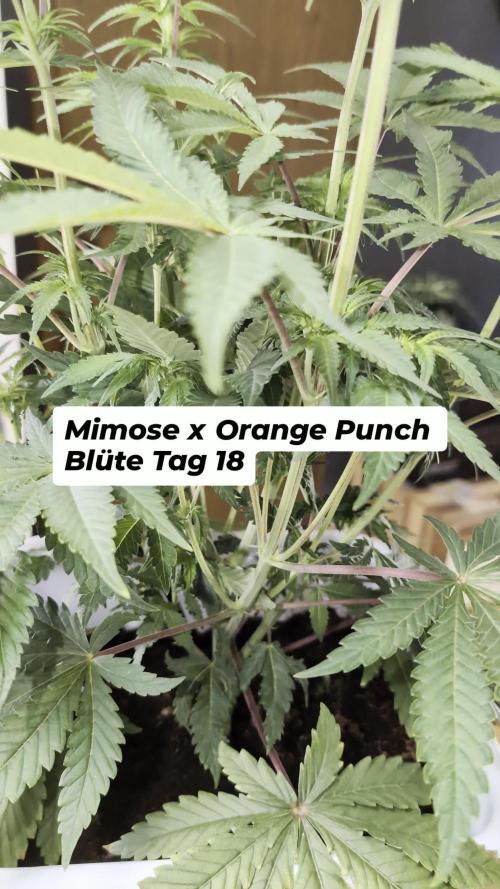
Link zum Strain: Mimosa x Orange Punch von Barneys Farm
🔗 https://www.seedsman.com/eu-de/mimosa-x-orange-punch-auto-feminisiert-samen-bfs-mimop-auto-fem?a_aid=PHENOMINDS
🔥 -10% mit dem Code: PHENOMINDS
🌿 Blüte Tag 23
📅 Datum: 22.03.2026
🌬️ Avg. VPD: 1.2 kPa
🔆 Lichtintensität (PPFD): 738 µmol/m²/s
📊 pH (Autopot Tank): 6
⚗️ EC (Autopot Tank): 1,5 mS/cm
🌊 Wassertemperatur: 21 °C
👁️ Pflanzenzustand: Keine Anzeichen von Stress.
📝 Besonderheit: Athena Düngermischung wird nach Schema gemischt und mit Leitungswasser auf den passenden EC verdünnt. Danach wird der PH Wert im Tank justiert.
Likes
10
Share


@Unnamed
Follow
Noticed some slight Nitrogen deficiency so I removed 20l of the tank and added 20l with Yara Kristalon Blue 19-6-20 + Calcinit A+B and it seemed to do the trick.
Went low on ORP this week.
Saw slight tip burn so I'll lower EC next week seems that ~2000 is the sweet spot.
Did some defoliation as usual whenever needed, never noticed any stunting in any timelapse, also did a little lolipoping.
This one is going to be a big one for sure, really happy.
Values are average of the day.
DATE - °C - RH% (Tent Temp/RH)
20241104 24.1 56.3
20241105 24.7 56.2
20241106 24.2 57.5
20241107 24.0 59.0
20241108 23.5 59.7
20241109 23.1 62.2
20241110 22.6 63.7
DATE - PH
20241104 6.03
20241105 6.03
20241106 6.07
20241107 6.08
20241108 6.08
20241109 6.08
20241110 6.07
DATE - ORP (mV)
20241104 86
20241105 90
20241106 98
20241107 82
20241108 76
20241109 72
20241110 69
DATE - EC(us/cm)
20241104 1981
20241105 2006
20241106 2118
20241107 2131
20241108 2142
20241109 2139
20241110 2137
DATE - CF
20241104 19.81
20241105 20.06
20241106 21.18
20241107 21.31
20241108 21.42
20241109 21.39
20241110 21.37
DATE - °C (Reservoir)
20241104 22.4
20241105 22.4
20241106 22.0
20241107 22.1
20241108 22.0
20241109 21.7
20241110 21.3
Likes
5
Share


@CannaIGrow
Follow
Still just trying to be patient, waiting for harvest time, hopefully I don't go past the harvest window that I'm looking for. Wanting Milky tricomes.