


Likes
Comments
Share


@420DeepGrow
Follow
Al no tener humificador se queda un pelín baja la humedad, pero estoy bastante contento con los parámetros.
A partir de ahora iré comentando día a día para que podáis hacer un buen seguimiento.
Día 8: 🔹Descanso 😴
Día 9: 🔹Trasplante a macetas de 1litro (en los siguientes cultivos pondré directamente en macetas de 1litro).
🔹 Riego con una solución de 2ml/l de acti-vera de Bio Bizz Ec: 600 y pH a 5.9. Siempre en base a un Ec de agua de 400
🔹Abono foliarmente con una solución de acti-vera de Bio Bizz unas 2, 3 veces al día.
🔹 Aplico tierra de Diatomeas sobre el sustrato, media cucharadita de café por cada maceta de 1litro para el control de plagas.
Día 10: 🔹Abono foliarmente 2,3 veces al día con acti-vera de Bio Bizz
🔹Bajo la altura del foco a 50 cm de distancia con las plantas.
Día 12: 🔹 Aplico foliarmente 1ml/l Acti-vera BioBizz + 0.1ml/l y pH a 6.0 de 2 a 3 veces durante el día.
🔹Remuevo la tierra para por encima con unas pinzas para airear el sustrato.
Día 13: 🔹Riego con 0.2ml/l Acti-vera y 0.01 Rootbastic, Ec 1000 y PH 5.9
🔹Pongo unas guías de madera para una mejor estabilidad y desarrollo de la planta.
Día 14: 🔹Aplico foliarmente 1ml/l Acti-vera BioBizz + 0.1ml/l y pH a 6.0.


Likes
14
Share


@Uglys_buds
Follow
Tuesday February 28th I dropped 5 Exotic Genetix “Yikes” in ph’d to 6 water. After 8 hours they’ll go into paper towels. Eventually ending up in rockwool. This is my first time running a RDWC system. I have to thank @budz_alot for helping me get this all together!!!


Likes
7
Share


@Krissci
Follow
Day 3
1st bit of training this week.
Looking healthy.
My aim is to allow lowest bud sites to keep up with the main heads..
LST LST LST LST LST
During this stage is most important to train Ur plant into the shape u want.
Likes
25
Share


@Grower_Of_Persia
Follow
week intel:
we getting close to end of ripening , this week i raised drought , Nitrogen and E.C stress by feeding them 2 times per week and raised e.c to 3 to cause real stress that will help increase terpenes production
stresses :
Nitrogen deficiency Stress by removing the fertilizers that has N in them
Drought stress via removing one meal in week
high E.C stress around 1.7 and the other feeding day 3.0 , 2 times a week
feeding:
no more Nitrogen
i feed them 2 times this week with this order :
day 1 : i feed them high with Bio-Bizz Top-Max + Feeding Booster about 850 ppm - 1.7 e.c to cause a medium e.c stress.
day 3 : no more feeding this day
day 5 : i feed them very high dose of Bio-Bizz Top-Max + Feeding Booster around 1500 ppm - 3 e.c to cause high e.c stress
guide of the week :
be patient in the last weeks, never hurry for harvest because its the time of ripening in last 2 weeks you should let plants to do their work
last weeks of ripening is the time to break the limits we should cause 3 stresses as i said above Nitrogen stress , Drought Stress , E.C Stress


Processing
Likes
15
Share


@eldruida_lamota
Follow
Hey familia, nuestras 2 cookies, Han cogido carrerilla, notamos como advanced nutrients trabaja para dar lo mejor en sus productos.
Estos ejemplares están bastante sanos, tienen buen futuro también, prometen por su potencia .
Ph 6,5 . 55% humedad, 18/26 grados. Riegos cada 3 dias.

Likes
19
Share


@adam_pawloski87
Follow
Let’s go Day 85 from seed !! This has been another great week ,ladies are coming close to the finish line an looking so beautiful!! This week we will continue flushing on these 3 ladies an jump em into there 48 hrs of darkness on Friday or Saturday will see ! Let’s have another great week ,, peace love an positive vibes to all y’all Keep them eyes peeled for next weeks update !! Cheers 😶🌫️💨💨💨💨💨🤙🏻

Likes
43
Share


@TheCannaProphet
Follow
~ FastBuds PAPAYA SHERBET Photoperiod~
Well here we go on another journey together through 'Canna-land' and this one's kinda special... forget that, it's VERY special because this is FastBuds newest surprise for the community, a FEMINIZED PHOTOPERIOD STRAIN!🤯
I was fortunate enough to score these seeds, of which only 1000 were available and can't wait to see what this strain can do! This Papaya Sherbet, according to FastBuds, is a hybrid with a 9-10 weeks flowering period. For a more detailed and accurate description of this strain the following from FastBuds says it best:
"Combining the massive stature of Papaya (Oni Selection) with the strength and resilience of one of our best keeper cuts (Sunset Sherbet), this strain develops into a big, expansive bush adorned with numerous bud sites that later transform into a generous harvest of medium-sized buds. Papaya Sherbet flowers deliver a signature flavor of premium cannabis with subtle citrus undertones that emerge upon inhaling. During growth, her aroma makes for a sweet yet pleasantly bitter fragrance, giving you an idea of what the smoke will taste like. Notably stress-resistant, Papaya Sherbet is a great choice for growers working in challenging environments. She is very forgiving and rebounds quickly from any adversity, allowing growers the freedom to experiment with confidence that she will take everything like a champion she is. This strain embodies resilience, flavor, and abundant yields in every grow cycle."
Sounds like an epic strain and I personally cannot wait for this lady to strut her stuff!😍
________________________________________________________________________________________________________________________________________________________________________________________________________________________________________________________________________________________________________________________
The Setup:
This is going to be an outdoor grow, but I have started the Papaya Sherbet photoperiod indoors as our weather is still a bit too chilly to put a newly sprouted seedling outside (nighttime temp's dipping regularly into the 40's℉).
The plan is simple... let her grow inside under a 19/5 light schedule until the nighttime temperatures are in the mid 50's℉, which shouldn't be long. After which, she'll be moved outside and transplanted into the soil which I have already setup and inoculated with beneficial microbes from BioTabs and slow release dry amendments from Gaia Green. Once she's established herself outside she'll be given periodic top dressings of Gaia Green 4-4-4 and 2-8-4 along with worm castings and Compost Tea's. Her grow area is approx. 5'x5' and I have posts and a trellis net set up already for when she gets bigger to aid in training her. Let the fun begin!🤪💚
________________________________________________________________________________________________________________________________________________________________________________________________________________________________________________________________________________________________________________________
Weekly Updates:
5/23- Week three from seed and the second week of veg for the FastBuds Papaya Sherbet photoperiod and she's doing surprisingly well considering the crappy weather, and being eaten like a salad by slugs and a rabbit!
5/25- The diatomaceous earth that I spread around her seems to have lessened the attacks on her leaves. I've also been spraying her down every other day with Neem Oil, and every three days with an organic insecticidal soap that I'm sure has helped as well.
I watered the Papaya Sherbet today via garden hose and began to train her branches a bit as well.
5/27- The FastBuds Papaya Sherbet continues to do exceptionally well with great color and vigor, putting out new growth it seems daily.
5/29- There's three weeks on the books for this little lady and I'm looking forward to see what she'll look like in the coming weeks! I will have to top dress her soon, probably in the next few days. I haven't added any dry amendments to her since I initially amended her soil and she's a hungry girl... Hope to see you next week, stay Blessed!
Thank you for checking out my diary, your positive comments and support make it all worthwhile! 💚Growers Love!💚😎🙏
Likes
14
Share


@Bigbombbudz
Follow
All right another week....
Ok my Gorilla girls are growing beautiful right on schedule did some LST as you can see to try and keep the canopy as even as possible and get the lower branches up even with the rest ..I also tied down the main branch to keep it even with the rest as it grows...
I will be going into flowing probably Monday ..by then they will be pushed out and just the right size......
Not much else to say everything is dialed in perfect ..
Until next week....
Smoke a fatty, help out your fellow grower.

Processing
Likes
24
Share


@MadeInGermany
Follow
Hi everyone :-)
This week, phenotype 2 and 3 were repotted just like phenotype 1 from the Zamnesia Spring Cup in the other diary 🙏🏻.
Otherwise not much has happened this week.
I'm curious how the two with Canna Bio will compare to the monster bud mix in the spring cup diary :-).
I wish you all a nice weekend, stay healthy 🙏🏻 and let it grow 👏🏻😎

Likes
34
Share


@HomeGrowHeaven
Follow
We chopped down the plants. Now they hang out to dry in the tent.
The Trichs looked very good. Some milky, some amber, hardly any clear. Just the way I want it. The popcorn buds were rather milky. So we have more of a couchlock effect on the head buds and the maximum THC on the popcorns. I'm really looking forward to the taste💚


Likes
8
Share


@DogDoctorOfficial
Follow
🌿 8×8 Adventure – Week 14
Amnesia Haze Auto by Zamnesia – Pheno A
👑 The Queen of the Yo-Yo World Is Still Reigning… And She's Moving FAST! 😂🌸🔥
Hello everyone, and welcome back to another chapter of the 8×8 Adventure! 🌱💚
Well...
As expected.
Absolutely as expected.
😂😂😂
OUR QUEEN IS STILL THE QUEEN OF THE YO-YO WORLD!
👑🌿⚖️😂
Seriously, my friends...
This girl is HEAVY.
Not a little heavy.
Not "maybe we should support that branch" heavy.
We're talking about the kind of heavy where you look at the plant, look at the supports, look at the plant again, and start wondering whether the entire yoyo department needs to be put on permanent standby.
😂😂😂👑
And the answer is...
YES.
YES, IT DOES.
Because our Amnesia Haze Auto Pheno A is still carrying a serious amount of flower throughout her structure.
The branches are loaded.
The flowers are substantial.
The plant is evolving quickly.
And when I look at her this week, I get the feeling that we're moving into an increasingly important part of her journey.
She's changing.
She's developing.
She's looking increasingly mature.
But is she ready to finish?
That's a different question.
And one we're not going to answer just because the calendar says Week 14.
😂🌸
For now, she's staying right where she is.
We're going to keep watching her, supporting her, documenting her, and allowing the next chapter to reveal itself.
Because this Queen isn't going anywhere just yet.
👑💚
So let's give her the individual report she deserves!
────────────────────────
👑 WEEK 14 — LONG LIVE THE QUEEN OF YOYOS!
Let's start with the obvious.
She's still incredibly heavy.
😂⚖️🌸
Last week, we were already talking about the ridiculous amount of support this girl needed.
And this week?
The title remains firmly hers.
The Queen of the Yo-Yo World.
No competition.
No challengers.
No appeals.
😂👑
Looking at her structure, it's easy to understand why those supports are such an important part of her story.
She's carrying substantial flowers throughout the plant, not just in one single location.
The weight is distributed across her branches, and the overall structure needs support to help everything remain where it should.
And honestly, I love that this has become part of her individual personality.
Some plants make an impression through height.
Others through colour.
Others through the shape of their flowers.
This girl?
She makes an impression through sheer weight.
😂🌿🌸⚖️
She's compact in certain parts of her architecture, but don't let that fool you.
There is a lot happening throughout this plant.
And the yoyo department is still very much open for business.
────────────────────────
😂 THE YOYO DEPARTMENT IS NOT CLOSING ANYTIME SOON
I think we need to make this official.
😂
At this point, the yoyos deserve their own diary.
Maybe we should call it:
"The 8×8 Adventure — Supporting the Support System."
😂😂😂👑
One branch needs help.
Another branch is carrying serious weight.
And suddenly, we're looking around the room to see whether there's another support available.
Because when a plant becomes this heavy, support is no longer some decorative extra.
It's part of managing the structure we've got.
And with Amnesia Haze Pheno A, that structure has become one of the defining features of the entire grow.
The important thing is that we're not trying to reshape her into something she's not.
We're simply helping her carry what she's produced.
She built the flowers.
She created the weight.
She developed those branches.
We're here to support the result.
That's it.
😂🌿👑
So, no...
the yoyo department isn't going anywhere.
And neither is the Queen.
At least, not for now.
────────────────────────
🌸 SHE'S EVOLVING FAST — AND THAT'S WHAT HAS MY ATTENTION
Beyond the weight, the other thing catching my attention this week is how quickly she's changing.
She's still developing.
The flowers continue to evolve.
And the overall appearance of the plant is changing as we move deeper into this stage of the run.
That's what makes this moment so interesting.
We have a plant that has already built a substantial structure, and now we're watching how that structure develops as the flowering cycle progresses.
When I compare the way she looks now with the earlier chapters, I can see why she's becoming such an interesting plant to follow.
She's not standing still.
She's not simply repeating the same week.
She's changing.
And she's doing it quickly enough to make me wonder what the next set of photographs will show us.
😂📸🌸
But here's the important part.
Fast development doesn't automatically tell us the exact amount of time remaining.
The plant can look increasingly mature while still having changes left to make.
So I'm not going to declare a finish date.
I'm going to keep observing her.
Keep documenting her.
And let the next week tell us more.
For now, she's evolving fast, carrying serious weight, and keeping the Queen title firmly in place.
👑🌿🔥
────────────────────────
🔍 THE FINAL CHAPTERS MAY BE APPROACHING… BUT WE'RE NOT WRITING THE ENDING YET
I have to admit, when I look at this girl now, I start thinking about the final stages of her journey.
She's looking increasingly mature.
She's carrying substantial flowers.
And the changes are becoming more noticeable from one update to the next.
But I want to keep one thing clear.
Looking close to the end and actually being ready are not necessarily the same thing.
The photographs help us document appearance and progression, but they cannot tell us everything about maturity on their own.
That's why we're going to keep watching rather than making assumptions.
Next week is next week.
😂🌿
For now, she stays where she is, and we continue following her story.
No premature farewell.
No harvest announcement.
No guessing just to put a date on the calendar.
We'll see what time tells us.
And honestly?
That's part of the fun.
────────────────────────
🌸 A PLANT THAT HAS EARNED HER SUPPORT
Let's take a moment to appreciate what all those supports represent.
They're not the main attraction.
The flowers are.
But the supports tell us something about the structure of this particular plant.
She's carrying enough weight that we need to pay attention to the branches and help them remain supported.
And that's another reason I enjoy keeping individual diaries.
If I simply wrote, "Amnesia Haze Auto is doing well," we'd miss so much of what makes this particular phenotype interesting.
We'd miss her unusual leaf presentation.
We'd miss the substantial flower development.
We'd miss the sheer number of supports.
And we'd miss the little details that have made her the Queen of the Yo-Yo World.
😂👑⚖️
This is her story.
Not every Amnesia Haze Auto will look exactly like this.
Not every plant will develop the same architecture.
And that's precisely why we document the individual plants rather than pretending one description represents every phenotype.
────────────────────────
📸 THE PHOTOGRAPHS — ANOTHER CHAPTER IN HER STORY
This week's photographs continue the visual record of our Queen.
The wider shots help show the plant's overall architecture and how much space she occupies.
The closer shots let us appreciate the individual flowers and their developing structure.
And the support details?
Well...
those deserve a little attention too.
😂📸👑
Because they're part of the reality of this plant.
It's easy to focus exclusively on beautiful flower portraits, but the full-plant photographs help tell the larger story.
They show us how the plant is developing as a whole.
They provide context for the branches.
They show where the flowers sit within the canopy.
And they help us compare this week's appearance with the previous updates.
That's the value of keeping a proper diary.
We don't have to rely on memory alone.
We can look back and follow the progression.
And with this girl, that progression has been fascinating.
────────────────────────
💎 THE FLOWERS ARE STILL THE STARS
Let's not allow the yo-yos to steal the entire show.
😂🌸
They're important, certainly.
But they're supporting the plant, not replacing the flowers as the main attraction.
The flowers are what make this girl so substantial.
The distribution of those flowers throughout the plant is part of what makes her structure so impressive.
And the way the plant continues to evolve is what keeps me interested in the next update.
She's not just a plant with a lot of supports.
She's a plant that has developed a structure substantial enough to make those supports necessary.
That's a very different story.
And it's one I want to keep documenting honestly.
So yes...
the Queen of the Yo-Yo World remains on her throne.
But the flowers are the reason she got there.
👑🌸💚
────────────────────────
🌿 OBSERVATION OVER UNNECESSARY INTERVENTION
At this point in the adventure, I'm increasingly focused on observing rather than constantly trying to change the plants.
Earlier in the run, there were plenty of moments for structural work, positioning, and other interventions.
Now, the plants have established their individual architectures.
The flowers are developing.
And the priorities are different.
We're observing the plants.
Monitoring the room.
Keeping an eye on the support system.
Documenting the changes.
And responding when something actually needs attention.
With this girl, support is clearly part of the story.
But we don't need to manufacture extra work just because we're in the grow room.
Sometimes the best thing you can do is recognize what the plant needs and leave the rest alone.
The Queen is doing her thing.
We're here to help her carry the results.
😂👑🌿
────────────────────────
☀️ SAME ROOM — SAME PHOTONS — HER OWN RESPONSE
The 8×8 lighting setup remains part of the same shared environment.
The two additional Future of Grow Black Series 600W fixtures are still part of the expanded setup, giving us more lighting capability and flexibility.
Our established reference has been approximately:
🔌 59% power from the plug.
☀️ Around 1,500 PPFD across the upper canopy.
Those figures describe our previous room reference, not a newly verified measurement at every point of this plant.
The canopy is three-dimensional.
Different branches and flowers sit at different heights and positions, so light exposure naturally varies throughout the structure.
And that's one of the interesting parts of this experiment.
Amnesia Haze Auto Pheno A has developed her own architecture under the same general environment as the other plants.
She's substantial.
She's heavy.
She's developing quickly.
And she's requiring plenty of support.
The lighting is one part of the shared environment, but we're not going to attribute every characteristic of this phenotype to one factor alone.
We're documenting what we see and comparing it with the other plants.
Same room.
Same artificial sun.
Different genetic expressions.
That's the 8×8 Adventure.
💡🌿☀️
────────────────────────
💡 MORE CAPABILITY, MORE CONTROL
The additional Future of Grow fixtures have given us more available lighting capability, but the point isn't to run everything at maximum simply because we can.
It's about having more flexibility and control over the lighting setup.
We're observing the plants within that expanded environment and documenting how differently they express themselves.
And that has been one of the most interesting parts of this project.
A huge thank you to Future of Grow for supplying the two additional Black Series 600W fixtures for us to test.
Having that extra capacity while controlling the output has given us another important part of the 8×8 experiment.
More capability.
More control.
More photons.
And twelve different plants responding in their own ways.
💚☀️🌿
────────────────────────
🔴 THE RED-LIGHT ROUTINE — KEEPING THE SCIENCE HONEST
We're also continuing to document the additional 15-minute red-light period after the main lighting period.
Red and far-red wavelengths interact with the plant's phytochrome system, which helps plants interpret their light environment.
The response depends on the wavelength, intensity, timing, duration, and the rest of the conditions.
So we're treating this as a documented part of our lighting routine, not as a guaranteed way to accelerate flowering or produce a particular result.
With Amnesia Haze Auto Pheno A, we're watching the plant's overall progression.
She's developing quickly.
She's carrying substantial flower.
And her appearance is changing as the run progresses.
But we cannot conclude from those observations alone that the red-light routine caused the changes.
That's why we keep documenting the whole environment and avoid turning correlation into proof.
We're here to learn, compare, and share the journey honestly.
🔴🌿🔬
────────────────────────
🔬 A LITTLE LIGHT SCIENCE — THE EMERSON EFFECT
Since we're discussing red light, let's revisit the Emerson effect.
The Emerson effect describes how photosynthesis can respond more efficiently when suitable red and far-red wavelengths are supplied together under particular experimental conditions.
It involves the cooperation between two major components of the light-dependent reactions of photosynthesis:
🌿 Photosystem II (PSII)
🌿 Photosystem I (PSI)
These photosystems have different light-absorption characteristics. Under suitable conditions, combining light that supports both can produce a greater photosynthetic response than would be expected from the individual wavelengths alone.
It's a fascinating example of how plant responses to light involve more than simply increasing brightness.
But there is an important distinction.
The Emerson effect does not mean every red-light treatment produces the same response, nor does it prove that a particular 15-minute red-light routine will increase yield, accelerate flowering, or determine harvest timing.
Spectrum, intensity, timing, and experimental conditions matter.
Our additional red-light period is part of the routine we're documenting in this grow.
We're not claiming that it automatically reproduces the Emerson effect.
We're recording what we do, observing the plants, and keeping our conclusions grounded in the evidence we have.
That's how we keep learning without turning an interesting scientific concept into an unsupported promise.
💡🔬🌱
────────────────────────
⚗️ NUTRITION — THE ROOM'S SHARED APPROACH
The room continues under the same general flowering nutrition approach, with the nutritional programme being adjusted progressively as the plants move through the later stages.
The established foundation includes the relevant Plagron Terra flowering products and additives used for this run.
Our previous room references were approximately:
⚗️ pH — around 6.0.
⚡ EC — around 2.05 mS/cm during the previous stage.
These are continuity references, not fresh readings confirmed specifically for this update.
The important part is that we're looking at the plant alongside the wider room conditions, rather than trying to explain her entire development through a single number.
And with this Queen, the story remains clear.
She's developing.
She's carrying weight.
She's changing quickly.
And we're continuing to observe her rather than assuming every plant will follow the same timeline.
────────────────────────
🌡️ THE 8×8 ROOM — SHARED CONDITIONS
Our previously established room references were approximately:
🌸 Flowering — Week 14.
💡 Light schedule — 12/12.
☀️ Upper-canopy PPFD reference — around 1,500.
🔌 Future of Grow output — around 59% from the plug.
🌡️ Day temperature — around 26.5–27°C.
🌙 Night temperature — around 25–26°C.
💧 Relative humidity — around 60–61%.
🌱 Substrate temperature — around 25–26°C.
💦 Nutrient solution temperature — around 25°C.
⚗️ pH — around 6.0.
⚡ EC — previously around 2.05 mS/cm.
💨 CO₂ — around 693 ppm.
💧 Previous irrigation reference — around 1.4–1.45 L per plant per 24 hours.
🌱 Pot size — 15 L.
These are the established room references from earlier reports, not a claim that every reading was retaken this week.
The room provides the shared background.
Each plant gives us her own response.
And Amnesia Haze Auto Pheno A continues to give us plenty to talk about.
👑🌿🌸
────────────────────────
🔬 SAME ROOM — DIFFERENT PLANTS, DIFFERENT TIMELINES
This remains the heart of the 8×8 Adventure.
Twelve plants.
One room.
The same general environmental approach.
The same lighting philosophy.
The same overall nutritional strategy.
And twelve individual expressions.
Some plants are compact.
Some are tall.
Some take their time.
Some seem to change before our eyes.
Some produce different flower structures.
And some make us install enough supports to start considering a career in the yoyo industry.
😂😂😂👑
Amnesia Haze Auto Pheno A is one of those plants that makes her personality impossible to miss.
She's substantial.
She's heavy.
She's developing quickly.
And she's moving through her own timeline.
That's what makes this experiment worthwhile.
We're not trying to make every plant behave identically.
We're documenting what each one actually does.
────────────────────────
💬 JOIN THE DOG DOCTOR COMMUNITY!
Want to talk about the 8×8 Adventure, share your own experiences, ask questions, or hang out with other growers?
Come and join us on Discord! 💚🌱
🔗 https://discord.gg/dogdoctorofficial
Different genetics, different environments, different experiences, and plenty to learn from one another.
Come say hello and join the conversation!
────────────────────────
🔮 WHAT HAPPENS NEXT? NEXT WEEK IS NEXT WEEK!
And this is where I'm happy to leave the story for now.
😂🌿👑
She's evolving quickly.
She's carrying a serious amount of weight.
She's looking increasingly mature.
And I have the feeling we're approaching an important part of her journey.
But we're not going to rush the conclusion.
She's not going anywhere for now.
We'll keep watching her.
We'll keep documenting her.
We'll keep paying attention to the flowers and the overall plant.
And next week?
We'll see what next week brings.
😂🌸
No premature finish line.
No promises about a date.
Just the Queen, her ridiculous support network, and another chapter of the 8×8 Adventure.
────────────────────────
❤️ FINAL THOUGHTS — THE QUEEN IS STILL REIGNING
Week 14.
And our Amnesia Haze Auto Pheno A is still doing what she does best.
👑🌿🔥
She's heavy.
She's beautiful.
She's evolving quickly.
She's carrying substantial flowers throughout her structure.
And she's still the undisputed Queen of the Yo-Yo World.
😂😂😂⚖️
The support system remains an important part of her story, and we're continuing to keep an eye on her as she moves through this stage.
She's looking increasingly mature, and it's tempting to start thinking about the final chapter.
But we're going to let time tell us when that chapter actually arrives.
For now, she's staying where she is.
We're observing.
We're documenting.
We're supporting what needs support.
And we're enjoying the show.
Because this is what the 8×8 Adventure is about.
Not forcing every plant into the same schedule.
Not pretending we know the ending before it happens.
But paying attention to the individual plant in front of us.
And this girl?
She's giving us a hell of a story.
👑🌿🌸💎
Keep doing your thing, Queen.
Keep showing us what you're capable of.
Keep carrying those flowers.
And please...
try not to make me expand the yoyo department again next week.
😂😂😂👑
Although, let's be honest...
if you need another one, you'll get another one.
That's what the department is here for.
💚🌱
Let's keep the photons flying.
Let's keep documenting.
Let's keep learning.
And most importantly...
let's let this beautiful Queen shine.
────────────────────────
🙏 THANK YOU
A massive thank you to everyone following the 8×8 Adventure here on GrowDiaries. 💚🌱
Thank you to Zamnesia for the Amnesia Haze Auto genetics and for giving us the opportunity to follow this individual phenotype throughout the journey.
Thank you to Plagron for supporting the garden with the growing media and nutrition.
A huge thank you to Future of Grow for supplying the additional Black Series 600W fixtures and allowing us to test the expanded lighting setup inside the 8×8.
Thank you to Lumiflora for helping bring additional light deeper into the canopy and allowing us to explore the garden as the three-dimensional environment it really is.
And thank you to TrolMaster for helping monitor and manage the room behind the scenes.
Finally, thank you to everyone who follows these diaries, leaves a comment, asks a question, or simply stops by to see how the girls are doing.
Every bit of support means a lot. 💚
Twelve plants.
One room.
Twelve individual stories.
And our Amnesia Haze Auto Pheno A?
She's still the Queen.
Still heavy.
Still evolving.
Still surrounded by enough yoyos to keep an entire department employed.
😂👑⚖️🌸
We're not rushing her.
We're not writing her ending.
We're simply watching, documenting, and letting her show us what comes next.
Growers Love, my friends! 💚🌱
Happy growing, take care everyone...
and don't forget to join the Dog Doctor community on Discord:
https://discord.gg/dogdoctorofficial
See you next week in the 8×8 jungle!
👑🌿🌸💎☀️🔥

Likes
4
Share

@4k2ofarmer
Follow
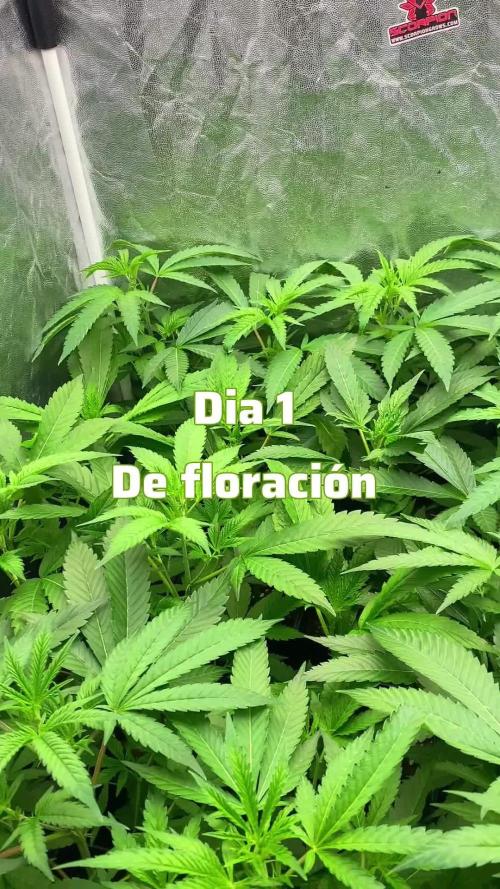
COMIENZA LA FLORACION Y ASI VAN LAS PEQUEÑAS
DESDE EL DIA 1 AL DIA 7 DE FLORACIÓN.
Likes
12
Share


@ChiTaN
Follow
The girl is huge, the buds are huge and meaty😃The smell is overwhelming, breathtaking :) I can't wait to finish😅

Likes
8
Share

@Antarctic
Follow
14.08.2025 – 20.08.2025
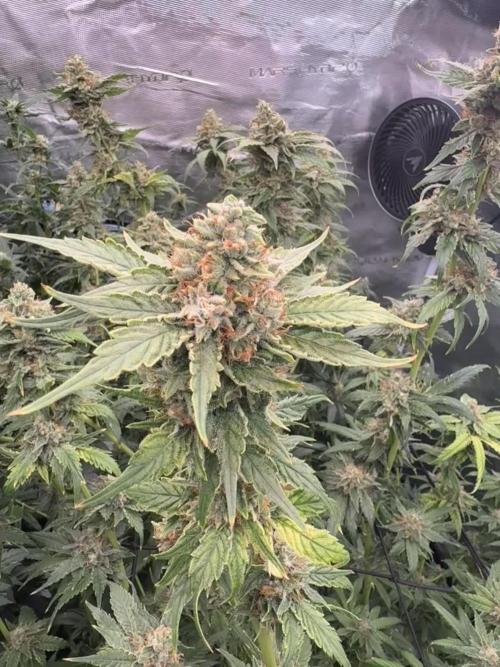
🔥 Week 5 Flower — bulking mode ON! 🔥
This week colas are really packing weight and starting to look chunky 🍇. The stretch is over, internodes are filled, and now it’s all about bud mass and resin production ✨.
I pushed the feed up to around 1300 ppm (EC 2.2) and the plants are loving it 💧. The recipe included the full combo: Hesi Hydro Bloom, CalMag, Big Bud Powder, C4, PK 13/14, Bud Candy, Hesi Boost, and a touch of Rhino Skin for extra strength.
The smell is insane now — sweet, fruity terps mixed with some heavy fuel notes, the tent reeks every time I open it 🚀.
Humidity is locked at 50%, temps around 30°C, and airflow is strong. This was the week I could finally see the payoff of stabilizing the pH and pushing the nutes properly. The buds are sticky already, and trichomes are frosting like crazy ❄️.
JetFuel is still smaller (my mistake earlier in training and positioning), but even it is starting to put on some decent weight. Next week, it’s all about resin and ripening 💎.
Likes
49
Share


@masterofsmeagol
Follow
7/4 SUN was poking out a little bit. Plants loved that little feeding and seen to he noticeable larger this morning. I'm considering starting the nutes. At least the organic ones as well as upping the water intake I've been scared to water with all this rain and my experience last time. I plan on applying BT this afternoon and doing some work on the bottoms of the plants. I also saw a chipmunk in my cage so I have some spots in my fence that need to be patched. I know I can't compare this year to orher years as these are seeds and all the other years were clones. I CAN say for certain that my plants are healthiest they've been out of any of my journals. Previous plants were much larger but I was fighting numerous fungal, pathogens and pests at the sane time. Ear wigs would've lollipopped most buddies by now but I've seen no sign of them. I'm going to apply more poison where they were and add some rat traps inside the cage for the chipmunks. Once I fix the cage I think I'll be good.
UPDATE: Went back over and fixed the holes on my cage from high winds. I found an old wire trap or cage and just cut sections and ziptied them to the existing wire and to the structure thus covering any open holes. I'll need to put lathes aroubdvtge outside because if a rodent REALLY wanted in they could get in. My belt had been wearing thin but I use shit until it breaks (yesterday the heal came off my shoe lol) so I was working hard sweating my nuts off and my belt gives out totally. At least ive got the major stuff done. I took a few videos too. I'm imagining it was this little bit of sun that gave these plants that boost of growth but I'm wondering if the added nutes had anything to do with it. Bags weren't light and I could feel moisture in the soil so I didn't water. I'll check again tomorrow morning. Since I didn't see many plants or even leaves for that matter with damage I decided to hold off ob the BT and the plant doctor. Only time will tell if that was the right decision.
7/5 Plants look fantastic. I see a few more holes in leaves sporadically amd I'm hoping it's pillars. I've seen lots of lightning bugs on my camera though and grasshoppers are abundant. Not one growth shoot has been chewed (knock on wood) which is what the earwigs had always done. I watched a video from last year and by nowcthey had lollipopped all lower leaves. It may not be the best weather growing season wise but despite the rh consistently in the 90's I still don't have pm or fungal pathogens. Need to get the BT out. Didn't water as we've had all that rain. I'll water either tonight or tomorrow morning. Sunny high in the 90s low is 66. Tomorrow looks good too.
UPDATE WENT BACK OVER AROUND FIVE. IT WAS 88 DEGREES SO I WANTED TO CHECK THE GROW BAGS. THE POTS ARE FINE. IT WAS HUMID AS HELL. ONE PLANT WAS SLIGHTLY DROOPY BUT VERY LIGHT AND DRY. I FOUND TWO OTHERS THAT SEEMED LIGHTER THAN THE REST BUT HADNT DROOPED. I MIXED TWO GALLONS OF WATER WITH 1TSP KANGOROOTS AMD PHED IT CLOSE TO 6. I FED THE 3 PLANTS THAT WERE SUPER DRY LIKE A HALF GALLON AND SPRED THE REST OVER THE OTHER EIGHT PLANTS. THEY WERENT DROOPING BUT THEY WERE VERY DRY. I PLAN ON A FULL WATER TOMORROW. I WOULDVE DONE IT TODAY IF THE TEMPS WERENT SO HIGH. ITS RAINED A MONTH STRAIGHT SO I HAVENT HAD TO WATER. I MADE A COUPLE VIDEOS BUT I'LL HAVE TO UPLOAD TOMORROW.
7/6 Another super hot day. I hefted the pots and they still had some weight but I could tell they were dry. This rain has messed up my watering schedule. Well it made it so I didn't NEED to water. These are big plants now. I need to get a schedule to stick too. They're going to probably need a gallon a piece at least. I'm still nervous watering. Right now I'm just reading the plants. I added .5tsp kelp me/you to 1 gallon of water to help with heat stress. I fed an additional two gallons to the garden this morning including the two container plants in the back. They were dry on top too but I know they have water deeper down. Next watering I'll be more consistent and try to give them there 10%. It's great having the bags elevated. I can finally see when I start getting run off. I could even measure the ph of it instead of relying on that meter. Ill check the ph when I go back over. Still a few 🐛 holes but they are few and far between. I really don't want to spray for such a small problem but if I cant find them at night that's what I'll do.
UPDATE: Another 90 degree day. I went back over and gave the garden a gallon of water as they were dry and it didn't rain. Tried to use a soil ph meter to check ph. First couple were 6.4, 6.5 then I got 7.3 and I accidently dropped it. Then I got somethings that were high eights and even one 9! Obviously the Meter shit the bed. I'll lower the ph of the water slightly when I fully water tomorrow and I'm going to measure the runoff.
7/8 I must've messed up the journal again as the dates are off. GAVE PLANTS A FULL WATERING. Each girl got a gallon. I couldn't upload my videos this morning as I had to break up a fight. 3 on 1. Didn't give me a chance to put the videos up. I'll take some stills then I can upload them. I took stills and they all uploaded but didn't fucking save. I'm nit going to keep trying to upload if it's not going to. Noticed a few more holes in leaves and one skeletinized leaf so I need to either spray the bt or something more versatile. I'm putting more poison around the cage and de between the bags. I'll go check things out tonight. Sick of writing a book and uploading to just hace them disappear
7/9 Did a quick video today. Noticed the bags were fairly light despite the plants being soaked amd the pallets wet. I was pressed for time. I gave two gallons to the entire garden. I hope that will hold them over until tomorrow. I'll need to up how much water I give them. Going with a gallon and a half next time. I see more pillar spots and a moth took off when I shook the plants this morning. So I'm gonna have too apply the BT. I figure if I go over before dark tonight I might be able to see aju nocturnal insects around. Luckily my dad feeds the birds and they are always there. I think they help with pests.
UPDATE IT WAS A LITTLE COOLER TODAY BUT MICH MORE HUMID. I WENT AROUND SIX TO MAKE SURE THE GIRLS WERE OK WITH WATER AND TO GIVE THEM A TREATMENT OF BT. I WENT THROUGH THE GARDEN ANDCGOUND THREE LEQVES TO DEFOLIATE AND LITERALLY A COUPLE LEAVES ON TWO PLANTS WITH PILLAR HILESM WHEN I ARRIVED TWO BIRDS FLEW OUT. A HORNET CAME IN WHILE I WAS THERE. THIS DO LESS APPROACH SEEMS TO BE REALLY WORKING. I DODNT SEE NEARLT ENOUGH DAMAGE TO WARRANT SPRAY8NG MY EXTREMELY HEALTHY GIROS WITH ANYTHING. ILL KEEP AN EYE ON THEM AND CLEAN THEM UP A BIT. I DO NEED TO INSTALL THE VERY8CAL TRELLIS FOR SUPPORT. THEYRE PRETTY HEALTHY THOUGH. ONE PLANT IS ABOUT AS WIDE AS IT IS TALL. STILL......PLANTS ARE EXPLODING AND ITS GETTING TIGHT IN THERE. I NEED TO GET THE TRELLIS UP THOUGH.
7/10 I went over and was planning to water. Plants were wet and it's raining. Top of the medium was moist but the bags were light. ONE bag was super light but seeing that we are having showers all day and an additional half inch of rain coming tonight so I didn't water them. Especially since they looked great. Decided to to spray BT yet as the damage is so small and i think the birds have been taking care of the pillars for me. Now I'm wondering if I should've gave that ONE plant a little bit of water but it will be find. Did a video. I'm being careful not to over water. Last year this is when all my buddies were devoured by earwigs. And no senescence like the years before. I think it was hust those earwigs. I haven't lost shot for leaves. Even the stalks are bright green and look amazing.


Likes
2
Share


@Gardens_of_Of
Follow
She is experiencing a general yellowing all over. I contacted Advanced Nutrients support and they consulted me to increase the feeding. Let’s hope that she recovers fast.
On the other hand, she keeps growing buds. Maybe a little stunned. That’s why I am waiting another 2 days for lollipoping.

Likes
22
Share


@Theia
Follow
White widow has finished at 64 days. Great plant with a stress free final week. She was on just water this week and was left to dry out for the last 3 days before the chop
She's only in a 3l pot of light mix that is only holding probably 2.5l so all in all I'm very happy with her wet weight. I don't see there being too much loss on this one as she drys out as her buds are rock hard dense and leaf mass is at a minimum.
Back in 10 days of 18c and 50%.
Thanks for looking.
