


Likes
Comments
Share


@Dunk_Junk
Follow
She only grew 2cm this week so that means she is is full flower mode.
Look how much the trichomes have increased this week!
I've never grown a CBD strain before, is this what they do? 😃
Minimal input from me this week. Just watering.

Likes
12
Share

@Xpie77
Follow
GrowDiary Verslag: The Bird × Red Wine – Feminized F1 Pheno-Hunt (Week 6 Bloei)
Kweker: Xpie77
Datum: 11 januari 2026
Strain: The Bird (Sensi Seeds) × Red Wine (Seeds Genetics) – zelfgemaakte feminized F1-zaadjes
Aantal planten: 16 stuks
Huidige fase: Week 6 bloei
Foto-update (Week 6)
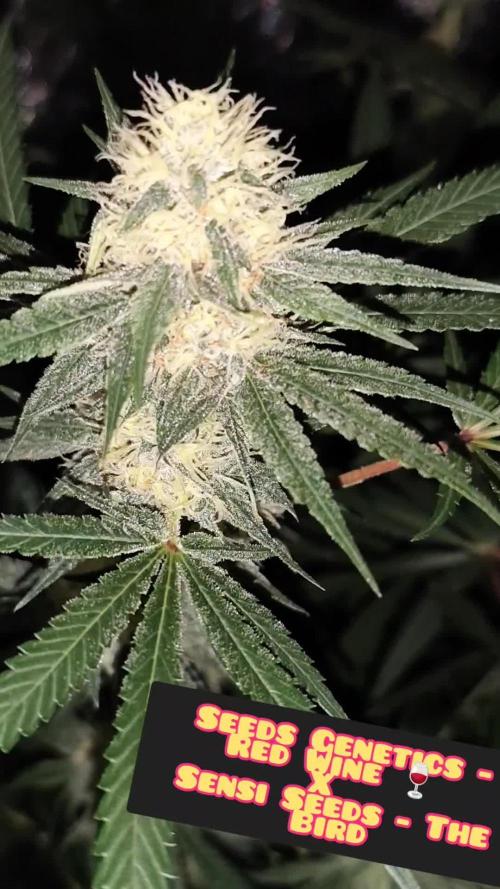
Hier een close-up van één van de buds in week 6 – kijk die insane trichome-laag! De hele top is bedekt met een dikke laag frost, alles glinstert onder het licht. Nog steeds voornamelijk groen, maar de pistillen worden dikker en donkerder, en er zit al een lichte paarse gloed in de calyxen bij sommige pheno’s. De echte paarse/blackout kleuren laten nog even op zich wachten, maar de resin-productie is nu al next level.
De bud ziet er super gezond en harsachtig uit – precies wat je wilt zien in week 6 van een indica-dominante kruising zoals deze.
Stand van zaken in Week 6
De 16 planten zijn in volle ontwikkeling en de bloei versnelt echt:
Bud-ontwikkeling: Buds zwellen flink op, calyxen worden groter en dikker. De toppen beginnen compact te worden.
Trichome-productie: Mega frost overal! Sugar leaves en buds zitten onder de hars – veel pheno’s lijken nu al harvest-ready qua trichomes (maar nog niet qua kleur/rijpheid).
Kleur: Nog grotendeels groen, met lichte paarse hints bij een paar planten. Ik hou de nachttemperatuur laag om de anthocyaninen te boosten – verwacht meer paars in week 7-8.
Aroma: Wordt steeds intenser in de tent: zoete druiven/bessen (Red Wine) met een gassy/funky punch (The Bird). Ruikt nu al als een premium strain.
Gezondheid: Topconditie. Bladeren donkergroen, geen tekorten, goede stretch voorbij, alles gelijkmatig.
Wat te verwachten de komende weken
Nog 2-4 weken bloei (afhankelijk per pheno: 8-10 weken totaal).
Buds harden verder op en trichomes gaan van helder → milky → amber (tijd om te checken met loep!).
Hopelijk meer kleurverkleuring bij de Red Wine-dominante pheno’s.
Beginnen met lichte flush richting het einde.
Conclusie
Week 6 is waar het echt spannend wordt – de frost is insane en de potentie schreeuwt eruit. Deze The Bird × Red Wine F1’s ontwikkelen zich prachtig, en met zoveel variatie in de 16 planten ga ik zeker een paar absolute killers vinden. Nog geen paars spektakel, maar de resin-laag maakt het al de moeite waard!
Stay tuned voor week 7/8 – dan komt de echte magie. 🍇✈️🐦
#TheBird #RedWine #F1PhenoHunt #FeminizedSeeds #ColloidalSilver #Week6Bloom #GrowDiaries #CannabisBreeding #Xpie77
Wat denken jullie: hoeveel weken nog tot harvest, en gaat het paars nog komen? Drop je voorspelling! 🔥


Likes
91
Share


@Salokin
Follow
Hi Growmies,
I'm excited to share some big news today! Although there have been some unexpected twists, it's all part of the incredible journey of gardening.
I've just completed the harvest, a tad earlier than initially planned, due to finding a bit of mold in one of the buds. Despite this minor hiccup, the trichomes were already at a decent 10% to 15% amber. So, all things considered, the timing ended up being pretty spot-on. The harvested weight was a solid 609 grams after trimming, which is quite a feat!
A lesson learned for next time: perhaps I let her grow a few too many buds, leading to a denser canopy than ideal. But on the bright side, the aroma is absolutely divine. I sampled an airy bud that had dried a bit, and wow, it packs a stronger punch than its clone mother. And the flavor? Pure, unadulterated cheese – no hint of pineapple here!
Now, the anticipation builds for the final dry weight, which I should know in about 3-4 days. It's always exciting to see the fruits of our labor fully realized.
A huge thanks to everyone who's been following along on this journey. Your interest and support mean the world.
And now, the adventure continues! I've started on Epic Buzz by Anesia Seeds. The diary for this new chapter is up and running, and the seedlings have already sprouted, marking the beginning of another exciting phase.
(https://growdiaries.com/diaries/185718-grow-journal-by-salokin)
I can't wait to share more updates with you all. Here's to the continued growth and learning in our gardening adventures!

Likes
43
Share


@Esoteric_growing
Follow
Height has almost doubled in one week, 2 of them are a bit bigger than their siblings but all looking very good although the front right plant seems to be the runt of the family although it’s improving.
Likes
7
Share


@Naujas
Follow
the girl went to the tent on the 69th, they predict very bad weather, which would probably cause her to rot, I will try to finish the growth in the tent, she has 14 days left and will be cut, I am going on vacation, so I am forced to do it a little earlier... In general, the girl is very it's healthy, it barely fit in the tent, so a fair amount of leaves were stuck to the edges of the tent, I've never seen anything like it, that people carry from nature to the tent - and not from it to nature :D it will be interesting to see how it all ends :) good luck:)


Likes
15
Share


@JeyGanesha
Follow
Iniziò seconda settimana ,sé tutto procede più che bene...da questa settimana inizierò a darGli anche un pochino di Ph perfecto 😉💪👍..........
Oggi all'11 °giorno ho tagliato via 2 foglie perché ho trovato delle macchie di ruggine su 2 foglie......
Likes
62
Share


@masterofsmeagol
Follow
9/26 This fucking sucks. Site won't let me upload pictures. Flood warning in effect. I believe this is the fifth day of rain. Not trickles. Sheet rain and high winds. My dream catchers have been taking this like a champ. Ice cream cake was totally sideways for awhile despite vertical trellis. I came down this morning to branches bent at 90° angles. I could've taken them but if I make it through this rain today it's supposed to stop tonight. Then I'll have a week of good weather. Buds are exploding. Even the ice cream cake. That will need more time but I'm getting close with the others. They are never out of sight. I'm surprised they've held up so well so far. I made my decision it would be stupid to alter it now, seeing how the storm is ending. I was going to spray k bicarb but I'll wait until after this rain.UPDATE: Went back over and the garden was flooded. I needed to put one grow bag on top of another as one plant was in six inches of water. I drained it and added supports and pulled off any dead leaves. I tried taking a video but it was raining so hard it stopped after 7 secs. Luckily my dreamcatchers are strong AF. Took to little ones and put them under the barn under a light. It's FINALLY stopped raining. After I smoke I gotta go back over and shake buds again and check for rot. Luckily nothing was broken but it was hanging right down. Fucking sucks. Spent like two hours in sheet rain. UPDATE: Stopped raining. I went over and continued to defoliate and cut little bits of rot from the interior. Sprayed a gallon of potassium bicarbonate and dawn on ever spot of rot I could find. I've been to the patch multiple times today. Found a few earwigs. I think I've found my problem. Late stage leaf septoria with earwigs eating the rotting plant matter. Fucking sucks but at least I have an idea. Can't upload pics and phone wouldn't even work in the rain. One 7 second video.
9/27 The extra work I've been putting in has certainly helped. I got in touch with a company who will do any type of extraction I want for $200 a lb. Fucking awesome. My cousin got 250 grams love rosin last year with this same company. I am sore. I checked trichs but I'm not seeing much Amber yet. Buds are gaining density fast. At least now that I have an idea what my problem is I can address it. Plants showed signs of pm after drying out. I did a k bicarb spray and this morning there isn't a spot. I need to take care of what's hanging so that's the plan today.
9/28 I think I made the right decision.my plants are looking good. Not where I want them but it's getting close. I checked the trichs this morning. Under 24 hour surveillance till harvest. Well it has been but now I stay up every nigh watching the cctv. Went down in the middle of the night to check for nocturnal bugs. Didn't find any. I've been defoliating the yellow septoria leaves. I went through every plant and cut out any rot and removed andy sugar leaves that started to turn brown. This and the k bicarb seem to help. I think that Leaf septoria has dwarfed the growth of the smaller dream catcher. Buds don't seem to be growing much more. Even my ICC has buds almost the size of the little one. The other dreamcatcher will probably be an elbow plant. The ice cream cake has beefed up incredibly and is covered in trich's. I'm super excited but I'm cautious at the same time. I hate that fucking dog but it's an added layer of security. Soon I'll do the harvest report for DJ short blueberry.
9/29 Trich's are changing fast. Haven't been watering lately do to all the rain. Plants are real real close. Up all night watching. Dog flipped out at 4am but no one was there. I want to wait until I have a little more Amber but I'm super excited. I may end up taking some tops. May end up doing a k bicarb spray today. Haven't decided yet. I'll update as I go. I've been making head way trimming the blueberry.
9/30. Things are looking beautiful. The smell at the garden is amazing. Lots of hard work left. Plants do have septoria and slight pm so I may do a bud wash. I cut a branch from each plant. I think I'm at the point of diminishing returns. Every wet night mold and critters take more and the chances of some idiot coming to try and take my shit increases. I may end up harvesting a little earlier. I'd lie to wait but the trichs look pretty good to me. Still doing all the maintenance required. I am extremely proud of this grow. I fought everything this year. Started with mites and thrips. Powder mildew came with them too. Now I've faced every pest or disease this year. At least it seems that way. I've seen the horror stories on my local Facebook thread. Leave your comments and let me know what you think about trichome stages and whether it would be ok to harvest.
10/1 Rained last night. Defoliated and removed some rot. I'll update later in the day.
10/2 Rained last night and I have A LOT to update which I will later.


Likes
10
Share


@JuanCamiloP
Follow
Como ven los tricomas ? Ya están listos para la cosecha?
Las dejaré una semana más aproximadamente con riego solo agua

Likes
16
Share

@Chubbs
Follow
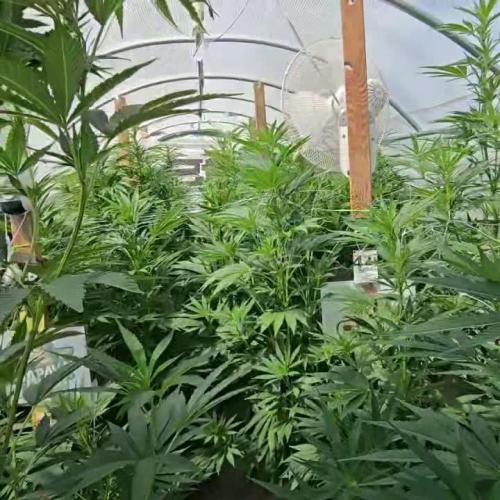
Wow, another week done. It's become an absolute jungle in my greenhouse. A few of the GG4/Sherbets tops had to be mainlined since they're hitting the top of the greenhouse at 7ft8in tall. The smell is definitely getting stronger every day and it goes from super pungent, to sweet, to almost tropical. They're all still looking nice and healthy. The Athena Blended Line works wonders with my well water as the plants couldn't be happier.
All in all Happy Growing.
Likes
25
Share


@Kikiwindsurf
Follow
HAPPY 420 GUYS !! GG day 46 y 47 and LH day 38
23/4/2020 : Lemon haze y la GG con LST estan muy resinosas, la que tiene corte apical no tanto, se nota el estrés y un poco el exceso de nutrientes porque come menos que su hermana. Solo he regado con agua de lluvia y PH regulado a 6. Ultima semana iluminacion muy inestable (unos dias 10 horas otros 12h otros 20h.... Creo que podre mantenerlo estable en 20 horas hasta el fin, pero controlar la temperatura debajo del HPS las horas que no hay sol se me ha hecho muy complicado... Sigue atento y recuerda que tengo una duda sobre la nutrición de mis niñas en mi pagina !
Likes
8
Share


@eldruida_lamota
Follow
Vamos finalizamos la quinta semana de estas Blue Spider de ZambezaSeeds.
Una tiene alguna carencia las otras 2 no van mal tienen buen color y El Progreso de formación de las flores es el correcto también en las 2 sanas la otra si se nota que la carencia afecta algo al engorde a si que a ver si soluciono el problema.
Por lo demás bien vamos viendo el proceso estas últimas semanas.
Agrobeta:
https://www.agrobeta.com/agrobetatiendaonline/36-abonos-canamo
Mars hydro:
Code discount: EL420
https://www.mars-hydro.com/
Las maximas de temperatura no superan los 26 grados y las mínimas no bajan 20, así que no me puedo quejar.
Los niveles de humedad también son los correctos van entre 50%/65% de humedad relativa.
Por supuesto el Ph lo estamos dejando alrededor de 6.
Hasta aquí es todo, buenos humos 💨💨💨.

Likes
18
Share


@Silverback_Guerilla
Follow
10/26:
All but one are flowering now, and most are stretching. There are a few shorter ones, thankfully, so they'll get moved up to the top of the closet in another day or two and I'll have a little more room for the big girls to spread out a little bit.
10/27:
I rearranged the garden a little bit today and checked whether they needed water or not. I foliar fed with Big Bloom and a little Tiger Bloom today.
I'm seeing signs of potassium deficiency on several of them.
10/28:
I watered everybody with about 1/4 gallon and included a little terpinator, cal-mag, bembe, and beastie bloomz.
I uploaded a couple of photos showing some weird curling of the newest growth...just an odd varietal trait I think because I've seen it before on my Candy Cane F2's.
10/29:
I rotated everybody on the edges and plucked some older, lower leaves. They are damn near totally dry, so flushing tomorrow.
10/30:
I decided not to flush based partly on how shitty the weather is right now...and partly because I'm seeing some N deficiency signs in several plants and really can't afford to put off feeding them again until they dry after a 3-gallon flush. So, instead, I thoroughly watered everybody with about 3/4 gallon including cal-mag, myco/tricho, beneficial bacteria, humic acid, bembe, and terpinator. I let them sit in their catchment trays long enough to soak all the run-off back up, so they are fairly well saturated now with things that should make the roots really happy. I've added another oscillating fan and got the hygrostat set to kick on the exhaust whenever the humidity reaches 55%, so it's pretty much staying on right now. Hopefully they are dried back out by Friday so I can give them a last good dose of N to help with their stretch. I'll also start going heavy with P and K, and increase terpenoid and flavonoid enhancers.
I'm gonna give Signal by True a try when I finish my current bottle of Terpinator. I just can't bring myself to keep paying over $60/gallon when I can get a gallon of Signal for under $40.
While watering today, I emptied the closet completely and had plants all over the place...my cats were in heaven..stalking each other under the jungle canopy.😺 It really does amaze me that I'm fitting all these plants into such a small space..😳
10/31:
I rotated the edge plants and checked their moisture level. I'll feed them tomorrow.
11/1:
I took everybody out of the closet and did a little defoliating. I fed everybody with about a half-gallon including all the good stuff.
Likes
54
Share


@Roberts
Follow
I am dropping a seed from Pure Instinto Seeds called Gorilla Cookies. I am grow it under the Spider Farmer G3000. The light use to be named the G300w. I scuffed the seed and have placed it in water. It is on a Spider Farmer germination mat for a little warmth. It will remain in the cup for 24 to 48 hours. Basically once I get a tap root started. I will put her in a 4 gallons of coco/perlite substrate. My schedule is about a 9 week vegging then flipping to flowering. 🤞🏻 for a great grow. Thank you Spider Farmer, and Pure Instinto Seeds. 🤜🏻🤛🏻🌱🌱🌱
Thank you grow diaries community for the 👇likes👇, follows, comments, and subscriptions on my YouTube channel👇. ❄️🌱🍻
Happy Growing 🌱🌱🌱
https://youtube.com/channel/UCAhN7yRzWLpcaRHhMIQ7X4g
Spider Farmer G300w: https://amzn.to/3S2zvsd
Spider Farmer 10X20 Heat Mat Kit - https://amz.fun/lsa0J
Spider Farmer Amazon Store: https://www.amazon.com/spiderfarmer
Spider Farmer Official Site: https://spider-farmer.com
Discount code: saveurcash


Likes
3
Share
@biglittlebird
Follow
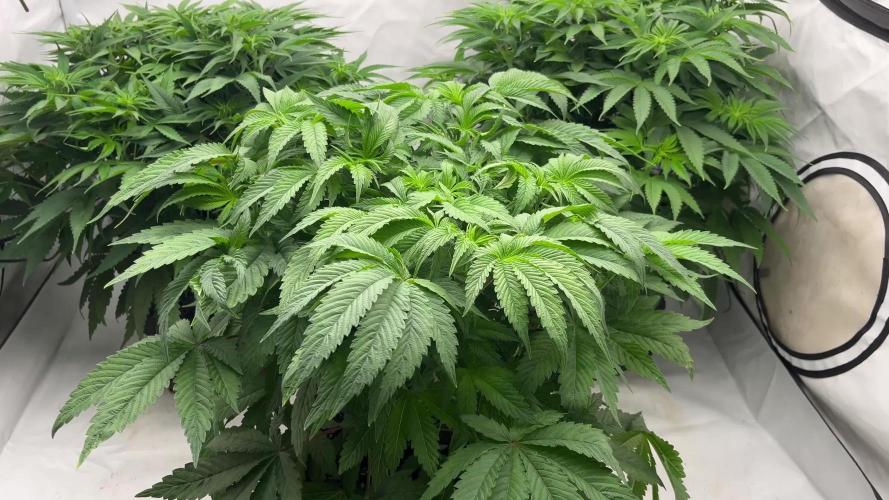
Je to zatím nádhera, košaté děvčice to jsou, tak uvidíme co vykouzlí v kvetení, snad to budou pořádně oharky ✌️

Likes
55
Share

@Roberts
Follow
I am dropping a fruity pebbles auto from ILGM. Seed was lightly scuffed on ends, and placed in a cup of water for 24 to 48 hours. As soon as I get a tap root tail I will place her directly in the rockwool. Thank you ILGM. 🤜🏻🤛🏻🌱🌱🌱
Thank you grow diaries community for the 👇likes👇, follows, comments, and subscriptions on my YouTube channel👇. ❄️🌱🍻
Happy Growing 🌱🌱🌱
https://youtube.com/channel/UCAhN7yRzWLpcaRHhMIQ7X4g
Likes
2
Share


@High_Grade_Dadli
Follow
So far so good transplant to a 15 gal...good thing I didn't wait till nxt week...top soil sink to the bottom and was hand for the roots to get tru
Likes
14
Share


@SamDo
Follow
🇺🇸 Week 8 of Growth – Mother Gorilla – Royal Queen Seeds 🇺🇸
This week, I’m happy! The roots have recovered well. They continue to eliminate dead roots, and you can see in the photos that new root growth is emerging. This is a great sign—it means the plant is regaining strength. The roots have resumed their growth, which is the big highlight of the week.
The plant has also continued to develop foliage. It’s now dense and well-filled out. Today, I did a major defoliation to maximize light penetration and maintain good airflow. Now, I’ll let the plant recover because I think I’ll be switching to flowering soon, maybe next week or the one after. I really want to optimize light penetration to encourage new shoots, which will later become flowering sites.
Environmental Conditions & Nutrients:
We’re still at 18 hours of light, with temperatures between 25–27°C and humidity around 70%.
pH and EC:
I’ve had some issues with pH rising. It tends to climb to 6.5–6.6, so I have to lower it regularly. Since switching back to RO water, I stopped adding tap water. But now, I’ve started reintroducing small amounts to help stabilize the nutrient solution. Initially, my RO water had an EC of 0.1, which I increased to 0.2–0.3, and now I plan to raise it to 0.4 before adding nutrients. This should help maintain a more stable pH.
The EC was set at 1.4, and now it has dropped slightly to 1.3, which is great news—it means the plant is drinking and absorbing nutrients well.
Final Thoughts:
• The roots are bouncing back.
• The plant is strong and healthy.
• I performed heavy defoliation and topped some apical growths to keep the canopy even as I finish filling the Scrog net.
• I changed the nutrient solution this week, so we’re on a fresh mix.
Now, I’ll let the plant recover from the defoliation, which might slow it down for a couple of days. Overall, things are looking great, and we’re getting closer to flowering!
⸻
🇫🇷 Semaine 8 de Croissance – Mother Gorilla – Royal Queen Seeds 🇫🇷
Cette semaine, je suis content ! Les racines ont bien repris. Elles continuent d’éliminer les racines mortes, et sur les photos, on peut voir que de nouvelles pousses apparaissent. C’est un excellent signe : la plante retrouve sa vigueur. Les racines ont repris leur croissance, et c’est vraiment la bonne nouvelle de la semaine.
La plante a également continué son développement foliaire. Elle est maintenant bien touffue et bien fournie. Aujourd’hui, j’ai fait une grosse défoliation pour maximiser la pénétration lumineuse et maintenir une bonne circulation de l’air. Maintenant, je vais laisser la plante récupérer tranquillement, car je pense la passer en floraison bientôt, probablement la semaine prochaine ou celle d’après. Je veux vraiment optimiser la pénétration lumineuse pour favoriser de nouvelles pousses, qui deviendront des sites de floraison.
Conditions & Nutrition :
On reste sur 18 heures de lumière, avec des températures entre 25 et 27°C, et une humidité d’environ 70%.
pH et EC :
J’ai eu quelques soucis avec le pH, qui a tendance à monter jusqu’à 6,5–6,6, donc je dois le réajuster régulièrement. Depuis que je suis repassé à l’eau osmosée, je ne mets plus d’eau du robinet, mais j’ai recommencé à en ajouter un peu pour aider à stabiliser la solution nutritive. À l’origine, mon eau osmosée avait une EC de 0,1, que j’ai augmentée à 0,2–0,3, et maintenant, je compte la monter à 0,4 avant d’ajouter les nutriments. Cela devrait aider à maintenir un pH plus stable.
L’EC était à 1,4, et maintenant, elle est descendue à 1,3, ce qui est une bonne nouvelle : la plante boit et absorbe bien les nutriments.
En résumé :
• Les racines reprennent bien.
• La plante est forte et en bonne santé.
• J’ai fait une grosse défoliation et topé quelques apex pour maintenir une canopée homogène et finaliser le remplissage du Scrog.
• Changement de solution nutritive cette semaine, donc on repart sur du neuf.
Je vais maintenant laisser la plante récupérer de la défoliation, ce qui la ralentira sans doute un peu pendant 2–3 jours. Dans l’ensemble, ça se passe très bien, et on se rapproche de la floraison !
🤘😎


