




Likes
25
Share


@Lou_Grows
Follow
Not much to say, by the end of this week I will defoliate. She is running fibe without any problem so far

Likes
3
Share


@TheSurfBud
Follow
Ganja Farmer Seeds
Amnesia Haze Auto
In @highpoweredorganics new ISLAND-BLEND.
Fed water soluble powders.
AQUA-MARINE Grow Formula 5.1.4 paired with OCEAN-POTION and RHIZO-MOJO in dechlorinated water.
Alternating ANTI-MATTER & DARK-MATTER feds weekly.
Foliar fed GREEN-SUPREME daily
Following High Powered Organics Island-Blend Feed Guide.
https://www.highpoweredorganics.com/
Happy growing friends 🇦🇺🇦🇺🇦🇺

Likes
8
Share


@NORTHWALESAUTOS
Follow
Sooo she's flipped into flower and shes growing amazing.. would expect any different from thsi strain.
She's going to start filling out. Was expecting more of a stretch but maybe there's still time.
Started her on bloom now so only good things to come.

Likes
42
Share


@MrJoint
Follow
🍁Dicas e sugestões? As meninas agradecem.
📸Update de fotos, vídeos e informações diariamente.
DAY 15
Muito feliz com a germinação da COP, ela está se desenvolvendo muito bem. Good girl!
💡Coloquei a luz em 50% de potência e gostei do resultado.
💦Reguei a C1 e C2 (250ml cada) com BACTOHEMP bacilos e bactérias + Acophyllum extrato de algas. Elas parecem felizes :)
DAY 16
Escoras de apoio para C3 e C4 até o transplante. COP está muito bem.
O transplante será realizado antes das meninas dormirem (menos stress para as raízes) e serão regadas com 💦1L de água + 🥄1 colher de chá de BACTOHEMP.
DAY 17
C1 e C2 estão cheias de vigor.
COP e C4 reagiram muito bem ao transplante.
C3 um pouco triste com o processo.
DAY 18
Todas as meninas estão lindamente bem!
C3 já está com mais saúde e feliz, 24h após o transplante.
📝NOTA:
💡Aumentei o dimer do Led para 75%
⚠️Temperatura aumentou 3°C no growbox.
DAY 19
🚫🐜Antes das meninas dormirem vou borrifar óleo de neem (250ml) para evitar pragas e insetos.
DAY 20
Hoje foi dia de beber água! Dia de rega, as meninas estão todas saudáveis.
DAY 21
C1 e C2 estão com muita sede! Estava regando 125ml/dia, hoje aumentei a para 250ml/dia.
Após a difícil germinação COP está crescendo muito bem.
🎃Obrigado por verificar o meu cultivo.

Likes
12
Share


@thonhash
Follow
Subimos algo más los ml de terranabis,buena asimilación y engorde,gracias a enzynabis que busca el equilibrio de todo.


Likes
3
Share


@AustinRon
Follow
Week 8 - Flower Week 4
Lemon Jeffrey by IRIE Genetics (14 Starts for 8 Finishers)
63-70 Days Flower (9 - 10 Weeks)
Seeds Wet: Monday 14 May 2023
Harvest Date Range: [ 2023-08-11, 2024-08-21]
Weeks Observations
- Local weather conditions have been unseasonably HIGH Humidity. First time in 3 years am unable to reduce to standard levels. Dehumidifier being installed today.
- Today is the 21st day since flip - we’ve experienced bolt since week 1, up to 5” in a day
Start of week:
- Dates: [2023-07-10: LJ2Q 57:F:4:1, 2023-07-16: LJ2Q 63:F:4:7 ]
End of Week:
- Plant Height Range: [ 30, 44, in]
- Water/Day/Plant: [ 720, ml]
EnvironmentalCurrent:
- Scotoperiod: [ 12, hrs] # 1900 - 0700 + 24
- LightIntensityPeak: [ 975, µMol/m2/s ]
- DailyLightIntegral: [ 42.1, Mol/m2] # Target: < [ 40, Mol/m2/day]
- LightDistance: [ 12, in] # Despite SuperCropping (Bending & Twisting), we’re wishing 12” of the Light at End of week
- TempAvg: [ 77.5, °F]
- RH: [ 66.9, %]
- VPD: [ 0.85, kPa] # Achieved Ideal ‘Early’ - need to bump to 1.05 to 1.1
- FeedwaterPerPlantPerDay: [ 720, ml]
- FeedwaterPerDayTotal: [ 5760, ml] # 1.5 Gal/Day
- EC: [ 2.0, mS]
Environment NOTES:
- Because room temperature overnight is 68°F, we need to
1. Nightly (2200) CLOSE AC VENT to Grow Room
2. Daily (0700) OPEN Vent to Grow Room
- Goal is to maintain TENT & CABINET TEMPERATURES OVERNIGHT
- RULE
- CLOSE Room Airflow during ‘Daylight’ periods(2030 - 0700) When on Flipped Schedule (Night LIGHT/Day DARK)
- OPEN during ‘Nightime’ Period (0700 - 2200)
Objective
- 8 Plants, Single Colas, Sea of Green
SOP:
- WEAR CLEAN GLOVES FOR ALL SEED OPERATIONS
- CLEAN All Instruments before use
- Light Strengthveg := 100 + (#nodes * 100)
- Light Strengthflower := [ 1000, 600, µMol/m2/s]
- Scotoperiodveg := [ 1300, 1900, 6, hr]
- Scotoperiodflower := [ 0700-1900, 12, hr]
Environment
- Mid Flower (2 Weeks) (Week 8-9) (F4-F5)
- Temp: 78-82°F
- VPD: 1.1 ± 0.1
- Photoperiod: 12/12
- Light Strength: 930 µMol/m2/s
- EC: 2.3
- Late Flower (Week 10-14) (F5-F9)
- Temp: 78-80°F
- VPD: 1.2 ± 0.2
- Photoperiod: 12/123
- Light Strength: [930, 850, µMol/m2/s]
- EC: 2.1 # Week 9-11
- EC: 1.4 # Week 12
- EC: 1.1 # Week 13
- Finish (Week 14) ( F10)
- Temp: 78°F
- VPD: 1.3 ± 0.2
- PPFD: 750 peak
- Resin Bloom ONLY
- EC: 0.8
Rooted Leaf Hydro 1.7 - 1.9 EC (Half RLA,Hydro Chart, EC to Targets):
- Primer A: [ 8, ml, gal]
- Primer B: [ 8, ml, gal]
- Silica Skin: [ 4, ml, gal]
- SLF-100: [ 5, ml, gal]
- PhotosynthesisPlus: [ 6, ml, gal]
____________________
Mon 10 Jul 2023 # Flower 4
LJ2Q 57:F:4:1
- W/ Dehumidifier Installed, our Environment is now …
Tue 11 Jul 2023
LJ2Q 58:F:4:2
Refill Res
- [x] 6.5 - 7 Gal
- [x] Primer A&B: [ 8, ml, gal], [ 80, ml]
- [x] Silica Skin: [ 4, ml, gal], [ 40, ml]
- [x] Photosynthesis+: [ 6, ml, gal], [ 60, ml]
- [x] SLF-100: [ 5, ml, gal], [ 50, ml]
- [x] Dr. Bohners: [ 10, drops]
- [x] ECRange: [ 1.9, 2.0, mS]
- [x] TempReservoir: [ 60, °F]
Wed 12 Jul 2023
LJ2Q 59:F:4:3
Thu 13 Jul 2023
LJ2Q 60:F:4:4
Friday 14 Jul 2023
LJ2Q 61:F:4:5
Sat 15 Jul 2023
LJ2Q 62:F:4:6
- Plants per Feed Line: 4
- Feedwater per Line per feed (FPL): 120
- Feedwater per event (FPE): [ 480, ml]
- Events per day (EPD): 12 # Hourly Fertigation During Lights ON
- Feedwater per day: FPE X EPD: 480 x 12: [ 5760, ml, day]
- Mix 2 Gallons @ 75% Strength (Medium Chart, FW 3)
- Primer A: [ 7.4, ml, gal], [ 15, ml]
- Primer B: [ 7.4, ml, gal], [ 15, ml]
- CalMag Fuel: [ 3, ml, gal], [6, ml]
- SilicaSkin: [ 3, ml, gal], [ 6, ml]
- Lush Green: [ 3, ml, gal], [ 6, ml]
- Root Anchor: [ 3, ml, gal], [ 6, ml]
- Peak Bloom: [ 3, ml, gal], [ 6, ml]
- Resin Bloom: [1.5, ml, gal], [3, ml]
Sun 16 Jul 2023
LJ2Q 63:F:4:7



Likes
3
Share


@DeepSouthDank
Follow
Life got a bit out of control, however, I am here with an update! :)
Unfortunately, the plants will need to come down tomorrow. The weather has turned and I havent been able to spend as much time at the location which has led to some botrytis on one or two of the plants :(
Plants have been fed only water no nutes for the last few days, it is unfortunate because they could've gone at least another 10-14 days if the conditions were right or I was able to be at the location full time.
Some observations -
Two of the keeper pheno's are quite similar to each other, and the other two are even more similar to each other.
Overall the genetics seem quite stable as all the plants are similar overall with slight variations with two Pheno 1 and 2 standing out the most.
Pheno #2 turned out to be something special! Sweet candy cookie nose and dense sluricane-looking nugs. Worth testing indoors to see her true potential.
Pheno #1 has bigger nugs and funky fruity nose, also with considering keeping.
Pheno #3 and #4 are very similar, but nothing worth keeping IMO.
Last thoughts/notes:
I will have to re-veg and take cuts of Pheno 1 because no cuttings were taken because I wasnt planning on keeping any :(
When the cuts are ready I will re-test pheno 1 indoors in the coming months.
The Tooth Fairy by Renegade Genetics Tooth Fairy has surprised me. I wasn't expecting much from these freebies from an unknown breeder, however, these girls performed exceptionally well given the timeline, conditions and circumstances. Sweet berry candy aromas, really good trichome development and easy-to-grow nature make her worth giving a whirl.
I look forward to re-testing the keeper indoors in the coming months. look out for that diary!
This will be the last update before the final check-in.
The next and final check-in will be bud shots, weight and smoke report.
Happy Growing 🌱✊
Likes
17
Share


@Sergio_721
Follow
16 days from birth the temperatures unfortunately with the lights on are still high but I don't think the girls are suffering very well despite a sudden irrigation that almost broke them
Likes
7
Share


@CURATI_DA_SOLO
Follow
Anche lei una pianta strepitosa veramente moltissimi tricomi ovunque ha 6 cime apicali e promette una qualità veramente eccellente...si spera in belle cime nel frattempo mi impegno a caricare più foto e aggiornamenti grazie a tutti voi!
Likes
4
Share


@Ctsbestsmoke
Follow
They just kept stacking and stacking. I’m just loving the growth and seeing how beautiful they are coming! Can’t wait till these are done and I can start my fastbud autos!!!!!

Likes
6
Share

@carlitoshaze44
Follow
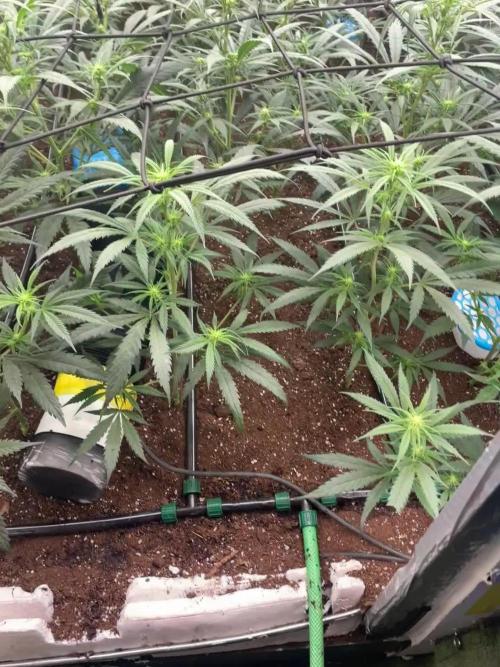
Así es como empezamos la tercera semana,seguimos con humedad alta pero la vamos controlando..
Estos días da buen tiempo la humedad en la calle será mucho más baja así podré meter aire sin tanta humedad..
De momento todo bien en el cultivo ningún problema hasta la fecha.
Ya podéis ver,y comentar sobre algo que veáis que yo no!
Como dicen! Ven veinte ojos mejor que dos!
🖖
Día 12
Último fungicida prevención mutritis,hongos
humedad.
Primer riego foliar hormonas producción de flores.
🌹
Día 13
Nada en especial solo observar si veo algún cambio tras las hormonas,aún no veo grandes observaciones fuera de lo natural del paso de los días.
En el día de mañana por lo que me recomendó el fabricante se verán los resultados a la vista!
Comentar que seguimos con la iluminación al 100x100 de capacidad
Marshydro sp3000 x2
Hero led Ignator t720
Yxo led 60w ir+un espectro completo
En la siguiente semana me llega el nuevo driver de philips para poder conectar la lámpara de IR que pude adquirir a Yxo nuevamente! Lampara led espectro completo + IR 70w .
Me vendrá muy bien para el pequeño espacio de la puerta que necesita más iluminación para poder desarrollar bien esas dos plantas,de la entrada.
La humedad fue cosa del pasado.
Evite el uso de desumificador eléctrico añadiendo varios de sales,deciros que funcionan muy bien no dan un control exacto pero mantienen una humedad interior estable para todo el periodo de floración!
50% de humedad lo demuestra!
Hoy añadi un poco más de sustrato. 110 litros exactamente sobre la cama de cultivo que tenía de topcrop con humus de lombriz,tierra diatomeas y alimentada con npk.
Después de eso tengo en mi cama de cultivo 810 litros de sustrato para mis 44haze. 💐
Saludos
Día 14
Anulado el intractor,ya que el propio extractor mete aire fresco por las rendijas de ventilación..
En lo largo de la noche iré viendo el resultado en datos..
Ya coloque los soportes para la nueva iluminación que en estos días llega su driver de sustitución
E visto que algunas plantas en estos dos días están en 67-70cm..
Ya colocado el sistema de riego para evitar más pisadas en el cultivo ya que algunas se realentizaron por pisar encima de sus raíces..
Le e metido una pequeña poda de bajos para airear más la zonas bajas del cultivo.
Pequeño riego de folacion con remedio de agua azúcar para dos que estaban más estresadas.
Día 15
Hoy era día de regar pero el sustrato aún parece húmedo en gran proporción aplazare el riego.
Día 16
Hoy me acerqué a ver las niñas en caso de que necesitaran algo..
Se ve todo correcto parece que no tienen mucha sed.. llevamos todo el día de alta humedad y lluvia en el exterior..
Las dejaré hoy sin riego también.
El sustrato está bien alimentado.
Mañana seguramente se presente el armario con una plantación pidiendo agua a gritos!! Jejeje.. así comerán con más ganas!,veremos qué tal..
Dia 17
Perfecto,las plantas se han mantenido muy bien para estar el sustrato ,prácticamente casi seco..
Se le aplicaron 32litros a la cama de sustrato con el riego de goteo
Y la humedad se ha mantenido bastante bien .
Una vez termine el riego la temperatura en el armario cayó considerablemente,llegando este a 16 grados.
Una vez se cierra todo vuelve a sus parámetros controlados de 23/24 grados.

Likes
5
Share


@Dmars
Follow
1/22 After some conversations I think I’ve determined the source of my issues. Using primarily coco for organics I guess has some drawbacks and it’s possible that’s why each grow has similar problems around this time. Only thing I can think of to do is top dress in some worm castings mixed in with some more Coco Loco to top off the pots, and then tomorrow I’ll water in the compost tea that I just set up to brew. After that I’ll be doing recharge in almost every watering. Going to try maxing out the microbe content for each pot as much as possible. Along with this I’ll be steadily raising the light intensity to where it should be. Current light setting is 490 PAR / 35.2 DLI.
1/23 Top dressed in about 2 cups of Coco Loco and 1 cup of worm castings to both. Since my coco medium isn’t doing a great job of handling organics I’ll just have to turbo charge the microbe level as much as I can. Both also got a compost tea that I started brewing yesterday. Readjusted the light to 600 PAR / 43.2 DLI. I wanted to go gradual but I’m also curious if they will take that hard step up in light.
1/24 Everything looks really good. I have a good feeling so long as I keep up with recharge and water from here on out it should be fine.
1/25 Both got a full watering with recharge.
1/26 Buds getting fatter and frostier. Looks good.

Likes
17
Share


@FrankieBones
Follow
Hi 420 Family.
Start of week 6, and we are well into the blooming stage. So far so good, these ladies have gained a lot of growth over the past 2 weeks, they have stretched a lot and have now shifted their energy into making buds. The one WW is a little ahead of the rest in maturity it seems, the other two WW's not far behind. PL's I think will flower for an extra week or two looking at the bud sites and the pistils. At this stage they are getting about 1L of bloom feed every 1.5 days but it does seem to pick up and they are getting more thirsty every watering. I guess they will eventually settle on about 1L per day.
D36 - 11 Aug - All good and no complaints, other than the stretchy PL's. Let's hope they just make for awesome bud sites.
D38 - 13 Aug - Steady as it goes... Bud sites are forming nicely and I have not again spotted any sacks on the WW that initial had about 6/8 sacks on the oldest branches, nodes closest to the main stem. Very happy that I didn't kill her; I am still keeping a close eye tho. The PL's have again stretched a little bit but not as much as last week, thank goodness. They were watered yesterday morning and will be letting them dry out properly before giving them another feeding.
D38 Heights:
WW1 - 46CM
WW2 - 45CM
WW3 - 62CM
PL1 - 65CM
PL2 - 72CM
PL3 - 76CM
Stay blessed and I wish you all a happy grow!


Likes
24
Share


@FlynnRyder
Follow
Alrighty, guys and gals it's another res change and another opportunity to make mistakes haha. All in all, I actually got a lot of helpful advice through the questions forum so a big shout out to anyone that helped with those issues. Unfortunately with the rest of the canopy being somewhat the same height, I decided to leave the lights on 100%. I can't raise them any higher and I just have to better in veg when it comes to keeping the canopy even and encouraging bud sites. I'm super tempted to trim up the top big fan leaves but I honestly am not sure if it would help any at this point in time. I'm looking forward to giving the buds more time to grow though and I'm hoping a surprise myself with a great turnout. I'm still at a loss for when to harvest as far as what to look for with the buds aesthetically. I've heard the trichomes cloudy bit so many times but I guess I just cant tell if I should harvest what's larger done and cloudy then harvest the rest later etc.


Processing
Likes
13
Share


@Grownewgenetics
Follow
We add here the videos and pictures of the last 2 week's, because of problems with the app we are slowly getting videos and pictures uploaded, please follow our YouTube channel for the full Videos.
Epical widow the two are getting ready to blooming and the Epic Spigol Field is also after the topping and L.S.T. getting she's nails out and big cola's are growing.
Likes
5
Share

@HomeToGrow
Follow
Moin,
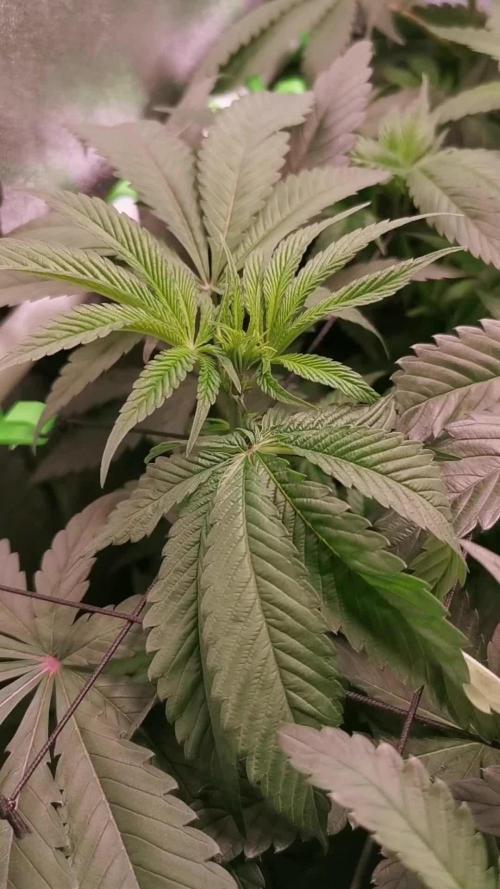
Wir befinden uns mittlerweile am Blütetag 12 und der Stretch ist voll im Gange. Von der Wachstumsstruktur würde ich die White Sweet Candy OG wie eine klassische OG beschreiben starke, dicke Haupttrieb, mittelgroße Internodienabstände (finde ich persönlich sehr angenehm), starke Seitentriebe und generell eine sehr buschigen Pflanze. Durch die starken Haupttrieb eignet sich die Sorte für mich nicht um die Triebe mit Budclips auf eine Höhe zu bringen, dafür ist dann eher das Herunterbinden der Triebe geeignet. Setzt man etwas früher als in meinem Fall ein Scrognetz ein erreicht man ein wirklich schönes und homogenes Blätterdach der Triebe. Auffällig ist, dass die ersten Pistils sich erst ab den 10 Blütetag zeigten und der Übergang von der vegetativen Phase ins Blütenwachstum etwas verzögerter abläuft. Aus meiner Erfahrung spielt das keine große Rolle bei der späteres Blütenentwicklung. Schon jetzt zeigt sich, dass die 4 Haupttriebe massive Buds produzieren werden. Ich freu mich auf die kommenden Wochen und vorallem auf die ersten Trichome und der damit beginnende Geruch, ich bin mehr als gespannt und bis jetzt ist dieser Strain im Wachstum und der Performance allgemein einer meiner Favoriten der letzten Jahre! Respekt an SSSC für die Tolle Arbeit. :)
Hey,
We’re now on day 12 of flowering, and the stretch is in full swing. In terms of growth structure, I’d describe the White Sweet Candy OG as a classic OG with a strong, thick main stem, medium internode spacing (which I personally find very pleasant), strong side shoots, and overall a very bushy plant. Because of the strong main stem, I don’t think this strain is suitable for using bud clips to keep the shoots at the same height, tying the shoots down is a better option. If you set up a SCROG net a little earlier than I did, you’ll achieve a really nice, uniform canopy. It’s noticeable that the first pistils didn’t appear until the 10th day of flowering, and the transition from the vegetative phase to flowering is somewhat delayed. In my experience, this doesn’t play a major role in later flower development. It’s already clear that the 4 main shoots will produce massive buds. I’m looking forward to the coming weeks and especially to the first trichomes and the scent that comes with them I’m more than excited, and so far, this strain is one of my favorites of recent years in terms of growth and overall performance! Kudos to SSSC for the great work. :)