


Likes
Comments
Share


@Roberts
Follow
Blue Dream Xtreme is growing. I think she wants more nutrition then the others. Is a little lighter in shade of green. I just switched to 12 12 light schedule. So first day of flowering. She is growing in a New Level Hydro bucket, under a Spider Farmer SE5000 light at 50 percent. Thank you New Level Hydro. Spider Farmer, and Amsterdam Marijuana Seeds. They been delivering quality seeds for 25 years and counting. 🌱🤜🤛🌱
Http://amsterdammarijuanaseeds.com
Thank you grow diaries community for the 👇likes👇, follows, comments, and subscriptions on my YouTube channel👇. ❄️🌱🍻 Happy Growing 🌱🌱🌱
https://youtube.com/channel/UCAhN7yRzWLpcaRHhMIQ7X4g
SE5000
https://amzn.to/3qFpAML
Spider Farmer Official Website Links:
US&Worldwide: https://www.spider-farmer.com
UK: https://spiderfarmer.co.uk
CA: https://spiderfarmer.ca
EU: https://spiderfarmer.eu
AU: https://spiderfarmer.com.au
Coupon Code: saveurcash
Www.newlevelhydro.com
Www.hygrozyme.com

Processing
Likes
17
Share


@Mr_nugs_lover_David
Follow
She's looking absolutely gorgeous, she's has become a beautiful bush full of bud sites everywhere and she's gonna produce a lot of beautiful colas, I think I have achieved a very good shape before flower. So let's see how this wonderful ak420 bush performs.

Likes
4
Share


@WuTangVibez
Follow
i came back home after 5 Days and it seems pretty Bad, the Humidity was extrem high and there was water drops all over the walls of the grow tent, the Soil was even less moist compared to the Humidity of the tent was the Soil Dry ! All my plants kept some Damage except of Applestrudel there was such a high Humidity that even Roots came out of the Stamb and grew in Air !!! after all she just had a few burnt leaf tips and thats it. After this Excident i finaly installed an Airfan and hope that this Problem wont continue.
I continued with Lst and super cropped some branches, the plant is pretty even but there are tons of side branches, i am not sure if i should let them grow or should I cut them of like a Lollipopping ? Please let me know about your Opinion and Expiriences !
Is it Normal that she's still not really showing Flower pistols or other signs of Flower begin ?
This Strain or at least Pheno is Amazing i can Pretty much do whatever i want to Her LST/Defoliation/Supercrop/Humidity-stress and she Always bounced back after a couple of Day like nothing Happend to Her, i am Pretty Happy with all my Fastbuds genetics !!!

Likes
3
Share


@Rick_Root
Follow
In der fünften Woche habe ich es gewagt. Nachdem ich die Weiße Witwe schon etwas trainiert habe, wurde sie jetzt auch oberhalb des fünften Sprossknotens abgeschnitten. Dazu habe ich meine Nagelschere benutzt (siehe Video), mit der ich mir auch die Fußnägel schneide. 😅 Dann wurde die unterste Nodi noch entfernt. Jetzt hat sie noch vier Nodien übrig, die zu acht Blütenstände wachsen sollen. Es war das erste Mal, dass ich eine Pflanze getoppt habe. Um sie besser runter binden zu können, habe ich einen Haselnusszweig quer über den Topf befestigt. Das macht das Festbinden um einiges leichter.
Die Cherry-Lady lasse ich ohne Training etc. wachsen. Sie ist aktuell ca. 40 Zentimeter hoch. Hier werde ich in den nächsten Tagen nur etwas entlauben. Die untersten Blätter können abgemacht werden. Sie sehen nicht sehr gut aus. Die Kirschen-Lady kann auch einen größeren Topf vertragen. Sie wird bald umgetopft. Der PH-Wert der Supermarkt-Blumenerde ist mit etwa 8 zu hoch. Der Idealwert liegt zwischen 6 und 7. Ich werde dafür Rhododendron- und Hortensienerde besorgen. Damit wird ein eigener Mix hergestellt. Solange bleibt sie aber noch in ihrem kleinen Topf, dem ich einen Mantel verpasst habe. Der Jutebeutel soll die Pflanze vor den Trauermücken schützen.
Das abgeschnittene Teil der White Widow wird versuchsweise in einen kleinen Anzuchtbehälter gesteckt und ordentlich nass gehalten. Ich bin gespannt, ob es mir gelingt, die Pflanze zu klonen.
peace & love



Likes
35
Share


@FreshCoastOrganics
Follow
The LSD25’s are doing pretty well! They’ve stayed short and stalky but their buds seem to be filling out nice and dense. Two of the lsd’s were suffering a slight nitrogen and phosphorus deficiency. I’m not too worried about it since it is somewhat natural for this to happen during this part of their life cycle. I gave them a nice dose of bloom nutrients and so far they seem to be really enjoying their food. A day after the feed they bulked up quite a bit and the trichromes became much more visible to the naked eye.
Regardless of my initial issues with my medium and original ph pen, I am pleased with these girls so far. The scent and aroma coming off of the plants is nothing like I’ve smelt before. Almost every bud site releases a different terp/aromatic profile when touched. It’s an interesting smell the notes/terp profile I get from it is; musk (mycerene), lemon (limonene), peppery/herbal (caryophyllene) and slight lavender (linalool) type scent. I’m not used to smelling this many different profiles from one strain but I must say that the smell is almost addicting!
Likes
Comments
Share


@eldruida_lamota
Follow
Vamos familia, actualizamos la segunda semana de floración de estas Forbidden Mochi fast de Seedstockers, Aplicamos varios productos de Agrobeta, que son increíbles para aportar una buena alimentación a las plantas.
Temperatura y humedad dentro de los rangos correctos dentro de la etapa de floración.
La tierra utilizada es al mix top crop, por cambiar.
De 5 ejemplares seleccioné 4 para completar el indoor y trasplanté directamente a macetas de 7 litros, cambie el fotoperiodo a 12/12 y aplique una buena poda de bajos, se ven bien sanas las plantas tienen un buen color y progresan a muy buen ritmo y ya empezaron a formarse las flores.
Agrobeta:
https://www.agrobeta.com/agrobetatiendaonline/36-abonos-canamo
Hasta aquí todo, Buenos humos 💨💨💨
Likes
9
Share


@Grow_for_Happiness
Follow
Well it finally happened, the girls have outgrown the 4x4! Was mid week and was having a hard time keeping humidity below 65%. Thought of defoliating, but can't keep doing that weekly or it will shock them sooner than later. So I decided to move the front left plant to the 3x3 under the Photontek SQ300W, giving the girls in the 4x4 some much needed breathing room. Set about retraining the plants to maximise space in the big tent, and then flattened out the lonely girl in the 3x3. Crazy enough the 4x4 still looks full by end of week, and the one by itself is getting close to filling the 3x3! This could be a pretty big grow by the time we finish 🤞.
Have the solo plant running on the older Autopot valves with 6mm hose, and already had one clogging issue. Seems really early on, in past would take 2-3 weeks so thinking maybe I didn't have the lines 100% clean to start. Either way easy fix just blow out the clog and flush the lines with a liter or so and back in business. Always remember to flush the on/off valve as well as the main valve in the tray.
Otherwise raised the lights in 4x4 to their max height (5" from roof) and took all the slack out of the cables to keep them off the lights. Adjusted the ties on last day of the week, but things seem pretty set now in the big tent so will just be widening out the lone girl once she grows a bit more. I'm sure by end of week that tent will be packed as well!

Likes
26
Share


@Kevs_Best
Follow
DE:
In der achten Blütewoche erreicht Last Dance ein Stadium, das kaum noch in Worte zu fassen ist.
Die Pflanzen wirken wie komplett überzogen von Kristallen, die Farben brechen durch, und die Terpene explodieren in einer Komplexität, die man nur bei echten High-End-Genetiken erlebt.
Alles an diesen Pflanzen schreit: Finale – Premium – Elite.
Phänotyp 1 – Der dunkle Funkgott
Der Black-Magic-lastige Phäno läuft jetzt auf absolutem Endlevel.
Die Sugar Leaves sind so dicht gefrostet, dass sie fast weiß erscheinen, während zwischen den Kelchen tiefe, dunkle Violett- und Schwarzgrün-Töne hervorkommen. Diese Farbkontraste wirken wie perfekt abgestimmt – als hätte die Genetik genau für diesen Moment designed worden.
Die Buds sind jetzt maximal geschwollen:
Die Kelche drücken sich übereinander,
die Harzdrüsen stehen wie kleine Diamanten hervor,
und die gesamte Textur wirkt dick, kompakt und schwer.
Aromaentwicklung in Woche 8:
Die Gassigkeit ist noch tiefer geworden, bekommt aber jetzt eine warme, dunkle Süße dazu.
Noten von fermentierter Beere, altem Hash, tiefem Wald und schwerem Funk verschmelzen zu einem Terpenprofil, das wirklich nur Top-Tier-Phenos erreichen.
Beim Anfassen bleiben dicke ölige Harzspuren an den Fingern – klassisches Zeichen für extrem hohe Harzproduktion und Potenz.
Phänotyp 2 – Der saftige Zangria-Phantom
Der fruchtigere Phäno blüht in Woche 8 optisch komplett auf.
Die Pink- und Lilatöne sind jetzt viel deutlicher geworden und ziehen sich teilweise sogar in die Kelche hinein. Der Frost-Level ist so hoch, dass die Buds wirken, als wären sie von einer dünnen Glas-Schicht überzogen.
Aroma in Woche 8:
Das Terpenprofil ist inzwischen eine Symphonie aus:
dunkler Traube, süßer Rotwein-Note, tropischen Früchten, frischer Kirsche und einer leichten Zitruswürze im Nachklang.
Es ist nicht mehr „fruchtig“ – es ist komplex, schwer, dicht und riecht wie ein komplett eigener Signature-Terpenmix, der selten in dieser Form vorkommt.
Beim Öffnen des Zelts mischt sich dieses Zangria-Bouquet mit dem dunklen Funk des ersten Phenos – ein absolut einzigartiges Erlebnis.
Gesamteindruck Woche 8 – Der Höhepunkt vor dem Finale
Jetzt in dieser Phase ist die Pflanze auf ihrem Zenit:
- Buds komplett geschwollen
- Farben brechen maximal durch
- Trichome glasig-milchig, erste Amber-Punkte sichtbar
- Aroma extrem komplex und deutlich intensiver
- Harzanteil auf beeindruckendem Niveau – selbst Stängel sind sticky
Die Pflanzen sehen aus wie Showcase-Material für eine Breeder-Website.
Blick auf Woche 9 – Der perfekte Zeitpunkt zum Spülen
In der kommenden 9. Blütewoche beginnt das Final Flush.
EN: Week 8 – The Last Dance Showcase Phase
By the eighth week of flowering, Last Dance enters a stage that’s almost impossible to capture with words.
The plants look fully crystallized, the colors break through aggressively, and the terpene expression becomes so layered and complex that it feels like a signature masterpiece of high-end genetics.
Everything about these plants says:
Final stretch – premium – elite cut potential.
Pheno 1 – The Dark Funk Titan
This Black-Magic-leaning phenotype is now performing at absolute top-tier level.
The sugar leaves are so heavily frosted they appear nearly white, while deep violet and dark forest-green tones push through the calyxes. The contrast is insane – almost cinematic – as if the strain was bred exactly for this late-flower moment.
The buds are now at maximum swell:
Calyxes stack aggressively, trichomes stand tall and dense like crystals, the entire flower mass looks heavy, tight, and fully matured.
Aroma development in Week 8:
The gassy core has become darker and richer, now wrapped in warm, heavy sweetness.
Notes of fermented berry, old-school hashish, deep forest funk, and that unmistakable dark Black Magic spiciness fuse together into a terpene profile only elite phenos deliver.
Touching the buds leaves thick, oily resin streaks on your fingers — a classic indicator of extremely high potency and mature resin glands.
Pheno 2 – The Juicy Zangria Phantom
The fruit-forward phenotype hits full visual bloom in Week 8.
Pink and purple hues become more pronounced, bleeding slightly into the calyx tips. The frost level is so extreme the buds look like they’re coated in a thin sheet of glass.
Aroma in Week 8:
This terpene profile is now a full symphony of:
dark grape, sweet red wine, tropical berry, fresh cherry, and a citrusy sparkle in the finish.
It’s not “fruity” anymore — it’s deep, layered, complex, and genuinely rare in its structure.
When you open the tent, the Zangria bouquet blends with the dark funk of Pheno 1, creating an aroma that feels completely unique and unmistakable.
Overall Impression Week 8 – The Peak Before the Finale
At this stage, the plant is on its absolute zenith:
- Buds fully swollen
- Colors breaking through in maximum intensity
- Trichomes milky with scattered amber
- Aroma dramatically intensified and highly complex
- Resin production at showcase level — even stems feel sticky
The flowers look like something straight from a breeder’s promotional photoshoot.
Looking Ahead to Week 9 – The Final Flush
In the upcoming 9th week, you begin the final flush.
This stage ensures:
a clean fade of excess nutrients, boosted terpene purity and clarity, smooth, clean-burning ash, and the highest possible quality for your final product.
During the flush week, colors often deepen even further, buds harden up, and the aroma becomes sharper, more defined, and unmistakably finished.

Likes
16
Share


@Ultraviolet
Follow
Seedling managing 93F 30%RH, around 20 DLI. Vpd is in the 3's. No I don't recommend.
Signum Magnum.
"A great sign appeared in the sky
a woman clothed with the sun
with the moon under her feet
and on her head a crown of twelve stars.
Sing ye to the Lord a new canticle:
because He has done wonderful things.
Glory to the Father, and to the Son, and to the Holy Spirit
As it was in the beginning, and now, and ever shall be, world without end."
The plant nutrient nitrogen exists in forms with both positive and negative charges. Ammonium (NH4+)(immobile in soil)(Cation) has a positive charge, while nitrate (NO3-) (highly mobile in soil)(Anion)has a negative charge. Nitrogen is unique among plant nutrients in that it can exist in both positively charged (ammonium, NH₄⁺) and negatively charged (nitrate, NO₃⁻) forms in the soil. This makes it a special nutrient. In that it is responsible for providing balance for reactionary trade offs when it comes to ph. Because ph itself in the medium will always slowly drift towards acidicity, such is nature. 80% of nitrogen should be nitrate and no more than 20% ammoniacal nitrogen.
Ca, mg, and K are the big 3 cations related to soil composition, pH & base saturation.
When nitrogen is in the form of ammonium, it can compete with calcium, magnesium, and potassium for absorption sites in the plant root. This competition can lead to a reduction in the uptake of these other essential nutrients. Nitrogen, particularly in its nitrate form (NO3-), can increase soil acidity, which can also affect the availability of calcium, magnesium, and potassium. The form of nitrogen applied (ammonium vs. nitrate) can influence its interactions with other nutrients. Ammonium nitrogen can have a more pronounced negative effect on the uptake of calcium, magnesium, and potassium compared to nitrate nitrogen.
Common forms of ammonium nitrogen include ammonium ion (NH4+), urea, and ammonium compounds like ammonium nitrate, ammonium sulfate, and ammonium phosphate.
Common forms of nitrate nitrogen include potassium nitrate (KNO3), sodium nitrate (NaNO3), calcium nitrate (Ca(NO3)2), and ammonium nitrate (NH4NO3).
Phosphorus is an essential plant nutrient, and its availability in the soil is strongly linked to the presence of oxygen. Plants primarily absorb phosphorus as phosphate (PO4), and oxygen is a key component of this molecule. Furthermore, the availability of phosphorus in the soil can be impacted by factors like soil aeration and temperature, which in turn affect the oxygen supply to the roots.
Phosphorus uptake in plants is most critical during the early stages of growth, particularly within the first few weeks of plant development.
Young plants actively growing tissues have a high demand for phosphorus. They may absorb up to 75% of their total phosphorus requirements within the first few weeks of vegetative growth, with up to 51% of uptake happening overnight, primarily in the first few hours or early nightfall.
⑨Anaerobic root respiration, or respiration without oxygen, is detrimental to plants because it's less efficient and produces toxic byproducts, leading to reduced energy production, nutrient uptake issues, and ultimately, root damage and plant stress.
⑨Anaerobic respiration, unlike aerobic respiration, doesn't utilize oxygen as the final electron acceptor in the electron transport chain. This results in a significant drop in the amount of energy (ATP) produced, which is necessary for various plant functions, including growth, nutrient uptake, and maintenance of cellular processes.
⑨In the absence of oxygen, plants produce byproducts like ethanol and lactic acid during anaerobic fermentation. These byproducts can be toxic to the roots and inhibit their function,
⑨When oxygen is depleted in a medium, the pH tends to decrease (become more acidic) due to the production of metabolic byproducts. This is particularly relevant in biological systems where aerobic respiration relies on oxygen as the final electron acceptor.
⑨When oxygen is scarce, plants may switch to anaerobic respiration. This process produces carbon dioxide (CO2) as a byproduct.
⑨CO2 dissolves in water to form carbonic acid (H2CO3). This acid lowers the pH of the medium, making it more acidic.
⑨Anaerobic conditions can impair a plant's ability to regulate its internal pH, leading to a drop in cytoplasmic pH and potentially cellular acidosis.
⑨The change in pH can also affect the availability of certain nutrients to the plant, as pH influences the solubility of micronutrients like iron, manganese, zinc, copper, and boron.
⑨The lack of oxygen in the plant medium leads to a decrease in pH due to the production of carbon dioxide during anaerobic respiration and impaired pH regulation within the plant.
In plant cells, cellular acidosis, a drop in the internal pH of the cytosol, is a significant stress response, particularly during conditions like flooding or hypoxia. This acidification can be triggered by a decrease in oxygen levels, leading to the production of metabolic byproducts like lactic acid and CO2. The plant's ability to tolerate and recover from these conditions depends on its cellular mechanisms to regulate pH and mitigate the effects of acidosis. When plants are subjected to low oxygen environments, such as those experienced during flooding, anaerobic metabolism, which produces lactic acid and ethanol, becomes the primary source of energy. This can lead to a build-up of these acidic metabolites in the cytosol, causing a drop in pH.
OXYGEN
Atomic oxygen (single oxygen atom, O) is the lightest form of oxygen, as it has the lowest mass of the oxygen molecules. Oxygen also exists as a diatomic molecule (O2) and an allotrope called ozone (O3), which have higher masses due to the number of oxygen atoms combined.
Atomic Oxygen (O):
This refers to a single oxygen atom, which is the most fundamental form of oxygen.
Molecular Oxygen (O2):
This is the common form of oxygen we breathe, consisting of two oxygen atoms bonded together.
Ozone (O3):
This is an allotrope of oxygen, meaning it's a different form of the same element, consisting of three oxygen atoms bonded together.
Since atomic oxygen has the fewest oxygen atoms, it naturally has the lowest mass compared to O2 or O3.
Ozone (O3) Lifespan:
Ozone has a relatively long lifespan in the stratosphere, particularly at lower altitudes. For example, at 32 km in the middle latitudes during spring, ozone has a lifetime of about 2 months.
Oxygen (O) Lifespan:
Atomic oxygen, on the other hand, has a much shorter lifespan. At the same altitude, its lifetime is about 4/100ths of a second.
Ozone-Oxygen Cycle:
The ozone-oxygen cycle involves the rapid exchange between atomic oxygen (O) and ozone (O3). UV radiation can split molecular oxygen (O2) into atomic oxygen (O), which then reacts with O2 to form ozone (O3). Ozone can also be photolyzed by UV radiation, creating atomic oxygen again, which can then react with O3 to reform O2.
Dominant Form:
The partitioning of odd oxygen (Ox) between ozone and atomic oxygen favors ozone in the lower stratosphere. This means that a much larger proportion of odd oxygen exists as ozone than as atomic oxygen, especially in the lower stratosphere.
Recombination:
Atomic oxygen has a high energy and reactivity. When it encounters another oxygen atom, they can combine to form O2. This process releases energy, contributing to the heating of the atmosphere.
Ozone Formation:
Atomic oxygen can also react with molecular oxygen (O2) to form ozone (O3). Ozone plays a significant role in absorbing harmful UV radiation.
Other Reactions:
Atomic oxygen can react with various other molecules in the atmosphere, like nitrogen (N2), water (H2O), and carbon dioxide (CO2), forming different compounds.
UV light below 240nm (peak 185nm) creates ozone (O₃) through a process called photolysis, where UV light breaks down dioxygen molecules (O₂) into single atomic oxygen atoms (O). These single oxygen atoms then react with other oxygen molecules to form ozone (O₃). Specifically, UV-C light with wavelengths shorter than 240 nm can cause this photolysis.
UV light with wavelengths between 240-280 nm, (peak 254 nm) breaks down ozone (O₃) into dioxygen molecules (O₂) and atomic oxygen atoms (O). 280nm does not have the energy potential to break apart the stable bond of (O₂) into enough (O) to make (O₃)
At ground level, atomic oxygen (single oxygen atoms) has a very short lifespan. This is because it's highly reactive and quickly combines with other molecules to form stable diatomic oxygen (O2) or other compounds. While the exact timeframe varies depending on the specific circumstances, its lifespan is typically measured in nanoseconds or picoseconds.
Likes
19
Share


@Tropicannibis_Todd
Follow
Alright Then
REMINDER I DO 2 UPDATES PER WEEK 👉WEEKLYROUNDUP👈👉MIDWEEKLY UPDATE👈
We just hit week 5 and all is well , in terms of its health 😃 ....... 👌
However I am some what disappointment at its internode branching , and still has yet to ever show its sex , 😡 I have a feeling she just might be a photoperiod 💩 which if that's the case , I may have to dump her 😭 but I will see and give her more time and see how it goes .....👍
rain water to be used entire growth
Lights being readjusted and chart updated .........👍
I GOT MULTIPLE DIARIES ON THE GO 😱 please check them out 😎


Likes
20
Share

@TrickzCutz
Follow
Servus Moin!
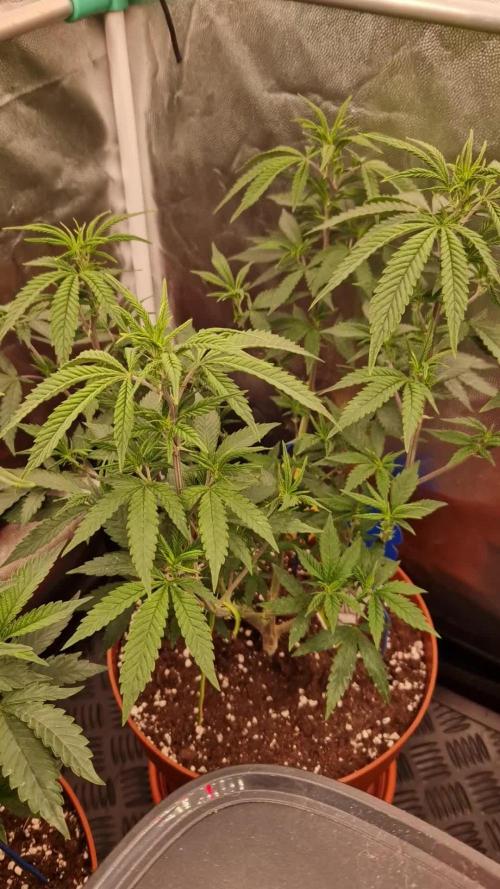
Die Sun of A Peach hat den Tripsebefall gut überstanden und wird jetzt diese Woche mit 12/12 in die Blüte geschickt.

Likes
24
Share


@Alpha_Green
Follow
Strong baby!
Lady Jealousy was in the vegetative phase for 7 weeks and is now in her 4th week of flowering - wow, that's really remarkable!
No automatic before, was like her.
She has an irrepressible will to live and is tremendously motivated to deliver!
Sour Jealousy means a lot of passion and diligence, but also assured quality and reliability.
Let's look forward with excitement.
PK is on the way…
Take care & bee 🐝 positive!
Alpha_Green

Likes
29
Share


@CrazyFlowers07
Follow
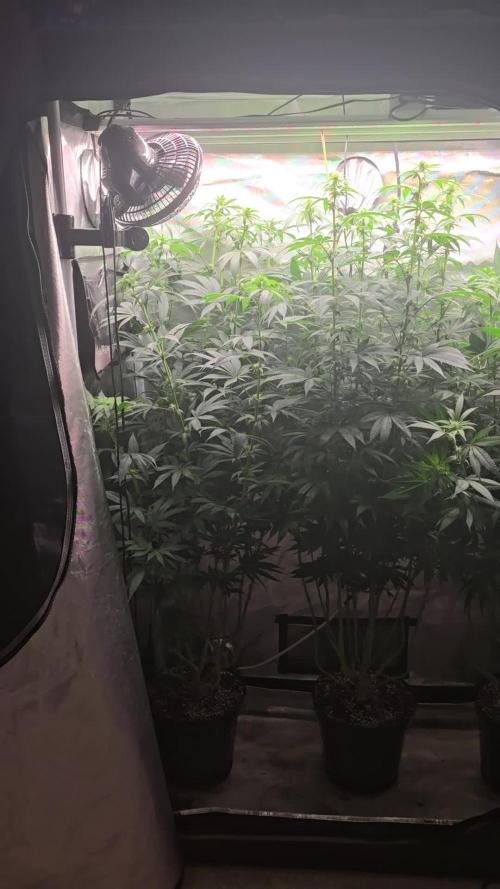
Plantas muy facil de cultivar y muy rapida .. en solo 9 semanas me saque en la #1 85g y en la #2 - #3 unos 50 cada una... en cada foto teneis el seguimento de cada planta desde la semilla a los cogollos.. consejo para todos de el banco de sweets seeds ✌️✌️


Likes
16
Share


@Willy_Balls
Follow
Doing great.
Bottoms cleaned, waiting for a day or two to do a major defoliation.
17.11
Vast defoliation. All the bottom leaves and mids. Left around 4 top fan leaves
On every branch.
19.11
Plants recovered perfectly, light is back to 100% . Unfortunately my Bluetooth app for mars hydro stopped working. Light cannot pair anymore with the app.
Also irrigation is changed to vegetative crop steering.
Likes
14
Share


@GoodTimesOrganics
Follow
Hi liebe Community and Welcome Back! 💚
Slush Mint Cake von Dutch Passion!
Die erste Blütewoche ist vorbei und die Pflanze hat im Stretch bisher 14 cm zugelegt, was noch sehr moderat erscheint..
Die Pflanze hat nun eine Höhe von 104cm erreicht.
Sie hat eine wunderschöne und homogene Wuchsform.
Dass untere Drittel der Pflanze habe ich ausgedünnt und die Triebe rausgeschnitten.
Die Wuchsform ist kräftig und Energie geladen.
Die Bedingungen im Growschrank sind für die Blütephase aktuell Top!
—————
🌞 Temp: 26
🌚 Temp: 18°C bis 19°C
💨 RH: 54%
VPD: 1,17 kPa
💡ppfd: 530 mpm
—————


Likes
Comments
Share

@Tponyou
Follow
Almost there,
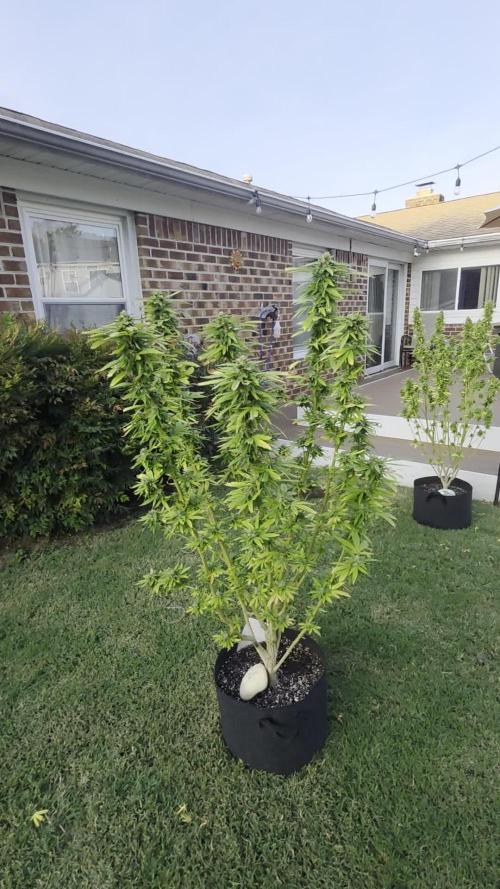
had some stem rot on one of the branches so I had to cut it out, over all coming along. Still lots of clear trichomes on the lower buds

