


Likes
Comments
Share


@RunWithIt
Follow
Did the switch i was talking about last week, moved my tent plants to the closet and closet plants to the tent. Made a video explaining briefly my rationale behind it. Hopefully they will speed up growth in my warm closet.
The next week will be an update for when ALL the plants are starting 🌼. Ill also be starting them on that Fox Farm Big Bloom i was talking about last week, and supplementing them with some Cal-mag by Botanicare as well. Cheers all, you wont be seeing me until there's visible flowers in the closet! ✌️


Likes
6
Share


@IamCy
Follow
She's starting to fatten up nicely! Terps still off the meter,and the roots are ridiculous. Definitely one of the best plants I've ever grown.
Likes
29
Share


@CrazyFlowers07
Follow
Plantas muy facil de cultivar y muy rapida .. en solo 9 semanas me saque en la #1 85g y en la #2 - #3 unos 50 cada una... en cada foto teneis el seguimento de cada planta desde la semilla a los cogollos.. consejo para todos de el banco de sweets seeds ✌️✌️


Likes
1
Share


@Vegetoo420
Follow
I made a defoliation on the top of the bud they started to growing fast

Likes
15
Share


@420Consinc
Follow
- Week 6 -
----- Day 36 -----
No feeding today as it was tomorrow so nutrient line up isn't up yet. I'll do that tomorrow.
Ladies are perfect, I can't wait. less than 30 days away.
----- Day 37 -----
Today is feeding but back left is behind the other 3 again, gave the other 3 500ml of tap water (10ppm) to prevent turgor pressure loss while back left dries up.
Should be feeding in 3-4 hours. 23L 1100-1500ppm (new feeding, so ppm end is not known atm) 6.4 pH
Plants are insane, big Bertha has become middle Bertha as the other stems have fattened up quickly.
Speaking of which plants are in bulk period, 3~ weeks left so it's an exciting time to watch them fatten up.
**UPDATE** Fed at 1000ppm 23L 6.4pH
The removal of FloraNova Bloom, and letting the chelated Diamond Nectar go to work on the molasses brings down the "accountable" parts by the machine I use. 1000ppm is full strength on all fertilizers being used.
I might add more molassses in the future and bring it up to 2ml/L, and maybe a smidge of epsom salts next feeding via foliar or direct feeding after I do some research.
No more KoolBloom liquid, KoolBloom powder begins and she's a strong one.
----- Day 38 -----
Yesterday back left plant has me unnecessarily anxious. It didn't need watering till 2 hours before lights off.
What I did is fed the other 3 90% of the feeding, and only gave back left 10% (closed the irrigation heads till the end of feeding).
I'm HOPING it was the plant transitioning from pre-bulk flower to bulk-flower stage, and maybe it slowed down photosynthesis to concentrate on hormonal changes. I dont know I'm anxious and just talkin out loud.
I'll know within 72 hours if there's a major issue with back left. Plant looks fine, i'm just paranoid.
Pictures later today around mid light cycle. Buds are getting insanely fat.
**Update**
Was bored. Here's some wicked shots. Still 25-27~ days left and its big bulk time. Can't wait to see them at the end.
----- Day 39 -----
Everything is great.
Feeding late tonight or potentially tomorrow depending on back left plant. I want to make sure bottom center of the root zone has dried out and doesn't begin to mold before I water again.
This will also help prevent fungus gnats in the soil.
I'll keep the other 3 away from turgor pressure loss, but they got 90% of the feeding last time so I expect them to dry by the time back left is.
*** Update ***
Now the other 3 plants who were faster on water intake than back left yesterday have slowed down.
Weed growing knowledge at a Horticultural greenhouse scientific repeatable level is pure fucking garbage.
I have 6~ books and checked dozens of sites and there was major conflicting info on water intake.
That's the problem with cannabis, it was illegal for so damn long horticulture practices and knowledge never molded or were used in the process and now it's anyone's fucking guess as to who is telling truth or is spouting bullshit bro-science.
Don't even get me started on names.
What a stupid god damn naming system "counter-culture" created... I'm growing wedding cake.. WEDDING CAKE? Wtf.
That's stupid as shit. Give weed botanical Latin names based on appearance and technical factors PLEASE!!!!!!
If I could name this plant it would be (Cannibas v. hybrid 'multa-magnum-fragum-gemmae-dulcis') why? It's due to it being a; Cannabis plant, hybrid variety 'multiple big bud strawberry candy' showing off multiple long bud stems smelling of candy,
Is that more convoluted and arrogant than Wedding cake?
YES, it is.
Is it better?
YES fuck your stupid wedding cake name.
That's dumb. And you should feel bad.
Still want to argue? Name it Cannabis v. Hybrid 'crustulam nuptias' THERE! Wedding cake. fuuuck!
99.99% of plant names are Latin.
Anyways... back to the point...
I hypothesize that there is a secondary transition portion of flower where the plant (like in stretch transition) pauses its growth to move the hormone and nutrient production to other sources. This secondary pause happens JUST before bulk session begins.
This hypothesis states roughly that up until final big bulk period (last 3-4 weeks), fan leaves and sugar leaves could still be produced by the plant during a "predator" or "high weather event" situation that would cripple the plants photosynthesis for final bud/seeding production during early to mid stage flowering.
Once the plant has reached adequate nutrient reserves or some other time or light cycle based trigger, it removes the hormonal/internal production/ability of sugar/fan leaves still being potentially produced out of the internode stem cells and fully stops that ability and concentrates 100% of growth on bud structure and protection of bud structures through THC/CBA/CBC/CBD etc. (Im a little tipsy, can't spell cannabinoid leave me alone...) production.
Tonight I will at 30 minutes before lights off be judging the water requirements during sleep of each plant to prevent turgor pressure loss, and to allow each plant to finish this transition and get back to major water intake by feeding tomorrow morning.
It's insanely obvious somethings changed.
I Was worried that leaving back left plant with stagnant water in the bottom saucer (pot doesn't sit directly in the water but is 3 inches above it) had released mold spores and started destroying the root mass of the back left plant but:
1) No obvious plant death signs, weakness or other aspects of it being a slow death from bottom up.
2) The other plants did the same damn thing within 48 hours.... and the back left plant is by far the largest and gets the most "light" due to its size hence it would most likely (HYPOTHESIS) finish its secondary cycle a bit faster due to just volume and weight.
Listen i'm not gonna say this is all 100% correct knowledge, It's based off feeling and "knowing" plant cycles as a greenhouse certified Horticultural Technician.
Repeated efforts to grow and replicating situations that created these things over and over is the real proof and will come in time.
One major benefit is the fact I WILL be re-flowering these for the VERY LEAST 3 full flowering cycles as long as they don't die during flower to veg transition.
I will be getting them THC tested EVERY SINGLE flower cycle to prove without a doubt the "maximum maturity" possible of a weed plant re-veg flower cycling, just like how we know by the 5th or 6th successive clone, the DNA will deteriorate and the grow will be stunted or a lesser bud high and yield.
God I fucking ramble when I'm bored and tipsy.
----- Day 40 -----
Fed at 1350ppm 6.3pH 23L
Plants are doing great.
**Update**
Little fun video from mid light cycle.
Roughly 20-25 days left.
Will finish at 30% amber 70% cloudy and will cut branch by branch as they are done, not in a rush to do 1 single cut and will let them survive to re-veg easier and less stressful.
----- Day 41 -----
Easy day. Here's some pics.
Just basically have to watch the grass grow today.
----- Day 42 -----
Big photo day, used ruler for most shots.
End of beginning of bulk, big bulk starts tomorrow.
Could probably feed late night tonight but I'm going to just give 500-750 ml of water depending on roots needs before lights off.
Tomorrow will be a big feed for first day of week 7.
Tropicanna Glookies tips on back right are beginning to darken and become purple. I am hoping this whole plant turns purple in last 2-3 weeks.
We will see.
**Update**
Back right plant is starting to turn purple and FAST. Pretty awesome.

Likes
3
Share


@BandoBoyJimmy
Follow
Steady growing a very rapid pace
Got all 11 on the drip irrigation using the Growlink controller they are loving the environment just praying everyday
Also put up the trellis net in preparation for the flip on week 5

Processing
Likes
20
Share


@DrGanj
Follow
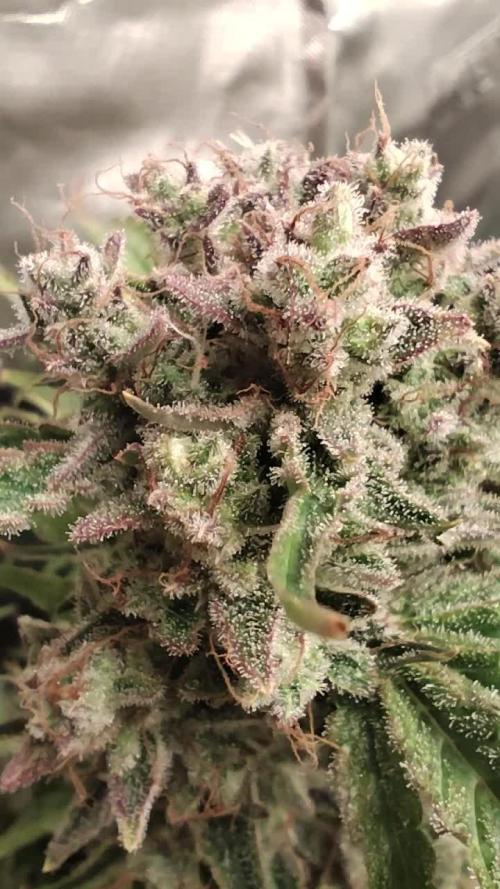
Mild defoliation throughout this week. Flush imminent so will leave the remaining fans as nute banks.
Next run with these genetics I'll be running a monstercropped clone under this scrog and will go heavier with the defoliation earlier on. I was advised this on here this grow and did a bit but have learned I need more!
Forever learning. Looks like it's gonna be an epic harvest. These girls smell absolutely dank.
Testament to the quality of these Madame Grow Fertilisers. Harvest just get better every time!
Also big shout out to my bro at NatureDelight.co.uk providing some awesome organics to add into the grow schedule. Used The Active Sugar Boost all through flower at 3ml per litre this run and I think the results speak for themselves. I cannot implore you guys enough to go check this stuff out. It's unique and you wont find better customer service.
Lots of vids and content this week as we all love bud shots <3



Likes
1
Share


@TheGreatMoog
Follow
Highlighted a few breaks that I wasnt able to repai and a few that I was. I was a bit rough learning LST



Likes
59
Share


@DogDoctorOfficial
Follow
she performed like a champion and delivered the same way, the fruit quality is out of this world, now needs rest for full potential but i can already tell she is a winner to me!!!
As always thank you all for stoping by, for checking my journey , for the love support and for it all, i am blessed and humble with you all.
Just a reminder , all i grow is medicine for myself, for me and for my best friend with is me nothing to sell, so don’t even ask.
All info and full product details can be find in can find @
https://ganjafarmer.com
https://aptus-holland.com/
#aptus #aptusplanttech #aptusgang #aptusfamily #aptustrueplantscience #inbalancewithnature #trueplantscience #Ganjafarmer #growerslove
With true love comes happiness 💚🙏 Always believe in your self and always do things expecting
nothing and with an open heart , be a giver and the universe will give back to you in ways you could not even imagine so 💚💚💚
More info and updates @
https://growdiaries.com/grower/dogdoctor
https://instagram.com/dogdoctorofficial
https://youtube.com/channel/UCR7ta4DKLFMg2xxTMr2cpIg
💚💚💚Growers love to you all 💚💚

Likes
46
Share


@Stork
Follow
Day 50
Add 7L water
PH 6.3 - 5.8
EC. 1.5 - 1.3
TDS 760 - 660
DLI/20h 36
PPFD 500
Water 25.0c
Day 51
Add 5L water
PH 5.6
EC.1.4 - 1.2
TDS 670 - 590
DLI/20h 37
PPFD 525
Water 23.0c
Day 52
Add 10L water
PH 5.9 - 6.0
EC.1.3 - 1.1
TDS 650 - 550
DLI/20h 37
PPFD 525
Water 23.0c
Day 53
Add 10L water
PH 5.6 - 5.8
EC.1.2 - 1.0
TDS 580 - 500
DLI/20h 37
PPFD 525
Water 23.0c
Day 54
Add baking soda for PH and 10L water add: revive and calcium 1L/ml
PH 5.0 - 6.0
EC.1.0 - 0.9
TDS 530 - 450
DLI/20h 37
PPFD 525
Water 23.0c
Day 55
Add 9L water + Nirvana + B52 1L/ml
PH 6.1 - 5.9
EC.1.0 - 0.8
TDS 480 - 410
DLI/20h 34
PPFD 470
Water 23.0c
Day 56
Add 20L water + 5ml Revive
PH 6.0 - 6.0
EC 0.9 - 0.6
TDS 430 - 290
DLI/20h 34
PPFD 470
Water 23.0c
Likes
13
Share


@NordicClosetGrower
Follow
The strain has proven to be extremely sturdy compared to the autoflower version. The smell has been a bit problematic. Some terpenes just can't seem to be tamed even with a brand new carbon air filter. I hope this pays off in terms of aroma quality :)
Likes
11
Share


@KennyC
Follow
350W total of this lamps. Day 99 (11.1) she’s shining at night ✨❄️
Day 105, flushed.
Will cut her a week from now :))
(18.1)
I really like Green Crack, lot of buds popping everywhere like popcorn. I had lollippoed this one, like 3x. Everytime i got 7-10 stems popping with lil tiny buds popping. This is the final. I’ll try GC nxt round with my new HPS 600W ;)
Likes
4
Share


@GODAXE
Follow
27.08.2024
D48 since cutting,
lady starting to bush like their mother, as i did nt have place for 8 massive bush in the tent i proceed to some pruning and set some bud clip.
overall look
GBC #1
16 inch, flowering
GBC #2
16 inch, flowering
GBC #3
16 inch , still in veg, 😰
GBC #4
18 inch, full bud mod 😍
GBC #5
18 inch , full bud mod 😍
GBC #6
19 inch, flowering
GBC #7
20 inch, start flowering👍
GBC #8
18 inch, flowering
i will not weekly uptade, but keep you tuned

Likes
34
Share


@JonnyKush
Follow
Day 38
I am very happy with how they are growing. finally begins to flourish, the LST seems to have paid off. from last week I started giving green sensation 1ml / l without adding anything else.
thanks for viewing it is my first growth if you see errors comment and correct me.
hit like and follow me for updates.
happy day and good luck with your growth 🌱💚

Likes
14
Share


@BudBrewerz
Follow
She's got very thick buds covered with white cristals. She's got a nice full smell (which covers about the whole house now)
Can't wait to have her dried so I can have a taste


Likes
8
Share

@Growfather1
Follow
Hello everyone,
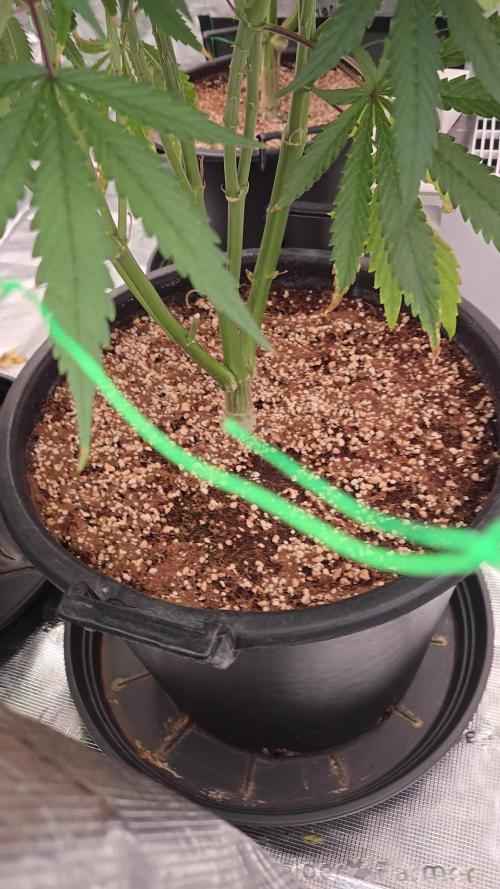
Another week has passed and the three ladies are doing well, the water runoff is under 850 ppm.
The plants are drinking more after watering 5 liters i don't get the 10% runoff so of tomorrow i will raise it to 6 liters per plant each day.
Next week i will raise pk13/14 to 0.5ml per liter now i am giving the ladies 0.25ml per liter.
Thanks for stopping by and have a nice week.

Likes
45
Share


@PapaSmurf416
Follow
Pbb has been chopped! Saw a decent amount of amber trichomes and the calyxes were quite swollen also she has been fading beautifully for quite some time now. Went into the dark for 48hours then I trimmed any dead leaves off and a few larger easy to reach leaves. She’s hanging in a dark tent now with a fan blowing at the bottom of the tent. Ducting to my flower tent to keep it from stagnating. Frost is starting to fade and swelling quite well. Afghani is getting a much more complex smell not as sweet as before still looks like looks like at least 2 weeks for her. They have all just been getting water for a while now.