Likes
Comments
Share


Likes
9
Share


@Headies
Follow
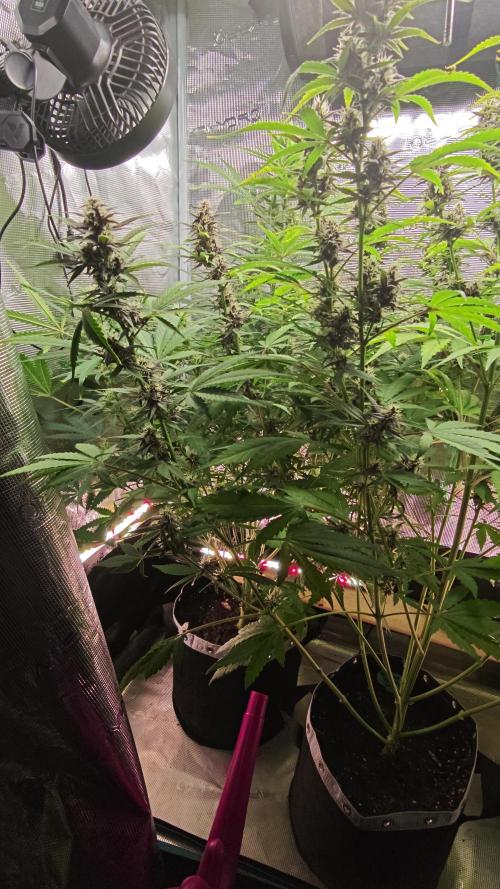
So this week after I gave it under nutrients I apparently gave it too much nitrogen while having a potassium deficiency. Shiney dark leaves, So i fixed that, but some didn't bounce back, and I tried nitrogen. I think they are doing pretty good considering everything I've put them through SO FAR. lol. Nutrients are NPK Raw's total lineup, follow their instructions at first, Fastbuds adjustments as of this week.

Likes
6
Share


@Notamastergrower
Follow
Veg a 200 grams
Veg b 150 grams
Zerotol 50ml
Silica 25ml
Bleach 10ml
Flex 50ml
About 3 weeks in at this point, I'm kind of off on my days at the moment lol. Dropped the feed this week 1.8 EC, plants definitely don't like the full feed and I added a little flex from drip hydro. Put up the trellis net double layer and removed a lot of plant material. I mainly just keep the dominant tops personally. Excited to see if I get any difference in flower quality and production with these new nutrients, switching to bloom nutrients next week. I'm running 2 different lights and the plants do grow slightly different under each.
Likes
58
Share


@Haoss
Follow
I did this beautiful girl a strong defoliation and let's see together what kind of girl she will be in the end, in 10 days I completely filled the 120/120 tent with the plant and then I will switch the light cycle to 12/12 🌞🌋💚

Likes
7
Share

@PhinolaGreen
Follow
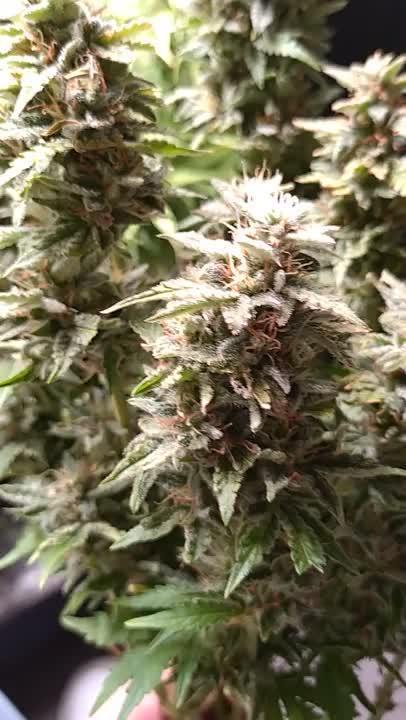
Harvest Die erste Hulkberry Auto hängt zum Trocknen 😌 Sie wächst wirklich wunderschön und ich bin gespannt, wie weit sie noch wird.
Der zweite Phänotyp braucht noch etwas Zeit, um fertig zu werden, und dann werde ich ein Update mit dem Erntebericht posten 😀
Update 3 Wochen später:
Hulkberry Auto Pheno 2 hängt jetzt auch zum Trocknen, bin gespannt, wie sie von der Wirkung wird. Sie hätte vllt noch 1-2 Wochen gebraucht aber egal, fand sie jetzt auch schon Klasse und habe dann heute Morgen den Cut gemacht. Also von dem was dran hängt bin ich wirklich überrascht, wie viel das am Ende wurde. Das wird wohl nur Strawberry Cheesecake Auto Barneys Farm toppen aus dem Durchlauf vom Gesamtergebnis der einzelnen Pflanzen im 6,7L Topf 😊 🦊

Likes
15
Share


@Professor_Daank
Follow
Google doc for nute schedule: https://docs.google.com/spreadsheets/d/1HtHnZOxMHtBK5DFQjpBun2lbhDxYVhI7lJaq4W6xbyk/edit?usp=sharing (Choose Sweet Seeds at the Bottom)
Week 2 of Veg - Week 2 Total
EC Target: 1100-1400
pH: 6.0 - 6.46
Sensi Grow A - 8ml
Sensi Grow B - 8ml
B-52 - 8ml
Voodoo Juice - 8ml
Rapid Start - 1ml
Great White Myco - 1tsp
This grow is just beginning and still going very well. Sweet Seeds genetics are crazy. Like... fuckin' amazing. I had a 3.5inch root starting on my Red Poison. This grow is going to be great!
Advanced has a tendency to give VERY high EC levels if you follow their guideline. I use what they recommend and then I tone it down to the EC levels I want. Just a heads up if you are using Advanced and not checking - you are WASTING nutes.


Likes
27
Share


@RDWCGrowing
Follow
5/30/2023
Week 8- Day 1 of Flower (Day 117 overall)
So two of the buds in the back fell over, it was definitely because they are getting heavy, I had to pick them up and tuck them in to the net to help support them they were so covered in Resin that I had to use Rubbing alcohol to clean my hand was so super sticky from touching the bud will have to use gloves from now on if I need to touch the buds. Other than that I sat back and got to watch the ladies grow.
5/31/2023
Week 8- Day 2 of Flower (Day 118 overall)
Just watched them grow today.. :-)
6/1/2023
Week 8- Day 3 of Flower (Day 119 overall)
I noticed on two of the bigger Fan leaves small signs of Calcium Deficiency so I fixed my Chart to up the Cal mag from .5 to .75 for the water change on Saturday.
Other than that I let them keep growing on Auto Pilot, frost is everywhere including all the way ont the Big fan leaves this strain is super Frosty...
6/2/2023
Week 8- Day 4 of Flower (Day 120 overall)
Auto Pilot engaged today.. Growers Hands stayed away just looked and apricated the beautiful buds that are forming. Tomorrow Water Change day!
6/3/2023
Week 8- Day 5 of Flower (Day 121 overall)
There were a couple of sucker buds right up front today so of course I had to get rid of them. Other than that Water Change Day.. Drained and reset the system. Since I am taking this to 10 weeks Week 7 and Week 8 Nutes repeat.
I took a couple of shots looking up for those that like stem action.
I added 36 gallons
Mammoth Silica = .5Mil/Gal= 18Mil
Root DRIP = 1Mil/Gal= 36Mil
CalMag= .5Mil/Gal= 18Mil
FloraMicro = 3.8Mil/Gal= 137Mil
FloraGro= 2.8Mil/Gal= 100Mil
FLoraBloom= 4.6Mil/Gal= 166Mil
LiquidKoolBloom= 2.5Mil/Gal= 90Mil
TPS SIGNAL= 4.0Mil/Gal= 144Mil
ORCA = .5Mil/Gal= 18Mil
Water Temp= 71.2
Tent Temp= 76
6/3/2023
Week 8- Day 6 of Flower (Day 122 overall)
Auto Pilot.. I did nothing but look in and enjoy the beautiful ladies.
6/4/2023
Week 8- Day 7 of Flower (Day 123 overall)
Auto Pilot Day 2.. Just watched them be beautiful.. I did want to get a picture of where they stems meet to make an arch I thought it looked really cool and would be a fun pic. I also wanted to focus on the color differences between the two. I am amazed between this lightside/darkside, yen/yang, thing going on in the tent.. Plant #2 is decidedly bright green, like more light with hints of yellow throughout, and plant #3 leaves are getting darker and it has hints of purple coming in throughout the buds. It really is an amazing and fun contrast especially with the name Yoda Soda to have a type of light side/ dark side theme going on with the Two plants.

Likes
16
Share


@DaddyPrime2
Follow
5/26 this plant is super fucking frosty and is starting to chunk up a bit.

Likes
11
Share

@Gram_Solo
Follow
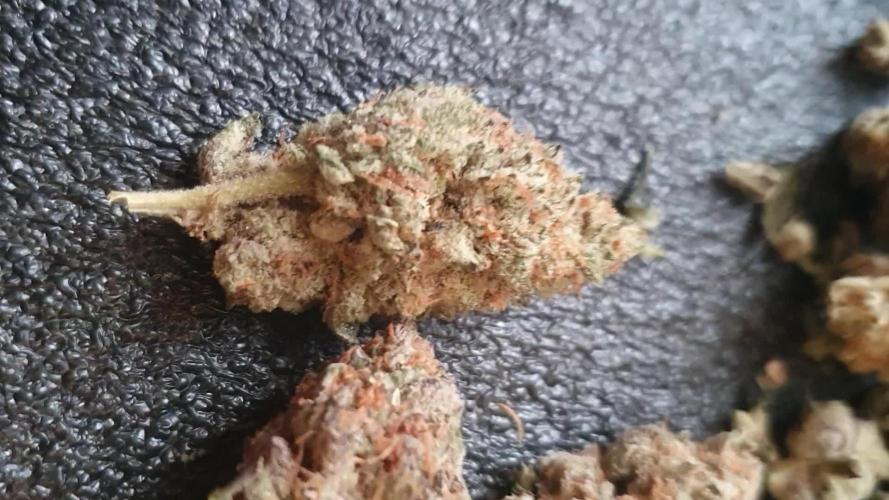
Smells amazing!
Survived some mad heat towards the end of flowering. still looking so frosty!
4 plants Harvested and we got 9oz plus an Oz n half of shake n small buds.
update in few weeks once its cured out for abit!
Thanks for following!
👽👽


Likes
14
Share


@Swiftgrow
Follow
Grow room has a strong pungent smell, starting to flush 1/6 of the plants. They all have started to fill up, got lots of nice fat colas considering they auto flowers.
Been defoliating a bit hear and there, where need be
Happy to see i am on track for a descent size harvest.
Would probably say I’ll harvest all in the next 2-3 weeks

Likes
14
Share

@Stonerandgrower
Follow
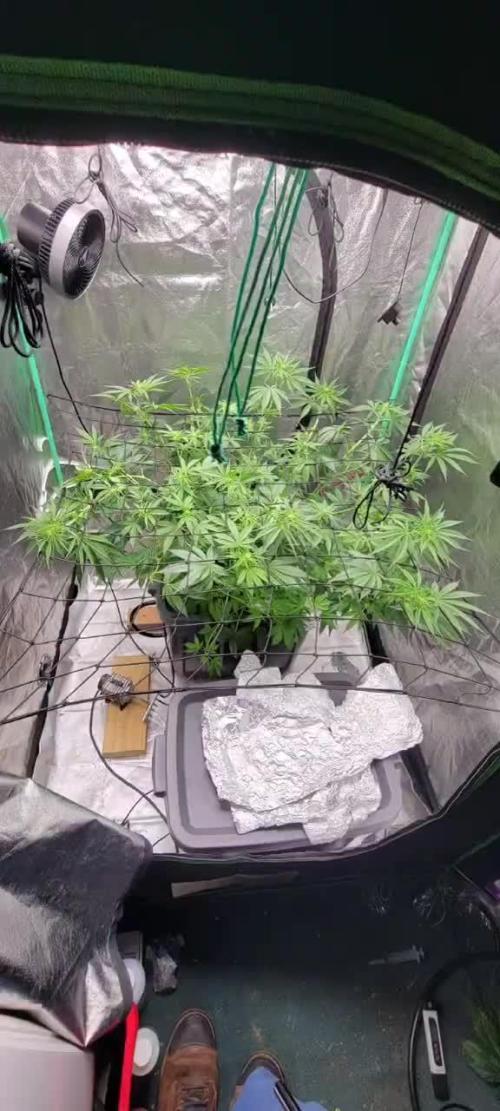
Harvested apple fritter it's grew from 7/4/25 to 11/1/25 and it was 7.5 pounds wet
Likes
11
Share


@The_Hoods_Club
Follow
This week the resin increased considerably compared to last weeks, we hope to be harvesting in approximately 2-3 more weeks.

Likes
22
Share


@Chucky324
Follow
Hello. This is the end of week 7 and the beginning of week 8 of veg.
I took another look at the males and found them to be average. Not that smelly or resinous. So, no good for breeding.
That's ok though. Let see what these females can do.
They are topped already and ready to be repotted and put in the tent.
There's still 1 plant undecided. Has small male looking flowers. I'll leave it for a few more days before deciding.
Man, there are lots of large female orb weaving spiders around here this year.
Huge webs, when you walk into them in the dark, they don't break off like the little webs.
What a difference in design though. These spiders are all in my yard.
I find them fascinating to look at.
Hope your enjoying the comics.
Keep Growing Straight.
Chuck.
Likes
6
Share


@Terpio1500
Follow
Week 2
I got Pistils showing
The New
Check out my other Dairies (Gelato Cake & The New)
Nutrients (floraflex) are in Grams/gal*
Light: HLG
Follow my IG @therealterpio for more updates & content!
I tend to low feed the first 2 weeks then ramp it up a little later into flower
Likes
13
Share


@Bryankush
Follow
Settimana di lavaggio probabilmente la sua ultima. Le cime al tatto sono appiccicose ma più che altro farinose , emanano un aroma tropicale favoloso😋
Giorno 3 viene annaffiata con 1L di acqua a 0 ppm
Giorno 7 oggi pomeriggio verrà tagliata
Le cime sono veramente compatte e piene di resina come vedete nel video. Nel vassoio sottostante ci sono a sinistra la cima centrale e a destra l'altra apicale simmetrica.
Likes
45
Share


@Bembeto
Follow
Se sigue alargando la maduración del pato 🦆 pero bueno, se nota que están ganando tamaño los cogollos y a su vez una forma hermosa😍
Estoy enamorado de los colores ya les contaré aserca de ella cuando llegue la cosecha, muchas gracias por el apoyo de la comunidad a lo largo del proceso, motivan a seguir haciendo diarios incluso mejores y mejores. Un abrazo hasta la próxima actualización ✨✌️


Likes
20
Share


@SecretTreasures
Follow
The ninth week of flowering is now over and the last days of the ladies have begun. The stated 9-10 weeks flowering time is definitely correct. One plant of the Hardcore Zoap was ready a little earlier, but as I want to harvest everything at once, everything is left standing until the majority looks ready. I also preferred to harvest the plants a little more mature than too early. In terms of appearance, I like the Miracle Gushers flowers best, as they have a fine and compact structure. The Banana Creamz seem to be able to develop very thick flowers, whereas the Hardcore Zoap seems to have the lowest yield. I will be able to say more after drying and weighing.