


Likes
Comments
Share


@xtchill
Follow
Onto week 7
Gave them a proper lst as you can see.
Think I'm going to put into flower 2morrow and see what the results are doing a 7 week veg instead of a 12 week veg.
Going to set the scrog net up and get tucking.
Looking lovely and healthy atm
Peace

Likes
2
Share


@MindFlowers68
Follow
Well she transitioned into flower this week but she is stretching at a fast rate. I'm hoping she keeps stretching another week or two. Two of the other autos started to bud this week but i was hoping this one would be offset beings that is was germinated a little later so Im wondering if theirs something that triggered them to flower other than its genetics. It did cool down this week from in the 100's, to mid 80's and mid 60's at night. They got more compost tea this week and some rain a few days earlier in the week followed by sunshine.

Likes
15
Share

@Bncgrower
Follow
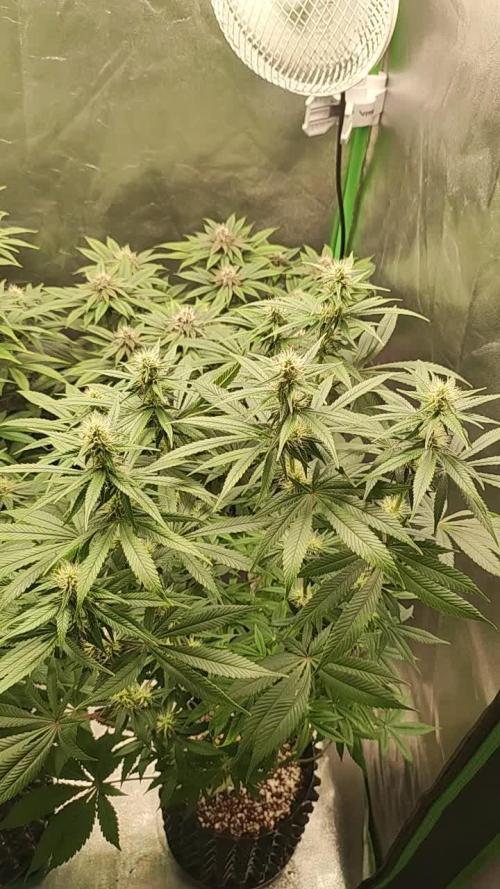
Following the plan, the girls are beautiful and were already quite large during this stretching phase. I hope everything continues as it is now during this growth and weight gain phase. I had some issues with the heat with this particular girl. I noticed she's more sensitive than the others, but I believe I've resolved or alleviated the issue. For the rest, I just have to wait for time to pass. 🌱🌿✌️✌️

Likes
36
Share


@rhodes68
Follow
9/21
Wont allow video uploads so this is it
9/22 pic
Still in veg starting week 4 which is a good sign for a good harvest though she remains smallish not sure why lots of light good nuets so genetics
9/23 Vids up
Still no sign of flowering solid veg whish is highly promising.
Some hairs though, so debating intro of small dose of bloom 1ml/g but prob not today
Increasing Grow nuets to 7.5/gal tonight each of A&B.
9/25 Still in veg looking real good
9/26
Hit 15 inches still in veg looks like we got a good grow
Vid/pic slow ride...
9/27
Hit 19" and still in veg


Likes
119
Share


@DogDoctorOfficial
Follow
And the time to flip her out came and here is day one on a 11/13 light shuttle lol she is looking amazing to my eyes and so , but so ready to flowers and deliver big fruits, lets see.
I topped 2x and they are all clean up to the top, from now on i will give her a defoliation some point on, like day 15 something like that, depending on her needs , if needed before it will b if after, after will b, she will decide if and wen i defoliate her .
I gave her still in this watering some root booster (start booster in my case) but from now on i will not give it tho her any more, started my P on them and my fruit booster ( in my case topbooster)
Gave her her last training and from here on she is capable of doing her thing, i believe in her and in the power of Aptus Nutrient line.
Tomorrow or so i will take some more pictures and post here to see how she is going, so stay happy stay tuned and i hope surrounded with love and good weed to smoke 😆💚💚💚🙏🙏🙏✊✊✊🙌🙌🙌💨💨💨💪💪💪
Day 2 and they are loving the fact that i change it to 11-13 , they wore desperate for that i think 😆 loving how they are praying like there is no t tomorrow
Day 5 and she looks happy AF and always praying to the Gods , thank you girl you doing great and im so proud of you ✊💪💪💪
As always thank you guys for your love , your time, your support and it all, i fell blessed and i am truly thankful 💚💚💚🙏🙏🙏🙌🙌🙌
All i grow is medicine for myself, for me and for my best friend with is me 😆 nothing to sell, so don’t even ask 😅💚💚💚
All info and full product details can be find in can find @
https://viparspectra.eu/collections/grow-lights DISCOUNT CODE 5% - DOGDOCTOR ( all store )
https://www.zamnesia.com DISCOUNT CODE 10% - GROWITGD ( just for seeds )
https://aptus-holland.com/
#aptus #aptusplanttech #aptusgang #aptusfamily #aptustrueplantscience #inbalancewithnature #trueplantscience #viparspectra #zamnesiaseeds #growerslove
With true love comes happiness 💚🙏 Always believe in your self and always do things expecting nothing and with an open heart , be a giver and the universe will give back to you in ways you could not even imagine so 💚💚💚
More info and updates @
https://growdiaries.com/grower/dogdoctor
https://instagram.com/dogdoctorofficial
https://youtube.com/channel/UCR7ta4DKLFMg2xxTMr2cpIg
💚💚💚Growers love to you all 💚💚💚

Likes
167
Share


@DeepWaterGrower
Follow
⭐ TrolMaster tracking ⭐
I started to track my crop during week 15, when I got the Tent-X TCS-1 by TrolMaster. First impression was: this is too professional for me, I can't handle setting it up and using it well. Then I started reading some posts on Instagram, I visited their site and in 5 minutes my cultivation experience took a huge step forward with disarming simplicity, I couldn't believe it.
I have uploaded tracking videos from the TrolMaster app for each week from the 15th to the 19th, as well as the two weeks of drying stage.
⭐ Controller Chronicles ⭐
Day after day I appreciated the clarity and precision for data, access to all settings and instant readings by connecting a WIFI router to the controller's LAN port. I loved the possibility to dim my lamps remotely, or even automatically based on the temperature in the box!
🌱 GERMINATION (2 days)
Seeds in a glass of EC 0.4 tap water for 10 hours, then in root riots and under the lamp. They sprouted after 48 hours from dry seed.
🌿 GROWING STAGE (10 weeks and half)
I decided to give these plants a long vegetative growth and this allowed me to do a lot of training on both.
Starting from the 4th veg week I started with defoliation sessions every two weeks, for a total of four during the entire vegetative phase. The last defoliation was done a couple of days before the switch, in order to allow the lower parts of the plant to get as much light as possible.
Furthermore I did Topping on week 6, cutting the apical branch, then on week 8 I did Topping again on several sites, as well as SuperCropping on the highest branches to make the canopy uniform.
The light cycle I used is 18/6 and the last two veg weeks I lowered the light hours to 16/8 first and 14/10 then.
During the veg stage I made 4 DWC change, PH was always between 5.5 and 6, about EC I started with 0.6 and was 1.4 on the last veg week.
🌸 FLOWERING STAGE (9 weeks)
I started this phase after 36 hours of darkness, I then changed the DWCs solution (adding a flowering stimulator).
Then I mounted the ScrOG-net about 50 cm from the base of the plants and I wove the phenotype #1 through the net occupying at least 60% of the available space; the phenotype #2 stretched shortly after the switch and I used the net only to widen the central branches.
They showed the pre-flowers two weeks after the switch, then I made two defoliations on week 3 and 5 flo.
During the last four weeks of flowering (weeks 6-9) I simply paid attention to the PH-EC levels to provide the roots with optimal conditions. I then kept the TEMP-RH-VPD-PPFD values under control and this also thanks to the Tent-X controller by TrolMaster which allows me to provide optimal conditions also above.
I chopped them when trichomes were about 85% milky and 15% amber.
During the flowering stage PH was always between 5.8 and 6.2, about EC I started with 2 and was 2.3 on the last week before flush.
✅ HARVEST
- From dry seed to harvest: 140 days (2 days germination + 75 days veg + 63 days flo).
- Chopped after 4 days flush and 48 hours in dark;
- Wet trim, removed fan leaves.
✅ DRYING STAGE
- Time: 14 days;
- Average: 20° C - 50% RH.
- After that I made a dry trim, removed branches and sugar leaves.
⚖️ DRY WEIGHT
- Phenotype #1: 230 gr buds + 25 gr larf;
- Phenotype #2: 105 gr buds + 50 gr larf.
So, the overall dry weight is: 335 gr buds + 75 gr larf.
✅ CURING STAGE
- Curing is done after 30 days with Boveda 62%.
Likes
Comments
Share


@LokalGrenz
Follow
Did some trimming
Looking good so far this week going be testing the self water pot going on trip for few days humidity going be funky but hopefully well watered


Likes
1
Share


@JoExotic
Follow
Week 6 not sure how this front one will turn out not sure what happened. The other one seems to be doing great. you can seen bright pink coming through the buds I’m extremely impressed how these are turning out good luck everyone ! Always open to grow tips just message me
Processing
Likes
10
Share


Likes
13
Share

@Stork
Follow
Day 84 Mon
Add Water
PH 5.8
EC 0.7 - 0.6
DLI 12h
PPFD
Water 22c
Day 86 Wed
PH 6.0
EC 0.5
DLI 12h
PPFD
Water 18c
Day 87 Thu
PH 5.9
EC 0.5
DLI 12h
PPFD
Water 21c
Day 87 Thu
Add Water
PH 6.1 - 5.9
EC 0.7 - 0.4
DLI 12h
PPFD
Water 18c
Day 87 Fri
PH 5.9
EC 0.6
DLI 12h
PPFD
Water 18c
Day 88 Sat
Add water
PH 5.9 - 6.0
EC 0.6 - 0.5
DLI 12h
PPFD
Water 18c
Likes
43
Share


@TheBulldozerSicily
Follow
Pensavo di raccogliere questa settimana , ma controllando i tricomi con la lente di ingrandimento possiamo notare che sono ancora trasparenti, quindi non pronti per il
raccolto, aspettiamo la prossima settimana e vediamo dinuovo.
HAPPY GROWING!!!!
Ec 1843 ph 6
Likes
4
Share

@Growstopher
Follow
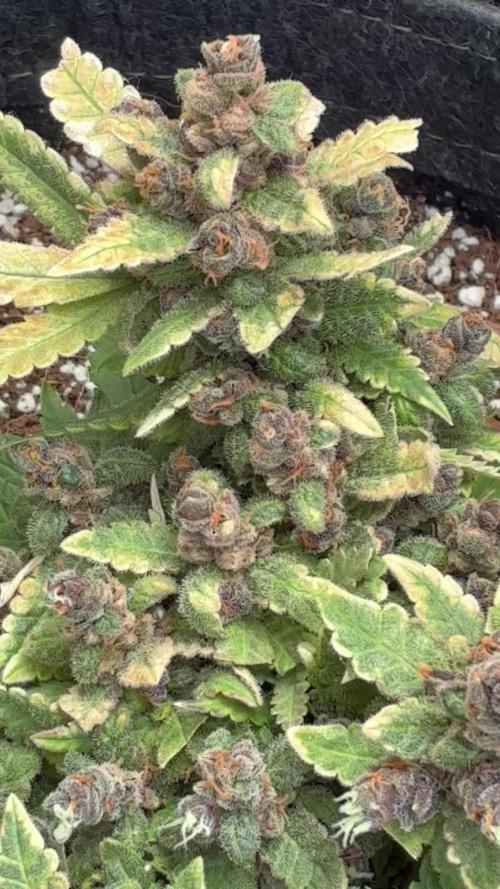
7.14.25. Harvest was 7.13. Glad this grow is over time to finish up!
Wet bud was 22.5 grams Bud looks decent sticky and smells pungent! Will starting next grow in month or 2!
Thanks for checking out grow!


Likes
59
Share


@GrimbolTheDruid
Follow
So, sad day friends. I got spider mites and had to throw all my plants out. This is what I think happened:
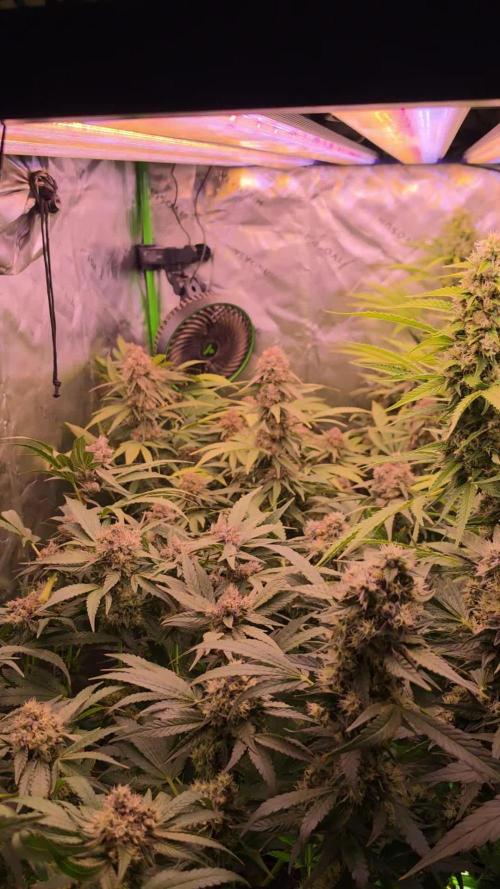
About 2-3 weeks ago I noticed some freckling on the lower leaves. I looked at it and thought it might be a cal/mag issue so I added cal/mag that week and went about my business. I saw it about a week later and it wasn''t getting any better so I added more cal/mag. This continued for about 2-3 weeks until I finally took off a leaf and examined it under my microscope. I saw little bugs crawling everywhere and my stomach just dropped. My fiance did some quick research while I was panic ripping leaves off (see pictures) and she correctly diagnosed it as spider mites.
I debated with myself and my close friend and ultimately I decided to throw all the plants in my tent away. I know that there are a lot of people who will say that there are things I could have done to make it to harvest but what it came down to is the people I take care of and personal pride. I consider myself a caregiver and I give away product for free that I am not going to use to my family and close friends. I thought to myself "Would you smoke this?" and when my answer was "ehhh, I don''t know", I thought about how it would feel giving it away and immediately made the decision to destroy them. I take an immense amount of pride in my product and this hobby and if I am not going to stand behind it I would rather just start over. I grow from my heart (shout out to the Grow From Your Heart Podcast!) to help people and make sure my family is not getting unsafe product from sketchy people. To spray pesticides in flower that may hurt people and have little bug carcasses in there just goes against that in every way and is just wrong in my opinion if you are giving it away to others. If you are the only one smoking it then it is one thing to take that risk but not with your patients. I want my medicine to help people, not create or exacerbate health issues.
It is also important to note that the mites had moved from my flower tent into my veg space and took over my auto berry as well. Damn things are crafty and fast.
So that is why I made the decision to destroy them all after 3 months of res changes, pruning, and manifolding on a slow vegging strain. Feel free to chime in with your opinion but I do not and will not regret my decision. I threw out my new clones, mother plant, and auto berry I had on my veg side as well. Shout out to all the other growers out there that do the right thing by their patients. Caregivers > Cash croppers.
For anyone curious, I removed everything from my tent and scrubbed it all with a 20% bleach/water solution. All equipment has been wiped down and stored in the garage away from any organic materials. I will give them until tomorrow (2 days) to air out and dry and then I will wipe it down again with bleach and wait another 2 days. Hopefully that will make sure everything is dead and will not come back next grow. That next grow should start in about a week.
It sucks but sometimes it happens and you gotta be ready for it. Lesson learned. Never bring outdoor plants into your indoor garden even if it is after just a day or two. A bunch of people on here and Reddit warned me and I did not listen. Now I have learned the hard way and it feels like when your parents "told you so" haha.
Thanks to everyone who stopped by along the way. Stay tuned for a new grow coming soon. It is going to be some cool new limited edition Mephisto Illuminautos. I am pretty excited.
Good luck out there and always grow from your heart folks.
-Grim


Likes
14
Share

@cangrowz
Follow
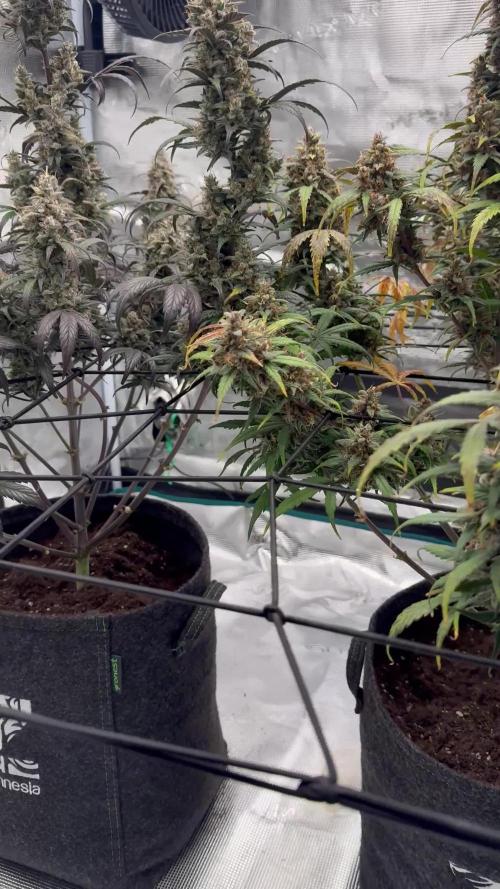
Der Grow lief finde ich sehr gut, auch beim ernten sah man wie sehr lila/rot es teilweise bei den Buds. Das war letztendlich genau was ich wollte. Nächste Sorte wird Lemon Haze :)


Likes
4
Share


@805homegrown
Follow
July 7 start of week 9 first week of transition to flowering.
July 8th I sprayed some (FSW) fermented sea water with (FPJ) fermented plant juice and (LABS)lactic acid bacteria as a foliage spray. Sprayed 2 hours before the lights came on.
July 9th the girls loved the spray I made for them on the 8th
July 12th I sprayed with WS-CAPO water soluble calcium potassium
Foliage spray.
