






Processing
Likes
1
Share


@Ganjagrandaddy
Follow
Week 7 and all is going very well with their transition to the tanks. They have begun to weave roots into the matting now so are well anchored.
The C Banana has been streching out well and I am continuing the bends and squashing her stem to create a decent knot to hold her down where she is quaded. It always looks so rough but the end results can be amazing for repair strength. The monster zkittelz is a little.more busy and robust. She has some nice thick and hardy stems building and i expect she knows her fruit weight to come . Using the squashing and bending does add a little more recovery time each session but the punishment is no worse than nature would throw their way if wild. Always worth remembering a little stress can work wonders. Dont be afraid to control your grows , YOU put a lot into them , you deserve a reward for the comittment.
Be safe and civilised Growmies, one love.
WWG1WGA

Likes
3
Share


@CalGonJim
Follow
7/28 11am Going to plant Rosetta and Montel this week
7/30 12:47AM Having trouble landing on a theme tonight, full retard mode activated!!!
7/31 1:51 I FOUND A NEW COSTUM IDEA FOR THE GROW ROOM
7/31 2:35AM NO WONDER ALL MY PLANTS DIE....LOOK AT THE COOL GROW ROOM SHIT IM DOING... I MADE A DEVIL WORSHIP VIDEO FOR CHRISTIANS!!!! I AM THE LORD OF DARKNESS AND AWESOMENESS AND OTHER COOL THINGS...😂😈😈😈😈..

Likes
45
Share


@masterofsmeagol
Follow
I Messed Up A DAY Here. So one of the days is dated wrong. I tried to correct it the best that I could.
7/24 I decided to label this week as flower. It's more like preflower though. GMOs are stretching like crazy. Due to the rain we weren't supposed to get some of my plants are a little over watered. That's why I love the fabric pots. With the winds we get the bags dry out fast. The GMO's would've needed water anyway if we didn't get this storm. Event Horizon seems to be the furthest in flower amd the most over watered. WE'LL get a LITTLE more rain today and tomorrow but then hopfully my bags will dry out. They are heavy as hell right now. Had we not got rain for what seems like forever. Several plants would've needed to be watered if we didn't get this rain. Still the plants are currently overwatered. All the pics and video so far are from this morning after the horrible pounding rain of yesterday. Like I said before, I need to; defoliate for better air flow, add secondary supports or a vertical trellis, considering using a preventative pest application (e.g. BT), LST and spread branches apart and start using nutes.
7/25 Wasn't supposed to rain today. Like .001. It poured this morning and is still raining VERY LIGHTLY at 2:30. We got an inch yesterday. The total for these 3 days was suppised to be under half an inch. Anyway I went over around two and everything looks great! Things are clearly overwatered and heavy but the plants look happy! Most have their leaves out and everything! I love growing in bags because they dry out so quickly! I don't mind watering more. I defoliated one event horizon and the few yellow leaves I coukd see on other plants after shaking them off. The seedling in the 50 is far behind the others in flower and just showed its sex. I'm fairly certain that one is red runtz. Whatever it is is going to flower much later than the rest. It's going to be good if I have couple early finishers. I did a video but I'll have to upload tomorrow. I have a lot of work to do And not just in the garden so I'm hoping I can balance things out and get this stuff done. Caught three TINY inch worms. I'm wondering if me manually hunting has cut the adult population down and I'm just getting fresh born ones? If that's the case I wouldn't need to spray.
7/26 Plants looked pretty great today. I think me manually removing pillars has made a big difference. It's windy out too so it won't take long for those bags to dry out. Which is good because what wad supposed to be a half inch of rain turned into 3 straight days of rain. I'll be back over to work on the garden today and I'll update then.
7/27 Plants are looking pretty good. Good weather ahead and the bags are starting to lose weight. Found a pillar wrapped in a dead interior leaf all wrapped up. Found a couple more early this morning amd killed them. I did some slight leafing on some plants. I don't like doing that outdoors but since these are monster cropped they have far to many leaves. Airflow is improved. I'm not seeing any nutrient deficiencies yet. Plants are a vibrant healthy dark green. Soon I'll add a base nute like big bloom or ancient amber (I think that's the one, it's applicable to big bloom). I cam see some plants trying to start flowering and I've got one (in the 50) that has just shown sex. Hopfully this will give me some time between harvests. I'll update as I go along.
DAD CALLED IN THE AFTERNOON AND SAID HE THOUGHT A PLANT MIGHT BE STARTING TO DROOP. IT WAS MY GMO CANARY THAT GETS HIT ON ALMOST THREE FULL SIDES BY WIND (ONLY ONE PLANT). I CHECKED THE WEIGHT AND IT WAS LIGHT. IT WAS DROOPING TOO. I WATERED THAT ONE PLANT WITH A GALLON AND WATCHED IT PERK BACK UP. I CHECKED THE WEIGHT ON THE OTHER PLANTS AND LIKE I THOUGHT THEY WERE STILL HEAVY. I PUT MY FINGER IN THE SOIL AND IT CAME AWWY COVERED IN DIRT. MY SEEDLING IN THE 10 WAS KINDA LIGHT SO I GAVE THAT HALF A GALLON. I USED THE OTHER HALF AS "A CUP OF KINDNESS" ON THE PLANTS THAT SEEMED LIGHTEST TO CARRY THEM OVER. I PROBABLY SHOULDVE WAITED BUT I DOUBT IT MATTERS. ILL CHECK IN THE MORNING. I ASSUME ILL HAVE TO WATER THEN OR AT NIGHT. ILL GO BY THE WEIGHT. THE CANARY WILL NEED TO BE ON A SEPERATE SCHEDULE. THATS FOR SURE. Went back over at 6:30 and plants looked better than they have in a long time bags still have some weight. With the sunny weather we are going to have these plants will keep exploding in growth. Found one pillar but I wasn't there long. Seriously considering a spray of BT in the near future.
EDIT: UNFORTUNATELY MY SPIDEY SENSE STARTING TINGLING AROUND NOON. MY ANXIETY WONT LET ME IGNORE IT (IM NOW EMBRACING IT) AND I HAD TO CUT OFF A CONVERSATION WITH MY WIFE TO GO TO THE GARDEN. I IMMEDIATELY SAW THAT ONE OF MY GMOS WAS STARTING TO DROOP. NOT LIKE BEFORE BUT IF I HAD BRUSHED IT OFF AND LEFT IT FOR FOUR MORE HOURS IN THE 90° SUN IT WOULD'VE BEEN. I GAVE THE GMO'S (BESIDES THE ONE I GOT YESTERDAY EACH A GALLON. I DIDNT WANT TO WATER DURING THE DAY BUT THIS WAS MY BEST OPTION. I GAVE THE TOASTED TOFFY A GALLON AND THE 2 EVENT HORIZONS EACH GOT HALF A GALLON, AS WELL AS THE SHERB PIE WHICH GOT HALF A GALLON. I DECIDED TO DO THIS BECAUSE SOME PLANTS USE MORE WATER THAN OTHERS. BEFORE ACTUALLY GOING OVER I CONSULTED MY PREVIOS DIARIES. I HAD THIS SANE PROBLEM LAST YEAR ON THE SAME WEEK OF THE MONTH! THATS WHAT MADE ME TRUST MY INTUITION FULLY. I LEARNED FROM THE MISTAKE OF LAST YEAR. THINGS ARE GOING GOOD. IM STARTING NUTES SOON AND I NEED TO SPEAY FOR BT BUT DONT KNOW IF IT WILL BE TONIGHT.
7/29 Apparently my intuition worked out well. Plants looked great this morning. I may feed today. I defoliated a bit and watered the 10g with a half gallon and gave another half gallon to the gmo on the end that dries out fastest and that I didn't water yesterday. I think I've got the watering down. Now I need to start nutes and spray bt. Need to wait for the rain first though. Suppised to get minor showers the next couple days. I'm gonna try to get the trellis up too.
WENT BACK A LITTPE AFTER FOUR. HUMiDITY WAS 100% AND IT WAS RAINING VERY LIGHTLY. I MEAN AS LITTLE AS IT CAN POSSIBLY RAIN. ALMOST LIKE WHAT IT FEELS LIKE WITH THOSE MISTING FANS IF YOU STAND BACK A WAYS. I DIDN'T WATER. PLANTS WERE LOOKING GREAT! I DID SOME DEFOLIATION AND CAN TELL I NEED TO START NUTES. I CAN SEE SOME SLIGHT DEFICIENCIES IN BIG OLDER LEAVES. SOME SMALL INTERIOR LEAVES YELLOWED. NOT MANY. GRANTED THEY ARE STARTING TO FLOWER. I'LL PLAN ON FEEDING TOMORROW. THE NEXT FEW DAYS IS SUPPISED TO BE SHOWERS. I DOUBT IT WILL GIVE MY BIG GIRLS ALL THEY NEED BUT IT WILL BE A GOOD START. I DID A VIDEO BUT ITS RATHER LONG SO I CANT UPLOAD IT HERE. ITS COOL WATCHING HOW DIFFERENT THE DIFFERENT STRAINS GROW. STILL HAVE A BUNCH OF SHIT TO DO. IT WILL GET DONE THIS WEEK.
7/30 I held off watering today due to a supposed storm and rain we were supposed to be getting. I had early doctors appointments. I got back around 11 and the bags seemed light. After consulting last years diary I saw that I am underwatering. The root system weighs a lot! We haven't got the hundredths of an inch of rain but we got some sun. It's over cast now. I was there working for a few hours. I watered most a gallon. All the gmo's got a gallon. I gave the two event horizons about two thirds a gallon. About the same with the toasted toffy and the sherb pie. About 3/4 of a gallon as they seemed to have a little weight left. Looking at last years diary there were plants I was giving two gallons at a time in a 20 gal bag so I've been u Der watering a bit. I've caught it now and adjusted. I'm not losing leaves at the pace I have in the past. Even though some are in flower. I think I'm getting better. I fed for the first time today. Each plant got 1.75 pints. Except the 10gallon which got half the powerade bottle and the 5gal which got a qtr. By the time I left the plants were standing up nice and tall and looking amazing. Now I just need to apply bt and secondary supports.
7/31 Another eight day week. I'll have to do six days next week. Everything looked amazing this morning. I'm seeing less pest damage. Watering and feeding was the right move. Now I just have a little rearranging to do, add supports and spray if I decide to.

Likes
84
Share


@Beans
Follow
Well this was long strange trip with 1 leaf lol. Started as an extra cutting I was experimenting with to see just how much abuse it could take before it died. I put it in my big tent from day 1, never misted or covered it and pretty much treated it like it was mature plant. It lost all its leaves but 1 and I had removed all the dead material so all that remained was 1 leaf with some green in between all the yellow. It didnt appear to have anywhere to sprout new growth, all the nodes were barren with nothing but dried up brown nubs then I decided I wanted to try to save it and I was curious if it would grow or just remain a stem and 1 leaf. I was burnt out on all the data input and pic downloading and wanted to screw around and do something fun that didnt end up feeling like a chore. For the most part I succeeded although some of those videos took me forever lol. I had never done anything like that before and that wasnt my original plan. I just started screwing around and 1 thing led to another and here we are. Hope everybody who followed along enjoyed it and I hope anybody watching in the future at least gets a couple laughs out of it. That's what this random collection of nonsense was all about...just trying to have some fun and get a few laughs along the way.

Likes
26
Share

@MedicaL
Follow
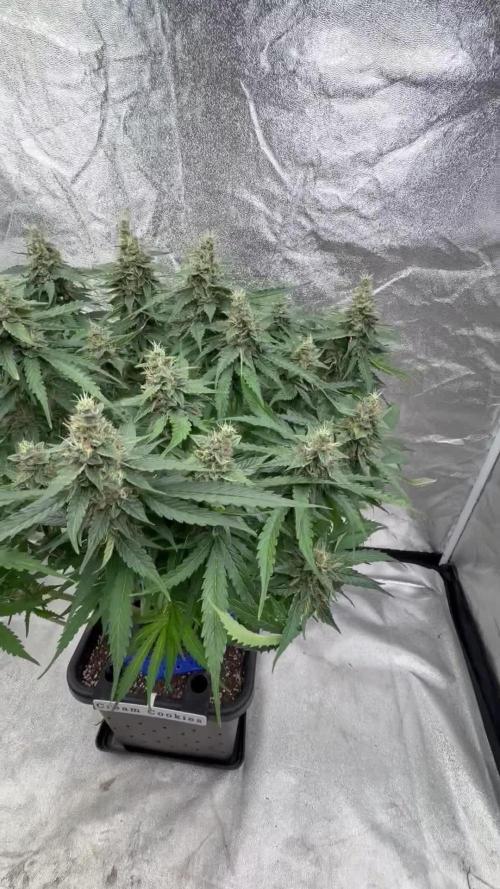
Cream Cookies Auto od Fast Buds je prostě stará klasika, na které je ale bohužel vidět její věk. V době svého vydání to mohl být solidní kousek, ale dnešní optikou už tahle genetika těžko konkuruje.Růst a struktura: Neurazí, ale ani nenadchne. Roste to tak nějak samospádem, jak člověk od staršího automatu čeká. Žádný extra stabilní fenotyp nebo explozivní růst se nekoná.Cukru taky moc nevydala.


Likes
19
Share


Likes
68
Share


@Ferenc
Follow
Day 71, 26th of November 2020:
Beautiful isn't she? Purple colour appears.... so nice! The other Kaini the normal does not show any sign of purple colour unfortunately.
Not much to report. The leaves started getting lighter hopefully they ain't gonna just die so quick.
Fertilization is the same like before with exactly the same ratio and mixture above.
The lamp is on 11.15 min and off 12.45 min.
Last week was 15 min longer light cycle....
So every week 15 min shorter light cycle until the 5th week. So far -45 min. It switches on at 6 am and off at 17.15 pm.
Processing
Likes
11
Share


@Fibro_Witch
Follow
This little lady is looking more hopeful this week. I moved her (well, all of the autos) further away from the photos so she could get more direct sun. She doesn't look great, but I feel like she's working through. The newer leaves are still pretty yellow, but at least they aren't contorted and there's no horrible brown spots or anything. I gave her some of the Coast of Maine 5-2-4 around her base so hopefully she'll gobble some of that up and will look better next week when she'll have gone to flower. Stay tuned!


Processing
Likes
5
Share


@Ninefold
Follow
Same as week 15, missing a lot of pictures in the timelapse :(.
Likes
14
Share


@Auto_lover
Follow
Starting to see almost all Milky trichomes. Buds are pretty dense. Smell is strong and loud. Smells like lemon sweet kushy
Likes
4
Share


@Growin_Ish
Follow
NY Diesel Auto Feminised is an auto-flowering version of the celebrated New York City Diesel. It is mostly indica while also displaying some sativa-like cerebral effects to accompany the deep relaxation that it provides.
NY Diesel Auto grows to a height of 60 – 100 cm. tall and develops plenty of side-branches that produce nice, dense buds. Growers can harvest yields of yields of around 600 gr/m2 in just 60 - 70 days from germination. This strain can also be grown successfully outdoors due to the hardy ruderalis genetics.
The scent is very dank with notes of diesel fuel. THC production is in the region of 14 – 16% while CBD levels are around 2%. The overall effect has an initial cerebral quality leading into bodily relaxation and a sense of wellbeing while not being physically incapacitating
10/5
Dropped two NY Diesel Auto seeds into a shotglass of room temp spring water. Placed the shotglass in a dark warm cupboard.
I will be preparing the medium today as well. The plan is 24 hours in the shotglass, 24 hours in a wet paper towel, then straight into 3gal fabric pots that have already been cooking for 2 days. They'll go under 18/6 with RH at 60% to 70%.
10/6
One seed has a tiny tap root and is still floating in the glass. The other seed fell to the bottom but has no taproot. Letting them stay in the shotglass another 12 hours.
10/7
Diesel #2
Half inch tap root and she sank to the bottom of the shotglass finally. I wet the coco-perl with PH 6.35 room temp water with Fish Sh!t in it. Let's grow Diesel #3 without Fish Sh!t for comparison.
Diesel #3
She has a miniscule taproot and it's black. Could just be film from the seed case where it cracked. I put her in a damp paper towel and stuck her in the dish washer. We'll check back in 12 hours.
12 hours later, no change. Then I realized I forgot to put it in a zip lock. The paper towel was still wet tho. Put it in a zip lock, will check in the morning.
10/8
We have a taproot on NY Diesel #3. Put some Azos in the drop site and sowed the seed. Half a shot glass of water to seal it in. 18/6, 67% RH, 80°f
Likes
12
Share


@CheeRz
Follow
We finally made it ladies and gentlemen. It is an honor to introduce you to the beautiful Lady Wedding Cake and the beautiful Cookies Kush twins. Even though I'm pretty sure cookies kush #1 would have needed another week, she had to go under the knife and was finished just in time for the super bowl. we also need the space now for the next round of the Eternity Grow Cup. Next Stop Zami Runtz and Blue Gelato 41
Likes
13
Share


@ButterfliesLittleFarm
Follow
Hello Diary,
Titan F1 looks to be ready for harvest soon.
In my estimation, given the development so far, two more weeks at the most. It's really fast.
The flowers are hard and compact and very sticky to the touch, the smell is incredibly strong.
Titan F1 has reached its maximum height, there is no change since the last measurement.
Watering has become a little more frequent, I have to water every three days because they drink a lot of water.
I continued this week with the addition of nutrients, bio flowering booster and easy bloom tablets.
The conditions inside the grow box are good, the temperature is around 28 degrees and the humidity is around 45%.
Here's a quick recap of the week.
12/06/2023 - Day 44.
Watering.
I prepared 8 liters of water, added all three components from the bio flowering booster, lowered the pH. at 6.0 and with that amount I watered all three plants evenly.
15/06/2023 - Day 47.
Watering.
I prepared 8 liters of water again, inserted one easy bloom tablet, lowered the pH. and again with that amount I watered all three plants on the farm.
17/06/2023 - Day 49.
The end of the seventh week and it's time to take photos.
That's all from me for this week, see you soon.


Likes
8
Share


@all_about_420
Follow
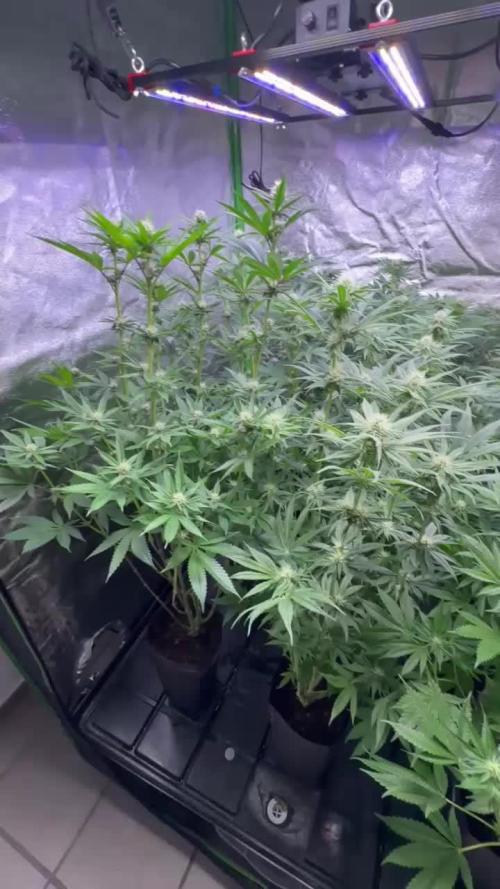
Die zweite Blütewoche der Tropicanna Poison F1 Fast Version verläuft absolut nach Lehrbuch. Die Blütenentwicklung ist mittlerweile im vollen Gange: An sämtlichen Triebspitzen formieren sich dichte, vitale Blütenansätze (Budsites) mit einer stetig zunehmenden Anzahl an schneeweißen Pistillen. Der vertikale Stretch verhält sich dabei mustergültig und hält sich erfreulich in Grenzen. Dank der schnellen F1-Fast-Genetik von Sweet Seeds hat die Pflanze den Übergang vom Längenwachstum zur reinen Blütenproduktion extrem zügig vollzogen. Das Kronendach bleibt dadurch kompakt, homogen und perfekt auf einer Höhe. Die Nährstoffaufnahme ist stabil, die Blattgesundheit makellos – beste Voraussetzungen für die anstehende Masse- und Harzbildungsphase!


Likes
90
Share


@AsNoriu
Follow
Day 128. It took me almost 48 hours with two short naps to sort all 8 girls.
Result not bad, think easy will brake 1g/W, I have 720 setup, but one light is limping, so it's closer to 600. Think harvest will be in 900 area. It's 90 W per plant only and I think one girl will go above 150 easy !
I doubt I will post Tangies weight in statistics, don't want to screw that strain, she could be way way WAY bigger !!!
Happy Growing !!!

Likes
4
Share
@Gorillagrower
Follow
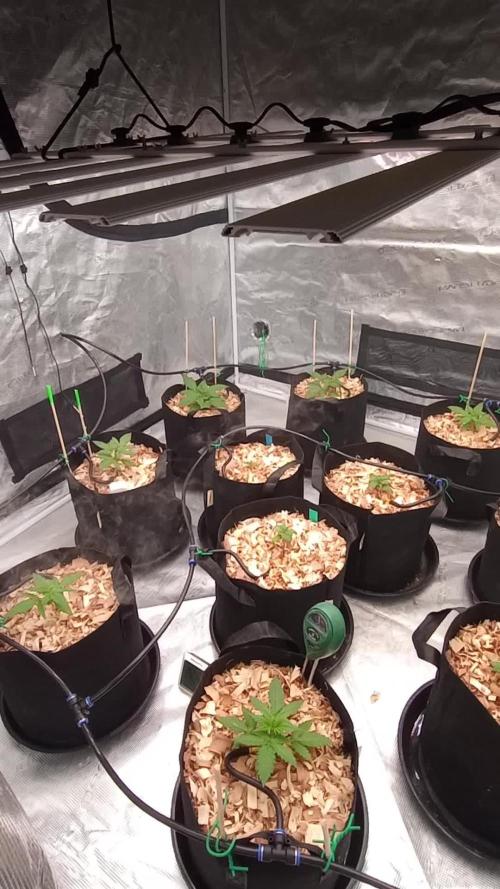
Week 3 and they are starting to take off. I used some Recharge by Real Growers. Instant compost soil amendment ingredients. Great stuff.

Likes
36
Share

@squalino
Follow
Darkwing Duck – Semaine 2
DDUEL ANULLE.
suite a quelques problèmes dans sa gestion des nutriments de bases thc-hunter a du recommencer ses cultures. on les comparera à la fin ..
l'erreur est humaine même encore maintenant on est pas a l'abri. ☺️☺️☺️☺️☺️☺️☺️☺️☺️😀☺️☺️☺️☺️☺️☺️☺️☺️☺️☺️☺️☺️☺️☺️☺️☺️☺️☺️☺️☺️☺️☺️☺️☺️☺️☺️☺️
Environnement
Températures : 25°C (Jour) / 21°C (Nuit)
Hygrométrie : 55% d'humidité en moyenne
❤️❤️❤️❤️❤️❤️❤️❤️❤️❤️❤️❤️❤️❤️❤️❤️
❤️❤️❤️❤️❤️❤️❤️❤️❤️❤️❤️❤️❤️❤️❤️❤️❤️❤️
Développement & Observations
Taille actuelle : 18 cm (+9 cm de croissance depuis la dernière mise à jour !)
❤️❤️❤️❤️❤️❤️❤️❤️❤️❤️❤️❤️❤️❤️❤️❤️❤️❤️❤️❤️❤️❤️❤️❤️❤️❤️❤️❤️❤️❤️❤️❤️❤️❤️❤️❤️
Du jour 8 au jour 14, je n'ai rien ajouté en supplément : l'eau déjà présente dans le pot suffisait largement à ses besoins.
Elle se développe à une vitesse impressionnante ! Le tronc s'est considérablement épaissi, la structure est bien solide et les nouvelles feuilles étagées sont de plus en plus grandes, bien vertes et en pleine santé. Un exemplaire végétatif de vigueur pour cette autofloraison !
❤️❤️❤️❤️❤️❤️❤️❤️❤️❤️❤️❤️❤️❤️❤️❤️❤️
❤️❤️❤️❤️❤️❤️❤️❤️❤️❤️❤️❤️❤️❤️❤️❤️❤️❤️
Un immense merci à toute la communauté qui suit nos aventures au quotidien ! ❤️❤️❤️❤️❤️❤️❤️❤️❤️❤️❤️❤️❤️❤️❤️❤️❤️❤️❤️❤️❤️❤️❤️❤️❤️❤️❤️❤️❤️
Un grand merci également à l'équipe d'AutoSeeds pour leurs splendides graines d'une qualité toujours au top ! Pour découvrir leurs génétiques exceptionnelles et faire vos commandes, rendez-vous directement sur leur boutique : https://www.autoseeds.com/shop/seeds/
