


Likes
Comments
Share


@CanarianGrow92
Follow
The first week of flower just passed and already some small tiny pistils are visible, in general this plant doesn't stretch exaggerated so its a perfect strain for me to put like 10 of these in one of my grow rooms, im happy to try this strain as I've heard quite some good things about this strain. Lets see how it goes the next couple of weeks 😜

Likes
35
Share


@farahweed
Follow
The first week of flowering!!!😍😍
Wow, how attractive!!
It is very attractive to me.
How about you??🌱🌱🌱🌱
Please coment to me!!
I changed the light cycle this week.
I changed the lighting time from 18 hours to 12 hours.
I feel that after doing this, the plant will grow faster in the flowering stage!!!
This week I used short flowering feeding


Likes
35
Share


@IndicaVibeMe
Follow
I'm going to need to transplant this gal! Already roots poking out the bottom so I'm prepared to get her in a bigger pot soon! Probably this week.-- update, she's loving Life in a larger pot!
Smells incredible already 👍

Likes
34
Share

@Suemchen
Follow
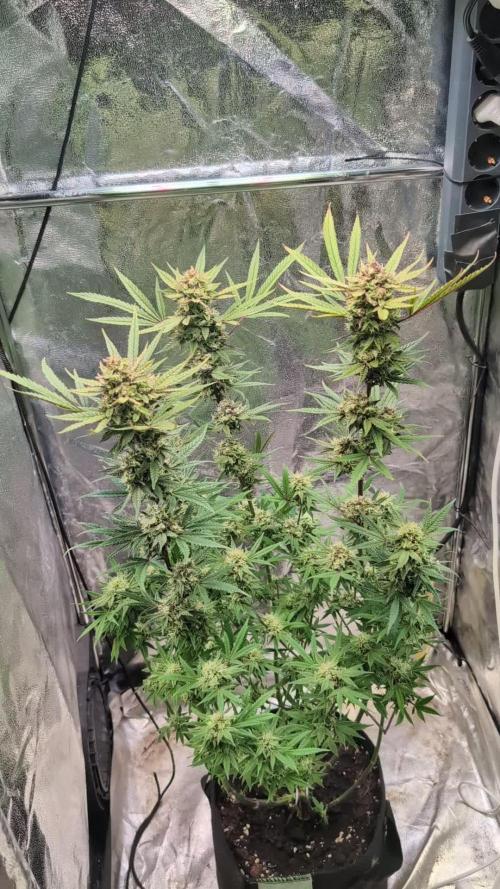
Sanlight EVO 3-60 at 80%
Day 120: looking good and watered again🌊. Watered with rain water, 1 ml/l Cal Mag, and 1 ml/l Green Sensation
Day 123: looking good and watered 🌊. Watered with rain water and 1 ml/l Hesi Boost, 1 ml/l Cal Mag, and 1 ml/l Green Sensation. EC at 1.0 and a pH of 6.4 .
Day 126: looking good and watered again. Watered with rain water and 1ml/l Powerzyme, 1 ml/l Hesi Boost, 1 ml/l Cal Mag, 1 ml/l Bloom Complex and 1 ml/l Green Sensation. EC at 1.0 and a pH of 6.4.
Likes
9
Share


@Mr_nugs_lover_David
Follow
This lady is making me enjoy a lot her fragrance that come from her flowers, very good strain, the 3 phenos of ak420 smell exactly the same, very sweet and floral nugs, and they're starting to get very compact and dense, let's see how she keeps developing her beautiful flowers everybody! Hope you have enjoyed this journey as much as me! 👨🌾💚❤️💛🔝

Likes
5
Share


@TheBluntBeauty
Follow
She is a tiny one for sure! Still no signs of flowering and pretty slow growth rate which I’m good with since I need to keep her tiny

Likes
4
Share

@Rare_Terps_5280
Follow
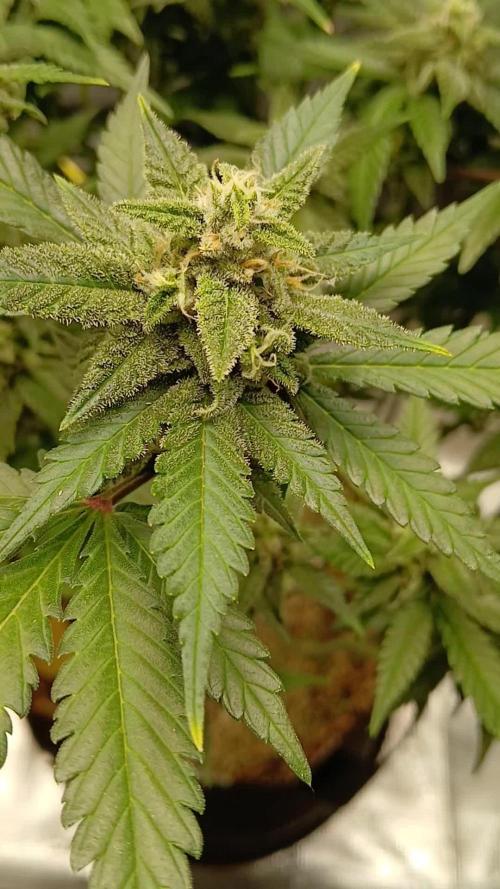
Few more weeks to go, strong terps, good tricome production now, good spred for colas

Likes
14
Share


@Gardens_of_Of
Follow
Greenhouse feeded one is struggling under the high intensity of the light. But still growing frosty buds.
Advance Nutrient one is smaller and is receiving less light. She is still recovering from the earlier accident though.
Likes
10
Share

@Cukito
Follow
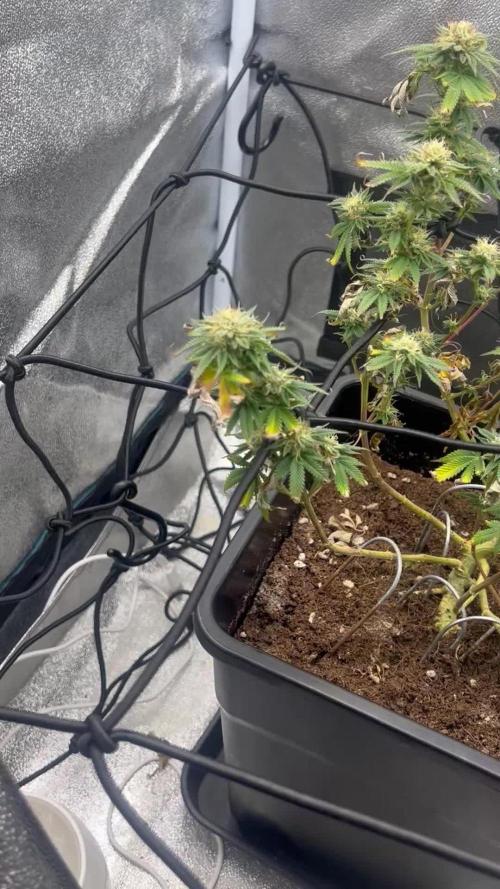
Man the smell is so fucking strong☠️ Also the resin has increased a lot!! The buds are smaller than I would like but It's fine we will solve that problem in the next grow!!

Likes
Comments
Share


Likes
18
Share


@berlinbeginner
Follow
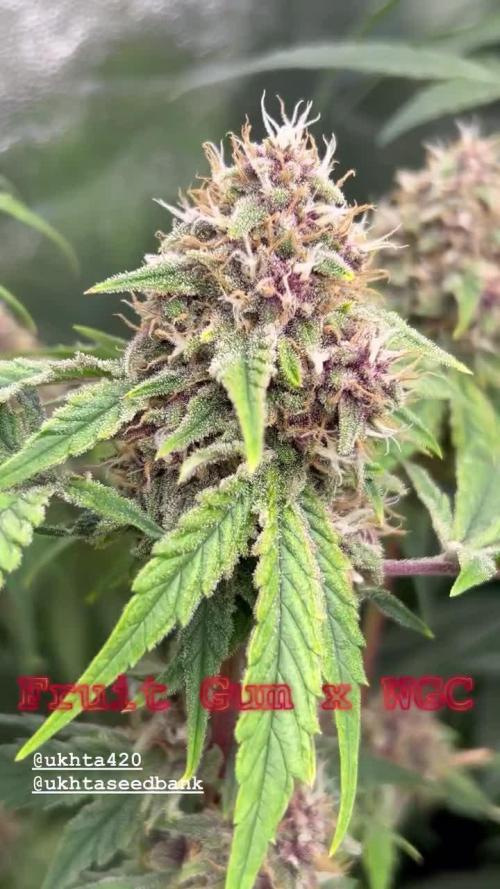
Ladies doing fine.
Worm castings are magic. SD2 is getting greener. I topdressed all the plants with worm castings

Likes
6
Share


@LittleBigTrees
Follow
Just given water this week (nutrients won't let me display 0 😱)
The leaves have lost their green right into the buds so it's time to chop them down. I'll try to do this later today or in the morning.

Likes
2
Share


@The_Doctor_Green
Follow
Hola a todo el mundo!.
Esta semana he regado con 2 ml x litro de agua de top bloom y top candy de @TopCrop .
Solo eso.luego regue con agua.
Siempre el ph de riego es de 6.3 - 6.4


Likes
4
Share


@Altitonans_Fulmen
Follow
The thoughts shared in this journal are my own—a snapshot of personal understanding at the exact moment of writing. It is not intended as a reference of absolute fact, but rather as an exercise in ἐπίνοια (epinoia): an exploration of thought, intuition, and creative insight.
Epinoia(ἐπίνοια) is a Greek term meaning thought, intention, purpose, or conception, stemming from "mind" (nous) and "upon" (epi), representing the mind's reflective or creative process, used in philosophy (Aristotle, Gnosticism) and theology to discuss understanding and divine names, appearing once in the New Testament for the "intent of your heart" (Acts 8:22). It signifies the mind's operation to form ideas or designs, contrasting with raw data or innate perception, and in Gnosticism, it's an emanation of divine wisdom (Sophia).
"Φsis" is a stylized spelling of the Ancient Greek word φύσις (physis), which translates directly to "nature" or the intrinsic essence of a living thing.
Exploring the deep intersection of science, intuition, and creative insight often leads to breakthroughs that challenge our understanding of what is possible. When we approach high-performance cultivation not just as a hobby, but as an exercise in pushing a biological system to its absolute genetic ceiling, the results can transform from simple data points into profound proof of concept. Achieving a highly optimized environment requires a shift in mindset away from empty promises and directly toward verifiable proof, building true confidence through a detailed archive of past lessons and strategic adjustments.
This philosophy turns a standard space into a precise mass and energy balance equation, where every variable is managed to eliminate biological bottlenecks entirely. In a recent project four individual plants produced 344 grams, 280 grams, 445 grams, and 255 grams respectively, resulting in a total harvest of 1,324 grams, or 47.2 ounces, of dry product. Operating with a 600-watt light source inside a four-by-four footprint, this brings the final efficiency to an exceptional 2.21 grams per watt.
To put this in perspective, the standard traditional indoor benchmark has long been established at 1.0 grams per watt, while expert commercial operations target 1.5 grams per watt, and elite commercial systems push the envelope between 1.8 and 2.0 grams per watt. Reaching 2.21 grams per watt places the outcome squarely within the top 0.1 percent of global benchmarks, acting as a true statistical outlier that demonstrates what happens when flawless environmental parameters meet a cultivar pushed to its maximum potential. Reaching this level of mastery demands that we move past the common trap of the mirror fallacy, where the ego mistakes its own limited perspective for universal truth and views different ideas as personal threats. True progress requires curiosity and dismantling the illusion that our immediate viewpoint is the objective standard, shifting the focus instead toward how a system actually operates under the absolute laws of physics. In a high-performance setup, maximizing output is never about adding random additives or forcing growth, but rather about systematically removing the limitations that hold the organism back. By maintaining a perfect vapor pressure deficit, ideal root-zone oxygenation, and precise structural canopy training every single minute of the cycle, the plant is freed to express 100 percent of its DNA potential without any lingering genetic latency.
Managing a dense canopy inside a tight footprint presents the ultimate challenge of mitigating stagnant air and preventing moisture issues. Overcoming this bottleneck relies on a sophisticated synganic approach, which seamlessly marries the precise control of synthetic mineral inputs with the natural resilience of active organic living soil. This method transforms the room into a closed-loop system where the internal microclimate is entirely isolated from external weather fluctuations and pests. Rather than openly exhausting the atmosphere, the air is continuously recirculated, enriched, and scrubbed using 264-nanometer ultraviolet light.
The foundation of this thriving ecosystem is a comprehensive substrate composition designed to provide perfect aeration, structural integrity, and biological buffering. The primary media base integrates expanded clay aggregates, coir chunks, premium coco coir, sphagnum peat moss, horticultural perlite, vermiculite, pumice, and volcanic basalt rock. To continuously condition the soil and fine-tune mineral availability, the mixture is amended with agricultural gypsum, wollastonite, dolomitic limestone, basalt rock dust, micronutrient-rich volcanic ash, greensand, crushed seashells, biochar, and shungite. This mineral architecture creates an incredibly stable environment where active soil biology naturally prevents salt toxicity and ensures steady, reliable nutrition throughout the entire life cycle.
Living organisms within the substrate play a vital role in maintaining this delicate biological balance and breaking down organic material. Red wigglers continuously process organic matter into easily accessible plant nutrients while aerating the media; specialized predatory mites offer excellent biological control against common soil pests, and pillbugs excel at breaking down tough, woody elements. These biological components are further supported by a rich layer of organic amendments including high-phosphorus steamed bone meal, high-nitrogen dehydrated blood meal, fish bone meal, cold-processed kelp meal, dehydrated moringa powder, spirulina powder, and marine crustacean biomass rich in chitin. Combined with biological inoculants like mycorrhizal fungi, premium worm castings, and concentrated humic and fulvic acids, the entire system operates as a flawless biological transducer of light and energy.
Ultimately, shifting our perspective to view a grow space as a complete mass and energy balance equation changes the entire nature of agriculture. Success ceases to be a matter of luck or anecdotal habits and instead becomes the predictable result of meticulous design, patience, and the strategic elimination of failure. When science, biology, and engineering converge so harmoniously, we gain a deeper appreciation for the intricate natural systems that sustain life and growth. By sharing these detailed insights and refining our techniques, we can continue to unlock the absolute maximum potential hidden within the living world around us.
Comprehensive Substrate Composition:
1. Substrate Base & Aeration Media
Expanded Clay Aggregates (Hydroton Pebbles)
Coir Chunks & Horticultural Coco Coir
Sphagnum Peat Moss
Horticultural Perlite
Horticultural Vermiculite
Horticultural Pumice
Volcanic Basalt Rock
2. Mineral Amendments & Soil Conditioners
Agricultural Gypsum (Calcium Sulfate)
Wollastonite (Calcium Silicate)
Dolomitic Limestone (Calcium Magnesium Carbonate)
Basalt Rock Dust (Trace Mineralizer)
Azomite (Micronutrient-Rich Volcanic Ash)
Glauconite (Greensand)
Crushed Seashells (Calcium Carbonate Source)
Pyrolyzed Carbon Feedstocks (Biochar & Horticultural Charcoal)
Shungite (Carbonaceous Mineraloid)
3. Organic Nutrient Amendments
Steamed Bone Meal (High Phosphorus)
Dehydrated Blood Meal (High Nitrogen)
Fish Bone Meal (Phosphorus & Trace Calcium)
Cold-Processed Kelp Meal (Ascophyllum nodosum)
Dehydrated Moringa Oleifera Powder (Botanical Nutrient)
Spirulina Powder (Arthrospira platensis / Cyanobacteria Nutrient)
Marine Crustacean Biomass (Shrimp & Crab Chitin)
4. Biological Inoculants & Organic Acids
Mycorrhizal Fungi Inoculant (Endomycorrhizae / Ectomycorrhizae)
Vermicompost (Premium Worm Castings)
Humic & Fulvic Acids (Concentrated Humates)
Human Body
65% Oxygen (in all liquids and tissues, bones, and proteins)
18% Carbon (everywhere)
10% Hydrogen (in all liquids and tissues, bones, proteins
3% Nitrogen (in all liquids and tissues, proteins
1,5% Calcium (lungs, kidney, liver, thyroid, brain, muscles, heart, bones)
1% Phosphorus (urine, bones, DNA)
0,35% Potassium (enzymes)
0,25% Sulphur (proteins)
0,15% Sodium (in all liquids and tissues) (in terms of salt)
0,05% Magnesium (lungs, kidney, liver, thyroid, brain, muscles, heart)
Plant
Mother-nutrients: Carbon 47%, Oxygen 43%, Hydrogen 4%.
Macro-nutrients: Nitrogen 3%, Phosphorus1%, Potassium1%, Calcium1%, Magnesium0.5%, Sulfur0.5%.
Micro-nutrients: All the rest combined 1%
More energy, more blueprint.
Although CO2 is a naturally occurring gas that both humans and plants use, it is invisible and odorless and can be fatal at high-levels. If you’re supplementing carbon dioxide in your grow room, ensure there are no leaks in any CO2 devices and always use a CO2 monitor and alarm.
0.02% Life unsustainable
0.03% Life OK
0.04% Current ambient atmospheric co2
0.04%-0.1% =400-1000ppm standard indoor co2.
0.1%-0.2% = 1000- 2000 ppm (prolonged exposure: drowsiness).
0.2%-0.4% = 2000-4000ppm (Headaches, fatigue, stagnation, stuffiness, poor concentration, loss of focus, increased heart rate, nausea).
1% is toxic
5% is quick death.
"Dabo vobis quod oculus non vidit, nec auris audivit, nec manus tetigit, quod in cor hominis non ascendit."
Likes
7
Share


@Jardineiro_Br
Follow
Todas as 3 plantas estão bem, uma já está bem colorida como flores, outra está começando a dar um tom roxo e uma ficou bem pequena e está com os pestilos bem brancos e ficou pequena, foi com certeza uma falha que cometi no preparo do solo. Perdi duas plantas por isso.
Estava intencionalmente exagerando no fertilizante, mas acho que a planta sentiu, vou retornar aos 4 ml por litro.
Likes
2
Share


@Scrubz767
Follow
They started flowering gave them Chicken Manure a few days earlier when I noticed it, in the 3rd week if flower i'm going to give them rabbit manure and make a flowering tea for them 😁we will see how it goes also might get a PK Booster 🤔


Likes
15
Share


@Brianm420
Follow
I’m happy one of the white widows is further ahead in flowering. I’m looking forward to enjoying some smoke.

Likes
Comments
Share


Likes
69
Share


@Crazyweedpt
Follow
Week 8
This week i ´ve been defoliating the cookies and stopped to give them nuts after some signs of stress on leaves, they are curling up and get burn out on their tips, this is most visible on pot 1 who´s appearing to be a sativa pheno! On the other hand Pot 2 who appears to be more indica pheno are showing more resistance to nuts! I Just been feeding them with ph water and have increase the distance for the ligths, I dont relate the burns on my leaves from that but with the temperatures on outside changing so drastic and the entire grow been heated and sealed (in order to save some money on energy) i only opened the windows to refresh the air two or tree times this week for a couple of hours generaly at 12 oclock to dont have my temps changing from 22 degres to 8 degres 😱, not the best conditions and not my easiest grow but what can i say? You can look them an judge... to me they are fucking Hero´s... They became thirsty, suffered from insufficient air flow, suffered slight burns for 24 hours of continuous light from the seed until now and still suffered from excessive fertilization but the ladies didn't fall off their high heels 🙌
Likes
81
Share


@LockDownGrow
Follow
Ok so this week I did a defoliation and a tigh down too the netting , I really was not planning on doing such a big defoliation but the leafs became thick and dense and there was almost no light penitration down too the lower branches of the plant , so she is opened right up now and the humidity and temperature has dropped loads and the air is moving alot better around the leaves and branches , I will not take anything more off her now , I have also added Cal mag too the nutrients for this week only ,
I am very happy with them so far and being new too all this it's all very exciting ,
Thanks for looking :)
Likes
8
Share

@ThatsmyGrow
Follow
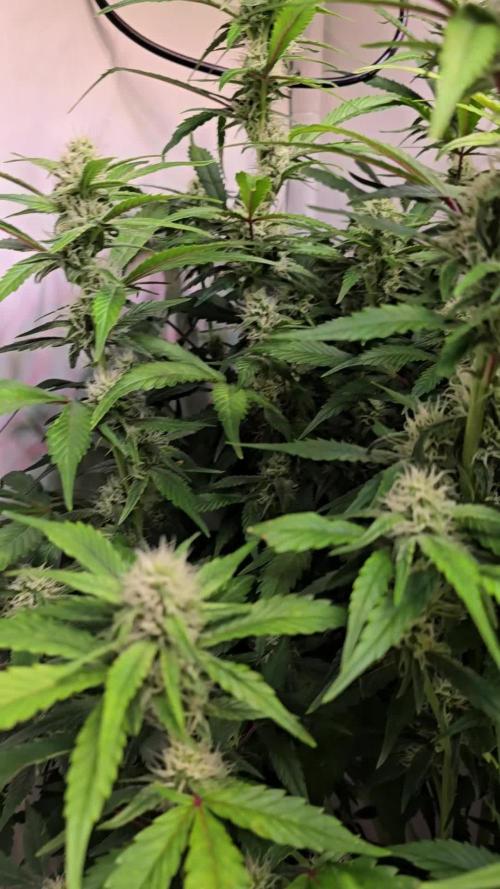
Frostbanger really impressed me; I think you can clearly see the Gorilla Cookies cross. I would love to grow this strain again and again.