Likes
46
Share


@Roberts
Follow
Drunken bitch Slap is growing great under the Hortibloom Solux 350 . 1 week bg into light change and not much has happened yet. Changes will show in a week to 2. I changed the solution today as well. Also increased light strength to full power. Nothing else to report at this time. Thank you Hortibloom, and Aeque genetics. 🤜🏻🤛🏻🌱🌱🌱
Thank you grow diaries community for the 👇likes👇, follows, comments, and subscriptions on my YouTube channel👇. ❄️🌱🍻
Happy Growing 🌱🌱🌱
https://youtube.com/channel/UCAhN7yRzWLpcaRHhMIQ7X4g

Likes
8
Share


@CULTMEN
Follow
Bravo, I am surprised by the fast buds 420, quality seems
Both are 46 days old
Gorilla Zkittlez Auto
And Gorilla Cookies FF let's see what happens next week 🌲🌱💚🌵🌧️🌦️

Likes
4
Share

@Zdenda
Follow
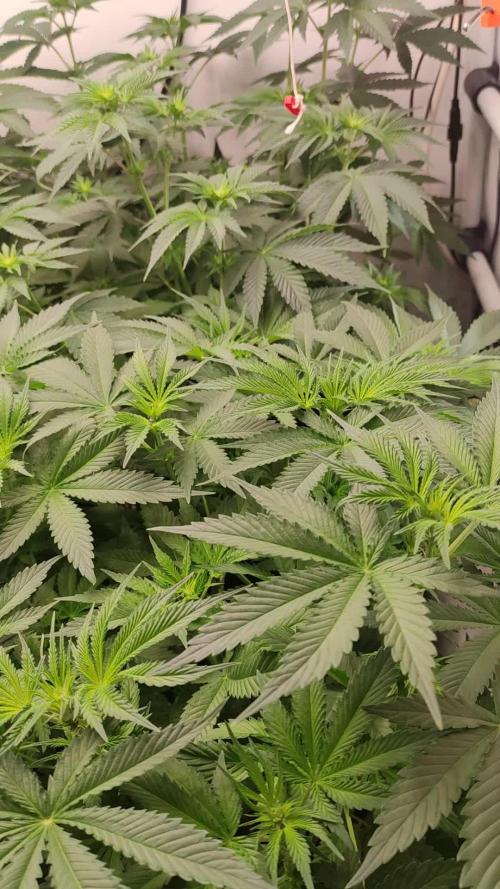
Tento týden jsem přidal Ionbeam S16 Full Spectrum LED na boky stanu , aby se světlo dostalo až dolů..
pH 6.3 a Ec jsem zvednul na 1.3 a myslím, že více živin holkám prospívá 😄
Celkově se holkám daří a vypadají zdravě.. jsou vitální a nikde ani žlutý list.. trochu se vytahují, ale né zase hodně.. tenhle kmen se mi dobře pěstuje.. nemám s ním zatím žádný problém. Květenství se začíná projevovat.. Jde to dobře 😄

Likes
23
Share


@DoubleDsTrees
Follow
Another week down and things just keep getting better and better with this one. Big fat buds laced in resin and the smell is soooo good and strong! Very strawberry-like with a ton of gas that my carbon filter is doing a poor job of covering up. Oh well, smells good. :)
I will start flushing about mid way through its growing week and then chop shortly after. It’s getting so close to finished I’m just waiting for more amber. I’m mostly cloudy right now.
Likes
17
Share


@JonnyKush
Follow
hey growmies I decided to switch to flowering, I am using ADV nutes with the dosage recommended by them and they seem to me in great shape, tonight I will do a defoliation in order to breathe better and get as much light as possible. I'll keep you up-to-date. good growth and happy day 💚🌳

Likes
22
Share


@Wicked_Stix
Follow
Everything is going smooth. Starting to see some stretch. I have removed a few leaves on the top to help get light deeper into the plants. I am going to start them on some maxibloom when they start popping pistils.
Likes
10
Share


@Belivitez
Follow
Strain has few phenos... I found 3 different, definitely i must to try this strain but in diffent style. I think this is great plant for sog! Branches aren't very hard, with one of plants i have big problems (broken branches) they need alot support. Zamnesia i want to try this strain in sog style ❤️
Likes
17
Share


@Greencrypto
Follow
Just a quick update looking good give them a trim and a water bud sites all over let’s go 😎👍 not a lot more to say. See ya next week ☺️ I will mark each plant next week with a better update 😎
Likes
2
Share


@Zugzug
Follow
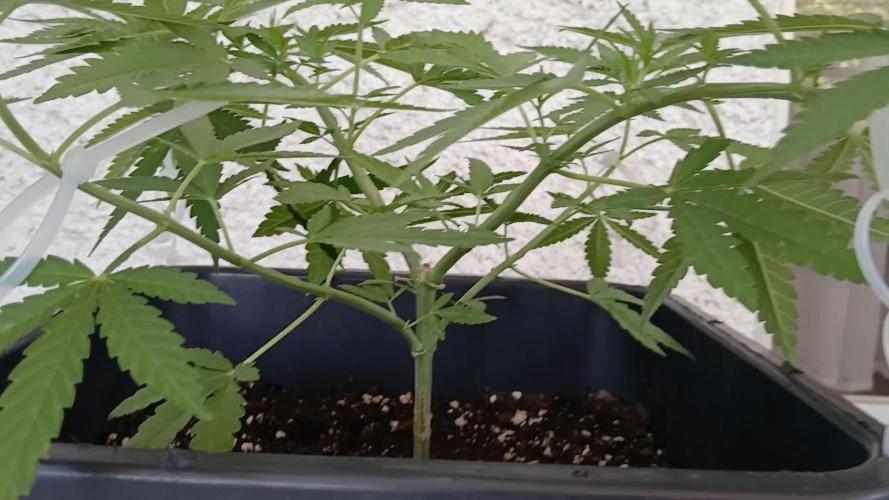
No food just Water (Grow Dots)
Day 22 Transplant to 3gal pots
Day 23 start of LS





Likes
109
Share


@ButtersStotch
Follow
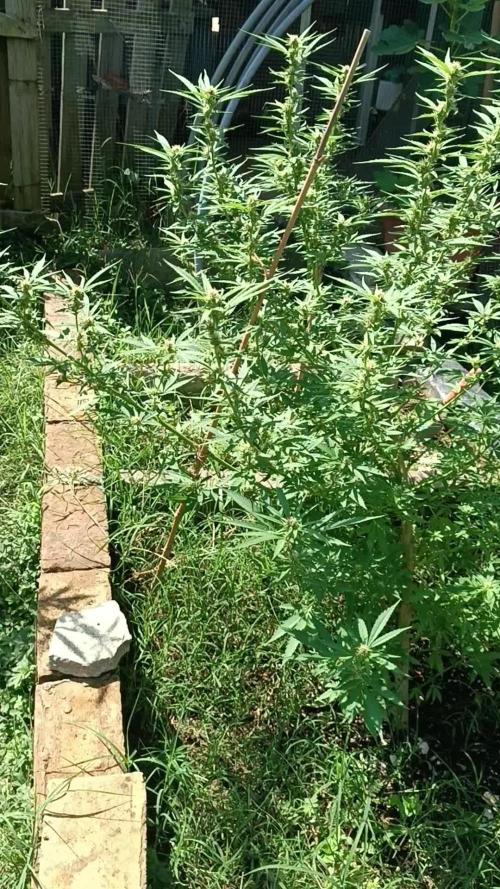
-Sorry I missed a week as I left town for vacation, luckily I had someone to check on them
-I've been feeding once a week about 2 gallons each
-I water whenever the top couple inches is dry but its been raining almost every other day so I've barely watered them
-I've been using straight tap water (municipal) without dechlorinating. I was dechlorinating for 3/4 and using the 4th as a test, it showed no ill effects so I decided to not waste my time and just send it. I'ts been 2 weeks and no negative signs (touch wood) so I'll continue
-I used Promix-HP as my medium, its pretty light and the girls are getting pretty tall. When I got home from my vacation I noticed they were all leaning to one side. I assumed they were leaning towards where they get the most sun so I spun them around. Doing so I noticed that they were leaning because they were top heavy and the medium wasn't dense enough to provide sufficient support. I set up the perimeter wire as you see to provide additional support and tied the stalks up with stakes. They seem pretty sturdy now.
-Been getting some hot and humid days here in Ontario and they keep stretching, I'm curious as to how big they'll get before flower.
-Oh and the Auto White Widow from my previous grow was planted in my flower bed and its still just vegging, hopefully it'll flower with the rest. I'm about to give her another major haircut.

Likes
61
Share


@Esoteric_growing
Follow
Couldn’t be happier, pictures and video speaks a thousand words. Absolutely top tier cannabis, people that I have shown and smoked actually thought it was from Cali packs. Top work barneys top work👍

Likes
49
Share

@Roberts
Follow
RSV11 was starting to get a little pale and lighter colored this week. I did a solution change today. She is starting to bulk. Colas are collecting some resin around the sites. Everything is looking okay at the moment. Thank you Terpyz Mutant Genetics, and Spider Farmer. 🤜🏻🤛🏻🌱🌱🌱
Thank you grow diaries community for the 👇likes👇, follows, comments, and subscriptions on my YouTube channel👇.
Thank you Happy Growing 🌱🌱🌱
https://youtube.com/channel/UCAhN7yRzWLpcaRHhMIQ7X4g

Likes
161
Share

@Schnabeldino
Follow
📅 Week 14 | Days 99–105 📅 🌼🌸🌺 Flowering phase 🌼🌸🌺
Day 105 🌞
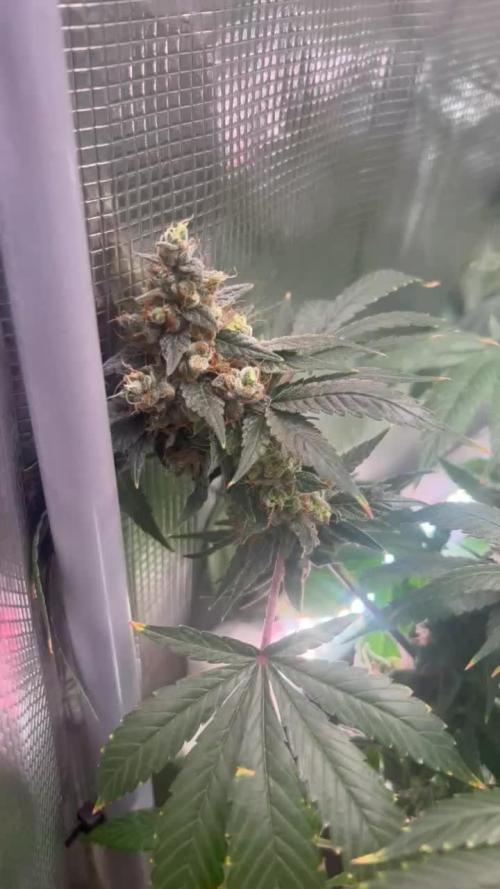
🔸 Poison Envy is now entering the final phase of flowering. The buds appear even more compact and harder than last week, with a dense layer of sparkling, predominantly milky trichomes. The first few amber-colored heads are now visible—a clear sign that harvest time is approaching. The scent is now extremely intense: now even more strongly overlaid by the sweet and spicy berry note, which now seems almost syrupy ripe.
🔸 The humidity remains stable between 50–55% thanks to the constant use of the dehumidifier and maximum circulation fans. Unfortunately, next week will be very warm, with temperatures reaching 30°C for sure—I think that sucks, but what can you do?
🔸 I gave it some more nutrients and watered it for the second time, but only with water... I think it's had its last week.
📈 Current Conditions
🌡️🔆 = 27-28°C
🌡️🌜 = 21°C
💨 VPD = 1.4
💨 Humidity = 55%
🔦 PPFD = 900 µmol (12/12)
🔦⌚ DLI = ~38
🛠️ Setup (unchanged)
💡 Lights: 2 x Sanlight Evo 4-120 @ 90%
⛺ Tent: 120 x 120 x 180
🍯 Pot Size: 18 liters
🌱 Medium: Bio-Bizz Light Mix
💊 Nutrients: Advanced Nutrients
💧 Water: Tap water (EC 0.5)
Likes
9
Share


@Sensi_Seeker
Follow
4/15 Fighting a soil pH issue. Learned I made some crucial mistakes this entire grow that compounded week after week until a few days ago and I have complete lockout. I was feeding every watering (rookie mistake). I tested runoff and it was at 1800ppm and 3.5 EC, I have done lots of flushing and got soil to an acceptable level of 800ppm and 1.5-1.6 EC. But my soil pH is testing around 4 and will not come up. I have watered with baking soda and it up near 4.5-4.6 now but I have flushed so much over last 3 days I can't stress the plant anymore. Leaves on the bigger plant are rust spotted everywhere and dying off. I will prob lose plant disappointing since it's so far along. I will still yeild something from it but had this not happened this plant would have been great it's super stinky and sticky right now and buds are dense but would have really stacked on and produced had this not happened. Other plant is chugging along its got same soil issues but showing no signs of stress yet.
4/16 Soil pH is still super low on the sick plant and continues to decline, I watered both plants with baking soda water and was able to get the healthier plants soil to 5.8ph. In a last ditch effort to salvage the sick plant, I cut off the fabric pot and transplanted to a planter I had with double the soil capacity. There were no roots stuck to the walls of fabric pot, the base had some but overall I caused very little damage to root system. I watered again with baking soda water and it's now at 4.4ph the fresh soil I put in planter was 6.8 and immediately after watering the new soil tested down to 4. I'm hoping I can get some leaching of buildup from the old soil to the new and get it balanced quickly.
I was able to get both plants soil testing around 5.8ph and out of the extreme acidity. There are some spots here and there that are testing a little lower. The healthier plant was showing the slightest spotting all over today, I watered it to about 20% runoff with calmag. Hopefully neither plant get any worse.
4/17 repotting the plant seemed to help tremendously, it really frosted up and seems to have resumed flowering. The other plant seems to be about a 7-10 days behind.
4/20 Bigger plant has really taken on a purple hue, pistils are appx 15-20% turned. Other plant seems to be 7-10 days behind, this is the plant that was over watered in the beginning and was stunted.
Likes
3
Share

@Organic473
Follow
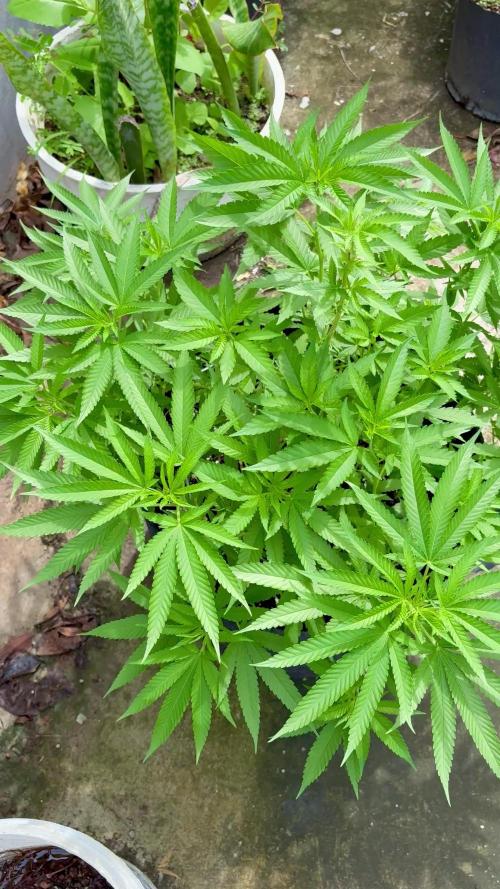
This is my longest veg time with this strain…I’m truly surprise after 3 months her height is so stunted…I may veg her out for another 2 months.