




Likes
4
Share


@Ferenc
Follow
Yeah I have already written a review about it in my previous diary. It is really strong not a day time smoke... It makes you really high. The plant is very very stinky when you cut so close all the doors and windows!!!!!! Last 2 pictures in the jar was aken after 4 days of the harvest. The harvest day it was 171g and after 4 days 80g. It needs to be cured. After 6 days its weight 51g. The last 6 pictures show the flower after 3 weeks of curing. The best thing in this smoke that it doesn't have that strong smell at all almost nothing but the effect is in :) All the plants grow at least 40-50 cm but it can grow over 100cm as well if you let it.
4 weeks later : I decided to make some cannabutter. Update: Fucking hell I have never tried brownie or tea like this and also I have never been so high. I put one tsp into my tea and felt nothing so decided to repeat with 3 tsp. I went to take a nap and when I woke up I couldn't see I was so fucking high for several hours. Uhhh was great tho.😂✌️✌️ Last 10 pictures: This is what left after almost 3 months of harvest I smoked and cooked it.

Likes
69
Share


@DogDoctorOfficial
Follow
Week 13 from Seed | Week 2 Flower - Eternity Grow Cup Update
April marks a fresh beginning, a new season, and a new stage in our Eternity Grow Cup journey. While many celebrate April Fool’s, for me, this is a time of progress and transformation in the garden. 🌱( and yes i know i am a coupe weeks back on the dates in here, but today still the 1st of April so still new year to me )
This week, the girls are filling up their space beautifully. While I continue bending them to maximize coverage, they remain incredibly compact—short, strong, and resilient. No extreme stretching, just thick, vigorous plants showing their best potential. Each of the five ladies is looking absolutely stunning.
TrolMaster Ecosystem in Action
The full TrolMaster system is running smoothly, allowing for optimal environmental control. Currently, I am using full spectrum with the reds, but I have yet to introduce UV into the mix. The girls are responding well to the setup, and I’m loving how everything is coming together.
Room Conditions
PPFD: 750
Temperature: 26.6°C
Humidity: 68.9%
CO2 Levels: 1200 PPM
The environment is staying in a great range, ensuring that the plants can thrive under perfect conditions.
Reservoir & Soil Data
pH: 5.97 (Holding steady at 5.8)
Water Temperature: 18.7°C (Still a bit low—I need to make adjustments)
Soil EC: 1.09
Soil Temperature: 21.8°C (Better, but aiming for 22-23°C)
Humidity remains a crucial factor, even in flower, so I’m continuing to use humidifiers to keep the levels stable. The air is quite dry, but managing it properly is key to keeping the girls happy.
A Look Into the Grow Space
I’ve shared some full-room shots so you can all get a better idea of my workspace. Having an organized, clean, and efficient grow area is essential for a smooth and successful run. Let me know what you think of the setup!
A huge THANK YOU to Zamnesia, Plagron, and Grow Diaries for making this contest possible. The competition is heating up, and I want to wish all the growers the best of luck in the Eternity Grow Cup! Your dedication and passion inspire me every day.
Big love to my sponsors and the entire community—whether you’re here for the love, the knowledge, or even the hate (yes, I see you too 😆)—I apprecilove each and every one of you!
Stay Tuned!
We’re just getting started in flower, and the best is yet to come. Keep an eye on the updates, and don’t forget to check out YouTube for 4K episodes and more detailed insights into the grow!
Let’s grow together!
Genetics - Runtz https://www.zamnesia.com/6000-zamnesia-seeds-runtz-feminized.html
Nutrients - Plagron https://plagron.com/en/hobby
- Aptus Holland https://aptus-holland.com/
Controls - Trol Master https://www.trolmaster.eu/
LED - https://www.futureofgrow.com/en
LED - https://www.thinkgrowled.com
Soil - https://www.promixgardening.com/en
Germination - Cannakan https://cannakan.com/?srsltid=AfmBOopXr-inLXajXu3QFgKXCXXos4F1oEvScjMKIB5MR5dk8-GJ-F49
DOGDOCTOR 15% off
Smoking Papers - https://ziggioriginal.com/
Terpene saver - https://grovebags.com/
As always thank you all for stopping by, for the love and for it all , this journey of mine wold just not be the same without you guys, the love and support is very much appreciloved and i fell honored with you all in my life
With true love comes happiness Always believe in your self and always do things expecting nothing and with an open heart , be a giver and the universe will give back to you in ways you could not even imagine so
As always, this is shared for educational purposes, aiming to spread understanding and appreciation for this plant. The journey with nature is one of discovery, creativity, and respect. Let’s celebrate it responsibly and continue to learn and grow together!
Growers Love To you All 💚
#EternityGrowCup #RuntzHunt #GrowersLove #CannabisCommunity #AptusHolland #ProMixSoil #TrolMaster #Zamnesia #Plagron #ZiggiPapers #Grovebags

Likes
12
Share


@Growing_Spartan
Follow
This is my second run with actual results and I’m pleased to say 420 FASTBUDS has great genetics and is a brand I’d love to utilize when practicing my craft. The purple plant

Likes
12
Share


@Tazard
Follow
We found some hermies on the Purple Purple. The breeder said that they’ve only found one stable pheno that didn’t hermie. They are considering doing feminized seeds but haven’t moved forward yet. I cut all the branches off that had hermies (about 1/4 of the plant). I dried it in the myherbsnow and pulled 75g of citrus 🍊 with a great energetic, not racey, euphoric head buzz. I have 3-4 side branches of one of the White Criticals that appear to have been pollinated. I put a white twist tie on all the suspect branches so I can keep them from going in my stash.

Likes
8
Share


@Alejangrow
Follow
This one may be over but theres more going on right now! Check out my other grows to see what I'm up too.😉


Likes
1
Share


@Andres
Follow
we will see how it is going....she grows fast ... I dont have much information for now
Likes
3
Share


@Ninjabuds
Follow
My Grand Turismo plant is one of the smaller ones, but it's definitely the mightiest of the bunch! It's short, stocky, and looks incredibly healthy. I've got a feeling this little powerhouse is gonna produce some seriously potent buds. It's got that classic Grand Turismo aroma – earthy and sweet with a hint of spice. I can't wait to see what this one yields!
This past week has been a whirlwind of work, leaving little time for anything else. My phone's camera roll is sadly neglected, with only a few snapshots to show for it. But finally, I'm finding a moment to catch up on my grow diaries. It's been exciting to see the progress, even if it's just through photos. I'm looking forward to documenting the next stage!

Likes
15
Share


@TheCannaProphet
Follow
~ FASTBUDS TESTER #2201 ~
Well friends, here we go on another 'canna-venture' together!
The grow room has had a complete remodel and some upgrades done to it including brand spanking new 4x8 and 4x4 tents and a Trolmaster Hydro X controller along with a new Control Panel.
This tester strain is one of six tester strains that FastBuds has graciously provided me with and I'm looking forward to seeing what this girl has to offer when she's grown to her full potential!
One drawback of 'testers' is I have little to no information on it other than its number and that it's an autoflower... 🤪 But, it's ALWAYS a blast growing them for me because not knowing a lot allows me to just concentrate on the essentials: Light, Environment, Water, Nutrients and possibly a bit of LST... not complicated, just basics like keeping a constant temperature and RH in the tent at a level that gives a good VPD, watering when almost dry and maintaining proper light levels according to their stage of growth.
____________________________________________________________________________________________________________________________________________________________________________________________________________________________________________________________________________________________________________________________________________________________________________________________________________________________________________________
~THE SETUP~
~Initially seeds were lightly scuffed, then soaked for 3 hours in 78℉ distilled water after which they were transferred to moist paper towels laid out in a Jiffy Pellet plastic starter tray with lid. Underneath the tray was placed a Mars Hydro Heat Mat with Controller that was set to 78℉ where they stayed until their tap roots emerged.
~Planted into Jiffy Peat Pellets that were hydrated with distilled water warmed to 78℉ with a 7.0 ph.
~Once roots emerge from the Jiffy Pellet they're transferred to their fabric pots.
~Grown 100% organic in a 4g Gronest fabric pot and a 3g fabric pot by Wraxly filled with Mother Earth 70/30 Coco/Perlite medium and initially amended with Dr. Earth 4-4-4 / Earthworm Castings / Dr. Earth Flower Girl 3-9-4 and Coast of Maine Stonington Blend Organic Plant Food 5-2-4.
~19/5 light cycle for the entire run with supplemental UVA added during flower. Lights are controlled by a Trolmaster Hydro X controller set for a 15min Sunrise/Sunset simulation.
~Top dressing every 3-4 weeks with slow release dry amendments and Earthworm castings.
~Straight water ph'd @ 6.2-6.8 when needed and bi-weekly Compost Tea's.
____________________________________________________________________________________________________________________________________________________________________________________________________________________________________________________________________________________________________________________________________________________________________________________________________________________________________________________
Weekly Updates:
12/15- Here we go into the second week of veg for the FastBuds Tester #2201 girl and she's certainly on a roll! When I checked on her today her medium was still moist so I'll let her go and check her tomorrow. Basically at this point in the run all I have to do is make sure her medium doesn't dry out, fill the humidifier and watch her grow! 🤩
12/17- Yesterday I watered her and increased the amount to roughly 0.25g of de-chlorinated water with 3ml/g of Botanicare Silica Blast (added to begin to help strengthen her branches) and then ph'd to 6.4 @ 74℉.
I've also increased the output of the HLG 650R's to 35% which equates to about 230w at the wall which, of course has raised the temp's in the tent so I've also begun to run the A/C unit in the grow room which is keeping the temp's now at 75℉ in the tent. The RH is running around 75-78% RH giving a VPD of .67-.74 which I'll take! 😁👍
Other than what I've mentioned above, all I did was fill the humidifier with distilled water and watched her grow! 🤩
12/19- Today I watered her with 0.25g of de-chlorinated water with 3ml/g Fish Head Farms Fish Sh!t and 1 tsp/g Unsulfured Molasses added which was ph'd to 6.3 @ 74℉. I'm now watering through the bottom, filling the drip pan and letting the plant draw up the water into itself. I am also watering from the top, but only just enough to moisten the medium.
She is really starting to take off now, a sure sign her roots are beginning to get well developed, and I'm thinking of going ahead and topping her in the next day or so.
12/21- Well, yesterday I went ahead and topped this girl! Hopefully she won't stress out over this and starts shooting out those secondary branches.
Today I watered her with 0.25g of straight de-chlorinated water which was ph'd to 6.3 @ 74℉. I gave about 3/4 of it into her drip pan so she can draw it up into her medium, the rest I applied to the top of the medium just to moisten it.
Well there's two weeks of veg behind us now, Week Three of vegetation is beginning and she should really start to take off! 😍👍
😎💚 Thank you for checking out my passion in life! Please visit as often as you wish and I hope you enjoy this journey as much as I know I will! Grow Strong! 💪😎🤙
Likes
77
Share

@DogDoctorOfficial
Follow
🌸 Week 9 – Letting Go to Shine Brighter 🌸
Welcome to Week 9 of flower in the Eternity Grow Cup, a milestone moment where we shift gears and let the plants begin their final expression. This is the week we cut all nutrients — a bold move made with care and trust — leaving only System Clean to keep our lines pristine in the Autopot system. No harsh flushes, no dry backs, just gentle guidance toward the finish line.
We didn’t wait for the reservoir to hit empty. Instead, we added pure water early, letting the system blend into a soft EC of 0.45, with a reservoir temperature of 21.9°C and a pH tuned to 6.3 — perfect for this phase. In the soil, EC sits at 0.95, giving the plants enough to sip on while encouraging them to cannibalize their stored energy, pushing out their richest colors, aromas, and trichome production.
And what a show they’re putting on.
The colors in the room are breathtaking: purples, oranges, yellows, deep greens — a painter’s palette. But above all, there’s this serene dark fade taking over, a sign of maturity and final expression. Trichome production is off the charts, with Runtz #1 still dominating the aroma game — sweet, powerful, unforgettable — while Runtz #4 emerges as the frost queen, covered head to toe in shimmering resin.
The environment is dialed in:
• Humidity at 52%
• Temperature holding at 28°C
• PPFD reduced to 683 to ease the plants into ripening
• CO₂ around 1000 ppm for that final metabolic push
We’re focusing now on presence and precision — ensuring airflow, temperatures, and humidity are in harmony. Every decision from here is about preservation, encouragement, and letting nature take the lead.
This week’s update includes a special series of photos taken through the mask lens — showing the garden from my eyes, from tops to bottoms, sides to centers, trichomes to fade tones. It’s a personal view I’m grateful to share.
The structure of the grow has become something of a symbol: four phenos in each corner, one in the center — creating an X from above, a cosmic mark that feels intentional, aligned, and just… right. They’ve bushed out so beautifully that this symmetry, almost a message from the plants themselves, is impossible to ignore.
And from the top down to the lowest buds, there’s no weak link. No “B-buds” here — they’ve become A-tier expressions, worthy of jars and not just extracts. The synergy between Plagron, Aptus Holland, and the TrolMaster & ThinkGrow lighting ecosystem is performing at an elite level — tuning spectrum, dialing environment, and nurturing these compact queens into full form.
This is a week of wonder, of silence before the final bloom. A week of gratitude.
⸻
🌟 With Grower’s Love, I want to thank:
• Our incredible community — lovers, haters, dreamers, doers
• The sponsors who make this possible
• And every grower competing in this cup — you are the fire that keeps this space glowing. I’m humbled to grow alongside you.
🎥 Full 4K episodes now on YouTube — come join us there for the full experience
📸 Daily beauty and behind-the-scenes on Instagram
Let’s celebrate the craft. Let’s finish strong.
Good luck to all. Eternity is in bloom.
Genetics - Runtz https://www.zamnesia.com/6000-zamnesia-seeds-runtz-feminized.html
Nutrients - Plagron https://plagron.com/en/hobby
- Aptus Holland https://aptus-holland.com/
Controls - Trol Master https://www.trolmaster.eu/
LED - https://www.futureofgrow.com/en
LED - https://www.thinkgrowled.com
Soil - https://www.promixgardening.com/en
Germination - Cannakan https://cannakan.com/?srsltid=AfmBOopXr-inLXajXu3QFgKXCXXos4F1oEvScjMKIB5MR5dk8-GJ-F49
DOGDOCTOR 15% off
Smoking Papers - https://ziggioriginal.com/
Terpene saver - https://grovebags.com/
As always thank you all for stopping by, for the love and for it all , this journey of mine wold just not be the same without you guys, the love and support is very much appreciloved and i fell honored with you all in my life
With true love comes happiness Always believe in your self and always do things expecting nothing and with an open heart , be a giver and the universe will give back to you in ways you could not even imagine so
As always, this is shared for educational purposes, aiming to spread understanding and appreciation for this plant. The journey with nature is one of discovery, creativity, and respect. Let’s celebrate it responsibly and continue to learn and grow together!
Growers Love To you All 💚
#EternityGrowCup #RuntzHunt #GrowersLove #CannabisCommunity #AptusHolland #ProMixSoil #TrolMaster #Zamnesia #Plagron #ZiggiPapers #Grovebags
Likes
5
Share

@Hundreds
Follow
Very impressed with this genetic form
Royal Queen Seeds
Milkyway (F1)
Its seems to have burst multiple flowers over the space of a week on top of what was there last week.


Likes
6
Share


@MrPipi
Follow
Day 91: Tuesday , start of the 14th Week.
nothing crazy happened the last Days.
Day94: Gave her some Molasses. next watering maybe some liquid N , cause leafs start yellowing but i think she´s not close to harvest yet...so just a little bit, before we flush in about 1-2weeks


Likes
24
Share


@DeepRootsGrowTrees
Follow
GORILLA COOKIES 🍪 FF/ FASTBUDS
WEEK #16 OVERALL
WEEK #8 FLOWER
This week she's just about done she's got about 1 week left before harvest buds are looking good and got a nice aroma to them. She's just on water now to flush. Stay Growing!!
Thank you for stopping by and taking a look it's much appreciated!!
Thank you FASTBUDS!!
GORILLA COOKIES 🍪 FF / FASTBUDS
Processing
Likes
12
Share


@CityFarmer
Follow
Hello everyone,
Been busy but I shoot a little video for yall to see, also if growing is something you guys intended to do, I suggest you guys get yourselves a Digital Microscope or a jewlers loop.
I just got myself a Digital Microscope for under $20.00 on Walmart.com, I got me a cheap one to start with so I can learn how to use it properly. But for under $20.00 this one brings 8 led lights, a adjustable mount, comes with 3 different connection choices build in, magnifies from 50-1000x, can take pictures and also videos and my favorite part, it connects right to my mobile device, you download and install a Google app and your ready to go, ill work with it and add pictures next week...
See you guys soon 👊👊👊


Processing
Likes
35
Share


@Ironlungs
Follow
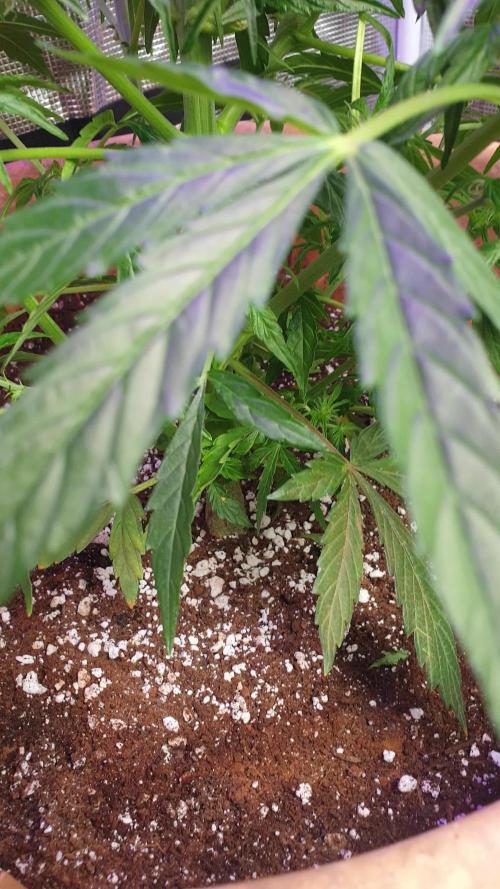
Week three is here and it has been pretty damn warm. Some leaves are curling on the edges but overall not too bad. Thankfully, it is starting to cool down a little bit
Processing
Likes
Comments
Share


