


@TeknoRanger
Follow
🌱 Sour Apple⠀⠀⠀
🌸 flowering 9 weeks⠀⠀⠀⠀⠀⠀
💚 70% Indica, 30% Sativa⠀⠀⠀⠀⠀
💣up to 27% THC⠀⠀⠀⠀
👅Apple, lemon⠀⠀⠀
⚖️ 550g/m²⠀
Sour Apple was created by an intersection of the original Sour Diesel and a Pure Kush. It is an indica dominant hybrid with a combination of both indica and sativa effects. It has an delicious intense taste of sour apples and lemon and a gigantic potency.
The rockhard buds are covered in a thick layer of milky white trichomes and are packed with sweet resin. Users describe the high of the sour Apple as a strong mental shift, a uplifting head high that leaves you motivated and focused with a sense of overwhelming euphoria and social tendencies. This is followed by a slow fade into an intensely overwhelming couch-lock. Sour Apple sends her 27% of THC stright to your mind to kick you in other psychedelic spheres. We proudly present this unique goddess to all the growers in the world.
GROWING SOUR APPLE
When growing indoors it is a good idea using screen of green or sea of green methods. You can expect big yields of 500g or more per squae meter indoors, 700g per plant outdoors. The flowering time is 9-11 weeks. Indoors, Sour Apple is a vigorous grower with many side stems which can be trimmed to keep the plant in bounds. Indoors, the plants grow between 1,00-1,50 m depending on the introduction of the flowering phase, outdoors Sour Apple can reach four metres of hight.
MEDICAL USE
Because of its strong effects Sour Apple is an ideal strain for treating patients who suffer from conditions such as chronic stress or anxiety, chronic pain due to injury or illness, and sleep disorders (insomnia and sleep apnea). In low doses it is daytime suitable for medical applications, at higher doses, it is the ideal weed for medication at the evening.


@Tropicannibis_Todd
Follow
Alright Then
REMINDER I DO 2 UPDATES PER WEEK 👉WEEKLYROUNDUP👈👉MIDWEEKLY UPDATE👈
We just hit week 3 and all is well , have to admit she's showing great , Growth in just 21 days😃 .......
Middle of this week I have decided to start a little training by pulling her over to the side and have decided to top it 👌 And she's filling out the pot perfectly👌
Very little water given ,so far and rain water to be used entire growth
Lights being readjusted and chart updated .........👍
I GOT MULTIPLE DIARIES ON THE GO 😱 please check them out 😎
👉I WISH GD HAD DISCORD SERVER SO GROWMIES COULD HAVE A PLACE TO HELP AND TALK THINGS RELATED TO GROWING IN REAL TIME .....👈
👉SO I CREATED ONE ALL YOU NEED IS TO JOIN THE GROWDIARIES DISCORD SERVER !!!!!!!!!!!👈
LINK IS 👉 https://discord.gg/zQmTHkbejs
AND SEE HOW IT PLAYS OUT !!!!!!!




@LittleBigTrees
Follow
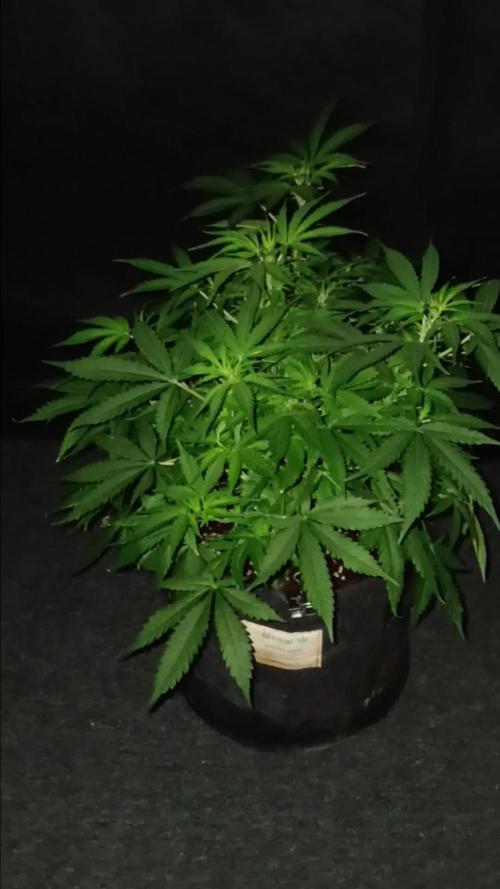
I transferred them from noodle cups into two litre pots.
Still defoliating as i go.
I will switch to flower on the 1st April.



@JVKdopegrow
Follow
She is showing her flowery self. Still very symetrical and very bushy. I am doing a light defoilation every few days to get the buds sites exposed. She really has potential to yield great flower.


@Vega0284
Follow
Well kind of a shitty week. The weather has been garbage, it snowed twice... yeah snowed. There is not a whole lot of growth to report on due to the weather. The Grand Daddy Purple has a lot of space between it's nodes this week, to what I can only attribute to the poor lighting with it being over casted, cold and snowing all week.
The other 2 photo's are doing just as well as you can see, again not a whole lot of growth after the topping, but I'm assuming the environment for them has not been as favorable as needed, so they are just focusing all their energy on not dying. Which I'm totally cool with lol.
The mephisto's are growing well, I'm still training them around the pot trying to get more tops out of them. The ChemDawg is doing significantly better than the Sweet N Sour,
I haven't had to do hardly any watering this week as the soil is still damp, temps are cold and humidity is high. I did water and feed them today though as we are expecting temps and weather to reach mid 70
s this week.
The Girl Scout Cookies is still in her seedling phase, not sure why this strain is giving me so much trouble, but she's not dead, and first true leaves are just starting to poke out, I've got her in the indoor tent with my Auto grow soaking up some light and hoping that gets her hardy enough to bring her outdoors.


@eldruida_lamota
Follow
Otra vez familia, entrando en la recta final ya algunas de estas critical están cogiendo una pinta, lástima se subió la temperatura esta semana, seguimos abonando con agrobeta.
Cepa bastante indica con floración rápida.
.
La humedad esta al 45% la temperatura está entre 21/27 grados , y como siempre el ph , ya que es de lo más importante,está en 5,8/6,0.
.
AgroBeta:
1 ml x L Flowering black line , vía radicular.
0,2 ml x L Beta shark, vía radicular.
0.5 gr x L mega PK , vía radicular.
0,8 ml x L Terminator, vía radicular.
0,5 gr x L Engordacogollos, vía radicular.
0,3 ml x L Tucán , vía radicular.
0,1 ml x L Betazyme, vía radicular.
0,3 ml x L Tricoma, vía radicular.
0,05 ml x L Gold Joker, vía radicular.
0,2 ml x L Silver, vía radicular.
.
Hasta aquí todo familia 🕸️ , un saludo y buenos humos fumetillas💨💨💨.


@CanadianFillmore
Follow
Week 3F begins. Raised the light a bit, will see if it makes a difference with the leaves.
Bud sites are popping and looking good for their small size.
Thanks for stopping by.



@ThatsmyGrow
Follow
🌸 Week 4 – Gorilla Cookies Auto Pheno Hunt
Week 4 has officially started and all 6 phenos have entered flowering 🔥🌸
Really happy to see every plant transitioning into bloom now. From this point on, things should get much more interesting because the differences between the phenos are becoming impossible to ignore.
📈 Current observations:
Several phenos are stretching hard since flowering started
Some plants are already reaching heights of around 40 cm
Growth patterns are becoming much clearer between each phenotype
On the taller phenos you can already see that the first side branches are developing almost like additional main colas 👀
💧 Feeding & training:
This week the plants received their first bloom nutrients following the Master Recipe.
I also continued removing selected large fan leaves that were shading potential flower sites to improve light penetration and help lower branches develop more evenly.
📊 Current environment:
Temperature stable around 26°C
Humidity remaining between 63–65%
VPD holding around 1.3 kPa
Light intensity unchanged
Now the exciting phase begins — the next few weeks will probably be the most important ones to identify the strongest and most beautiful phenos in the hunt 👀🔥
💬 Which pheno do you think will dominate once flower production really kicks in?

shorts_status_processing


@MG2009
Follow
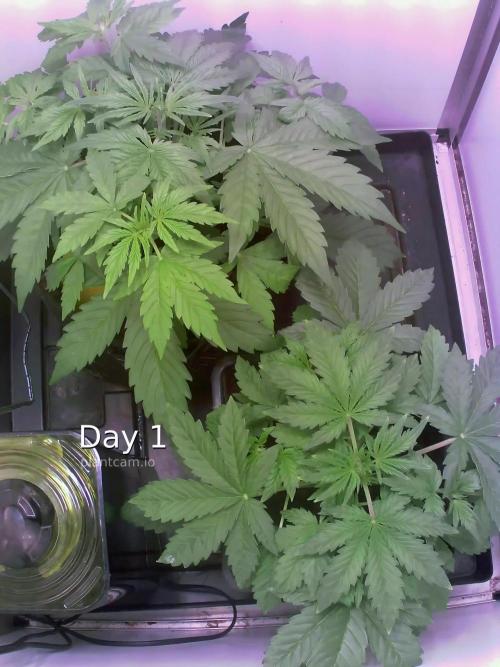
09/13/2018
Nutes up to 2/3strength, going up to full at next reservoir change. She is putting on nice growth, had to raise light due to leaf burn, but only one leave affected, I think I will flip to flowering next week. She has 9fingered leaves but in veg she's very Indica like, hopping she has more sativa like flower stretch.🙏
Topped and lite defoliation.


@Zengrower
Follow
Week six is where things really start to accelerate.
The buds are now developing rapidly, and you can almost see them gaining size day by day. What stood out before as “early formation” has now clearly shifted into real bud growth. These ladies are not holding back.
At the same time, the differences between the two phenotypes are becoming even more pronounced — not just in structure, but now also in aroma.
The smaller pheno on the right is developing a surprisingly sweet and unique scent. It’s a mix of raspberry and something slightly rubbery — an unusual combination, but very intriguing.
The larger pheno on the left leans more towards a sweet citrus profile, layered with earthy undertones. A completely different expression, and exactly why growing from seed can be so rewarding.
This week also called for some intervention. The plants were already getting dangerously close to the top of the G-tools cabinet, so defoliation became necessary to open things up and improve airflow. On top of that, I had to supercrop a few of the tallest shoots to keep the canopy under control.
What really impressed me is how resilient these plants are. Compared to the Erdbeer I grew last winter — which showed light stress fairly quickly — these ladies seem to say: “bring it on.” They’re absorbing the light as if it can’t be intense enough.
And it shows.
The buds are stacking at an above-average pace and are already getting quite thick — and we’re still a few weeks away from the finish line.
If they continue like this, this is going to be a very interesting run 🌿🔥


@Ultraviolet
Follow
2nd net is up. Early bud formations are promising. holding up to the extremes pretty well, some leaves taking minor damage, but overall, she is holding up, gave her 1 night at 50F see how she would react, stressful. Not advised as it messes with her metabolism, but I want to see if it triggers any anthocyanin response. Love to see her purp up but no signs yet.
My homework.
Rubisco regeneration is intrinsically linked to nitrogen supply because Rubisco is a major sink for nitrogen in plants, typically accounting for 15% to over 25% of total leaf nitrogen. The regeneration phase itself consumes nitrogen through the synthesis of the Rubisco enzyme and associated proteins (like Rubisco activase), and overall nitrogen status heavily influences the efficiency of RuBP regeneration.Structural Component: Nitrogen is an essential building block for all proteins, and the sheer abundance of the Rubisco protein makes it the single largest storage of nitrogen in the leaf.
Synthesis and Activity: Adequate nitrogen supply is crucial for the synthesis and maintenance of sufficient Rubisco enzyme and Rubisco activase (Rca), the regulatory protein responsible for maintaining Rubisco's active state. Nitrogen deficiency leads to a decrease in the content and activity of both Rubisco and Rca, which in turn limits the maximum carboxylation rate, Vmax, and the rate of RuBP regeneration Jmax, thus reducing overall photosynthetic capacity.
Nitrogen Storage and Remobilization: Rubisco can act as a temporary nitrogen storage protein, which is degraded to remobilize nitrogen to other growing parts of the plant, especially under conditions of nitrogen deficiency or senescence.
Nitrogen Use Efficiency (NUE): The allocation of nitrogen to Rubisco is a key determinant of a plant's photosynthetic nitrogen use efficiency (PNUE). In high-nitrogen conditions, plants may accumulate a surplus of Rubisco, which may not be fully activated, leading to a lower PNUE. Optimizing the amount and activity of Rubisco relative to nitrogen availability is a target for improving crop NUE.
Photorespiration and Nitrogen Metabolism: Nitrogen metabolism is also linked to the photorespiration pathway (which competes with carboxylation at the Rubisco active site), particularly in the reassimilation of ammonia released during the process.
To increase RuBisCO regeneration, which refers to the process of forming the CO2 acceptor molecule Ribulose-1,5-bisphosphate (RuBP) during photosynthesis, the primary methods involve optimizing the levels and activity of Rubisco activase (Rca) and enhancing the performance of other Calvin-Benson-Bassham (CBB) cycle enzymes.
Biochemical and Environmental Approaches:
Optimize Rubisco Activase (Rca) activity: Rca is a crucial chaperone protein that removes inhibitory sugar phosphates, such as CA1P (2-carboxy-D-arabinitol 1-phosphate), from the Rubisco active site, thus maintaining its catalytic competence.
•Ensure optimal light conditions: Rca is light-activated via the chloroplast's redox status. Adequate light intensity ensures Rca can effectively maintain Rubisco in its active, carbamylated state.
•Maintain optimal temperature: Rca is highly temperature-sensitive and can become unstable at moderately high temperatures (e.g., above 35°C/95F° in many C3 plants), which decreases its ability to activate Rubisco. Maintaining temperatures within the optimal range for a specific plant species is important.
•Optimize Mg2+ concentration: Mg2+ is a key cofactor for both Rubisco carbamylation and Rca activity. In the light, Mg2+ concentration in the chloroplast stroma increases, promoting activation.
•Manage ATP/ADP ratio: Rca activity depends on ATP hydrolysis and is inhibited by ADP. Conditions that maintain a high ATP/ADP ratio in the chloroplast stroma favor Rca activity.
Enhance Calvin-Benson-Bassham (CBB) cycle enzyme activity: The overall rate of RuBP regeneration can be limited by other enzymes in the cycle.
•Increase SBPase activity: Sedoheptulose-1,7-bisphosphatase (SBPase) is a key regulatory enzyme in the regeneration pathway, and increasing its activity can enhance RuBP regeneration and overall photosynthesis.
•Optimize other enzymes: Overexpression of other CBB cycle enzymes such as fructose-1,6-bisphosphate aldolase (FBA) and triose phosphate isomerase (TPI) can also help to balance the metabolic flux and improve RuBP regeneration capacity.
Magnesium ions, Mg2+, are specifically required for Rubisco activation because the cation plays a critical structural and chemical role in forming the active site: A specific lysine residue in the active site must be carbamylated by a CO2 molecule to activate the enzyme. The resulting negatively charged carbamyl group then facilitates the binding of the positively charged Mg2+ion. While other divalent metal ions like Mn2+ can bind to Rubisco, they alter the enzyme's substrate specificity and lead to dramatically lower activity or a higher rate of the non-productive oxygenation reaction compared to Mg2+, making them biologically unfavorable in the context of efficient carbon fixation. The concentration of Mg2+ in the chloroplast stroma naturally increases in the light due to ion potential balancing during ATP synthesis, providing a physiological mechanism to ensure the enzyme is activated when photosynthesis is possible. At the center of the porphyrin ring, nestled within its nitrogen atoms, is a Magnesium ion (Mg2+). This magnesium ion is crucial for the function of chlorophyll, and without it, the pigment cannot effectively capture and transfer light energy.
Mg acts as a cofactor: Mg2+ binds to Rubisco after an activator CO2 molecule, forming a catalytically competent complex (Enzyme-CO2-Mg2+). High light + CO2) increases demand: Under high light (60 DLI is a very high intensity, potentially saturating) and high CO2, the plant's capacity for photosynthesis is high, and thus the demand for activated Rubisco and the necessary Mg2+ cofactor increases. Mg deficiency becomes limiting: If Mg2+ is deficient under these conditions, the higher levels of Rubisco and Rubisco activase produced cannot be fully activated, leading to lower photosynthetic rates and potential photo-oxidative damage.
Optimal range: Studies show that adequate Mg2+ application can enhance Rubisco activation and stabilize net photosynthetic rates under stress conditions, but the required concentration is specific to the experimental setup.
Monitoring is key: The most effective approach in a controlled environment is to monitor the plant's physiological responses e.g., leaf Mg2+ concentration, photosynthetic rate, Rubisco activation state, and adjust the nutrient solution/fertilizer to maintain adequate levels, rather than supplementing a fixed "extra" amount.
In practice, this means ensuring that Mg2+ is not a limiting factor in the plant's standard nutrient solution when pushing the limits with high light and CO2.
Applying Mg2+ through foliar spray is beneficial to Rubisco regeneration, particularly in alleviating the negative effects of magnesium (Mg) deficiency and high-temperature stress (HTS). While Mg can be leached from soil, within the plant it is considered a mobile nutrient, particularly in the phloem. Foliar-applied Mg is quickly absorbed by the leaves and can be translocate to other plant parts, including new growth and sink organs.
Foliar application of: NATURES VERY OWN MgSO4 @ 15.0g L-1 in a spray bottle.
Foliar sprays are often recommended as a rapid rescue measure for existing deficiencies or as a supplement during critical growth stages, when demand for Mg is high. Application in the early morning or late evening can improve absorption and prevent leaf burn.
The starting point [of creativity] is curiosity: pondering why the default exists in the first place. We’re driven to question defaults when we experience vuja de, the opposite of déjà vu. Déjà vu occurs when we encounter something new, but it feels as if we’ve seen it before. Vuja de is the reverse—we face something familiar, but we see it with a fresh perspective that enables us to gain new insights into old problems. Come walk in the enchanted forest.
shorts_status_processing


@J_diaz420
Follow
Cada vez falta menos!!
Comienzo la semana con el último riego con fertilizantes y termino la semana con un lavado de raices, dejando en el sustrato un riego en dosis mínima de flawles finish para que en el resto de los días que quedan la planta se dedique a comer reservas. Dentro de la próxima semana are otro riego con dosis normal de flawles finish para posteriormente dejar secar el sustrato y al corte.
A ver que tal!!


@Harukisan
Follow
Hello fellow growers,
4th week for the Double Grape and we are still looking good. She recovered perfectly after the topping, in fact, she didn't seem to suffer from it at all.
I did some light training on the lower branches, I am waiting for the top branches to grow a bit more before I start to manipulate them.
She's showing some pistils, now the real fun begins. 😎
I am still following the HESI feeding schedule and we are doing just fine.
This week I added HESI Boost which role is to activate flowering.
That's it for now, don't hesitate to check my Instagram page @harukisan_grower_cz .
Thanks for stopping by and see you next week! 👍


@Salokin
Follow
Hello Growmies!
As we conclude our Epic Buzz journey, let's dive into the final harvest data under the exceptional conditions provided by the Trolmaster and the engaging platform of GD. This week marks the end of our cultivation cycle with a final wet weight of 1720 grams from a setup featuring the FC4800 light dimmed to 65% maximum, utilizing 108 watts over an area of approximately 0.48 square meters.
Final Harvest Metrics:
Yield Efficiency: Achieved an impressive yield efficiency of 15.92 wet grams per watt, underscoring the efficiency of our light setup.
Area Yield: With a productivity of 3583.33 wet grams per square meter, our cultivation space was maximized for optimal output.
Plant Yield: Each plant contributed significantly, averaging 573.33 grams, highlighting robust growth and development.
Density: The garden hosted 6.25 plants per square meter, optimizing space without overcrowding.
Energy Utilization: The grow utilized 225 watts per square meter, a testament to our strategic light management.
A huge shoutout to Trolmaster for making such an amazing contest possible, and to GD for providing a platform that brings us all together. This cultivation journey has been a rewarding challenge, showcasing the potential of careful strain selection and attentive grow practices.
In the meantime, feel free to check out my upcoming Barneys Farm diaries which will soon take over this tent. Exciting times ahead as we continue to explore and share our passion for growing!
Stay Lifted!
Salokin



@Ninjabuds
Follow
I like the structure of this plant it starting to look pretty healthy ima hook up the watering system soon and flip to flower soon aswell


@DKTRP_HIGH
Follow
Looks good want to go in to flowering next week i will give IT 12/12 and food to bloom


@OttoManVePr3sident
Follow
Northern liht bana ilk defa indica sevdiren bir sigara oldu. Diyeceklerim bu kadar


@Shalma_kush_420
Follow
Muy buenas.
Ya en la primera semana de vida de esta florcita, ha recibido su primer riego hoy mismo con estimulador de raíz (raziel de hype) veremos como cambia la próxima semana.
Con una temperatura entre 23'5/24'5° encendido y 16° apagado con una humedad entre 60/80%.
Con el led de 150w al 75% para poder aprovechar bien los lúmenes en sus diferentes fases.
Está semana le tocará cambio de maceta por una de 3 litros ya que está en 250 centilitros.
Por el momento marcha muy bien con buen color buena forma y asta se le puede ver la capa de glándulas que tiene sobre las hojas.


@Santaclaus
Follow
Día 40 me ha dado carencias de calcio magnesio y posforo y potasio, me he dado cuenta un poco tarde... Las hojas estaban caídas y se me estaban poniendo amarillas con manchas marrones...les puse calmag y empezaron a buscar la luz ... También me di cuenta, que las Lili que no veía se me ponían las hojas moradas, creía que era exceso de nitrógeno, pero no era posforo y potasio... Así, que lo que no quería hacer, lo he hecho he metido a tope de nutrientes y más... Espero no liarla más...
