


Likes
Comments
Share


@TheFlowerMan
Follow
So, the fourth week has come to an end. The girls are slowly blossoming. Pineapple had some problems with watering and nitrogen deficiency, if I'm not mistaken. I hope everything will be fine 😋


Likes
7
Share


@Mission420
Follow
This week plant 1 has continued to surge ahead of the other girls, where as plant 4 and the subject of time lapse is the runt of the family. I determined that my watering system is not equally distributing the lifeblood for the plants properly and as such, some are getting more than others. I have cut back the schedule and manually watering them as needed using an old fashioned soil tester to determine which ones get extra. I believe that plants 2 and 3 were not getting enough water, 1 is just right, and 4 is too much. Check back next week to see if things continue to improve.
I did some topping on plant 1 and some LST on plant 2 this weekend. I will watch them for the coming week. Plant 1 also seems to be spreading out on its own, so we will see what the extra topping will do for it.
Although I kept the schedule the same, I also turned on the bloom lights to see if that would help with the plants stretching out more this week. It uses more power, but hopefully it will help the girls by giving them extra energy to stretch.


Likes
18
Share


@DogDoctorOfficial
Follow
Week 6 Report: White OG – Shaping Her Future 🌟
We’re at Week 6 of veg, and the White OG is thriving like a superstar! This week, I decided to take her structure to the next level by topping a few branches, and let me tell you—she’s loving it. 🌿 The growth is vigorous, and she’s shaping up beautifully to maximize her potential for flowering.
Let’s dive into what went down this week and why it’s all so important for her journey.
Branch Topping: Building a Strong Framework
After recovering beautifully from her initial topping at node 7, it was time to refine her structure further by topping a few branches. For each branch, I left two nodes to ensure strong, healthy growth while encouraging a bushier canopy.
Why Top Branches?
Topping isn’t just for the main stem—it’s an essential technique for creating an even canopy and increasing yield potential:
1. Encourages Lateral Growth: By removing the top of a branch, the plant redirects its energy into the remaining nodes, encouraging side shoots to grow and fill out.
2. Maximizes Light Penetration: A bushier plant with more branches ensures that all parts of the plant get access to light, reducing shading and improving photosynthesis.
3. Improves Structure: A strong, evenly distributed framework sets the stage for a healthier plant that can support larger buds during flowering.
The decision to leave two nodes per topped branch ensures a balance between promoting growth and avoiding unnecessary stress.
Tent Conditions: Consistency is Key
The room conditions this week have remained steady and perfect for her vegetative stage:
• Temperature: Around 18°C—cool but manageable, keeping her growth steady.
• Humidity: At 60%, maintaining just the right level to support her root zone and foliage.
• Lighting: The Future of Grow (FOG) LED at 200 PPFD continues to provide optimal light for compact, strong growth. i will dim it up soon!
These consistent conditions give her the environment she needs to recover quickly from topping and focus on building her structure.
Nutrient Routine: Trusting the Pellets
This week, I’ve continued with the Aptus Holland All-in-One Pellets as the primary nutrient source. They’re working their magic, providing a steady release of nutrients to support her vigorous growth.
As a backup plan, I’m always ready to reintroduce All-in-One Liquid if she starts showing signs of needing more immediate nutrition. For now, she’s thriving, and the pellets are doing an excellent job of meeting her needs.
Training and Future Plans
Topping a few branches this week was just the beginning. I’m planning to continue topping over the next few weeks to shape her into a bushy, evenly distributed plant. By focusing on creating a strong structure now, she’ll be perfectly prepared for explosive growth when we flip her into flowering.
Looking Ahead: Growth on Overdrive 🚀
As Week 7 approaches, I’ll be monitoring how she responds to the additional topping and ensuring her environment stays consistent. The goal is to encourage her lateral growth while keeping her stress levels low and her energy focused.
A huge thank you to the incredible brands and community that make this journey so rewarding:
• Seedsman Seeds for the top-tier genetics—don’t forget to use the DOGDOCTOR 10% off discount code!
• Aptus Holland for their game-changing nutrient solutions.
• Pro-Mix Soil for the perfect foundation with their HP Mycorrhizae + Bacillus blend.
• TrolMaster for helping me maintain the perfect environment.
• Future of Grow LED for reliable, efficient lighting.
• Cannakan for kickstarting this journey during germination.
• Grow Diaries for being the platform where we share, connect, and learn together.
To all my followers, lovers, haters, and everyone in the community—you’re the heart and soul of this journey! 🌟
Bonus Content: New Episodes Weekly on YouTube! 🎥
Don’t forget to check out my YouTube channel for weekly episodes with tips, tricks, and behind-the-scenes action. Links are in the profile—come join the fun!
Growers Love! 💚
DISCOUNT CODE - SeedsmanSeeds - DOGDOCTOR 10% off
As always thank you all for stopping by, for the love and for it all , this journey of mine wold just not be the same without you guys, the love and support is very much appreciated and i fell honored and so joyful with you all in my life 🙏
With true love comes happiness 💚🙏 Always believe in your self and always do things expecting nothing and with an open heart , be a giver and the universe will give back to you in ways you could not even imagine so 💚
Friendly reminder all you see here is pure research and for educational purposes only
💚Growers Love To you All and remember to keep that smile big and alive 💚

Likes
31
Share


Likes
207
Share

@DogDoctorOfficial
Follow
Supper easy growing , great genetics , a must have in any garden . Im still amazed by all of it,
This was just a delight grow, over all everything was great , genetics are among the best i ever grew, litle small and compact plant to what iam use to, but non or less they delivered on the quality, and also they did great on the number hehehe. Defently recomend this Runtz from Zamnezia Seeds, shout out to them, shout out also to Viparspectra and the amazing 200w LED they send me, this P2000 delivers way more of what i was expectic and omg do they love the spectrum , yes they do. Shout out also to AptusHolland since all of this wold b impossible without the best (for me ) nutrients on the market . Growers love to you all, stay tunned i still need to find time to edit the full round time lapse 💚💚💚🙏🙏🙏 as alwaythank you all for reading and taking your time and love with me 💚💚💚.
Likes
7
Share


@Sunstonedgrows
Follow
A tad late, but on Dec 20th we started flower! The pics and video are all from dec 20.
To kick it off we did a small feed (1tbsp) of veg nutrients and over the next few weeks will transition to flower blend.
So far she's taken well to the training and looks very strong overall.
Cheers til next time
-Dj Sunstone

Likes
33
Share


@DEEGREEN
Follow
• FLOWERING WEEK #1
✎ DAY 50 — THE LIGHT CYCLE HAS CHANGED. ☼ 18 / 6 TO 12 / 12

Likes
59
Share


@JeyGanesha
Follow
Iniziò fioritura,.oggi 2 agosto, secondo giorno a 12 ore...dopo aver sofferto anche lei 3 mesi dentro AD un vaso da un litro... adesso con questo vaso da 11 dovrei riuscire a portarla. A maturazione,,,💪😂

Likes
21
Share

@JeyGanesha
Follow
Inizio 2 settiman...anche loro stanno venendo su benissimo.da questa 2°settimana inizierò anche dandogli poco Ph perfect ,.........
Oggi 17/10/2024 .queste papaya cookies auto Che mi ha regalato la cara Molly di fastbuds, stanno esplodendo di vita😉💪🙏🤣😂....
Forza belle piantine mie ...
Oggi 18/10/24 sto pensando di toppare una di ogni varietà...tipo 3 le toppo e 3 no e vediamo qual'è che viene meglio
Toppata...,....
Likes
1
Share

@Gaso425
Follow
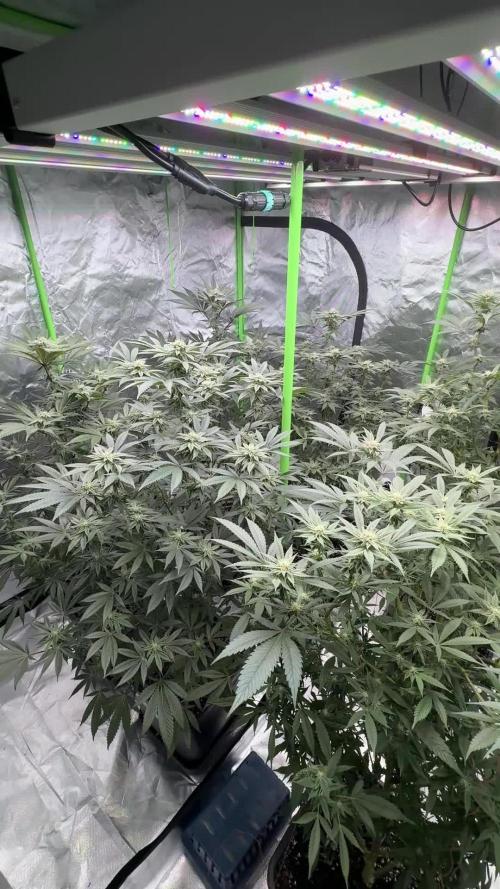
The girls push in to the flower and next week we start whit UV light in the night


Likes
120
Share

@DogDoctorOfficial
Follow
Week 8 of our Lego Ninja Tropical Tangie Run has been an incredible rollercoaster of growth and excitement. Our Tangie is evolving into a true botanical ninja superstar!
With her rapid growth, I made a bold decision to give her a full defoliation! What does this mean? Well, it's like a ninja makeover, where we removed all the leaves from her stems. Don't worry, it might sound drastic, but it's a ninja-approved technique used to maximize her potential.
During this process, I carefully removed every leaf, allowing more light to reach the lower branches and bud sites. It's like clearing the path for her to channel all her energy into producing top-quality buds. Our Tangie is a champion, and she took this defoliation challenge like a true ninja warrior!
After the defoliation, I was amazed to see how quickly she bounced back. She's incredibly resilient! You wouldn't even notice she underwent such a transformation; the grow room is already looking lush and vibrant again.
Now, with all the unnecessary leaves gone, she can focus her energy on producing larger, denser, and more potent buds. It's like giving her a clear ninja path to success!
But let's not forget the most important part—nutrition. With her full defoliation, it's essential to provide her with the perfect fuel for her ninja journey. I continue to rely on the powerful Aptus All-in-One Pellets, which act as her trusty ninja power capsules, delivering all the essential nutrients she needs with each watering.
The canopy is filling up once again, and our Tangie is now ready to continue her incredible growth journey. The room looks as if no defoliation ever happened!
Thanks to the support and fantastic products from Aptus Holland, Dutch Passion, and Grow Diaries, our Tangie keeps showing us her ninja potential.
Stay tuned for the next update, where we'll dive deeper into our Tangie's growth and unveil more ninja training techniques. Keep cultivating with joy, embrace the ninja spirit, and remember, with love and passion, anything is possible in the world of growing!
As always thank you all for stopping by, for the love and for it all , this journey of mine wold just not be the same without you guys, the love and support is very much appreciated and i fell honored and blessed with you all in my life<3 <3 <3
#aptus #aptusplanttech #aptusgang #aptusfamily #aptustrueplantscience #inbalancewithnature #trueplantscience #dutchpassion #dogdoctorofficial #legoninjago #growerslove
With true love comes happiness <3 <3 <3 Always believe in your self and always do things expecting nothing and with an open heart , be a giver and the universe will give back to you in ways you could not even imagine so <3 <3 <3
Friendly reminder all you see here is pure research and for educational purposes only
<3 <3 <3 Growers Love To you All <3 <3 <3

Likes
3
Share


@GanjaFarmer101
Follow
Smooth trim, last of the first wave of autos this summer - yields are very low but the bud looks great :)


Likes
21
Share


@420DeepGrow
Follow
Gracias al equipo de Kannabia Marshydro XpertNutrients y Trolmaster sin ellos esto no sería posible.
💐🍁 Amnesi K - Lemon:
La Amnesi-K Lemon es una semilla formada a partir de un trío de reyes, la Amnesia, la Lemon Skunk y la Jack Herer. Este matrimonio de tres dio lugar a una gran sativa que, con tonos dulces, terrosos y muy cítricos
🌻🚀 Consigue aqui tus semillas:
https://www.kannabia.com/es/semillas-marihuana-feminizadas/amnesi-k-lemon
💡TS-3000 + TS-1000: se usaran dos de las lámparas de la serie TS de Marshydro, para cubrir todas las necesidades de las plantas durante el ciclo de cultivo, uso las dos lámparas en floracion para llegar a toda la carpa de 1.50 x 1.50 x 1.80.
https://marshydro.eu/products/mars-hydro-ts-3000-led-grow-light/
🏠 : Marshydro 1.50 x 1.50 x 1.80, carpa 100% estanca con ventanas laterales para llegar a todos los lugares durante el grow
https://marshydro.eu/products/diy-150x150x200cm-grow-tent-kit
🌬️💨 Marshydro 6inch + filtro carbon para evitar olores indeseables.
https://marshydro.eu/products/ifresh-smart-6inch-filter-kits/
💻 Trolmaster Tent-X TCS-1 como controlador de luz, optimiza tu cultivo con la última tecnología del mercado, desde donde puedes controlar todos los parametros.
https://www.trolmaster.com/Products/Details/TCS-1
🍣🍦🌴 Xpert Nutrients es una empresa especializada en la producción y comercialización de fertilizantes líquidos y tierras, que garantizan excelentes cosechas y un crecimiento activo para sus plantas durante todas las fases de cultivo.
Consigue aqui tus Nutrientes:
📆 Semana 3:
Ha sido una buena semana, ella ha dado un gran cambio en su lugar definitivo 😎.
Se le ha aplicado un tratamiento insecticida con agua + tierra de diatomeas ( 1 cucharadita por litro de agua), también se le aplica un tratamiento fungicida con una infusión de cola de caballo para evitar futuro moho.
A partir de ahora se riega manualmente con las dosis recomendadas por el fabricante.
https://xpertnutrients.com/es/shop/

Likes
12
Share


@SamDo
Follow
Hello,,, fin de semaine 10, semaine 2 de floraison.
Les plantes se portent très bien. Elles ont fait un beau stretch depuis le passage en 12/12. Presque 40cm!!
Un début de buds commence à se former. Les pistils blanc apparaissent doucement.
Je vais attendre la fin du stretch pour refaire une défoliation, Parceque la canopé est vraiment très très dense. Ce qui améliorera la pénétration lumineuse et qui aura aussi pour effet de faire baisser l’humidité, que j’ai du mal à faire chuter en dessous des 55% pour le moment.
J’ai aussi augmenté mon ec à 1.7 pour bien les nourrir, ce qui pour le moment semble leur convenir.
Pour l’arrosage, je suis toujours à un arrosage par jour.
Voilà pour cette semaine...
Happy grow...😎

Likes
57
Share


@Silverback_Guerilla
Follow
2/26:
Harvested both Black Jacks and both Gorilla Girls tonight. They got a rough live trim, then chopped, washed, and hung to drip dry.
Big, heavy, frosty buds on all 4 of them!👍
3/2:
Still drying in the closet...amazing aromas!
Likes
5
Share


@savvage61
Follow
with week six the plants now get the full regiment
Big blooms
Grow big
Tiger bloom
cal mag
Purpinator
all feedings and watering are done between 6.3 -6.5 PH is one of the biggest causes of Defencincies and other issues I will be glad to start my SSSD Photo contest to grow
and even more I look forward to using Geo Flora Nutrients. No more mad scientist mixtures Just a little purpinator when I water I have a video coming out about Fox farm flush SLEDGE HAMMER

Processing
Likes
6
Share


@Sticky_Green_Fingers4
Follow
Pushing out the last stretch this week and starting to so signs of some nice flowers, will update again next week folks hopefully with some nice looking flowers 😁
Processing
Likes
19
Share

@Mission420
Follow
Nothing exciting happened this week. Even the time lapse is boring as it does not show any growth, its almost as if they have gotten into a time warp. The leaves don't seem to be drooping, or really doing anything. This was the last week of nutes as of yesterday I drained and cleaned the water bucket and they are getting straight water now. I see some of the leaves are getting some spots, so I looked that up and it might be they were getting to much nutrients. Well see in the coming how they fair with no nutrients at all. Even though it has continued to be colder here than normal, the room is keeping a good steady temp and humidity.
I was hoping the buds would start to get fatter, but that is not happening so far and the smell is still not very prevalent in the room. They are very sticky when touched with a lovely smell on the fingers afterwards. I figure 2 weeks now until harvest with another week or 2 of curing. I purchased a humidifier which will arrive this week just in time to keep the room at the right humidity when they are curing.
Likes
5
Share


@Chucklebrother1
Follow
This strain has been easy to grow from the start and very quickly packed the weight on during flower, for a free seed I'm more than happy with the outcome, if you're gonna grow it give it a good 13 to 14 weeks It's quite an uplifting smoke a nice head stone
