Likes
Comments
Share
@WorldPeas
Follow
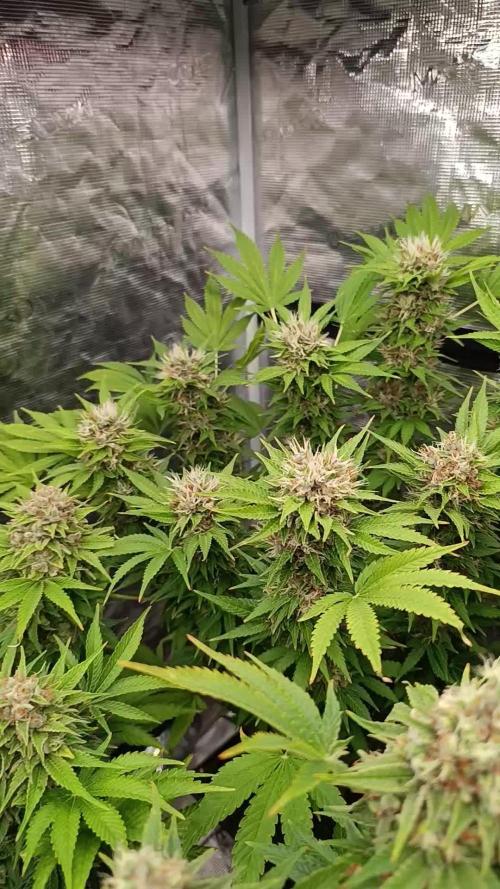
Beginning of week: Can't tell yet if the branch i broke is going to mend or die yet. Light defoliation today focusing on the upper canopy and tapering to the bottom to allow the lower branches to catch up as much as possible. Midweek: going away for 3 days. Put my net down to help breakup the canopy more though it wasnt really needed this thing loves to grow sideways. Added Cycos suga rush at 1ml/L and a light defoliation. The branch i thought I broke hasnt shown any signs of dying and has continued growing 😁 I also have started watering with worm casting tea in between feeds.
Processing
Likes
2
Share
Haven't seen too much calyx formation yet, just a lot of stretching. Waiting on the purple too🧐 I've been pruning out lower branches and leaves hanging close to the ground to help keep air flowing and humidity down, especially near her stalk.
Likes
43
Share
~ FastBuds PAPAYA SHERBET Photoperiod~ Well here we go on another journey together through 'Canna-land' and this one's kinda special... forget that, it's VERY special because this is FastBuds newest surprise for the community, a FEMINIZED PHOTOPERIOD STRAIN!🤯 I was fortunate enough to score these seeds, of which only 1000 were available and can't wait to see what this strain can do! This Papaya Sherbet, according to FastBuds, is a hybrid with a 9-10 weeks flowering period. For a more detailed and accurate description of this strain the following from FastBuds says it best: "Combining the massive stature of Papaya (Oni Selection) with the strength and resilience of one of our best keeper cuts (Sunset Sherbet), this strain develops into a big, expansive bush adorned with numerous bud sites that later transform into a generous harvest of medium-sized buds. Papaya Sherbet flowers deliver a signature flavor of premium cannabis with subtle citrus undertones that emerge upon inhaling. During growth, her aroma makes for a sweet yet pleasantly bitter fragrance, giving you an idea of what the smoke will taste like. Notably stress-resistant, Papaya Sherbet is a great choice for growers working in challenging environments. She is very forgiving and rebounds quickly from any adversity, allowing growers the freedom to experiment with confidence that she will take everything like a champion she is. This strain embodies resilience, flavor, and abundant yields in every grow cycle." Sounds like an epic strain and I personally cannot wait for this lady to strut her stuff!😍 ________________________________________________________________________________________________________________________________________________________________________________________________________________________________________________________________________________________________________________________ The Setup: This is going to be an outdoor grow, but I have started the Papaya Sherbet photoperiod indoors as our weather is still a bit too chilly to put a newly sprouted seedling outside (nighttime temp's dipping regularly into the 40's℉). The plan is simple... let her grow inside under a 19/5 light schedule until the nighttime temperatures are in the mid 50's℉, which shouldn't be long. After which, she'll be moved outside and transplanted into the soil which I have already setup and inoculated with beneficial microbes from BioTabs and slow release dry amendments from Gaia Green. Once she's established herself outside she'll be given periodic top dressings of Gaia Green 4-4-4 and 2-8-4 along with worm castings and Compost Tea's. Her grow area is approx. 5'x5' and I have posts and a trellis net set up already for when she gets bigger to aid in training her. Let the fun begin!🤪💚 ________________________________________________________________________________________________________________________________________________________________________________________________________________________________________________________________________________________________________________________ Weekly Updates: 7/2- Eight weeks since breaking ground and the FastBuds Papaya Sherbet photoperiod is really starting to get going now despite our extremely hot and humid weather. The weather continues to be hot and humid and the daily watering continues. 7/4- 🎉HAPPY 4th of JULY!🎉 The FastBuds Papaya Sherbet photo has taken the heat like a champ and is transforming into a very LARGE and beautiful lady! She's over 5 feet tall now and is stretching! She has maintained excellent vigor, color and has shown great resistance to pests and other stressors! 7/6- Yesterday we had a thunderstorm pass through early in the day, which provided about an inch of rain in a short time. I went ahead and watered in the afternoon, but only gave the Papaya Sherbet photoperiod approx. 3g of water from the well, via garden hose.🌱🚿. 7/8- The daily watering continues, as does our blistering hot🔥weather. All is well with the FastBuds Papaya Sherbet photoperiod and today, after watering her with 5g of well water, I gave her a good going over, looking at all the leaves topside and underneath and removing any leaves that were either yellowing or had other issues. Well folks, Week Eight is a wrap and the Papaya Sherbet photoperiod from FastBuds is going strong! See ya next week! Thank you for checking out my diary, your positive comments and support make it all worthwhile! 💚Growers Love!💚😎🙏
Likes
7
Share
@Mr_Pgrow
Follow
Yet another reliable fastbuds run. OG Kush grew to a very large bushy girl, looking back I should have lollipoped a bit better, seem to be left with a lot of popcorn buds. But I'm still happy and can't wait to try her out.
Likes
31
Share
Ladies and gentlemen today is day 42 of veg and we are moving right along, as you can see, we are at 8 tops and everything seems to be going swimmingly. As you guys can see from one of the pictures is a little area. I don't know what happened to it at first.I thought it was rotting.It seems to be getting better if anyone has any clue as to what the why or how that would be greatly appreciated! Other than that, this girl is doing great and she is thriving. Regardless of that little mark, so I think everything will be just fine.. I'd like to thank my friends over at Kannabia seeds for making this grow possible and for being awesome! I hope everyone is doing well and so are there ladies. God bless and happy growing ✌️
Likes
14
Share
Afghan was a beaut and she would have stayed up longer if the rain had let up. The denseness of her buds is what we admire although it is also why she started to rot. The scent of her is strong and mouth watering. Overall we would grow her again outdoors, this was a strange year with the weather and it is unfortunate but we are quite sure every strain would rot just the same. Hopefully next year has a better balance but that is the way it grows outdoors. As for curing, it was not typical for us at all. First she was washed but Afghan was not trimmed nor was she properly managed, she hung for six days and went in a paper bag for moisture redistribution way to late. Aside from that we had to use a triple beam for an estimated weight and we were unable to get a wet weight so please take the number and outcome lightly. Bone dry does not mean she won’t be enjoyed, she will be made into hash and or edibles.
Likes
Comments
Share
@ctm_dzagi
Follow
**Strain:** Sour Puffs photo fem by Doctor's Choice The name says it all: a sour, aromatic strain with a smooth and pleasant smoke. **Genetics:** Northern Light × Sour Diesel × Thailand Sativa A sativa-dominant hybrid (approximately 65% sativa). **THC:** High **Flavor:** bittersweet + diesel + apricot + citrus. **Effects:** balanced — first comes a light uplifting and energetic feeling, followed by calmness and relaxation (described as “floating on clouds”). Sour Puffs is a photoperiod hybrid with a slight sativa dominance, known for its fast growth. The plant grows like a typical hybrid: medium height, with uniform stems and numerous side branches. The buds are elongated, dense, and rock-hard, with a distinctive sour aroma. Flavor & Effects One of the defining features of the feminized Sour Puffs strain is its distinctive taste and aroma. Its unique terpene profile provides a smooth and enjoyable smoke. Sour Puffs has a strong bittersweet aftertaste with a tangy citrus edge and diesel notes. Despite its distinctive flavor, Sour Puffs is undoubtedly one of the smoothest and most refined strains in our catalog. Growers who appreciate a rich and complex flavor profile will certainly appreciate this strain. Sour Puffs has high THC levels and delivers a balanced combination of a head high and a relaxing stone effect. From the first inhale, you can feel an uplifting rush of energy and a mild psychedelic sensation, creating the feeling that you are floating somewhere among the clouds. Soon after, a relaxing stone effect sets in, gently carrying you toward a state of peace and relaxation. Sour Puffs is an ideal choice for an enjoyable daytime smoke, offering a diverse range of sensations and emotions. Thanks to Sasha Doctor's team for the generous gift! Considering full-time work throughout the day and living in an apartment in a major city, it is difficult to imagine any outdoor grow that could be genuinely practical and responsible. In this case, the only option is to pretend to be part of Babylon while remaining invisible in plain sight. In my view, the answer to this riddle is a stealth micro-grow built into a PC case, since this form factor provides a perfectly plausible explanation for the presence of ventilation. Moreover, by using an all-in-one PC or concealing the actual PC components, you can seamlessly integrate the grow box into the observer’s everyday surroundings. Even the fact that the case is closed and its internal components are inaccessible is completely justified and beyond suspicion by the simple fact that the key has not been lost (a much more plausible story than a humming cabinet or a locked refrigerator). Grow box dimensions: External: 67 × 20.5 × 54 cm / Usable volume: 50 × 20 × 43.5 cm. The lighting is controlled independently for each of the four channels via an iOS app. The cooling fan speed is regulated through PWM controllers with temperature sensors according to predefined temperature settings. The lighting system and the grow chamber are equipped with two independent ventilation circuits and are completely thermally isolated from each other.
Likes
9
Share
Week 1 of flowering is progressing well. The canopy is flat and filling the net evenly. Started adding Top-Max and keeping up with Calmag
Likes
1
Share
@Day_1
Follow
Gave the girls a really good defoliation giving them a couple of days before going into week nine first week of flower then gonna give them one week in flower before I give them a top feeding of flower nutes
Likes
8
Share
@Kingseeds
Follow
Another powerful strain form in-house genetics (OGKB V 2.1 x Platinum ) pure gassy flavour and aroma which will have all the Kush lovers out there going crazy Absolutely frozen cola
Likes
8
Share
This beautiful lady is doing well! She is flowering beautifully and strong 💪! Doubling up on her flower nutrients!
Processing
Likes
10
Share
Simply planted the seeds a half inch below soil and watered them in... they each sprouted within 3-4 days.
Likes
47
Share
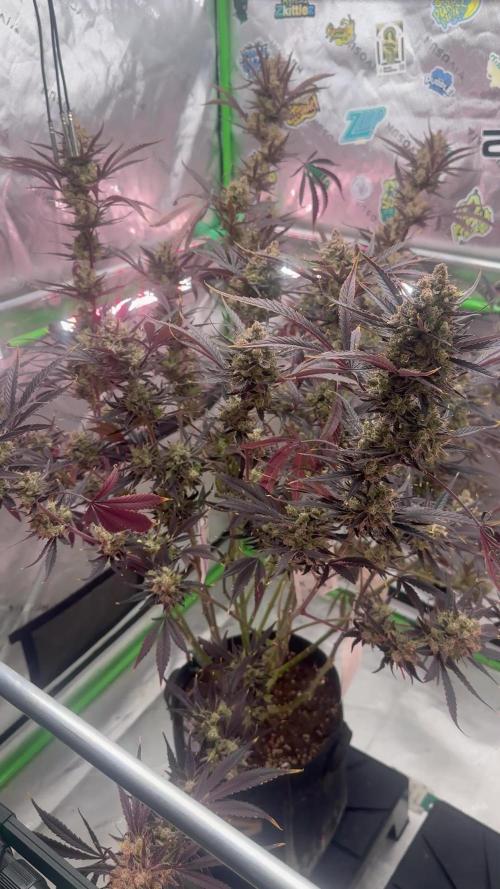
2nd net is up. Early bud formations are promising. holding up to the extremes pretty well, some leaves taking minor damage, but overall, she is holding up, gave her 1 night at 50F see how she would react, stressful. Not advised as it messes with her metabolism, but I want to see if it triggers any anthocyanin response. Love to see her purp up but no signs yet. Remember, For every molecule of glucose produced during photosynthesis, a plant needs to split six molecules of water. This process provides the hydrogen needed for synthesizing glucose and other organic compounds, while oxygen is released as a byproduct. Homework. If Rubisco activity is impaired and it cannot properly function or regenerate its substrate, the plant's leaves are likely to turn a pale green or lime green, a condition known as chlorosis. Essentially, Rubisco activity is highly regulated and susceptible to various environmental and metabolic factors that can cause it to become inhibited, leading to an apparent failure in RuBP regeneration due to a lack of consumption. Rubisco regeneration is intrinsically linked to nitrogen supply because Rubisco is a major sink for nitrogen in plants, typically accounting for 15% to over 25% of total leaf nitrogen. The regeneration phase itself consumes nitrogen through the synthesis of the Rubisco enzyme and associated proteins (like Rubisco activase), and overall nitrogen status heavily influences the efficiency of RuBP regeneration. RuBisCO is a very large enzyme that constitutes a significant proportion (up to 50%) of leaf soluble protein and requires large investments in nitrogen. Insufficient nitrogen supply limits the plant's ability to produce adequate amounts of RuBisCO, thereby limiting the overall capacity for photosynthesis and carbon fixation. Maintaining the optimal, slightly alkaline pH is crucial for the proper function and regeneration of Rubisco. Deviations in either direction (too high or too low) disrupt the enzyme's structure, activation state, and interaction with its substrates, leading to decreased activity and impaired RuBP regeneration. (Lime/yellowing) Structural Component: Nitrogen is an essential building block for all proteins, and the sheer abundance of the Rubisco protein makes it the single largest storage of nitrogen in the leaf. Synthesis and Activity: Adequate nitrogen supply is crucial for the synthesis and maintenance of sufficient Rubisco enzyme and Rubisco activase (Rca), the regulatory protein responsible for maintaining Rubisco's active state. Nitrogen deficiency leads to a decrease in the content and activity of both Rubisco and Rca, which in turn limits the maximum carboxylation rate, Vmax, and the rate of RuBP regeneration Jmax, thus reducing overall photosynthetic capacity. Nitrogen Storage and Remobilization: Rubisco can act as a temporary nitrogen storage protein, which is degraded to remobilize nitrogen to other growing parts of the plant, especially under conditions of nitrogen deficiency or senescence. Nitrogen Use Efficiency (NUE): The allocation of nitrogen to Rubisco is a key determinant of a plant's photosynthetic nitrogen use efficiency (PNUE). In high-nitrogen conditions, plants may accumulate a surplus of Rubisco, which may not be fully activated, leading to a lower PNUE. Optimizing the amount and activity of Rubisco relative to nitrogen availability is a target for improving crop NUE. Photorespiration and Nitrogen Metabolism: Nitrogen metabolism is also linked to the photorespiration pathway (which competes with carboxylation at the Rubisco active site), particularly in the reassimilation of ammonia released during the process. To increase RuBisCO regeneration, which refers to the process of forming the CO2 acceptor molecule Ribulose-1,5-bisphosphate (RuBP) during photosynthesis, the primary methods involve optimizing the levels and activity of Rubisco activase (Rca) and enhancing the performance of other Calvin-Benson-Bassham (CBB) cycle enzymes. Biochemical and Environmental Approaches: Optimize Rubisco Activase (Rca) activity: Rca is a crucial chaperone protein that removes inhibitory sugar phosphates, such as CA1P (2-carboxy-D-arabinitol 1-phosphate), from the Rubisco active site, thus maintaining its catalytic competence. •Ensure optimal light conditions: Rca is light-activated via the chloroplast's redox status. Adequate light intensity ensures Rca can effectively maintain Rubisco in its active, carbamylated state. •Maintain optimal temperature: Rca is highly temperature-sensitive and can become unstable at moderately high temperatures (e.g., above 35°C/95F° in many C3 plants), which decreases its ability to activate Rubisco. Maintaining temperatures within the optimal range for a specific plant species is important. •Optimize Mg2+ concentration: Mg2+ is a key cofactor for both Rubisco carbamylation and Rca activity. In the light, Mg2+ concentration in the chloroplast stroma increases, promoting activation. •Manage ATP/ADP ratio: Rca activity depends on ATP hydrolysis and is inhibited by ADP. Conditions that maintain a high ATP/ADP ratio in the chloroplast stroma favor Rca activity. Enhance Calvin-Benson-Bassham (CBB) cycle enzyme activity: The overall rate of RuBP regeneration can be limited by other enzymes in the cycle. •Increase SBPase activity: Sedoheptulose-1,7-bisphosphatase (SBPase) is a key regulatory enzyme in the regeneration pathway, and increasing its activity can enhance RuBP regeneration and overall photosynthesis. •Optimize other enzymes: Overexpression of other CBB cycle enzymes such as fructose-1,6-bisphosphate aldolase (FBA) and triose phosphate isomerase (TPI) can also help to balance the metabolic flux and improve RuBP regeneration capacity. Magnesium ions, Mg2+, are specifically required for Rubisco activation because the cation plays a critical structural and chemical role in forming the active site: A specific lysine residue in the active site must be carbamylated by a CO2 molecule to activate the enzyme. The resulting negatively charged carbamyl group then facilitates the binding of the positively charged Mg2+ion. While other divalent metal ions like Mn2+ can bind to Rubisco, they alter the enzyme's substrate specificity and lead to dramatically lower activity or a higher rate of the non-productive oxygenation reaction compared to Mg2+, making them biologically unfavorable in the context of efficient carbon fixation. The concentration of Mg2+ in the chloroplast stroma naturally increases in the light due to ion potential balancing during ATP synthesis, providing a physiological mechanism to ensure the enzyme is activated when photosynthesis is possible. At the center of the porphyrin ring, nestled within its nitrogen atoms, is a Magnesium ion (Mg2+). This magnesium ion is crucial for the function of chlorophyll, and without it, the pigment cannot effectively capture and transfer light energy. Mg acts as a cofactor: Mg2+ binds to Rubisco after an activator CO2 molecule, forming a catalytically competent complex (Enzyme-CO2-Mg2+). High light + CO2) increases demand: Under high light (60 DLI is a very high intensity, potentially saturating) and high CO2, the plant's capacity for photosynthesis is high, and thus the demand for activated Rubisco and the necessary Mg2+ cofactor increases. Mg deficiency becomes limiting: If Mg2+ is deficient under these conditions, the higher levels of Rubisco and Rubisco activase produced cannot be fully activated, leading to lower photosynthetic rates and potential photo-oxidative damage. Optimal range: Studies show that adequate Mg2+ application can enhance Rubisco activation and stabilize net photosynthetic rates under stress conditions, but the required concentration is specific to the experimental setup. Monitoring is key: The most effective approach in a controlled environment is to monitor the plant's physiological responses e.g., leaf Mg2+ concentration, photosynthetic rate, Rubisco activation state, and adjust the nutrient solution/fertilizer to maintain adequate levels, rather than supplementing a fixed "extra" amount. In practice, this means ensuring that Mg2+ is not a limiting factor in the plant's standard nutrient solution when pushing the limits with high light and CO2. Applying Mg2+ through foliar spray is beneficial to Rubisco regeneration, particularly in alleviating the negative effects of magnesium (Mg) deficiency and high-temperature stress (HTS). While Mg can be leached from soil, within the plant it is considered a mobile nutrient, particularly in the phloem. Foliar-applied Mg is quickly absorbed by the leaves and can be translocate to other plant parts, including new growth and sink organs. Foliar application of: NATURES VERY OWN MgSO4 @ 15.0g L-1 in a spray bottle. For those high-intensity workouts when 1 meal a day is just not enough! Foliar sprays are often recommended as a rapid rescue measure for existing deficiencies or as a supplement during critical growth stages, when demand for Mg is high. Application in the early morning or late evening can improve absorption and prevent leaf burn. The plant was getting a little limey yellow in the centre. Shortly thereafter, she was back in business, green mostly regenerated. The starting point [of creativity] is curiosity: pondering why the default exists in the first place. We’re driven to question defaults when we experience vuja de, the opposite of déjà vu. Déjà vu occurs when we encounter something new, but it feels as if we’ve seen it before. Vuja de is the reverse—we face something familiar, but we see it with a fresh perspective that enables us to gain new insights into old problems. Confidence is evidence... nothing more. You are confident because you have driven 10,000 times, you are confident because you have spoken 10,000 times. People think confidence is a feeling, but it's not. If you want more confidence, then you need to create evidence, take more shots, collect more data, build more experiences, take more risks; fail, confidence doesn't come first; it is the reward you get for doing the work. no one else wants to do.
Likes
27
Share
This has been by far the best results I have ever seen. Ladies are all progressing super quickly, I attribute this to the addition of the Blurple light and the brand of soil I am using. Earlier in the week I added some training clips to the Lemon AK & Gelato to better control the structure I was waiting for the stems to harden before I took them off but they seem to be breaking them! Excited to see what this week holds.
Likes
12
Share
@CheeRz
Follow
We finally made it ladies and gentlemen. It is an honor to introduce you to the beautiful Lady Wedding Cake and the beautiful Cookies Kush twins. Even though I'm pretty sure cookies kush #1 would have needed another week, she had to go under the knife,too. The ladies finished just in time for the super bowl 🏈. We need the space in the tent asap because of the Eternity Grow Cup. Next Stop Zami Runtz and Blue Gelato 41
Likes
61
Share
@Grey_Wolf
Follow
Sensi Seeds JACK HERER 31st December 2019 It's the Last day of the year and the little Jack Herer has a brand new home along with my other Photoperiod Plants. I erected a 3m x 2m x 1.8m Green House That completely covers the whole area. This Green house will serve a few purposes such as protection from any Rain during Flowering, Prying Eyes and Potential animal interference. Ive topped her now at the 5th node and other than that she's been left to her own devices to grow and thrive as she wishes. Speaking of wishes,,,, I would like to wish you all a very Happy New Year and I will be back Next Week for another Update. ***** The Video is of a visit from some Wild Red Tailed Black Cockatoos *******
Likes
10
Share
It's HUGE! first time ever i have an autoflower that big and heavy!!! Seems like NFT works really well on autos.
Likes
30
Share
Es wurden alle drei geköpft und zwei im gesamten in die sogenannten DryBags die ja jeder empfehlen tut und die ersten Tests sind sowas von gut ab jetzt nur noch Mit DRYFEM Resultate vom smoke. Kommen noch 🏼👌🏼👍🏼
Likes
15
Share
This week starts off with 11 hours and 55 minutes of sunlight and ends with 11 hours and 40 minutes of daylight hours. It is also dipping down to 7 degrees Celsius at nights. Rain is also expected next week. I caused the stalk to re-veg in a place it was covered with the black plastic sheet. The plastic was causing such a humid situation it infected the previous cut stems sites, it was doing damage to the stalk for being put on too early. Other symptoms included drying of the stem where the starting from where the plastic sheet covered the infection site, I looked under the sheet after this and found the infection site, The infection had initiated at a stress point in the branch. The humidity caused by the plastic sheet, caused the stem to tear at two points. Another symptom was the leaves changing colors and crunching up. Under the plastic sheet was a completely lighter color of stem. This explains why I was able to LST the main cola, it also explains the nutrient burn, as the plant is craving vegetative nutrients. I will most likely get some hermaphrodite genes in the already pollenated seed sacks due to this stalk re-veg. To fix this, I removed the sheet and the new vegetative growth. I applied 0.5% hydrogen peroxide to the infected areas.(WARNING: This bud will be toxically non smokable or consumable) I fed the plant 3 tablespoons of Epsom salt, and covered it with 40 liters of pro-mix soil for when the rain comes. I also added the open sided greenhouse for the rain covering, as this plant is fighting a waterborne infection. I low stress trained the main cola, in order to create airflow, and secondary colas. If I did not LST the colas the stem rot would have reached them and turned into bud rot. The airflow created by cola LST and the hydrogen peroxide causes the infected areas to only slightly increase, infection spreading noticeable after a week. The re-veg will also benefit with the infection recovery, even though It kind of is a result of a cause. I also started feeding the plant 900ml of water in the heatwave so the water uptake content would not cause the fungus to thrive. I also raised the branch up with a support so the infection would have a hard time moving with the nutrients and water. It doesn't appear to be spreading, and has been treated two times within the past three days. I plan to treat it a few more times before the rain. I also used concrete slabs at the base to ensure the root base was warm at night . I think she will pull through this fungus infection with the photoperiodic stress shock created by the humidity of wrapping of the stem. Cannabis is supposed to die at 12 degrees Celsius. I am hoping the outcome of the greenhouse test will also determine the daylight hours the cannabis will die at. I mean I am expecting it to die when daylight hours reach 9. Will be adding photos to harvest.