Likes
Comments
Share
@Roberts
Follow
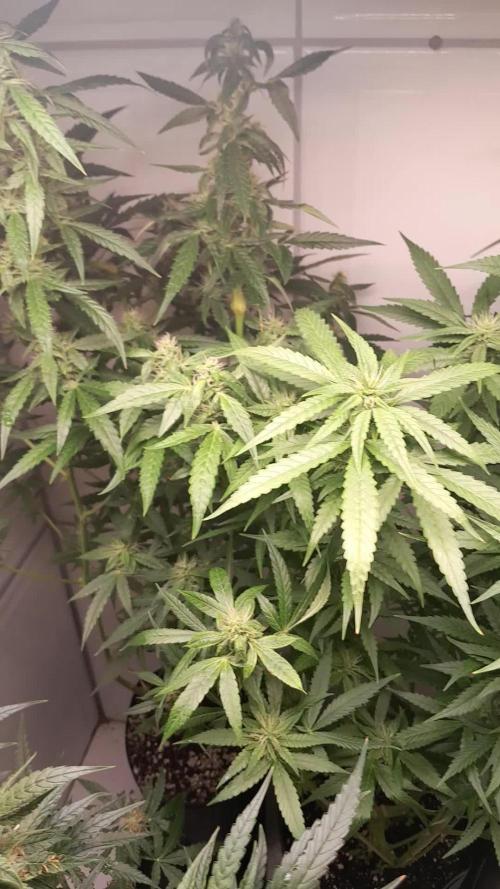
Gorilla Glue from AMS is doing great under the Spider Farmer G3000 light. I just changed light times to 12 hours today. So let the flowering phase start 💐. I think I am past most my previous issues. My feed is pretty strong already. So I am not adjusting it yet. I will be going into more of a potassium rich diet while trying to reduce nitrogen levels once stretching is done. I defoliated today and will again more aggressively in 2 weeks. I wanted to open it up for the stretching in hopes it stays more in a bush or more even canopy. I will likely have to hst them if they stretch a lot. Time will tell of course. Thank you Spider Farmer, and Amsterdam Marijuana Seeds. 🌱🤜🏻🤛🏻🌱💪🏻❄️🌱 Www.amsterdammarijuanaseeds.com Thank you grow diaries community for the 👇likes👇, follows, comments, and subscriptions on my YouTube channel👇. ❄️🌱🍻 Happy Growing 🌱🌱🌱 https://youtube.com/channel/UCAhN7yRzWLpcaRHhMIQ7X4g Spider Farmer G300w: https://amzn.to/3S2zvsd Spider Farmer 10X20 Heat Mat Kit - https://amz.fun/lsa0J Spider Farmer Amazon Store: https://www.amazon.com/spiderfarmer Spider Farmer Official Site: https://spider-farmer.com Discount code: saveurcash
Likes
4
Share
@IamCy
Follow
Week 2. Just the normal stretch. Nothing eventful. After this week, I'll be giving random weekly updates due to my busy schedule.
Likes
10
Share
@Tegridy
Follow
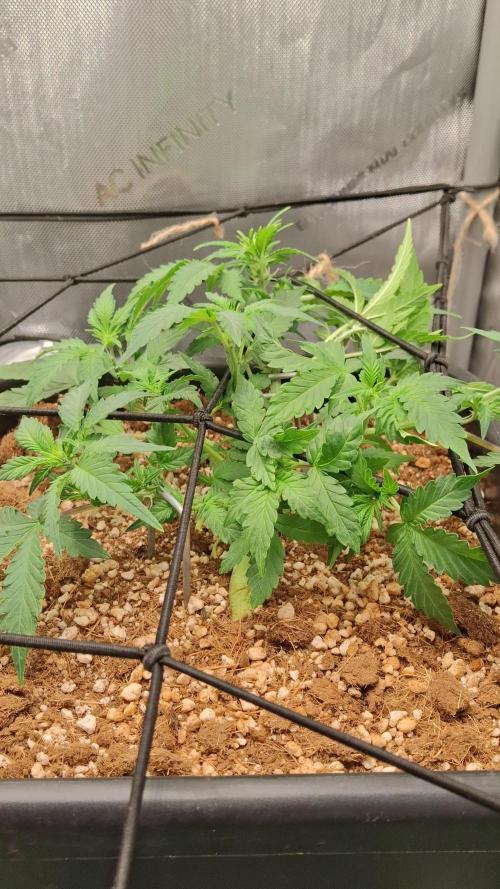
just put clones in 6 pot current culture set up
Likes
6
Share
Likes
8
Share
@dreamLife
Follow
Finalmente el día de cosecha, la producción no fue de las más abundantes pero suficiente para mi consumo personal, bastante entretenido el cultivo en DWC, lo repetiré en mi siguiente cultivo pero con una semilla automática.
Likes
3
Share
Auto Pablo Escobar – Divine Seeds Day 1 above soil 🌱 Sprouted yesterday with a nice strong start. Keeping temperature around 26°C and gentle watering around the stem zone only. Light cycle 18/6 from the first day above ground. Curious to see how Pablo performs under this 3-month run.
Likes
24
Share
Still only giving them water at ph6. 5 The soil I started them in is a full strength soil. House and garden bat special 🦇💪👍 Some people say I shouldn't plant seeds direct into full strength soil, I've been doing it for 20 years and never had any issues . Each to there own I say 👍
Likes
3
Share
Another two weeks down, and the tent’s definitely alive and kicking. Some branches started leaning over, so I tied up the colas before things got out of hand. I pulled CalMag for a bit, thinking it was leaving residue in the reservoir — but turns out the real culprit is probably the Connoisseur Coco base. Kinda sad, because I really like these nutes, but looks like they’re not the best match for hydro-style Autopots. They leave sediment. Time to move on. I added a 25-micron filter to the circulation pump, and that helped quite a bit — though it’s still not perfect. Next grow will be with CANNA Coco — hoping for a cleaner run. Lemon Orange already looks like it's getting flushed, even though I haven’t started yet. Gonna give it two more weeks and then probably chop. King’s Juice? That thing exploded — totally outgrew the scrog because I didn’t bend it in time. Bit of a jungle now, but I’m rolling with it. Oh — and they’re drinking like crazy: 2 liters a day from the res, easy.
Likes
4
Share
She looks and smells amazing. I wanna talk specifically about her amazing mango smell just pure mango,you'll only be able to feel it if you grow her 100% the organic way. It's a must,you don't think about smoking her when you smell it you think of eating her it's just so yummy,definitely I want to grow this amazing somango auto plant by gea seeds every time I can. 💚🌱💎🤤
Likes
Comments
Share
It is a vigorous plant with very uniform branching, high resinous and high yield, if you grow from seed there are a few different phenos that I got, equally as good
Likes
12
Share
Now the flowers!! 💐💐💐
Likes
25
Share
Our psyche is part of nature, and its enigma is limitless. Learn to be present 🎁. Don't let the trauma of your past guide the infinite paths towards your future.
Likes
9
Share
@Oldwied
Follow
Hey dudes, The final defoliation took place at the beginning of the week. Since then, the lady has just been allowed to grow. I had a bit of a problem with the low humidity. So I helped myself with a 10L bucket, a fogger and a timer. There's nothing else to mention, the plant looks great. What more could I want? Light Power: 100% Day 68 Flower #23 Lollipopping Day 71 Flower #28 Watered with 2,5L freshly brewed compost tea Photosession
Likes
25
Share
Lots of learning curves! Started using a king led only to find out it didn’t cover all the plants, leaving just the mother growing in the middle! On with the hps!
Likes
120
Share
Hi all the happy people here in GrowDiaries. This is my second cultivation ever and it will be fun to try a bigger space than my closet grows First, I'm just going to say I'm done with the construction of my new growroom. I put some pictures on the construction here in week one. The room is 2.14 meters by 1.7 meters and has a ceiling height of 2 meters. It provides a floor area of ​​3.6 square meters. I use a 54 Watt Lightwawe T5 for germination and 2 Pcs 400 Watt HPS lamps. I have a channel fan that replaces the room air about 40 times an hour to get a comfortable theme in the room, the air enters a fresh air intake from the outside. The air is purified through a carbon filter to then leave the room to the rest of the basement. Then I use that heat to heat the rest of the basement. I will use 8 pcs 15 liter Autopots to grow with and a 100 liter water tank that supplies the pots of water and nutrition. I will grow completely organically in soil and will watercure my buds to get the best possible medicine for me. But there are no cultivation rooms to be displayed here, so I continue with what is most important. I am very excited to see how the new growroom will work and how this CBD Fast Eddy plant from Royal queen seeds will turn out. CBD Fast Eddy Automatic is combining Cheese x Juanita la Lagrimosa x Ruderalis, Fast Eddy is a rapid growing, flavourful, and CBD-rich auto strain that goes from seed to harvest in 8-9 weeks, produce generous yields, and induce a clear, mellow, and most importantly, functional high. THC: 9% CBD: High Yield Indoor : 400 - 450 gr/m2 Yield Outdoor: 80 - 130 gr/plant Height Indoor: 60 - 100 cm Height Outdoor: 80 - 120 cm Flowering: 6 - 7 weeks Harvest month: 8-9 weeks after sprouting Genetic Background: Cheese x Juanita la Lagrimosa x Ruderalis Type: Sa 50% In 40% Ru 10% Effect: Clear, Painrelief Climate: Mild ----------------------------------------------------------------------------------- 2017-09-18. Week 4 starts and she is in flower. She is 36 cm high and looking really healthy. --------------------------------------------------------------------------------------------------------------------------------------------------------- 2017-09-19. 2 new fans is installed in the grow room. Added pic and video. --------------------------------------------------------------------------------------------- 2017-09-20. Kl 10.00. New video. The girl is 38 cm high and doing great. Kl 23.00. Did some massive defoliation, added video and pics ------------------------------------------------------------------------------------------------ 2017-09-22. The girl have recovered well after my massive defoliation. She is 39 cm high now and have received 2 liters of water and nutrition today.
Likes
8
Share
10th week begins! Only water. My cat is in love with this plant 😻😹 This week, just like last week, I wasn't able to take many photos because I had some commitments to, so I was away from home.
Likes
15
Share
Welcome to Flower Week 9 of Divine Seeds Divine Rapier I'm excited to share my grow journey with you from my Sensi Seeds Project . It's going to be an incredible ride, full of learning, growing, and connecting with fellow growers from all around the world! For this Project , I’ve chosen the Feminized Photo Strain Divine Rapier: Here’s what I’m working with: • 🌱 Tent: 120x60x80 • 🧑‍🌾 Breeder Company: Divine Seeds • 💧Strain Info : 29% • ⏳ Flowering Time: 6-7weeks
Likes
24
Share
The cannabis strain Grape Guava can be a purple strain, depending on its specific phenotype and genetic makeup. While not all phenotypes of Grape Guava are purple, some variations, such as the Zatix Grape Guava, are noted for their striking purple appearance due to the genetic expression of anthocyanin pigments. In a garden of green, Grape Guava gleams, With its fruity aroma, enchanting dreams. Clusters of grapes, guava's sweetness ignite, A strain so divine, in purple and white. Euphoria whispers, a lush fruity haze, Grape Guava's embrace, a tranquil daze. Off and away.@1400ppm. The increased CO2 allows plants to thrive at higher temperatures, which in turn necessitates higher humidity to maintain the ideal VPD for healthy growth and transpiration. 80F -5F = 75F LST with 70% RH = 0.72 kPa. Higher temperatures and humidity promote rapid growth, nutrient uptake, and photosynthesis while maintaining a lower stress level. Temperature influences the rate of enzymatic reactions involved in aerobic respiration. Enzymes, such as those involved in glycolysis, the Krebs cycle, and the electron transport chain, work most efficiently at an optimal temperature range. In low temperatures, enzymatic activity will slow down, thus reducing the rate of aerobic respiration. In high temperatures, enzymes can become denatured, thus impairing their function and stopping the process of aerobic respiration. Glucose is the primary fuel for aerobic respiration. The rate of aerobic respiration increases with the availability of glucose, as it is the starting point for glycolysis. If glucose levels are low, cells may rely on alternative energy sources such as fatty acids or amino acids , but these processes may yield less ATP or be less efficient. To determine this effect, carbon dioxide volume was measured (as carbon dioxide is an output of aerobic respiration) A seed germinated via skotomorphogenesis (in the dark) will generally develop faster in its initial stages to reach light, though it will be etiolated (elongated and weak) and will switch to slower, more robust photomorphogenesis (light development) once it emerges into light. While skotomorphogenesis is a rapid, growth-oriented process for soil escape, it's a temporary phase; photomorphogenesis is a more sustainable development program that prepares the seedling for photosynthesis. 18/6 with the 6 being IR instead of darkness, keeping temps overnight a neat 77F-80F. PPFD overnight 1.8. Think of my tent as a lung. What goes in must come out. When the rate of air going out exceeds the amount of air coming in, it creates a negative pressure. Tent concaves (bends in). If set up correctly, your RH will begin to drop slowly to the desired level you set, and the extraction turns off when it reaches 50% RH. The plant, as it performs cellular respiration, will always be releasing more water into the air, so the RH% of the tent overnight will always increase, so long as oxidative phosphorylation is occurring. As soon as the RH% creeps back up to 55%, the extraction turns back on, over and over, this creates a strong pressure differential which will work wonders on your grow. replicating high and low pressure fronts in nature, critical for oxygen diffusion, but more importantly, full control of your RH%. Moisture will not transfer from a saturated atmosphere to another if that air is already at or above its saturation point, meaning the air can't hold any more water vapor. Once I understood that water is produced as a by product during cellular respiration, specifically at the very end of the electron transport chain (ETC) where electrons are finally transferred to molecular oxygen, the higher the RH of the air, the more resistance there is for more moisture to be added to that environment, and effects the ease with which it does so. But none of that water comes from the pot; it's pulled from the air. If you run high daytime RH, your medium/pot is 100% reliant on transpirational root pull to move water. ZERO evaporation happens across the atmosphere if the tent air has high RH%, the medium cannot release its water through evaporation. Once a canopy develops, light no longer slowly wicks and evaporates from the topsoil. The Soil-Plant-Atmosphere Continuum (SPAC) describes the continuous pathway and process of water movement, driven by a gradient in water potential, from the soil, through the plant's roots, stem, and leaves, and finally evaporating into the atmosphere through transpiration. There is evaporation, there is transpiration, then there is evapotranspiration; Evapotranspiration (ET) is the combined total of two processes: evaporation (water lost directly from soil and surface water into the atmosphere) and transpiration (water released from plants to the atmosphere through their leaves). Evapotranspiration represents the total amount of water that moves from the medium into the air. There is no such thing as a medium with too much water, only a medium that retains too much for too long. The water must always flow efficiently from one atmosphere(Medium) to another(Air) in a timely manner. Moisture is a critical factor for bacterial growth and decay. Dictating how long it's allowed to sit in any one location for any given period is a key preferred control. To ensure a net reduction in a bacterial population, the rate of removal (ET) must exceed the rate of bacterial growth (decay rate), which is often modeled as a growth rate for the specific bacterium under the given conditions. By optimizing daytime VPD, we also optimize conditions for bacterial growth to explode exponentially above 77°F.. If water is allowed to sit in a medium without an escape within a timeframe, nothing good will happen. IF High RH is maintained overnight as well as during the day, placing 100% of water movement at the behest of daytime transpiration, roots can only pull where they can reach, and if soil is compressed above a certain point, moisture will become trapped in a medium with no way of moving day or night. This will begin the countdown for decay to take hold. When water stagnates in a medium, it loses oxygen, creating anaerobic conditions that foster the growth of harmful microorganisms like bacteria and fungi, which can produce toxins and disease vectors. Thigmomorphogenesis, the process by which plants respond to mechanical stimuli like touch by altering their growth and development, resulting in significant morphological changes to improve survival against mechanical perturbations. This complex response involves sensing touch and initiating physiological and genetic responses, leading to changes in form and structure over days or weeks. The process is triggered by physical forces such as wind, rain, or touch. Plants adapt to these stimuli by changing their shape and structure, which may include slower growth, thickened stems, or altered leaf development. Plants possess sophisticated mechanisms to detect even subtle mechanical stimuli and initiate responses. A variety of molecules, including calcium ions, jasmonates, ethylene, and nitric oxide, are involved in signaling these mechanical inputs. Touch can induce the expression of genes that encode proteins for calcium sensing, cell wall modification, and defense mechanisms. A plant exposed to constant wind may become shorter and sturdier. A plant that is touched frequently might grow slower to conserve energy and develop thicker cell walls. These changes increase a plant's resilience and ability to survive in harsh environments. Let's get Thiggy with it.