


Likes
Comments
Share


@AERO_Grower
Follow
1° Semana- Aeroponía - Crecimiento lento, pero luego mejorando las condiciones de crecimiento para las raíces, ya que al inicio la luz traspasaba a través de la arlita y la tapa del tarro, afectando el crecimiento, por lo que en el día 4 se realiza el pintado con pintura para evitar el crecimiento de patógenos.
---------------------------------------------------------------------------------------------------------------------------------------------------------------------------------------------------------------------
1st Week- Aeroponics - Slow growth, but then improving the growth conditions for the roots, since at the beginning the light passed through the clay and the lid of the bucket, affecting growth, so on day 4 I painted it to prevent the growth of pathogens.





Likes
24
Share


@ganzigunnu
Follow
having hard time reducing the humidity. everything else is going well.


Likes
9
Share


@Edles_Gas
Follow
Forgot to record last week (due to being too high) but here’s week 4 they seem to be doing great😄.


Likes
3
Share


@Knowitall
Follow
This week were just on vegetation cruise control.. making sure the Bosh is topped up for there feeds n checking and adjusting ph n ppm's.. the canopy is filling in nicely now n the training seems to be working!

Likes
6
Share


@thenotillwizard
Follow
The Red Hot Cookies are looking beautiful. Very nice looking buds with fantastic colors. Very promising in terms of bag appeal :)
The pheno 1 shares many traits with the GSC. The effect is amazing despite of the quite boring terpene profile which is unidimensional (very sweet base notes along with creamy peach head notes that reminds me of the peach flavored campino hard candys). The high has the soothing and calming effect of the GSC while being more uplifting and energizing.
The pheno 2 is more on the Tangie side for both the effects and the terp profile. The high is energetic but a little bit racy. The limonene content seems far higher than the myrcene, and it translates itself in both the taste and the effect. I will be looking for a Tangie-dom pheno that is richer in myrcene, in hope of getting more of the tangerine taste/aroma and the relaxing effect that we can find in the Tangie and Tangerine Dream strains.
As for the Amherst Sour D, they all share the same woody and tropical aromas with subtle specific nuances (pepper, fuel, skunk/sulfur, lavender). The effects go from slightly sedating to highly energizing and euphoric. A great afterwork hard hitting sativa that tastes awesome, without being the terp bomb of the year.
The Dinamed CBD plus is a very short, bushy and stalky plant. The Pheno 1 smells like straight pine/fir on sweet and fruity base notes. The structure is nice with lots of lateral branching and the buds are looking very good too. I could have got a way better yield be giving her an extra 10 days of veg.
The pheno 2 is more one the fruity/fuely/tart side. Definitely not the best pheno. Very slow growth...


Likes
8
Share

@Gorillagrower
Follow
Spliff Seeds... Dutch Blue Automatic. They are loving life in my simulated tropical invirment. 78 degrees with 65% humidity with long days.

Likes
3
Share


@Ieiogrow94
Follow
Eccoci qui...
Tutto va per il meglio, questa settimana ho eseguito Lollipopping e Defoliation per far si che le cime principali sprigionino al meglio il loro vigore.
Siamo verso la fine del progetto ora bisogna solo aspettare la fine...
Grazie a tutti per il supporto🔥🌲❤️
Likes
2
Share


@Ninjabuds
Follow
Man, it must really suck to see that skunk apple plant doing so poorly. It barely grew at all, and those four points on it are supposed to make it look cool, but they're super tiny. It's looking more like a skinny stalk with a few weak branches.
Likes
16
Share

@pHilosophy420
Follow
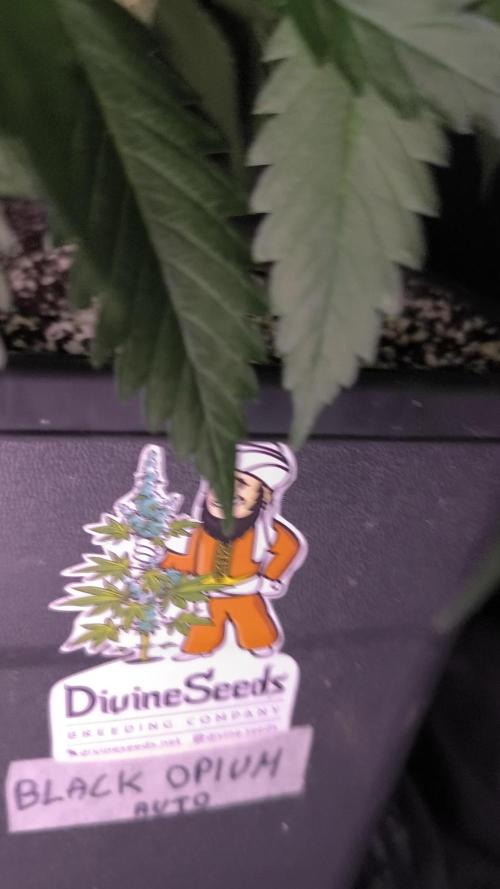
Day 63- She was very bushy and I did defoliation and LST using second ring to expand the branches vertically (beging of week 8). Now she has stretch and buds forming nicely 🙂👌

Likes
55
Share


@Ultraviolet
Follow
What's in the soil? What's not in the soil would be an easier question to answer. 16-18 DLI @ the minute. +++ as she grows.
Probably not recommended, but to get to where it needs to be, I need to start now.
Vegetative @1400ppm 0.8–1.2 kPa 80–86°F (26.7–30°C) 65–75%, LST Day 10, Fim'd Day 11
CEC (Cation Exchange Capacity):
This is a measure of a soil's ability to hold and exchange positively charged nutrients, like calcium, magnesium, and potassium. Soils with high CEC (more clay and organic matter) have more negative charges that attract and hold these essential nutrients, preventing them from leaching away.
Biochar is highly efficient at increasing cation exchange capacity (CEC) compared to many other amendments. Biochar's high CEC potential stems from its negatively charged functional groups, and studies show it can increase CEC by over 90%. Amendments like compost also increase CEC but are often more prone to rapid biodegradation, which can make biochar's effect more long-lasting. biochar acts as a long-lasting Cation Exchange Capacity (CEC) enhancer because its porous, carbon-rich structure provides sites for nutrients to bind to, effectively improving nutrient retention in soil without relying on the short-term benefits of fresh organic matter like compost or manure. Biochar's stability means these benefits last much longer than those from traditional organic amendments, making it a sustainable way to improve soil fertility, water retention, and structure over time. Needs to be charged first, similar to Coco, or it will immobilize cations, but at a much higher ratio.
a high cation exchange capacity (CEC) results in a high buffer protection, meaning the soil can better resist changes in pH and nutrient availability. This is because a high CEC soil has more negatively charged sites to hold onto essential positively charged nutrients, like calcium and magnesium, and to buffer against acid ions, such as hydrogen.
EC (Electrical Conductivity):
This measures the amount of soluble salts in the soil. High EC levels indicate a high concentration of dissolved salts and can be a sign of potential salinity issues that can harm plants.
The stored cations associated with a medium's cation exchange capacity (CEC) do not directly contribute to a real-time electrical conductivity (EC) reading. A real-time EC measurement reflects only the concentration of free, dissolved salt ions in the water solution within the medium.
98% of a plants nutrients comes directly from the water solution.
2% come directly from soil particles.
CEC is a mediums storage capacity for cations. These stored cations do not contribute to a mediums EC directly.
Electrical Conductivity (EC) does not measure salt ions adsorbed (stored) onto a Cation Exchange Capacity (CEC) site, as EC measures the conductivity of ions in solution within a soil or water sample, not those held on soil particles.
A medium releases stored cations to water by ion exchange, where a new, more desirable ion from the water solution temporarily displaces the stored cation from the medium's surface, a process also seen in plants absorbing nutrients via mass flow. For example, in water softeners, sodium ions are released from resin beads to bond with the medium's surface, displacing calcium and magnesium ions which then enter the water. This same principle applies when plants take up nutrients from the soil solution: the cations are released from the soil particles into the water in response to a concentration equilibrium, and then moved to the root surface via mass flow.
An example of ion exchange within the context of Cation Exchange Capacity (CEC) is a soil particle with a negative charge attracting and holding positively charged nutrient ions, like potassium (K+) or calcium (Ca2+), and then exchanging them for other positive ions present in the soil solution. For instance, a negatively charged clay particle in soil can hold a K+ ion and later release it to a plant's roots when a different cation, such as calcium (Ca2+), is abundant and replaces the potassium. This process of holding and swapping positively charged ions is fundamental to soil fertility, as it provides plants with essential nutrients.
Negative charges on soil particles: Soil particles, particularly clay and organic matter, have negatively charged surfaces due to their chemical structure.
Attraction of cations: These negative charges attract and hold positively charged ions, or cations, such as:
Potassium (K+)
Calcium (Ca2+)
Magnesium (Mg2+)
Sodium (Na+)
Ammonium (NH4+)
Plant roots excrete hydrogen ions (H+) through the action of proton pumps embedded in the root cell membranes, which use ATP (energy) to actively transport H+ ions from inside the root cell into the surrounding soil. This process lowers the pH of the soil, which helps to make certain mineral nutrients, such as iron, more available for uptake by the plant.
Mechanism of H+ Excretion
Proton Pumps: Root cells contain specialized proteins called proton pumps (H+-ATPases) in their cell membranes.
Active Transport: These proton pumps use energy from ATP to actively move H+ ions from the cytoplasm of the root cell into the soil, against their concentration gradient.
Role in pH Regulation: This active excretion of H+ is a major way plants regulate their internal cytoplasmic pH.
Nutrient Availability: The resulting decrease in soil pH makes certain essential mineral nutrients, like iron, more soluble and available for the root cells to absorb.
Ion Exchange: The H+ ions also displace positively charged mineral cations from the soil particles, making them available for uptake.
Iron Uptake: In response to iron deficiency stress, plants enhance H+ excretion and reductant release to lower the pH and convert Fe3+ to the more available form Fe2+. The altered pH can influence the activity and composition of beneficial microbes in the soil. The H+ gradient created by the proton pumps can also be used for other vital cell functions, such as ATP synthesis and the transport of other solutes. The hydrogen ions (H+) excreted during photosynthesis come from the splitting of water molecules. This splitting, called photolysis, occurs in Photosystem II to replace the electrons used in the light-dependent reactions. The released hydrogen ions are then pumped into the thylakoid lumen, creating a proton gradient that drives ATP synthesis.
Plants release hydrogen ions (H+) from their roots into the soil, a process that occurs in conjunction with nutrient uptake and photosynthesis. These H+ ions compete with mineral cations for the negatively charged sites on soil particles, a phenomenon known as cation exchange. By displacing beneficial mineral cations, the excreted H+ ions make these nutrients available for the plant to absorb, which can also lower the soil pH and indirectly affect its Cation Exchange Capacity (CEC) by altering the pool of exchangeable cations in the soil solution.
Plants use proton (H+) exudation, driven by the H+-ATPase enzyme, to release H+ ions into the soil, creating a more acidic rhizosphere, which enhances nutrient availability and influences nutrient cycling processes. This acidification mobilizes insoluble nutrients like iron (Fe) by breaking them down, while also facilitating the activity of beneficial microbes involved in the nutrient cycle. Therefore, H+ exudation is a critical plant strategy for nutrient acquisition and management, allowing plants to improve their access to essential elements from the soil.
A lack of water splitting during photosynthesis can affect iron uptake because the resulting energy imbalance disrupts the plant's ability to produce ATP and NADPH, which are crucial for overall photosynthetic energy conversion and can trigger a deficiency in iron homeostasis pathways. While photosynthesis uses hydrogen ions produced from water splitting for the Calvin cycle, not to create a hydrogen gas deficiency, the overall process is sensitive to nutrient availability, and iron is essential for chloroplast function.
In photosynthesis, water is split to provide electrons to replace those lost in Photosystem II, which is triggered by light absorption. These electrons then travel along a transport chain to generate ATP (energy currency) and NADPH (reducing power). Carbon Fixation: The generated ATP and NADPH are then used to convert carbon dioxide into carbohydrates in the Calvin cycle. Impaired water splitting (via water in or out) breaks the chain reaction of photosynthesis. This leads to an imbalance in ATP and NADPH levels, which disrupts the Calvin cycle and overall energy production in the plant. Plants require a sufficient supply of essential mineral elements like iron for photosynthesis. Iron is vital for chlorophyll formation and plays a crucial role in electron transport within the chloroplasts. The complex relationship between nutrient status and photosynthesis is evident when iron deficiency can be reverted by depleting other micronutrients like manganese. This highlights how nutrient homeostasis influences photosynthetic function. A lack of adequate energy and reducing power from photosynthesis, which is directly linked to water splitting, can trigger complex adaptive responses in the plant's iron uptake and distribution systems.
Plants possess receptors called transceptors that can directly detect specific nutrient concentrations in the soil or within the plant's tissues. These receptors trigger signaling pathways, sometimes involving calcium influx or changes in protein complex activity, that then influence nutrient uptake by the roots. Plants use this information to make long-term adjustments, such as Increasing root biomass to explore more soil for nutrients. Modifying metabolic pathways to make better use of available resources. Adjusting the rate of nutrient transport into the roots. That's why I keep a high EC. Abundance resonates Abundance.
Likes
8
Share

@SuparWawfflez
Follow
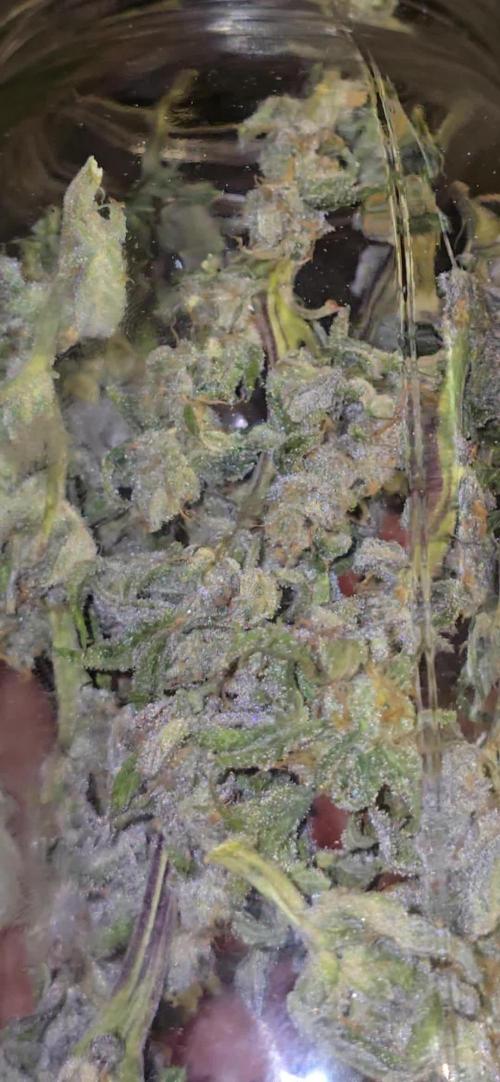
Frosty as heck but small buds, I might run it again with no lst and see if it gives bigger buds. Easy trimmer.


Likes
6
Share


@Zuzugrowz
Follow
"Week 5 Update: My ladies are TURNING UP! My 5-week-old cannabis plants are exploding with growth! The Demonic Genetics Booming in Coverage is living up to its name - the canopy is full and lush. Fastbuds420 is also crushing it, just as I predicted. We're entering the home stretch and I'm hyped to see what week 6 brings! Stay tuned for the next update
Likes
14
Share


@nobodyknows1312
Follow
Meanwhile it is foxtailing hard. As I‘m not running crazy temps, this is likely caused by the 13h of light. Reduced now back to 12h and hoping she will survive another week or so (trichs are mostly milky, no amber yet)

Likes
15
Share


@SensimillaP
Follow
390g dry weight out of 2 plants in a 0.8m2, i'm happy with the results. Powerfulll Strain with 25% THC, i've tried uncured and already packs a punch. Very delightfull with both of phenos ! Recomend !
I will upload more photos after 2/3 weeks of curing

Likes
15
Share


@Siriuz
Follow
Yo guys whats up
Check out my videos and lemme know
Im trying my best to keep up
MY girls are doing very good
Im just too busy right now with my son
He is 10 months old now and sometimes I have to leave behind the girls thank God I had built over the past months a great setup and I keep improving every time I have budget so it is very kind of you every like you give and every Comment is a blessings for us as a family you guys help us a lot to continue promoting and growing the best medicine in this world, thanks brothers happy growing and keep enjoying our diaries we will keep posting once we get the time and space for sure stay tuned
Now this
PPM 1000 lowering down to
800/600/400
Until we are done for the remaining weeks
Also we stop adding nutes for like 2 weeks now or so
We only add water every Day
Like 300ml at least to keep them hydrated
But for us is best to add one 1.5 liters then wait for them to drain and leave them like that for like 3-4 days until water in the bottom is full absorb this forces the roots to go and drink water which makes the plant grow bigger...
I know THESE are autos but you would be impress depending on the genetics of what they're capable of
The only thing that really f them up is time
They dont go back just forward so yeah
Got to be quick
Anyways how you doing guys
Happy growing thanks for everything
Likes
51
Share


@BudBoutique
Follow
Welcome to Bud Boutique Grow Diary - really appreciate all your love and support :)
Dont forget to check out my other current grows!
🗓️ This Week:
- Day 38: stacking up has started
- Day 41: praying up as always
Thank you for still staying with me 💚
___________________________________________
--- 🌱 Strain (Sponsor) 🌱 ---
🏷️ Big Band by Kannabia Seed Company
https://www.kannabia.com/en/feminized-cannabis-seeds/big-band
--- 🥗 Nutrients and Feeding (sponsored by APTUS: APTUS Ambassador) ---
🍸 APTUS: full nutrient schedule extreme
-- Regulator, N-Boost, P-Boost, CaMg-Boost, K-Boost, Allin1 Liquid, Startbooster, Topbooster, Enzym+ every feeding
-- Fulvic-Blast, NutriSpray as Foliar each once a week
🔗 https://aptus-holland.com/
--- ♻️ Grow Control (Sponsor) ---
TROLMASTER: TENT-X + LM14 Light Adapter to dim/sunrise/sunset lights + Temp & rH Sensor all remote on App
🔗 https://www.trolmaster.eu/
--- 🚿 PetraGrow (Sponsor) ---
CannaFogger Foliar Spray
🔗 https://www.petratools.com/product/petragrow-cannafogger-atomizer-new-mini-fogger
--- 🏭 Grow Setup ---
💡LUMATEK Zeus Pro 600
* 🏠🌿 Indoor: Homebox 120x120x200cm (4x4)
* 📐🌀 PrimaKlima exhausting Fan 1180m3/h (running on 60-80%)
* 🌀 Can Light Filter 800m3/h & 1x Fanbox 1x Dyson fan for Air circulation
🔗 https://lumatek-lighting.com/zeus-600w-pro-29/
🔗 https://primaklima.com/de/shop/ventilatoren-de/ec-ventilatoren/pk160ec-tc/
🔗 https://canfilters.com/products/filters/
All Likes and comments are highly appreciated!!!
👨🌾 don't forget to check out my Instagram for daily educational content: budboutiquee
- Bud Boutique

Likes
4
Share


@GODAXE
Follow
27.08.2024
D48 since cutting,
lady starting to bush like their mother, as i did nt have place for 8 massive bush in the tent i proceed to some pruning and set some bud clip.
overall look
GBC #1
16 inch, flowering
GBC #2
16 inch, flowering
GBC #3
16 inch , still in veg, 😰
GBC #4
18 inch, full bud mod 😍
GBC #5
18 inch , full bud mod 😍
GBC #6
19 inch, flowering
GBC #7
20 inch, start flowering👍
GBC #8
18 inch, flowering
i will not weekly uptade, but keep you tuned


Likes
1
Share

@MindFlowers68
Follow
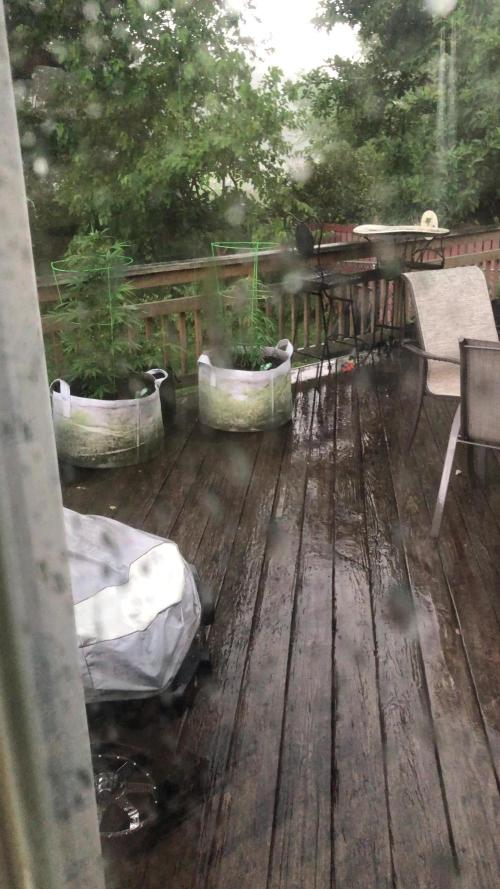
Buds are in full stack mode, and is thriving. A stormy and rainy week overall but bursts of powerful sun. I did not need to water but I made some compost tea and fed the roots after I topped off with the leftovers from the brew. Smell is already getting fruity and spicy.
Processing
Likes
14
Share


@Dunk_Junk
Follow
She's growing well this week. Her flowers are fattening up nicely! I was a bit worried that they will be airy not dense, but I was being too impetuous 😬😅