


Likes
Comments
Share


@stephandjo
Follow
Sugar Bomb Punch
THC Bomb X (Critical Orange Punch x Bubba Island Kush).
Harvested on 63 th day of flowering.
A cool strain to grow from Dutch Passion 👍
4 on 4 on germination rate.
The 4 ladies were slightly different from each others but they gave some very cool buds !
The "black one" was a real beauty 😍

Likes
52
Share


@Santica_Garden
Follow
Uploaded a video which explains everything 👍🏾................................................................................................!


Likes
25
Share


@mrlovesgrow
Follow
My first ever harvest went great! I trimmed 3 different ways as well as flushed for different amounts of time.
24hr flush and wet trim with bowl trimmer, dried on dry rack. Aprox 4 ounces as i was smoking it soon as it dried, small buds first. 🤷♂️🏻
3 day flush. Wet trimmed by hand. Hung to dry. 119 grams
Last two ladies were the bushy ones. I let them flush for a full week and then hung to dry. We hand trimmed them both(not as close of trim) to make edibles and oils with. 412 grams!
I think I did pretty well on my harvest. I have over a pound of bud! I’m all smiles!

Likes
17
Share


@Bobo_Zion
Follow
Last week we noticed one of the ladies had begun to show sex. A couple calyxes with barely visible white hairs coming out of them. Seeing as there's no electricity where the garden is located we opted for a 1500 lumen LED lantern, that we turn on at 11:pm every night for about 40 minutes to and hour. This seemed to have done the trick as no more hairs have been seen and the vegging process is back on track.
Likes
25
Share


@Ultraviolet
Follow
Permanent Marker weed strain possesses the genetics for high anthocyanin production, which is responsible for its signature deep purple. While the genes are present, the expression of these colors is often enhanced by "thermal stress" (lower temperatures) during the final three weeks of flowering, which triggers the production of these pigments.
👋 Raising the Carbon-to-Nitrogen (C:N) ratio in the growing medium to avoid over-immobilizing nitrogen, on the flip side, being careful not to trigger early autophagy. Moderate, controlled increases in sugar support the energetic demands of flowering and act as a signal trigger, but excess sugar is more likely to inhibit flowering or damage the plant. Balance, like everything else. Visually, when the chloryphyll green gets darker, it is a subtle indicator that the concentration of nitrogen is increasing / more is being stored than is being used. I noticed when you push very high intensity lighting, it slowly fades the green as the plant degrades chloryphyll faster than it can be replenished. When the green of the leaf continually gets darker, it is an indication that the concentration levels of nitrogen are increasing, and I dont want to increase light intensity.
Turn down the nitrogen faucet. C:N ratio dictates the rate at which nitrification occurs, if at all.
The Carbon-to-Nitrogen (C:N) ratio acts as a critical biological "on/off switch" (or regulator) for nitrogen turnover by determining whether microbes
immobilize (consume/tie up) or mineralize (release) nitrogen during the breakdown of organic matter. This ratio regulates microbial activity by defining the balance between available energy (carbon) and building materials (nitrogen). The C:N ratio in a medium acts as a critical regulator of nitrification, effectively functioning as an "on/off" switch for the dominance of either autotrophic nitrifying bacteria or heterotrophic bacteria.
The shade of green in chlorophyll is subtly linked to the enzyme Rubisco through a co-evolutionary, functional relationship designed to optimize photosynthesis. Chlorophyll absorbs blue and red light for energy, reflecting green light, a process that ensures the "light-dependent" reactions provide the correct, controlled amount of energy (ATP and NADPH) needed by Rubisco to perform its "light-independent" carbon fixation. Because Rubisco is a relatively inefficient and slow enzyme—often considered the bottleneck of photosynthesis—chlorophyll and the overall structure of the leaf have evolved to manage energy distribution to prevent overwhelming the Calvin cycle.
While chlorophyll absorbs mainly red and blue light, it is not perfectly efficient, and leaves appear green because some green light is reflected or transmitted. This reflection allows light to penetrate deeper into the leaf, preventing the surface chloroplasts from becoming overloaded and enabling a more efficient distribution of energy to the high volume of Rubisco located throughout the leaf's mesophyll.
The rate of chlorophyll-driven electron transport (light reactions) is matched to the potential rate of carbon fixation (Rubisco activity). If Rubisco were faster, leaves might be darker; however, the "shade of green" represents a balance that prevents chlorophyll from producing more energy than the inefficient Rubisco can process. The green color itself is a byproduct of a photosynthetic system tailored to feed a slow, yet crucial, enzyme (Rubisco) just enough energy to maximize carbon assimilation without inducing excessive oxidative stress or inefficiency.
The shade of green in leaves is directly linked to the concentration of chlorophyll, which is in turn strongly correlated with the amount of
Rubisco (Ribulose-1,5-bisphosphate carboxylase/oxygenase) and, consequently, the rate of carbon fixation. Darker green leaves generally indicate a higher concentration of both chlorophyll and Rubisco, signifying greater capacity for photosynthesis.
Increase output or reduce input. Subtle tells.
While an excess of nitrogen (specifically ammonium) can cause an imbalance, nitrification—the microbial conversion of ammonia to nitrate—is highly sensitive to a variety of environmental, chemical, and physical factors. Because it depends on specific, slow-growing bacteria (Nitrosomonas and Nitrobacter) and archaea, anything that stresses these organisms can disrupt the process.

Likes
2
Share


@I_Identify_As_A_Dan
Follow
Day 42
Shes got some buds coming in but barely any growth points so im not expecting much from her.

Likes
2
Share

@Bowser45
Follow
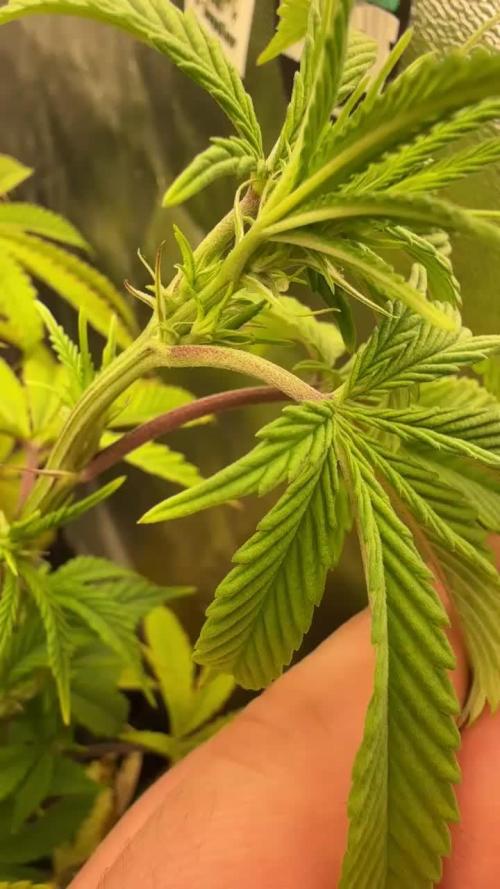
The Plants started exploding in growth these last two weeks and now after their first 9 days of flower they added another 10-15cm in height. i defoliated bellw the two scrog nets to focus more energy on the tops . they look very healthy and i hope we will see some purple hints soon. so far they started to produce buds quite quick now and i can see notable differences everyday. The next weeks will bring beautiful buds.
Likes
12
Share


@GizaWRZ
Follow
Girls start getting bigger :)
One of them it looks like will be finish soon 🤨 this week i will get microscope then i will check on her what trichomes are 🧐✌️


Likes
4
Share

@Colonel_oCoQ
Follow
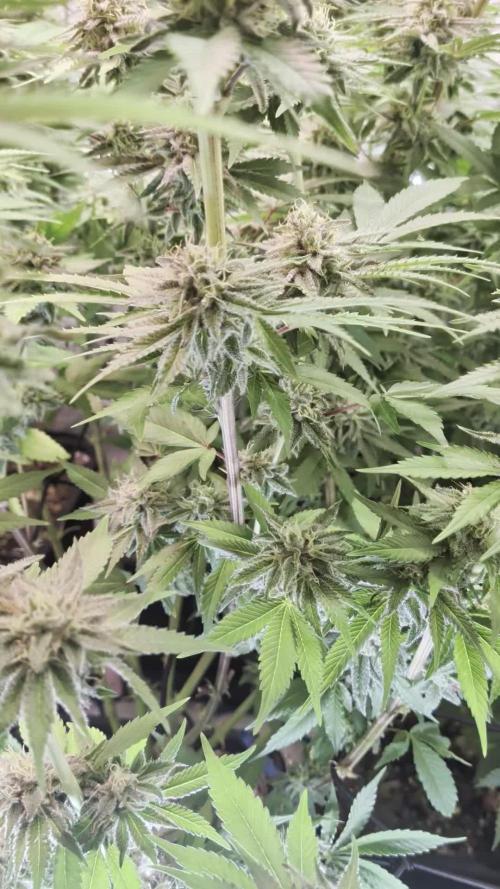
So we are in the last half of flowering and so far so good. EC 1900 and PH 5.7 in tank and until the finish of this week raising EC to 2.0-2.1.

Likes
10
Share


@HerrnLubitz98
Follow
Another closeup video for you guys, I know we all love them. Last photo is a little sneak peek of a tester, harvest will look crazy - promised. Smells like a fruit Tart with berries and Lemon, Persian pie absolutely killed it. Thank you Greenhouse seeds.

Likes
Comments
Share



Likes
11
Share

@TheCalyxLaboratory
Follow
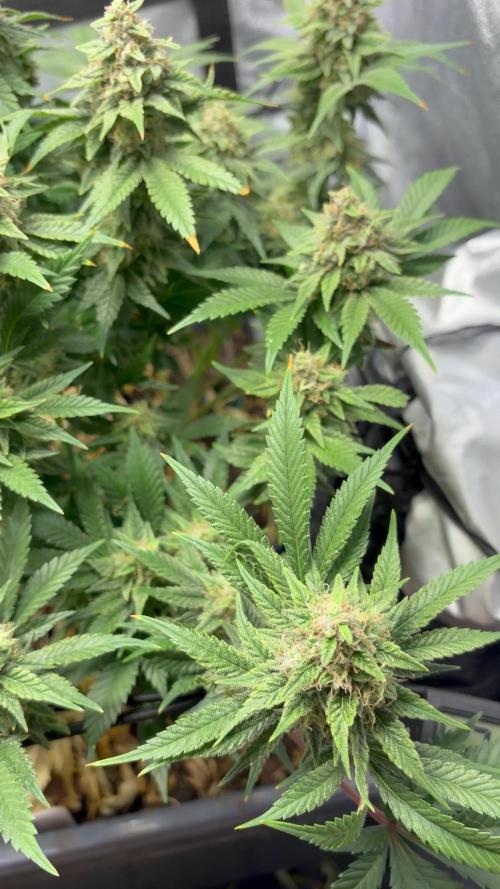
Day 50: Lemon Haze is screaming! 🍋🔊
The smell in the lab is insanely strong—pure citrus gas. ⛽💨 Buds are rock solid, now on a strict PH 6.3 water-only diet. 💧 Trichomes still clear; holding out for that milky peak! 💎🚀
Likes
55
Share


@Xpie77
Follow
💚Please Like This Diary and Leave a Comment!💚
pH @ 6.8 Plants grow nicely and are strong! No Nutritions until flowering start.
Red Wine was created by crossing Rozay F2 with Jet A. They are 2 very powerful aromatic Cali hybrids. This exclusive new Cali strain is a very strong and fast flowering indica-dominant strain. It has an aromatic, intoxicating and relaxing effect. That is comparable to enjoying a good glass of wine.
Red Wine has an average flowering time of about 7-8 weeks when grown indoors. Outdoors it is ready fairly early, usually around the end of September.
The yield is very good. Indoors she has an average yield of 450-650 gr/m². When growing outdoors, 600-800 grams can easily be achieved per plant.
Red Wine has an aromatic scent that can be compared to a full red wine. Her full, purple-green buds are very compact with few leaves. This is very convenient when cutting the plants and saves a lot of time. Smoking this weed gives you a nice high with relaxing properties. The taste of Red Wine is very fruity sweet with an aroma of red grapes.
Flowering time: 7 – 8 weeks
Genetics: Rozay F2 x Jet A
30% Sativa, 70% Indica
Plant height outside: 100 – 180 cm
Outdoor harvest month: from June to October
Yield indoors: 450 – 650 gr/m²
Yield outdoors: 200 – 800 gr / plant
THC: 25%
💸💸💸Wanna Try Red Wine from Seeds Genetics?💸💸💸
https://seedsgenetics.nl/product/red-wine-gefeminiseerd/

Likes
17
Share


Processing
Likes
26
Share


@rhodes68
Follow
8/17 Week 5 Flipping
Lights set to 11-13 for the first few days then 12-12
Nuets will transition accordingly
Took 2 cuttings from her for clones
Reducing feeds to once a day during the switch
Intro Cocotek Bloom a/b at 5ml/gal each
Reduce Grow to 10ml/g each
Next feed half and half
8/19
Switching to 12-12 from 11-13 think its done its work changes are afoot
8/20
Colas forming quickly may have to flip the week to Flower, lets hope so 😉
They getting a dose of Kangaroots 5ml/g and Fish Shit 2ml/g at intervals during transition purely as plants seem to need.
Pics tonight
8/21
Not there entirely yet but wont be long at all
Vertical growth has picked up strongly, 2" in 3 days, though I really wont call it stretch yet
Continued light defoliation keeping center clear
Nuets as is for now

Processing
Likes
7
Share


@Laplantadelpie
Follow
dia 21
•se seleccionan 16 plantas
•se realiza transplante a macetas de 11 litros
•riego foliar con acidos humicos y aminoácidos
•se instala el riego por goteo
Likes
19
Share


@GoldenWeedGrower
Follow
Legend
Timestamp: 📅
Measures: 🛠️
Water: 🌊
Actions: 💼
Thoughts: 🧠
Events: 🚀
________________________________
📅 D43/F04 - 05/10/23 - ,
🛠️ EC 1.1 pH 6.4
🌊 Added 2L of water and nutes
💼 Big Defolation
🧠
🚀
________________________________
📅 D44/F05 - 06/10/23
🛠️
🌊 RES Changed 💦💦💦
💼
🧠 I'll let her run pure water 'til tomorrow
🚀
________________________________
📅 D45/F06 - 07/10/23
🛠️ EC 1.1 pH 6.5
🌊 New water
💼 Defolation and HST on the litte one
🧠
🚀
________________________________
📅 D46/F07 - 08/10/23
🛠️ EC: 1.1, pH 6.4
🌊 Added 5L of water and nutes
💼 LST and defolation on the little one
🧠
🚀
________________________________
📅 D47/F08 - 09/10/23
🛠️ EC1.2, pH 6.4
🌊 Added 3L of water and nutes
💼 Increased EC from 1.1 up to 1.2 adding only B52. Made a Timelapse of the little one
🧠
🚀
________________________________
📅 D48/F09 - 10/10/23
🛠️ EC: 1.3 , pH 5.5
🌊 Added 4L and nutes
💼 Eliminated lot of sprouts of the little one and lollipopping on the big one. Added water and raised EC up to 1.3 from 1.1
🧠 Very hungry and thirst girls. pH decresead drastically and it can be a problem
🚀
________________________________
📅 D49/F10 - 11/10/23
🛠️ EC: 1.3 stable pH 5.1 decreasing
🌊
💼 Strouts cutted and LST on the little one. Also raised the lamp. No water added
🧠 The little one is ready to bloom, I need to change the water and put bloom nutes, also to support the big one. I think I'm going to do it tomorrow or in a couple of days
🚀

Likes
10
Share


@JeyGanesha
Follow
Anche questa stokers seeds Panty punch auto.non vedo l'ora di provarla ha in profumo squisito, deliziosa....la prenderei a morsi🤤😂😂😂😂😜💪

Likes
69
Share


@nonick123
Follow
Día 87 (26/08) Aplicación foliar de Bacillus thuringiensis a 1 g / litro para evitar a las temidas orugas de los cogollos!
Hace un día nublado (29 ºC de maxima) y NO es necesario regar
Elimino la malla de sombreado de la cara sur, ya que las temperaturas son más suaves después de la canicula
Día 88 (27/08) Riego con 500 ml H2O pH 6,5
Empiezan a bajar las temperaturas a 29 ºC de máxima, y se nota en la demanda de agua por parte de las plantas!
Día 89 (28/08) Riego con 500 ml H2O pH 6,5
Cada planta empieza a ir un poco a su marcha en la demanda de riego dependiendo de su tamaño y estado de floración
Día 90 (29/08) Riego con 250 / 500 ml H2O pH 6,5
He detectado un gusano de los cogollos muerto sobre una hoja! 💥 Parece que los Bacillus thuringiensis funcionan estupendamente! 😁
Día 91 (30/08) Riego con 250 / 500 ml H2O pH 6,5
Día 92 (31/08) Riego con 1 litro H2O pH 6,5 + 25 ml de Humus de Lombriz Liquido
Día 93 (01/09) Aplicación foliar Bacillus Thuringiensis
No es necesario regar tras el litro de ayer y dia nublado con pequeños chubascos!
💦Nutrients by Lurpe Solutions - www.lurpenaturalsolutions.com
🌱Substrate PRO-MIX HP BACILLUS + MYCORRHIZAE - www.pthorticulture.com/en/products/pro-mix-hp-biostimulant-plus-mycorrhizae
Likes
8
Share

@Dendegrow
Follow
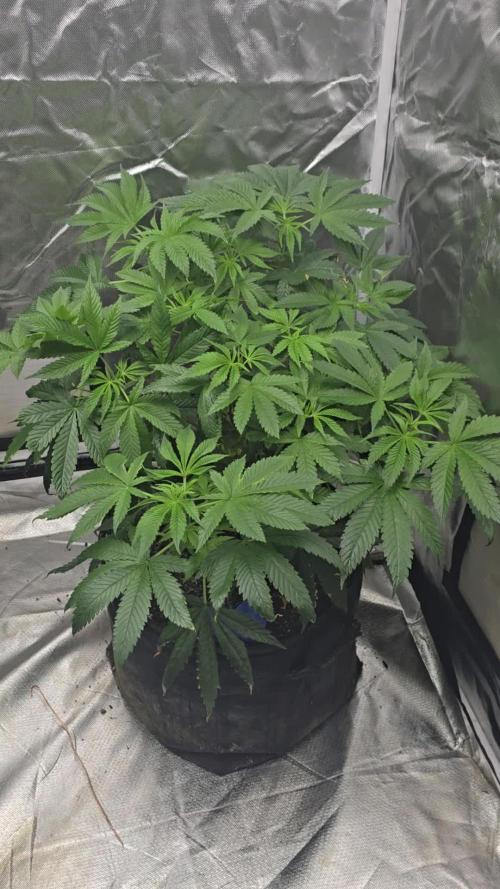
👹 MonsterMarker – Week 7 | Flowering Start 🌸
This one is a real beast! 🚀 The roots are the most explosive of all my plants – absolutely insane growth underground 🌱. On top, she’s very stocky and strong, which makes me think there’s a lot of Indica genetics in her 🍃💪.
The smell is already super nice – deep, rich, and very promising 🌿💨. She feels like she’s building the foundation for some serious flowers.
Can’t wait to see how this monster evolves – follow along, it’s going to be fun 👹🔥.
---
👹 MonsterMarker – Woche 7 | Blütebeginn 🌸
Das hier ist echt ein Biest! 🚀 Die Wurzeln sind von allen Pflanzen am krassesten gewachsen – richtig verrücktes Wachstum unter der Erde 🌱. Oben ist sie dagegen sehr stämmig und kompakt, was stark nach einem hohen Indica-Anteil aussieht 🍃💪.
Der Geruch ist schon jetzt richtig gut – tief, reichhaltig und sehr vielversprechend 🌿💨. Man merkt, dass sie gerade die Basis für dicke Blüten aufbaut.
Bin gespannt, wie sich dieses Monster entwickelt – bleibt dran, das wird spannend 👹🔥.
