


Likes
Comments
Share


@Colo420
Follow
Atrasados con el seguimiento debido a las vacaciones pero aquí regresamos!!
Proximamente 6 comienzan su flora en exterior y 2 en interior


Likes
47
Share


@AsNoriu
Follow
Day 85 since seed touched soil.
Trim jail !!!
More than 2 meters of hanging buds , a bit airy, but amazingly smelly !!!
Happy Growing !!!

Likes
2
Share


@Thatguysbudz
Follow
Transplanted all to 15 gallon pots. All looking good started seeing new growth very quickly. They seem like very happy plants. Next week the new tent comes in and the new lights

Likes
1
Share


@Ultraviolet_
Follow
Turned off IR @ nights
Red wigglers (Eisenia fetida) are highly beneficial. They are considered an ideal choice for "no-till" or container-based organic growing because they live in the upper layers of soil, feeding on organic mulch rather than the plant's root system. Red wigglers accelerate the breakdown of organic amendments and produce high-quality, nutrient-dense worm castings directly in the root zone. Clover is another exceptional component of an organic rhizosphere, offering a sustainable, self-sustaining alternative to synthetic nitrogen fertilizers produced via the energy-intensive Haber-Bosch process. By forming a symbiotic relationship with Rhizobia bacteria, clover converts atmospheric nitrogen N2 into ammonium NH4, providing a steady, slow-release nutrient source that enhances soil health and reduces environmental impacts. Red clover offers superior nitrogen fixation and biomass production compared to white or yellow clover, making it the premier choice for maximum soil vitality, particularly for improving soil structure and providing a high-volume nitrogen credit for subsequent crops.
If it is fully functional and efficient soil, the rhizophagy cycle is far superior long-term than any synthetic delivery when it comes to preventing deficiencies, not because it's "better," per se. The medium will require a very high CEC to make it to harvest without re-fertilization. The rhizosphere acts as a dynamic, interactive exchange where plants and soil microbes trade resources based on immediate needs. When a plant lacks a specific nutrient, it changes its physiology and releases specialized chemical cocktails—root exudates—into the surrounding soil. These exudates, which include sugars, amino acids, and organic acids, serve as a "shopping list" to attract specific microorganisms, which in turn return higher levels of desired nutrients. There is nothing in comparison to synthetic delivery, which causes plants to stop producing exudates, effectively "starving" the beneficial soil life, over time turning the soil barren and void of microbial life. Responsible use, applying the right amount at the right time, can minimize these negative effects. Relying solely on synthetic fertilizers without replenishing organic matter is what typically leads to exhausted soil. The use of synthetic fertilizers can utilize the Cation Exchange Capacity (CEC) of the soil, but without a robust rhizosphere and active microorganisms, the efficiency of this process is significantly reduced. This makes synthetic growing more difficult to prevent deficiencies overall compared to an efficient organic living soil with a robust rhizophagy cycle, as there is no "one size, fits all" when it comes to different nutrient profiles of strains/genetics, making it trickier to "guess" and prevent creeping deficiencies.
CEC does not contribute towards EC. Add more CEC using biochar, problem solved. If you keep pH between 6.3 and 6.7, hydrogen is exudated to cycle the medium's CEC for its needs. Keeping the pH between 6.3 and 6.7 creates an environment where plants release H+ to displace positively charged nutrients (like Ca2+, Mg2+, K+ held on soil particles or within artificial media this cycle through nutrients via the medium's Cation Exchange Capacity (CEC)
Microorganisms generate a stable potential of approximately 0.5 V EC. The rhizosphere creates its own food, similarly to chelation, using 1000's of varying combinations to create its own food.
Start to finish, just add water. Eventually, more materials will need to be added at the beginning of each new grow, but very attainable to go from seed to harvest without ever fertilizing, regenerative cultivation.
ATP is king above all else when it comes to biomass accumulation. Cellular root respiration and cellular respiration are essentially the same biological process, the breakdown of glucose to create usable energy (ATP) in the presence of oxygen, just taking place in different parts of the plant. Synthetic (salt-based) grows have significantly lower levels of total rhizosphere respiration, often referred to as root-zone activity, compared to organic living soil grows. While the plant roots themselves may respire in both systems, the surrounding soil ecosystem in a living soil setup is vastly more active, teeming with bacteria, fungi, and beneficial microorganisms.
2 pools of ATP, it won't double in growth buuuut, but improving root respiration by ensuring high oxygen in the soil is crucial. Good aeration ensures roots can fully utilize glucose to generate the ATP necessary for nutrient uptake, leading to healthier and more productive plants, even if growth isn't exactly doubled. The ATP created using root respiration is dedicated to rootzone growth; the ATP created using regular cellular respiration in a synthetic system would have to dedicate a lot of ATP to the roots when there is little or no root respiration. It's true that there is less of an initial ATP cost in breakdown when nutrients are already in their final form (synthetic), but you lose a solid chunk of ATP when the entire plant is reliant on cellular respiration alone; a large portion of ATP is dedicated to root zones for "forced" (active) nutrient uptake. Making it overall less efficient, even if the initial cost of breakdown is higher. If that makes sense. Oxygen is of critical importance when growing in living soil compared to synthetic methods because it supports the metabolic needs of the microbial, fungal, and insect ecosystem, rather than just the root respiration required by the plant itself. While synthetic grows can survive in lower-oxygen environments with precise mineral feeding, living soil systems rely on aerobic microbes to decompose organic matter (microbial mineralization) to create plant-available nutrients, which is an oxygen-intensive process. While a specific fair percentage is difficult to guess, my experience points to a massive, compound difference between the two methods and the amount of oxygen required. All the ATP spared is used on more biomass, not only that, but the extra root respiration can achieve a much higher CO2 compensation point naturally than you could with synthetic and atmospheric CO2 alone.
As a plant grows faster and increases in size, its demand for nutrients to support that growth increases, requiring a higher rate of nutrient uptake. As plants enter phases of rapid vegetative/floral growth, their metabolic demand for nutrients increases exponentially. Without a robust buffer zone—whether in the soil (cation exchange capacity) or in a hydroponic reservoir—deficiencies will occur rapidly because the instantaneous demand for specific nutrients can quickly exceed the rate of supply.
A growing body of evidence suggests that organic living soil provides superior long-term soil health and environmental benefits compared to synthetic fertilizers, which are often criticized for promoting a cycle of dependency and degradation. While synthetic fertilizers offer short-term convenience and high yields, they often come at the expense of long-term soil health, sustainability, and increased corporate control over growers/ farmers. Organic living soil, while slower and requiring more care to establish, creates a sustainable, resilient, and, ultimately, more fertile environment.
We don't grow; we facilitate energy conversions.
Once all water is removed, approximately 95% to 97% of a plant’s dry matter consists of carbon, oxygen, and hydrogen. These three elements form the structural backbone of all plants. Corporate interest sells you the other 3-5% NPK & all the rest in RATIOS! Why not throw the 3-5% in a pot, and focus your energy on the other 95-97%?
Indigenous Amazonians created, or at least significantly enhanced, the fertile, dark soil known as Terra Preta de Índio (Portuguese for "Indian Black Earth") by incorporating biochar and other organic materials into the soil. This anthropogenic (human-made) soil technique, which dates back roughly 2,500 to 8,000 years, allowed ancient civilizations to flourish in regions with naturally poor, acidic, and nutrient-poor tropical soils.

Processing
Likes
4
Share


@TehSnow
Follow
Finally the cold front has arrived and temps dropped considerably into comfortable levels 22-26 which are perfect for flowering. You can have high temps if you have enough fans blowing at the plant buzt the increčased perspiration can kill your plants through a nutrient burn as they have to take up more water from the res.

Likes
94
Share


@love_2_grow
Follow
Earlier in the week, I saw a discolored bud, and upon closer inspection, I found bud rot. Ugh. I immediately cut off the infected bud and the one closest to it.
I looked through the canopy but couldn't see any more affected buds.
Right after, I went out of town for a few days to Mary Jane, the big Cannabis Conference in Berlin.
It was the first one after legalization, and it was wild. I had an awesome time, and it was great to meet up with friends while in Berlin.
What wasn't so great was seeing more signs of budrot when I returned home—those days of +85% humidity at the start of last week made the botrytis go brr. Sigh :(
Checking the trichomes showed it was still early to harvest, but I decided to chop anyway to save the unaffected buds.
I also decided to hang each branch separately, as it would allow me to inspect each one closely to ensure no affected buds made it into the drying tent. Another reason is to decrease the drying time. Usually, I prefer a long dry, but due to botrytis, I aim to speed up the process.
Overall, I found 12-15 affected buds, and of course, they're always the nicest-looking buds.
I don't care about the yield loss, as more than enough is still left. I only hope the remaining buds are unaffected, and I'll inspect them daily throughout the dry.
Now we wait. And hope.


Likes
75
Share


@Jef79
Follow
PEV SEEDS
TROPICANA COOKIES
Genetics - Tropicana Cookies X OG Kush Auto
Phenotype - 40% Indica/ 30% Sativa/ 30% Ruderalis
Indoor production - 17.6 oz/3x3ft
Outdoor production - 1.76-5.3 oz/plant
Crop cycle since germination - 80 days
Features - Beginners
Effects - Relaxing
THC - 17%
CBD - 0.8%
CBG - 0.2%
Flavor and aroma - Fruity,Lemon
Symptoms - Stress
Very nice auto strain.. Grew up the tallest in the tent with lots of long colas from all branches.. Nugs came out very tight and she dryed out the quickest of them all in around 9days..no problems with her throughout grow but a bit of lst on her main cola would of been better because of her preflower stretching.. Very pungent smelling flowers that have a very deep aroma similar to cheese strains.. Nice smooth smoke with a tickle in the nostrils on exhale.. Good for days or night times.. Not a stealth smoke as she stinks like pungent cookies&cheese when burning!.. The only reason she received 8stars was because of the cheese resemblance (its a strain im tired off) and its not really my cup of tea.. For the majority of people im sure they would enjoy this plant..
https://www.viparspectra.com/?aff=454&utm_source=affiliate
https://partners.viparspectra.com/create-account?ref=454
Coupons -
code: Itxsgdvip
code: JEF
https://www.amazon.com/dp/B08CHCFCG1?ref_=ast_sto_dp


Likes
11
Share


@420DeepGrow
Follow
Gracias al equipo de MSNL Seeds y XpertNutrients sin ellos esto no sería posible.
💐🍁 CBG SOUL FEMINIZED:
CBG Soul es un híbrido rico en CBG con una proporción Indica/Sativa 50/50, creado por sus efectos calmantes y relajantes. Sus sabores dulces, limón y cítricos se complementan con terpenos limoneno y mirceno, ofreciendo una mezcla única para el alivio y disfrute terapéutico.
🚀🌻 Consigue aqui tus semillas:
https://www.marijuana-seeds.nl/cbg-soul-feminized-seeds
🍣🍦🌴 Xpert Nutrients es una empresa especializada en la producción y comercialización de fertilizantes líquidos y tierras, que garantizan excelentes cosechas y un crecimiento activo para sus plantas durante todas las fases de cultivo.
Consigue aqui tus Nutrientes:
https://xpertnutrients.com/es/shop/
📆 Semana 5:
Definitivamente se ha adaptado muy bien a su hábitat natural, voy con dosis muy suaves de nutrientes ya que ellas tienen prácticamente todo lo que necesitan. El canto de las aves la pone feliz.
Poco que agregar, buen sol y buen tiempo 😍
Processing
Likes
13
Share


@GrowGuy97
Follow
1 of the bubba kush & 2 of the gorilla zkittlez are a little behind but over all everything seems to be going good so far!
Day 10 update transplanted all the ones in smaller pots to 5 gallon pots except 1 of the bubba Kush it still needs a few more days! Everything else seems to be going great!


Processing
Likes
10
Share


@eltiiocultiveta
Follow
Desgraciadamente el cultivo se quedó estancado en altura y demás. Estoy decepcionado pero la próxima saldrá mejor, no haré tantas podas y quizás cultive automáticas para cosechar rápido

Likes
14
Share


@CookiesAndCake
Follow
Week 17
Day 113 (04/12/2020)💧:
Nice start to the week with a watering. Just as last week, I will be giving them the increased nutrients until the flush. So today I gave them 1.5ml of BioGrow, 6ml of BioBloom, and 6ml of TopMax.
Day 114 (05/12/2020):
The trichomes were looking beautiful today! (really hard to take close of pictures of them though). You can see in the pictures that some are getting more amber now which is a great sign that the girls are almost ready 🌸
Day 115 (06/12/2020):
Took a quick pic of the tent but didn’t have much time to check the girls properly. I’m sure they are great as always 👌
Day 116 (07/12/2020)💧:
I watered the girls today with the same nutrients: 1.5ml of BioGrow, 6ml of BioBloom, and 6ml of TopMax. The buds on this girl are looking super dense and even the ones at the bottom are getting bigger! I hope that this 6ml of TopMax will fatten them up even more in the next few weeks before harvest 😄
Day 117 (08/12/2020):
Didn’t have time to take pictures today actually
Day 118 (09/12/2020):
I’ve gotta say that their smell is definitely evolving in a more “mature” direction and they are starting to smell less like citrus and a bit more earthy and spicy. Really incredible!
Day 119 (10/12/2020)💧:
Watered the girls today with the same nutrients as last time giving them 1.5ml of BioGrow, 6ml of BioBloom, and 6ml of TopMax. They are both doing well but again some of the leaves and stems at the bottom were definitely a bit sad and wilting. But nevertheless, I took some videos and close-up pictures and they look incredible. Their red tint is definitely developing more and more, which is especially noticeable when I take close ups. Also looking from their trichomes, there are some amber ones already so I am thinking to even start the 2 weeks flush from next watering onwards and prepare for harvest! Will assess the trichomes in a few days and decide.
Likes
18
Share


@Staffedition
Follow
Привет друзья. Моей растихе сегодня 129 дней
Сегодня температура упала до +8°
Буду делать сверху водяное отопление) а то так дело не пойдёт зимой)
20.10 перевёл свет в режим 12/12
Шишки наливаются)
Начал применять LST технику на 19 дне, а 18 августа добавил ДЕФОЛИЗАЦИЮ
С 20.08 ДЕФОЛИЗАЦИЮ делаю каждые 3,4 дня
С 20.08 LST технику делаю каждые 4.6 дней
На сегодняшний день влажность 54%
5.09.2023 заметил высокий Ph 7.9
С 48 дня Ph не ниже 5.8
На сегодняшний день Ph 6.0
Начал кормить с 60 дня Canna Terra Vega
PPM 870
Всем мира и добра!
Не забудь поставить лайк❤️, если понравилась как прошла неделя
И читайте наш TELEGRAM: https://t.me/smail_seeds
#Smail_Seeds 😀
Likes
11
Share


@StartGrowingShxt
Follow
Week 10
November 11
- Looking good need to up the calmag as the leaves are looking weird again like in early veg
-Will be defoliating at 21 days of flower so bout the end of this week
-flowers and bud site are looking good and flowers are forming well
- had one clone survive outta four but it’s all good at least one survived
-Will good a good top and bottom watering later this week

Likes
10
Share


@RivenWaters
Follow
Starting 7 seeds, only six made it to the solo cups. ETHOS genetics seeds are ; Planet of the Grapes 55ind/45sat, Cotton Candy Grapes 70/30, Grape Diamonds 50/50, Apex Kush 90/10, and Skunk Hero x Afghgan Kush 100/0 ; DNA Genetics seed, Cataract Kush 99/1 Ind. dom.


Likes
25
Share


@pifflestikkz
Follow
Day 45
17/08/24 Saturday
Another watering today using de-chlorinated tap water pH 6 only.
Lemon skittles and XXL ammo are tall, bud nice and smelly plants!
The Kabul is more of a dense compact build, I'm excited to see what they grow into 😍
Picture and video update ✌️ 💚
Day 48
20/08/24 Tuesday
Feed today using de-chlorinated tap water pH 6. With Plagron PK13-14 and power buds.
Noticing the stretch stop, and now packing out there bud sites 💪💚
Vid + pic update ✌️💚


Likes
6
Share
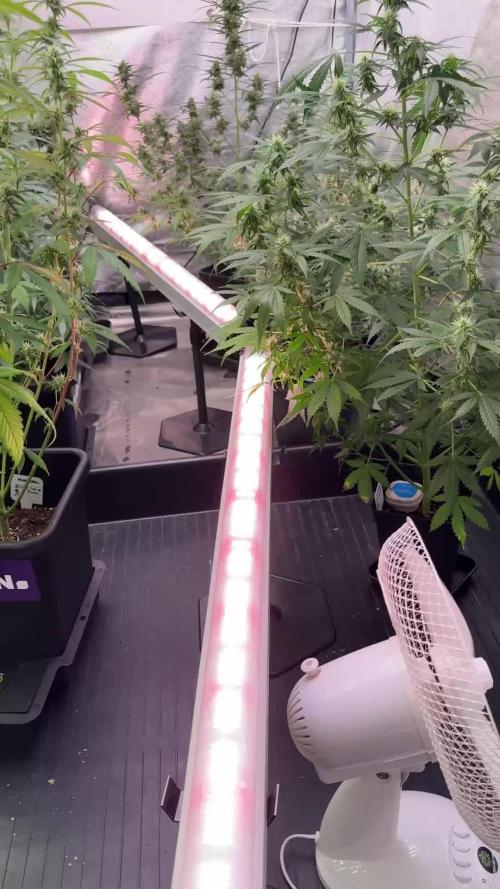

@DogDoctorOfficial
Follow
🌸 Pink Rosay Auto by Zamnesia | Pheno A | Week 9
💗 Small Plant. Massive Presence. An Absolute Beauty.
There are plants that are big.
There are plants that are tall.
There are plants that fill every available centimetre of a tent.
And then...
there are plants like Pink Rosay Pheno A.
She's something different.
She's small.
She's compact.
She's incredibly dense.
And somehow, she manages to carry an absolutely ridiculous amount of flower for a plant of her size.
Every time I look at her, I find myself thinking the same thing:
How did all of that fit into this little plant? 😂💗
This girl continues to impress me.
Not because she's trying to compete with the giants around her.
Not because she's stretching toward the ceiling.
But because she has taken her relatively small frame and turned almost every available centimetre into productive flowering structure.
And honestly...
few plants are like this.
At least, few plants I've had the pleasure of growing.
She's compact in size.
But she is absolutely not compact in personality.
🌸 Week 9 – She's Still Radiant
Pink Rosay continues moving beautifully through flowering.
The plant remains around 111 cm, but that number really doesn't tell the story.
Height is only one measurement.
Look at the flowers.
Look at the density.
Look at the way the buds occupy the structure.
Look at the proportion between the plant itself and the amount of flower she's carrying.
That's where this girl becomes special.
The flowering sites have developed into substantial, clearly defined flowers, with impressive structure and increasingly mature-looking resin coverage.
The calyxes continue swelling.
The pistils are changing as the flowers progress.
And the overall appearance is becoming increasingly impressive.
She's not simply producing flowers.
She's packing them in.
And she's doing it beautifully.
💗 Small Frame. Huge Flower-to-Plant Ratio.
This is probably the characteristic I appreciate most about her right now.
Pink Rosay has one of those structures where you can immediately see how much of the plant is dedicated to flowering.
She's compact.
But the flowers are large relative to the plant.
The branches aren't disappearing into endless stretches of empty space.
Instead, they're carrying substantial flowering structures throughout the canopy.
The result is something I find incredibly satisfying to look at:
a small plant with an enormous flowering presence.
It's almost like someone took a much larger plant and compressed it.
😂
And that's exactly why I keep calling her special.
You can find tall plants.
You can find massive plants.
But finding a plant that remains this compact while developing this much flower relative to her overall size?
That's something I really appreciate.
🌿 The Beauty Is in the Structure
The structure is another thing that continues catching my attention.
She's dense, but she doesn't look chaotic.
The flowers have their places.
The branches support them.
The foliage surrounds the developing buds.
And the whole plant has that feeling of everything working together.
There's a real sense of balance here.
That's important.
Because density by itself isn't necessarily impressive.
A plant can be dense simply because everything is crowded together.
Pink Rosay is different.
She has organized density.
Her compact structure has become a framework for the flowers rather than simply a mass of foliage.
And after the selective defoliation we performed previously, the plant has continued developing beautifully.
We didn't strip her.
We didn't try to expose every single flower.
We simply opened areas where necessary and then stepped back.
And now...
we let her do what she does best.
Build flowers.
✂️ After the Defoliation – Now We Watch
The selective flowering defoliation from the previous week has now become part of the story.
Some foliage was removed where it was contributing to unnecessary congestion, while plenty of healthy leaves were deliberately left behind.
That distinction remains important to me.
I'm not interested in making a plant look naked.
I'm interested in making the canopy functional.
And Pink Rosay still has plenty of green.
The remaining leaves are working.
They're capturing light.
They're supporting photosynthesis.
They're feeding the developing flowers.
And the plant is responding exactly how I hoped she would.
So this week?
No need to reach for the scissors again.
She's beautiful.
She's balanced.
She's developing.
Leave her alone.
Sometimes cultivation is knowing when to intervene.
Sometimes it's knowing when to stop.
Right now, I think Pink Rosay is telling me very clearly:
"I've got this."
😂💗
❄️ The Flowers Are Becoming Serious
The flowers are now entering a really exciting stage.
They're no longer just developing structures.
They're becoming proper flowers.
The calyxes are becoming more pronounced.
The pistils are beginning to change.
The buds are gaining density and volume.
And the resin continues to become increasingly visible.
When you look closely at the photographs, there is so much happening.
Every flower has layers.
Pistils crossing through the developing structures.
Calyxes stacking around one another.
Sugar leaves emerging through the flowers.
And resin covering the surfaces.
This is where the plant starts becoming more than just a green plant under a light.
The architecture you spent weeks watching develop is finally turning into the thing you've been waiting for.
Flowers.
And Pink Rosay is producing some beautiful ones.
📸 A Photographer's Dream
This girl is also becoming incredibly enjoyable to photograph.
Her structure gives you the wide shots.
Her compact frame tells the story.
But then you move closer...
And suddenly the entire image changes.
The flowers are full of texture.
The pistils create those beautiful fine lines.
The calyxes create layers.
The resin catches the light.
And the surrounding leaves provide that deep green background.
It's one of those plants where I can understand why macro photography and growing became so connected for me.
You can photograph the whole plant...
and then spend another hour looking at one flower.
There's always another detail.
Another texture.
Another little piece of biology happening right in front of the lens.
And Pink Rosay is giving me plenty to photograph.
💡 Eating Photons
The lighting system remains unchanged.
The Future of Grow Black Series LED continues providing the primary overhead illumination, with the Lumiflora under-canopy lighting adding another layer of light into the lower portions of the garden.
And Pink Rosay is clearly making use of the available energy.
The plant has plenty of flower structure.
The foliage remains strong.
And the flowers continue progressing.
This is another reason I like having different phenotypes growing together.
The environment gives them the opportunity.
But their genetics decide what they do with it.
Some plants turn that opportunity into height.
Some into branches.
Some into enormous individual flowers.
Pink Rosay seems to have chosen:
"I'll just make everything count."
And I love that.
🌿 The 8×8 Perspective
When I step back and look at the entire 8×8 Adventure, Pink Rosay becomes even more interesting.
There are plants around her that are significantly taller.
There are plants that occupy much more physical space.
There are plants that look enormous from across the room.
And then there's this little powerhouse.
Standing there at around 111 cm...
covered in flowers.
It's a perfect reminder that comparing plants purely by height doesn't make much sense.
A plant's potential isn't measured by the ruler alone.
It's in the architecture.
The density.
The flower distribution.
The health.
The efficiency of the canopy.
And ultimately...
what she gives you at the end.
And Pink Rosay is giving me plenty of reasons to be excited.
💧 Feeding & Environment
The current program continues consistently:
🌱 Plagron Terra Bloom — 2.2 ml/L
🌿 Plagron Power Buds — 1 ml/L
✨ Plagron Green Sensation — 1 ml/L
🍯 Plagron Sugar Royal — 1 ml/L
⚗️ Lemon Kick / pH adjustment as required
Current recorded conditions:
🌸 Flowering: Week 9
📏 Height: 111 cm
💡 Light schedule: 12/12
🌡️ Day temperature: 29°C
🌙 Night temperature: 25°C
💧 Relative humidity: 60%
⚗️ pH: 6.0
⚡ EC: approximately 2.0 mS/cm
🌡️ Solution temperature: 25°C
🌱 Substrate temperature: 26°C
🌬️ CO₂: 529 ppm
? Pot size: 15 L
💦 Watering: approximately 1.4 L per plant / 24h
Nothing dramatic needs changing.
The plant is progressing.
The environment remains stable.
The flowers are developing.
So we stay consistent and let the biology continue doing the work.
🌬️ Density Means Attention
Because Pink Rosay is so compact and flower-dense, environmental management remains something I pay close attention to.
The more compact the flowering structure becomes, the more important airflow and general cleanliness become.
That's not unique to Pink Rosay.
It's simply part of managing a dense flowering canopy.
And this is also why the work we did previously wasn't simply cosmetic.
Opening selected areas can give light and air better pathways through the structure.
But again...
there is a balance.
I don't want to destroy the very thing that makes this phenotype special.
Her density is part of her identity.
So we're managing it rather than fighting it.
💗 Phenotype Spotlight – One of the Special Ones
I think I'm finally comfortable saying this:
Pink Rosay Pheno A is one of those plants that doesn't come around every day.
Maybe I'm biased.
Of course I am. 😂
I've been watching her develop for weeks.
I've photographed her.
I've watered her.
I've watched her change.
I've watched the flowers develop from tiny early structures into what we're seeing now.
So yes...
I'm attached.
But even objectively looking at her structure, there's something unusual about the relationship between her size and her flowers.
She's small.
She's compact.
She's balanced.
And yet she's carrying an enormous amount of flowering structure for that frame.
That's what makes her interesting.
Not simply that she's beautiful.
It's how she's beautiful.
And that's the difference.
🔭 Where Is She Going?
This is the question now.
And honestly...
I don't know.
That's what makes it exciting.
She's progressing quickly.
The flowers are developing beautifully.
The pistils are changing.
The calyxes are swelling.
The resin is becoming increasingly apparent.
And the structure is already impressive.
But there's still a story left to write.
How much more will those flowers swell?
How much more density will they gain?
How will the resin develop?
How will those compact colas finish?
And ultimately...
what will this little powerhouse look like when she decides she's finished?
I'm very curious.
Because if she continues on this trajectory...
she could be something really special.
❤️ Final Thoughts – Let Her Shine
Pink Rosay Pheno A has officially reached the point where I don't think I can call her simply "the small plant" anymore.
She's small.
Yes.
But that's almost irrelevant now.
Because look at what she's carrying.
Look at the flower-to-plant ratio.
Look at the structure.
Look at the density.
Look at the development.
Look at those flowers.
This is one of those plants where the ruler tells one story...
and the camera tells another.
The ruler says:
111 cm.
The plant says:
"And?" 😂
Because she doesn't need another 50 centimetres.
She has already done an incredible job with the centimetres she has.
She's compact.
She's dense.
She's balanced.
She's beautiful.
She's developing some seriously impressive flowers.
And every week, I find myself liking her more.
So this week, I'm not going to ask whether Pink Rosay might surprise us.
I'm going to say something much simpler:
She already has.
And now I'm just curious to see how far she can take it.
This little lady has earned her spotlight.
Not because she's the biggest.
Not because she's the tallest.
But because she has managed to turn a small frame into something that feels absolutely enormous.
Pink Rosay Pheno A.
Small plant.
Huge flowers.
Beautiful structure.
Exceptional presence.
And one hell of a personality.
💗🌸❄️
🙏 Thank You
A huge thank you once again to Zamnesia for these beautiful Pink Rosay genetics.
Thank you to Plagron for supporting the nutrition throughout the journey.
Thank you to Future of Grow for the Black Series lighting.
Thank you to Lumiflora for bringing the under-canopy lighting into this experiment.
Thank you to TrolMaster for the environmental control.
And, of course, thank you to everyone following the 8×8 Adventure on GrowDiaries.
Every phenotype has something different to teach us.
Every plant writes a different story.
And Pink Rosay Pheno A?
She's writing one of my favourites.
She's small.
She's compact.
She's absolutely packed with flowers.
And she's becoming more beautiful every single week.
So let's keep watching.
Let's keep photographing.
Let's keep learning.
And let's give this little powerhouse exactly what she deserves:
the spotlight. 💗✨
Until next week...
Small frame. Huge flowers. Let her shine.
Growers love and happy growing! 🌱💚🌸


Likes
10
Share


@AZMamaBear
Follow
In the beginning of the week she was standing a bit crooked. I will be mainlining soon and I want her central stem to be strong. So I tied her stem to a chop-stick to do a bit of low stress training prior to topping her.
Also hit the hydro store and picked up some Fishsh!t and Recharge. Added that, worm castings and some Down to Earth dry amendments to brew up a compost tea. Gave her a big sip on 3/4.
Likes
40
Share


@Chronicbastard
Follow
I switched over to 12 and 12 four days ago.i went out and bought the net so I'm about to get my Scrog on.i really don't have a lot to say.everything has ran smoothly.my ppm is kind of high but nectar of the gods is pretty gentle as long as you go by the feeding schedule. i have been feeding with my line up every other other feeding.then it's fish shit and herculean harvest and ph ro water to 6.4.