


Likes
Comments
Share


@brapzky
Follow
Weeks 6-7-8 should probably have been better controlled. I'll definitely control the heights better for the next grow.
I didn't defoliate, top nor supercrop. I'll do that for the next grow.


Likes
13
Share


@WeedM8
Follow
Hello m8 welcome to this journey with me in this diary will have very interesting strains hope u find something useful
Persian Girl 🏝️🧞♀️
- [ ] 1st week Veg: germinated in substrate lighting very close so it jets medium high humidity after the 3rd day they started sprouting
- [ ] 2nd week Veg: this week my ventilator broke down and as the temperature stayed very warm nothing developed much
- [ ] 3rd week Veg:fortunately this week i had fixed the ventilation and the temperature has go down a bit allowing the little plants to develop and reinforce
- [ ] 4th week:very good developments in this week I already started feeding a bit two times but i didn’t have to…once was enough
- [ ] 5th week Veg:this week they were very strong green i only had to water them good and keep the ventilators going no stop .They have good hight already ,but as i have to strains together. I want to transplant them when the hight of the other one have stretched… I’m thinking to transplant next week if not the next one Hello m8 welcome to this journey with me in this diary will have very interesting strains hope u find something useful
- [ ] 1st week Fl: first week of flowering they started stretching and looking very heal
- [ ] 2nd week Fl this week I’ve been away i had a friend taking care of them they stretching very well i hope that she starts putting energy into the flo
- [ ] 3rd week Fl
- [ ] 4th week Fl
- [ ] 5th week Fl
- [ ] 6th week Fl
- [ ] 7th week Fl
if this was useful please like and followk

Likes
5
Share


@Zeaiache
Follow
Pasamos a 12/12 el 1ero de sept, todas están hermosas, esperemos a ver cuanto se estiran para hacerle su defoliacion y pronto nos llegan juguetes de Grotek, por ahora el suelto está abonado lo suficiente para su preflora 😏

Likes
16
Share


@DreamIT
Follow
Sponsored by:
🎭ZAMNESIA SEEDS🎭-💡VIPARSPECTRA💡-💐GREEN BUZZ NUTRIENTS💐-🛠️WEDRYER🛠️
28/7 I took a clone and leave it a week of greenery before moving it to bloom, yeah
2/8 it has recovered very well from the cut and grows luxuriantly. soon she comes into bloom too
__________________________________________
Personal advertising (contains affiliate links)
__________________________________________
🦄Zamnesia boasts the most complete and accurate site where you can find everything related to cannabis and the "psychedelic" world. Autoflowering, feminized seeds, mushrooms, salvia divinorum, afrodisiacim of everything, and more! ( no affiliate link)
✅https://bit.ly/Zamnesiaseeds
__________________________________________
Did you know that Green Buzz Nutrients fertilizers are 100% vegan? A complete line of products ready to give the best to each of your plants! Visit the site and see my journals to see how they work 🦄
🤯 And with the code "dreami t" you will immediately receive a 15% discount on your purchases
✅https: //bit.ly/GreenBuzzLiquidsPro
__________________________________________
👀 Are you looking for a good lamp to start with? 👀
🌞Viparspectra has something more than the others, take a look at their site.
⏩ Use "GDVIP" for an extra discount or "DREAMIT3" for an extra 5 %% discount
👀 Search for it on Amazon
✅Amazon USA: https://amzn.to/30xSTVq
✅Amazon Canada: https://amzn.to/38udUVe
✅Viparspectra UE: bit.ly/ViparspectraUE
✅Viparspectra USA: bit.ly/ViparspectraUS
______________________________________________
🌈 Tired of blowing on your weed hoping it dries quickly? Check out the Wedryer website! You will find a well-made accessory that will help your weed dry in just 8-10 days without the annoying risk of finding mold or other annoyances! (no affiliate links)
✅https: //bit.ly/Wedryer_
______________________________________________
📷🥇Follow the best photos on Instagram 🥇📷
https://www.instagram.com/dreamit420/
Backup
https://www.instagram.com/dreamit4200/
🔻🔻Leave a comment with your opinion if you pass by here🔻🔻
🤟🦄💚 Thank you and good growth 💚🦄🤟

Likes
62
Share


@nonick123
Follow
Día 22 (11/11) Las plantas muestran pequeños puntos / zonas marrones pero... Don't panic! It's Organic!
Dejaré que el proceso del Super Soil de BioTabs siga su camino tal y como indica el manual de BioTabs!
Ajusto LST a CBD Auto 20:1 #2 aplicando una nueva atadura a la punta, que ya se estiraba hacia arriba 24 horas después! 💥😍
La idea es NO aplicar más LST y dejarla que crezca de forma natural a partir de ahora
Tal vez solo ir recolocando las ramas laterales para que no crezcan demasiado juntas, porque no quiero estresarla y que ralentice su crecimiento...
Día 23 (12/11) Subo a DLI 40
Pequeños ajustes de LST en las ramas laterales a CBD Auto 20:1 #2 para crear una estructura homogenea
No voy a volver a aplicar LST a la punta, voy a dejar que crezca de forma "natural" a partir de ahora
El resto de plantas están creciendo muy bien!
Riego con 750 ml H2O RO a CBD Auto 20:1 #2. El resto no necesitan riego
Día 24 (13/11) Riego todas las plantas con 750 ml H2O RO
CBD Auto 20:1 #2 se muestra sedienta y vuelve a necesitar 750 ml de H20 RO tras solo 24 horas desde el último riego!
Día 25 (14/11) Pequeños ajustes de LST en CBD Auto 20:1 #2
Parece que los puntos / zonas marrones se aceleran en todas las plantas excepto en CBD Auto 20:1 #1...
Día 26 (15/11) LSD-25 Auto & OG Kush Auto empiezan a mostrar muchas zonas marrones y las hojas inferiores se empiezan a retorcer...
Día 27 (16/11) Riego con 1 litro de H2O RO
El area técnica de BioTabs me confirma que lo que muestra las plantas es una quema de nutrientes... 😢
Su recomendación es regar SÓLO con agua la siguiente semana (hasta el día 35 por lo menos)
Día 28 (17/11) LSD-25 Auto & OG Kush Auto se muestran muy afectadas por la quema de nutrientes... Una pena porque estaban creciendo muy bien hasta ahora...
Después de hablar con BioTabs, parece que el error ha sido aplicar el Boom Boom Spray demasiado temprano (en día 21) cuando las plantas tenían suficiente nutrientes y acababa de añadir la 2ª (y ultima) Tab al sustrato...
Tengo que seguir aprendiendo que con el SuperSoil: MENOS ES MÁS, MENOS ES MÁS!
A seguir regando SOLO con agua los próximos días...
CBD Auto 20:1 #2 todavia no muestra el sexo (pre-flores)... es algo extraño...
💦Nutrients by Bio Tabs - www.biotabs.nl/en/
🌱Substrate PRO-MIX HP BACILLUS + MYCORRHIZAE - www.pthorticulture.com/en-us/products/pro-mix-hp-biofungicide-plus-mycorrhizae
"GDBT420" 15% DISCOUNT code for the BIOTABS Webshop https://biotabs.nl/en/shop/


Likes
5
Share


@jojopfoh
Follow
This is an easy strain to grow. I didn't have to use any LST. I am just waiting on some amber trichomes and I will chop.

Likes
43
Share


@The_Northern_Skunk
Follow
Well most of the autos have came into flower a couple are still slacking behind and the others are a week younger so i expect them to come into flower in the next week or so..

Processing
Likes
6
Share


@Ashbash
Follow
Not giving them Any nutrients now until chop which should be in a few days. Seeing lots of amber on the Royal Gorilla, not so much on the Green Gelato, but still present in small amounts.
2 days until 10 weeks total flowering.
Letting the plants fall and rest on the side of the tent isnt ideal, but its the only way i could have saved them from the heat.
Check out my stardawg diary for what heat can really do to a plant....gonna upload another week soon and there is HUGE damage to the plant that didnt auto.
These smell lovely anyway, cant wait to try them!
Likes
3
Share


@KushManAdam420
Follow
Lots of dropping leaves , day 55 gave 3ml/l of bloom booster to all . They seem very hungry
sour stomper 1 is super dense already
topped sky stomper is slowly gaining weight for sure

Processing
Likes
20
Share


@BudXs
Follow
Solo cup challenge continues to press along. Not much change, plants are in veg, growing and healthy. Still a few weeks before the flowers start so I hope to get a bit of size going before it does. Having fun and really like looking at the other entries in this contest.
Check out WildeWeed, Butterstotch and BeanswithPork, silky, larimar, fireman


Likes
3
Share
@Olduffybastard88
Follow
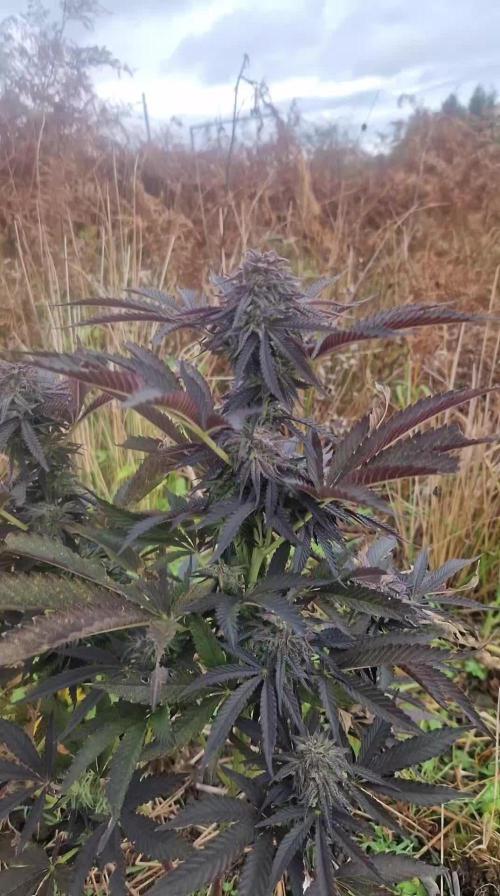
The black diamond from zamnesia was grown outside while the rest where inside the tent look how beautiful my black diamond turned out left all alone no feed or water for 5 months I returned to find this im in scotland so you know its very hard to grow out here
Processing
Likes
2
Share


@DIRTYKEG
Follow
Wow I love it so crazy and fun at this stage the defoliation was allot more work then I thought jeez..... but there looking beautiful but hope you like now I got to go defoliat the last 2...


Likes
67
Share


@AwfulBuddy
Follow
Last two weeks for these girls!
there is a visibile issue on leaves, I bet on nitrogen toxicity...
Lowered the feed and let it run until the final flush.
I dont see super duper fatty buds but I'm happy with it and wait for the weight of the harvest ...

Likes
21
Share


@gr3g4l
Follow
la semana empiezan mostrando un estado muy bonito y gozan de humidificador nuevo.
Primeras comprobaciones de temperatura y humedad con el humidificador al mínimo, como puede verse en la foto del dia antes, dia 15, apenas no ha cosumido nada de agua por lo que aumentaremos el caudal y tiempo en el temporizador analógico. Así aumentaremos también un poco más la humedad sin tantos altos y bajos
Pasados unos 5 dias volví a podar dejando únicamente un nudo por planta y un doblado de ramitas.
A los 21 dias volví a podar del primer nudo de cada rama, hojas y yemas.
Likes
11
Share


@Tygrows420
Follow
Week 8 of veg she is looking good and green she’s really starting to stretch.
Likes
2
Share

@Growfather2
Follow
Hello everyone,
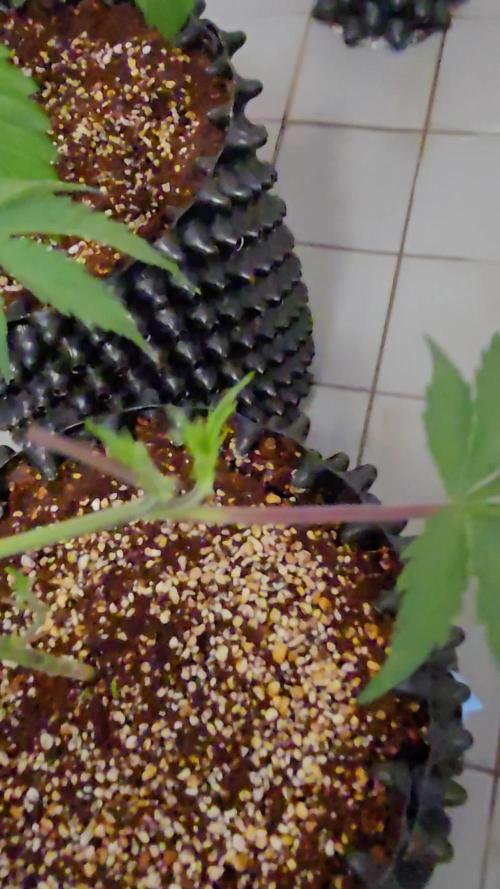
The peyote cookies are doing great they are topped multiple times and now it's a waiting game.
They need to grow in hight, i will remove all internodes and new leaves in the coming weeks and keep topping them.
Thanks for stopping by and have a nice week.
Best regards,
Growfather.


Likes
18
Share


@Ch33cH
Follow
She went from looking ordinary to looking great. Shes a nice vibrant colour with dense buds. This is her final photo shoot as she is about to come down. Next update will be of the harvest.
1 of 2 Sweet Seeds strains i have running and neither has let me down at all. They both shot out there shells and got to work with no complaints or wants at all.

Processing
Likes
29
Share


@Reaper
Follow
at this week u can compare the stems and bush in the videos, keep in mind this is my first hydro grow and i messed the PPM and PH a few times..
also snapped a whole branch of the hydro plant around week 4.
still the hydro plant looks bigger and fatter stem. lol