




Processing
Likes
10
Share


@CanadianFillmore
Follow
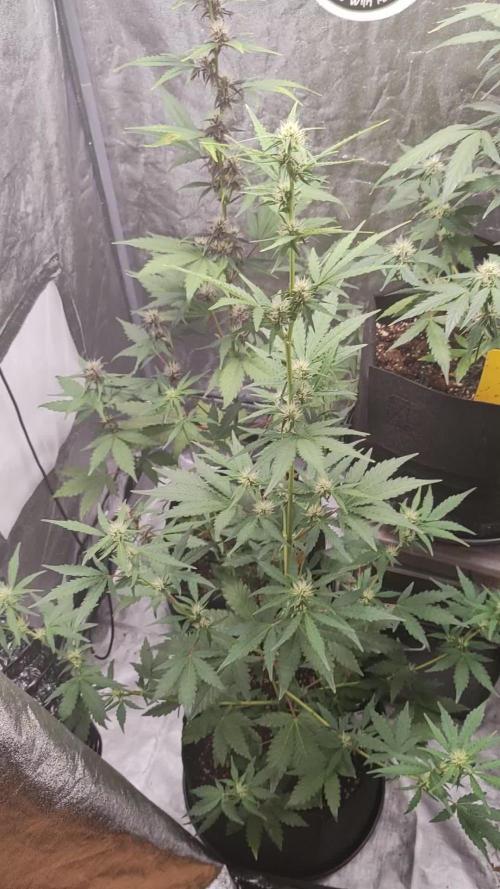
Start of week 3 of flowering. This Glueberry OG girl is hungry, but the least hungry of the 4. She's also now up to 6 liters per feeding. Bud sites are developing nicely, added B52 to the feed this week too.

Processing
Likes
16
Share


@Dunk_Junk
Follow
So I'm having another go at LSD-25.
Day 1 she looked quite sickly if I'm honest.
She's picked up ever since. I've put the timelapse camera on her for the forthcoming week so I can keep a very close eye on her growth.

Likes
60
Share


@SooSan
Follow
12/12 + 102 jours
Vu qu’il y a 16 plantes mais que sur growdiaries on ne peut mettre que 8 variétés j'ai divisé en 2 diaries pour le bas de la tente
1️⃣
🏠 90x60x90
☀️ FC-E 4800 => puissance a 75%
🍁
1x Black Bomb / Philosopher Seed
2x Amnesia Lemon / PEV Seeds
1x Blueberry / PEV Seeds
1x Blueberry / 00 Seeds
1x Wappa / Paradise Seed
1x Dark Phoenix / Green House Seed
1x Quick Sherbet / Exotic Seeds
1x Mango Cream / Exotic Seeds
1x Banana Frosting / Sensi Seed
1x Hindu Kush / Sensi Seed
4x Fast Mix / Sweet Seed
📎 https://growdiaries.com/diaries/122084-grow-journal-by-soosan
📎https://growdiaries.com/diaries/124052-grow-journal-by-soosan
2️⃣
🏠 30x60x50
☀️TS1000 => 100w = 54g
🍁
Quick Sherbet - Exotic Seed = 12g
Quick Sherbet - Exotic Seed = 12g
Quick Sherbet - Exotic Seed = 17,5g
Quick Sherbet - Exotic Seed = 12,5g
📎 https://growdiaries.com/diaries/122080-grow-journal-by-soosan


Likes
12
Share


@mowsgrows
Follow
Sweet, Sour, Gassy.. now we talking
Der Geruch erinnert mich nun an Vitamin C Bonbons und die Buds legen immer mehr zu.
Ich bin zufrieden mit dem Gesamtbild und freue mich über immer mehr frost.
Manche Blätter drehen sich vor lauter Trichomen zwischen den Zacken. Überall sieht man Zuckerkristalle bis auf die grossen Fächerbätter hinaus.
Es hat sich hier deutlich abgekühlt und für die letzten Wochen finde ich es sogar gut um ein klein wenig Herbst zu imitieren :)
Basis Dünger werden nur bei jedem zweiten Giessen verwendet, Booster bei jedem Mal. Ich gebe nun bis zum Schluss Alfa Boost mit hinzu, während ich bei den Mengen von Growzyme und Huminsäure Plus variiere
Das Thermometer habe ich nun mal auf Höhe der Blüten gehängt, im Endeffekt waren die Werte bisher alle von der Höhe der Töpfe
Edit 5.Sept. : Habe gestern an einer Pflanze Bananen in den Buds entdeckt. Habe Sie gespült, mit Skalpell die Sichtbaren Bananenteile entfernt und wieder etwas niedriger ins Zelt gestellt. Die anderen Beiden bekamen heute nochmal nutrients und werden mit der nächsten Tour auch gespült.
Ich brauche die Zwitter Pflanze mindestens zur weiterverarbeitung.
:(

Likes
18
Share


@DogDoctorOfficial
Follow
Hey fellow green thumbs! 🌿💚 We’ve just wrapped up the sixth week of flowering with our Auto Fast Pete and Auto Northern Dragon Fuel from Super Sativa Seed Club. With harvest just around the corner, this week has been all about the final push. Let’s dive into the details!
🌟 Week 10 (Sixth Week of Flower) Progress:
Day 64-66: Final Bud Swell
• Auto Fast Pete: Pete is in the final stages of bud development. The buds have swelled significantly, becoming denser and more resinous. The aroma is incredibly strong, filling the grow room with a delightful scent. 🌿🌸
• Auto Northern Dragon Fuel: Dragon Fuel is also in her final stretch, with thick, sticky buds that are heavily covered in trichomes. The plant’s resilience continues to impress as she pushes through to the end. 🌱✨
Day 67-69: Flushing Phase
• Nutrient Strategy: This week, we’ve switched to just water with a TDS of 100 and a pH of 6.8. The goal is to flush out any remaining nutrients, ensuring a clean and smooth finish for the final product. 🌿💧
• Reservoir Details:
• TDS: 100
• Temperature: 18°C
• pH: 6.8
• Environmental Conditions:
• Temperature: 31°C
• Humidity: 51%
Maintaining these conditions to optimize the flushing process and prepare for harvest. 🌡️💧
Day 70: Final Observations
• Auto Fast Pete: The buds are fully matured, with a thick coating of trichomes and a rich aroma. The plant has responded well to the flushing process, and the foliage is showing signs of nutrient depletion, indicating a successful flush. 🌿🌼
• Auto Northern Dragon Fuel: The buds are dense and sticky, with a beautiful trichome coverage. The plant has also responded well to the flushing, and the leaves are beginning to fade, signaling that she’s ready for harvest. 🌱🌟
🌟 Care Tips:
• Light: Maintaining the 12/12 light schedule as we approach harvest. The plants are thriving under this schedule, and the buds are fully developed. 💡
• Autopot System: The Autopot system has provided a steady water supply throughout the grow, reducing the need for frequent manual watering. This week, the system is delivering only water to ensure a proper flush. 🌊
• Nutrient Monitoring: Switched to just water with a TDS of 100 and pH of 6.8. Monitoring the plants closely to ensure they are properly flushed and ready for harvest. 🌿
• Environment Control: Maintaining a stable temperature of 31°C and humidity around 51% to create the perfect conditions for the final stages of flowering. Adjusting airflow and positioning to optimize plant health. 🌡️💧
🌟 Genetics Spotlight:
Auto Fast Pete:
• Characteristics: Rapid bud development, strong structure, early resin production, and impressive resilience. Despite some stress earlier, this strain has produced dense, aromatic flowers.
• Harvest Expectations: Fully matured buds with a rich aroma and thick trichome coverage. Expecting a potent and flavorful final product.
Auto Northern Dragon Fuel:
• Characteristics: Robust structure, dense bud sites, resilience, and heavy trichome production. The buds are sticky and aromatic, showing great promise for a high-quality harvest.
• Harvest Expectations: Dense, sticky buds with a beautiful trichome coverage. Anticipating a strong and potent final product.
🌍🌿 Fun Fact:
Did you know? 🌿✨ Flushing your plants with just water before harvest helps to remove any residual nutrients, leading to a cleaner and smoother smoking experience. It’s a crucial step to ensure the best possible final product!
For all the in-depth action and detailed explanations, head over to my YouTube channel! 🎥✨ I’m sharing all the tips, tricks, and step-by-step guides to help you get the best results from your grow. This week has been particularly exciting as we prepare for harvest, and there’s so much more to explore and learn together!
👉 Join me on YouTube ink in my profile 👈
🌟 Conclusion:
Week 10 marks the sixth week of flowering, with both Auto Fast Pete and Auto Northern Dragon Fuel showing remarkable progress. The buds are fully matured, and the plants are ready for harvest. With careful monitoring and a successful flushing process, we’re set for a promising and rewarding harvest.
Stay tuned for the harvest report, and happy growing! 🌿💚✨
#SuperSativaSeedClub #Week10Report #FastPete #NorthernDragonFuel #PlantMagic #GardeningJoy #NatureLovers #PlantPower #InspireGrow #YouTubeJourney
Germination method 🌱 @thecannakan
Genetics @supersativaseedclub_official
Nutrition
@aptusholland 🌿
@aptus_world 🌎
@aptus_es 🌍
@aptusbrasil 🌱
@aptus_thailand 🌿
@aptus_portugal 🌳
@aptususa_official 🍀
@aptusplanttechnz 🌺
@aptusplanttechaus 🍃
Ambient controls🎮
@trolmaster.eu @trolmaster.eu.support @trolmaster.support @trolmaster.agro
Soil @promix_growers_eur @promix_cannabis
LED - @lumatekeu
Watering- @autopot_usa @autopot_global
Love and attention- @dogdoctorofficial
As always thank you all for stopping by, for the love and for it all , this journey of mine wold just not be the same without you guys, the love and support is very much appreciated and i fell honored and so joyful with you all in my life 🙏
With true love comes happiness 💚🙏 Always believe in your self and always do things expecting nothing and with an open heart , be a giver and the universe will give back to you in ways you could not even imagine so 💚
More info and complete updates from all my adventures can be found ⬆️link in the profile description ⬆️
Friendly reminder all you see here is pure research and for educational purposes only
💚Growers Love To you All 💚
Discount Codes :
@thecannakan DOGDOCTOR 15% off
@theneutralizer PORKIT7-DOGDOCTROSO 15% off
@kannabiaglobal DOGDOCTOR 30% off
@seedsmangenetics DOGDOCTOR 10%off
@terpyz.mutant.genetics DOCTOR 15% off

Likes
26
Share


@Char23
Follow
So this week has been interesting for the gorilla and blueberry.
They are packing on some weight especially the gorilla the buds are getting super fat.
The zkittlez has been a lost cause for a while now. I decided to cut this down once I started to notice some amber trichs. I'll update and put in a harvest once this is dried and trimmed in about 7 days. There wont be much there. Will mainly make hash from this and edibles. My screens are on the way to make some nice sift.
I genuinely think I'll be lucky to pull 3.5gs of dried smokable bud.
I am now flushing with plain water both of the remaining plants and I am hoping the gorilla can hold off for another 2 weeks so I can cut these both down at the same time and utilize my tent for drying.
These should more than make up for the disappointment of the zkittlez. I had 3 oz in my head as a good yield from this first grow and I'm confident I could make 4 by the looks of these plants.
There is some nice fading appearing on the blueberry leaves as you can hopefully tell but they defo need to fatten up. Trichs are half cloudy on both plants maybe slightly further on the gorilla.

Likes
39
Share


@DreamIT
Follow
Not one of the fastest autoflowers out there, but with excellent results. You plant the seed, water every now and then and wait: p With white widow you are never wrong
Likes
9
Share


@YetiGrowth
Follow
The harvest was simple and an absolute pleasure. I did a wet trim and thought later maybe i should have did a dry trim? Please share your opinions.
Likes
49
Share


@Roberts
Follow
The Mandarin Squeeze sisters are growing good. They are starting to bulk, and get some resin on the early flowers. Everything has been going smoothly. I did hst the bigger one some more today. I also have been driving the ph up a little each day to today. They are ready to go. They likely will need a solution change very soon. Thank you Spider Farmer, and Terpyz Mutant Genetics. 🤜🏻🤛🏻🌱🌱🌱
Thank you grow diaries community for the 👇likes👇, follows, comments, and subscriptions on my YouTube channel👇.
Thank you Happy Growing 🌱🌱🌱
https://youtube.com/channel/UCAhN7yRzWLpcaRHhMIQ7X4g


Likes
12
Share


@2Stones1Bird
Follow
Checkout my Instagram @smallbudz to see the Small budget grow setup for indoor use, low watt, low heat, low noise, step by step.
21/12/2019 - Fed her 1.5l of 6.4PH water with 0,5ml of each: Grow, Bloom and Max, and 1ml of each: Heaven, Alga-mic and Vera, noticed almost no run off, I use about 1/3 of the nutrient dosage on the chart, to achieve about 200/300PPM (500 scale).
Did some light pruning also.
Likes
5
Share


@killerjoint
Follow
15th day into flowering- Trim some Fan leaves /anything cover canopy.
18TH DAY FLOWER- LOLI POPPING.
JUST WATER EVERY 3 DAYS PH 6.5


Likes
112
Share


@Tropicannibis_Todd
Follow
ALRIGHTY THEN
REMINDER I DO 2 UPDATES PER WEEK 👉WEEKLYROUNDUP👈👉MIDWEEKLY UPDATE👈
We just hit week 9 and all is well , have to admit shes just killing it on the resin development 😃 ......the frost is insane 👹......
👉 her baby Sister and it's coming along very well , I did little defolation last week 😏 shes is about 7 weeks now at 49 days from seed ...👈 she's also killing it 💀
Lights being readjusted and chart updated .........👍
I GOT MULTIPLE DIARIES ON THE GO 😱 please check them out 😎
CHECKOUT MY GROWMIE Green_fiend 👈 AS HES JUST A WEEK OR TWO FROM HARVEST ON HIS AFGHAN KUSH DIARY 👈
👉IF ANYONE IS LOOKING FOR A PLACE TO HANGOUT VIA GROWDIARIES AND TALK GROWING AND JUST CHILL AND WHATEVER .....👈
👉I CREATED GROWDIARIES DISCORD SERVER !!!!!!!!!!!👈
LINK IS 👉
https://discord.gg/zQmTHkbejs
AND SEE HOW IT PLAYS OUT !!!!!!!
Likes
23
Share


@Athos_GD
Follow
Strain was easy to grow. Had some herms but since I only have 2 plants I was able to pinch the balls off. Buds have no seeds and are a strong smoke. Really hits the lungs.


Likes
19
Share


@AlbSS
Follow
Pas vraiment le temps de poste, désolé les gars, quelques imprévu personnelles à gérer ! Je laisse une petite vidéo pour actualisér. 😊

Likes
15
Share


@Bluemels
Follow
An Tag 39 zeigt die Triple G eine winzige Vorblüte 😜
An Tag 40 habe ich die Triple G an 4 Zweigen getoppt.


Likes
2
Share

@Avengergreen
Follow
I am starting the third week of flowering. This week I will slightly increase the dose of fertilizers per flower. The plants are responding to the nutrients very well, which can be seen as the flower buds are becoming denser every day.
Processing
Likes
3
Share


