


Likes
Comments
Share


@GrapevineGrower2
Follow
Haven't updated my grow diary for a little more than two weeks due to a severe back flare up. Yup, bad back strain, which has made it hard to sit, lay, stand for any duration of time. Suffice to say, much has happened since last update. The PBCRbx has undergone a growth spurt after a bucket change and upping nutrient (ppm) levels as I transitioned her to flower. And in that time, she received one defoliation in veg and a recent (and last) defoliation in flower. At this point, I just need to maintain healthy roots, consistent environment, and proper water levels with feedings. She's due another bucket change soon as ppm levels dropping and ph is adjusting upwards every reading. This is good sign from my understanding as a first time DWC grower.
As far as feeding, lowered grow big (veg) and upped both tiger bloom and beastie blooms along with a splash of big bloom and cal/mag. Topping off buckets with about 1100+ ppm, which helps maintain ph in bucket at roughly 700-800 ppm. But it's getting harder to maintain those levels in flower, so that's why I believe a bucket change is in order.
Here are photos spanning the entire 2-3 week period since last update.

Likes
9
Share


@Cestlaweed
Follow
Vista general del cuarto se ve el crecimiento que llevan las 5.
Las dos invitadas, negra blue devil y blanca chocolope, duraran hasta 3ra o 4ta semana máximo, Además se integrará la cuarta cepa oficial LSD-25 de FastBuds.
Se subirán fotos en horas de oscuridad para mejor calidad, lamento estas primeras.


Likes
12
Share


@Shinobi
Follow
Máme tu 36°C .vyzerajú zdravo.budúci týždeň budú búrky,uvidíme ako to prekonajú.po búrkach ich ešte ostrihám posledný krát.mier Bol čas tak som ich ostrihal teraz🤪

Likes
18
Share


@Hempface86
Follow
Alright guys today is day 18 and she is off to an amazing start.. she got her first feeding yesterday with very little of silica , cal mag and Maxibloom.. I gave her her first soaking yesterday when I topped her and removed the lower branches up to the 3 finger leaf.. i'm hoping for big things with this grow, and i'm very excited to use Plagron mid flower.. thanks to Zamnesia Seeds and Plagron for putting this contest together, it is much appreciated by and i'm sure many others.. To anybody reading this I hope you are doing well in the contest. If you're not in the contest i hope you are doing well too.. Until next time, God bless and happy growing ✌️.
Just wanted everyone to know that i'm using .2 tsp of maxibloom with the 2ml of silica and 2 ml of cal mag as of this week, but for some reason, grow diaries doesn't recognize general hydroponics as a company or any of their products.The maxi bloom and silica I use are both general hydroponics and when I add them as custom, everything is good until I go to save and then it comes up not showing the maxibloom SMH .. Just wanted to throw this in here, so everyone knows exactly what this girl is getting.. These three nutrients is all.She will be getting up until about the fourth week of flower.. Until then, I will increase the dose on everything slightly every feeding until we reach that fourth week of flower, and then out comes the Plagron which I hope works out great for the plant

Likes
16
Share


@PoshGrow
Follow
Welcome to Ultimate Auto Grow by PoshGrow!
🍀 Week #4 2020 September 21st. - 28th.
General Info:
When planted: 2020 September 1st.
Week: 4
Days: 21 - 28
Last Update Day: 2020 September 26th.
Plants:
4 x OG Kush Auto
3 x Amnesia Auto
5 xAlaskan Purple Auto
2 x Blueberry Auto
1 x Northern Lights Auto
Total: 15 girls.
NOTICE: Check week 1 for full equipment list!
UPDATE: I got 8 ltr. Or 2 gallon Spear&Jackson Pressure Sprayer to help me with watering.
Comment:
Welcome boys and girls to Season #2 by PoshGrow! So alongside my 1sq. meter tent I got my new 2nd tent and setup. So at this time i will be running 2 tents.
Ohh, this week and the end of week 3 was rought... I ran into a gnats problem in week 3, read more there. The way I "solved" my problem was a huge mistake, creating bigger problems. Gravel I put on top of soil kept moisture inside the pots, so I manage to over water my plants. NEVER PUT GRAVEL ON TOP OF YOUR SOIL! 🤦♂️ NEVER 😂 Big shoutout to guys who answered my question in week 3! Thanks for your help and support!
So I remove all gravel and let all pots to dry completly before next watering. They bounced back very fast. Also I did LST training on them and manage to break up that one girl which had biggest over watering issues. Shit happens I guess... Btw its one of Amnesia strains.
I will update more info how girls responded to training next week.
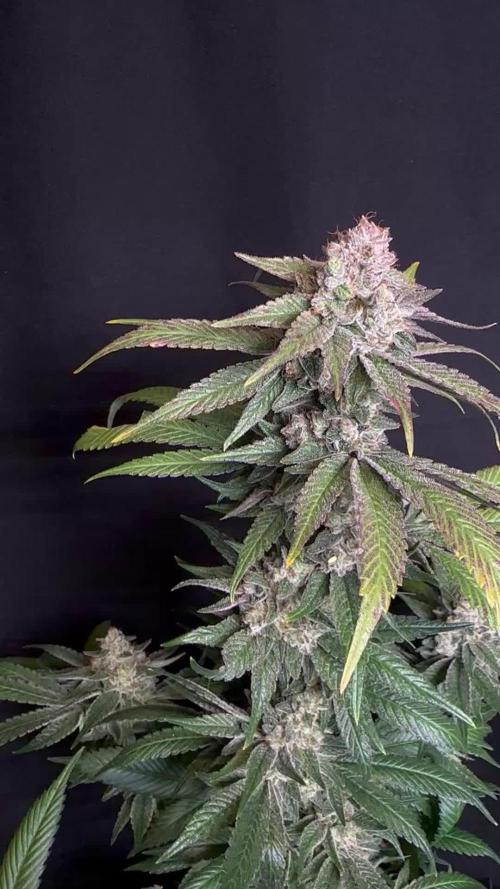
Stay tuned and happy growing! ✌️



Likes
60
Share


@Roberts
Follow
Alaskan Purple auto is doing okay. She broke her top when she grew against my lst from last update. She is under a Medic Grow Mini Sun-2. Beside the top breaking everything else is looking okay. Thank you Medic Grow, and Seedsman. 🤜🏻🤛🏻🌱🌱🌱
Thank you grow diaries community for the 👇likes👇, follows, comments, and subscriptions on my YouTube channel👇. ❄️🌱🍻
Happy Growing 🌱🌱🌱
https://youtube.com/channel/UCAhN7yRzWLpcaRHhMIQ7X4g
Likes
9
Share


@SanderG
Follow
Bought clones that were vegged for four weeks and are now in day five of flowering. I suspect one of the plants is a different strain and not Pineapple Express but we'll see.
Processing
Likes
17
Share


@Hawkbo
Follow
Everything is still alive thankfully and smells fuckin tremendous. The pictures were taken on day 49 or 50. I'll probly start flushing some of them over the next week the citradellic are lookin close. They kinda all look close even tho I expected some 70 dayers with the mostly sativa crosses but I gotta get in there and check the trichs.
Likes
43
Share


@Jack_Greenstalk
Follow
added trellis netting this week to start SCROG. two layers close to eachother so I don't have to wait for entire square of growth to tuck under higher growth to keep flat even canopy. also minimizes my need for zip tie and garden ties needinf adjustment. I'm happy with veg growth thus far, and once the screen fills up with more green in a week or two these two ladies will both be ready to flip to flower. waiting on lower nodes to develop a bit more and get best use I can from a big(ish) 315 w LEC light.
the girls are getting foliar every 3 or 4 days. using heavy 16 foliar only at the moment but will follow their foliar mix as grow progresses.
smell has gotten much heavier, especially in nemo, the more blueberry pheno of the two, looking at the fan leafs I think V is more haze pheno with super thin sativa leaf structure.
Likes
9
Share


Likes
47
Share


@FreddyGrows
Follow
This is gonna be the last week of my babies.
Monday i gave them 10L water with sugar royal that was the last time they het anything.
From now on straight water with lowered ph to under 7
Anything between 6.3 and 7 ec is oke always worked good for me.
The buds are very sticky,some are bigger then others but overall very very nice.
Some look fuckin frosty as fuck cant wait to taste sum.
*********************edit************************
After questioning my own methods i found out that i better keep going on with 2 weeks more of flowering. So this week i just keep giving them the nutrients and from next week on i will be flushin them
!!!!Thanks everybody for answering my questions !!!!
!!!!Thats what we call love man!!!

Likes
19
Share


@naturelovers
Follow
Hello to you, here are the last 2 gorilla cookies put in the dark for 72 hours their sisters the 3rd that I put in the dark a week earlier give me 59 gr dry and very nice to smoke but I curing it again before the total tasting :-)
Once this one is dry I will make you a report for its 2 if and do not forget that the 2 watermelon candy are not yet finished ... to follow.
Likes
50
Share


@AsNoriu
Follow
Day 36. One girl is shooting the sky other still have that unhealthy look, made my mind - its genetics and i can't do anything.
Girls got second feed, looks happy and hopefully will bring some nice flowers.
Took some leaves down, spread a bit, but most of work will be done next week, if i will dare ;)))
Last time used Root Juice, added Acti-Vera, increased Bloom and Heaven.
Day 40. After last feed, girls got small rusty spots on 4-5 leaves total, cut out cal mag for couple weeks.
Heavy training, its always tricky to decide what to do with Autos and i have almost no knowledge, but i have SPA Queen and Midget aka Margaret ;))) both different, but bushy, had to clear Midget really heavily and still loads future airbuds left, but maybe ... ;)))
Girls drink 3 liters every day, highest rate ever, but i relate it to most powerfull exhaust ever.
Some leaves on both plants got strange mutation, like leaf tries to branch out ... Never seen anything like this. But by height i presume it happend on first feed, late Root Juice aftermath ?
Happy Growing !


Likes
4
Share


@DarkVarein
Follow
Smells likes Candy and Orange, really good strain, and hits really hard.
Likes
12
Share

@Crazy_Doofus
Follow
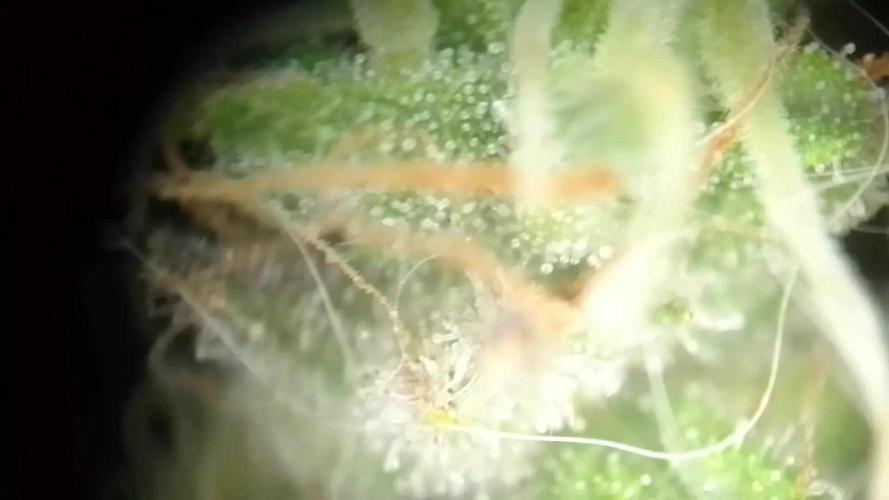
Another few days, cut her half, ready end of the week ♥️👍
03/01 trichomes still blanc

Likes
16
Share

@Northern_Ent
Follow
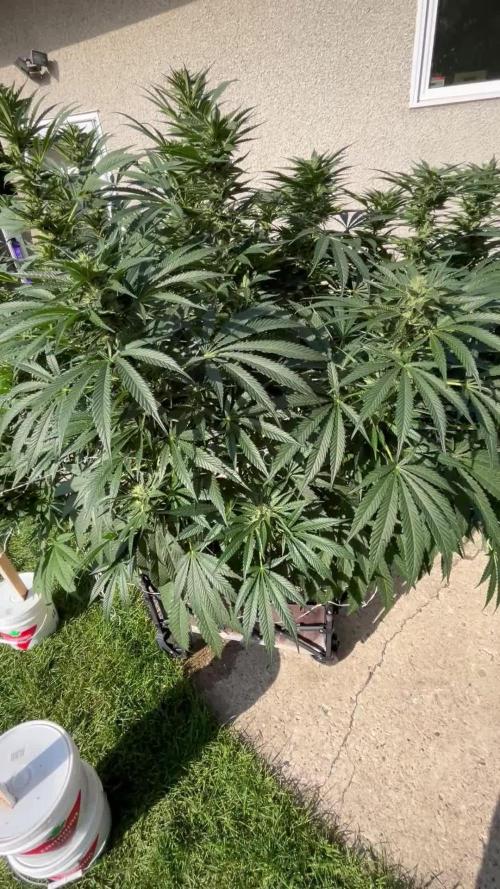
Aug 30: very hot for the Labour Day weekend. Defoliated some upper fan leaves that were growing inward and blocking sunlight. Buds need direct sun to ripen.
Sep 2: heat wave has past but now we have smoke for a couple of days.
Decreased water volume from 9 L/day when it was hot to 5-6 L/day now.

Likes
34
Share


@Southwest_budders21
Follow
Day 49 Flip day! Just flipped them to 12/12 took loads of leaves off. Let's see if I've guessed the sex right then 😏 I think I've got 3 fems but people still tell me I want know until I've flipped 🤷♂️🏼
Update: Day 50 and day 1 of flower looking very happy will give a nice feed when soil dries out. Lights are now maxed out and on Day 51, day 2 of flower I'm sure all 3 are definitely fems will keep eye on them next few days 👀
Update again: Day 53, Day 4 of flower and they looking beautiful 😍
Likes
109
Share


@JOE_S_GARDEN
Follow
Our most infamous strain with the stickiest buds in the game. A knockout artist who boasts a staggering 24% THC. Very big and potent. The “glue” comes from so much resin, that your fingers will literally be stuck together while trimming. A large-sized plant that only needs around 9 weeks to reward growers with big enormous sticky fat buds, that any type of grower will fall in love with. Super easy to grow and her pine and diesel terp profile will impress even the most experienced cannabis connoisseur. She is well suited for beginner growers and hash makers should not miss out on this trichome queen.
Bud descriptionGorilla Glue Auto’s buds will be chunky and dense, with a heavy resin production that causes your fingers to stick together like super glue. The buds are dark green, with swollen pointy calyx that swell wrapped in bright orange hairs. A truly impressive amount of trichomes that would make excellent cup winning extracts hands down.Smoke reportShe is one for smokers with the highest tolerances and fans of powerful hybrids. Gorilla Glue Auto is extremely potent and her effects are not for the light-hearted. Not only will she glue you to the nearest armchair, your eyes and face will slowly feel the force of her physical effects while you enjoy a nice head high that will keep you deeply motivated and energized. Certainly a perfect choice for staying at home and lounging out with friends or relieving stress and pain while maintaining an uplifted spirit that allows you to continue with your day-to-day chores.Plant AppearanceThis lady likes to stay low and will usually grow to a height of 60-130cm, making her ideal for keeping out of sight. She does not require much maintenance and will reward you with massive yields of up to 450-600gr/m2. Her growth structure is short and bushy, thanks to her sativa dominance, and will grow one main central cola, with fat side branches all around. Once flowering starts, expect Gorilla Glue Auto to fill out thick and fast, as she begins to pack on size, weight and go crazy with the trichome output. From seed to harvest she is ready in 9-10 weeks, where she will finish with a short and fat appearance.