


Likes
Comments
Share


@wheedtobeus420
Follow
Day 77. She’s soooo stinky. I’m impressed with her. I wasn’t all that stoked about the orange strain but she smells
So good and look so nice she has exceeded my expectations for her. I’m excited to flush her out sooo and get her ready to smoke 🔥🔥🔥

Likes
24
Share


@nonick123
Follow
Día 59 (29/07) Este cultivo no es muy entretenido con solo agua, asi que...
Le hago supercropping a todas! 😁 A ver como reaccionan!
Día 60 (30/07) Las plantas se están recuperando muy bien del supercropping! 😁
Todos las puntas hacia arriba! 💥
Come onnnnnnn! A por esa floración en 2-3 semanas!
Riego 500 ml H2O pH 6,75
Día 61 (31/07) Las plantas se han recuperado genial del supercropping y están lanzando TODAS las ramas hacia arriba 😍
Un espectaculo la fuerza de estas plantas! 💥
Redistribuyo las plantas, para ver si OnionOG está más protegida del sol, ya que consume muchisima agua y voy a estar en unos días fuera...
También reubico ligeramente la malla de sombreado, debido a que en mi latitud el sol empieza a incidir lateralmente por las tardes...
Riego 500 ml H2O pH 6,55
Día 62 (01/08) Vuelvo a redistribuir las plantas en el invernadero dejando a OnionOG todavía más protegida del sol directo, para tratar de disminuir su consumo de agua estos días que no voy a estar...
Pongo una protección "visual" en el invernadero en el lado que da a los vecinos (cara norte), porque he "cazado" miradas indiscretas...
Riego 500 ml H2O pH 6,55
Día 63 (02/08) Debido a que me voy de vacaciones unos días, adelanto el riego semanal con Té y la aplicación foliar de Kelp
Riego con 1 Litro de Té Vegetativo de Lurpe Solutions. Preparación: 24 horas con bomba de aire (oxigenación) con ingredientes:
Green Sunrise 8 ml/L + Insect Frass 16 ml/L + Hummus Lombriz 8 ml/L + Melaza 1 ml/L + Kelp Hidrolizado 0,25 g/L
Aplicación foliar Kelp hidrolizado de Lurpe Solutions a 0,25 ml/l
Día 64 (03/08) Cerrado por vacaciones
Día 65 (04/08) Mi amigo viene a casa a hacer un riego con 1 Litro de H2O pH 6,5
💦Nutrients by Lurpe Solutions - www.lurpenaturalsolutions.com
🌱Substrate PRO-MIX HP BACILLUS + MYCORRHIZAE - www.pthorticulture.com/en/products/pro-mix-hp-biostimulant-plus-mycorrhizae

Likes
10
Share


@Mr_nugs_lover_David
Follow
This is another beautiful pheno of my beloved strain Do-si-dos OG I wasn't expecting to grow 3 plants this year, just wanted 2 however it was a doble root seed and I didn't want to throw her away so I'm gonna grow her anyways! I love how good she has developed in this 4 weeks since planted, she developed without any issues and has become a happy and strong lady!! Let's get to work for our beloved medicine, I hope you like my outdoor diaries this year!! 💛💚💓👨🌾

Likes
10
Share


@Murojuanna
Follow
The one that survived was only inside a 2 litre, unfortunately, so didn't produce no where near as bud as I would've liked to. It's definitely not stable from 2/3 hermies, no issues with the other strains I had going alongside these.

Likes
49
Share


@masterofsmeagol
Follow
6/23 Due To The Two 8 Day weeks this week will only consist of five days to get me back on track. SEE LAST WEEK FOR DETAILS. I DID ANOTHER EIGHT DAY WEEK. I'LL DO THIS WEEK AS SIX DAYS. THAT WAY IM BACK ON SCHEDULE. WATERED 6/22. WENT BACK AT NIGHTCAND WATERED ANOTHER GALLON WITH 1/3 TSP Armor Si. I mixed the solution with kelp you kelp me but I dumped it out. I've mixed silica with other nutes before but I had read something earlier about bioavailability issues and I didn't want to risk it. My plants are the healthiest I've ever grown. I'm considering transplanting the large 10th planet that I'm light depping. I also need to develop my ipm and my nute schedule. Still gonna have to keep an eye onvthe water situation. Luckily I have a buddy in my corner that's co tinualkt Bern a great help.
WENT BACK OVER AROUND NOON. BEAUTIFUL OUTSIDE AND THE PLANTS WERE LOVING THIS SUN. I DEFOLIATED SOME BURNED LEAVES AND MIXED A SOLUTION IF KELP ME KELP YOU THAT I PLAN TO FEED TO THE GARDEN TODAY. IM HAPPY WITH HOW THINGS ARE GOING. WE HAVE SOME RAIN AND THINDERSTORMS COMING. I NEED TO GET MY IPM UP AND RUNNING AND THE NUTES ONLINE. I ALSO NEED TO DECIDE IF IM GOING TO TRANSPLANT THE LIGHT DEP 10th PLANET. Went back over to put the girls to bed at six and if was still 90 degrees. The water from yesterday had dissipated. The tops were dust dry. I mixed two gallons of kelp you kelp me and fed it to the garden. Afterwards I pointed qbd found a couple plants that were more open to the wind were a little lighter. I know tomorrow will be very hot. Maybe quarter inch of rain. However after that it will rain (showers) off and on for days. I wanted to make sure the girls had what the needed to make it through tjis heat wave until they get that rain. I had another gallon mixed up and I'm thinking I should've given it to them. Oh well. I'd rather underwater than overwater any day. I did notice a burnt top on the plant furthest from the tarp that the sun JUST BARELY TOUCHES when the rest are in shade. I'll just raise the tarp a little. These are tiny problems. Can't upload video until tomorrow.
6/24 Good thing u gave the plants that water. I know it wasn't much but we didn't get any rain. Suppised to get a qtr in today and another qtr in tomorrow. Then rain a couple more days. It's working our really good for my watering schedule lol. Yesterday the girls got there first dose of a bottled nute. They got two gallons of kelp me kelp you (1/3 tsp per gallon) and another gallon of just phed water. I was going to do another gallon but held off due to the threat of syring rain. Didn't get it bur it looks like the plants loved the kelp. It had reached 90 yesterday. They look better today. It's 70 at 9 today. I LST the 10th planet in the 3 gallon. It's getting huge. I should start a separate diary for those three light dep plants. Its cool as hell watching this. One of the purple punches is flowering pretty good. I probably should start another diary for them. I'll be starting to feed my plants soon. Wondering if I should pinch plants again. TUCKED THE LITTLE GIRLS IN AT SIX AND SHOT A VIDEO AND TOOK SOME PUCTURES. PLANTS LOOKED PHENOMINAL! GOT HOME AND AROUND SEVEN IT JUST STARTED RORREBTIAL DOWNPOURS! THE TYPE OF RAIN THAT BREAKS STEMS. I SHOULDVE PUT MY OTHET TARP UP BUT I DIDNT. I WISH I HAD. IM A LITTLE NERVOUS. I KNOW THESE GIRLS ARE STRONG THOUGH! TOMORROW. ILL ROLL THE RARP UP AND SECURE THE BOTTOM FOR FAST ACCESS. IM ALSO GOING TO KOOK INTO FINDING A TOP FOR MY CAGE I CAN USE IN INCLIMENT WEATHER.
6/25 That little qtr in of rain we were supposed to get turned into torrential downpours and high winds. Luckily no REAL damage. If you watch the video you'll see what I mean. I'm going to havecto be cognizant moving forward. Noticed a few chunks from leaves butvplants are still healthy. I'm surprised how well these girls withstood this storm. They are certainly resilient. The 2 purple punch 1 10th planet that I'm light depping are flowering nicely now. They missed all the commotion from the storm as they were inside. It's smelling good. I'm happy.
6/26 It's what a friend would say is "maineing") out. That mistcthe plants love. I'm surprised the plants are doing as good as they have been considering the wind. Will be adding nutes soon. Need to add extra supports too. Light dep
6/27 Brief periods or torrential downpours. Light depped 3 gallon 0lants are under an overhanfcwhete the hatsxrain can't hurt them but they still get sun. They are really starting to flower now! I'm going to begin feeding with a base nute and a flower nute I think. I'm thinking about giving the light dep some open sesame or something similar. I need to set up a nute program soon but the plants ALL look so healthy! And it's been raining! I've only watered like once or twice since they've been in the big pots. I've seen zero pests aside from a chunk missing from a grasshopper. Usually by now I'd have battled half a dozen things and be battling another half dozen. However I was posing from clones. These are seeds and boy don't I see the difference!


Likes
34
Share


@Salokin
Follow
Hello Growmies,
As we navigate through week 9, the crescendo of the Watermelon Candy F1 Hybrids’ flowering odyssey is near. Nestled within the verdant grove alongside the Epic Buzz and Red Banana Pudding strains, our Watermelon Candy troupe is displaying the telltale signs of impending harvest.
The plants exude a melody of sweetness, with trichomes glistening like morning dew under the subdued glow of the IR lights, revealing a spectacular array of colors not typically seen in the standard lighting spectrum. Despite the compact nature of the buds, which is a result of the 12/12 light cycle they've been flourishing under, the density of these floral clusters cannot be overstated—like tiny, aromatic asteroids.
Plant #1 continues its reign with a prolific bud structure that's nothing short of mesmeric. Plants #2 and #3 exhibit a bounty of floral nodes, each one a testament to the bounteous yields that are just a fortnight away. Their canopies spread wide, a testament to the cultivar's vigorous growth habit and the attentive care they’ve received.
Though the buds might not break records in size, their solidity is remarkable—a testament to the precise environmental controls maintained by our trusty TrolMaster. The buds are rock-solid, heavy with resin, and brimming with the promise of potent effects and delectable flavors.
Our nutritional regimen remains unchanged, delivering the essential elements for these final, crucial stages of bloom. The meticulous oversight of our automated systems ensures that our Watermelon Candy Hybrids are relishing in their peak conditions, as we nudge them gently toward full maturation.
With a harvest on the horizon, the anticipation is palpable. These final days are a mixture of excitement and the bittersweet acknowledgment that this chapter is closing. Soon, we’ll be able to savor the fruits of our labor, a sweet reward for the weeks of dedication and camaraderie in our grow community.
Until then, we'll continue to marvel at the transformation, watching as each plant fulfills its genetic destiny, soon to provide joy and relief in its final form.
Stay lifted,
Salokin


Likes
20
Share

@Mannirumpel420
Follow
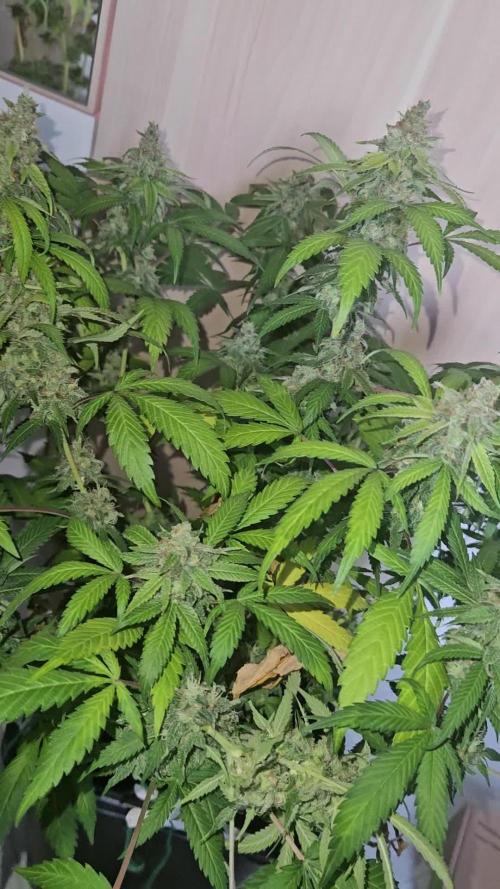
Um Platz für andere Pflanzen zu schaffen ernte ich 2 pflanzen.Es hat sich wirklich gelohnt diese Sorte zu klonen.Die Popcorn buds habe ich beim fresh trim abgeschnitten und eingefroren.Daraus mache ich dann gemeinsam mit anderen Sorten etwas bubble hasch.Darauf freue ich mich schon richtig.

Likes
6
Share


@Kendoda
Follow
It’s the second week of flower and I’ve got her spread across the net.
I’m going to do a foliage feed of fish mix and alg a mic in a around 4 days as well as another 4 ml of alg a mic in 2L.

Likes
43
Share


@Sabac
Follow
Semana 4 de flora están a full mis plantitas. Creciendo cada día más y más.
Sanitas.


Likes
19
Share


@adam_pawloski87
Follow
Let’s Go Day 67 from seed !! So this week went real great! 2 Ogreberrys an Bruce Banner started getting flushed! The rest will follow up and start flush next week ! Today the 3 will continue getting flushed while the 3 others get there dose of nutrients, PHd at 6.5! Let’s grow lil ladies let’s grow!!! You all have an amazing productive day as well as a a great safe week !! Peace love and positive vibes to y’all Cheers 😶🌫️💨💨💨💨🤙🏻If there’s any questions please ask, I’ll be opened up to answer at best of my knowledge! Thank you all have a dank day !!


Likes
2
Share

@SOme_Venutian_Weed
Follow
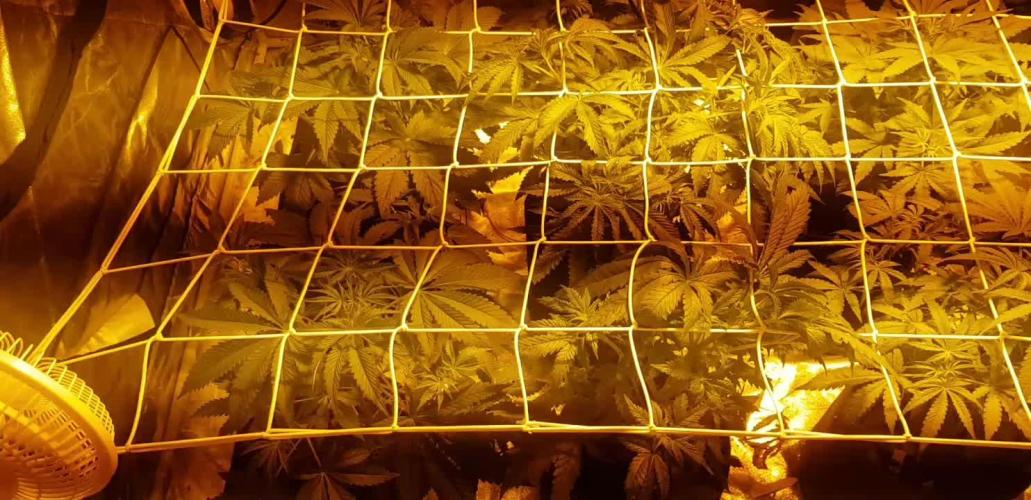
12/12 started strech inc let's see what happened
for the document here is the quote
MPK = Mendocino Puprle Kush
FBN = Free Blueberry Nation
SBM = Sticky Berry Mints
PS = Pink Sherbert
OOG = Oreoz OG
F+4 scrog reworking withtout any stress for the girls , i tried to shoot the structure of most of the plants so you see they are all healthy :)


Processing
Likes
26
Share


@MG2009
Follow
02/11/2021
Calling it day #1 of veg, she will stay under 1000w MH at least through veg cycle. Going to transplant when roots coming out of bottom of her pot until then watering very little each day(50ml.) and checking pot weight. Going to get some myco for transplanting to reduce stress during transplant.
Ps.
Going to have to raise my substrate temp I think it is fine, but prefer it to be warmer around 68°-70°f
See ya next time. New pic is day #5 of veg getting bigger


Likes
3
Share


@Wiggsix
Follow
Jue19mayo
Hermosa por donde se la mire.
Vie20mayo
Hoy se hizo una defoliación intensa sacando hojas satélites q no suman, y poda de bajos..
Sab21mayo
Entrenando ramas con impresiones 3d, para no andar atando las ramas..
Mar24mayo
Linda y fuerte..
Vie27mayo
Se realizo una nueva defoliación de la cual no saque fotos..
Processing
Likes
43
Share


@IndicaRising
Follow
START OF WEEK 4 FLOWERING. NUTRIENTS SAME 4 ML PER LITER RO WATER OF BOTH A & B. 2 ML PER LITER BIG BUD.
MIXED UP 8 LITERS OF NUTRIENT SOLUTION
---------------------------------------------------------------------------------------------------------
Day 64 April 18th - 2019 Both ladies had a little trim to get rid of thick interior.
Day 64 April 18th - 2019 Both Jessica Rabbit & Elly May were fed 1.5 liters of nutrient mix.
Day 64 April 18th - 2019 Temp in tent is @ 78.4° F.
Day 64 April 18th - 2019 Humidity in tent is @ 51%.
Day 64 April 18th - 2019 Jessica Rabbits Coco temp is @ 70.2° F.
Day 64 April 18th - 2019 Elly Mays Coco temp is @ 70° F.
---------------------------------------------------------------------------------------------------------
NOTE - Day 65 April 19th - 2019 The Lady in the coffee can is a clone from the Blue Cookies. The clone was 2 weeks old put in soil in the coffee can
It was put in the tent straight to flower No Veg time at all the clump of leaves at the bottom was how tall it was.
I have been feeding Her the same Nutrients I am using for Coco flowering with the Big Bud for Coco.
---------------------------------------------------------------------------------------------------------
Day 65 April 19th - 2019 Both Ladies are looking good after their little trim.
Day 65 April 19th - 2019 Temp in tent is @ 81.1° F.
Day 65 April 19th - 2019 Humidity in tent is @ 55 %.
Day 65 April 19th - 2019 Jessica Rabbits Coco temp is @ 71.8° F.
Day 65 April 19th - 2019 Elly Mays Coco temp is @ 71.6° F.
Day 66 April 20th - 2019 Ladies are looking good coming alone.
Day 66 April 20th - 2019 Temp in tent is @ 79° F.
Day 66 April 20th - 2019 Humidity in tent is @ 40 %.
Day 66 April 20th - 2019 Jessica Rabbits Coco temp is @ 69.3° F.
Day 66 April 20th - 2019 Elly Mays Coco temp is @ 69.4° F.
---------------------------------------------------------------------------------------------------------
Day 67 April 21st - 2019 Both Ladies received 1 liter pre-mixed solution
---------------------------------------------------------------------------------------------------------
Day 67 April 21st - 2019 The girls are looking fine.
Day 67 April 21st - 2019 Temp in tent is @ 79° F.
Day 67 April 21st - 2019 Humidity in tent is @ 47 %.
Day 67 April 21st - 2019 Jessica Rabbits Coco temp is @ 70° F.
Day 67 April 21st - 2019 Elly Mays Coco temp is @ 70° F.
Day 68 April 22nd - 2019 Ladies are looking good no issues.
Day 68 April 22nd - 2019 Temp in tent is @ 71.2° F.
Day 68 April 22nd - 2019 Humidity in tent is @ 57 %.
Day 68 April 22nd - 2019 Jessica Rabbits Coco temp is @ 67.6° F.
Day 68 April 22nd - 2019 Elly Mays Coco temp is @ 66.6° F.
Day 69 April 23rd - 2019 Both Ladies looking good.
Day 69 April 23rd - 2019 Temp in tent is @ 69.4° F.
Day 69 April 23rd - 2019 Humidity in tent is @ 61 %.
Day 69 April 23rd - 2019 Jessica Rabbits Coco temp is @ 65.7° F.
Day 69 April 23rd - 2019 Elly Mays Coco temp is @ 64.8° F.
Day 70 April 24th - 2019 Both ladies are coming alone.
Day 70 April 24th - 2019 Temp in tent is @ 67.1° F.
Day 70 April 24th - 2019 Humidity in tent is @ 61 %.
Day 70 April 24th - 2019 Jessica Rabbits Coco temp is @ 65.2° F
Day 70 April 24th - 2019 Elly Mays Coco temp is @ 64.0° F.

Likes
8
Share


@Easygrower
Follow
Hello growers day 42 in the garden with the blue monster auto 19/7/20 all is well she’s looking really good just keep feeding her when the top is dry and she is loving life just hope this good weather iv been getting holds out for a bit longer so she can beef right up until next week be safe and happy growing ✌️