


Likes
Comments
Share


Likes
5
Share


@WeyWey
Follow
Buds looking really good, the trichomes are almost ready one more week to harvest

Likes
4
Share


@Barcelona_Farmers710
Follow
Muy buenos resultados para el poco cuidado por falta de tiempo! Una maravilla.
Likes
294
Share


@StarLorr
Follow
Welcome to my Ðivine ØĞ Ķush Diary.
In this diary:
Seeds sponsored by: Ðivine Șeeds
Media not sponsored😄
Nutrients not sponsored🤪
Light sponsored by: Şun☀️
___________________________
Feeding:
Thu 23May: 4L nutrients pH'd 6.5
___________________________
Past week was very warm and she loves the outdoors ...
Perhaps not so much with todays wind gusts and pouring down rain😂
___________________________
Thanks for stopping by, likes and comments are appreciated!👊🏻😎
Keep on growin!
Keep on tokin!!!
😙💨💨💨💨💨

Likes
27
Share


@Dunk_Junk
Follow
Well that was her last week! 😎
I think she's done well in her 10 litre fabric pot. 😍
Will be harvested within 24h.


Likes
Comments
Share


@Batista
Follow
We noticed this week that she's growing much faster and the side branches too.
See the difference between the pictures April 18th - Topping view and April 20th- Topping view, and how much the side branches had grown.
Other than that, it was a week without major events :)
Sorry again for the pictures under the grow light.


Processing
Likes
13
Share


@Grownewgenetics
Follow
we are getting to week 3 on day 18 and 15 , the two rooms have 1 plants for each strain .
we have 150 watts room and a 250 Watts room, and we are getting the led pannels to test the Genetics of our sponsors on 3 different grow rooms. follow us also in Instagram, YouTube, Twitter,etc

Likes
15
Share


@tokesly
Follow
EC Meter broke and accidentally refed the plants double nutes at 1700 EC. Also never measured the pH while flushing with RO water. The runoff is all over the place reading up to 2500EC and 7+ pH. Realized the pH doesn't matter as much but the PPM runoff still is important. Flushed them for a day and transplanted them up to 5 gallon pots to refresh the medium. Also highly recommend dusting your roots with mycorrhizae when transplanting. The beneficial microbes attach to the roots and help metabolize the nutrients being fed for faster root intake.

Likes
10
Share


@AsNoriu
Follow
Day 87. Thought will be trim jail with her, but nugs formmed very nice, think she was most mature from this run. All trim for bubble hash, rest hanging, two rows of colours and sparks ! ;)
Day 97. 98 g. went for curing
Happy Growing !

Likes
8
Share


@jaydee702
Follow
steretching is done no she just needs to fill in now 3 to 4 more weeks till shell be done. crossing my fingers the roots dont push the top can off
hopefully the roots are finished stretching also
She is doing very well drinking all water every six hours when in the light and doesnt drink it till 12 hrs in dark

Likes
6
Share


@Discepolo
Follow
I am shocked😱...because...
Overwatering problem got more serious than last week on one bimba, that is not cooping well as others with water is getting.(I am on auto pot system)
I really think that forgetting to put the clay at the bottom of my vase on the airdome will give me some challenges.
Me and my bambine are ready for the fight!👊👊👊
We will not give up👽


Processing
Likes
26
Share


@GrowGuy97
Follow
Day 49 - Still giving the ladies just PH water with no nutrients trying to see if I can fix whatever is wrong with them😅 All in all the White Widow & Orange Sherbet plants I took individual pictures of are growing great & should have a pretty nice yield! Thank you for following & make sure to check back for daily updates! Happy growing friends!🌱✌️🏼


Likes
52
Share


@DevilsBud
Follow
New week for the 2 purple berry Kush
I think the purple berry Kush needs couple days more then the rest but it's going great there at a size that adding extra nutrients is waste and only making flushing take longer so starting to lower all nutrients and preparing for last week exited times
Happy growings Growmies 🤜🏻 🤛🏻
visit www.marshydro.eu
for your best gear and use the PROMO CODE: DEVILSBUD
Some info about the Marshydro FC-4800
Superb Quality LED Chips: The whole light is composed of 1206 pcs Samsung lm301b and Osram 660nm chips. More than two times as many LEDs are used to drive the grow lights at low currents and to avoid overdrive. Quality is guaranteed and efficiency is up to 2.8 μmol/j.
Even PAR Distribution and High PPFD Output: The multi-light bar design and the densely distributed light chips enable the LED grow lights to achieve the optimum PPFD required for plant growth over the entire effective coverage area.
Specifically Designed Spectrum: To ensure even plant growth, blue and red light are enhanced on the basis of a full spectrum combination. Not only does this accelerate plant growth, but it also improves the yield and quality of the plants at the same time.
Dimming Daisy Chain Function: The dimming function saves on electricity costs and enables brightness from 10% to 100% for the different stages of plant growth. A single master light can connect up to 30 lights in a daisy-chain system.
Business LED Grow Light: The light's wavy heat sink dissipates heat quickly and the IP65 waterproof allows the light to operate in humid conditions. 180° collapsible feature for easier installation. All these features provide favorable assistance for commercial cultivation.
And some tent info
●【Lock All Light Insid】MARS HYDRO Grow Tent Interior is made of diamond mylar. Non-toxic to the environment, no harm to plants. High-quality 1680D canvas being double stitched, (ALL OTHERS BRAND grow tent is 601D canvas) which is tear-proof for perfect light locking, No light leaks or rips at all.
●【Durability Grow Tent】Stable Metal corner adapters and poles are the trustful supporters of the tent. No rusting nor paint-falling. Quick easy tool-free installation. Carries strong heavy-duty SBS zippers, double layer lining to create a light-proof seal.
●【Easy Observation of your Plants】Special peeks window made by double layers of cloths. Observe the growing conditions of your plants without opening the tent and avoid disturbing plants. The peek window also serves to dissipate heat and ventilate air.
●【Removable Tray Keep Clean】The package includes a removable waterproof floor tray to hold soil and fallen leaves. The tray can be taken out easily to wash. Removable and water-proof makes cleaning easy.
●【Good Ventilation&Fast Assembly】 Circular double-sleeved vent holes with adjustable nylon strap for air circulation by exhaust fan, ducting, carbon filter, or reflector. Better allows proper light, heat, and airflow. Quick tool-free installation. Reinforced by a sturdy metal frame to ensure security and stability, supports up to 140lb. Perfectly safeguard your plants to thrive even in winter

Likes
7
Share


@Smokeitup091191
Follow
This week I has gone well had a small error on my part but other than that’s seems to be going fine she is stretching well, plenty of top bud sites and hopefully the next week there will be more definitive flowers showing 👍🏼
Likes
34
Share


@ILoVeThiSpLaNt
Follow
Tanta roba!!! Dopo 4 giorni ho assaggiato qualche cima e oltre a essere pulita e quasi non sentire il tiro che ti fai ha già dei sapori ben definiti. Quando tiri il fumo è talmente pulito che non lo senti neanche poi in bocca esplosione di sapori molto fruttati con retrogusto diesel. Peccato solo non averla fatta fiorire il giusto tempo. Raccolta una settimana prima causa freddo e mancanza di posto nel box. Sicuramente Cannarado Genetics e Archive seed bank hanno scavalcato ogni banca seme fatta fi


Likes
3
Share

@lolasher
Follow
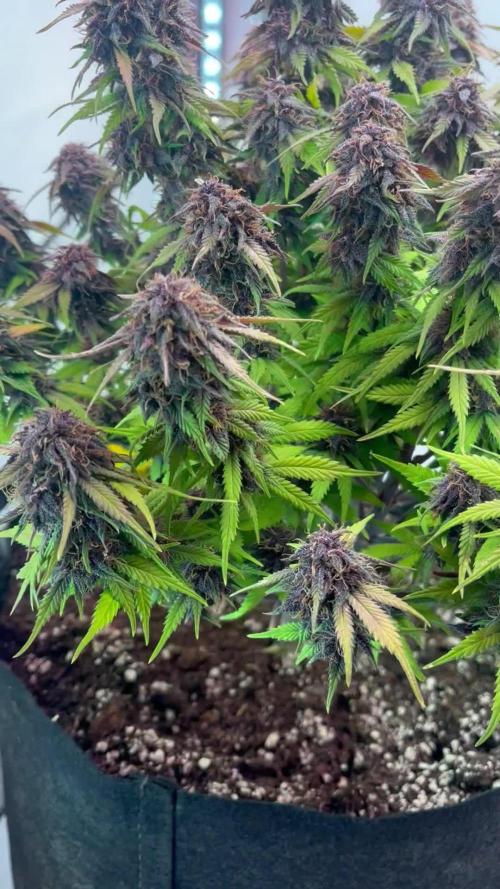
After the FBA was chopped, the LCC remains alone for at least one more week.
You can really see the damages the flies left.
A few leafes are turning red. Its time for a bit more color!