


Processing
Likes
Comments
Share


@Dunk_Junk
Follow
Day 56 - She grew 6cm this week. Not a lot... but she continues to grow well.
Day 56 - Tent configuration changed: 4x more CREE CXB3590's have been added and 4x blurple LED things removed. Lights now consist of 8x CXB3590's & 1x 1000W HID with flower bulb.

Likes
10
Share


@Zeravlab
Follow
1/29/24 - Beginning of week. Looked good, was planning on letting it go another week but within a day the top leaves started turning yellow all over and I started seeing amber, just a few but spread out all over the plant, so last minute decision to harvest on 1/31/24.

Likes
27
Share


@Budassgrower7
Follow
Loved the strain she was super strong attacked by a cat a cuple of times and she really grow well after that 62cm so yes, I think is strong, she smells like cream and fruis i dry her for 4 days with herbdryer i was fast bit didnt hold the smell , the yield was very good to 34 grams ready for the jars, I took some lower buds and smoke them , the flavor is just how she smells , like cream with fruit tones that come and go wile the cream sensation stays in your mouth, i love this kinda flavors , the effects are active at the beginning with a rush of energy ,but if you stop then relaxing is coming like you want to see a movie and eat a lot ahahha well thats my first impression i know the smell and taste is going to get better with time so for now this is what i can say , what a good strain fast Buds!💚👌🏻🌲👐🏻👊🏻


Likes
5
Share


@Ninjabuds
Follow
My gas tax plant is looking absolutely incredible right now. It's got these massive buds that are super dense and have this awesome dark color to the leaves. I'm so excited to see how it turns out when it's finally ready to be harvested. I've been checking the height, the thickness of the stem, and the density of the buds to get an idea of how much longer I have to wait. I think I might start flushing it soon.
The past few weeks have been so beautiful, watching the plants grow and change. It's amazing how something so small and fragile can turn into something so strong and vibrant. Now that they're getting ready to bloom, it feels a little bittersweet. I'm so excited to see the finished product, but I'll definitely miss having them around while they're growing.
Likes
1
Share

@nijuana
Follow
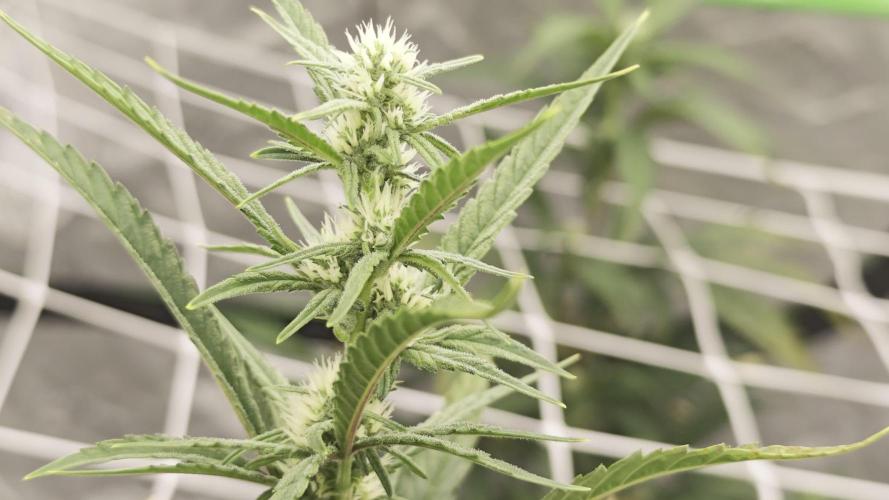
I had a big problem with the nutrients unfortunately I think it was an excess she was stressed I recorrected the problem




Likes
469
Share


@love_2_grow
Follow
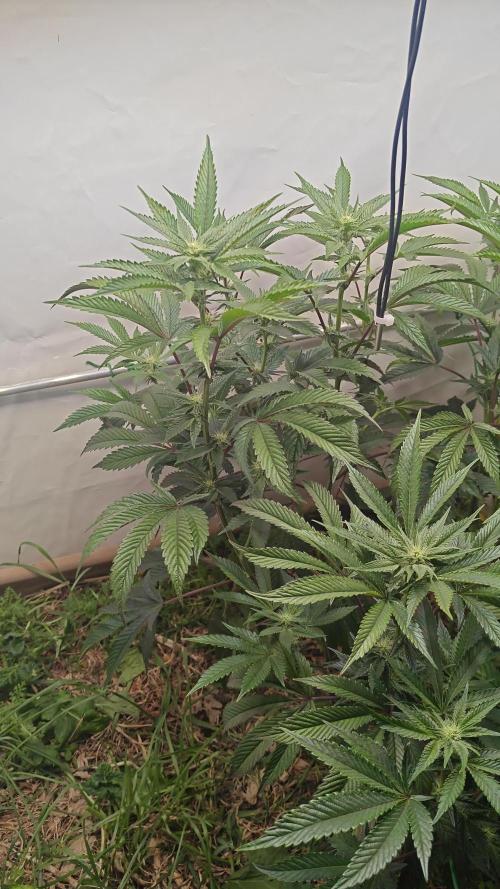
D64 - We're at the start of the fifth week of flower, and the girls are looking better day by day.
However, a few days I noticed very minor leaf damage on two leaves on the second girl that "might" be thrips damage.
It's not a huge deal since the girls will finish in two to three weeks, but I figured it would be prudent to be proactive before the next grow, so I ordered some Cucumeris predatory mites. They arrived today, and I hung a sachet with mites on each girl.
D68 - Today, I disconnected the Inkbird controller and humidifier that kept the humidity in the tent high. It is getting towards the end of flower, and I want to decrease the RH in the tent to avoid botrytis. I also set the exhaust fan to run constantly. I hope that will be enough as there isn't enough space in the tent to fit a dehumidifier. #tinytentproblems
D69 - The humidity in the tent is still too high for my liking so I had to get creative. I drilled a hole in my dehumidifier so that it can hang in the tent. It's only a small dehumidifier and not very powerful but the tent is tiny and the dehumidifier should be enough to drop the RH by around 10%.
D70 - We have reached the end of the fifth week of flower and the girls are rocking it in the tent and their buds are getting fatter as each day passes by. It's only a waiting game at this point although a game where I'm trying to avoid budrot. I adjusted the light schedule yesterday so that the hottest hours of the tent are during the coldest hours of the day. That should even out the temps a bit, and I also keep a flap open on the tent to further reduce the temperature and humidity. The girls are looking great and I would hate to get botrytis and lose part of the harvest.
Likes
9
Share


@SuperSmoker
Follow
This week i topped the plant at the 4-5th node
Check out YouTube video
SuperSmoker for more!


Likes
4
Share

@TTerpz
Follow
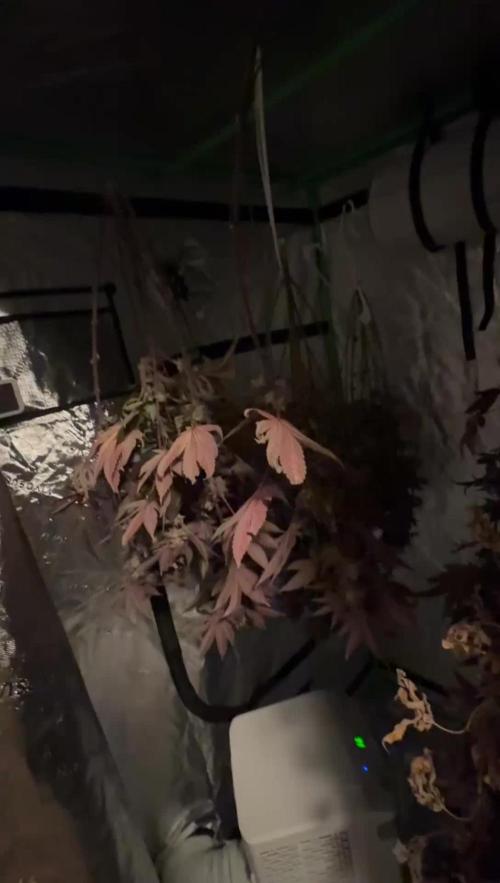
Harvest day! Whole plant gets chopped and hung
First day of of dry 10/2/25
Day 4 of dry 10/6/25 buds are drying up not much chlorophyll smell left except for on the bigger fan leaves that I kept on the plant buds are giving off a nice pungent smell
Likes
20
Share


@4F1M6
Follow
Colas are stacking, trichomes are piling on. This plant is doing over time with the bloom production. Just explosive through all phases. A real strong and hardy genetic all around.
Shes got a nice sea of buds brewing up in her 2x2. Fucking sweet.
I treated her with Dr zhymes as one of her last preventative sprays. With her explosive massively productive growth comes hunger. She has developed minor pk deficiencies. As I said last week I was upping the feed end of last grow week. Which I did... but it seems it was a touch late for her likeing. When the day to increase came she had minor signs already showing.
With her next usual straight water I will also be adding a touch of the pk booster. Getting close to the finish line to be chasing deficiencies... but should be able to ammend the light hunger lol. We shall see.
Until next update. Happy growing and stay lit fam.

Likes
16
Share


@willertex
Follow
📅 D85- 26/01
📜 Only fresh water from now on. She's not yet ready - 3-4 days more I think.
✍️ 0.1 EC
♒ 6 pH
🌊 10 L
📏 95 cm
📅 D90- 29/01
📜 Not yet Ready
✍️ 0.1 EC
♒ 6 pH
🌊 10 L
📏 95 cm
Likes
5
Share


@StonedandSteady
Follow
@humboldtcountysown LLC for Veg&Bloom Thanks Again Phil&Gail! @rocket_seeds Newest Seed Sponsor!!! @vivosun.official VIVOSUN®️ VS2000w & VS1000w Grow-Thank You so Much J Bro! I'm Honored and Very Proud to be apart of your Family/Team! I #FlippedToFlower on Friday 6/24/22 ShoutOut to our Bro @soillife420_2 for Gifting us this VS®️ VS1000w LED Grow Light! Sponsored VS®️ VS2000w LED Grow Light with Samsung LM301 Diodes & Sosen Brand Driver, Dimmable Lights, Sunlike Full Spectrum with Grow Room Glasses for Seedling Veg & Bloom Plant Growing Lamps for 4x2 Veg & 3x3 Flower Grow Tent or Grow space! Lower Cost & High Efficiency: VS®️ VS2000w LED grow lights use the latest LED plant light technology including Samsung LM301 Diodes, high-energy efficiency with 2.9μmol/J; Extremely high output but consumes only 200W of electricity, making it more efficient than traditional HID lamps and other plant lamps on the market! It comes equipped with 3000k Warm white Diodes that Boosts Bloom, 5000k Cool white lights that Promotes Germination and 660nm Red lights for Higher Yields! Thier attached to a Durable, Waterproof Aluminum Heat Sink with Low Noise and only weights 9.03lbs. with a 5 year Warranty! SuperCropped3rdTime #TransPlanted into 3GallonPots from 1GallonPots #Lollipopped ToppedThe3rdTime #LeafTucked Transferred into our 6×5ft. #ChronicCave BasementFlowerArea and Growing under our Brilliantly Bright VIVOSUN®️ VS2000w-VS1000w with the 12/12 lighting schedule, Dimmed⬇️=50% around 30" Over Canopy's We Love to use Team @tnbnaturals @tnb_naturals #TNBNaturals #TheEnhancer #Co2DispersalCanister for Vigorous and Great Growth for our Grows! ShoutOut to Bro @dr._weedman I'm Growing from Team @ilovegrowingmarijuana_strains #HeroMixpack #ILGM #SkywalkerOG-Fem #BruceBanner-Fem #BlackWidow-Fem and started Up a New phenoz of those, my Team @nirvana_seeds nirvanashop.com #Zkittlez-Fem and a New pheno, Team @nukeheads.nutrients #CheetahPiss-Fem clone and from my Wonderful Wife's @juicyjj85 plant, I've taken two Clones from our Bro @goliathgrowshow #GoliathGrower #MacBerries-reg Thanks Again Everyone!!! #BudBrothers4-L Happy Growing! Cheers Famz!!! Much Props and Much Pars!💯VS®️💡's+⛺'s=🏆's
#LoveWhatYouGrow
#BringGreenToYourLife
#vivosun #vs1000 #vivosungrowlight #vivosungrowtent #vs2000 #vs3000 #vs4000 #vs1000e #vsf4300 #hcf1600 #hcf3200
https://linktr.ee/vivosun.official
https://www.linkedin.com/uas/login?session_redirect=%2Fcompany%2F77743591%2F
https://youtube.com/c/VIVOSUN
https://instagram.com/vivosun.official?igshid=YmMyMTA2M2Y=
https://www.facebook.com/198734887125319/posts/1724749361190523/?extid=a&mibextid=baczqb
https://mobile.twitter.com/VIVOSUN/header_photo
https://pin.it/2uORZDs
https://www.tiktok.com/@vivosunglobal?lang=en&is_from_webapp=1&sender_device=mobile&sender_web_id=7110614037704197678
https://www.amazon.com/stores/page/A2F7F49B-7130-4423-BF67-59CE3EC5A44F?maas=maas_adg_01A961034EF443FE5006848DB5A6C70B_afap_abs&ref_=aa_maas&tag=maas&ingress=3&visitId=3e0468ed-290c-4c15-9d06-7a22afdff345&mc_cid=e5417eb03f&mc_eid=69bad0aef8
https://www.amazon.com/stores/page/3EDD8CEC-742A-44F6-90C4-0930E78DD730?ingress=2&visitId=6cfb6992-f86f-4c85-a5ad-4cb5d1c06d07&ref_=ast_bln
Limited-time deal: VIVOSUN 6-Pair 1/8 Inch Adjustable Grow Light Hanger, Heavy Duty Rope Hanger with Reinforced Metal Gears, 8-Ft Long and 150 lbs Weight Capacity Rope Rachet for Grow Light, Inline Fan https://a.co/d/1WezHcI
Likes
2
Share


@Mytrichomedgarden
Follow
LIVING SOIL!!!! WOW SUPER CONTENTO! dentro de la bolsa hay recolecion de organismos indigenas IMO2 mezclado con sustrato growers tmb melaza de caña y la verdad no mido cuanto de ferti pero le pongo mas bioblom q biogrow hasta llegar a 600pmm y el ph queda en 5 6 pero luego del fermento de 24hs se estabiliza en 7 para flora increible uso levadura de mi masa madre q tengo hace 5 años y los lactobacilos de mi yogurt el suero todo dentro del té ! curo todas las deficiesias la AK esta viva y la choco increible! la cannalope x skunk de Yeruti seeds SON DE OTRO PLANTEA! UN GUSTO A CITRICO MANGO CON NARANJA WOW
Likes
6
Share


@Naujas
Follow
the girl has already matured :) tomorrow will be the crossing and renewal :).

Likes
14
Share


@Professor_Chaos
Follow
Beginning of week..
She is smelling dank as fuck! The buds are stacked.. They are about to begin swelling! I can't wait! She's so gorgeous and smells so dank! I love it!... I guess with this grow I didnt do enough by checking the runoff and making sure salts arent building up.. They build up and I keep just watering.. Thinking if I add more nutes it will fix the deficiencies but instead it burns the tips.. That is more than likely why the leaves are yellowing and burnt at the same time.. I dont think it should hurt the yield too much tho.. She's a strong lady for sure!! Glad I got many more of these seeds.. May even breed my own fem seeds of this strain just to have more of.. We will see what the end product produces.. But so far she seems like a keeper!
Mid week..
She is happy and healthy! Not much to update on.. Just waiting for her to start swellin up.. She smells soooo dank! Like citrusy.. Fruity but also skunky.. Or diesely.. I love when I move her around cuz it smells up my whole room.. I love sleeping in the same room as my ladies.. Just have to get used to the fans running.. Which I already don't mind.. Helps block out other noises.. And when lights go out.. About a minute later you can smell her through out the house! ... Just so dank! I can't wait for harvest.. Not sure when I should begin to flush this girl.. Shes already so yellow.. Its the buds that matter to me tho.. Not the leaves.. And the flowers are looking immaculate as these plants ALWAYS produce some gorgeous and amazing flowers.. She started producing trichomes a little slow at the beginning but it definitely has picked up.. She is SOOOO stinky!!!
End of week..
So I just recieved my order of General Hydroponics FloraNectar FruitNFusion.. BUT I have no idea when it should be added to the nutrient water.. And I can't really find anything on the web about it either.. I know it goes.. 1. Silica.. 2. CalMag.. 3. Micro.. 4. Grow and/or Bloom... What I did with Floralicious Plus is just added after everything was added.. Didn't seem to have any issues.. Wondering if I should just do it the same with this.. Kinda wondering if organic matter will even do anything with all these synthetic nutrients.. Wish I could find a COMPLETE list of what order ALL nutrients should be introduced to water when mixing nutrients.. Other than that.. This girl is doing great.. More nute burn on the leaves.. But leaves are so yellow still.. Something is off.. But the quality of the bud is still there.. Hoping the FloraNectar will help out with that too!.. Hmm.. Wondering if I should start the flush or wait one more week.. Not sure how long this strain takes.. Since nobody else has any harvested diaries on it.. Anyways.. On to the next week!

Likes
6
Share


@Tezza2
Follow
The purple lemonade is flowering nicely the buds are showing purple already and the gorilla cookies auto is flowering it has very tight node spacing which will mean bigger and fatter buds my tent is smelling great at the moment it will intensify as they grow


Likes
175
Share


@the_curious_grower
Follow
as the second week of June is just on it's end and the weather has had it's ups and downs with a lot of rain and some nice sunny days the plants keep growing day by day.
The tallest plant reached a height of 86 centimeters or 33.85 inch so i'm getting close to the 1 meter mark. But hopefully they will grow much bigger as they have plenty of time left. Last year i a grew Blue Dream and a Chocolope in pots which reached a total height of 1,38 meter, which both yielded 30 grams each. What i should mention about the plants from last year is that the seeds weren't bought but came out of a friends weed. So this year it was all out with premium seeds, more knowledge and experience, great soil and hopefully the best weather
