


Likes
Comments
Share


@Growyourownathome2x2
Follow
Friday the 19th of May Day 23 of 12/12 recently started with the new nutrients mills part A and mills part B ppm 870 all in full flower now still not impressed with the front left plant but what can you do il be happy with a small yield from that one hopefully the quality is as good as my last grow 🍁😎 also need to upgrade my light been using cheap lights for awhile now and the grow is better each time so I’d like to see what I can do with a well known light from a good company

Likes
17
Share


@420DeepGrow
Follow
Gracias al equipo de AnesiaSeeds, Marshydro, XpertNutrients y Trolmaster sin ellos esto no sería posible.
💐🍁 Sticky Boof:
Prepárate para dejarte llevar por Sticky Boof, nuestra última obra maestra que está poniendo el listón muy alto para los amantes de las índicas. Nacida del legendario cruce de Super Boof y Cadillac Rainbow, Sticky Boof es una potente planta con un asombroso 80% de dominancia Indica que promete una relajación sin igual.
Prepárate para un viaje épico con el asombroso 37,5% de THC de Sticky Boof.
Sumérgete en una cosecha abundante con Sticky Boof, que produce hasta la friolera de 500 g/m² en interior y 800 - 900 g por planta en exterior. Esta variedad es generosa y está lista para llenar tu alijo de cogollos de la mejor calidad.
Sticky Boof es todo rapidez y eficacia, acelerando el tiempo de floración en sólo 7 u 8 semanas.
💡TS-3000 + TS-1000: se usaran dos de las lámparas de la serie TS de Marshydro, para cubrir todas las necesidades de las plantas durante el ciclo de cultivo, uso las dos lámparas en floracion para llegar a toda la carpa de 1.50 x 1.50 x 1.80.
https://marshydro.eu/products/mars-hydro-ts-3000-led-grow-light/
🏠 : Marshydro 1.50 x 1.50 x 1.80, carpa 100% estanca con ventanas laterales para llegar a todos los lugares durante el grow
https://marshydro.eu/products/diy-150x150x200cm-grow-tent-kit
🌬️💨 Marshydro 6inch + filtro carbon para evitar olores indeseables.
https://marshydro.eu/products/ifresh-smart-6inch-filter-kits/
🍣🍦🌴 Xpert Nutrients es una empresa especializada en la producción y comercialización de fertilizantes líquidos y tierras, que garantizan excelentes cosechas y un crecimiento activo para sus plantas durante todas las fases de cultivo.
Consigue aqui tus Nutrientes:
https://xpertnutrients.com/es/shop/
💻 Trolmaster Tent-X TCS-1 como controlador de luz, optimiza tu cultivo con la última tecnología del mercado, desde donde puedes controlar todos los parametros.
https://www.trolmaster.com/Products/Details/TCS-1
📆 Semana 3:
Esta variedad sera un cultivo mixto, interior y exterior para ver todo su poderio em ambos lugares.
Ha sido una buena semana en la que han dado un gran cambio en sus lugares definitivo 😎.
Se le ha aplicado un tratamiento insecticida con agua + tierra de diatomeas ( 1 cucharadita por litro de agua), también se le aplica un tratamiento fungicida con una infusión de cola de caballo para evitar futuro moho.
A partir de ahora se aplica riego por goteo, 1/3 de la dosis recomendada por el fabricante ya que al estar en exterior y en buena tierra tiene bastante comida.
En interior seguira el mismo plan nutricional que el resto, ajustando sus dosis de nutrientes segun sean requeridos.
El ejemplar de interior es mucho mas rápido que el resto, he tenido que hacer una poda para frenar su crecimiento.


Likes
4
Share

@Count-Dooku
Follow
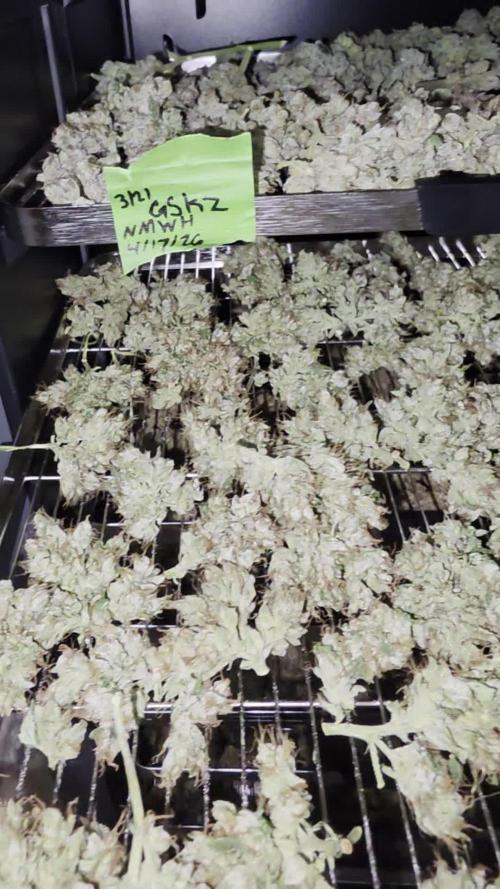
Was up late last night trimming three small plants up to go into the box.
Super fox tail structure, I fked with the light schedule a few times during flower by bringing them inside and taking them back outside to finish. So I think that's why they have that structure.
Ended up being more bud than I thought tho so I'm not upset, trimming was just a pita.


Likes
9
Share


@Mr_GreenPixel
Follow
Week 3,
as you can see i did top them all and started a little bit of training to open them up.
For the Training i bend and twist the Stem, so that the plant holds the position a bit before returning back.
I do this daily to keep them a little shorter.
This is it for Week 3.
Keep growing.

Likes
1
Share

@Wizardgreen317
Follow
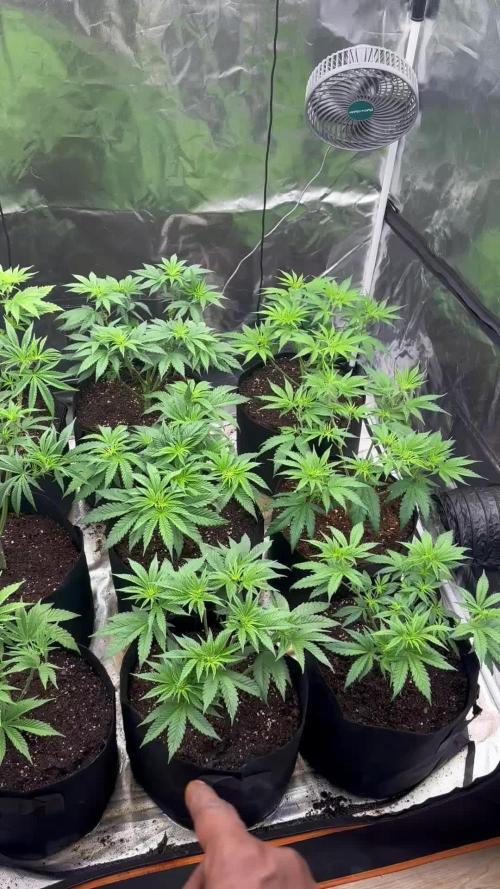
They doing better and they will be in flower after today. They have been working with me I know they want to be in a bigger pot for a while and the stay perky the whole time great plant easy going definitely a good on for a grower trying to step and challenge there skill . Growing really compacted but this could be because they where kinda of root bounded but they coming out the head look so it time to flower lol . Thank yall for your support and I love that I chose this to grow. No smell and that great lol
Likes
14
Share


@Kakui
Follow
Exotic Genetix: Event Horizon (x3) y Toasted Toffee(x3).
Thug pug Genetics: Peanut Butter sunset(x3).
Una ves sean transplantadas a su macetero definitivo(5 litros) se comenzará con riego automático, drip to waste, y protocolo Crop Steering.
20 Octubre(15:30): 9 semillas en remojo, solución de 2 partes de agua de ósmosis + 1 parte de peróxido de hidrógeno 3%, 5.8pH, 0.6EC, 28°C~30°C. Antes ser puestas a remojar se lijaron las semillas para favorecer la absorción del agua.
21:30: puestas en toalla de papel con la misma agua de remojo, dentro de un contenedor de vidrio hermético y sobre una alfombra de calor a 28°C~30°C, para aumentar la actividad metabólica.
21 Octubre: Pre carga del coco, con solución de nutrientes Athena en 2.0EC y 5.7pH, saturación hasta lograr drenaje, el drenaje fue de 1.5EC y 5.6pH.
21:50: Todas las semillas presentan radicula de distintos tamaños(1cm aprox) son inmediatamente pasadas al sustrato.
22 Octubre: 21:10, se aprecian todas ya brotando, se mantiene el ambiente en 26°C~28°C y 70%+ de humedad.
23 Octubre: 9/9 semillas brotadas, se ven algunos Cotiledones.
24 Octubre: (9:30)8/9 cotiledones abiertos, altura entre 3cm~5cm, etapa de plantula iniciada.
Toffee n3 se atrofió por mala manipulación, espero que crezca aunque sea lento, si no, tendré que seguir solo con 8 plantas.
25 Octubre: Toffee n3 está viva!!! Estuve a punto de quitarla, y está mañana apareció sin su capucha, cotiledones afuera. Yujuuuu!!
26 Octubre: hoy tuvieron su primer riego con nutrientes Athena, 2.0EC y 5.8pH. Se regó hasta alcanzar drenaje, el drenaje fue de 1.9EC y 5.7pH.
27 Octubre: Se desarrollan a buen ritmo, algunas han estirado más que otras, alturas entre 4cm~7cm.
31 Octubre: Segundo riego, 120ml casa una, 2.0EC y 5.8pH, runoff de 2.3EC y 5.7pH.
2 Noviembre: Creciendo a buen ritmo, alturas entre 5cm y 9cm.
4 Noviembre: Riego 180ml cada una, 2.0EC y 5.8pH, runoff 2.8EC y 5.8pH, desde ahora se regarán más seguido, removí las primeras hojas, solo por comodidad para regar, de igual manera los primeros nodos y esas hojas se terminan podando pronto.
8 Noviembre: Riego 2.0EC, 5.8pH, 240ml cada una para aumentar el runoff, valores de runoff de 3.0EC y 6.0pH. Alturas entre 9cm y 14cm.

Likes
11
Share

@Growbody
Follow
Herzlich Willkommen zu meinem Growbericht der Membrana Hyper Autofem von VIP Seeds.
Die URL für den Strain findet Ihr hier:
https://www.vip-seeds.com/membrana
Für den Grow verwende ich den großen 15 Liter WideVersion Stofftopf von ROOTIES. Bei meinem ersten Grow mit den ROOTIES kam nur die 9 Liter Version zum Einsatz, da haben die sich gut bewährt.
Auch die Smart Start Plugs von Zamnesia werden wieder verwendet, dieses Mal ohne den Samen vorher einzuweichen.
Und die Erde und der Dünger von BioBizz findet wieder Verwendung.
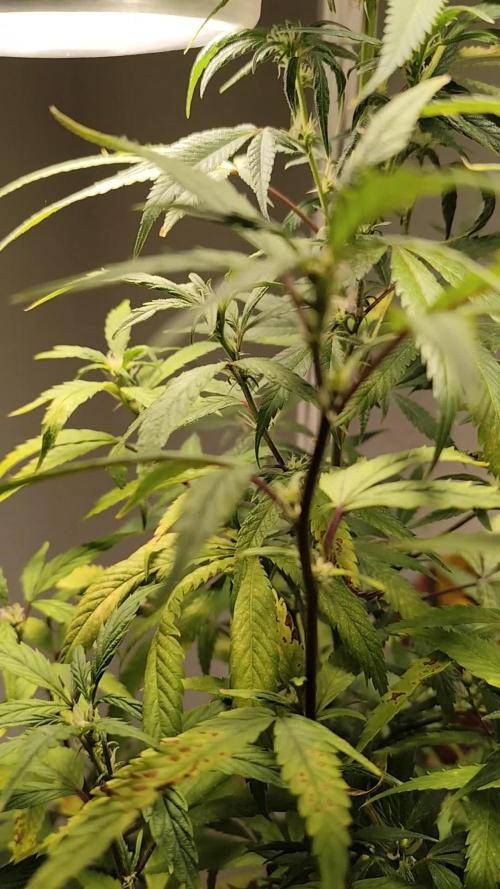
Tag 112: Die Membrane Hyper Autofem von VIP-Seeds streckt sich weiter. Der Blütenzuwachs bleibt sehr bescheiden.
Tag 116: Kein Unterschied zu sehen.
Schön, dass du dir mein Tagebuch angesehen hast. Schau gerne wieder rein✋😎

Likes
3
Share

@Hren_Morjovii
Follow
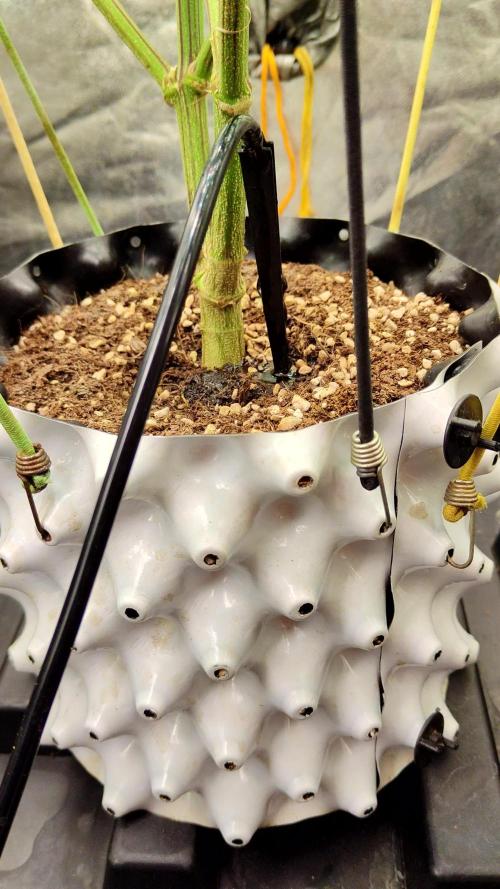
Клон. Пролил 1 раз Дельта 9, 4 мл/л 1 ЕС. В конце недели сделал дефолиацию.
Likes
23
Share


@Horseluisweed
Follow
Básicamente lo mismo, aunque está semana pilló bastante más horas de luz(tuve que irme fuera de casa dos findes seguidos, en los cuales la dejé con la luz encendida full 24/7 en la caja)
Como experiencia utilicé café reposado 48h para "alimentarla" e intentar bajar el Ph de la tierra (coco ph6+hummus ph7+vermiculita ph8= ph total 7)
El otro experimento fue cubrir la tierra con coco para que el tallo eche raíces y aprovechar su espigamento!
Las horas de luz solía dejarla 8h en bombilla mientras duermo, y el día la pongo en la ventana a que tome el fresco, pero apenas tiene luz directa, me da la sensación que crece más rapido cuando vuelvo del finde, estoy replanteandome tenerla más tiempo en la caja con luz, porque la veo aún pequeña, y quizá ponerle un ventilador de pc o algo🤔..veremos, aún tengo el papel de aluminio al lado de la caja y ni se lo he puesto, con eso os lo digo todo☝️🎃

Likes
17
Share


@Ton_Trichomen
Follow
Bruce Banner#3
See of green project
Featured grow by:
Original Sensible Seeds, BTB Grow Supplies &
exclusive for Mars Hydro
Day 49 07.00
all good no problems the plant does what she should do, today i give her water again, substrate measured ph 6.4 so everything is good again...
oh yes yesterday each of my babes had 400ml of pure coconut water as a cure that stuff does magic work 😉
Day 50 07.00
today checked everything again after I fertilized yesterday with a full dose ... everything ok substrate ph and ppm are top new circle fan ensures more wind and better air circulation and yes that's it for today
Day 51 10.00
everything on top level, you can now see trichome formation all over the place and the smell, fantastic ... maybe I'll hang a lamp with me, just wait and see
Day 52 7.00
all good, nothing else to report actually you can see it by yourself .. good weekend all of you...
Day 53 07.00
I wish you a wonderful sunday morning, the babies are fine, no special occurrences, they dance in the wind and get nice and frosty
Day 54 12.00
think that I'll defoliate something again tomorrow, otherwise everything is on top level at the moment, I see no bugs or other problems, they dance and get fatter, that's exactly how we want it, yesterday took another full load of fertilizer and they also tolerated that well again...
so see you again tomorrow ...
Day 55 09.00
good morning weed lovers, what can I say see for yourself ... there's really nothing to report except that the lady's are getting fatter and no we are not putting them on a diet, we keep popping the calories in until the end of day's 😂
Lights: 12/12
Humidity: 57%
Ph : 6.0
Water: 35l 23°C
CO²: No Mercy Tabs
Ppm: 900
Plagron: Terra bloom 140ml
Plagron: Green Sensation 35ml
Plagron: Sugar Royal 25ml
Plagron: Pure Zym 00 ml
Plagron: Power Roots 00 ml
Light distance: 35-40cm
1x MarsHydro eco 120 220w
1x MarsHydro TS 3000
Air Van: 800m³ Prima Klima
AKF : 800m³ prima klima
3 l water cooling airco Diamant...
3.3l humidifier
1.8l dehumidifier
Humidity control: Inkbird IHC-200
Temp control cooler - heater: Inkbird ITC-308
1.5x1.5m² Custom Grow Room
All seeds comes out #originalsensibleseeds
so they have 100% of 100%
Bruce Banner the 3. hits the ground and i really hope he gets angry as fuck and shows me the green big guy sleeping inside him ...
S.O.G.
☠️☠️☠️🌶️🌶️☠️☠️☠️
Thx to Linda Seeds, BTB Grow Supplies, Mars Hydro as our exclusive sponsor of our group The High Community & Zamnesia for supporting this grow.
Zamnesia unconsciously because they sent me my seeds 2 times but I'm very grateful for that...

Likes
7
Share


@StonedandSteady
Follow
1st Day of Flower: 2nd Feed Humboldt
Let's Grow and Stretch Out to Fill your Mighty Branches with Giant Gorgeous Budz Ladies! Happy Birthday HoneyBuns!!! I Love you so Much and Thankful to be your Man and Husband! It's been a few days since I gave the Ladies thier 2nd Feed of #HumboldtCountysOwn Nutrients and they look Super Awesome!!! We'll definitely Grow back to everything here soon! I'm Glad it's May 1st and Flipped to Flower and also to Celebrate my Wonderful and Beautiful Wife's Birthday!
11th w/ Veg and Flowers Update #Pre-Sexed🚺 #SuperCropped #Defoliated #Lollipoped
Good Day and Happy Growing Everyone! These Ladies were Growing into thier 11th Week of Veg and Looking Totally Tight and Phenomenally *Femed* from the Right!
#Pre-Sexed 4/9/21 #Opium/#PabloEscobar *Fems* breed by Team #DivineSeeds #DivineSeedsSquad #DivineSeedsBreedingCompany and #SuperCropping continued! I'm Very Excited and Extremely Gracious!!!
Heck Yeah Growmies and Growmets!!! Check Out these Confirmed Females with thier Wild Pistol Hairs popping and I'm still Training and Widening them Out with #SuperCropping Everything looks Expanded and Growing Great!
After #SuperCropping the plant will Grow Bushier, Produce More Buds, and possibly even Produce More THC! This is how the plant naturally responses to danger and protects itself! Growers take advantage of this technique to get Bigger Yields and More Potent Buds than would be produced otherwise!
Getting Trained out into thier 11th Week of Veg and Looking Mighty Fine!!! Thier getting Humongous and Hearty in thier 10 gallon Grow Bag from Broski #www.as420.ca These Cannabis plants are Camping out in the Closet for a week or so! Lol
This is my 2nd run using the Osree.Light QB1000w and Everything is Mesmerizing!!!
My #Opium and #PabloEscobar *Fems* from #DivineSeeds Regs: SalamiLegF3's×2 and FireAlienRomulan look$ Outstandingly Awesome and Growing Up Phenomenally Fine into thier 11th week of Veg in our 2- 10 gallon The Grow Bags from Broski #www.as420.ca and also 2- 5 gallons as Well! Our others are Super and Breed by #thehumancannabiniod #AlienBloodGenetix #TNBNaturals #Foop
Yo!!! Thanks Again for All the Love and Support my fellow Growmies and Growmets!!! These Magnificent and Magical Ladies were Growing in our 48×24×60 ViparSpectra Official Club 🌿 ®️ Grow Tent and under our #Osree QB1000w and #GrowStarStore Kokokala QB1000w and our Purple Rose Cutting×2, Aloe Vera Cutting, Maters×3, Morel Mushroom, Lavender×3, Sunflowers×5 and The 6 Brand New and Fresh Starts are Wonderful with a Huge Hint of Fantastical Fire is my #SalamiLegF3×2 by Broski #thehumancannabiniod #DankFlowGenetics #EastCoastSeedBank #FireAlienRomulan by Broski #AlienBloodGenetix my #PabloEscobar and #Opium by Team #DivineSeeds #DivineSeedsBreedingCompany We Grow with #Growatt 600w with #FoopOrangicBioSciences and #TNBNaturals The Enhancer Co2 Despersal canister and ph'd them w/ Declorinated watering w/ TNB ph Up and Down! Totally Top Quality Topz all Around! Thanks Again #GallowGlas420 #HarleyGrower #thehumancannabiniod #AlienBloodGenetix #TNBNATURALS #FoopOrangicBioSciences #www.as420.ca #divineseeds #divineseedssquad #divineseedsbreedingcompany #BioFlux Family's and Teams!!! Your Genetics are Merry Magnificent, Mega Marvelous and Mighty Medical! Love um!!! I really Can't stress enough how Thankful and Grateful I am of All of you and what you've Shared with Us! Means the World!!! It's definitely a Pleasure being able to Grow with these Phenomenal Grow Lights! Please Enjoy! BudBrothers4-Life! Cheers Famz!!! Much Props and Much Topz!💯🔥 #Osree #GrowStarStore #Growatt #TNBNaturals #TNBTeam #FoopOrangics #GrowYourOwn #Bliss
HumboldtCounty'sOwn:
Email: [email protected]
Phone: (707) 725-4119
Toll free: (866) 872-9434
Humboldt Bottling
Po Box 429 · Fortuna, CA 95540
HumboldtCounty'sOwn Website Link: https://humboldtcountysown.com/
HumboldtCounty'sOwn Instagram Link: https://instagram.com/humboldtcountysown?igshid=1qj809qkkwych
https://instagram.com/divine.seeds?igshid=1r90iwe9xiwz8
https://instagram.com/thehumancannabinoid?igshid=17k159pumklkq
https://www.instagram.com/alienblood_genetix_official/
https://instagram.com/as420.ca?igshid=1f116alw054wp
The Grow Bags: https://www.as420

Processing
Likes
3
Share


@Barcelona_Farmers710
Follow
Mientras yo me divertía en la spannabis las niñas se ponian cada vez mas resinosas farmers!! Solo basta ver la shining haze para darse cuenta que el mammoth p es brutal!!👌🏻


Likes
12
Share


@w33dhawk
Follow
Sry das ich wieder eine Woche verpasst habe zu posten hab momentan leider zu viel um die Ohren die Pflanzen sind jetzt seid sammstag dem 31.10.2020 auf 12/12h eingestellt die Sapphire scout is ne wachstumsbombe geile Genetik bei der skittles hab ich dieses mal Probleme mit 2 von 3 leider beim meinem grow davor hatte ich sie auch drinnen 2 stk keine probleme gehabt naja werd sehen was da bei rum kommt in ca 10 Wochen


Processing
Likes
5
Share


@AgroCultiveta
Follow
Semana 12 de los esquejes y su primera semana de floración, en realidad llevan 9 días de flora.
Hago los riegos 1/1, uno solo con agua(EC: 0.4) y el otro con los fertilizantes.
En los riegos estoy utilizando Sensi cal-mag para llegar a una EC base de 0.4 y luego aplicar los fertilizantes.
Regulo el PH con los reguladores de BioBizz.
Por lo demás todo va bastante bien, las dos plantas van con buen aspecto y sin posibles carencias, espero que todo siga así.
Seguimos con todo la flora!!
Cualquier recomendación será bien recibida!!
Processing
Likes
12
Share


@Nighttripper
Follow
Another good week. Knock on wood. The plants responded very well to drop in the nutrient level. This is the first and second week of the flower cycle. And starting to get some white hairs. They are girls! I decided they needed a haircut and did some major defoliation today. There’s some pictures before and after.

Likes
54
Share


@TheWeedaltor
Follow
I always grown with HPS lights, now after 10+ years is time try to run with a new lamp 🔌💡💪🏻 Lotta Love Lumatek 💚

Likes
46
Share


@eldruida_lamota
Follow
Que hay familia, vamos con la décima semana de floración de estas Candy Rain de Zamnesia, para el concurso POWER BUDS Plagron x Zamnesia CONTEST.
Las flores han terminado de madurar, con 70 dias de floración desprenden unos aromas bastante dulces, en 24 horas me imagino que haré las últimas fotos y las cortaré.
Tercera y última semana solo con agua controlando siempre el Ph, que ahora mismo lo dejamos en 6.
Tragan alrededor de 0.6 litro por planta cada 48 horas.(3 riegos semanales).
La temperatura máxima está en 22 grados y la humedad está entorno al 40%.
Os adelanto, es una planta híbrida predominante indica, es bastante fácil de cultivar, y aunque no sean plantas grandes si produce buenas flores y bien resinadas.
Hasta aquí es todo, en unos días actualizaré la cosecha y la smoke review.
Os comento que tengo un descuento y para que compréis en la web de Zamnesia de un 20%, el código es ZAMMIGD2023
The discount 20% and the code is ZAMMIGD2023
https://www.zamnesia.com/
Hasta aquí todo, buenos humos 💨💨💨
Likes
60
Share


@MrSpooky882
Follow
The week was nothing unusual, I fertilized today and see them growing very well 😍
Next week I will defoliate and thin out again and remove what is in the shade and will not wear anything ... otherwise I am very, very satisfied with the growth of the plants😁😏😊
Likes
2
Share


@Mr_nugs_lover_David
Follow
She smell so so so strong that doesn't even look like an automatic strain,super strong mango smell coming off the flowers,I'm doing a perfect job here,she's happy and she's giving the best of her! 🌱💚#organics
