


Likes
Comments
Share


Likes
25
Share


@BudHaks
Follow
I am now flushing her with plain Brita filtered water PH'd with lime juice to lower her PH.
I initially first flushed her with 42L of water and now I am flushing her once a day for 8 days and then I will put her in for darkness for 3 days and then I will harvest her and dry her for 9 days and then cure her for 28-48 days.

Likes
87
Share


@JKent19
Follow
Not going to lie, with everything going on in the world right now, taking pictures of the plants was not high on my priority list. I basically snapped a couple of pics and took a couple of videos today and decided that will be it. This is not the place to get political, but I truly hope that against all odds by the time of my next post peace will have returned to Ukraine. In terms of the grow, plants seem to be doing great. Over the past couple of days, the buds have started to fatten up to the point where I think my yield will at least be on par with the last run. I'm still giving her another 3-4 weeks before I think they'll be finished up, but it honestly could be anywhere from 2-6 weeks, just have to wait and see. On a side note the plants are becoming more and more different, to the point where they don't even look like the same pheno. One plant has airy, larfy buds but has made some progress over past 24 hours towards tightening up a bit. The other plant has these fat, dense, stocky nugs that look very much like an indica strain, we will see how this affects the harvest. Thanks as always for taking the time to read my update, hoping for a more cheery update next week.

Likes
3
Share


@Cookies420
Follow
28/09
Hey folks,
Just changed the light schedule to 12/12 yesterday, no signs of response yet.
But i think they are looking fine, im gonna flush them in 1/2 days, depending on the soil moisture.
I kept doing the LST this week.

Likes
9
Share


@StickyFingah420
Follow
Día 77 y final para esta Wedding Glue que ha brindado unos frutos hermosos!. Manicura y cosecha para posteriormente secar y curar estas densas y rocosas flores bañadas en brillantes tricomas, fragancias dulces tipo torta cubren todo el ambiente y una pegajosa capa de resina me impide abrir mis tijeras con facilidad, realmente una sabrosa cosecha!
Volveré después del curado para dar un informe de cosecha detallado.
Buenos Humos! 👽

Likes
3
Share


@CaliJ
Follow
beginning of the 6th week, I add pk 13/14. everything is going well😎. 12/07: too hot, installation of an air conditioner

Likes
3
Share


@Andylatynhack
Follow
The buds are swelling little by little, now we just have to wait, it hasn't given me any problems as a plant, indeed I recommend everyone to grow it as simple as it is .. I'll update you next week that should start to swell a lot.


Likes
14
Share


@GanjaReaper
Follow
Day 35:
They went into pre-flowering this week, I still gave them vegitation nutrients since they still grow a bit in this stage.
The leafs look healthy and green.
I't is getting warmer outside now so hopefully they will stretch a bit in the preflower stage.
Did some Defoliation and LST again.
Until next week!
Likes
9
Share


@Doctor_Gonzo
Follow
-5/7/23 Start of Week
--Week 7/Flower 1
-5/9/23 (Day 52/Flower 3)
--Observations: large quaintly of three-point leaves, some nutrient burn
--Changes: stopped giving Miracle-Gro nutrients, stared spraying with filtered water
--Comments: the LST being use may be more stressful that originally thought, evident in the formation of several three-point shade leaves. some nutrient burn has started killing the tips of some shade leaves, stopped giving nutrients and stared spraying with filtered water. lemon balm is still small and not growing very fast, lemon basil is getting burst of growth and has a light lemon sent.
-5/13/23 (Day 56/Flower 7)
--Observations: starting to get clustered with leaves again, still not much stigma growth
--Comments: can only see a few spots that were damaged by the nutrient burn now because of how clustered the shade leaves are getting. stigma have started forming but are not in abundance, also it is still hard to see the ones that did form. expecting growth of branches and stigma to boost within the next two weeks, still not going to remove anything until the end of week three flower. will start giving low doses of Build-a-Soil's Build-a-Bloom as a foliar spray sometime next week, may also give some in watering as well.
-5/13/23 End of Week
-Post Note: noticed that the amount of nutrients being given was not accurate, thought it was in tbs and not in tsb. amount of nutrient per gallon has been updated for this week and prior weeks and will be added correctly in future weeks.
Processing
Likes
70
Share


@CBD_Sweden
Follow
@MephistoGenetics,
Hi all the happy people here in GrowDiaries.
This is my second cultivation ever and it will be fun to try a bigger space than my closet grow.
First, I'm just going to say I'm done with the construction of my new growroom.
The room is 2.14 meters by 1.7 meters and has a ceiling height of 2 meters.
It provides a floor area of 3.6 square meters.
I use a 54 Watt Lightwawe T5 for germination and 2 Pcs 400 Watt HPS lamps.
I have a channel fan that replaces the room air about 40 times an hour to get a comfortable environment in the room, the air enters a fresh air intake from the outside.
The air is purified through a carbon filter to then leave the room to the rest of the basement.
Then I use that heat to heat the rest of the basement.
I will use 10 pcs 15 liter Autopots to grow with and a 100 liter water tank that supplies the pots of water and nutrition.
I will grow completely organically in soil and will watercure my buds to get the best possible medicine for me.
But there are no cultivation rooms to be displayed here, so I continue with what is most important.
I am very excited to see how the new growroom will work and how this Illuminauto 21 - Sour Crinkle will turn out.
Illuminauto 21 - Sour Crinkle (Grape Crinkle x Sour Crack)
Two of our fastest and frostiest varieties collide to make a sweet and sour delight!
Expect super frosty, compact nugs that won't be a toke for novices.
Destined to be a great strain for extraction work too!
Plant size - Small - Medium
Cycle time - 60-65 days from sprout
Indica/Sativa - 80/20
Frost level - Extra Ridiculous
https://www.mephistogenetics.com/product-page/illuminauto-21-sour-crinkle
--------------------------------------------------------------------------------------------------------
2017-09-25. Week 5 starts. Added a video of the girls. Gave the girl water and nutrients. This girl is 27 cm high and have grown 7 cm in 7 days.
I flushed the girl yesterday with 40 liters of tap water. Im lowering the humidity in the room with a dehumidifier and try to have 50% air humidity.
----------------------------------------------------------------------------------------------------------------------------------
2017-09-29. Installation of the New light rail in the grow room. Its Advanced star light V 5.0. Added a video of it.

Likes
106
Share


@StarLorr
Follow
Welcome to my autø Øpium Diary.
In this Diary:
Seeds: Sponsored by Ðivine Seeðs
Media: Pro~Mix HP *•ns
Nutrients: Remo Supercharged Kit *•ns
*•not sponsored
___________________________
Feeding:
Tue12Nov: 2L Remo/Recharge pH'd 6.5
Sat 16Nov: 2L Remo/Recharge pH'd 6.5
___________________________
Been sick all week and didn't have the strength or the will to remove the yellow leaves.. sorry for that.
Anyhoo!! The buds on my mini Øpi are dense and solid😋
Thing are looking promising!
___________________________
Thanks for stopping by, likes and comments are appreciated!👊🏻😎
Keep on growin!
Keep on tokin!!!
😙💨💨💨💨💨

Likes
189
Share


@Legendaryseedthumb
Follow
:)
Day 88: took some buds from her today actually! I have no smoke 😆 but she tasted decent even from a microwave fast dry, not even a little bit of hay just like weed with some undertones. Very wei😂😂😂😂

Likes
2
Share


@bbs42
Follow
Something was causing my predator mites to eat my leaves. I added lady bugs and nematodes which solved the issue.

Likes
Comments
Share

@Pot_Portraits
Follow
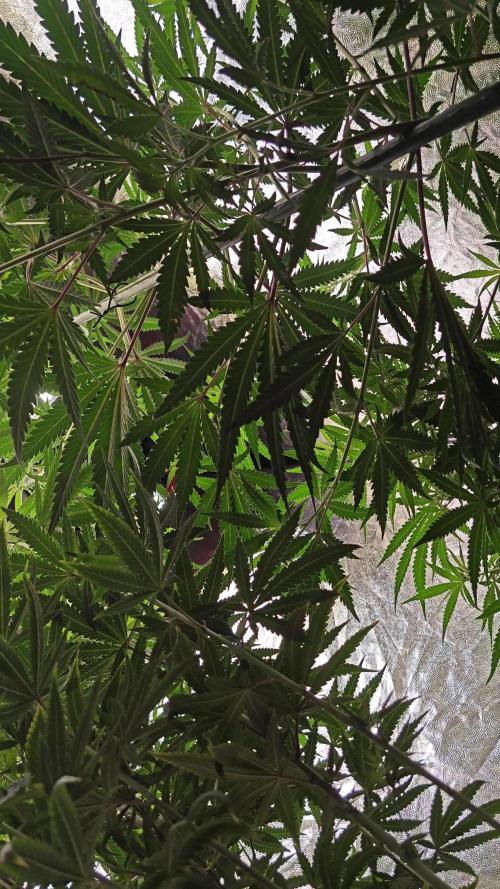
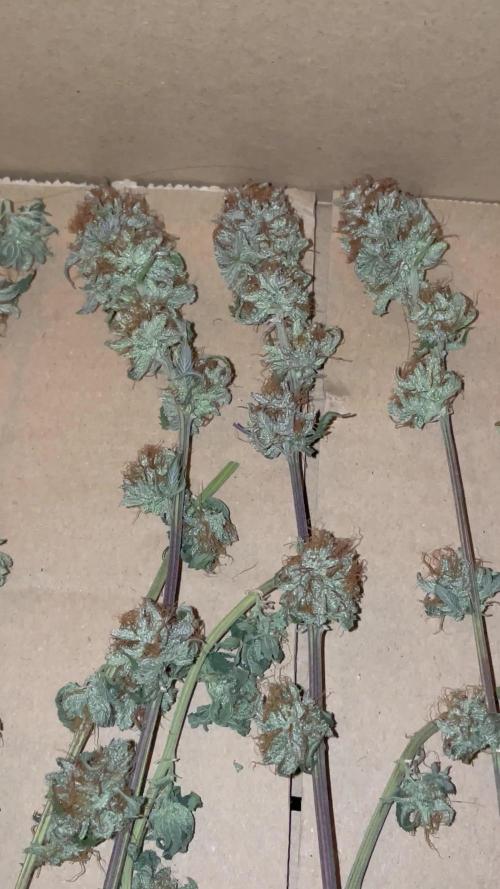
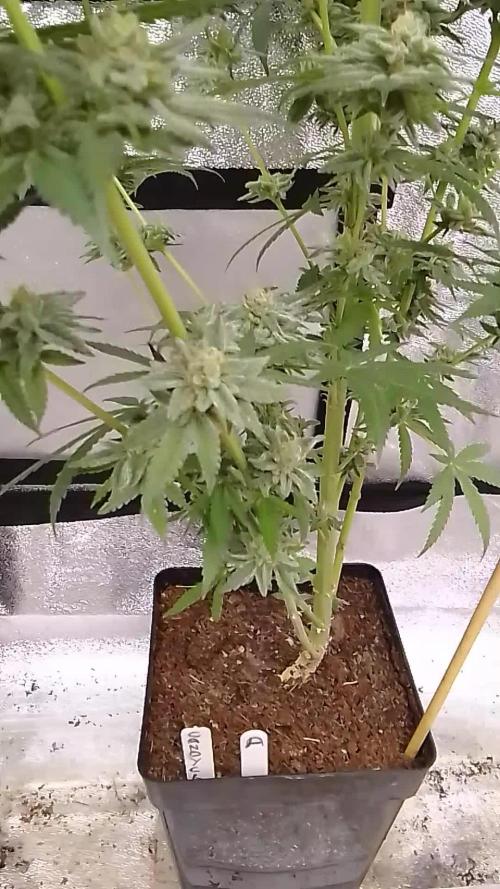
Week 2 and she is fast ! Flowers are developing super nice, she is growing a lot every single day, no slowing down.
She is happy in all the ways and she is getting massive, super tall and great structure overall !
Amazing strain so far !





Likes
16
Share


@bigbootybotanist
Follow
Loved the strawberry pie, it smells sooo fruity and delicious and it smokes amazing definitely will have to grow this strain again !! Thank you fastbuds
Likes
3
Share


@High_Grade_Dadli
Follow
Still haven't trans set 1....gonna jus wait till I get to move them out the green house so it will be new home new atmosphere....set 2 amma jus top dem up for a week or 2(only using half the pot with soil) other than that everything else seem to be on point(2 that were struggling condemned one and put the other with the new set coming up...
Trans new cutting to some small pots all (30) lived...they are coming along well
Mother tree doing her thing putting on some fat iced out nugs scent is hitting n she is mad sticky jus dense up time now and wait for dem trichomes to reach


