






Likes
3
Share


@Ctrellis90
Follow
I loved growing this girl. So much so that I had to double her life and re veg her lol. Well yeah that's story pretty much, it was a long ass grow but I only documented the last 9 weeks out of 8 months! Literally. But now she's gone and that's the last of the zkittz. She grew like a champ and I can't wait to see how this grape pheno taste.

Likes
1
Share

@Mo_Powers
Follow
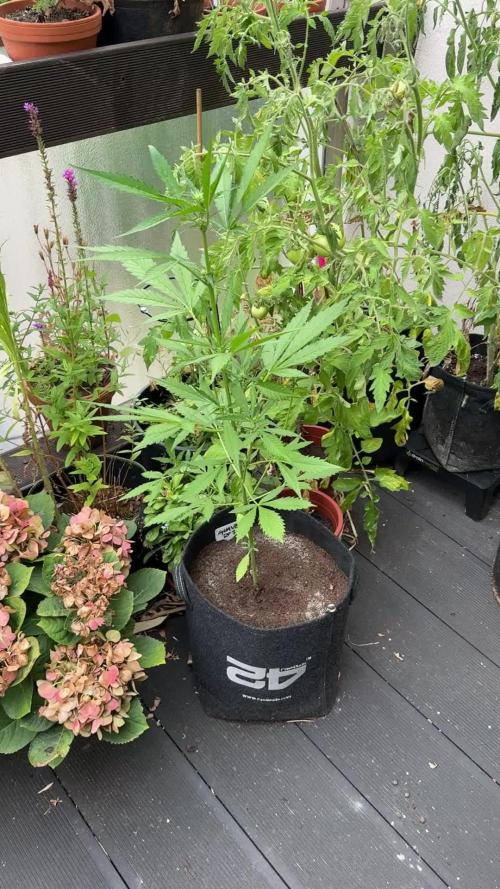
I was away for a few days and she was left to her own devices, but to my surprise she’s come along nicely. She’s now started flowering. I’ve already started LST on the lower shoots.

Processing
Likes
28
Share


@No_Clout
Follow
06/03/19 - unfortunately this was my own fault for being gullible with a mix of just not thinking, but I got a cal deficiency on my OG which was fitting seeing as everything was going well, but I think I have resolved the problem as I’m not see the new growth being affected but I do think it has slowed down in growth abit but I’m guessing that’s understandable, I’m really happy I’ve turned to mills as I can tell a difference from my previous grows, this slight hiccup was my fault but they were that healthy I’m almost positive it’s gonna spring right back 🤞🏻
09/03/19 - definitely looks like it stopped growing for awhile as the gelatos are a hell of a lot bigger now compare to my OG but I think the problems been solved as their was only a little progression on some of the newer leaves but the newest set of leaves seem unharmed includeding the side branches.
12/03/19 - a lot smaller than the gelatos but never the less I’ve started the LST/leaf braiding with the OG aswell to make sure the side branches catch up as they were stunted from the cal mag def


Likes
9
Share


@420keef
Follow
Outcome was alright since i had a mite infestation for so long, still happy of what i got out of the plants! will update on dry weight and taste etc. Also that was the first time in grew with “decent” equipment, since i don’t have alot of money to spend i got these quantum boards off alibaba & i’m pretty impressed off what they are able to do!

Likes
5
Share

@Grow4ever
Follow
Ein paar Tage nicht da und dann solche Büsche im Zelt. Das hieß heute gehts ran ans defolieren und Scrognetz einspannen. Zudem haben Sie leider einen ganzschönen VPD Schock erlitten. Habe heute morgen also erstmal eine Ladung Wasser mit Cal/Mag und etwas algamic gegossen und die Lampe höher gehängt. Heute abend ging es dann direkt ans defolieren, da ich ehrlich gesagt, die Woche sonst wenig Zeit finden werde. Jetzt sollen Sie sich erholen und ins Scrog einfügen. Achja mein Sorgenkind, die Sfv Og Kush, hat immer noch deutliche Blattvervorfungen. Werde Sie in der Blüte, wohl um meine Paranoia zu beruhigen, täglich nach Hermaphroditmus untersuchen.

Likes
49
Share


@masterofsmeagol
Follow
6/1 I'm anxious to get my plants in their final homes. Another 90 degree day today and then it will be cooling off with some showers. I plan to take advantage and utilize that to make the transition. I have some small burns on a couple plants bit considering the weather we've had its nothing. Temperature swings 50 degrees. I hope these girls do OK outside. I was tired and stoned last night and I accidently topped a plant I had already FIMed. Oh well. Transplants soon. Supports screwed in after the heat. Plants have been handling this weather like a champ. Big thick healthy stalks.
UPDATE PUT THE PLANTS IN AROUND 730. Cutting down on light hours I'm poverty close to where we are. It was 95 today. Plants have suprisingly little burning. My fan was taken so they go without that tonight too. In the next few days it's going to cool down and that's when I'll transplant. Only thing left before transplant is sanitizing trellis and supports. Easy peezy. Especially if it's supposed to be in the 50s. And people dent climate change lol. I'm hoping that all this adversity makes my flower a higher quality. I'm glad to have the quantity to pick the best phenos for the BIG POTS. Im trying to stay excited but it's just so dumb hot. Oh well. If the plants can do it so can I. I'm planning to give them some kelp me kelp you next watering and may start some light organic nutes.
6/2 Phone doesn't like uploading my videos. Broke record high temp yesterday 95 and tomorrow we will break the record low 50. Plants withstood the heat well and are doing great. Transplant soon. They were a little light but I held off on the water. Plan on it tomorrow. May transplant tomorrow. I have several videos that haven't uploaded. I thought they did but I was wrong. Oh well.
UPDATE: Forgot to water. Some were light and others could've held off. Did the half a powerade bottle ahain. A litt ke less on the heavier ones. However I'm looking to transplant into final homes tonight and into this weekend. I sanitized a fifty and a forty so my bags and two pots are sanitized. Cage is sanitized and ready and pallets are sanktized and in place. The 40 and 60 fit PERFECT in the small space left from the pallets. Plus the plants always lean the opposite direction so things should go smooth. Only thingvleft is sanitizing stakes, bamboo, plastic garden stakes and all the other plastic training stuff. I'll just soak it while I transplant. Gotta mix the soil first too though.
UPDATE. Heat went higher than expected and hit 90. I figured I'd go back around three and screw in suppirt stakes and begin getting everything ready for transplant (i.e. supports, mix soil, sanitize trellis) before I transplanted tomorrow MORNING was what I had planned. Unfortunately we got a huge thunderstorm with a shot ton of rain and it's gonna continue throughout the night. I think this is God's way of telling me to take a break. I can get up early and get those support stakes screwed in. Then when I get back from the wife's doctor's I can do the transplants. I'm trying to break the labor up into manageable chunks. Looking at my other diaries I can see that my plantscare fine in their three gallon homes. It'd a little disheartening seeing such big clones that I started so much earlier on the other diaries. However I always was fighting SOMETHING (usually more than one thing) and last year was a shit show. At least this year I stay away from anyone else's cannabis any clones and I'm extremely cautious. I've seen my cousin out perform me multiple times with healthy plants like this I'm excited to see how it goes. I really needed the break anyway but tomorrow morning the stakes will be in. Hopefully they'll be outside.
6/3 Broke the record for low days after breaking record for highs. I saw it 94 yesterday and the day before. On the way to my grow at 6am it was 44 degrees and it's not warming up much. Fifties at best. Rainy. I left the door closed. The big door on the otherside got opened as the other end of the garage neededcto he used. If the rain let's up I'm going to set up the grade stakes so I can transplant in the morning and throughout the day. I think I'm going to light dep a couple of them and leave them in the 3's. We'll see.
UPDATE: At 12:30 the temp today was 44. Yesterday it was 94. I can't believe this. Plants are doing great though and are in the garage under lights for the day. The BIG door was open part of the day. Didn't take any pictures (or even enter the grow area) as I sanitized the last 40 gallon pot and a bunch of grade stakes. I drilled the grade stakes to the pallets in the front. The first row is done. Just need to sanitize the plastic trellis itself and finish attaching the other grade stakes. I don't need the fill trellis up by transplant. I just need the bags to not knock over and have SOME support. I'll be back over there either to tonight to put more supports in or tomorrow when I actually plan to start transplanting. I'm getting excited. After dealing witb the stiff that I sanitized I didn't dare go fuck with my plants so I looked through the window. I'll finish sanitizing the net tomorrow. These plants look great. I'm wondering if doing the two diagonal I poles with zipties actually works. It would save me some kone for sure. I'll definitely update in the morning.
6/4 It's warmed up to a balmy 44 degrees. My plantsxare in the garage still. Weather sucks this whole week but after this heavy rain it should be perfect weather to transplant these girls. A little to chilly but it will warm up and I need to get this shit done. I'm trying to do to much at once. I need to just out dirt in bags and get them outside. I'm glad I waited until after this craziness. Breaking temp records for high one day then breaking it for low the next can't be good for the plants. I'll update what gets done today. I may mix soil or I might wait until tomorrow. It will let up some then. Plants still look fabulous 👌
6/5 50 degrees still raining like hell. Rain until Friday. Plants are inside under the onecworking light. Lots of indirect light through the massive windows though. I'm planning on mixing soil today and tomorrow and getting bags and pots half filled. Just trying to break the labor up into manageable pieces. It's probably a good thing I didn't put them in their huge containers before all this rain.
UPDATE: MIXED SOIL 1/3 of each (FOX FARM OCEAN FOREST, HAPPY FROG, AND ROOTS ORGANIC 707). I prepared I believe 11 containers for transplant. I need to sanitize two more containers and I'm good. I got a lot done. Might go back over. Set up extra cams too. I'm excited. Talked to my commercial buddy amd he motivated me. No reason my plants can't handle this shit. I've just had massive personal shit going on. Friday is the next GOOD day but these girls might go out earlier. I'm checking the forecast. I'll sanitize the other containers in the morning and fill them.
6/5 Today is usually my watering day but shit still seems heavy so I'm going to hold off. Despite that i need to transplant. I think they're wet enough. I could do it today. Plants are looking good and weather takes a better turn Friday. It's not raining hard though. It's just sprinkle right now. I may transplant some today depending on how things go. I'll keep the diary updated.
UPDATE: I went back over with the intent to just mix soil and let it acclimate. I decided to try to transplant one. I grabbed a 10th planet and started to go. I had done a bunch of manual labor already so i wasn't thinking. Of course the fucker was dry and didn't wanna come out ofcthe pot and the root ball pretty much decintigrated in my hand so I'm not sure how that will go. Tried again with the Blueberry Cheese Cake. I thought the roots just might not have been rootbound abdcthat could've been the case. After having another rough transplant I recognized I was tired, all the hard stuff is done and it's gonna keep raining until Friday. I wanted to transplant three and put them outside but with the wind and rain and the difficult transplant I let them sit under the light in the garage in indirect light. I had the doors open for a while. Should be open now but i don't want to have to go back over and shut it. Plus I'm not to keen on getting water on my light. Let's hope for a better day tomorrow. This was the only thing I had going good. Phrple punches are still behind. I've decided I'm oing to light dep ttwo of the plants in the 3 gallon pots. The two shittiest or smallest plants (probably purple punch will be light deped.
WENT BACK OVER AT FIVE AND IT APPEARS EVERYTHING IS ALRIGHT. WILL HAVE CHECK IN MORNING. Vid won't upload. Tried multiple times. I'll try again tomm.
6/6 Waiting for a doctor's appointment when I should be transplanting buy whatever. Everything is looking really good. Despite me disint9grating the rootball in my hands the two transplants look great! When I get back I'm planning to get some more work done. It's still lightly raining off and on but the door is up. I'm lettingvthe soil mix acclimate a little bit too. Hard labor is mostly done. Now the intricate part. Wish me luck. Not sure if it will be today bit I'm hoping.
WENT BACK OVER CAUSE IT WASNT RAINING BUT AS SOON AS I WAS CLOSE IT STARTED POURING SO THE PLANTS ARE UNDER THE ONE WORKING 150HPS AND THE AMBIENT LIGHTING FROM THE WINDOWS. TOMORROW IS TRANSPLANT DAY. I WONT HAVE A VEHICKE SO IT WILL BE TRICKY BUT IM GONNA MAKE IT HAPPEN. Opened doors at 530. Video still didn't upload
6/7 Still raining. It's off and on and a nice rain though. It's 53 degrees at noon. I transplanted two 10th planet's into 20 gallon pots. I transplanted these two a little differently. I put the bags in there final spot I side my cage andctransplanted in the misting rain. The first one came out and seemed to be heavier on the bottom and broke off. I tend to "throw" them in the hole before they collapse. With my anxiety I suck at transplanting. Plus these plants haven't filled the 3 gallon pots with roots yet but i want hem in their final homes and its time to go outside. I transplanted the other two plants indoors and let them have days in the garage with the door open and the light on then protection from the elements at night. I've been doing this for awhile. They would all be outside if the weather wasn't so shitty. This rain is supposed to stop. I'm curious as to what will be the fate of the two plantsci transplanted and left outside. I'm praying and hoping for the best. I also put my back tarp up so I have a wind break between rhe buildings. I stopped working because I didn't want to fuck anything up. Anxiety disorders suck. TOOK A BUNCH OF VIDS BUT THEY WONT UPLOAD. GOES FROM 9% TO 65% BUT ALWA7S TURNS RED "FILE FAILED TO LOAD". I'LL KEEP THE DIARY UPDATED. ESPECIALLY IF I GO BACK OVER. WAS ABLE TO LOAD A COUPLE VIDEOS. I GUESS ITS NOT AS BAD AS I THOUGHT. AT LEAST I HOPE. WENT BACK OVER AT 3 AND CHECKED THINGS OUT. THE TWO REXENT TRANSPLANTS I LEFT OUTSIDE SEEMED TO BE IMPROVING. DESPITE THE FACT I DUMPED A SHIT TON OF SOIL ALL OVER ONE OF THEM. IT SNAPPED A LITTLE BRANCH CLOSEST TO THE SURFACE. ITS STUFF I'LL REMOVE ANYWAY BUT STILL. IM REALLY CROSSING MY FINGWRS AND PRAYING THESE GIROS WILL MAKE IT. With everything i have going on tjis is my respite.IM GOING TO TRY TO SEE WHAT I CAN ACCOmplish TOMORROW. SOME OF THE PURPLE PUNCHES ARENT READY FOR TRANSPLANTING THOUGH. I ALSO ADDED TEO TARPS TO THE CAGECTO COVER THE WIND TOWER BETWEEN THE TWO BUILDINGS. THIS IS GOING TO BE A GOOD YEAR! Shut the door at seven. For some reason the two 10th planet's I transplanted (that fell all over the plant and I thought mightve broke it) look awesome lol. Despite the ridiculous pouring rain. It's going to let up soon and we are do fir some good weather. I'm trying to get everything (that isn't getting light depoed) into the cage. Four transplanted. Ten (I mean 8 more) to go.


Likes
6
Share


@Lovemabud
Follow
The plant went crazy this week, easily doubled its size. Really happy with how its going, nice even canopy after the LST from weeks 2-4. I decided to fertilise this week with some left over Mills nutrients I had from a previous grow. Really think the plant appreciated it. Hopefully it shows me the appreciation with fat juicy buds.
Likes
77
Share


@ArucambaAutoflowers297
Follow
Day 51.
Growth:
The girls stopped growing vertically and are between 62 and 75cm. Theyre all frosty already so im guessing theyll be frosty girls once they have put on weight. They arent looking healthy and i fucked up this week :( Ill explain everything down below.
Training:
Selective deleafing (cannabalized leaves)
Nutrients:
Ok so i had some ph issues last week and flushed as soon as i could( had to wait for soil to dry) I explained this in depth in last week's diary.
Anyway, they got flushed and finally fed them 3 ml of canna terra florres 2-2-4. And next feeding will be 1ml of Canna Mono Calcium 15% and 1ml of Canna Mono Magnesium 7%
Issues:
The soil wasnt completely dry yet when i first fed after the flush but the girls were suffering and begging for theyre first dose of flores. I also carefully gave a foliar feeding to help her a bit during her flush instead of cannabalizing the shit out of theirselves. According to the time I have set on the timer the girls shouldve had 2 more hours of darkness after the foliar. Turns out somehow my timer wasnt set the way i left it and it ended up burning a few leaves, luckily it was a big foliar feeding. I must of bumped into it when setting up the tent. My dumbass shouldve checked the timer more often and im so mad at myself for letting this happen.
Environment:
So the ladies have a new home, a 27"×27"×63" tent. I didnt expect them to fit properly but it did!. The tent is definitely full. But i dont think ill run into issues. Right now i have a 150m3/h filter with a 185m3/h fan. The temperature and humidity is under control for now. I do have a little bit of positive pressure in the tent but not enough to inflate the tent, the room doesnt smell so im assuming no air is escaping from anywhere other then the exhaust. I will be updrading the inline fan and filter so i dont run into heat problems
Likes
6
Share

@eldruida_lamota
Follow
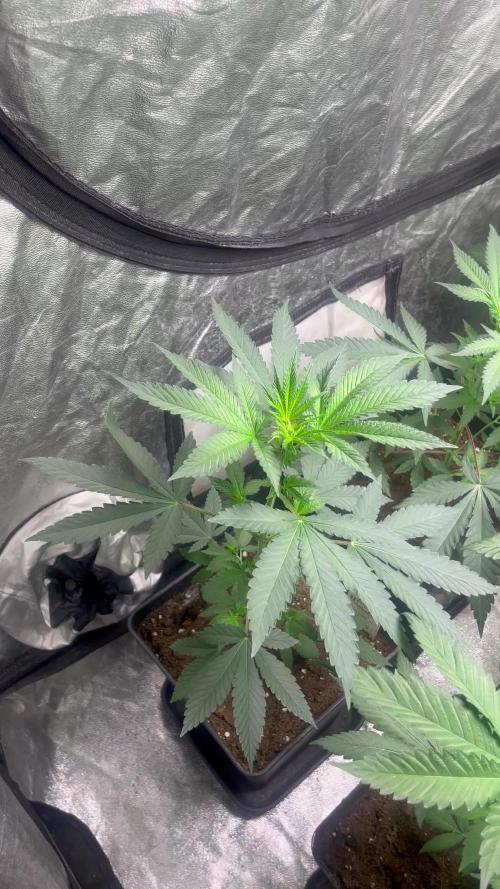
Vamos familia, actualizamos la sexta semana de crecimiento de estas Papayton de FastBuds.
La temperatura que estuvo entre los 24-26 grados y humedad dentro de los rangos correctos.
Todavía estamos en el ciclo 16 horas luz, 8 oscuridad, estiraron bien y ensancharon bastante también, el color es verde sano.
Se nota que los nutrientes de la marca Agrobeta hacen sus funciones.
También realicé una poda de bajos que yo si las veo necesarias para explotar después la flor.
- os dejo por aquí un CÓDIGO: Eldruida ,descuento para la tienda de MARS HYDRO.
https://www.mars-hydro.com
Hasta aquí todo, Buenos humos 💨💨💨
Likes
18
Share


@BABS_Babies
Follow
Things are really starting to smell strong and getting fun. Seeing some frosty Trichomes. Excited!


Processing
Likes
5
Share


@PETEROG
Follow
Hey guys everything is going great with these ladies all 6 germinated and popped up in 3 days after planting 1 of the six shooters is a lot smaller than its sisters so I've order LEMON PIE from FASTBUDS should be here tomorrow to take its place and I'm going to move the six shooter outside so if you would like to see its journey comment and like bellow ⤵️
The only thing I wish I did differently would of been starting these girls under a cfl or a cheap led to stop stretching but lesson learned if anyone has any question's please comment and thank-you all for your support ✌️
Processing
Likes
10
Share


@KcKush
Follow
*Increased PPM from 550 to 650
*Will probably start flowering in a week once I get my tent set up.
*They were looking kinda droopy maybe cold weather and to much water.

Likes
37
Share


@Haoss
Follow
The plant has removed all the leaves, the buds should be dried in the dark, at 21 degrees at 50% humidity

Likes
31
Share


@KnightRider
Follow
Hey Cannafam,
Horray the suns been out this week and my gals been soaking up some rays most of the week, apart from today and yesterday wheres its been raining.
Shes now started flowering and smell has noticibly increased, i may have to move her again soon as when it increases more she may be noticed as i know this one is strong on odour! Ive managed to get another feed in her this week and although shes still not a great colour shes recovering nicely 😊
I have however had to pluck a few leaves due to leaf miners so hopefully they dont spread!
Apart from that shes had good growth and really happy that this gal is bouncing back for me.
Thats all for now, thanks for stopping by 😊✌️
Likes
119
Share


@PEAKYPLANTERS
Follow
Hello, fellow growers
I thank you for having dedicated your attention to my garden and I hope that the contents are to your liking and help for your growth.
Likes
46
Share


@Biggy2k20
Follow
Slowly slowly catchy monkey 😂 looking good for its final week, pistils are now starting to change colour. Fox tail is still present but not too bad. This week will be the time for the snip following magnesium deficiency and a flush of 0 ppm water via 7 stage filter.

Likes
5
Share

@FicoCG
Follow
Liebe Leute,
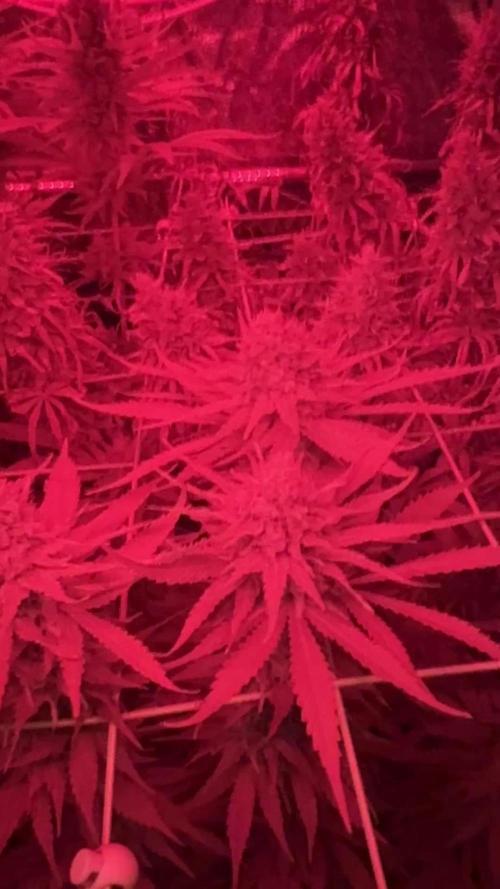
Die Woche 8 ist im vollen Gange!!!
Ich habe mir heute die Mühe gemacht und das Vorschaltgerät der Hauptlampe aufs Dach mit einem Blech zum Schutz gelegt, damit die Temperatur etwas runter geht!
Ich habe jetzt für die letzten Wochen die Lampe nochmal auf volle Power gedreht und hoffe, das ich jetzt bei den Außentemperaturen bei nicht mehr als 29 Grad Celsius im Zelt Lande.
Die GG#4 und Purple Haze, haben den Düngeschock gut verkraftet und gehen top in die letzten Wochen der Blüte.
Leider hat es die Lemon Skunk (Red No.2) etwas erwischt, aber sie müsste es auch bis zum Ende durchhalten.
Die Trichome sind noch klar und warten nur noch darauf zum Höhepunkt zu kommen. Ich ernte aus Erfahrung wegen der Wirkung bei ca. 10% Bernstein. Also die nächsten zwei Wochen Augen ganz weit auf und die Lupe aus der Hose kramen.
Ich hoffe euch gefallen die Bilder und wie die Lady‘s aussehen!
Liebe Grüße, euer Fićo

