Likes
422
Share
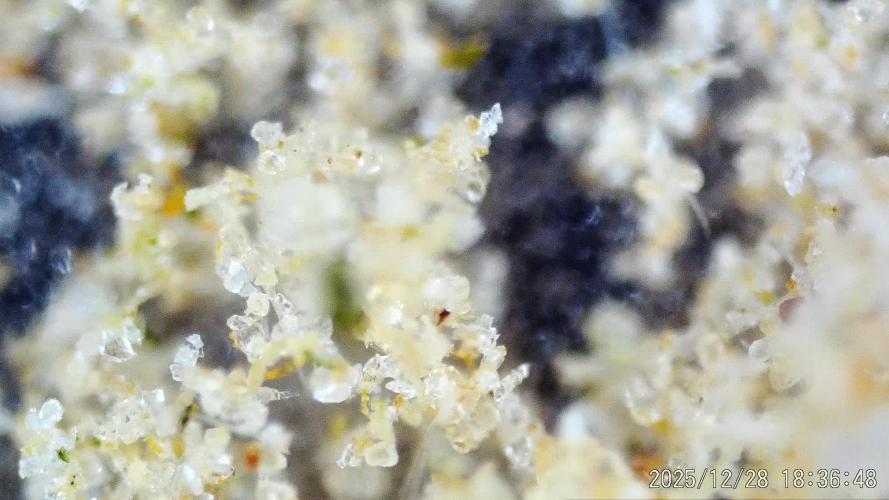
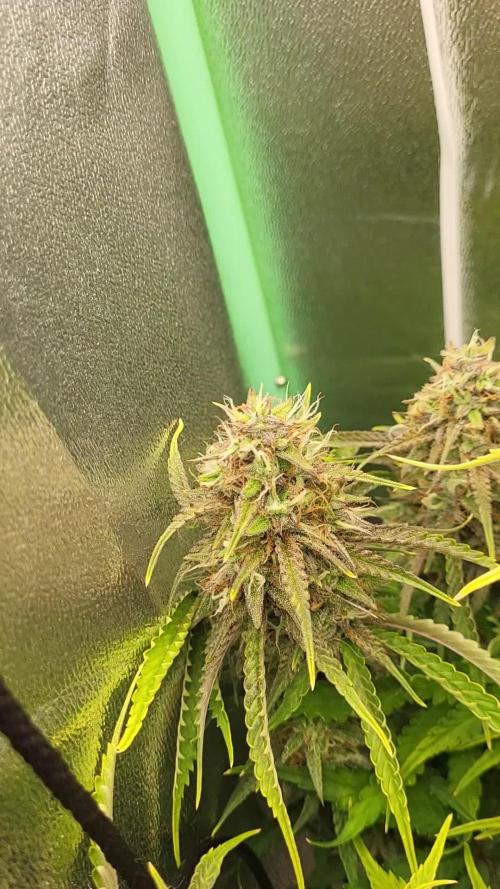
Hi all, Welcome to my🍌💜👊 week update Thank you so much for all support on this bananas journey. Much appreciate all your likes, follows and comments. 🙏💚❤️💜 Week 14 Jan 15- Jan 21 Flushing and preparation for harvest 😁 on Jan 15 feed girls for the last time with nutrients. It was reduced dose by 60% 5ltr no runoff. Following morning topped up with 6ltr of ph down and only fish shit. Runoffs PH 6.2. Second watering Jan 18 6tr and 7ltr on Jan 21. It was last watering. Week went very well. No white pistils hairs on Athena for a good while and barely few left on Xena. Many buds have different shapes and colours but all of them are equally hard as rocks, sticky and smelling so deliciously. This week trichomes development was just like I wish for. Just milky and amber in play Status on Jan 22. Mostly of buds 20-50% amber. It's just perfect for my needs🤤 On Jan 21 lights were on for the last time and girls will be harvested after 48 or 72h of darkness. Stay tuned for the final week update! Peace and love brothers and sisters ✌️💚👨‍🌾 Links https://2fast4buds.com/seeds/banana-purple-punch-auto https://plagron.com https://www.biobizz.com/ https://fishheadfarms.com/
Likes
17
Share
Sono contento e difficilmente sono contento. Cinque piante identiche e sembra di fumare la vera gorilla glue con note dolci quasi a ricordare delle caramelle. Una pianta invece ricorda di più la zkittlez. Davvero contento di aver scelto questa casa 😊
Likes
5
Share
Net going in next week lots of branches not holding their
Likes
92
Share
Week 7 Flower Report – The Masterpiece Garden Unfolds 🌱 Introduction Welcome back to the most thrilling chapter of our journey yet! Week 7 of flower is here, and the garden has transformed into a paradise of unique beauty and diversity. Every plant has its own personality, showcasing the results of all the hard work, dedication, and love poured into this run. Let’s dive into the details and celebrate these girls like never before—because they deserve it! 🌸 Plant-by-Plant Breakdown Papaya Zoap The rebel queen of the garden, aiming for the stars with her towering structure. Her dense, frosty white nugs sparkle like diamonds, and her leaves are fading to a stunning yellow hue—a clear sign she’s ready to shine. Her aroma is captivating, leaving no doubt she’s going to be a showstopper. Gorilla Melon Standing tall as the second in command, this beauty is all strength and vigor. Her vibrant green foliage cradles thick, frosty buds that exude a fragrance worthy of her name. A true contender for the title of MVP. RS11 This one’s a frost factory! Long, elegant buds dripping in trichomes, with leaves gracefully fading to yellow as she transitions toward the finish line. Her balanced stature and impeccable structure make her a dream to cultivate. Green Papaya The frostiest of them all, her sugar leaves are curling under the weight of so much resin. Every glance reveals a shimmering coat of trichomes that’s hard to believe. If frost were a competition, she’d already have the gold medal! Mandarin Squeeze Dark and mysterious, this beauty stands out with her rich, deep green tones and impressively dense buds. Her flowers feel like rocks, and her aroma hints at a citrusy explosion waiting to happen. Punch Pie What can we say about this heavyweight? Her large, dense buds are jaw-dropping, and her presence in the tent is commanding. She’s proving to be a genetic masterpiece, delivering beyond expectations. 🌞 Environmental Mastery This week, we’ve begun the slow decline of PPFD to 750, keeping reds and UVs strong while easing back on whites—a calculated move to guide these girls into the final stages. The room’s stats speak volumes: • Temps: 27.8°C with RH at 64.8%. • CO2: 800 ppm for consistent growth energy. • Reservoir: PH 6.16, TDS 791, temp 21°C. • Soil Stats: TDS 669, temp 22°C. Even the fun facts are worth noting: leaf temps are ranging between 26.6°C and 24.2°C, while the LED bars are holding steady at 38°C, and the ICL-300 at 35.6°C. Aero Fan at 23°C and the filter output at 24.7°C highlight the precision and control in this room, all thanks to the incredible TrolMaster ecosystem. 💧 Feeding and Nutrient Update Our transition from organic minerals to a solo mineral approach has been a game-changer. These girls are thriving! Here’s the recipe this week: • System Clean: 0.25 ml/L. • RO Water Conditioner: 0.8 ml/L. • All-in-One Liquid: 1.75 ml/L. • K-Boost: 0.5 ml/L. • Regulator: 0.15 ml/L. This blend is bringing out the best in each plant, delivering unparalleled frost, density, and aroma. The stability of the pH, thanks to minerals, has made life simpler while pushing the plants toward peak performance. 🌟 Reflecting on Progress It’s a joy to walk into this room and witness the results of months of effort. Each plant is delivering on its promise, and the smells, colors, and trichome production are truly next-level. The journey has been demanding, but the rewards are sweeter than ever. The curiosity to see how they finish is at an all-time high! 💬 Shoutouts and Community Love As always, massive gratitude to the sponsors that make this possible: • TrolMaster for precise environmental control. • Aptus Holland for top-tier nutrients. • Cannakan for their unwavering support. • Pro-Mix Soil for a robust foundation. • Seed Banks for the incredible genetics. To the Grow Diaries community, our followers, lovers, haters, and everyone in between—thank you for being part of this journey. Your engagement fuels the passion to keep growing, learning, and sharing. 📣 Call to Action If you haven’t already, check out our YouTube and Instagram for exclusive content and updates. Don’t forget to hit that like button, subscribe, and ring the bell so you never miss a beat. Join us for the next episode, where we’ll dive into super-cropping and give the room another round of defoliation as these girls keep reaching for the finish line. Let’s keep growing, learning, and celebrating this beautiful process. 🌱✨ Growers Love, Your Grateful Gardener Discount Codes so you can save big on your next check out 💚💚💚 Kannabia - DOGDOCTOR 30% off SeedsmanSeeds - DOGDOCTOR 10% off CannaKan- DOGDOCTOR 15% off terpyz.eu - DOCTOR 15% off The Neutralizer - PORKIT5-DOG 15% off Fast Buds - DOGDOCT 15% off As always thank you all for stopping by, for the love and for it all , this journey of mine wold just not be the same without you guys, the love and support is very much appreciated and i fell honored and so joyful with you all in my life 🙏
 With true love comes happiness 💚🙏 Always believe in your self and always do things expecting nothing and with an open heart , be a giver and the universe will give back to you in ways you could not even imagine so 💚 Friendly reminder all you see here is pure research and for educational purposes only Growers Love to you all 💚💚💚
Likes
14
Share
@Wenz004
Follow
My F-MILF (NL untopped) is going to eat my tent She is not soaking 5 l (nutrified)per day...she drinks it with open mouth. Not a single drop drain Getting this: Aptus Topbooster 4 drops/l Aptus P-boost 10 drops/l Aptus regulator 3 drops/l Aptus All in one 0.6 ml/l Aptus CaMg 0.6 ml/l Trying to keep ph not lower than 6.4... Not easy because P-boost puch it down a lot All TA nutrients above are only for NL untoppes in smaller tent
Likes
8
Share
@MTUZZIO
Follow
Fully into flower. Filling in well, smell coming along nicely (some are like lemon candy, some are a little more skunky). I had a Mars Hydro TSW2000 sitting around so I added that in between the two lights/beds which really helped to even out the PAR. Dead nuts in the middle of the beds is about 1000, the edges are about 700. Super cropped a few that were just reaching too much. Put up some trellis, I think I'm going to need the supports, and helped to spread out some of the stacks that were going to be a little too close. Did a little more defoliation. It's really just maintenance at this point (and standing there admiring and smelling over and over) Been mixing up a little organic nutrient cocktail to supplement with, using BuildASoil BuildABloom (soy protein hydrolysate, rock phosphate, gypsum, magnesium sulfate, potassium sulfate), Fermented Plant Extracts: Liquid Pumpkin Extract (Probiotically Grown Pumpkins, Clean Mountain Water, EM-1, Home Made LABS (Lactobacillus Serum), Super Cera Powder, and Molasses), BuildASoil Aloe and the Quillaja extract. I'll do a foliar spray first thing in the morning and replace the first fertigation of the day with this same mix (at the normal EC and PH level). They seem to love it and respond really well. I really want to switch over completely to organic living soil, I'm probably going to after this run, so it's fun to experiment with some of the ingredients.
Likes
3
Share
@mjumbo
Follow
week 14 / 2 weeks of flowering Give them BioNeem from Namasté nutrientes to keep them really Green.. I think it Is a great product to mantain your plants free from plagues. also I have used tricomas and Flora Booster to them. Will apply surely one dose More in two weeks and no More... not too much smell but they are growing nice.
Likes
34
Share
Yellow butterfly came to see me the other day; that was nice. Starting to show signs of stress on the odd leaf, localized isolated blips, blemishes, who said growing up was going to be easy! Smaller leaves have less surface area for stomata to occupy, so the stomata are packed more densely to maintain adequate gas exchange. Smaller leaves might have higher stomatal density to compensate for their smaller size, potentially maximizing carbon uptake and minimizing water loss. Environmental conditions like light intensity and water availability can influence stomatal density, and these factors can affect leaf size as well. Leaf development involves cell division and expansion, and stomatal differentiation is sensitive to these processes. In essence, the smaller leaf size can lead to a higher stomatal density due to the constraints of available space and the need to optimize gas exchange for photosynthesis and transpiration. In the long term, UV-B radiation can lead to more complex changes in stomatal morphology, including effects on both stomatal density and size, potentially impacting carbon sequestration and water use. In essence, UV-B can be a double-edged sword for stomata: It can induce stomatal closure and potentially reduce stomatal size, but it may also trigger an increase in stomatal density as a compensatory mechanism. It is generally more efficient for gas exchange to have smaller leaves with a higher stomatal density, rather than large leaves with lower stomatal density. This is because smaller stomata can facilitate faster gas exchange due to shorter diffusion pathways, even though they may have the same total pore area as fewer, larger stomata. Leaf size tends to decrease in colder climates to reduce heat loss, while larger leaves are more common in warmer, humid environments. Plants in arid regions often develop smaller leaves with a thicker cuticle and/or hairs to minimize water loss through transpiration. Conversely, plants in wet environments may have larger leaves and drip tips to facilitate water runoff. Leaf size and shape can vary based on light availability. For example, leaves in shaded areas may be larger and thinner to maximize light absorption. Leaf mass per area (LMA) can be higher in stressful environments with limited nutrients, indicating a greater investment in structural components for protection and critical resource conservation. Wind speed, humidity, and soil conditions can also influence leaf morphology, leading to variations in leaf shape, size, and surface characteristics. Small leaves: Reduce water loss in arid or cold climates. Environmental conditions significantly affect gene expression in plants. Plants are sessile organisms, meaning they cannot move to escape unfavorable conditions, so they rely on gene expression to adapt to their surroundings. Environmental factors like light, temperature, water, and nutrient availability can trigger changes in gene expression, allowing plants to respond to and survive in diverse environments. Depending on the environment a young seedling encounters, the developmental program following seed germination could be skotomorphogenesis in the dark or photomorphogenesis in the light. Light signals are interpreted by a repertoire of photoreceptors followed by sophisticated gene expression networks, eventually resulting in developmental changes. The expression and functions of photoreceptors and key signaling molecules are highly coordinated and regulated at multiple levels of the central dogma in molecular biology. Light activates gene expression through the actions of positive transcriptional regulators and the relaxation of chromatin by histone acetylation. Small regulatory RNAs help attenuate the expression of light-responsive genes. Alternative splicing, protein phosphorylation/dephosphorylation, the formation of diverse transcriptional complexes, and selective protein degradation all contribute to proteome diversity and change the functions of individual proteins. Photomorphogenesis, the light-driven developmental changes in plants, significantly impacts gene expression. It involves a cascade of events where light signals, perceived by photoreceptors, trigger changes in gene expression patterns, ultimately leading to the development of a plant in response to its light environment. Genes are expressed, not dictated! While having the potential to encode proteins, genes are not automatically and constantly active. Instead, their expression (the process of turning them into proteins) is carefully regulated by the cell, responding to internal and external signals. This means that genes can be "turned on" or "turned off," and the level of expression can be adjusted, depending on the cell's needs and the surrounding environment. In plants, genes are not simply "on" or "off" but rather their expression is carefully regulated based on various factors, including the cell type, developmental stage, and environmental conditions. This means that while all cells in a plant contain the same genetic information (the same genes), different cells will express different subsets of those genes at different times. This regulation is crucial for the proper functioning and development of the plant. When a green plant is exposed to red light, much of the red light is absorbed, but some is also reflected back. The reflected red light, along with any blue light reflected from other parts of the plant, can be perceived by our eyes as purple. Carotenoids absorb light in blue-green region of the visible spectrum, complementing chlorophyll's absorption in the red region. They safeguard the photosynthetic machinery from excessive light by activating singlet oxygen, an oxidant formed during photosynthesis. Carotenoids also quench triplet chlorophyll, which can negatively affect photosynthesis, and scavenge reactive oxygen species (ROS) that can damage cellular proteins. Additionally, carotenoid derivatives signal plant development and responses to environmental cues. They serve as precursors for the biosynthesis of phytohormones such as abscisic acid () and strigolactones (SLs). These pigments are responsible for the orange, red, and yellow hues of fruits and vegetables, while acting as free scavengers to protect plants during photosynthesis. Singlet oxygen (¹O₂) is an electronically excited state of molecular oxygen (O₂). Singlet oxygen is produced as a byproduct during photosynthesis, primarily within the photosystem II (PSII) reaction center and light-harvesting antenna complex. This occurs when excess energy from excited chlorophyll molecules is transferred to molecular oxygen. While singlet oxygen can cause oxidative damage, plants have mechanisms to manage its production and mitigate its harmful effects. Singlet oxygen (¹O₂) is considered a reactive oxygen species (ROS). It's a form of oxygen with higher energy and reactivity compared to the more common triplet oxygen found in its ground state. Singlet oxygen is generated both in biological systems, such as during photosynthesis in plants, and in cellular processes, and through chemical and photochemical reactions. While singlet oxygen is a ROS, it's important to note that it differs from other ROS like superoxide (O₂⁻), hydrogen peroxide (H₂O₂), and hydroxyl radicals (OH) in its formation, reactivity, and specific biological roles. Non-photochemical quenching (NPQ) protects plants from damage caused by reactive oxygen species (ROS) by dissipating excess light energy as heat. This process reduces the overexcitation of photosynthetic pigments, which can lead to the production of ROS, thus mitigating the potential for photodamage. Zeaxanthin, a carotenoid pigment, plays a crucial role in photoprotection in plants by both enhancing non-photochemical quenching (NPQ) and scavenging reactive oxygen species (ROS). In high-light conditions, zeaxanthin is synthesized from violaxanthin through the xanthophyll cycle, and this zeaxanthin then facilitates heat dissipation of excess light energy (NPQ) and quenches harmful ROS. The Issue of Singlet Oxygen!! ROS Formation: Blue light, with its higher energy photons, can promote the formation of reactive oxygen species (ROS), including singlet oxygen, within the plant. Potential Damage: High levels of ROS can damage cellular components, including proteins, lipids, and DNA, potentially impacting plant health and productivity. Balancing Act: A balanced spectrum of light, including both blue and red light, is crucial for mitigating the harmful effects of excessive blue light and promoting optimal plant growth and stress tolerance. The Importance of Red Light: Red light (especially far-red) can help to mitigate the negative effects of excessive blue light by: Balancing the Photoreceptor Response: Red light can influence the activity of photoreceptors like phytochrome, which are involved in regulating plant responses to different light wavelengths. Enhancing Antioxidant Production: Red and blue light can stimulate the production of antioxidants, which help to neutralize ROS and protect the plant from oxidative damage. Optimizing Photosynthesis: Red light is efficiently used in photosynthesis, and its combination with blue light can lead to increased photosynthetic efficiency and biomass production. In controlled environments like greenhouses and vertical farms, optimizing the ratio of blue and red light is a key strategy for promoting healthy plant growth and yield. Understanding the interplay between blue light signaling, ROS production, and antioxidant defense mechanisms can inform breeding programs and biotechnological interventions aimed at improving plant stress resistance. In summary, while blue light is essential for plant development and photosynthesis, it's crucial to balance it with other light wavelengths, particularly red light, to prevent excessive ROS formation and promote overall plant health. Oxidative damage in plants occurs when there's an imbalance between the production of reactive oxygen species (ROS) and the plant's ability to neutralize them, leading to cellular damage. This imbalance, known as oxidative stress, can result from various environmental stressors, affecting plant growth, development, and overall productivity. Causes of Oxidative Damage: Abiotic stresses: These include extreme temperatures (heat and cold), drought, salinity, heavy metal toxicity, and excessive light. Biotic stresses: Pathogen attacks and insect infestations can also trigger oxidative stress. Metabolic processes: Normal cellular activities, particularly in chloroplasts, mitochondria, and peroxisomes, can generate ROS as byproducts. Certain chlorophyll biosynthesis intermediates can produce singlet oxygen (1O2), a potent ROS, leading to oxidative damage. ROS can damage lipids (lipid peroxidation), proteins, carbohydrates, and nucleic acids (DNA). Oxidative stress can compromise the integrity of cell membranes, affecting their function and permeability. Oxidative damage can interfere with essential cellular functions, including photosynthesis, respiration, and signal transduction. In severe cases, oxidative stress can trigger programmed cell death (apoptosis). Oxidative damage can lead to stunted growth, reduced biomass, and lower crop yields. Plants have evolved intricate antioxidant defense systems to counteract oxidative stress. These include: Enzymes like superoxide dismutase (SOD), catalase (CAT), and various peroxidases scavenge ROS and neutralize their damaging effects. Antioxidant molecules like glutathione, ascorbic acid (vitamin C), C60 fullerene, and carotenoids directly neutralize ROS. Developing plant varieties with gene expression focused on enhanced antioxidant capacity and stress tolerance is crucial. Optimizing irrigation, fertilization, and other management practices can help minimize stress and oxidative damage. Applying antioxidant compounds or elicitors can help plants cope with oxidative stress. Introducing genes for enhanced antioxidant enzymes or stress-related proteins over generations. Phytohormones, also known as plant hormones, are a group of naturally occurring organic compounds that regulate plant growth, development, and various physiological processes. The five major classes of phytohormones are: auxins, gibberellins, cytokinins, ethylene, and abscisic acid. In addition to these, other phytohormones like brassinosteroids, jasmonates, and salicylates also play significant roles. Here's a breakdown of the key phytohormones: Auxins: Primarily involved in cell elongation, root initiation, and apical dominance. Gibberellins: Promote stem elongation, seed germination, and flowering. Cytokinins: Stimulate cell division and differentiation, and delay leaf senescence. Ethylene: Regulates fruit ripening, leaf abscission, and senescence. Abscisic acid (ABA): Plays a role in seed dormancy, stomatal closure, and stress responses. Brassinosteroids: Involved in cell elongation, division, and stress responses. Jasmonates: Regulate plant defense against pathogens and herbivores, as well as other processes. Salicylic acid: Plays a role in plant defense against pathogens. 1. Red and Far-Red Light (Phytochromes): Red light: Primarily activates the phytochrome system, converting it to its active form (Pfr), which promotes processes like stem elongation and flowering. Far-red light: Inhibits the phytochrome system by converting the active Pfr form back to the inactive Pr form. This can trigger shade avoidance responses and inhibit germination. Phytohormones: Red and far-red light regulate phytohormones like auxin and gibberellins, which are involved in stem elongation and other growth processes. 2. Blue Light (Cryptochromes and Phototropins): Blue light: Activates cryptochromes and phototropins, which are involved in various processes like stomatal opening, seedling de-etiolation, and phototropism (growth towards light). Phytohormones: Blue light affects auxin levels, influencing stem growth, and also impacts other phytohormones involved in these processes. Example: Blue light can promote vegetative growth and can interact with red light to promote flowering. 3. UV-B Light (UV-B Receptors): UV-B light: Perceived by UVR8 receptors, it can affect plant growth and development and has roles in stress responses, like UV protection. Phytohormones: UV-B light can influence phytohormones involved in stress responses, potentially affecting growth and development. 4. Other Colors: Green light: Plants are generally less sensitive to green light, as chlorophyll reflects it. Other wavelengths: While less studied, other wavelengths can also influence plant growth and development through interactions with different photoreceptors and phytohormones. Key Points: Cross-Signaling: Plants often experience a mix of light wavelengths, leading to complex interactions between different photoreceptors and phytohormones. Species Variability: The precise effects of light color on phytohormones can vary between different plant species. Hormonal Interactions: Phytohormones don't act in isolation; their interactions and interplay with other phytohormones and environmental signals are critical for plant responses. The spectral ratio of light (the composition of different colors of light) significantly influences a plant's hormonal balance. Different wavelengths of light are perceived by specific photoreceptors in plants, which in turn regulate the production and activity of various plant hormones (phytohormones). These hormones then control a wide range of developmental processes.
Likes
12
Share
As of day 14, the Blackberry is growing well! The growth is vigorous and pretty healthy, so I am going to just keep doing what I am doing. I am temporarily using dry cal-mag crystals to the same ppm/EC (.5-.6) as calimagic hasn't caused any issues yet. I can make my way through the bag I have before buying more calimagic, and not be wasteful! The Blackberry will be ready to be topped this week, so that will definitely be updated when the time is right. Happy growing, and stay safe everyone! 🌱👍 Day 15: plant has been FIMed! Day 17: the plant is continuing to have healthy vegitative growth. I am waiting for slightly longer branches, and then I can start training the plant. Day 19: good, bushy growth 👍
Likes
5
Share
Mein pH Messgerät war kaputt, der pH deswegen um 0,5 zu hoch. Das habe ich angepasst, Apera kommt mir nicht mehr ins Haus. Die RLF ist sehr niedrig, seit gestern habe ich einen kleinen Humidifier from, mal schauen ob der taugt.
Likes
5
Share
Well it’s week 5. Week one of what I’m gonna call flower. I got 2 plants in full flower and the others are coming from begins fast. Dealt with a mag issue this past week got it straightened out. The banana purple punch plants just aren’t thriving like the rest in my tent. I’m gonna grow them again because I’m pretty positive it a me problem. The plants are doing awesome and these fast buds grow insanely fast. I’ve been creeping my light up every week. I’m at 60 percent on this evo 3. Gonna bump it up to 70 percent later when my light comes back on
Likes
22
Share
@SkunkyDog
Follow
Hallo zusammen 🤙. Alle 3 Pflanzen sind geerntet. Wir sehen uns in 2 Wochen mit dem Erntebericht. Bis dann 🤙
Likes
4
Share
Week 4 for the indoor black Lebanon by SSSC Phenos 4 & 1 are for sure the ones packing on the size of buds first. Hoping the other 2 catch up. They were only feed plain water next week ill probably give them a feeding of greenhouse feeding bio enhancer for some extra boost. They are all smelling of a strong nutmeg type spice atm.
Likes
77
Share
The final Week, before harvest! She has some massive towering buds! 2.5 gallons of water is lasting this plant 5-6 days before drying out, and ready for more.. She was harvested instead of being watered!