


Likes
Comments
Share


@KeemBboomin
Follow
Once again these girls don’t really need much just watering when dry but other than that we are on cruise mode. I have been checking trichomes for about a week now and man is she almost there I should be giving them lights out with in another week or two can’t wait
Likes
10
Share


@Martymar021208
Follow
First week of flower these girls are definitely ready to start producing. I have lollipopped them and have done a tone of L.S.T. with little super cropping to start building that strentght for big colas. Extremely excited about this run. These mac and jac girls were under a marshydro fc 4800 all of veg and switched to the spider farmer sf 4000 to finish the run.
Lighting has switched from a 18/6 to a 12/12. Earthy smells have become stronger. The plants are very healthy and growing strong best of luck to your grows to all my growmies hope you all a plentiful harvest.

Likes
57
Share


@Roberts
Follow
Runtz Punch is growing great. She has a bunch of pistils for preflowering. I switched the light time today. I will do a solution change to blooming nutrition next week. I defoliated her some, and lollipopped her more. Everything is going great. Thank you Spider Farmer, Athena, and Herbies Seeds. 🤜🏻🤛🏻🌱🌱🌱
Thank you grow diaries community for the 👇likes👇, follows, comments, and subscriptions on my YouTube channel👇.
❄️🌱🍻 Happy Growing 🌱🌱🌱
https://youtube.com/channel/UCAhN7yRzWLpcaRHhMIQ7X4g.

Likes
151
Share


@BioBuds
Follow
'Not all those who wander are lost'
What started out as an experiment, turned out to be an adventure of epic proportions. What hangs here behind me smells like the weed I knew in the 80's, skunky and full. But look at those buds. DAAAAANG....
These are the biggest buds Ive ever grown, I didn't know what darkness precisely did before.... now I know... My god after a few days they oooze cristal liquid from all its holes.
They are greasy and sticky, full of weight and I think well hit the 300 grams per plant with this one, taking our total to 600 grams what would be 2 grams per watt used.
If that's so, Ill never use another light again! Thank you Mars Hydro for letting us try it. And by god so should anyone wanting to up their growing game.
Well keep you posted with the dried results and smoke report!
For now thanks for checking us out again and see you soon
X
Bud and Sunshine!
Likes
18
Share


@VI_Cannabis
Follow
First day went as expected. I put the paper towel in a small see-thru plastic container and put it on the table. With a bit of water and the seeds in side, the germination has now started!
Day 2 no progression, moved the tray into my furnace room (pitch black and warm)
Day 3 major progression. I got them out and started to prep the jiffy pellets. Shortly after I transferred the roughly half inch tarp roots with seeds into the jiffy pellets, root down, seed up, slightly covered with dirt. I soaked them in water (like a beginner i overwatered heavily knowing what I know now). I placed them back in the tray and put them at a window for light.
(Note) the plan was to do outdoor so no light or tent was ordered at this point.
Day 4-7 not much progression seeing as the clouds and rain showed up...
Likes
4
Share


@ArtisticGrown
Follow
Hello yall!! Hope everyone is doing good out there and your plants are thriving. The 2 plants that are pretty much done already are the 2 Dolphin Wax. 🐬
It's pretty awesome to be able to capture 2 such beautiful different plants with 2 beans.
The Isorins are doing wonderful. She's thicking up and busting Caylaxs. Starting to catch the fade in the begging of week 7.
I'll do some more feeding this week withheld battle axe and the Isorin.
I'll feed lightly. Do molasses foop water ph irrated balanced. Every of the day. For the week of 7. Try to keep the flavors locked in.
I'll be back after a while updating.
Thos are the thricomes of the Dolphin wax @ Day 49 bloom!! Holy smokes that was fast!!!
Hoping these other 2 strains take a couple more weeks. Let em get darker and more full of flavors, thricomes and love haha


Likes
11
Share


@Dr_Metanol
Follow
Estamos finalizando la semana número 3 y por lo que podemos ver, se ven genial, esperemos ver como comienzan a engordar a partir de ahora.

Processing
Likes
4
Share


@MallorcaBreeders
Follow
Esta semana empiezo con la poda de bajos, y a clonar esos bajos para guardar genética y quedarme la mejor planta del cultivo. en unos días empieza la floración. un saludo compañeros


Likes
3
Share


@maxpain
Follow
Been real busy missed a week or two but here she is looking lovely smells good did a heavy defoliation...buds nice and fat about to start flush in about a week or so

Likes
17
Share


@Unkraut
Follow
Not satisfied with yield and density of the buds...they even had the premium places with the middle of thd tent..sad
But taste is really awesome!

Likes
4
Share


@902EastCoast
Follow
This week went great again. They are getting heavy now and packing on the crystal. They smell soooo fckin good!

Likes
5
Share


@Lazuli
Follow
I flowered during a heatwave so lights were dimmed a half week.. other then that everything was good. Humidity was between 45-60% all way trough flower. I really love this pheno smells very blueberry
Likes
4
Share


@DELTA9_CANNABINOID
Follow
En esta nueva semana, he subido la dosis de Bio-Grow 1ml/l más, la planta en sí a desarrollado un tronco grueso con grandes hojas, lo que viene siendo una índica. No presenta ningún defecto, carencia o exceso.
Espero que en 1-2 semanas empiece a tirar pistilos, os traeré las mejores fotos y videos que pueda, dulces fumadas máquinas.💀

Likes
7
Share


@Adam22
Follow
Day 28 week 4 of flower plants looking good I dropped a 3L water bottle on a string which snapped a whole branch from the bottom 😳 on right plant 😭
Likes
19
Share


@Little_E
Follow
Day- 22
Repotted and fed them ph water that read 6.35. Fed 1ml of ph down with 1 gallon of water. Gave each plant a half gallon of the ph water.
Day- 23
Added another half gallon of ph water to both plants. I think they were being underwatered. Or not watered thoroughly. We will see how they look tomorrow at 3. Expecting a big growth spurt. May have to look into topping them.
Day- 24
I’ve topped both plants. I assume I did it correctly so we will see how that goes. Blacked out the windows in the room. Opened the door and now have a fan blowing all the hot humid air out. I’m thinking that will cool the room a lot and bring down internal tent temps.
Day- 25
Ended up trying to do some LST got the biggest leaves on the bottom tied back and the top main two where I topped them. I’m going to water them again today. 1/2 gal each of ph water. Waiting to see how much run off I get. If not enough, I will do another half gallon.
Day- 26
Soil is still moist so I will not be watering today.
Day- 28
Last day of veg week 3! Video will speak for itself 😎

Likes
59
Share


@JeyGanesha
Follow
Iniziò fioritura,.oggi 2 agosto, secondo giorno a 12 ore...dopo aver sofferto anche lei 3 mesi dentro AD un vaso da un litro... adesso con questo vaso da 11 dovrei riuscire a portarla. A maturazione,,,💪😂

Likes
6
Share

@carlitoshaze44
Follow
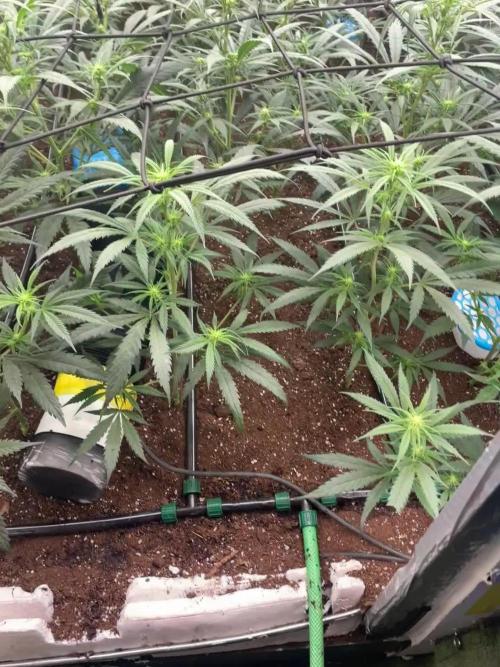
Así es como empezamos la tercera semana,seguimos con humedad alta pero la vamos controlando..
Estos días da buen tiempo la humedad en la calle será mucho más baja así podré meter aire sin tanta humedad..
De momento todo bien en el cultivo ningún problema hasta la fecha.
Ya podéis ver,y comentar sobre algo que veáis que yo no!
Como dicen! Ven veinte ojos mejor que dos!
🖖
Día 12
Último fungicida prevención mutritis,hongos
humedad.
Primer riego foliar hormonas producción de flores.
🌹
Día 13
Nada en especial solo observar si veo algún cambio tras las hormonas,aún no veo grandes observaciones fuera de lo natural del paso de los días.
En el día de mañana por lo que me recomendó el fabricante se verán los resultados a la vista!
Comentar que seguimos con la iluminación al 100x100 de capacidad
Marshydro sp3000 x2
Hero led Ignator t720
Yxo led 60w ir+un espectro completo
En la siguiente semana me llega el nuevo driver de philips para poder conectar la lámpara de IR que pude adquirir a Yxo nuevamente! Lampara led espectro completo + IR 70w .
Me vendrá muy bien para el pequeño espacio de la puerta que necesita más iluminación para poder desarrollar bien esas dos plantas,de la entrada.
La humedad fue cosa del pasado.
Evite el uso de desumificador eléctrico añadiendo varios de sales,deciros que funcionan muy bien no dan un control exacto pero mantienen una humedad interior estable para todo el periodo de floración!
50% de humedad lo demuestra!
Hoy añadi un poco más de sustrato. 110 litros exactamente sobre la cama de cultivo que tenía de topcrop con humus de lombriz,tierra diatomeas y alimentada con npk.
Después de eso tengo en mi cama de cultivo 810 litros de sustrato para mis 44haze. 💐
Saludos
Día 14
Anulado el intractor,ya que el propio extractor mete aire fresco por las rendijas de ventilación..
En lo largo de la noche iré viendo el resultado en datos..
Ya coloque los soportes para la nueva iluminación que en estos días llega su driver de sustitución
E visto que algunas plantas en estos dos días están en 67-70cm..
Ya colocado el sistema de riego para evitar más pisadas en el cultivo ya que algunas se realentizaron por pisar encima de sus raíces..
Le e metido una pequeña poda de bajos para airear más la zonas bajas del cultivo.
Pequeño riego de folacion con remedio de agua azúcar para dos que estaban más estresadas.
Día 15
Hoy era día de regar pero el sustrato aún parece húmedo en gran proporción aplazare el riego.
Día 16
Hoy me acerqué a ver las niñas en caso de que necesitaran algo..
Se ve todo correcto parece que no tienen mucha sed.. llevamos todo el día de alta humedad y lluvia en el exterior..
Las dejaré hoy sin riego también.
El sustrato está bien alimentado.
Mañana seguramente se presente el armario con una plantación pidiendo agua a gritos!! Jejeje.. así comerán con más ganas!,veremos qué tal..
Dia 17
Perfecto,las plantas se han mantenido muy bien para estar el sustrato ,prácticamente casi seco..
Se le aplicaron 32litros a la cama de sustrato con el riego de goteo
Y la humedad se ha mantenido bastante bien .
Una vez termine el riego la temperatura en el armario cayó considerablemente,llegando este a 16 grados.
Una vez se cierra todo vuelve a sus parámetros controlados de 23/24 grados.


Likes
4
Share

@DutchFarmer
Follow
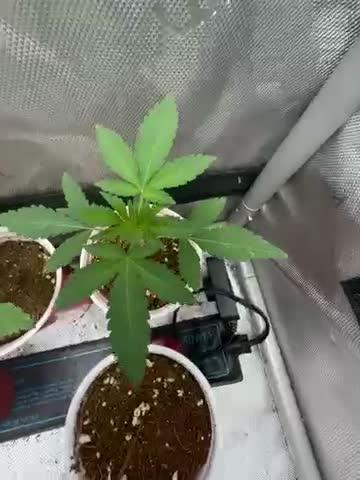
Let’s go the two phenos are pushing strong
If you’re thinking about trying them out, don’t miss this 👇
Use my code for 20% OFF 💸💫
🎉 Discount Code: DFARMER23 🎉
Go grab your favourites before they’re gone 🏃♀️🔥


